
Visual Learning Math Worksheets for 6-Year-Olds
11 filtered results
Difficulty Level
Grade
Age
-
From - To
Subject
Activity
Standards
Discover our engaging Visual Learning Math Worksheets designed specifically for 6-year-olds! At Kids Academy, we transform learning into an exciting adventure. Our colorful worksheets enhance number recognition, geometry, and patterning skills. By combining fun visuals and interactive exercises, we ensure each child grasps fundamental math concepts while having fun. Perfect for supplementing school learning or as enjoyable practice at home, these worksheets cater to early learners' need for visual stimulation and hands-on activities. Experience the difference that visual learning can make in your child's educational journey. Explore our wide range of math worksheets and ignite your child's passion for learning today!
Favorites
With answer key
Interactive
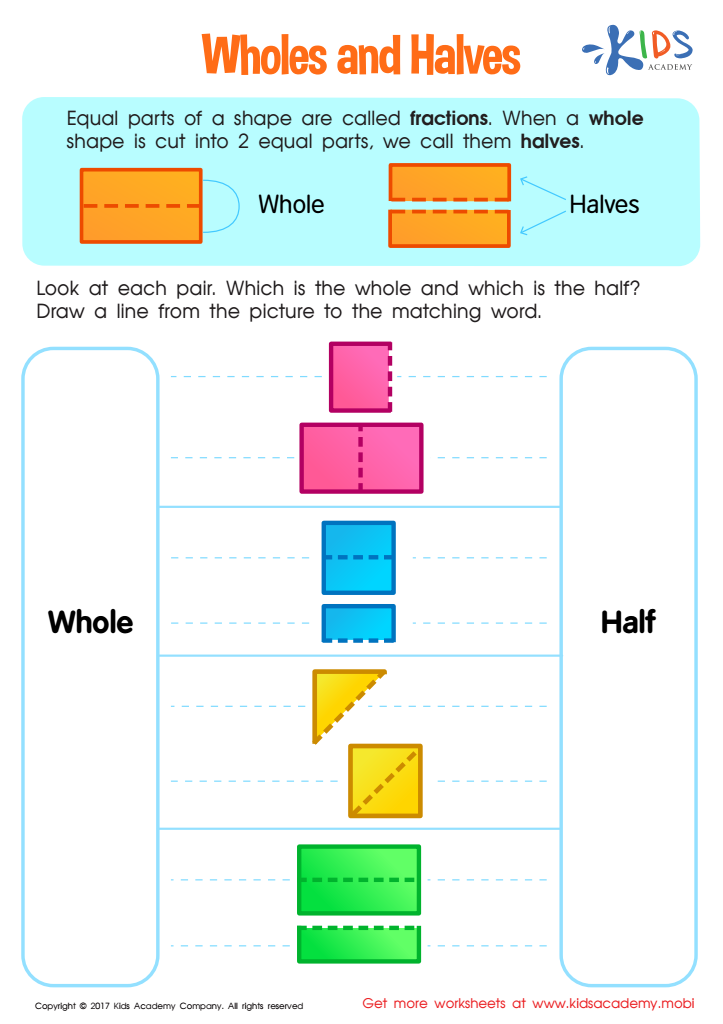
Wholes and Halves Worksheet
Students can feel overwhelmed with fractions. Help take the stress off by using a colorful worksheet to explain whole shapes and how to find halves. Ask them to identify the whole and point to the matching word for the half. A free printout can help guide them.
 Assign to My Students
Wholes and Halves Worksheet
Worksheet
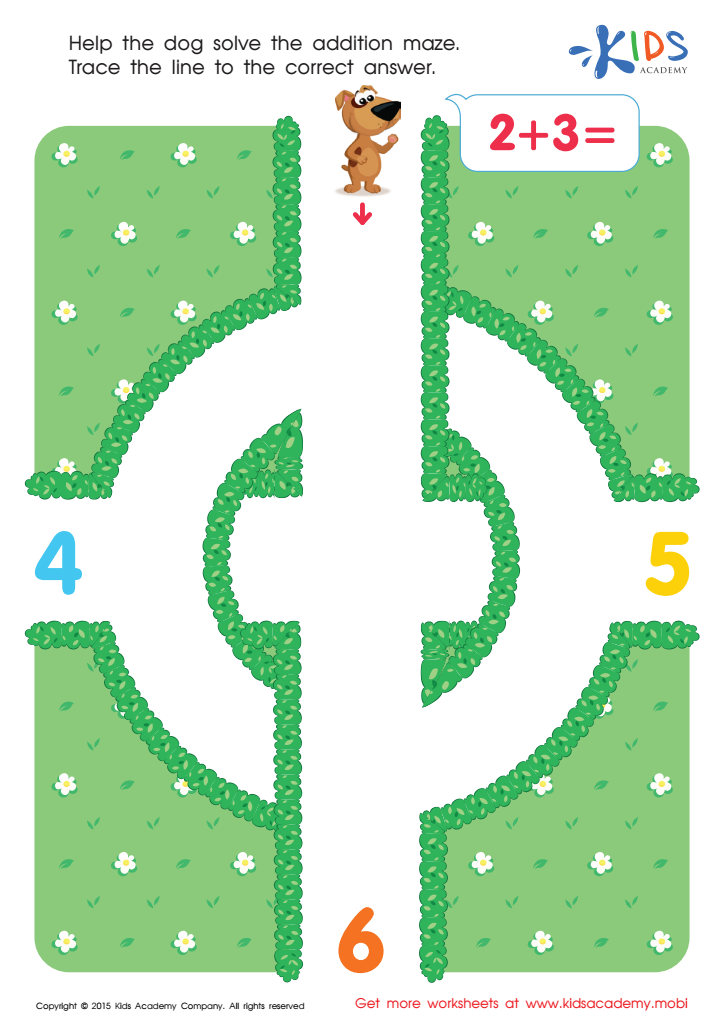
Two And Three Addition Worksheet
Give your children the task and let them find the path to the right answer while they make their way through the maze, and don't forget to let them trace the path.
Two And Three Addition Worksheet
Worksheet
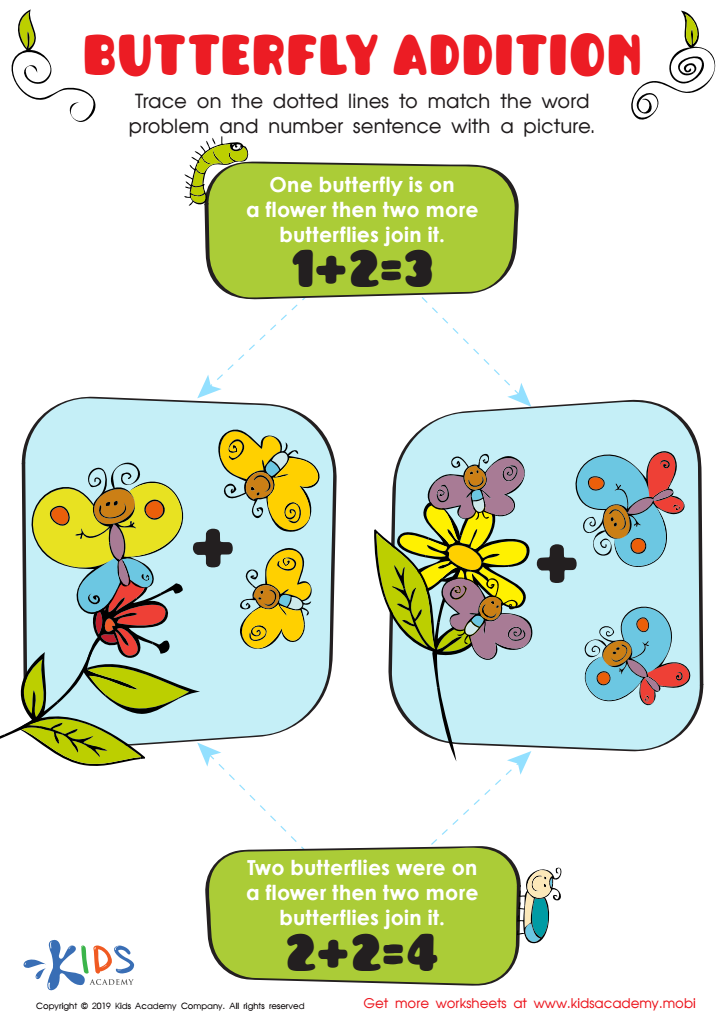
Butterfly Addition Worksheet
This tracing sheet is great for kids to work on math skills and have fun too. Read the word problems to them, then help them trace the dotted lines to match the problem and number sentence to a picture. Not only is it educational, it's beautiful too - your kids will love learning about butterflies!
Butterfly Addition Worksheet
Worksheet
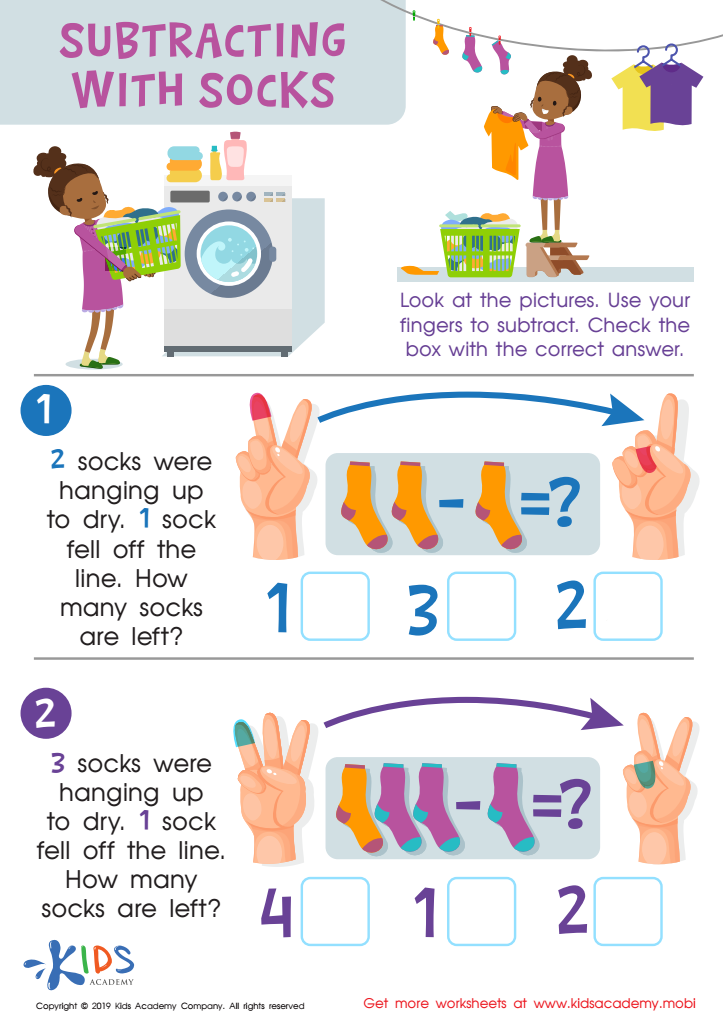
Subtracting Socks Worksheet
Before beginning this exercise with your children, warm them up with a counting game. If math is not their favorite subject, use this worksheet. Help them read the two word problems, then use their fingers to count and subtract. Ask them to select the correct answer and check the box.
Subtracting Socks Worksheet
Worksheet
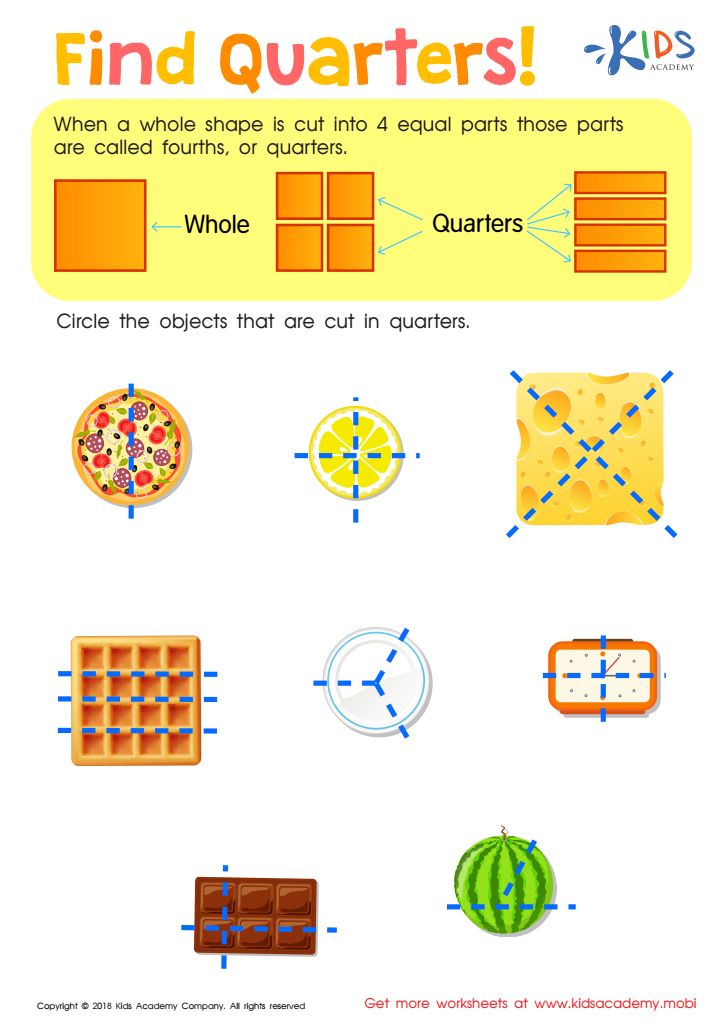
Find Quarters Worksheet
Ask your child if they know what it is called when a shape is cut into two equal parts. If yes, introduce them to quarters. Tell them that when a shape is cut into 4 equal parts, each part is called a quarter. Have them do this exercise by finding and circling objects split into quarters.
Find Quarters Worksheet
Worksheet
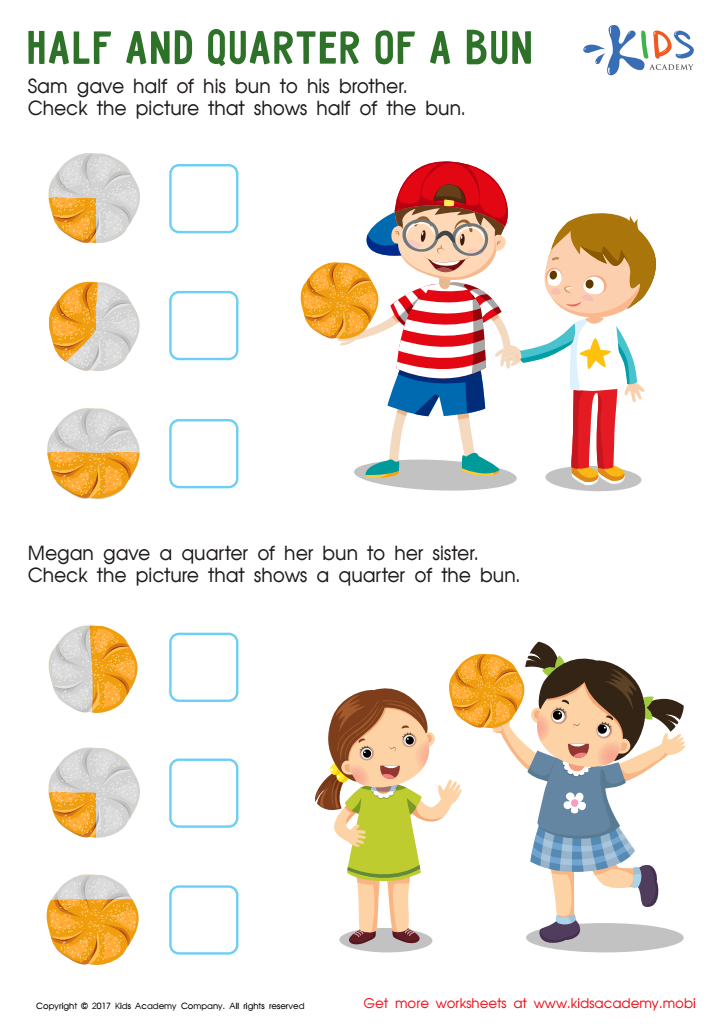
Half and Quarter of a Bun Worksheet
This worksheet introduces Sam, his brother and Megan, her sister, who are sharing buns. Show kids the picture of half and quarter to help them understand. Ask if they know what half and quarter of a shape is before progressing. Help them check the picture showing half and quarter of a bun.
Half and Quarter of a Bun Worksheet
Worksheet
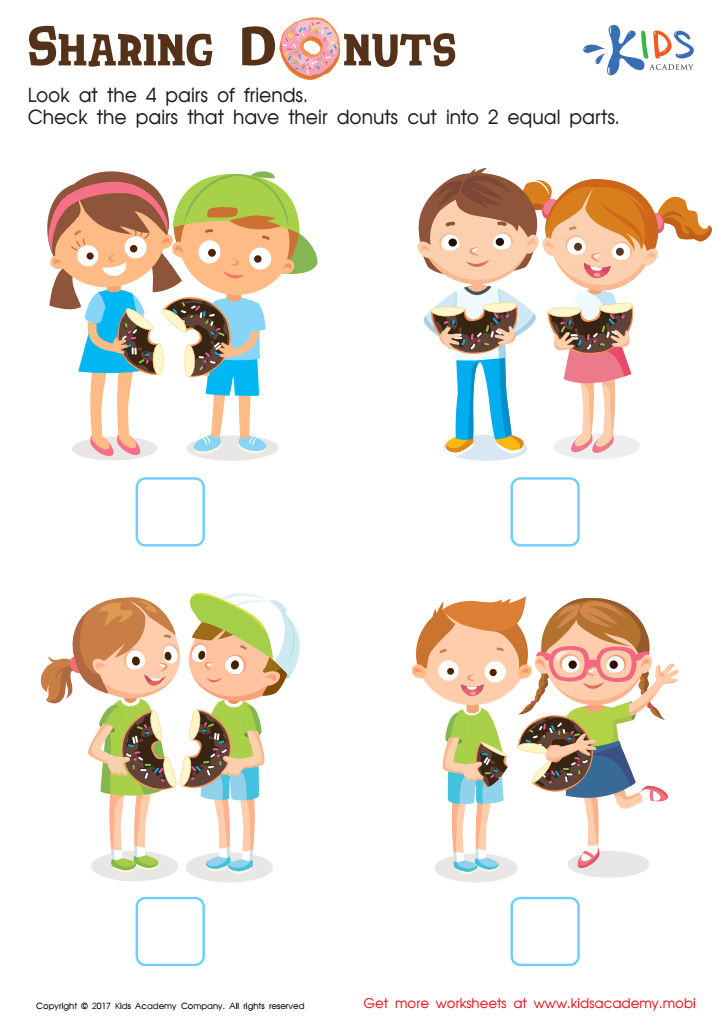
Sharing Donuts Worksheet
Get your kids to check which of the 4 pairs of friends in the worksheet have evenly-split donuts. No one likes being cheated out of a treat, so it's important to make sure the donuts are divided fairly. Plus, your kids will love the challenge!
Sharing Donuts Worksheet
Worksheet
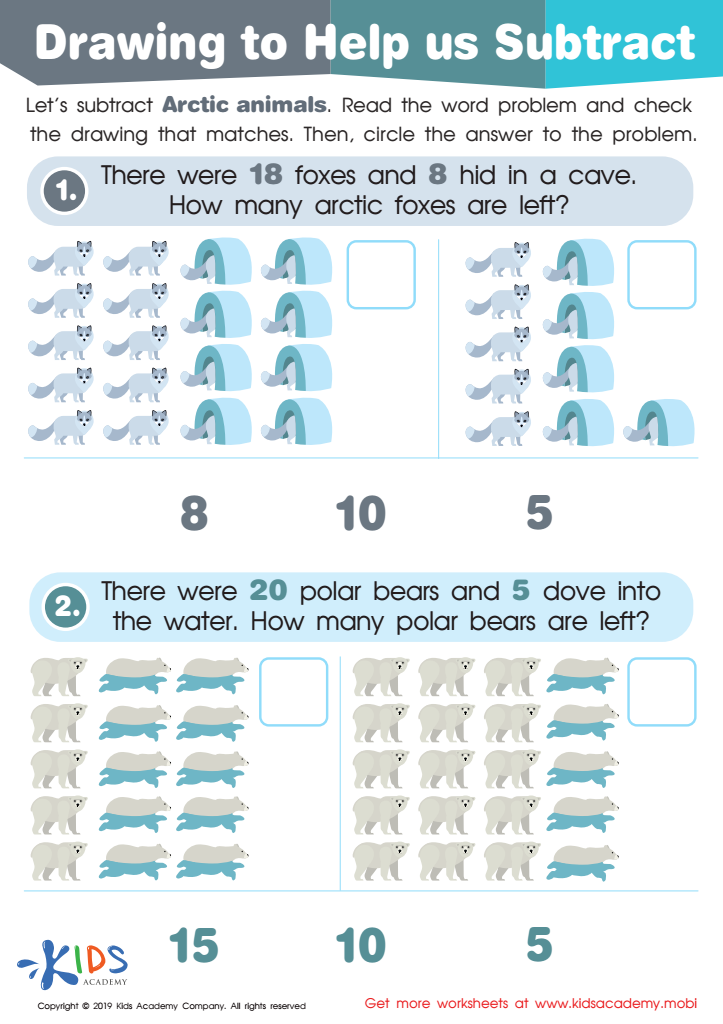
Drawing to Help Us Subtract Worksheet
Math is made fun with this free worksheet featuring Arctic animal pictures to solve basic subtraction word problems. Kids read the problem and choose the correct drawing of the animals to represent the solution. They'll have a blast with their cool animal friends while learning math!
Drawing to Help Us Subtract Worksheet
Worksheet
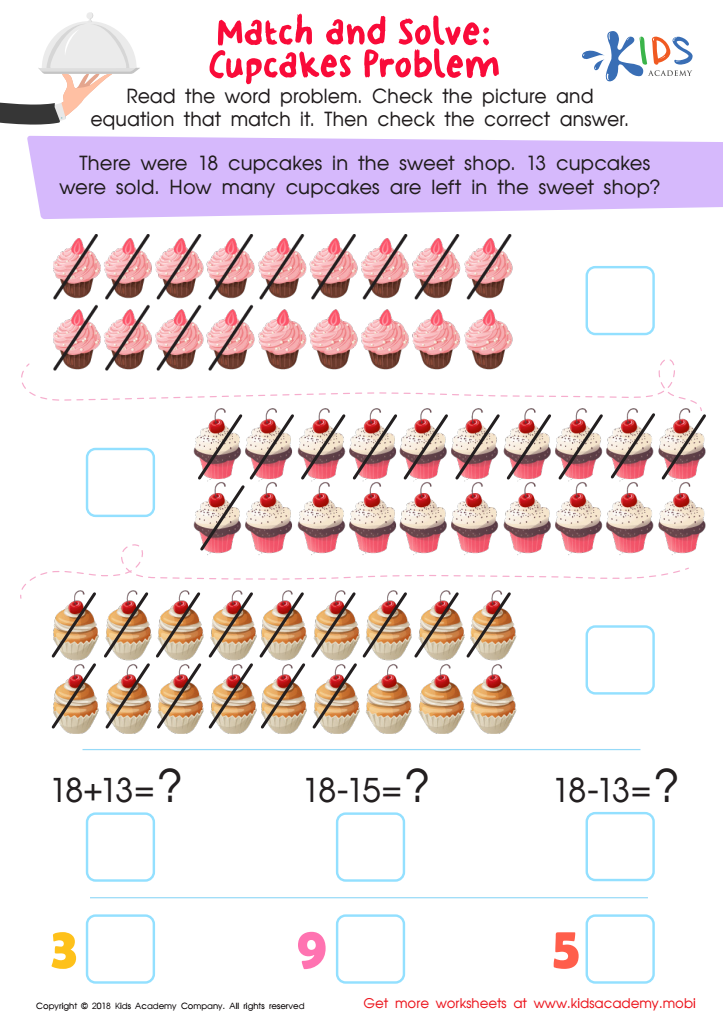
Match and Solve: Cupcakes Problem Worksheet
This math worksheet will excite your kid! Read the word problem and look at the cupcakes; the slashes mean some are being taken away. Select the picture that matches the text, then complete the equation to find the solution!
Match and Solve: Cupcakes Problem Worksheet
Worksheet
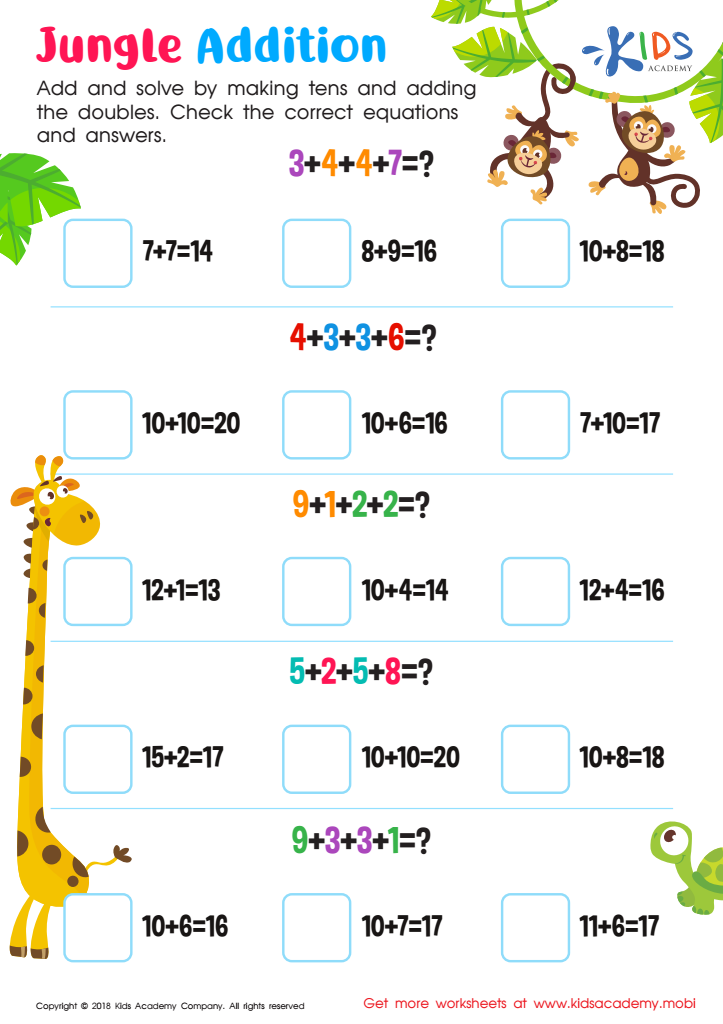
Jungle Addition Worksheet
With this worksheet, kids can use the strategies of making tens and adding doubles to add numbers with more than three addends. They'll practice choosing the right method and become more confident in their calculations, enabling quicker, more efficient computation.
Jungle Addition Worksheet
Worksheet
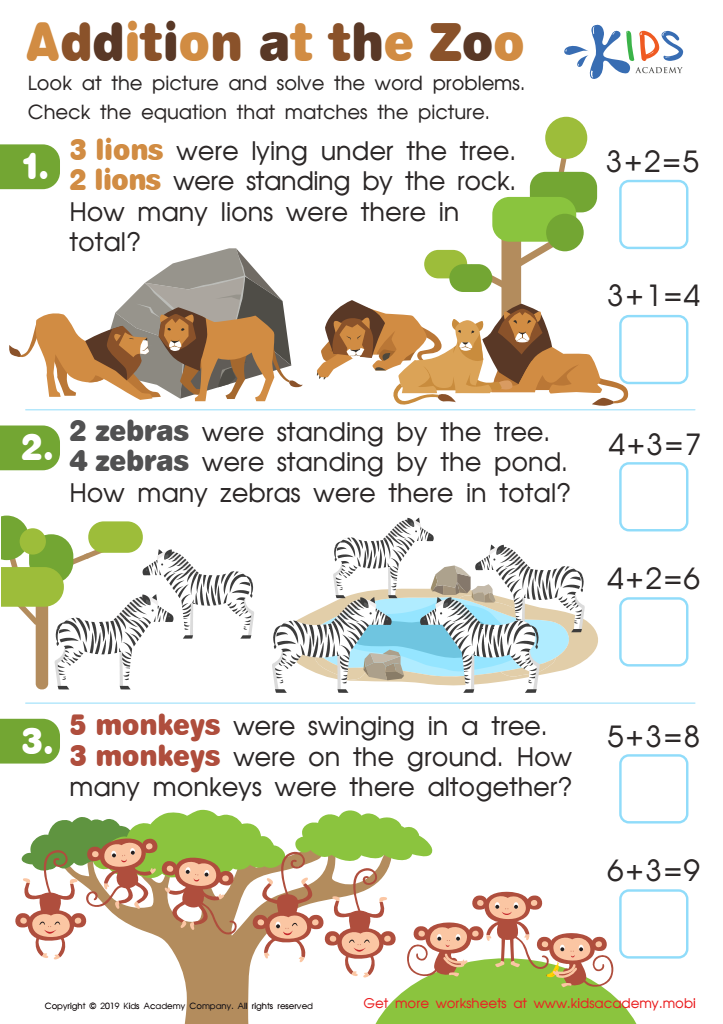
Addition at the Zoo Worksheet
Visit the zoo with your kids and point out all the different animals. Ask them to name their favorites and identify animals on a worksheet. Challenge them to solve word problems related to the pictures. Ask them for the equation that fits the picture and check the answer.
Addition at the Zoo Worksheet
Worksheet
Join Kids Academy for Free
Who is primarily going to use this learning content?








Parents and teachers should care about visual learning math for 6-year-olds because it aligns with young children's developmental stage and learning style. At this age, kids typically learn best through concrete, visual, and tactile experiences. Visual learning supports understanding by bridging the gap between abstract mathematical concepts and tangible experiences. For instance, using objects, pictures, or diagrams to illustrate addition and subtraction can make these concepts clearer and more relatable.
In addition, visual learning aids in memory retention. Visual aids like charts, number lines, and colorful graphs can make information more engaging and easier to recall. This approach can spark curiosity and foster a positive attitude toward math, setting the foundation for future learning. When children can visualize problems and see patterns, they gain confidence in their math abilities, which is crucial for their long-term academic success.
Moreover, early exposure to visual learning techniques can cater to diverse learning styles and needs. Every child is different; some may grasp verbal instructions readily, while others may need visual cues to fully understand. By incorporating visual math, educators can offer a more inclusive learning environment that actively engages all students.
Ultimately, visual learning math develops critical thinking, problem-solving skills, and a deep understanding of mathematical concepts, ensuring children build a strong mathematical foundation.








