Filters

10 filtered results

Clear all filters
Favorites
With answer key
Interactive

10 filtered results

Difficulty Level

Grade


Enhance your 6-year-old's fine motor skills with our engaging "Fine Motor Skills Numbers up to 100 Worksheets." Designed specifically for young learners, these printable activities provide a fun and effective way to practice number recognition, counting, and basic writing. By tracing, coloring, and completing various tasks centered around numbers up to 100, children will develop the hand-eye coordination essential for future learning milestones. Our worksheets are crafted to provide a hands-on approach that keeps kids motivated and excited about learning. Dive into the world of numbers while strengthening those critical fine motor skills today! Perfect for at-home learning or classroom use.

Check out this FREE Trial Lesson on Numbers up to 100 for age 6!

Using a Number Line

Favorites
With answer key
Interactive
  • 6
  • Fine Motor Skills
  • Numbers up to 100
Сounting from 11 to 20 Worksheet

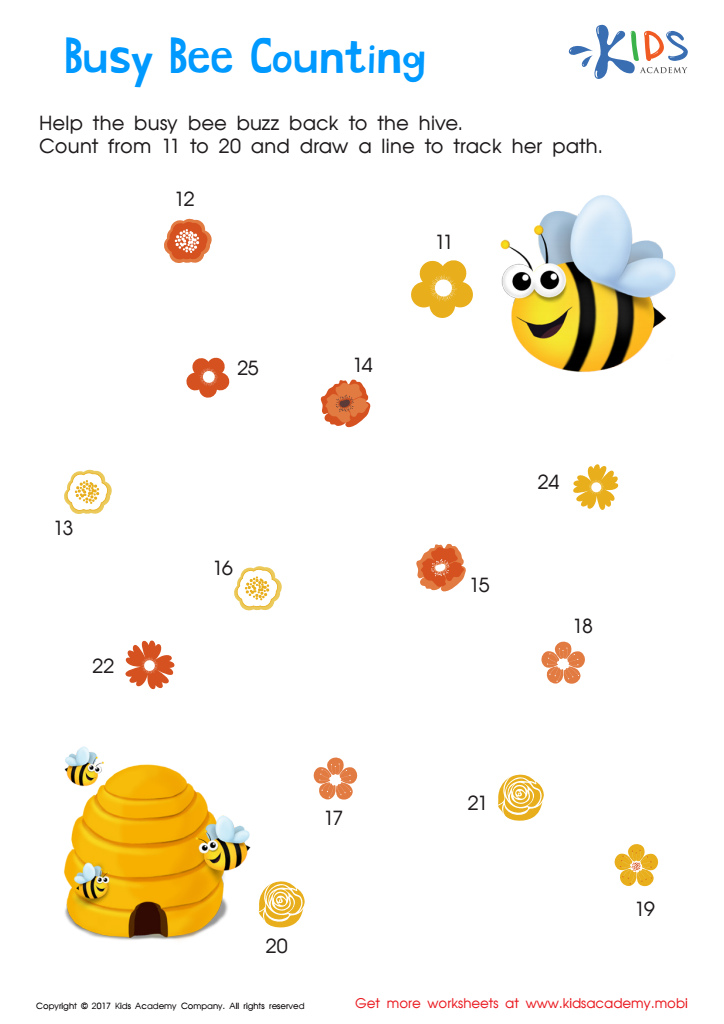
Ordering 11–20: Busy Bee Counting Worksheet

Help your child master counting from 11 to 20 with our connect the dot counting worksheet. Kids will have fun counting, drawing and problem-solving with this vibrant worksheet. With clear directions, adorable pictures and a sense of purpose, your child will develop crucial numeracy skills without even knowing it!
Ordering 11–20: Busy Bee Counting Worksheet
Worksheet
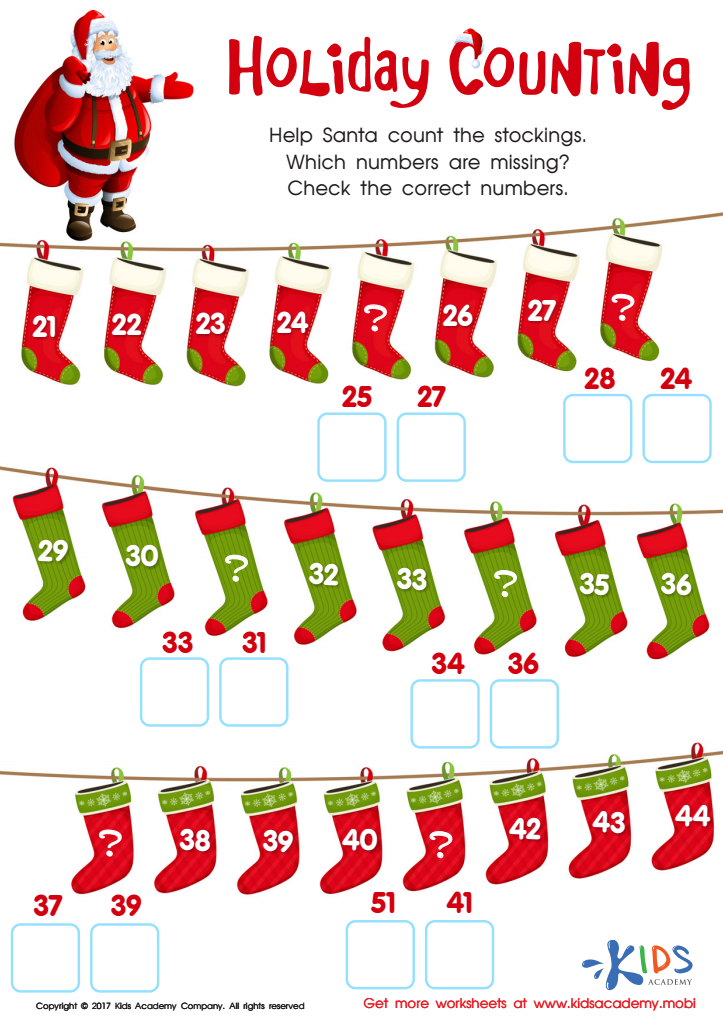
Holiday Counting Worksheet

Holiday Counting Worksheet

Let's spread some holiday cheer! Santa needs help counting stockings hung up for gifts - can your little one lend a hand? Find the missing numbers on the worksheet and have them check the boxes for the correct answers. Time to get counting!
Holiday Counting Worksheet
Worksheet
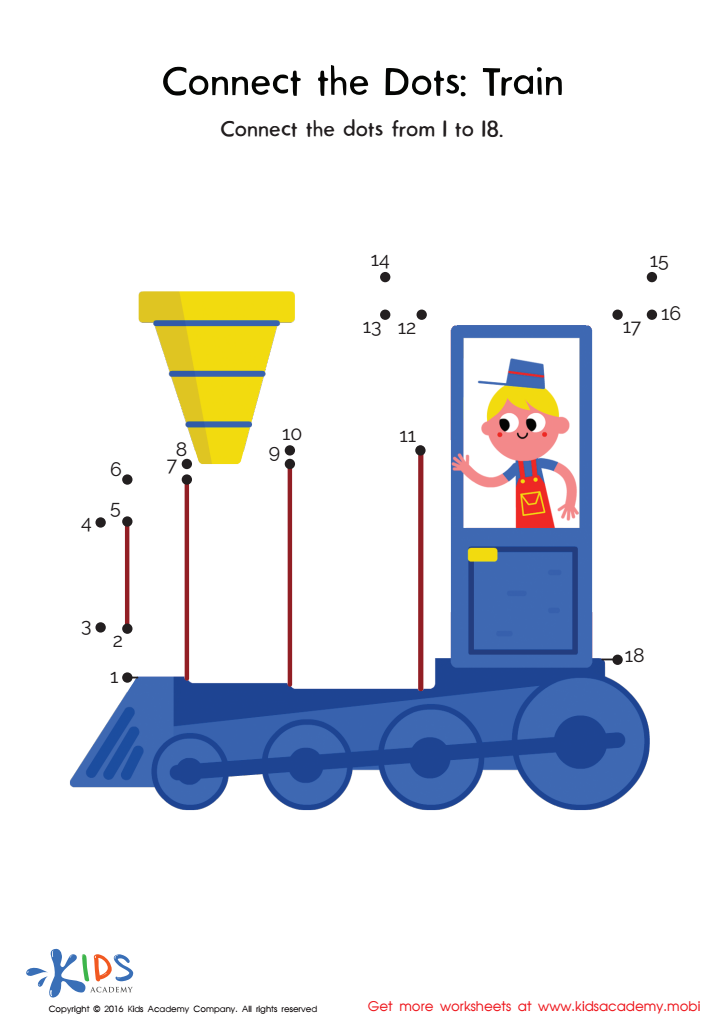
Connect the Dots Printable Worksheet

Train Connect Dots Worksheet

Train Connect Dots Worksheet
Worksheet
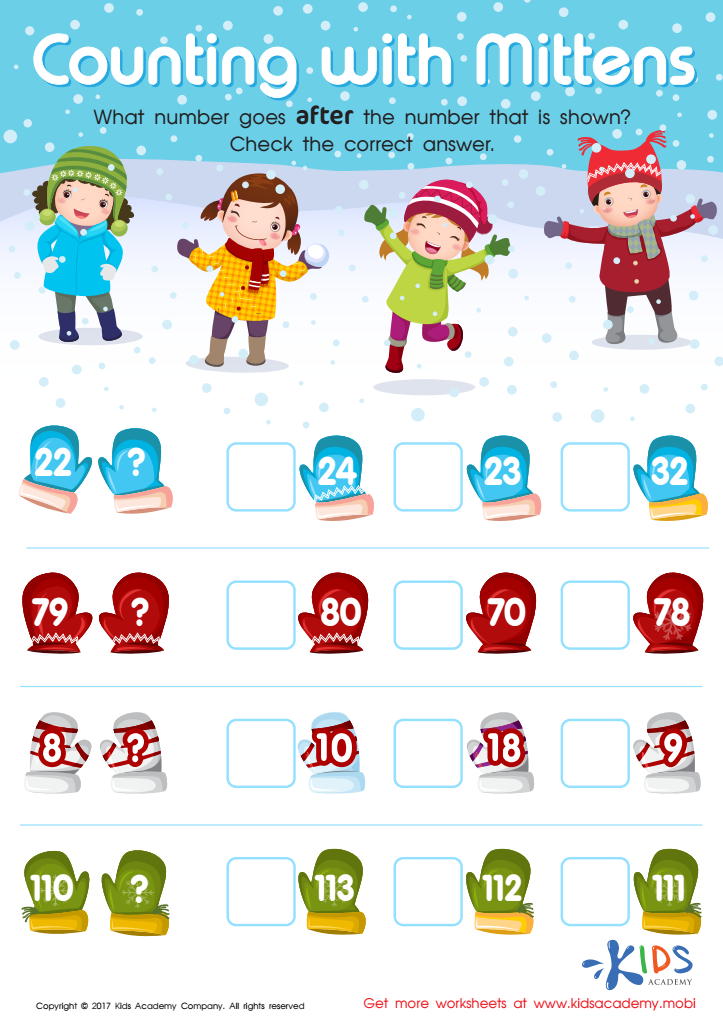
Counting with Mittens Worksheet

Counting with Mittens Worksheet

Let your kid have fun with this counting worksheet! It encourages them to count numbers and figure out which come next in the picture. Check the box with the correct answer - it's already provided. No more groaning and tears - this is a great way to learn!
Counting with Mittens Worksheet
Worksheet
Halloween Counting Worksheet from 11 to 20

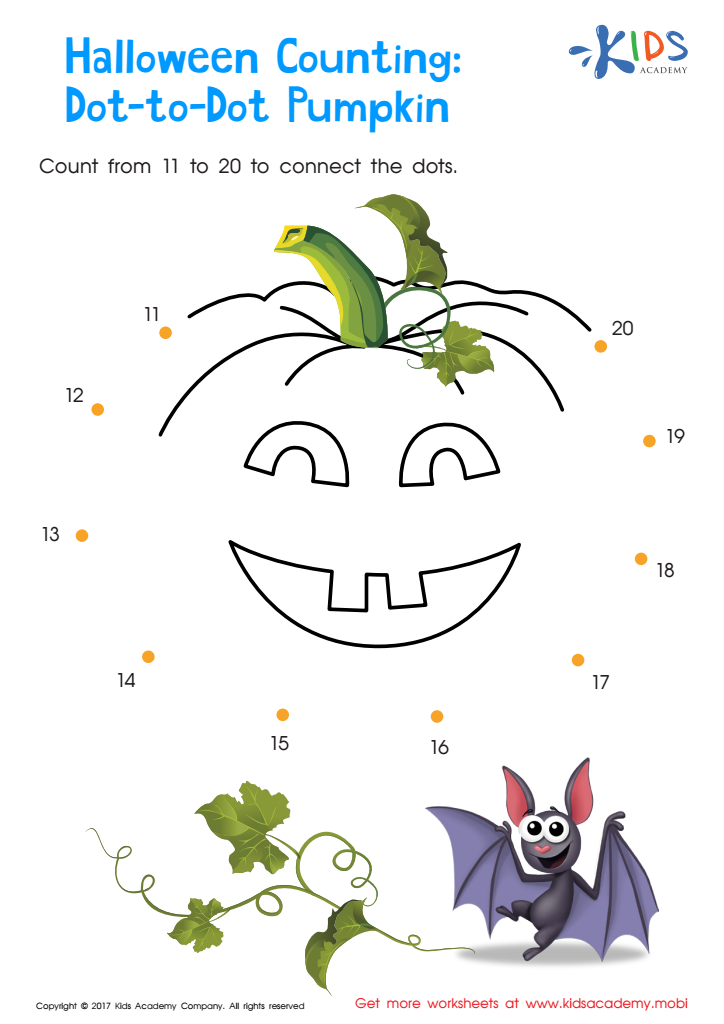
Ordering 11–20: Halloween Counting Worksheet
No matter the time of year, help your child get ready for Halloween with this worksheet. They'll practice counting from 11 to 20, recognizing numbers, and using a pencil to draw. By connecting the dots, they'll create a pumpkin picture, while unknowingly strengthening their early math skills. Print it today for an educational and fun experience!
Ordering 11–20: Halloween Counting Worksheet
Worksheet
Dot to Dot Numbers 11-20

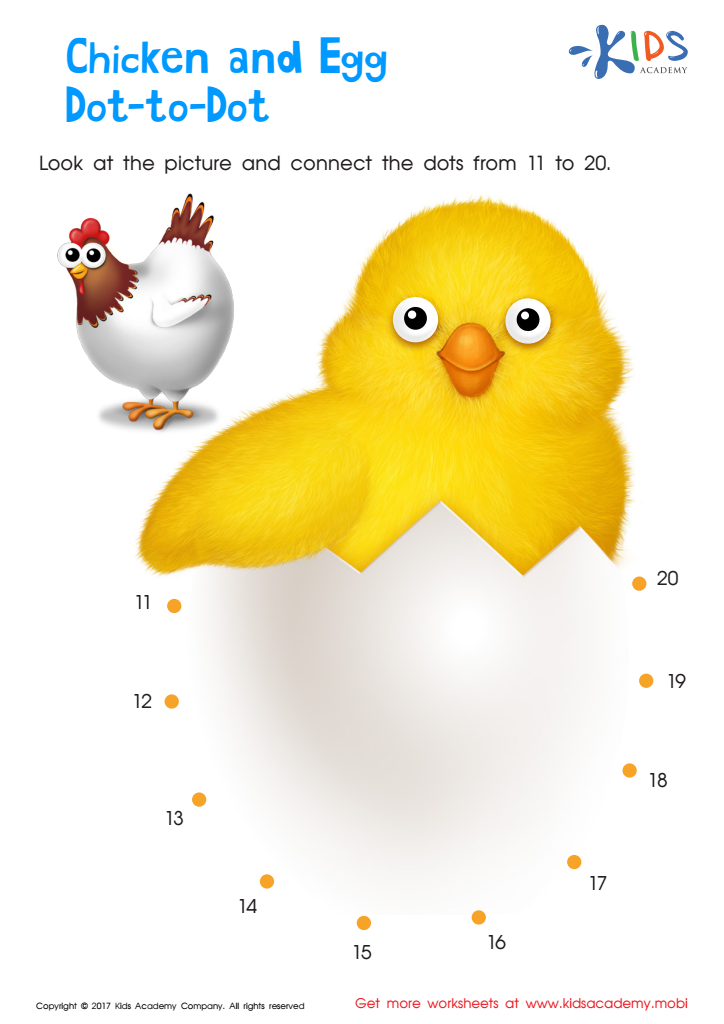
Ordering 11–20: Chicken & Egg Dot–to–dot Worksheet
Help your child hatch the chick and practice their counting skills with this dot to dot worksheet – the chicken came first! Connect the dots 11-20 to have fun and learn at the same time. Experience meaningful practice and gain confidence while drawing great pictures.
Ordering 11–20: Chicken & Egg Dot–to–dot Worksheet
Worksheet
Number Puzzles Worksheet

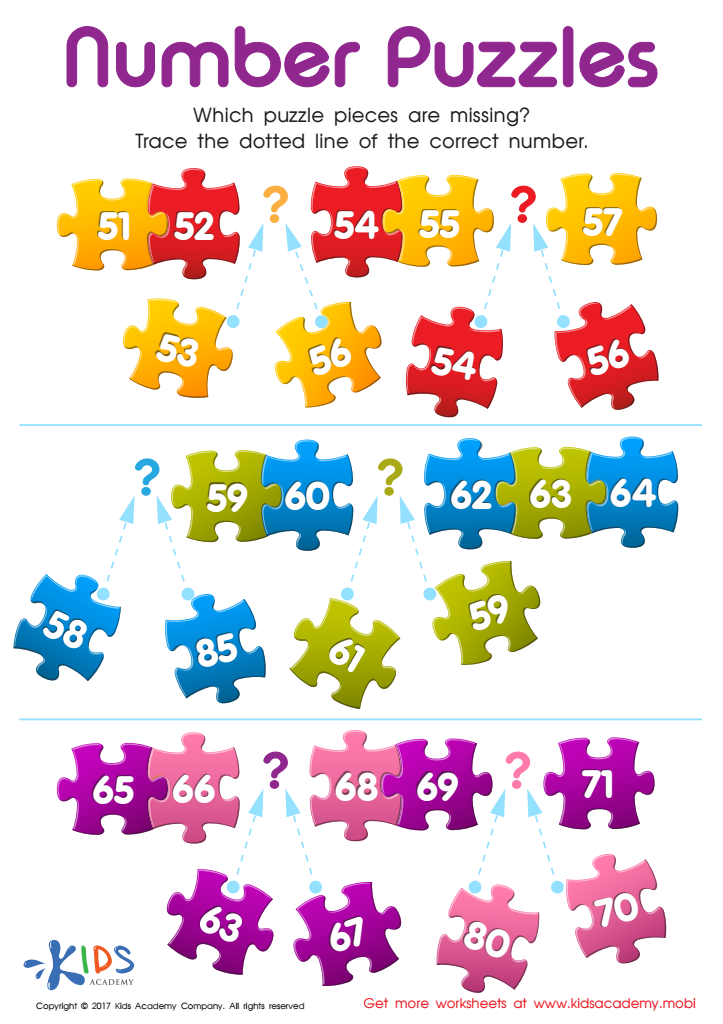
Number Puzzles Worksheet

In this tracing paper, your child must identify the missing numbers in the puzzle. Guide them as they trace the line for the correct number to complete the worksheet. This activity will help boost their problem-solving skills.
Number Puzzles Worksheet
Worksheet
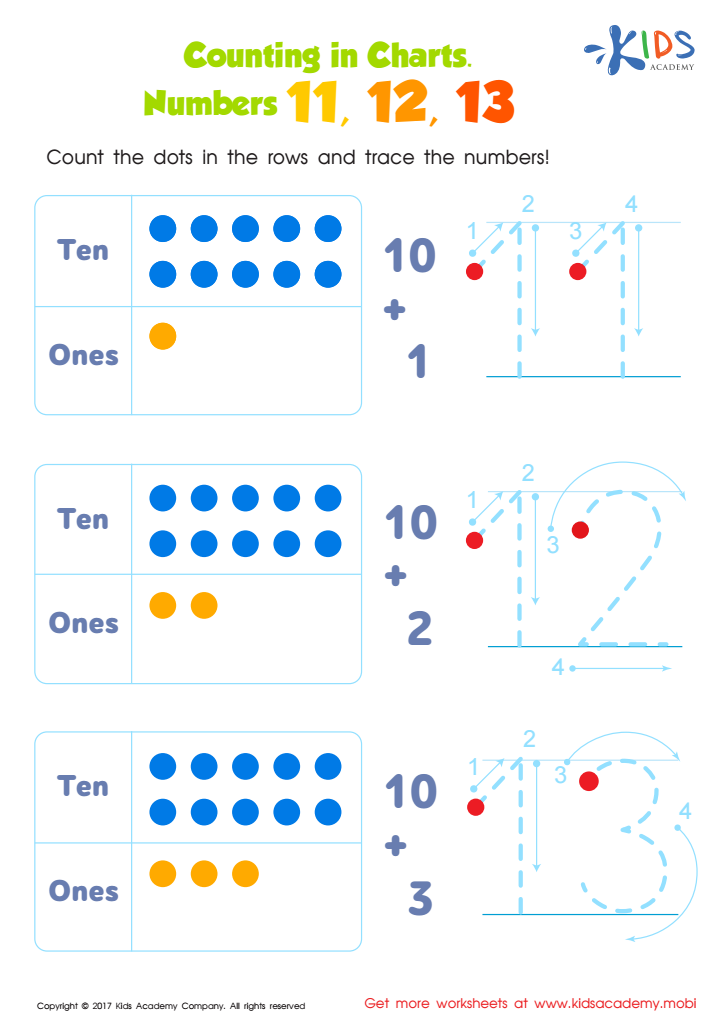
Number tracing worksheet for kindergarten

Number Tracing Worksheet For Kindergarten
Help your child develop addition skills and improve number recognition with this easy-to-use worksheet. Have them count the dots and add to solve each problem. Then, trace over the number to complete each row! It's a fun and simple way for kindergarteners to practice their math skills.
Number Tracing Worksheet For Kindergarten
Worksheet
Dot to Dot Worksheets 11 to 20

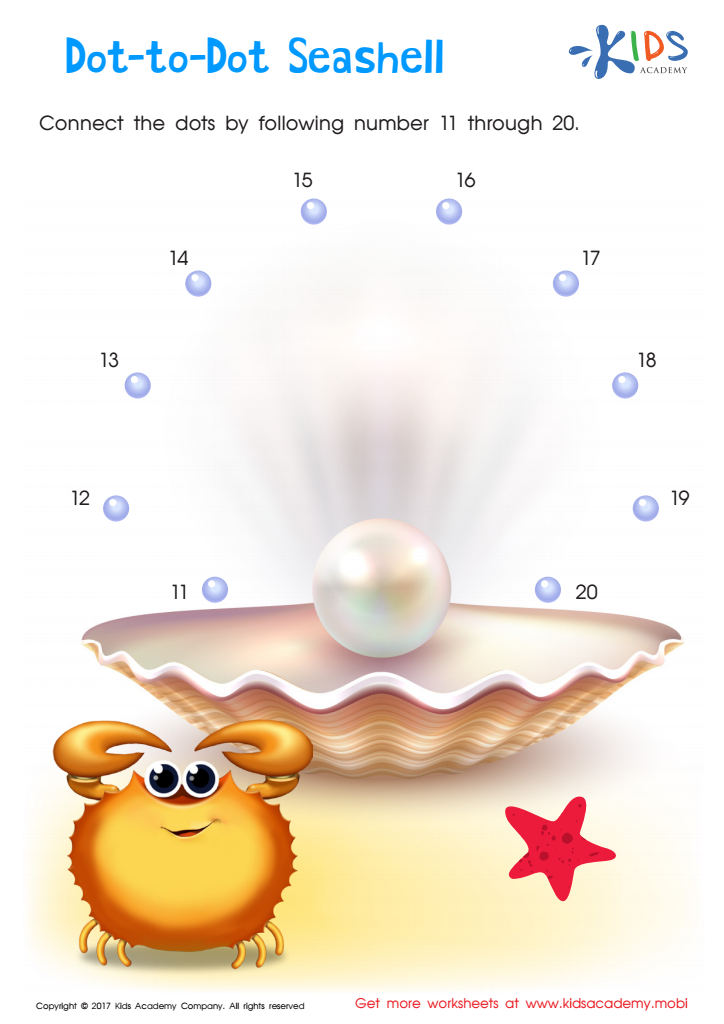
Ordering 11–20: Dot–to–dot Seashell Printable
Connecting the dots 11 to 20 is rewarding for kids, helping them practice counting, identifying numbers and gain cognitive and logical skills. Our worksheet features a vibrant image of a seashell, crab and sea star, and your child will feel rewarded creating it while honing their counting skills!
Ordering 11–20: Dot–to–dot Seashell Printable
Worksheet
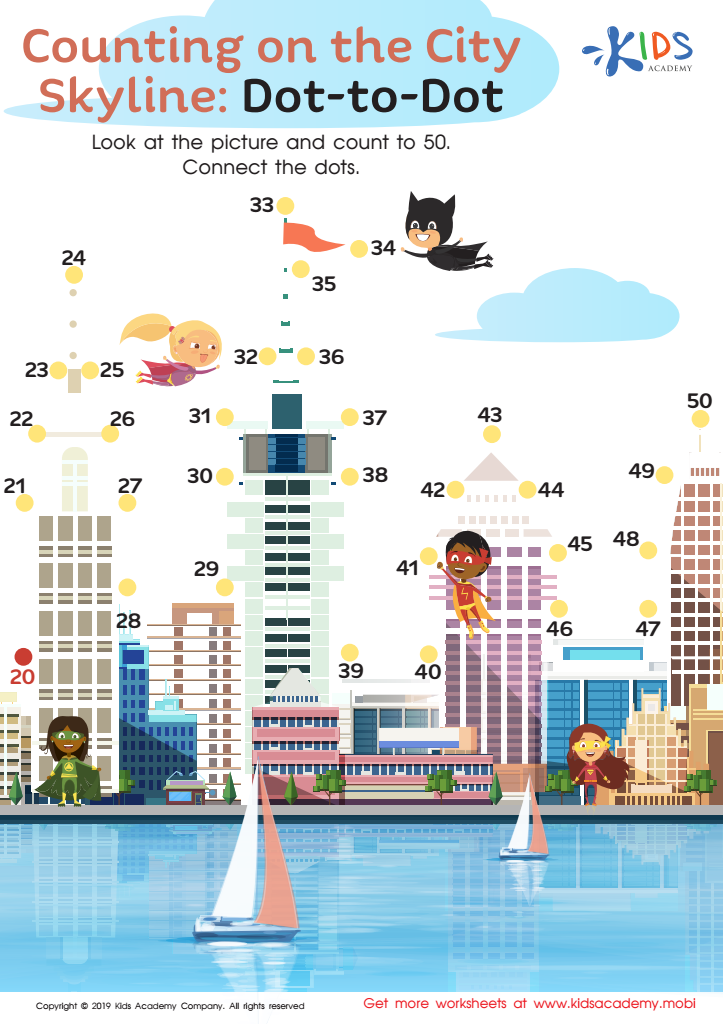
Counting on the City Skyline: Dot-to-Dot Worksheet


Counting on the City Skyline: Dot-to-Dot Worksheet

Kids will love connecting the dots to make a superhero skyline! They'll reinforce their number line thinking and number sense while building fine-motor skills. Watch them beam with pride as the cityscape reveals itself, all thanks to some math practice.
Counting on the City Skyline: Dot-to-Dot Worksheet
Worksheet


Fine motor skills are crucial for 6-year-olds as they form the foundation for many academic and daily life tasks. As children progress through early education, their ability to use their hands and fingers with precision impacts their performance in various areas, particularly when working with numbers up to 100.

Developing fine motor skills enables children to manipulate tools such as pencils, scissors, and paper, which are essential for writing, drawing, and engaging in hands-on activities related to mathematics. The ability to count objects, write numerals, and arrange numbers visually (e.g., number lines or charts) relies on these skills.

Moreover, fine motor development enhances hand-eye coordination, which supports problem-solving abilities when working with math concepts. For example, attaching value to numbers while arranging blocks or drawing shapes requires both critical thinking and dexterity.

Parents and teachers should care about fostering these skills because early mastery can lead to greater confidence and motivation in learning. Children with strong fine motor skills often exhibit better academic performance, increased participation in classroom activities, and improved social interactions. Dedicating time to activities that enhance fine motor coordination is an investment in a child's overall development and success in learning environments.