Cognitive Development Tracing Shapes Worksheets for 6-Year-Olds
4 filtered results
-
From - To
Explore our engaging "Cognitive Development Tracing Shapes Worksheets" tailored specifically for 6-year-olds! Designed to enhance essential cognitive skills, these worksheets provide a fun way for young learners to improve focus, hand-eye coordination, and shape recognition. By tracing various shapes, children not only strengthen their fine motor skills but also boost their problem-solving abilities. Perfect for use at home or in the classroom, these printable resources encourage creativity and boost self-confidence as kids progress through different levels of difficulty. Foster a love for learning while ensuring your child develops foundational skills in an enjoyable and interactive way!
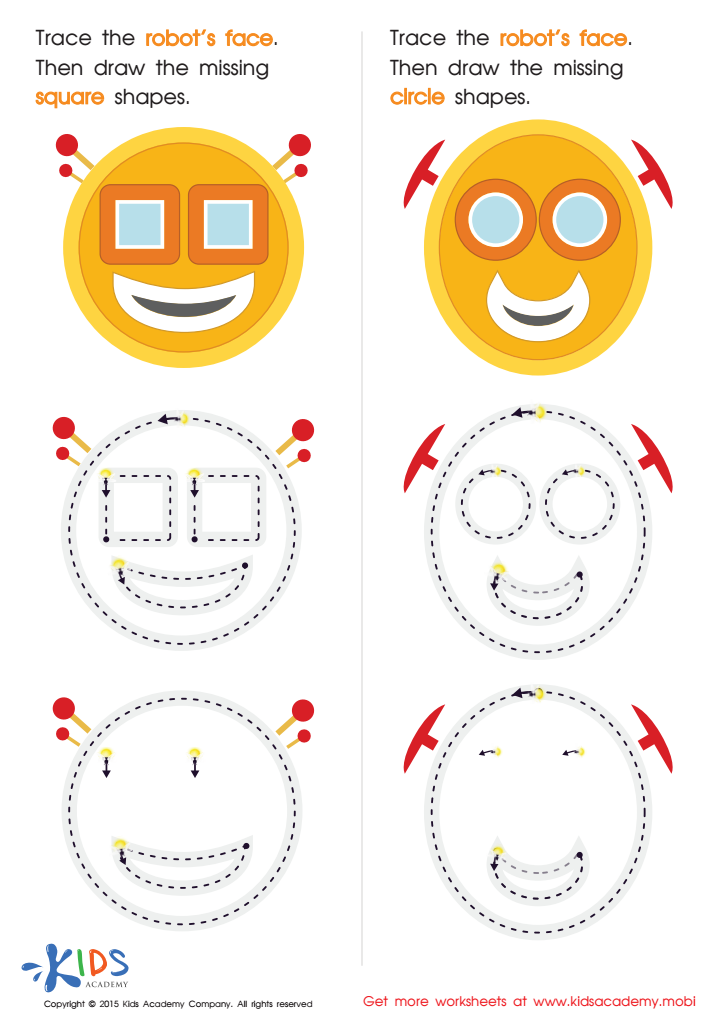
Practicing to Draw Circles And Squares Printable
 Assign to My Students
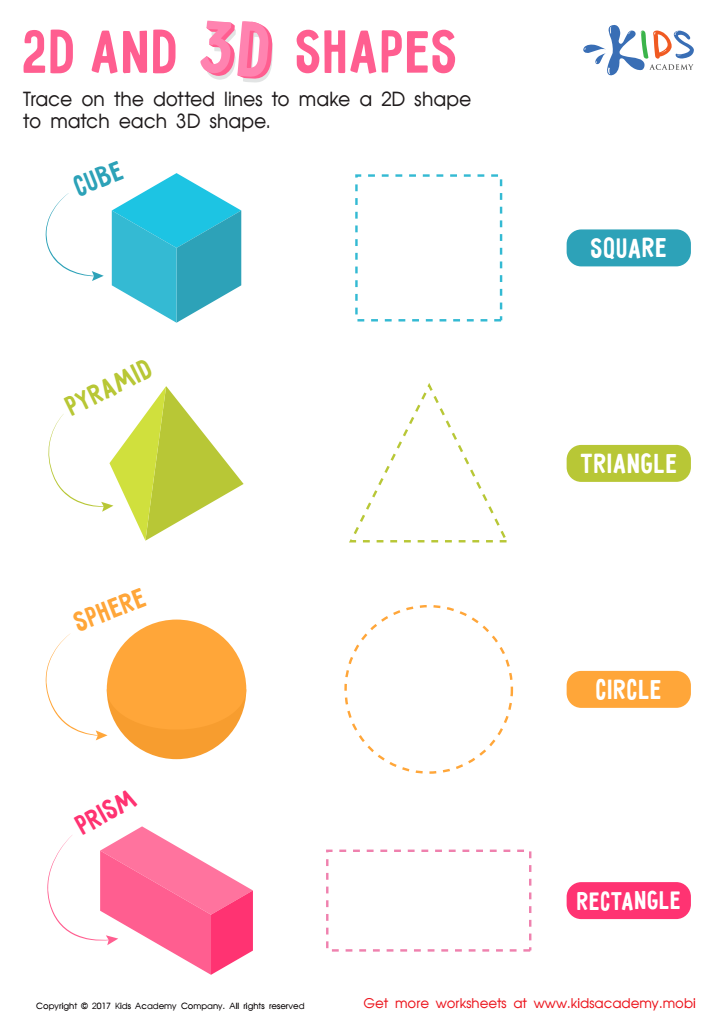
2D and 3D Shapes Worksheet
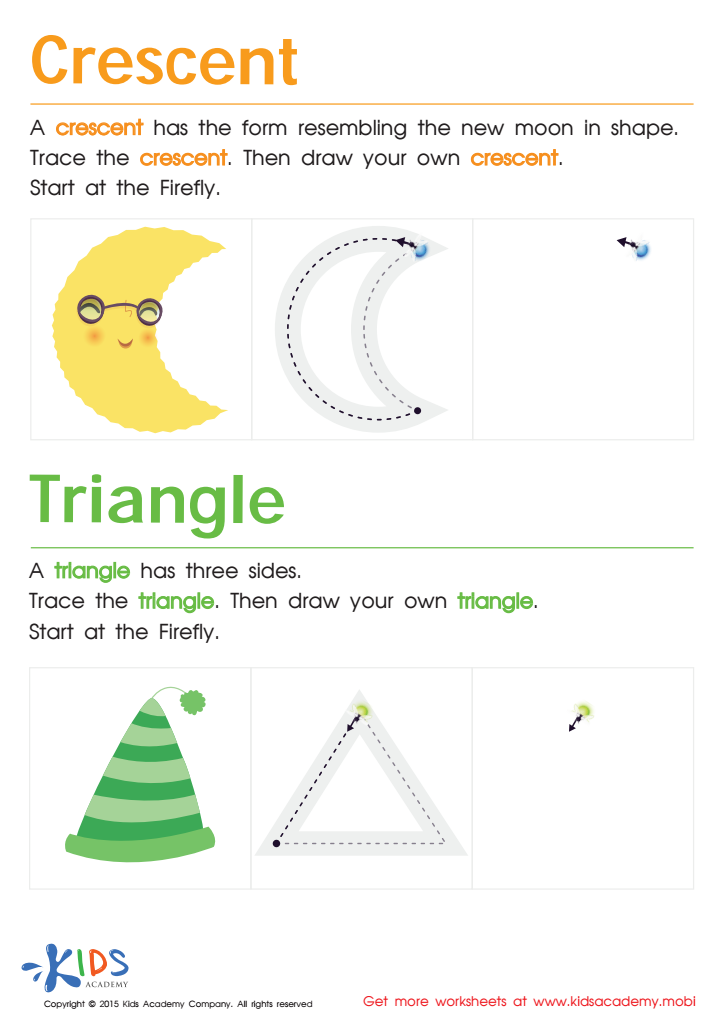
Learning to Draw Crescents And Triangles Worksheet
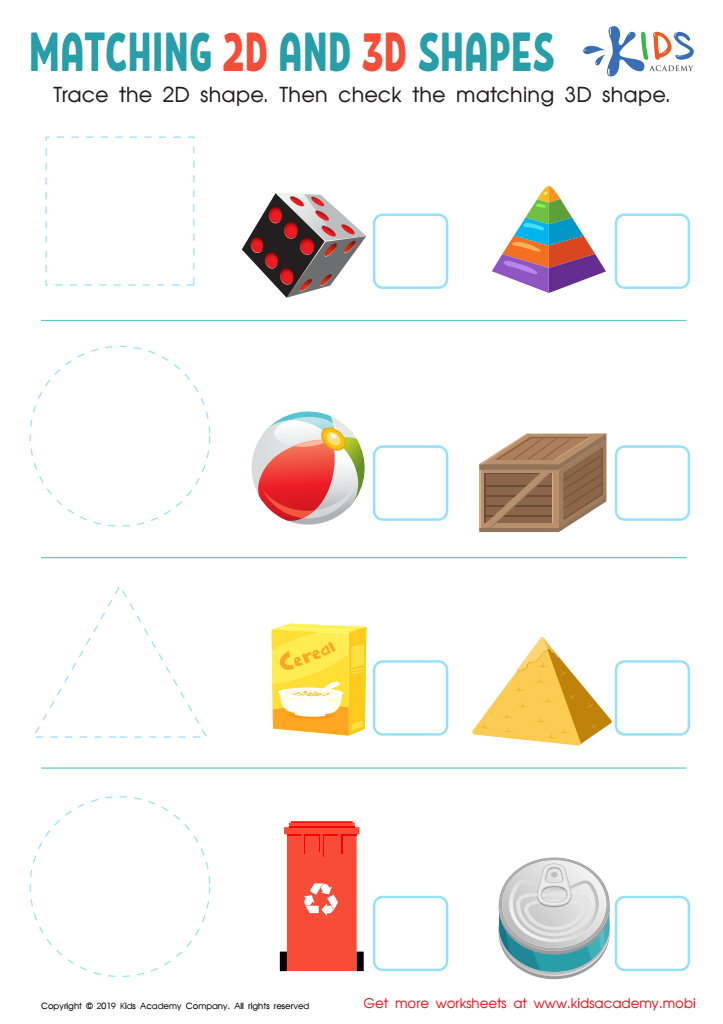
Matching 2D and 3D Shapes Worksheet








Cognitive development activities, such as tracing shapes, are essential for six-year-olds as they foster critical skills influencing academic success and everyday functioning. Engaging in shape tracing aids fine motor skills, an important prerequisite for writing and manipulating tools effectively. This activity promotes hand-eye coordination, allowing children to gain confidence in their physical abilities.
Moreover, tracing shapes contributes to cognitive growth by enhancing spatial awareness and visual perception. Understanding shapes lays the foundation for math skills, enabling children to recognize patterns and develop problem-solving abilities, essential for later mathematical concepts such as geometry. As children trace, they also engage in critical thinking, deciphering directions and thinking about how shapes relate to one another.
Additionally, tracing activities encourage focus and concentration, challenging children to sustain attention on a single task. This ability to concentrate is crucial for learning in all subjects. By participating in shape tracing, children also build creativity and expression, transforming simple shapes into complex designs.
Given these multifaceted benefits, parents and teachers should prioritize cognitive development through activities like tracing shapes. By supporting these early developmental processes, they equip children with the foundational skills necessary for lifelong learning and success.