
Sight word recognition Reading Worksheets for 6-Year-Olds
5 filtered results
Difficulty Level
Grade
Age
-
From - To
Subject
Activity
Standards
Introduce your 6-year-old to the joys of reading with our Sight Word Recognition Reading Worksheets. Designed specifically for early learners, these engaging worksheets help kids quickly identify and memorize common sight words, an essential skill for confident reading. With fun activities like matching, tracing, and coloring, children build their vocabulary and reading fluency seamlessly. Our expertly crafted resources ensure that learning remains enjoyable, effectively supporting your child's literacy development. Boost their reading proficiency and watch their skills flourish with our comprehensive and interactive sight word worksheets! Sign up today and start your child's reading journey on the right foot.
Favorites
With answer key
Interactive
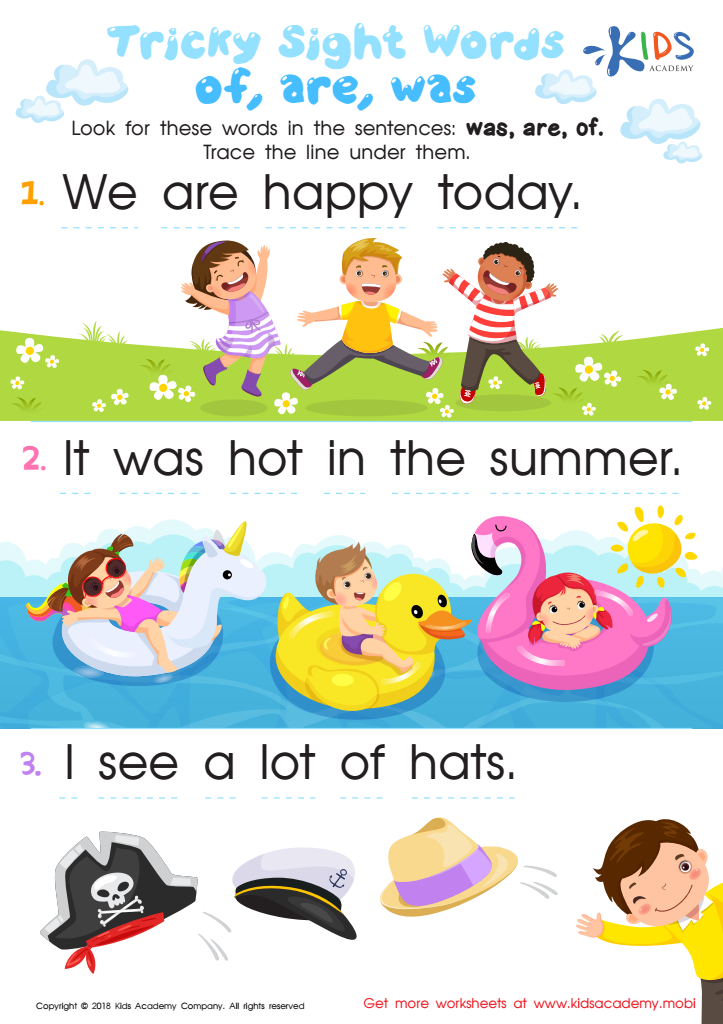
Tricky Sight Words Worksheet
Read the sentences to your students. Ask them to spot words 'of, are, was' and trace the line under them. It could be challenging for them to use them correctly or understand their meanings. Provide help where needed.
Tricky Sight Words Worksheet
Worksheet
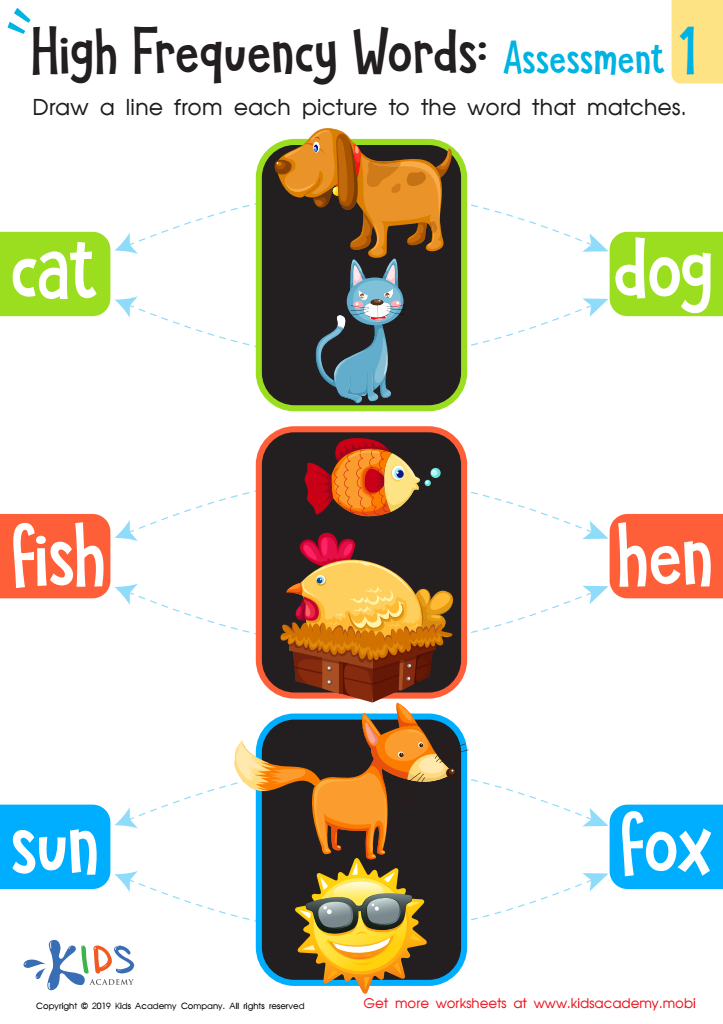
High Frequency Words: Assessment 1 Worksheet
Emergent readers need to know high-frequency words accurately and quickly to develop fluency. Connecting these words to colorful, fun pictures helps reading prosody. This assessment worksheet uses traceable lines to help learners match pictures to words.
High Frequency Words: Assessment 1 Worksheet
Worksheet
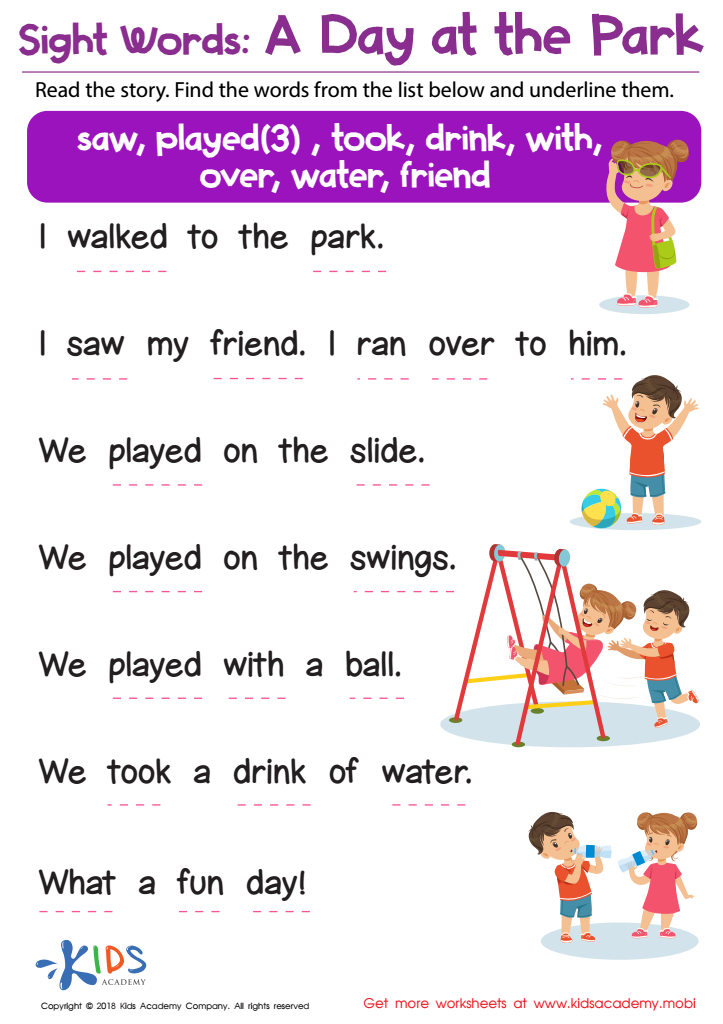
Sight Words: A Day at the Park Worksheet
This worksheet offers kids practice reading sight words in a story. With picture clues and repetitive wording, they'll work with words that can't be sounded out to reinforce their learning. This is an important step in the reading process that helps kids become more confident readers.
Sight Words: A Day at the Park Worksheet
Worksheet
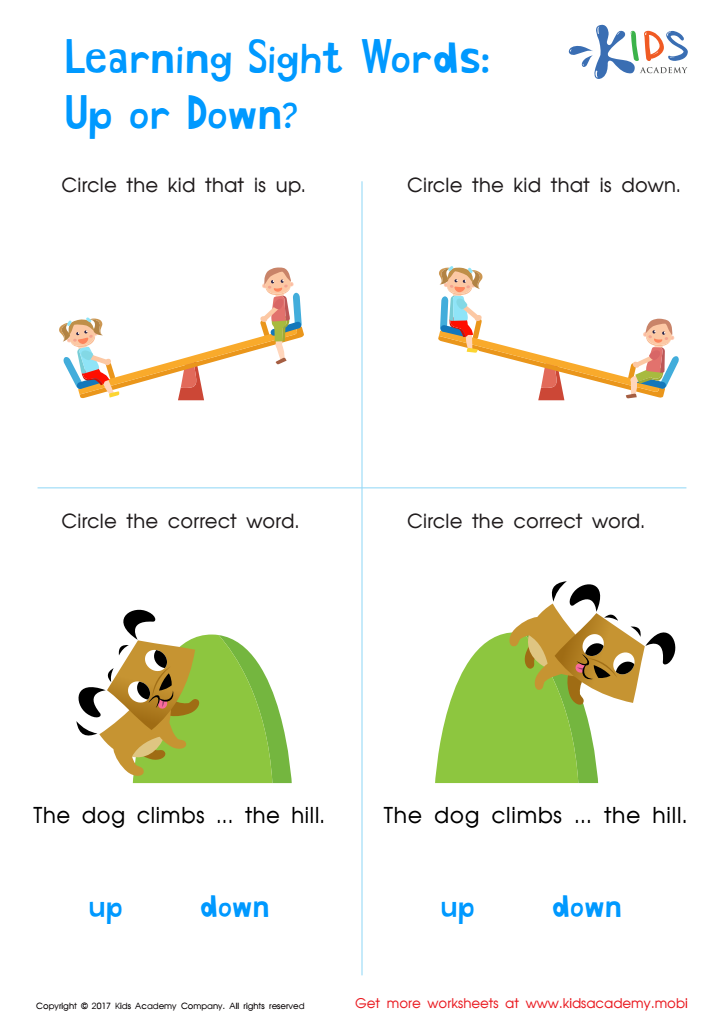
Up or Down Printable Sight Words Worksheet
Help your child identify up and down in print with this sight words worksheet. It has simple sentences, vibrant images and easy-to-read language that allow your little learner to practice these essential sight words. Perfect for early readers!
Help your early reader identify and read up and down with this sight words worksheet. It provides simple sentences, clear language and vibrant images to help them practice these essential sight words. Perfect for toddlers!
Up or Down Printable Sight Words Worksheet
Worksheet
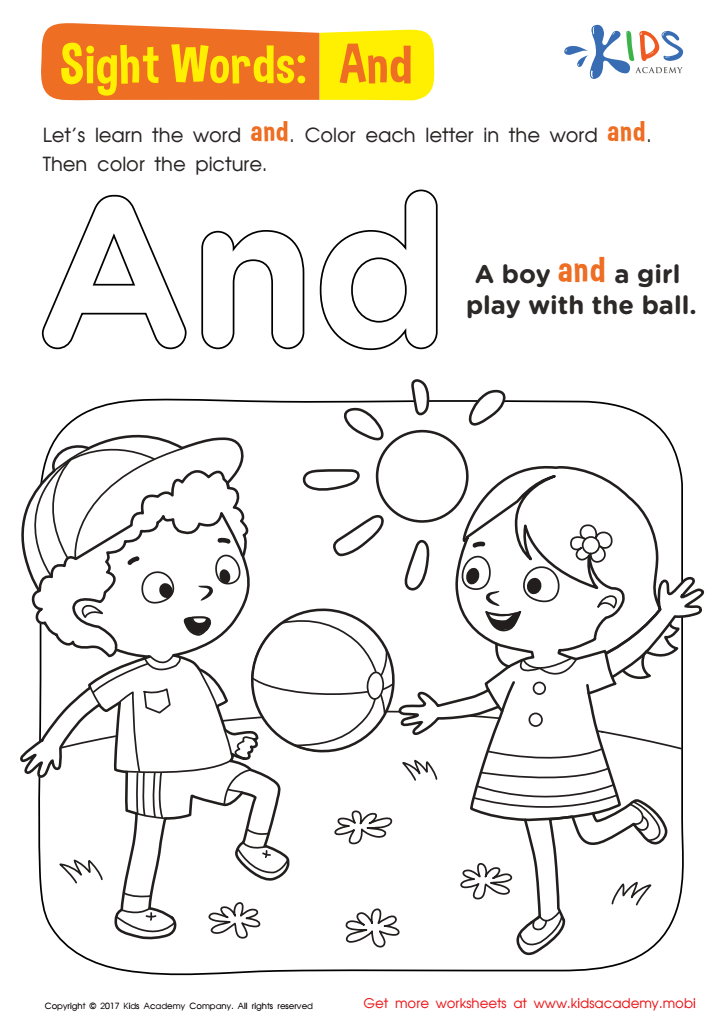
And Worksheet Sight Words Worksheet
Help your child get a jumpstart on reading with sight words! Print out this fun worksheet and get your child to read the sentence. Point out the word "and", then color the word and enjoy the rest of the scene! It's a great way to introduce sight words and get their early reading skills going!
Download (PDF)
 Assign to My Students
Assign to My Students
And Worksheet Sight Words Worksheet
Worksheet
Join Kids Academy for Free
Who is primarily going to use this learning content?






Sight word recognition is a critical component of early literacy that parents and teachers should prioritize, especially for 6-year-olds. At this age, children are building foundational reading skills that will be essential for their future academic success. Sight words are common words that children frequently encounter in texts but may not be easily decodable based on phonics rules alone (e.g., "the," "come," "said"). Recognizing these words by sight allows young readers to achieve smoother and more fluent reading.
The benefits of sight word recognition are manifold. First, it enhances reading fluency, enabling children to read quicker and with less effort. This, in turn, gives their brain more capacity to understand and make meaning out of the text, thereby improving comprehension. Second, knowing these words by sight can significantly boost a child's confidence and motivation to read. Mastery of sight words also supports overall language development, as many sight words are connecting words that carry significant meaning and are essential for constructing sentences.
Neglecting sight word recognition can pose hurdles in a child’s reading journey, leading to frustration, lower self-esteem, and disinterest in reading – all of which can impede academic progress across all subjects. Therefore, instilling this skill early sets the stage for a lifetime of learning and literacy success.








