
Matching skills Science Worksheets for 6-Year-Olds
4 filtered results
Difficulty Level
Grade
Age
-
From - To
Subject
Activity
Standards
Discover our engaging Matching Skills Science Worksheets designed specifically for 6-year-olds! These interactive resources help young learners develop essential matching skills while exploring fun science concepts. Each worksheet presents vibrant visuals and age-appropriate activities that encourage children to connect related items, strengthen their cognitive abilities, and ignite a passion for learning about the world around them. Ideal for home or classroom use, our worksheets provide children with a hands-on way to enhance their understanding of nature, the environment, and basic scientific principles. Download now to inspire curiosity and combine play with education in an exciting way!
Favorites
With answer key
Interactive
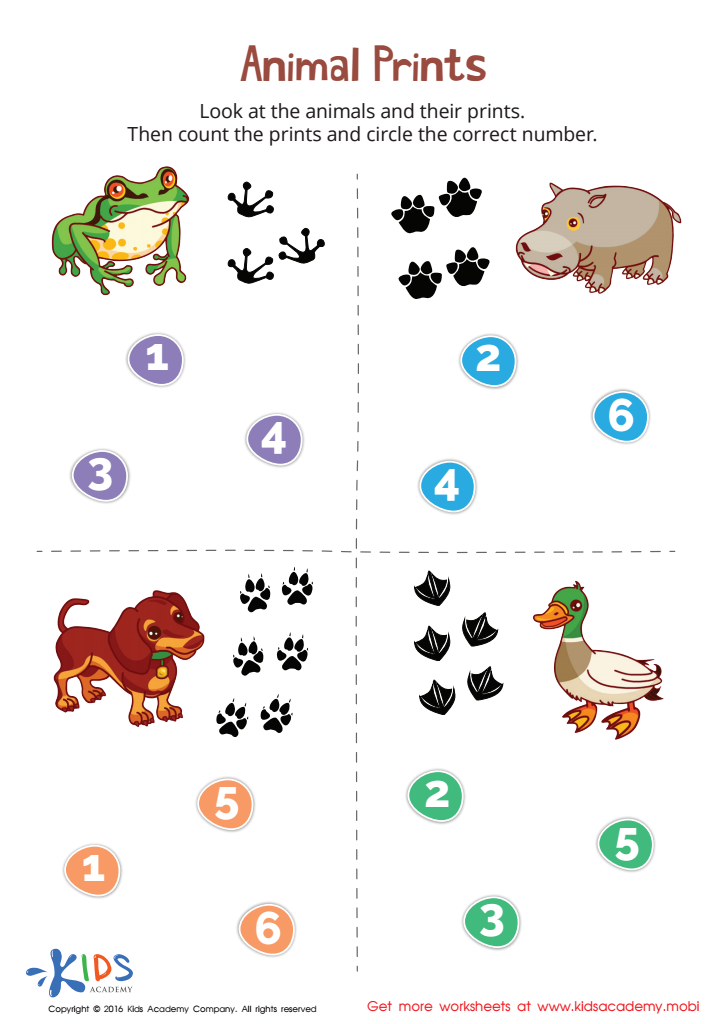
Animal Prints Match-Up Worksheet
Help your little learner build early math skills with this fun animal paw prints worksheet. With it, they'll count, recognize numbers, and learn about the animals that make the paw prints. Talk to them about the prints and ask them to count. They'll love exploring and learning about the different animals, all while sharpening essential math skills!
Animal Prints Match-Up Worksheet
Worksheet
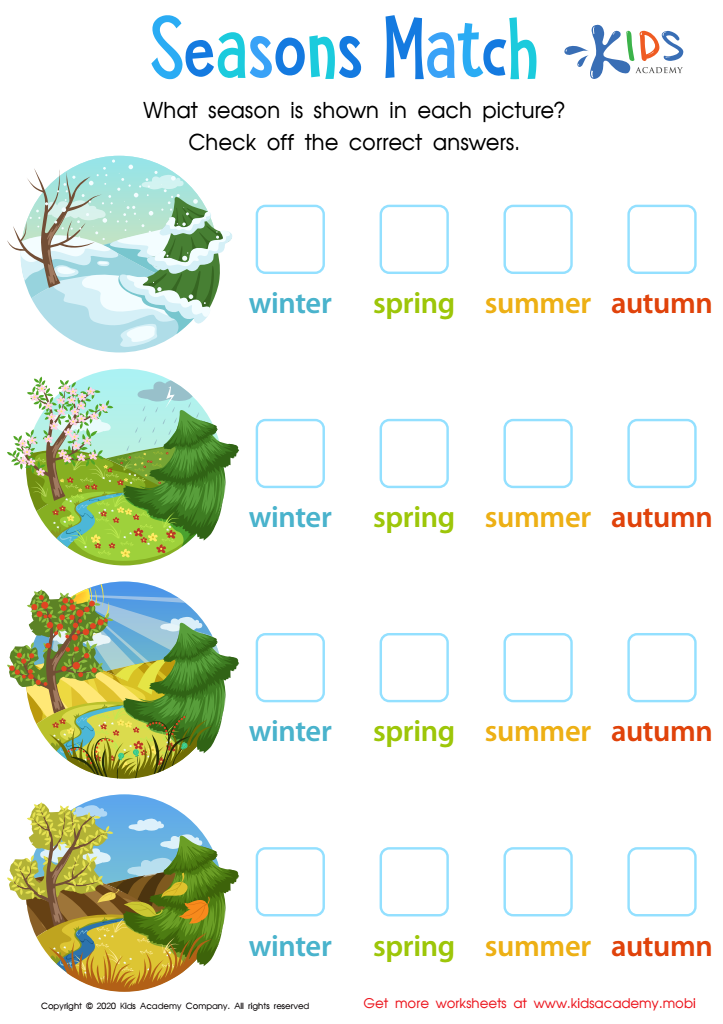
Seasons Match Worksheet
Preschoolers should begin learning about seasons and weather early. Most can tell what season it is by upcoming holidays or school activities. Test their knowledge with a printable PDF worksheet. It asks them to match each image with its corresponding season!
Seasons Match Worksheet
Worksheet
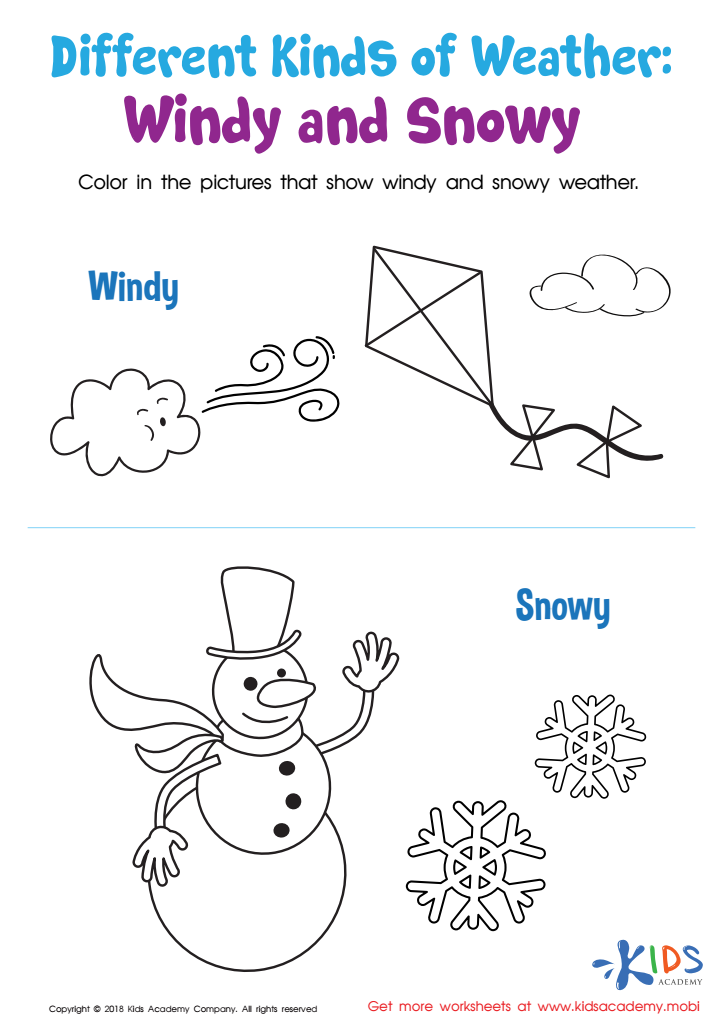
Different Kinds of Weather: Windy and Snowy Worksheet
Invite your little learner to practice their fine motor skills and learn about nature with this fun and charming PDF worksheet! Reinforce weather patterns and examine their environment as they color, giving them a foundation for understanding how weather affects them. No matter the weather, your learner will have a blast!
Download (PDF)
 Assign to My Students
Assign to My Students
Different Kinds of Weather: Windy and Snowy Worksheet
Worksheet
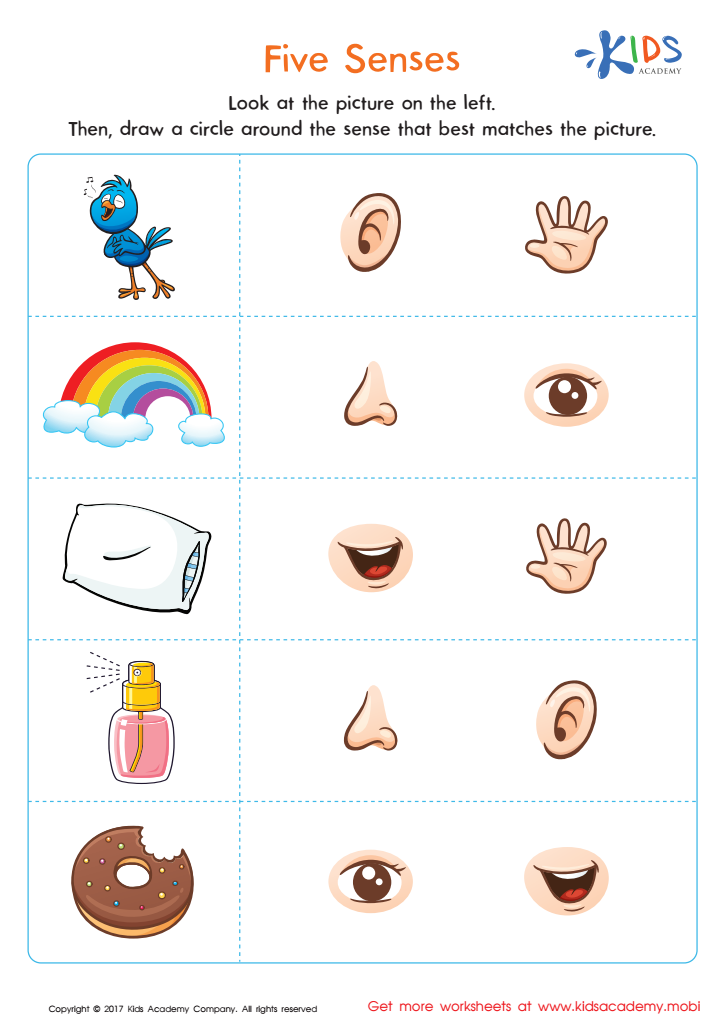
Five Senses Printable
For an easy way to jumpstart your child's critical thinking and introduce the five senses, print our free worksheets! These are great for reviewing each sense and practicing critical thinking skills. Work with your child and discuss each image. After completing the worksheet, find objects around the house so they can quiz themselves!
Five Senses Printable
Worksheet
Join Kids Academy for Free
Who is primarily going to use this learning content?




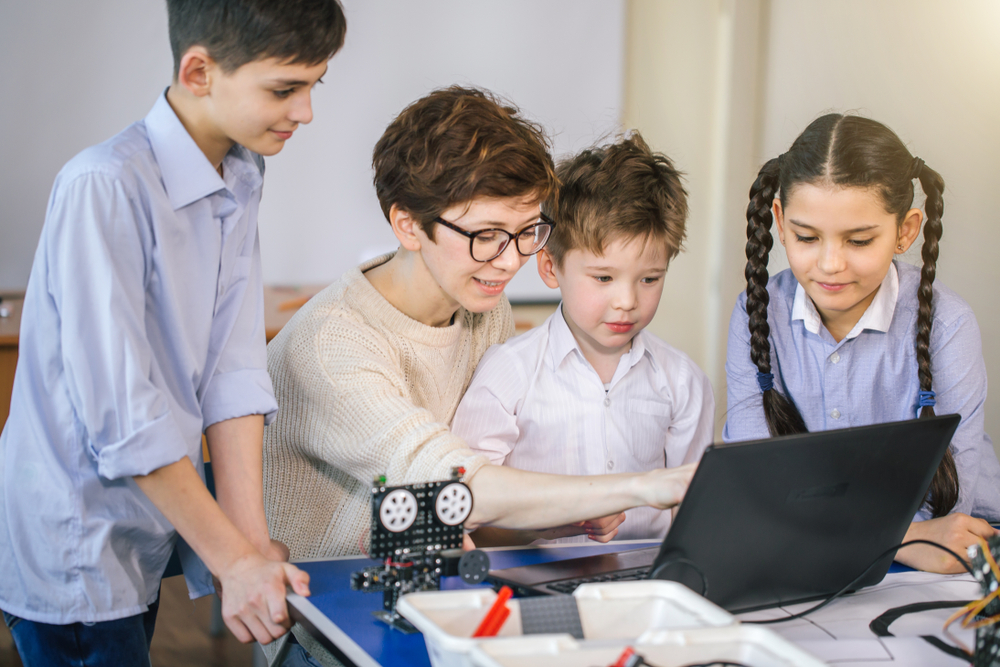



Parents and teachers should prioritize matching skills in science for 6-year-olds because these foundational skills support cognitive development and enhance learning across various subjects. At this age, children are naturally curious and eager to explore their environment. When they engage in matching activities—such as grouping similar objects, categorizing living and non-living things, or identifying pairs of scientific concepts—they develop critical thinking skills and improve their ability to recognize patterns.
Matching activities foster observational skills, allowing children to distinguish between different features, such as color, shape, and size. These skills are essential not only in science but also in mastering early math concepts and literacy as children learn to connect letters with sounds or numbers with quantities. Moreover, engaging in matching tasks enhances memory and reinforces vocabulary, empowering children to better articulate their understanding of scientific concepts.
Additionally, incorporating matching skills into science activities can spark a lasting interest in the subject. By making learning fun and interactive, teachers and parents can help young learners build a positive attitude towards science, encouraging a lifelong love of exploration and discovery. Hence, supporting matching skills is critical for nurturing well-rounded, inquisitive, and capable young learners.







