Understanding directions Science Worksheets for 6-Year-Olds
4 filtered results
-
From - To
Unlock your child's potential with our "Understanding Directions Science Worksheets" designed for 6-year-olds! These engaging worksheets enhance critical cognitive skills while making learning fun. Students will practice following directions, interpreting simple instructions, and gaining confidence in scientific exploration. Each worksheet features colorful illustrations and age-appropriate tasks that encourage kids to think creatively and analytically. Whether in the classroom or at home, our resources promote interactive learning, helping young learners grasp essential scientific concepts. Dive into exciting activities that nurture curiosity and support skill development. Equip your child with the tools they need to excel in science and beyond!
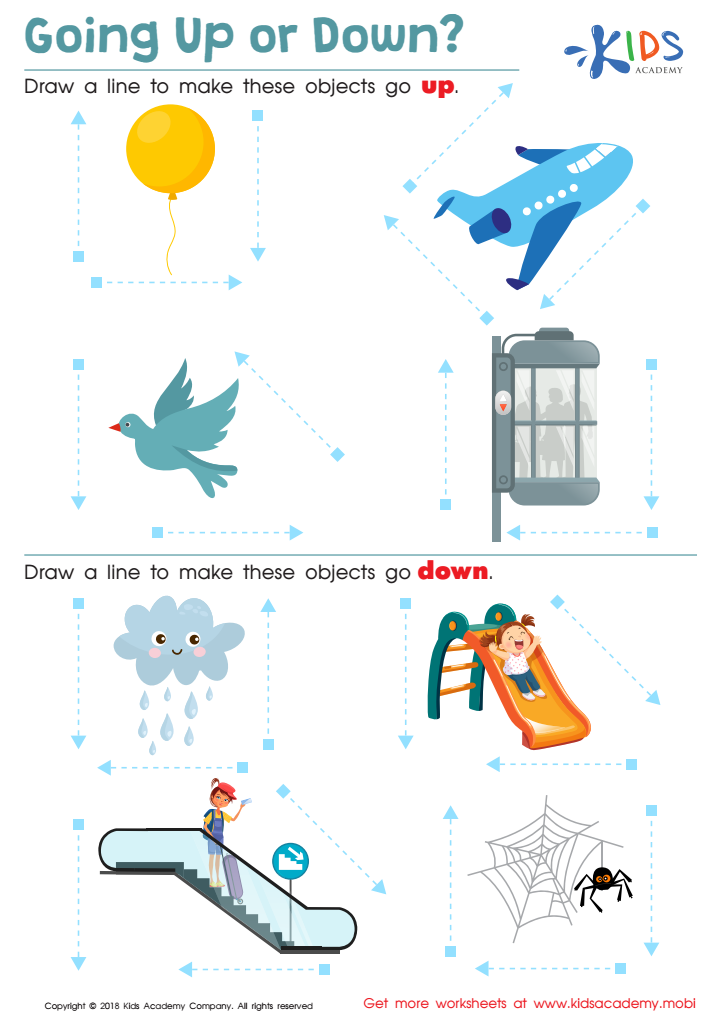
Going up or Down? Worksheet
 Assign to My Students
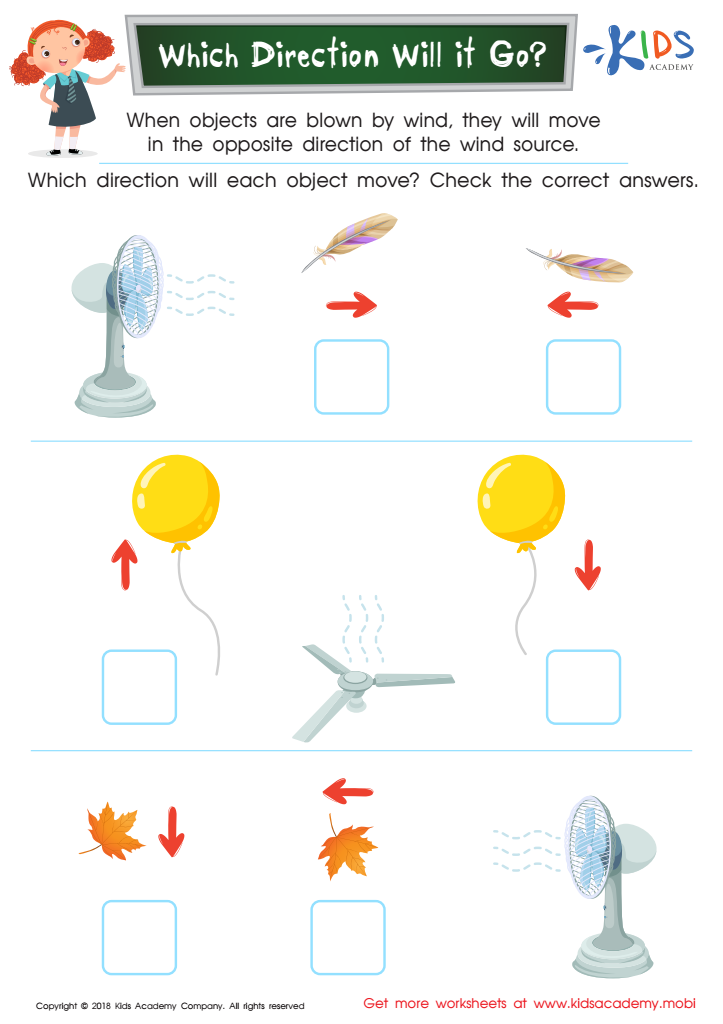
Which Direction Will it Go? Worksheet
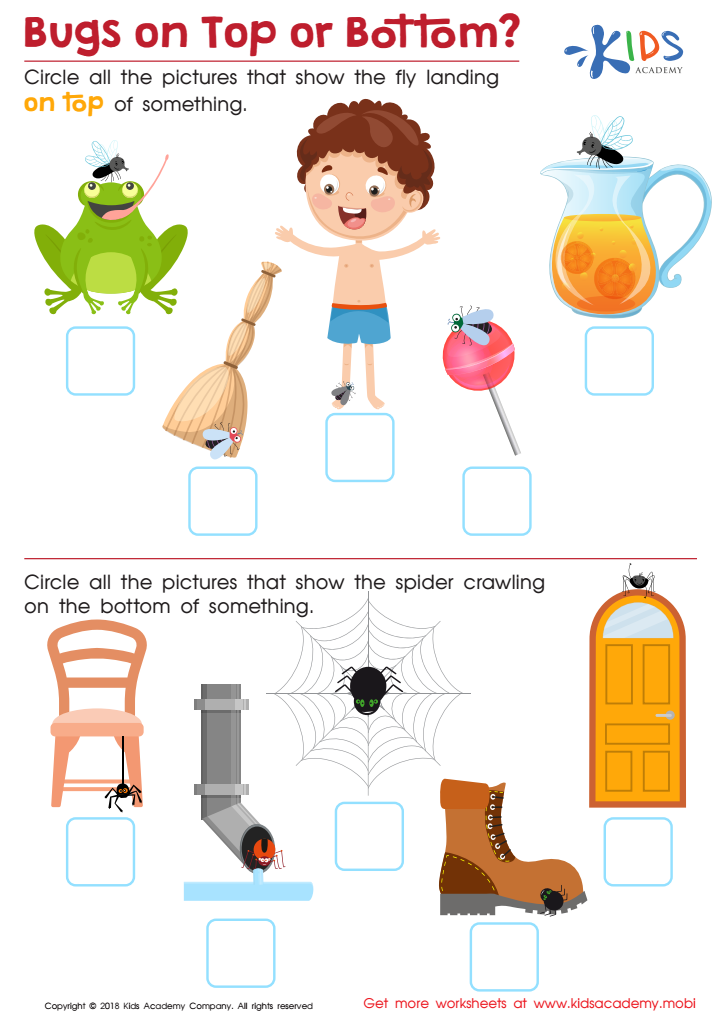
Bugs on Top or Bottom? Worksheet
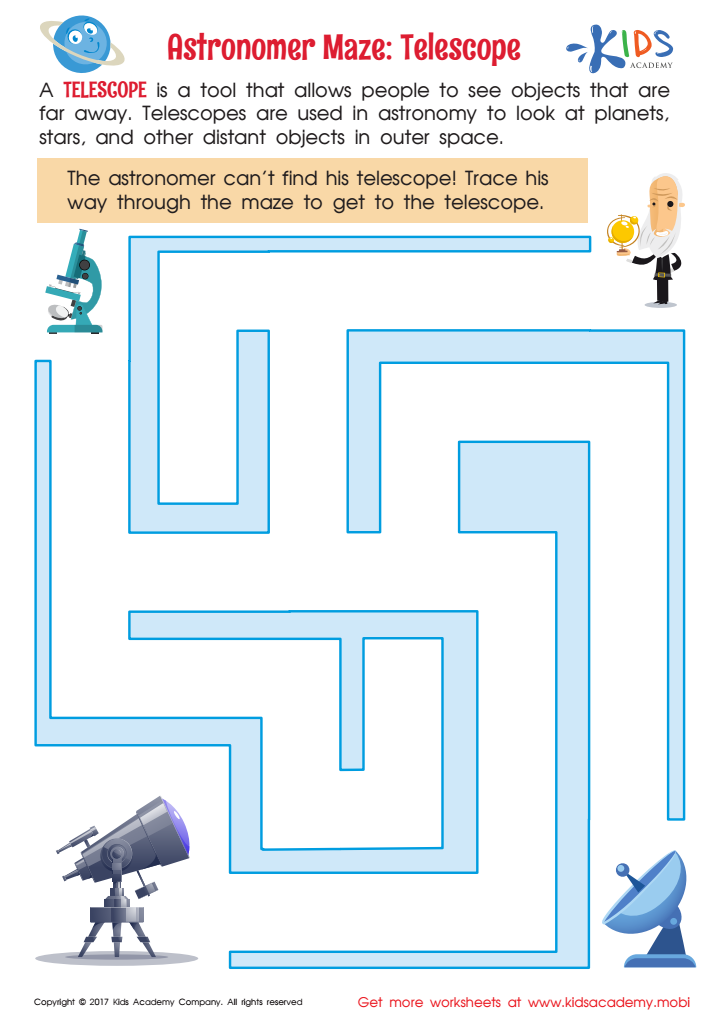
Astronomer Maze: Telescope Worksheet







Understanding directions in science for 6-year-olds is crucial for their cognitive development and enthusiasm for learning. At this age, children are naturally curious, and incorporating scientific concepts helps fuel that curiosity. When parents and teachers emphasize understanding directions, it promotes critical thinking skills. Children learn to follow sequential steps in experiments, fostering patience and problem-solving abilities.
Moreover, clear directions support literacy and comprehension development. As children engage with science, they read instructions and articulate observations, enhancing their vocabulary and communication skills. This serves as a foundation for more complex scientific inquiry in the future.
Additionally, engaging with science at a young age cultivates a positive attitude toward learning. Parents and teachers can model the excitement of discovery, which can lead to a lifelong interest in science, technology, engineering, and math (STEM) fields.
Finally, understanding directions in science encourages collaborative learning. Children work together on experiments, honing their social skills and teamwork abilities while sharing unique perspectives. By nurturing an understanding of directions through science, parents and teachers are preparing children for future academic success while encouraging a love for exploration and collaboration. This foundational skill set is vital in guiding them through their educational journey and beyond.







