
Cognitive Development Writing Worksheets for 6-Year-Olds
6 filtered results
Difficulty Level
Grade
Age
-
From - To
Subject
Activity
Standards
Unlock your child's potential with our engaging Cognitive Development Writing Worksheets designed specifically for 6-year-olds. These worksheets nurture essential cognitive skills such as critical thinking, problem-solving, and creativity through fun, interactive activities. Each worksheet promotes language development and helps young learners enhance their writing abilities while encouraging imagination and expression. Perfect for home or classroom use, our worksheets cater to various learning styles and experience levels, ensuring every child can thrive. Transform writing practice into an enjoyable experience and watch your child's cognitive abilities blossom as they build confidence and skills essential for future learning. Explore our collection today!
Favorites
With answer key
Interactive
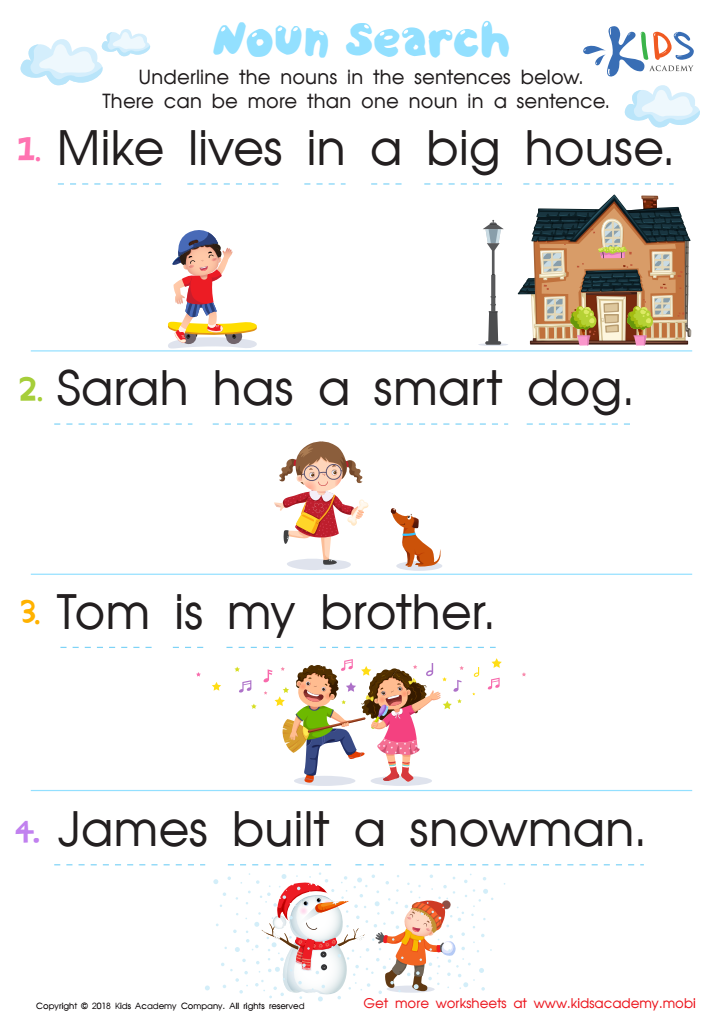
Noun Search Worksheet
To help your children learn the basics of grammar, start with nouns, verbs, adverbs and adjectives. This noun search worksheet will help your child understand the most common part of speech - the noun. Ask them to underline the nouns in each sentence. This is a great way to start learning proper grammar.
 Assign to My Students
Noun Search Worksheet
Worksheet
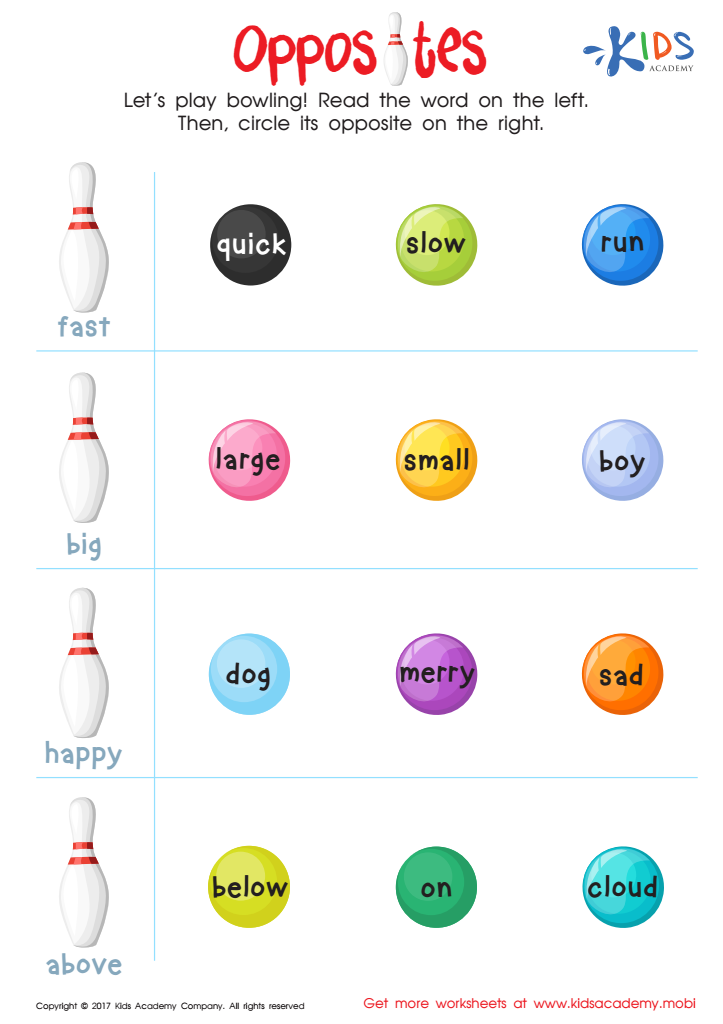
Opposites Worksheet
Have your students identify and circle the opposites of the words on the left. As a fun bowling-themed exercise, read the words and ask your kids if they know the opposites. Look through the options on the right and see if the answer is there; then, circle the correct answers.
Opposites Worksheet
Worksheet
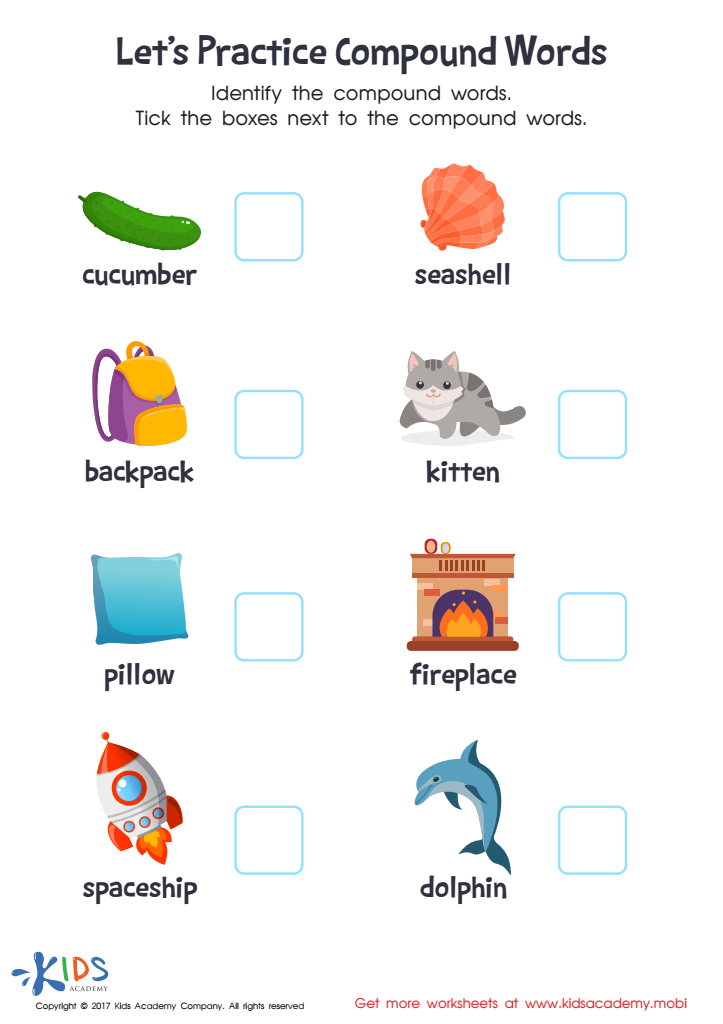
Let's Practice Compound Words Word Structure Worksheet
Test their knowledge of compound words with this fun worksheet and help them build their vocabulary. Have them say the words out loud as they work!
Let's Practice Compound Words Word Structure Worksheet
Worksheet
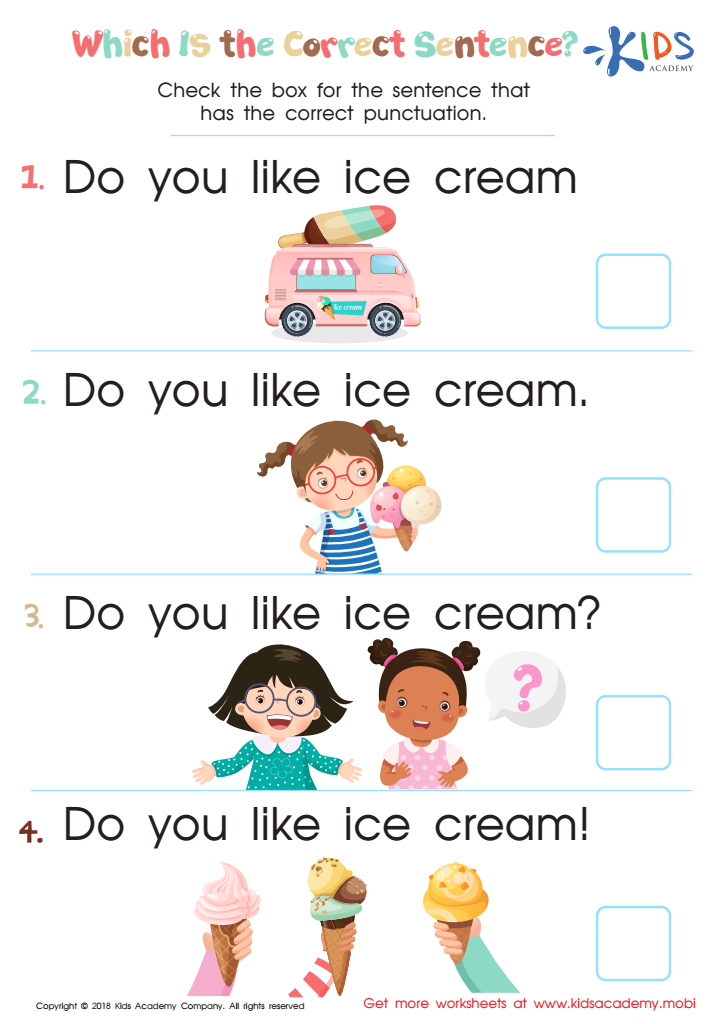
Which is the Correct Sentence? Worksheet
Punctuation is crucial in sentence formation. If your kid still doesn't grasp it, bigger hurdles await when writing sentences. Get them to read simple sentences, then ask if they know the right punctuation. Assist them in selecting the sentence that has the accurate punctuation.
Which is the Correct Sentence? Worksheet
Worksheet
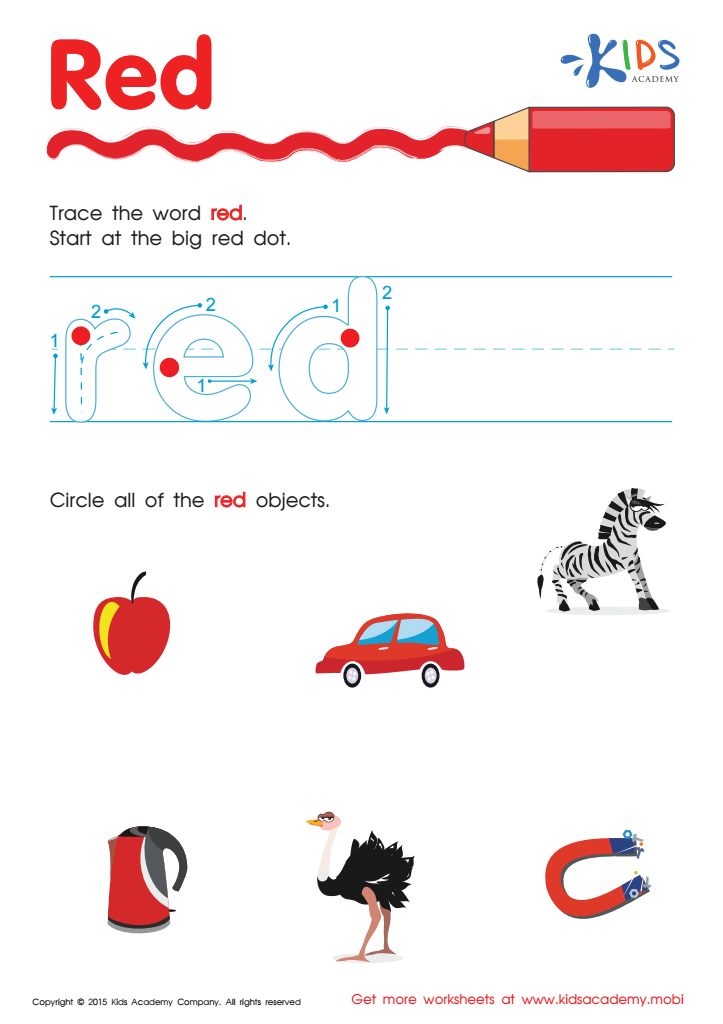
Red Tracing Color Words Printable
Trace red letter by letter, following the arrows and circling all the red objects. Look around your room and find something red. Have fun and become a handwriting master with this worksheet!
Red Tracing Color Words Printable
Worksheet
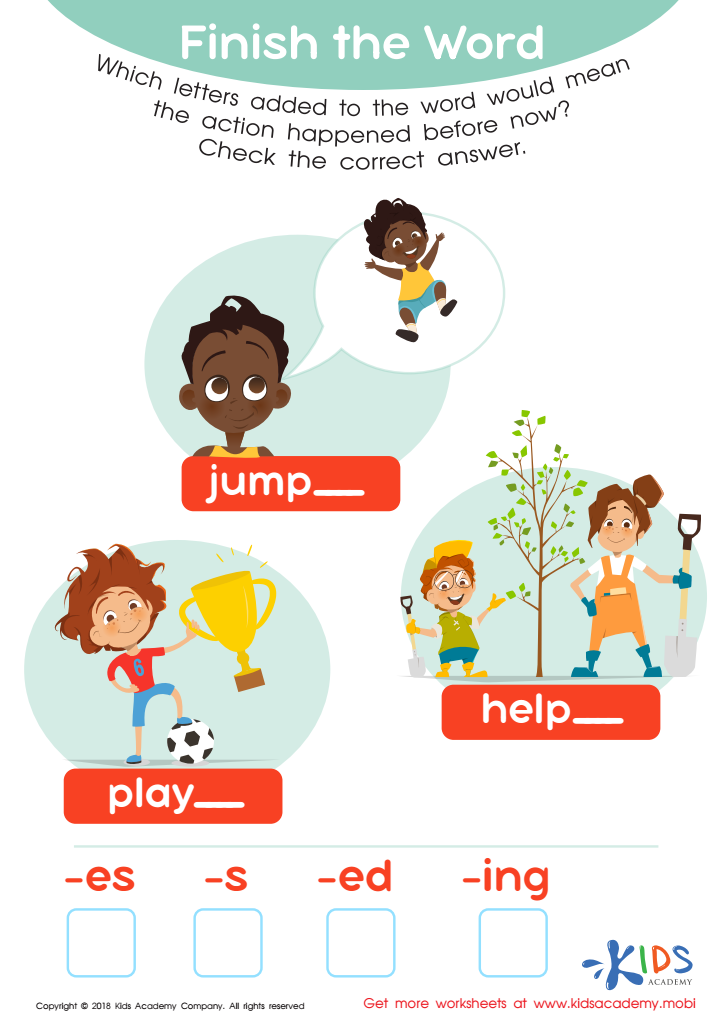
Finish the Word Worksheet
Does your kid know tenses? Listen to see if they are using words correctly. With this worksheet, your kids will learn to use the appropriate past tense forms. Ask them which letters added to words make the action past. Help them check the answers.
Finish the Word Worksheet
Worksheet
Join Kids Academy for Free
Who is primarily going to use this learning content?


.jpg)





Cognitive development is a critical aspect of a child's overall growth, particularly in the early years when they begin to express themselves through writing. For 6-year-olds, their cognitive abilities are blossoming, and engaging in writing activities helps to enhance these skills. Parents and teachers should care about this because writing not only supports language development but also improves critical thinking, creativity, and problem-solving skills.
At this age, children are learning to organize their thoughts and convey their ideas clearly. Writing provides them with an opportunity to experiment with words and sentence structure, fostering their confidence in communication. Moreover, it encourages neural connections that are essential for advanced literacy skills as they progress to higher grades.
Through guided writing exercises, parents and teachers can support children in setting intentions for their writing, reflecting on their experiences, and articulating their emotions and understandings. This scaffolding is crucial, as children learn best through supportive interactions. Lastly, writing helps children develop a sense of self and understand the world around them, making it an essential focus for caregivers to nurture their emotional and intellectual growth in a holistic way.








