
Shape identification Geometry Worksheets for Ages 7-8
9 filtered results
Difficulty Level
Grade
Age
-
From - To
Subject
Activity
Standards
Enhance shape recognition for 7-8 year-olds with our engaging Shape Identification Geometry Worksheets. Designed to build foundational geometry skills, these printable worksheets make learning fun and hands-on. Students explore various shapes, identify their properties, and hone their spatial awareness through interactive exercises. Perfect for both classroom and home use, our worksheets support visual learning with colorful graphics and practical activities. Foster confidence in young learners as they master basic geometric concepts, preparing them for future math success. Download now to provide an enriching educational experience that combines enjoyment and skill development in geometry. Ideal for second-grade students!
Favorites
With answer key
Interactive
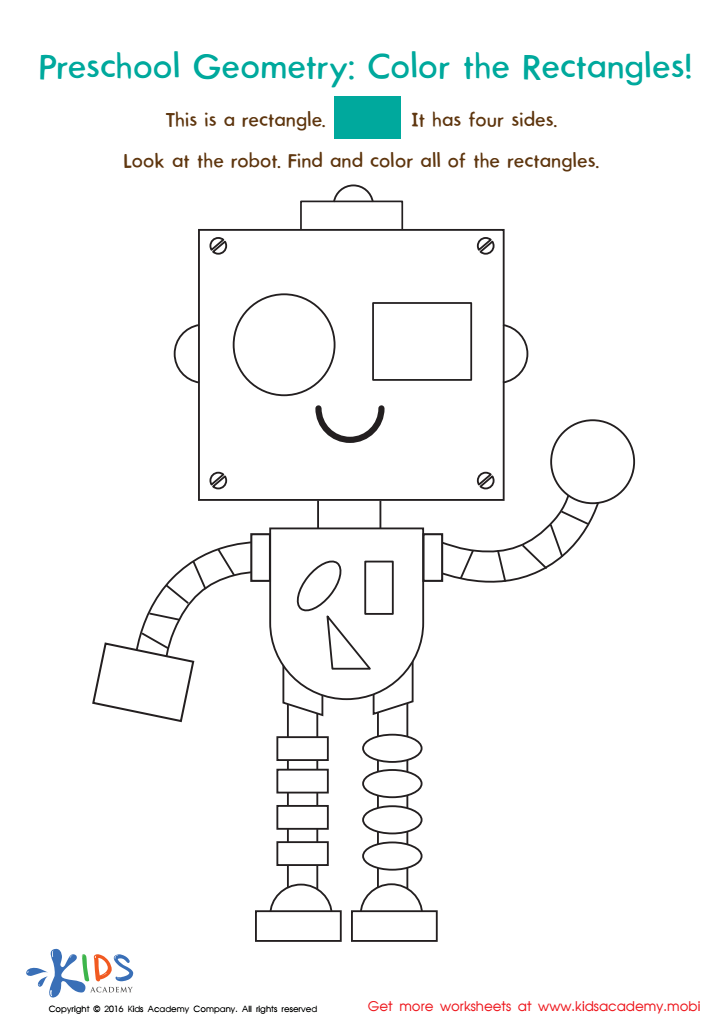
Geometry Worksheet
Geometry can be fun for kids! They explore shapes that create their favorite pics and objects. This preschool worksheet explains that rectangles have four sides, then kids color rectangles on a funny robot!
 Assign to My Students
Geometry Worksheet
Worksheet











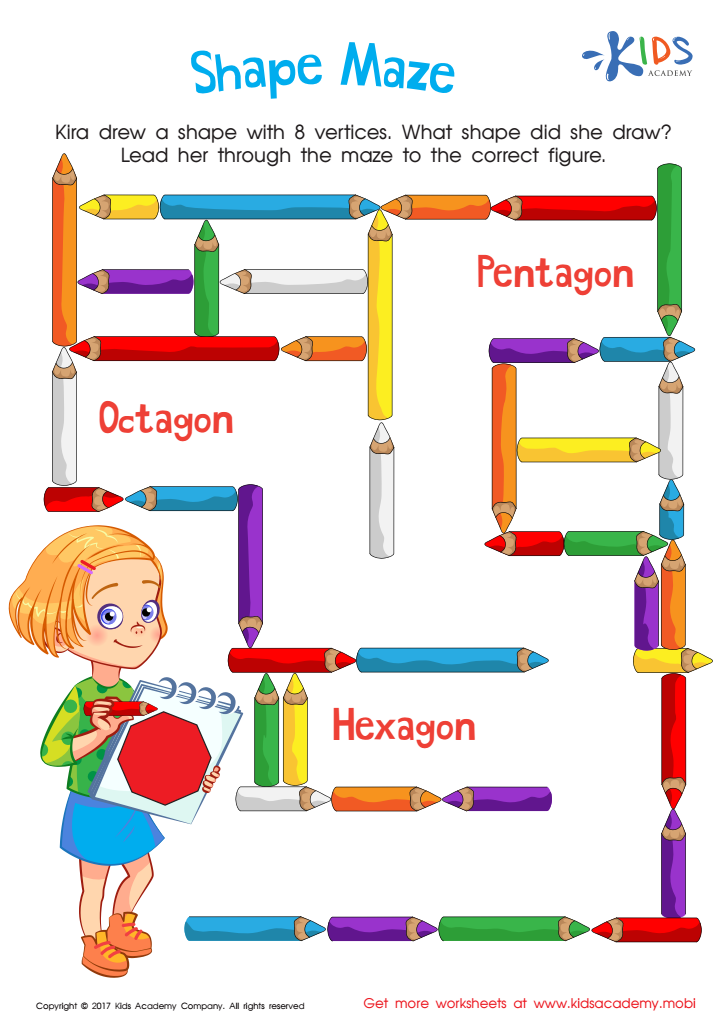
Shape Maze Worksheet
Test your child's geometry knowledge with this fun printable maze! They'll need to identify shapes with 8 vertices to find their way through the maze and get the correct answer.
Shape Maze Worksheet
Worksheet
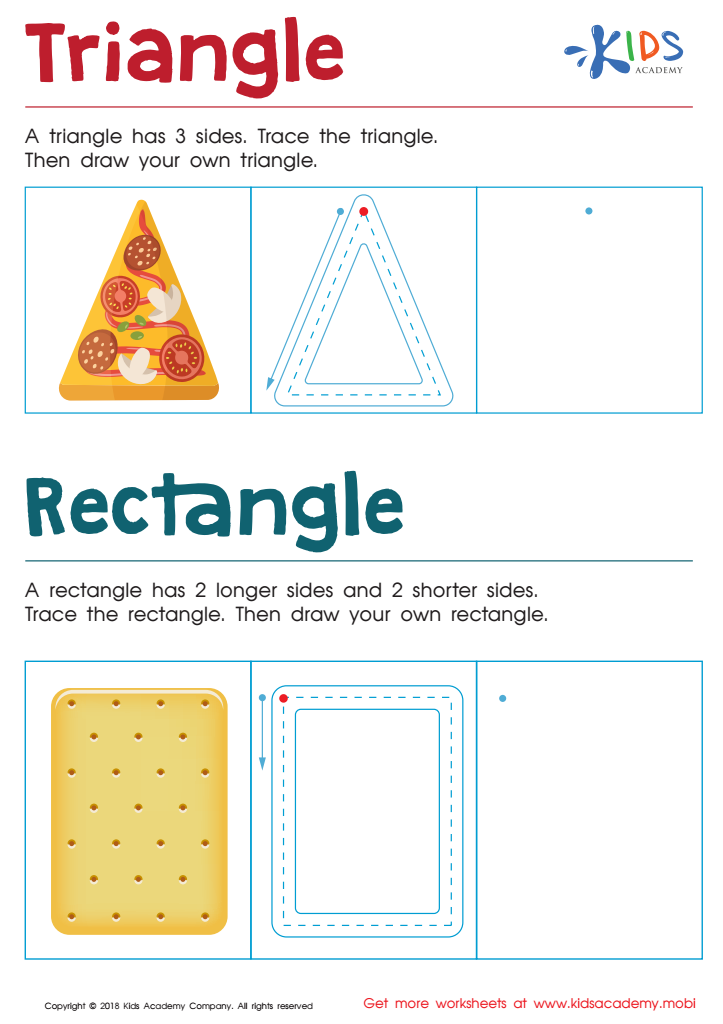
Triangle Rectangle Worksheet
This printable worksheet helps kids draw rectangles and triangles. Have your child trace the pizza and cracker shapes to become familiar, then try their own. Perfect for second graders! Coloring and creativity make this fun and educational.
Triangle Rectangle Worksheet
Worksheet
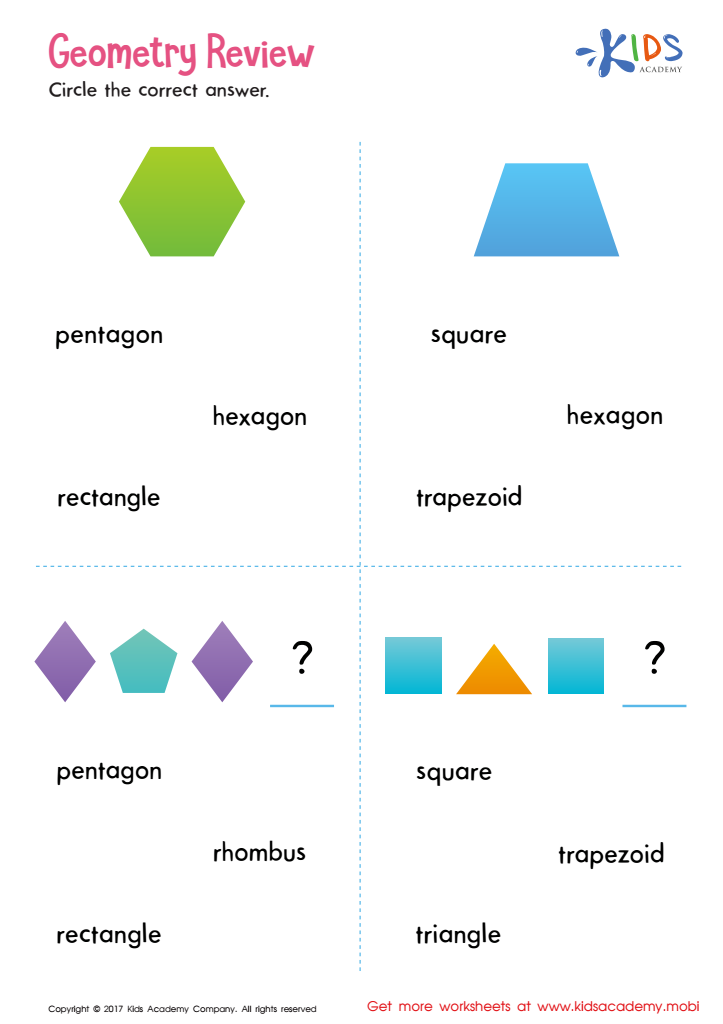
Geometry Review Printable
Repetition is key to success; give your child the practice they need with this geometry worksheet.
Geometry Review Printable
Worksheet
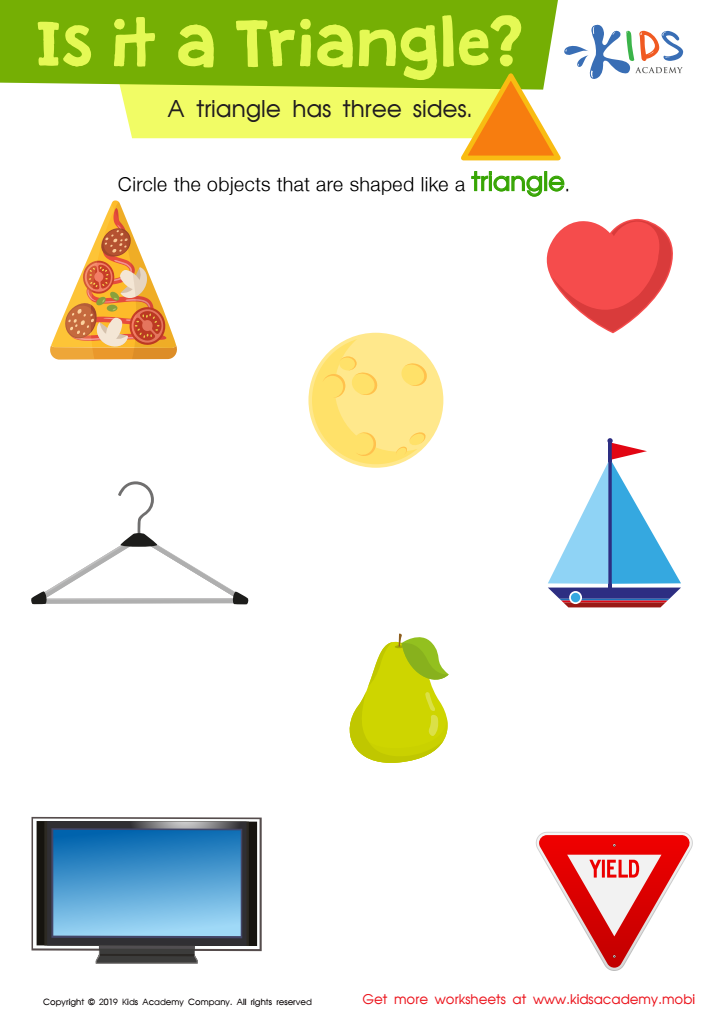
Is It a Triangle? Worksheet
Young kids need to learn to identify basic shapes for math. Show them what a triangle looks like with this fun worksheet. They can look around their environment for everyday objects shaped like a triangle and circle them on the sheet. Download now and start learning what a triangle is!
Is It a Triangle? Worksheet
Worksheet
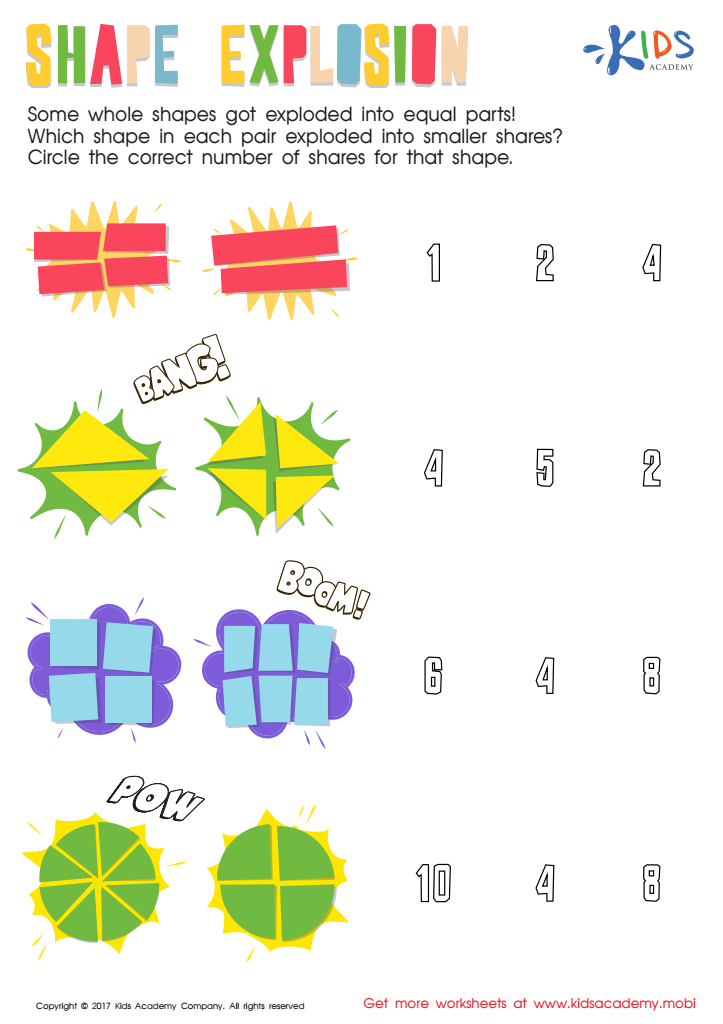
Shape Explosion Worksheet
This worksheet shows students how some shapes explode into two or more equal parts. On the left side are four shapes, each splitting into two or more parts. Ask your child to point out which shape has the smaller share, and help them circle the correct number of shares.
Shape Explosion Worksheet
Worksheet
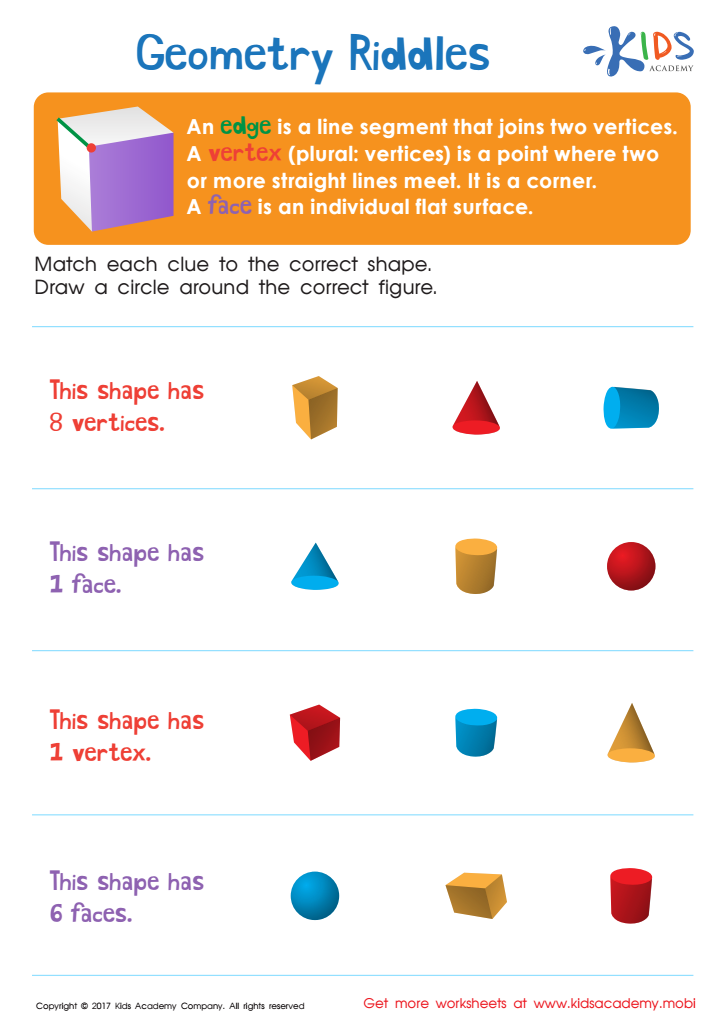
Geometry Riddles Printable
Review geometry terms with your child using this challenging worksheet of tricky riddles. Identifying and counting vertices, edges, and faces of shapes becomes fun as they solve the riddles!
Geometry Riddles Printable
Worksheet
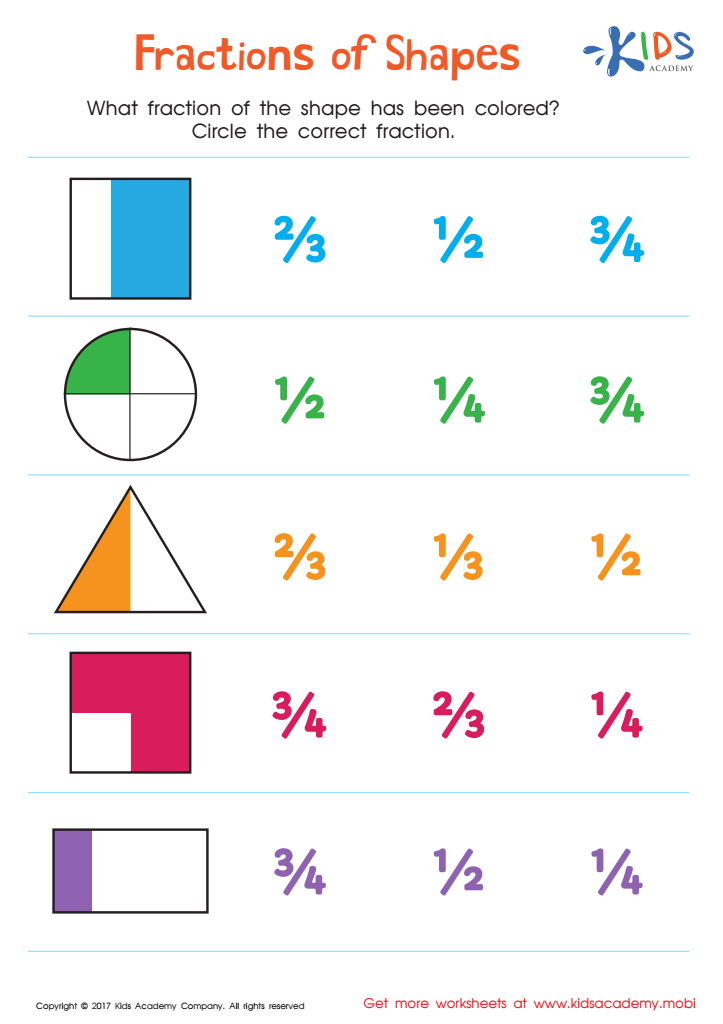
Fractions of Shapes: Math Concept Worksheet
Fractions can be tricky, but with pictures to illustrate them, they become much easier to understand. Our fractions of shapes worksheet is a great way to help children visualize fractions and gain a better understanding of them.
Fractions of Shapes: Math Concept Worksheet
Worksheet
Join Kids Academy for Free
Who is primarily going to use this learning content?








Shape identification and geometry are foundational elements in early childhood education that significantly benefit children aged 7-8. Understanding shapes enhances a child's ability to recognize and differentiate between various forms, which is a crucial cognitive skill. This foundational knowledge in geometry contributes to their mathematical development and general learning.
Firstly, shape identification helps improve spatial awareness, which is integral in understanding the environment and effective problem-solving. By recognizing and comparing different shapes, children develop critical thinking and reasoning skills that are applicable in many areas, including reading, science, and daily life.
Moreover, geometry introduces children to basic properties and relationships between shapes, such as the number of sides and angles, fostering early numeracy skills. This forms the groundwork for more complex mathematical concepts they will encounter later, such as fractions, symmetry, and area.
Additionally, engaging with shapes through hands-on activities and visual aids can make learning fun and interactive, promoting better retention of information. Shape recognition also boosts language skills as children learn to describe shapes and their attributes.
Lastly, a solid grasp of shapes and geometry is not only academically beneficial but also practical. It aids children in interpreting signs, maps, and architectural structures, nurturing a practical understanding of the world around them. Therefore, parents and teachers should emphasize shape identification and geometry to support holistic cognitive and practical skills development.








