Problem-Solving Skills Numbers Worksheets for Ages 7-8 - Page 2
41 filtered results
-
From - To
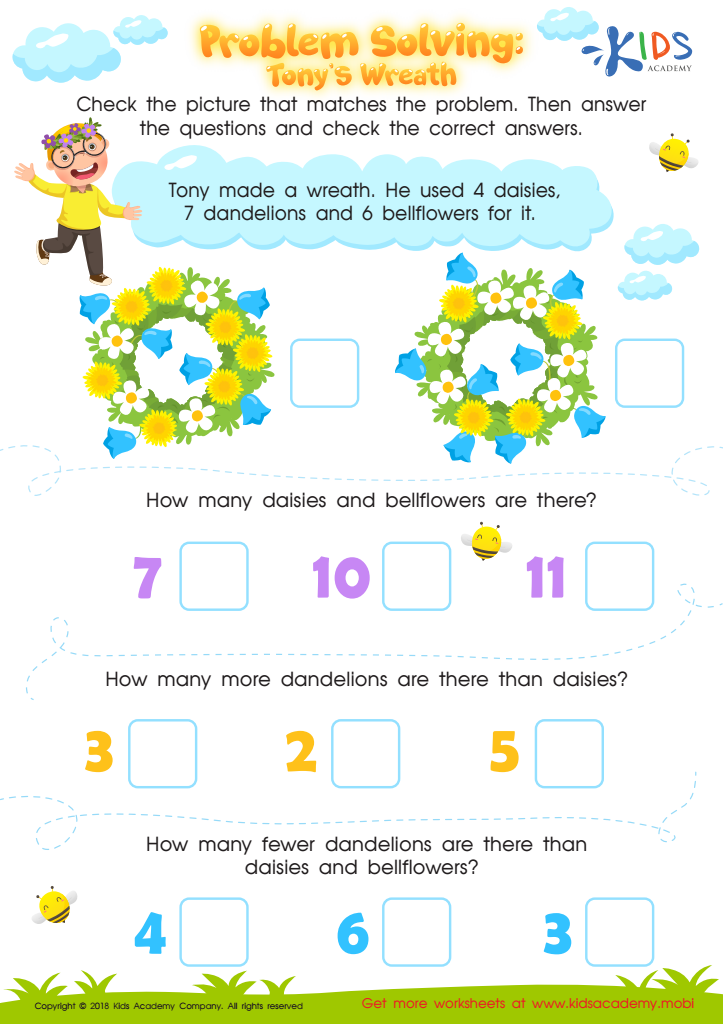
Problem Solving: Tony's Wreath Worksheet
 Assign to My Students
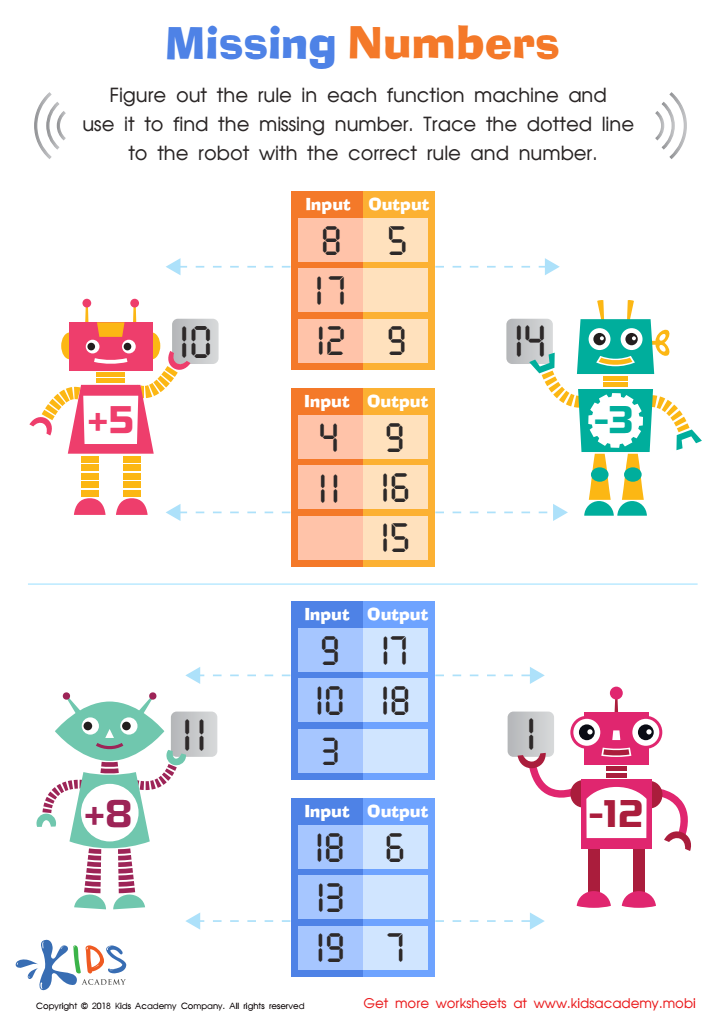
Missing Numbers Worksheet
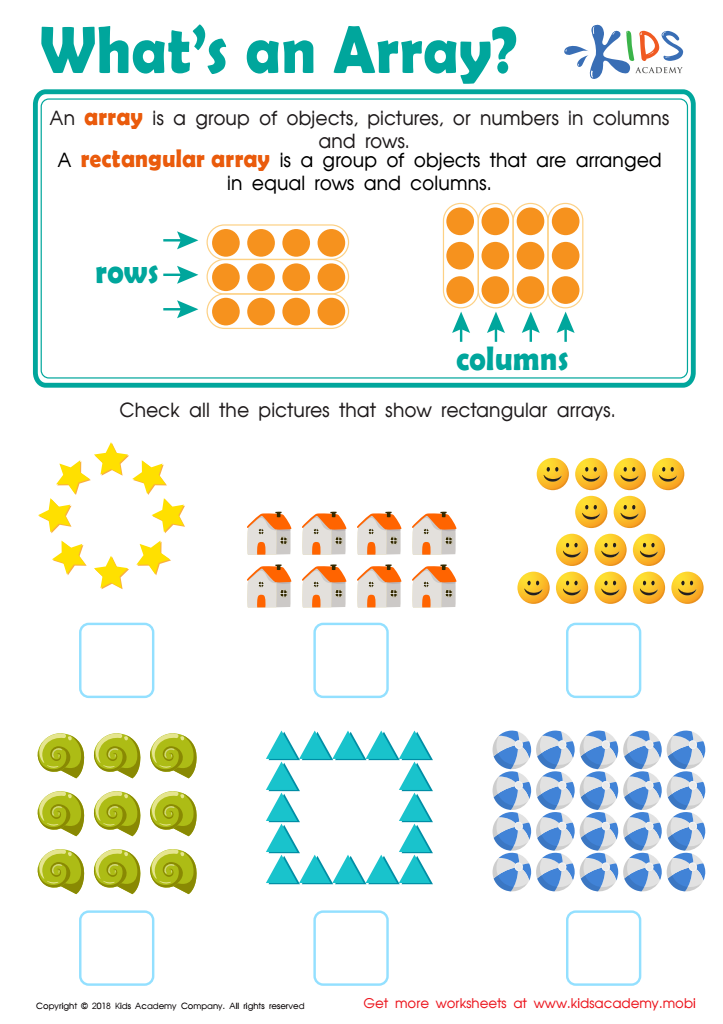
What's an Array? Worksheet
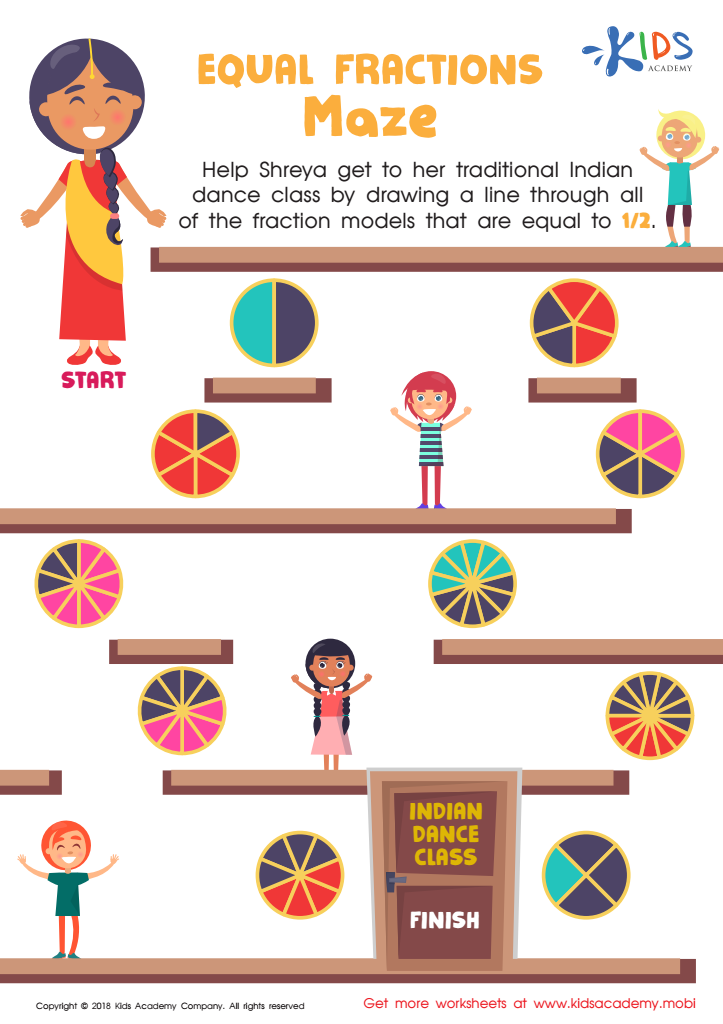
Equal Fractions Maze Worksheet
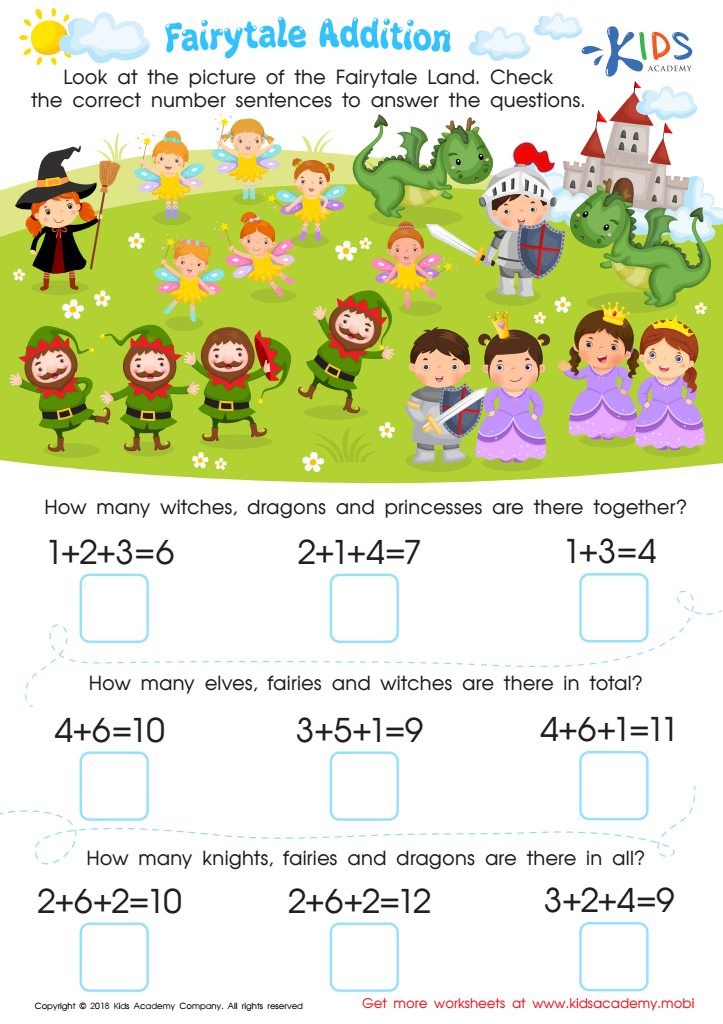
Fairytale Addition Worksheet
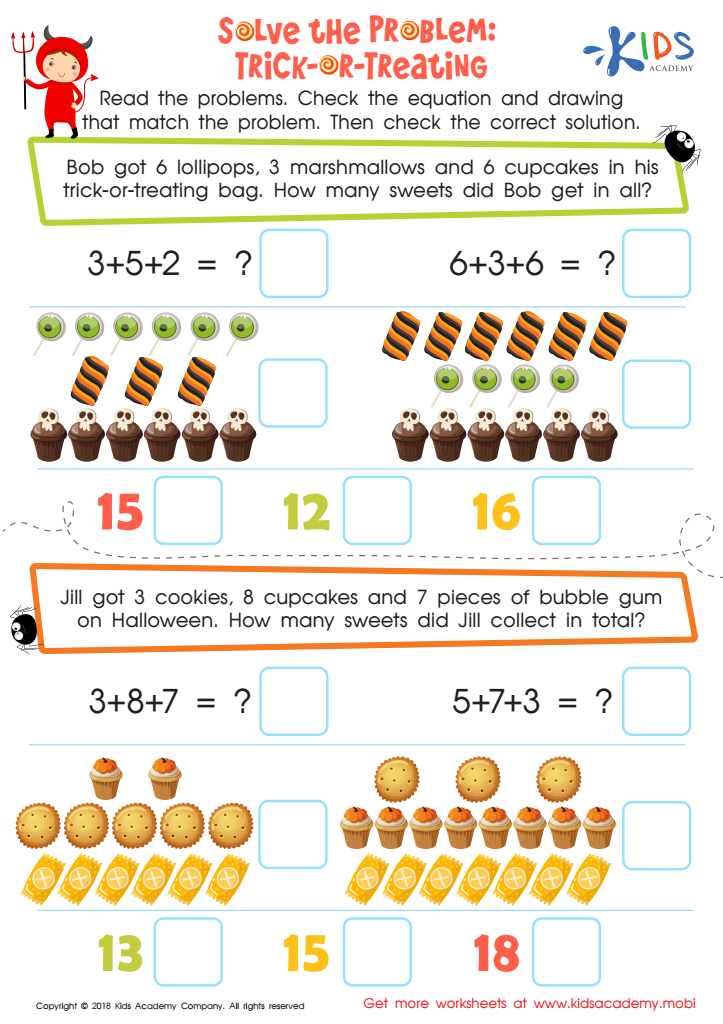
Solve the Problem: Trick–or–treating Worksheet
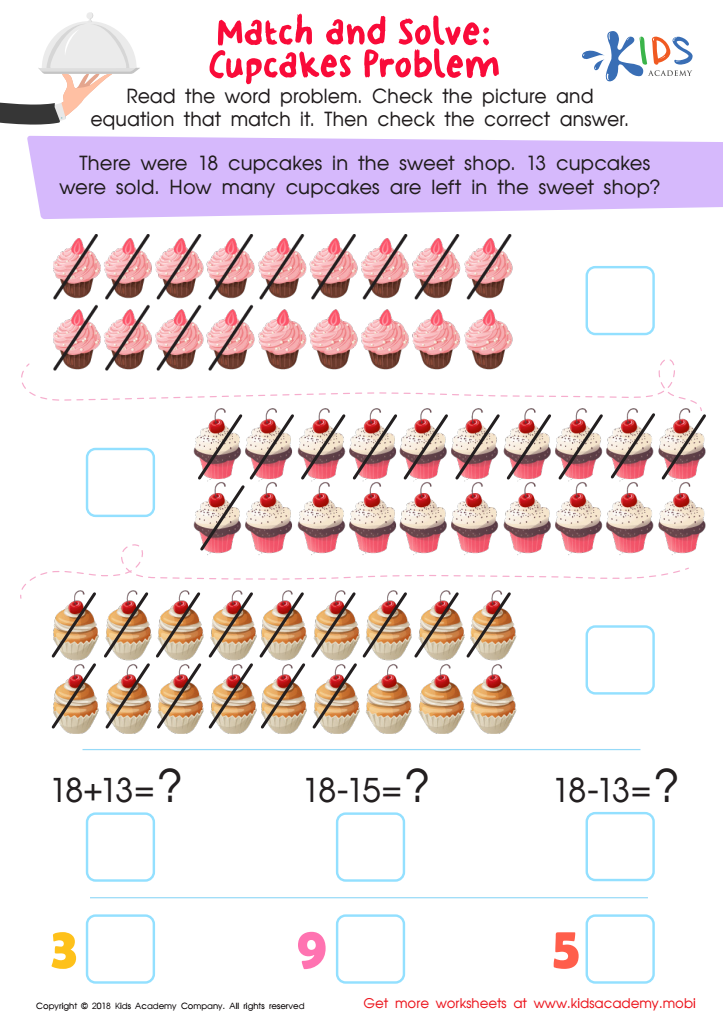
Match and Solve: Cupcakes Problem Worksheet
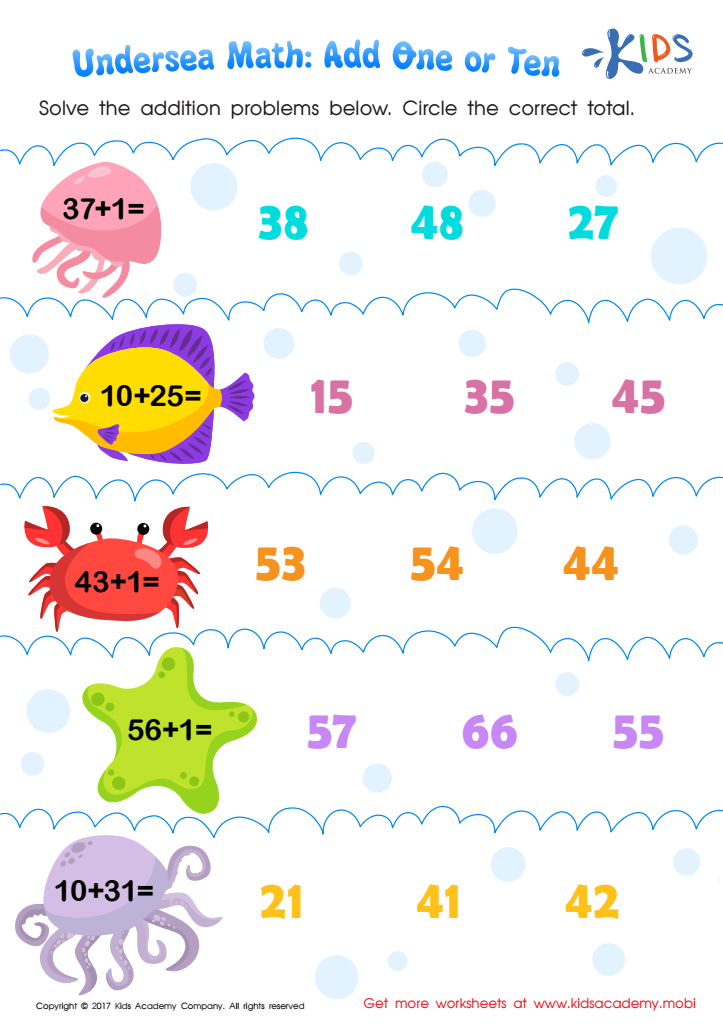
Undersea Math Worksheet
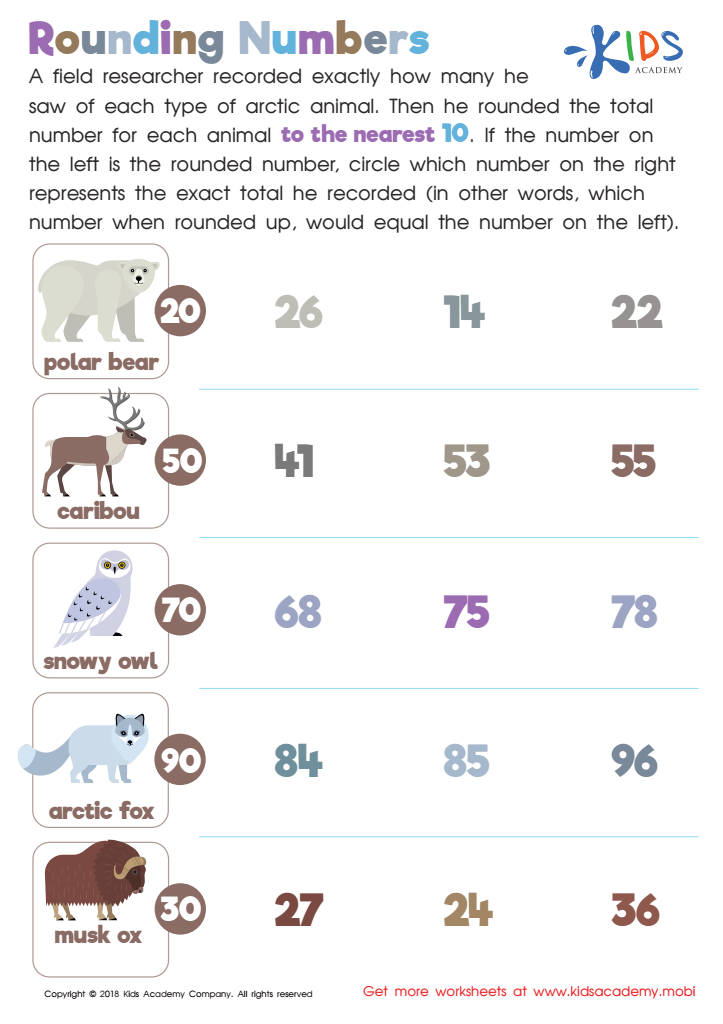
Rounding Numbers Worksheet
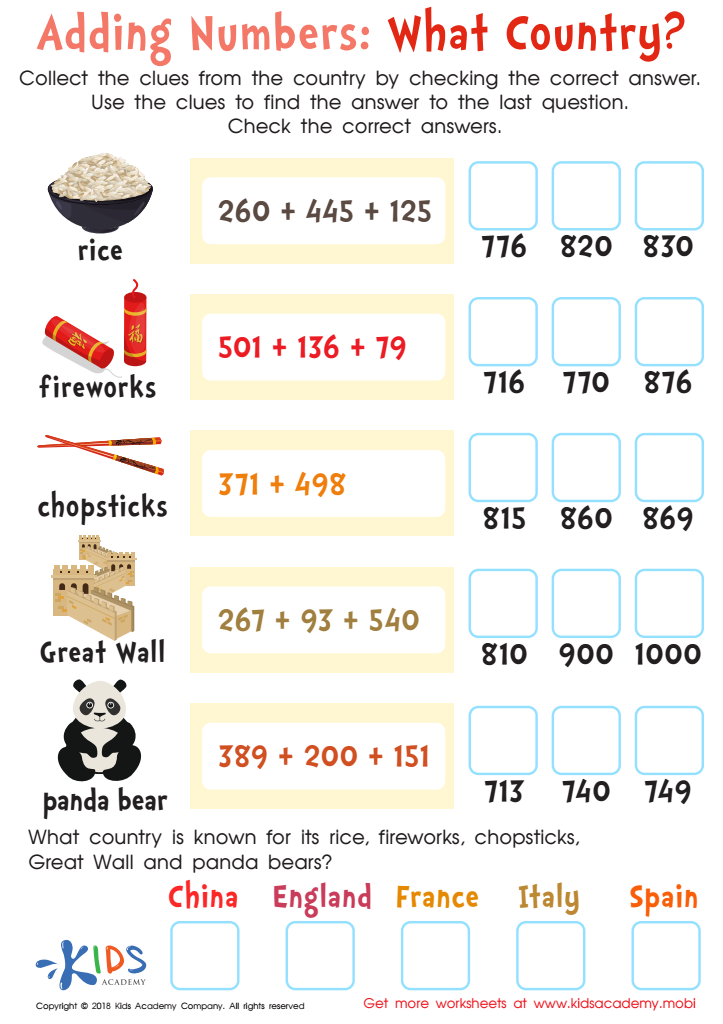
Adding Numbers: What Country Worksheet
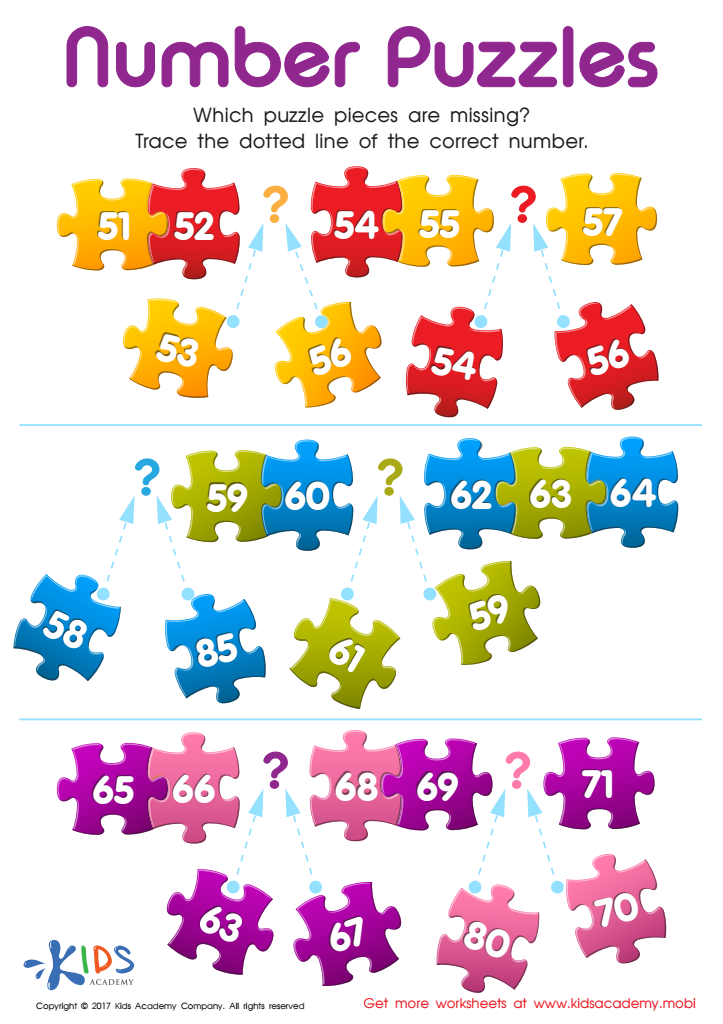
Number Puzzles Worksheet
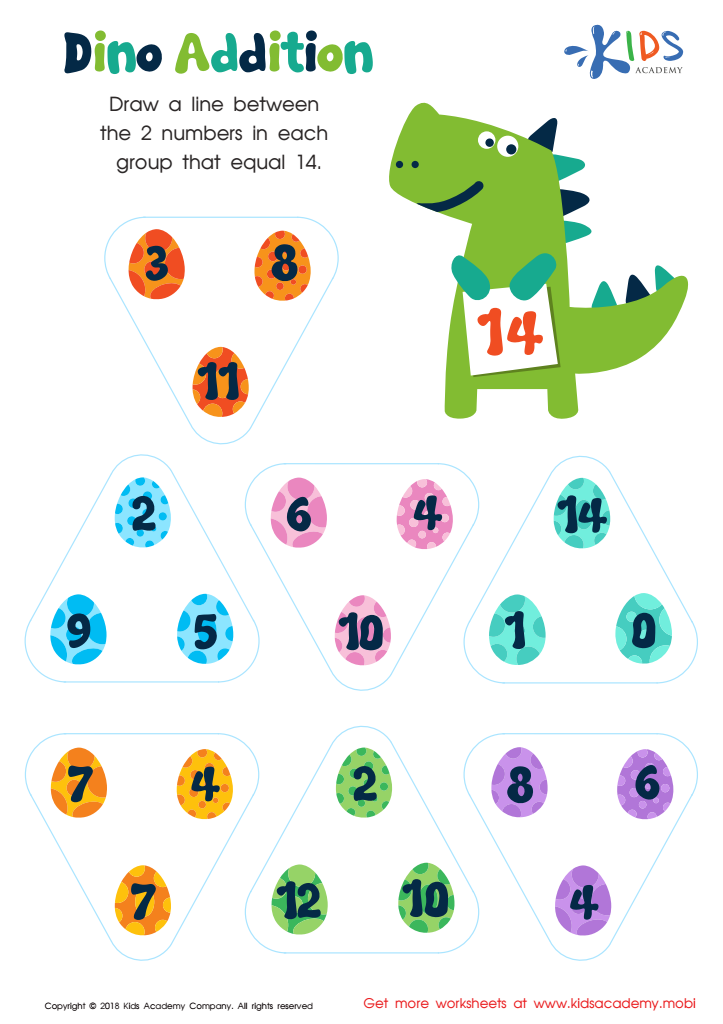
Dino Addition Worksheet
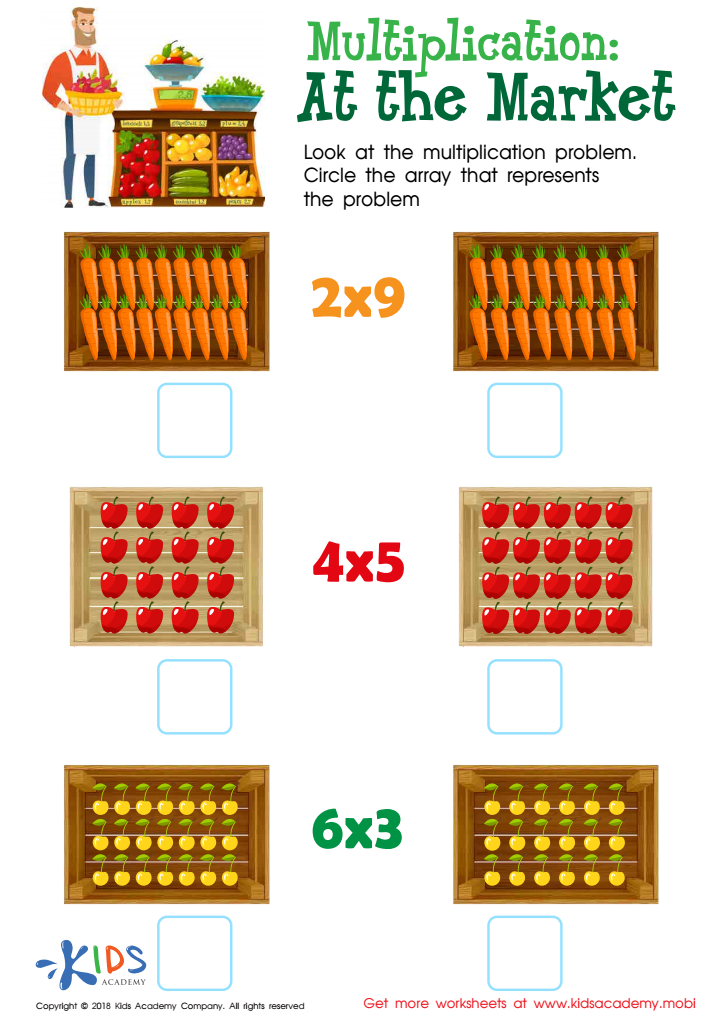
At the Market Worksheet
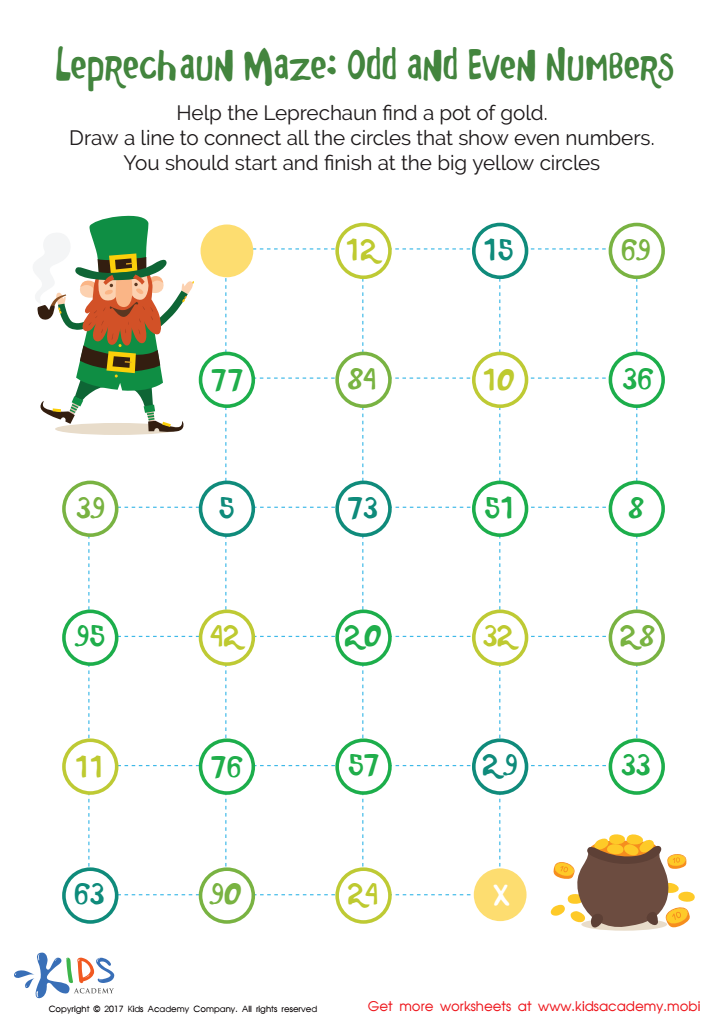
Leprechaun Maze Printable
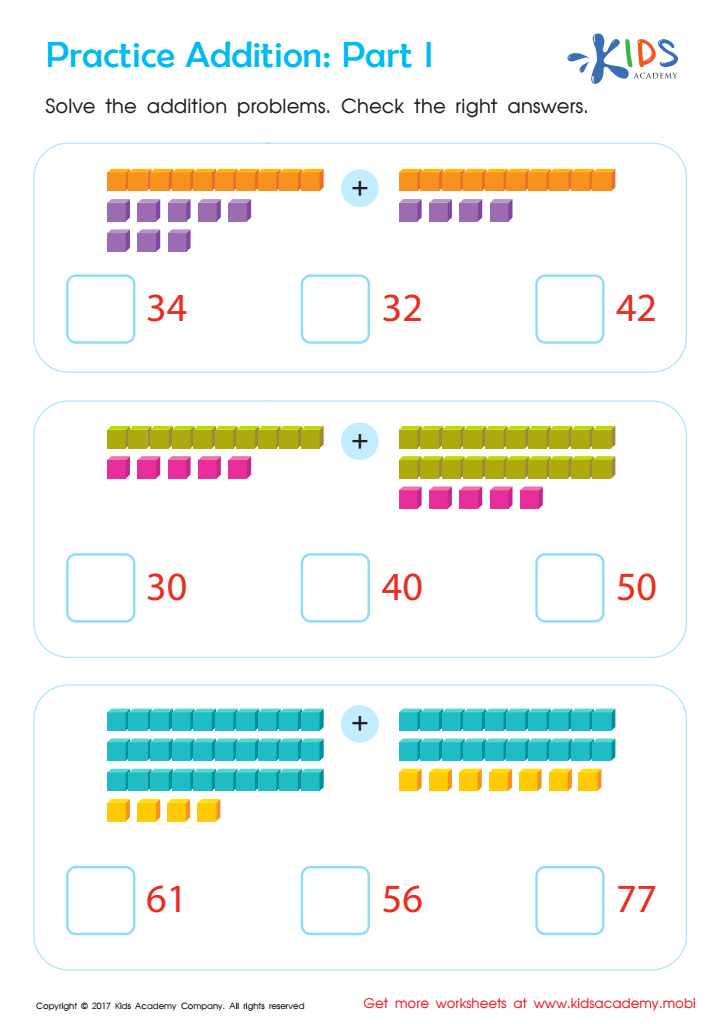
Practice Addition: Part 1 Worksheet
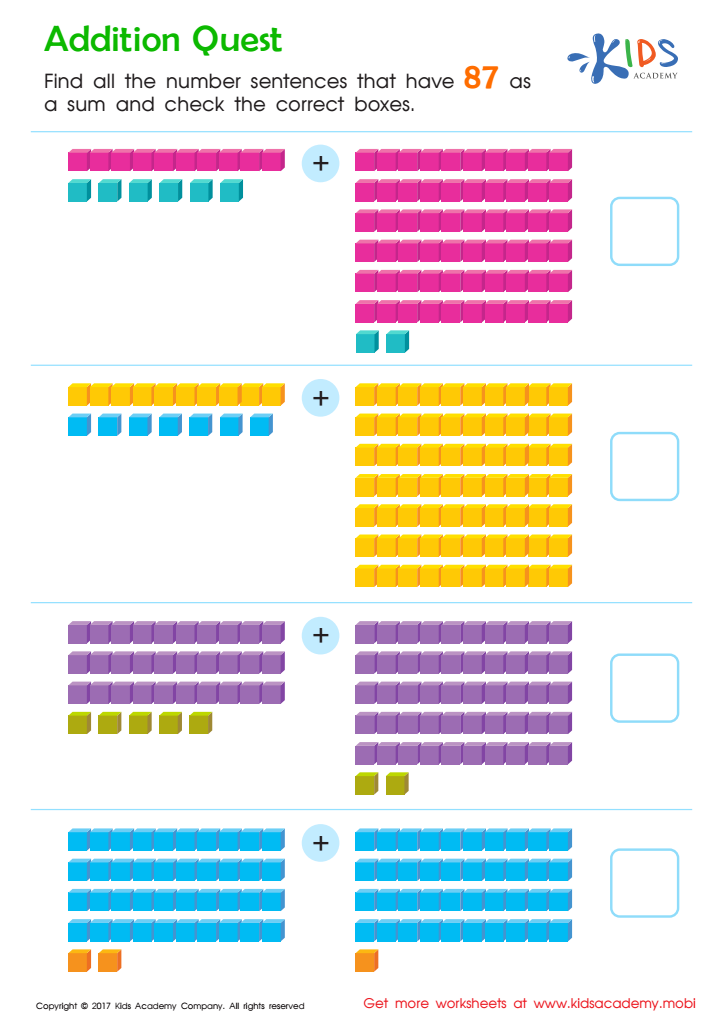
Addition Quest Worksheet: Part 1
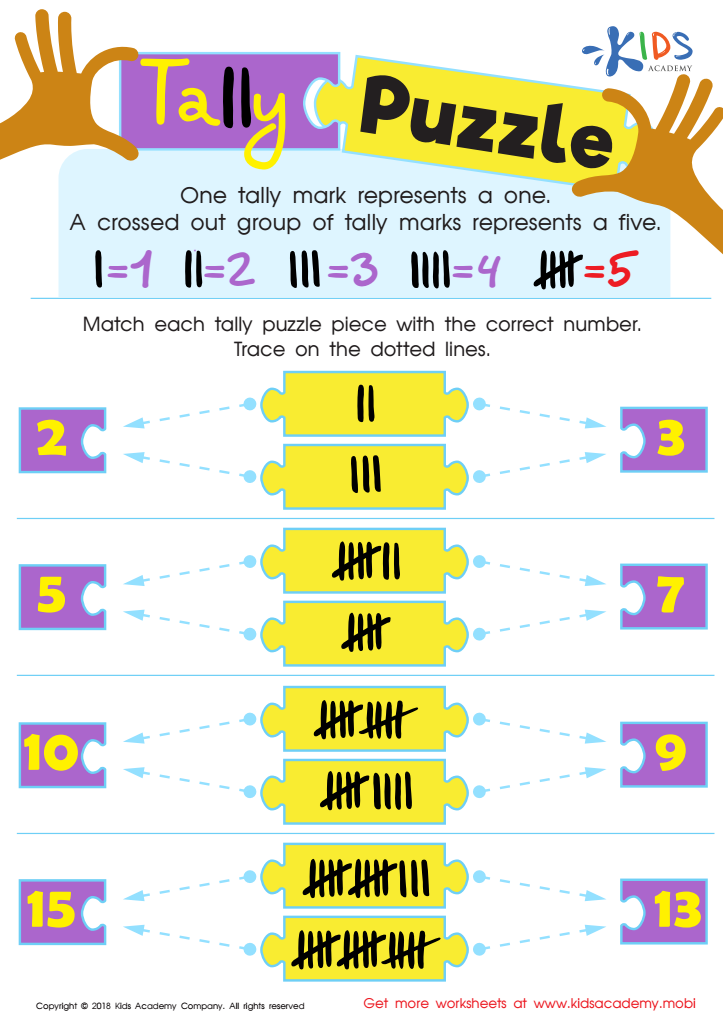
Tally Puzzle Worksheet








Problem-solving skills are crucial for children aged 7-8 as they lay the foundation for critical thinking and independent decision-making. During this developmental stage, children learn to navigate more complex mathematical concepts and real-life situations, making problem-solving an essential skill in both academic and social contexts.
Parents and teachers should care deeply about nurturing these skills in young learners for several reasons. Firstly, problem-solving fosters a growth mindset, encouraging children to embrace challenges as opportunities for learning rather than obstacles. This resilience is vital for long-term success in both academics and life.
Additionally, proficient problem solvers are better equipped to approach math concepts with confidence, enhancing their academic performance in subjects like mathematics, science, and beyond. This skill also transcends mathematics; it applies to everyday situations, such as resolving conflicts with peers or making informed choices.
Moreover, in a rapidly changing world, these skills promote creativity and adaptability, essential for future careers. Thus, by fostering problem-solving skills in young learners, parents and teachers are not only enhancing academic achievement but also preparing children to become thoughtful, resourceful adults who can navigate challenges with confidence.








