
Sound-letter association Alphabet Worksheets for Ages 7-9
3 filtered results
Difficulty Level
Grade
Age
-
From - To
Subject
Activity
Standards
Discover our engaging Sound-Letter Association Alphabet Worksheets designed specifically for children ages 7-9. These interactive resources empower young learners to strengthen their phonetic skills by connecting sounds with corresponding letters. Each worksheet features fun activities that enhance reading, spelling, and language development, while fostering a love for learning. Ideal for both classroom and home use, our worksheets provide a structured approach to phonics, promoting confidence in literacy. Enhance your child's understanding of letter sounds with our thoughtfully crafted exercises and cultivate essential skills that will set them up for success in their educational journey. Start exploring today!
Favorites
With answer key
Interactive
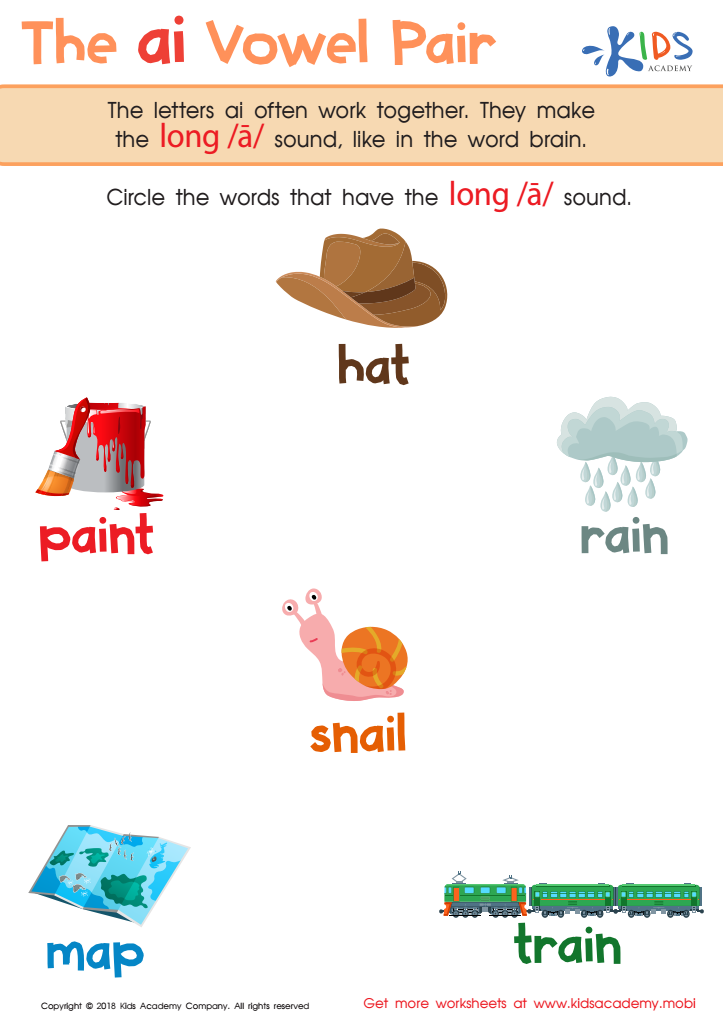
The AI Vowel Pair Worksheet
Vowel pairs make different sounds than individual letters. The 'ai' combination often forms the long /a/ sound, like in 'brain' and 'strain'. Get your kids to look at the pictures in the worksheet, identify each and say the name aloud. Help them circle the words with the long /a/ sound.
The AI Vowel Pair Worksheet
Worksheet
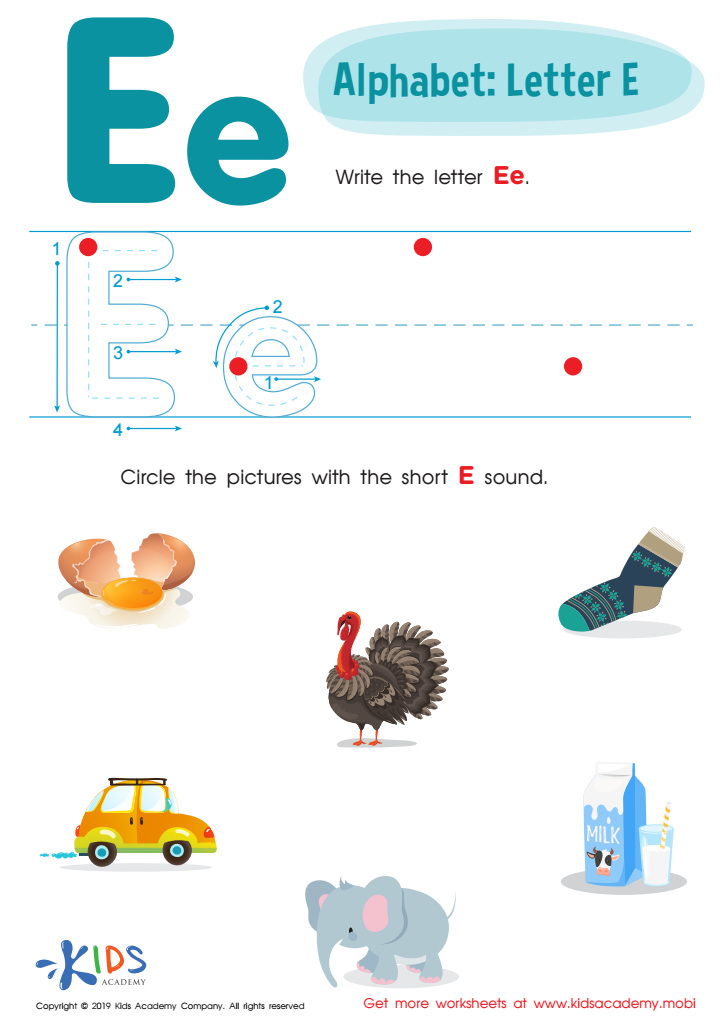
Letter E Tracing Worksheet
Students trace and write uppercase and lowercase letter E. They sound out "E" words, choosing those with short "E" sounds. Preschoolers identify the difference between the 'E' sounds in words like "egg" and "turkey." A tracing sheet helps them to understand.
Letter E Tracing Worksheet
Worksheet
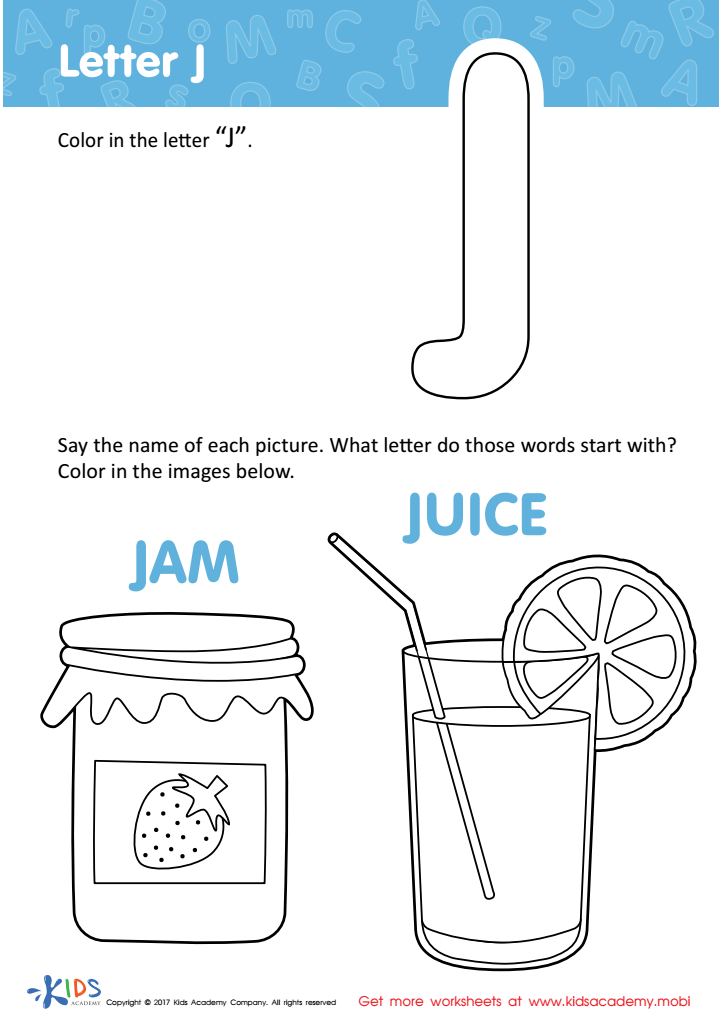
Letter J Coloring Sheet
Practice the letter 'J' with your little one with this fun coloring page! Pictures of jar, juice, jam and jelly make it an enjoyable experience for kids. Learning the letter and coloring is fun for even the youngest learners.
Download (PDF)
 Assign to My Students
Assign to My Students
Letter J Coloring Sheet
Worksheet
Join Kids Academy for Free
Who is primarily going to use this learning content?


.jpg)




Sound-letter association, or phonics, is a foundational skill crucial for children aged 7 to 9 as they continue to develop their reading and writing abilities. This understanding enables students to decode words by connecting sounds with their corresponding letters or letter combinations, paving the way for improved literacy skills.
Parents and teachers should prioritize sound-letter associations because they build confidence in children's reading. As students become adept at sounding out words, they are more likely to tackle new texts independently, fostering a love for reading. Enhanced reading skills contribute to better academic performance across subjects, as students can comprehend and engage with grade-level material more effectively.
Moreover, strong phonics skills can reduce the risk of literacy difficulties such as dyslexia. By focusing on sound-letter relationships, educators and caregivers can identify and address challenges early, ensuring that no child falls behind. Understanding phonics also prepares children for advanced literacy concepts, enriching their vocabulary and writing skills.
Ultimately, nurturing sound-letter associations is a critical investment in a child’s educational journey. It empowers them with tools to communicate effectively and lays the groundwork for lifelong learning. Engaged parents and teachers play a vital role in promoting these essential literacy skills, guiding children toward successful futures.







