Chess Worksheets for Ages 7-9 - Page 5
97 filtered results
-
From - To
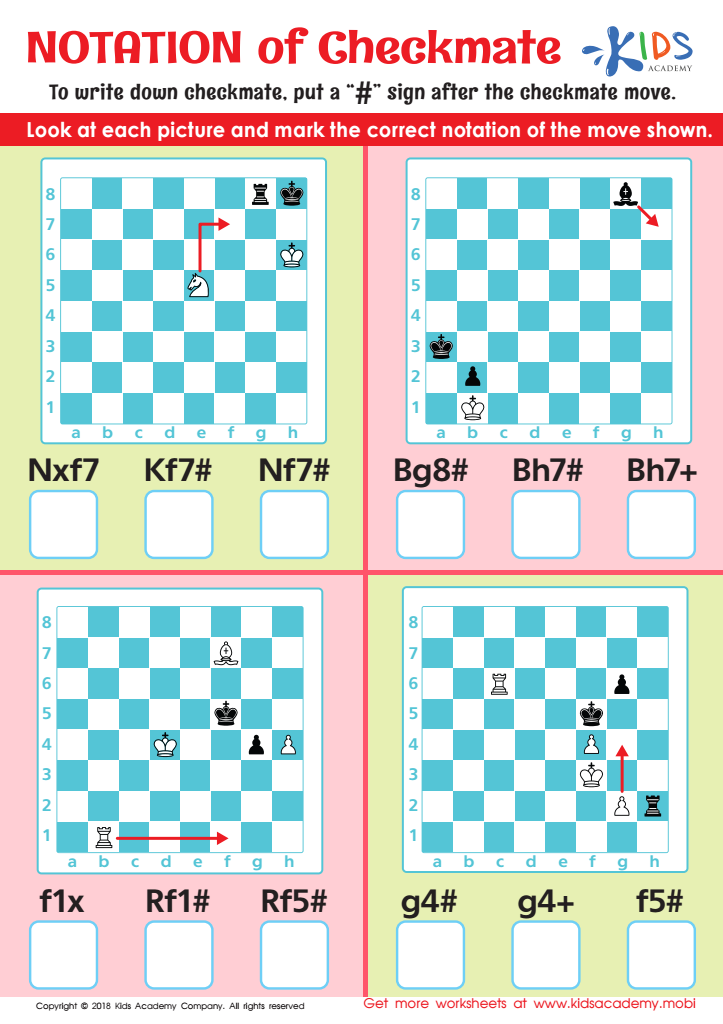
Notation of Checkmate Worksheet
 Assign to My Students





Chess is an invaluable tool for children aged 7-9 that extends far beyond gameplay. Engaging in chess offers numerous cognitive, social, and emotional benefits essential for their development. It enhances critical thinking and problem-solving skills, as each move requires planning ahead and strategizing against an opponent. This mental exercise sharpens analytical thinking and reinforces the ability to assess different scenarios, skills that are applicable in academics and everyday life.
Moreover, chess fosters patience and concentration. It teaches children to focus intently and make thoughtful decisions without rushing, skills increasingly vital in our fast-paced digital world. Additionally, playing chess encourages resilience; kids learn to cope with losses gracefully and adapt their strategies, building emotional maturity.
Collaborating in chess clubs promotes social skills, teaching children the importance of sportsmanship and respect for opponents, nurturing friendships, and fostering a sense of community. For parents and teachers, supporting chess at this age lays a foundation for lifelong learning and disciplined thinking. As chess grows in popularity, recognizing its educational benefits can help children excel both in school and beyond, making it an ideal activity for cognitive and social growth.