Basic Addition Skills Worksheets for Ages 7-9 - Page 2
35 filtered results
-
From - To
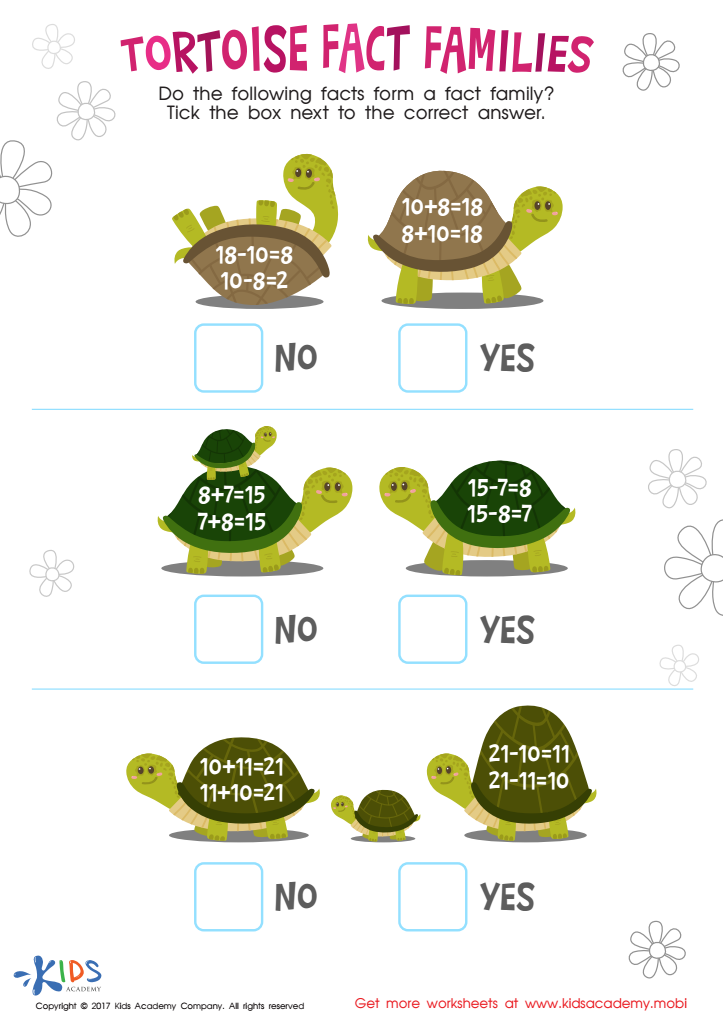
Tortoise Fact Families Printable
 Assign to My Students
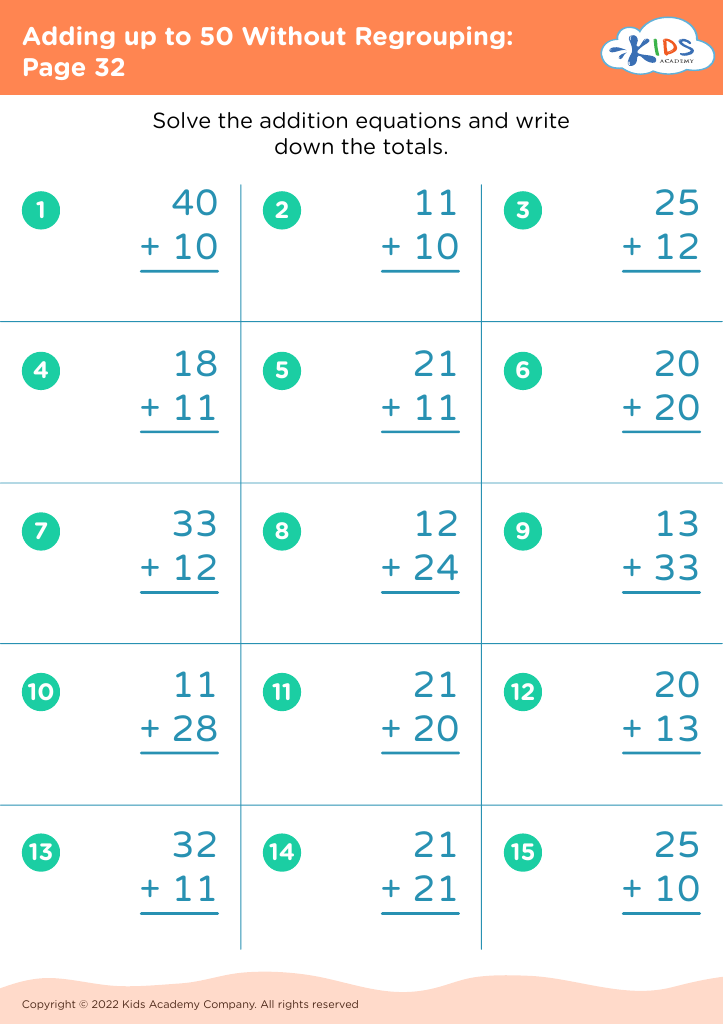
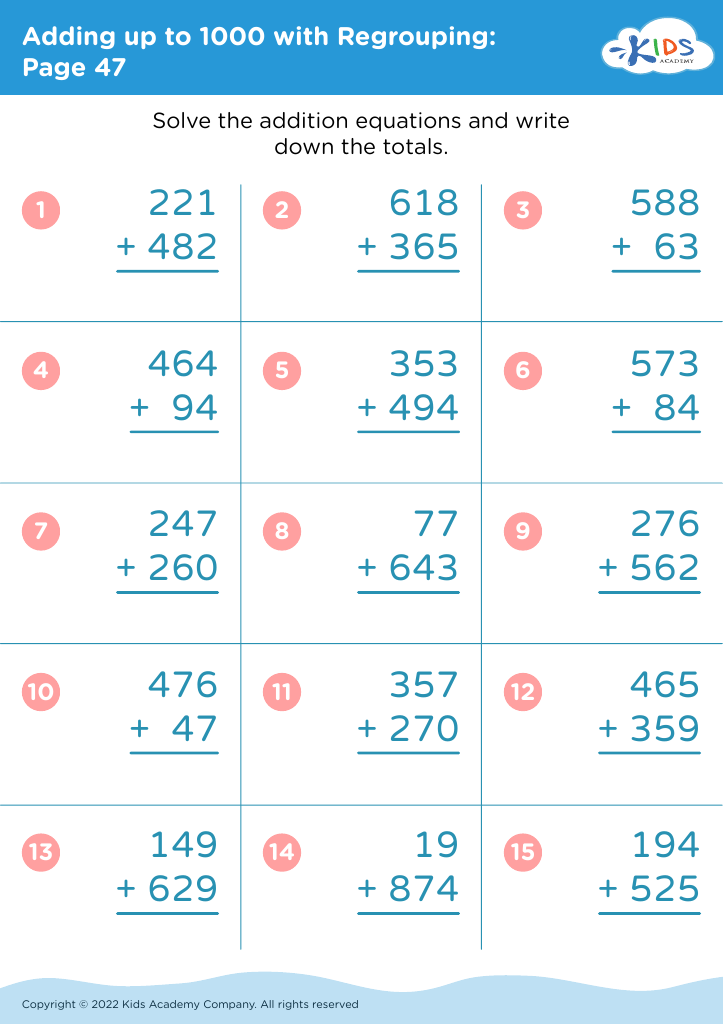
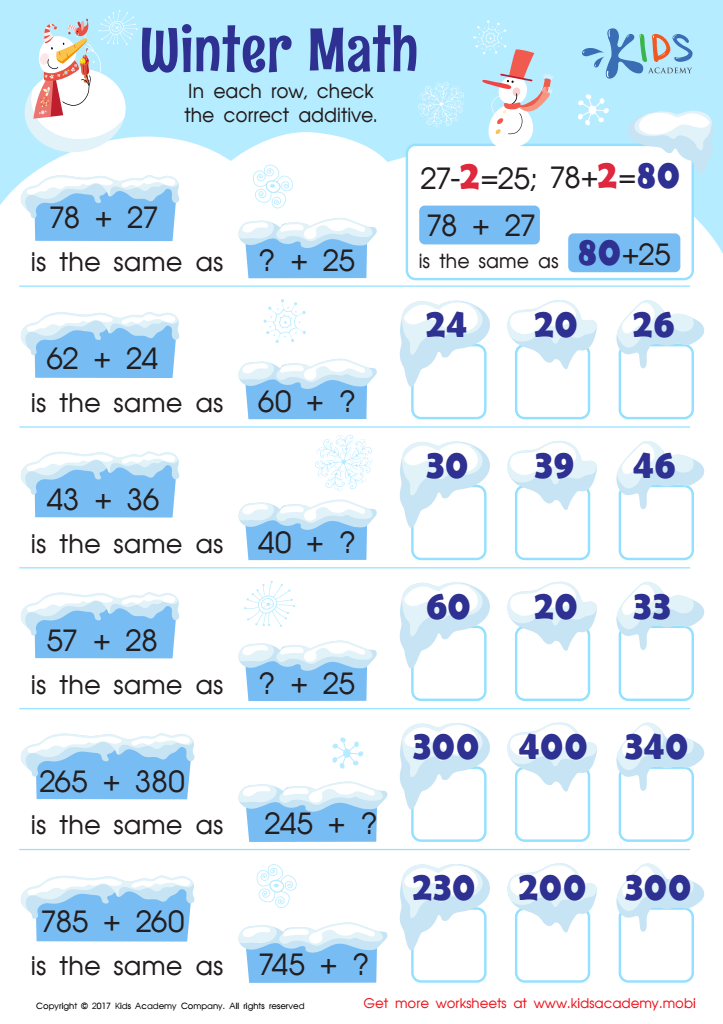
Free Addition Worksheet
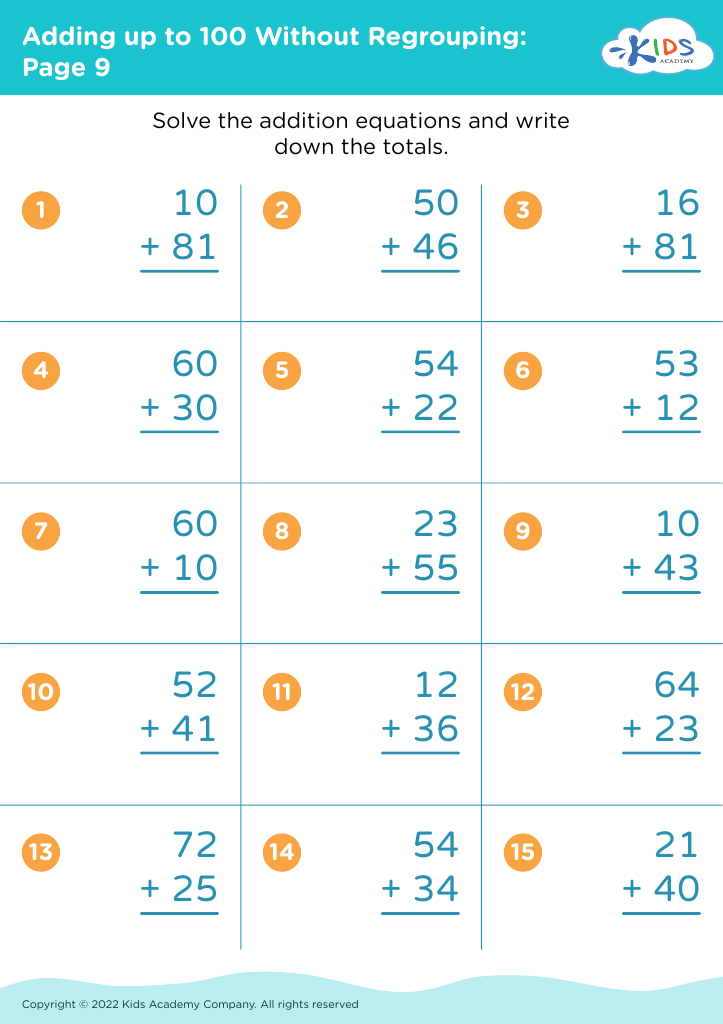
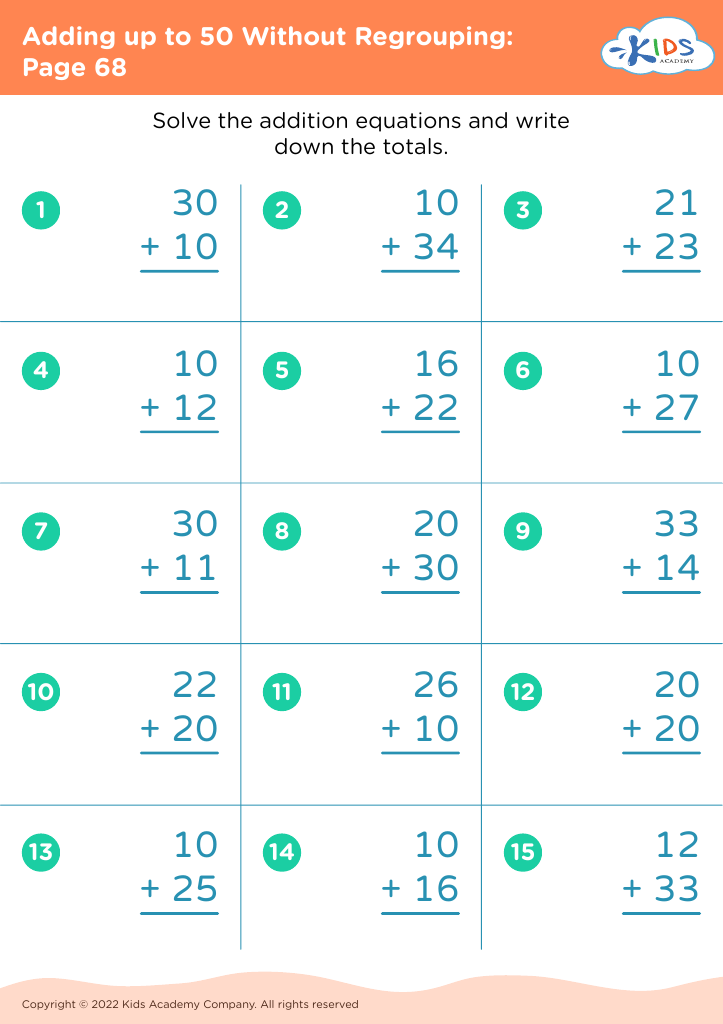
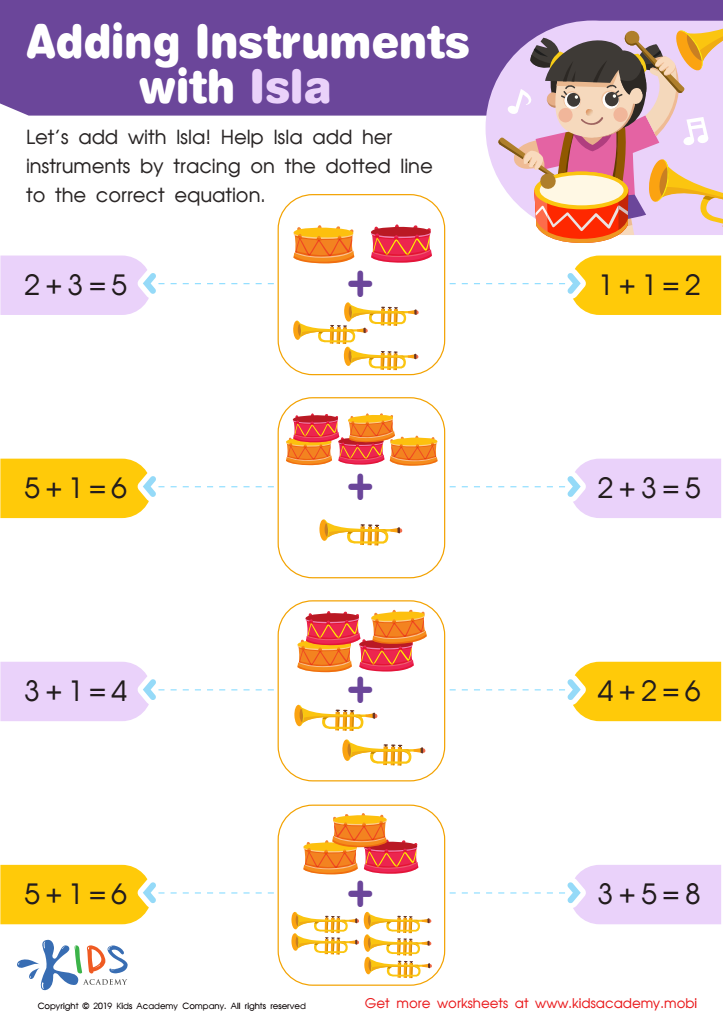
Adding Instruments with Isla Worksheet








Parents and teachers should care about basic addition skills for ages 7-9 because these foundational skills are crucial for a child’s overall mathematical development. At this age, children are in a critical stage of developing their numeracy skills, and mastering addition lays the groundwork for more complex math topics like subtraction, multiplication, division, and fractions.
Basic addition itself improves number sense, enabling children to recognize patterns and relationships between numbers, which is vital for problem-solving in both academic settings and everyday life. For example, understanding addition helps children figure out how much money they have, how many items they need to split, and even how long an activity might take. These skills foster logical thinking and reasoning abilities.
Moreover, confidence in basic addition fosters a positive attitude towards learning math. Early success in these skills can motivate children, boost their self-esteem, and instill a sense of achievement, making them more likely to tackle more advanced math challenges with confidence.
Finally, math skills, starting with basic addition, are directly linked to academic success. Proficiency in math is a predictor of future achievement in both math and science, which are critical fields in an increasingly technology-driven world. Caring about and investing time in learning basic addition skills ensures that children have a strong mathematical foundation on which to build their future knowledge.








