Filters

124 filtered results

Clear all filters
Favorites
With answer key
Interactive

124 filtered results

Difficulty Level

Grade


Enhance your child's math abilities with our "Counting Skills Addition & Subtraction Worksheets" for ages 7-9. Designed to build a strong foundation in basic arithmetic, these engaging worksheets help young learners practice counting, addition, and subtraction in a fun and interactive way. Each worksheet features visually appealing exercises and practical scenarios to make learning enjoyable and effective. Boost your child's confidence and competence in math by reinforcing essential counting skills through our tailored educational resources. Perfect for use at home or in the classroom, these worksheets support continuous learning and development.
Check out this FREE Trial Lesson on Addition & Subtraction for age 7-9!

A

Favorites
With answer key
Interactive
  • 7-9
  • Counting skills
  • Addition & Subtraction
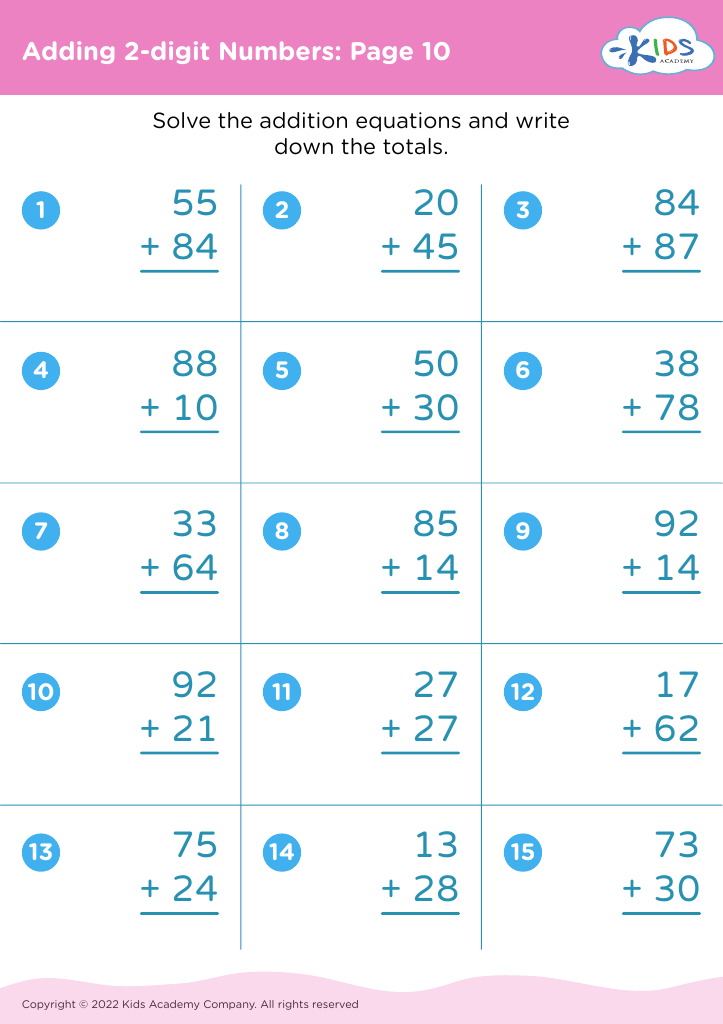
Adding up to 1000 with Regrouping: Page 57
Worksheet
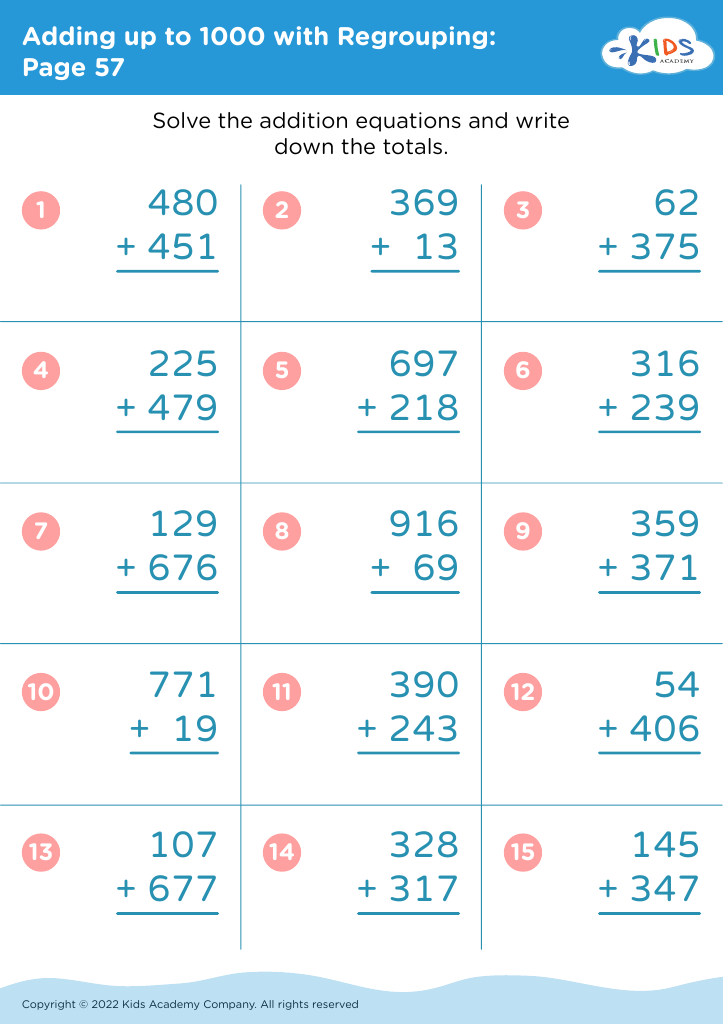
Adding up to 100 Without Regrouping: Page 12
Worksheet
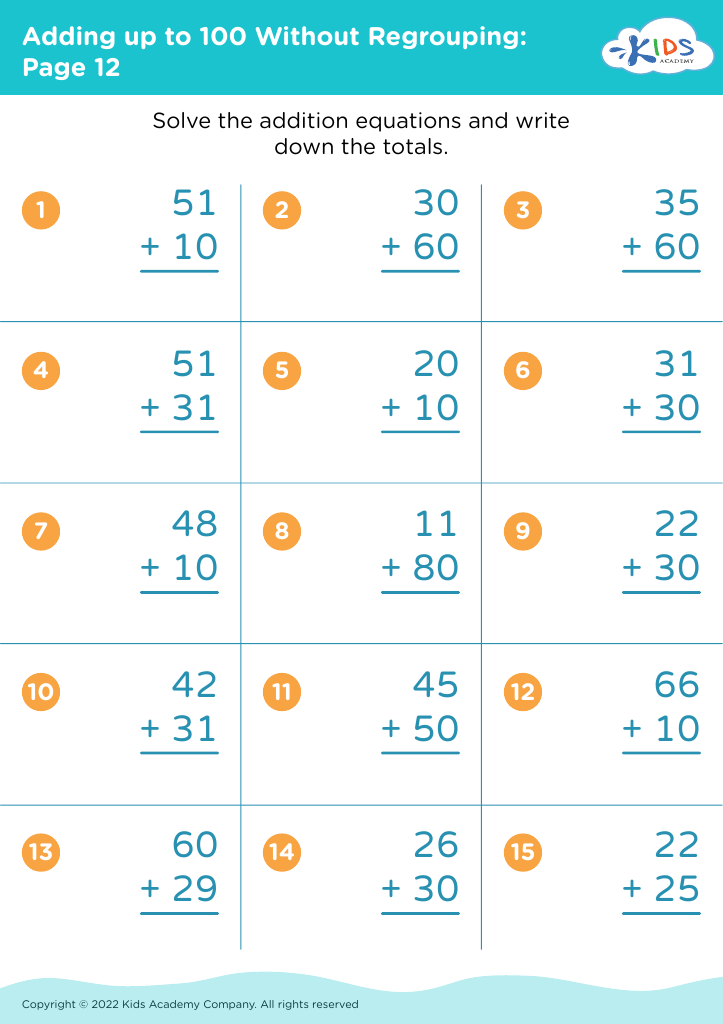
Adding 2-digit Numbers: Page 28

Adding 2-digit Numbers: Page 28

Adding 2-digit Numbers: Page 28
Worksheet
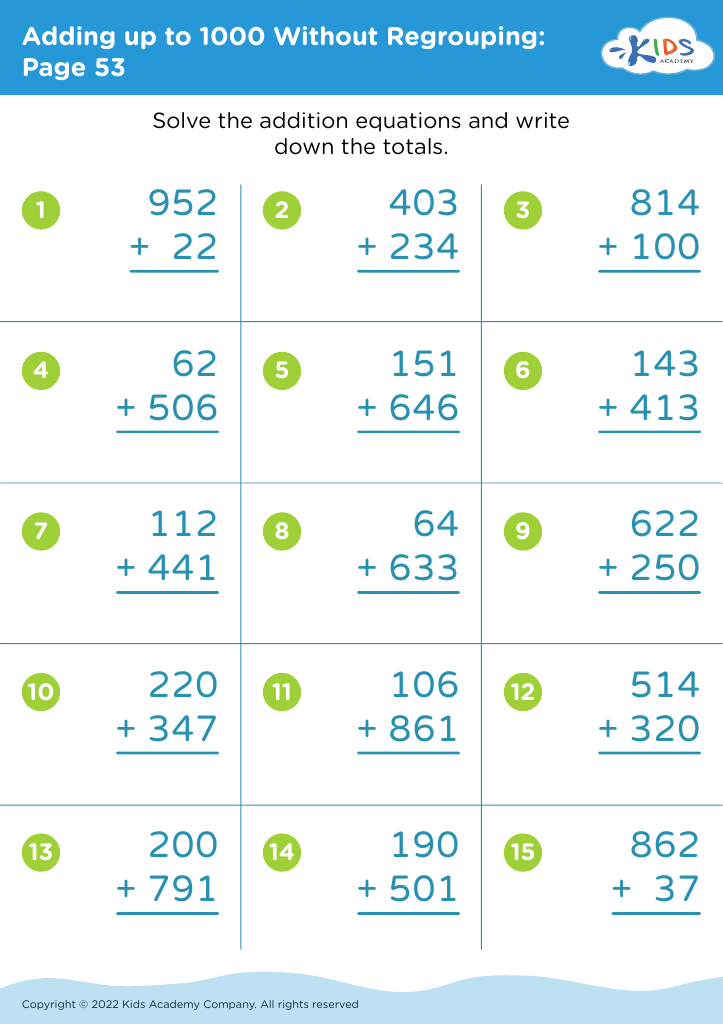
Adding up to 1000 Without Regrouping: Page 53
Worksheet
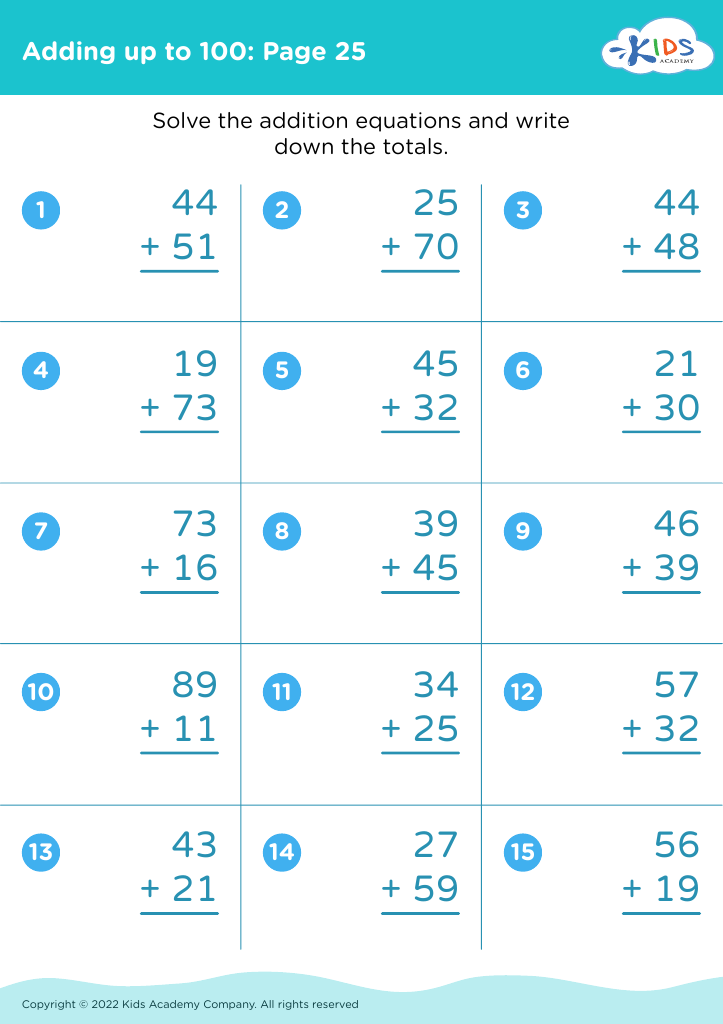
Adding up to 100: Page 25

Adding up to 100: Page 25

Adding up to 100: Page 25
Worksheet
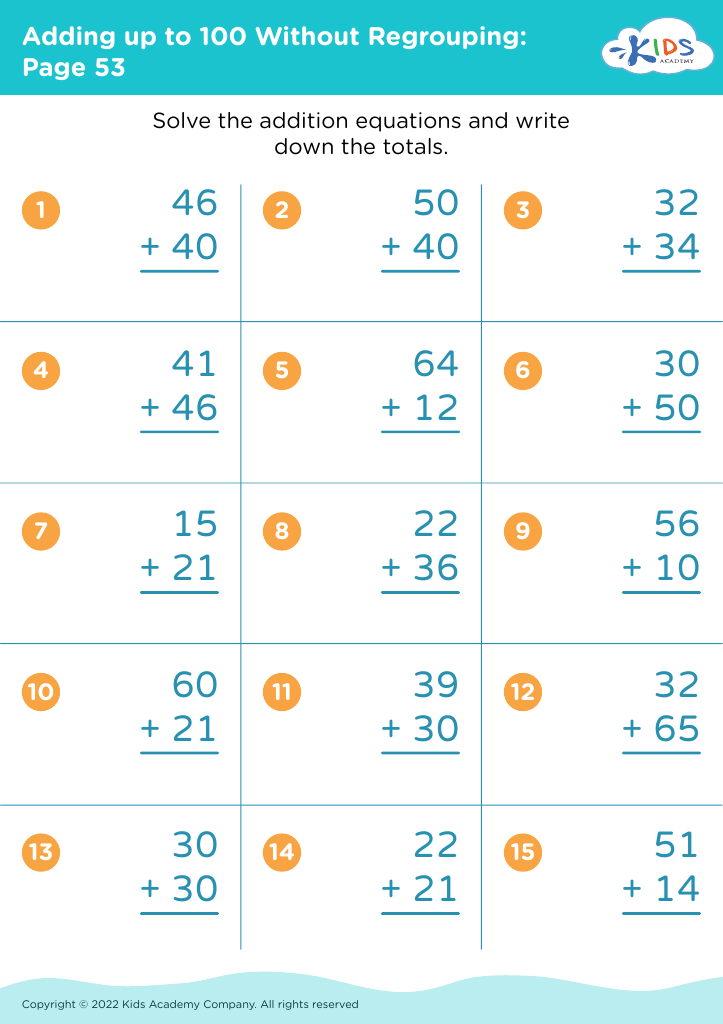
Adding up to 100 Without Regrouping: Page 53
Worksheet
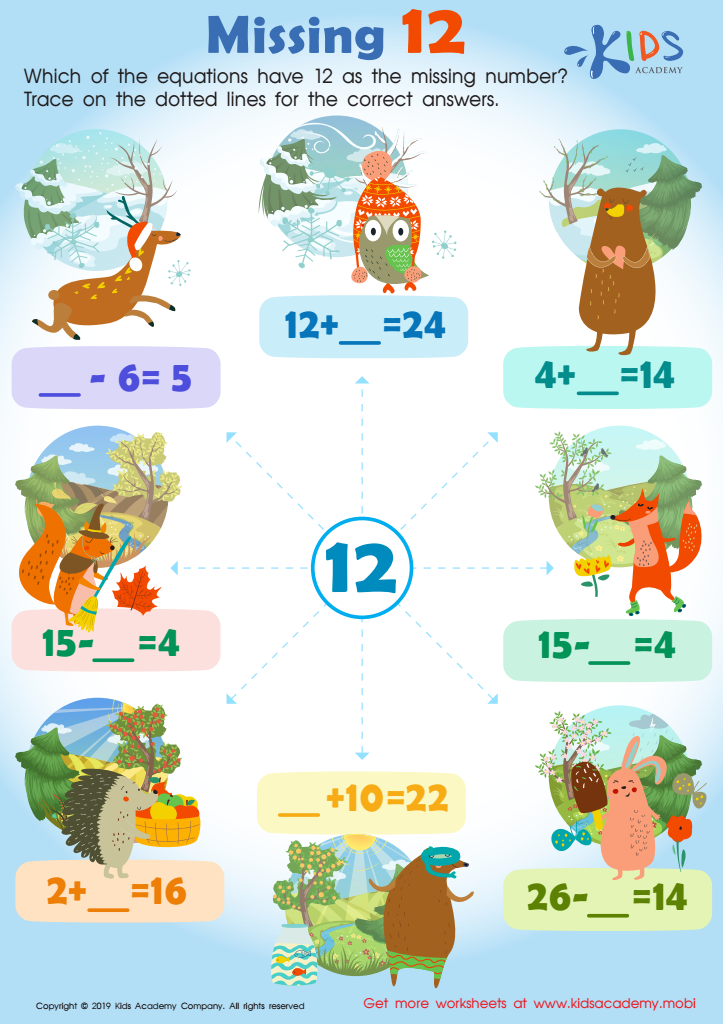
Missing 12 Worksheet

Missing 12 Worksheet

Help your kids find the missing number in this fun nature worksheet. Engage them with this educational exercise - combining teaching and fun. Encourage them to practice addition and subtraction skills. Look at the picture with them. Which equations have 12 as the missing number? Guide them to trace the dotted lines for the correct answers.
Missing 12 Worksheet
Worksheet
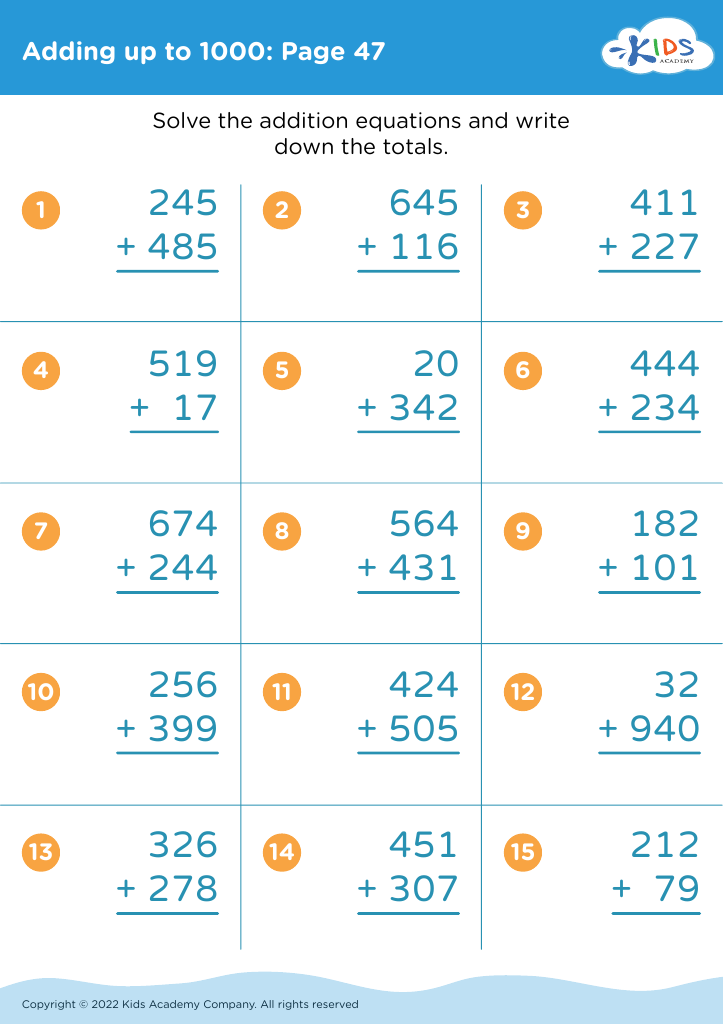
Adding up to 1000: Page 47

Adding up to 1000: Page 47

Adding up to 1000: Page 47
Worksheet
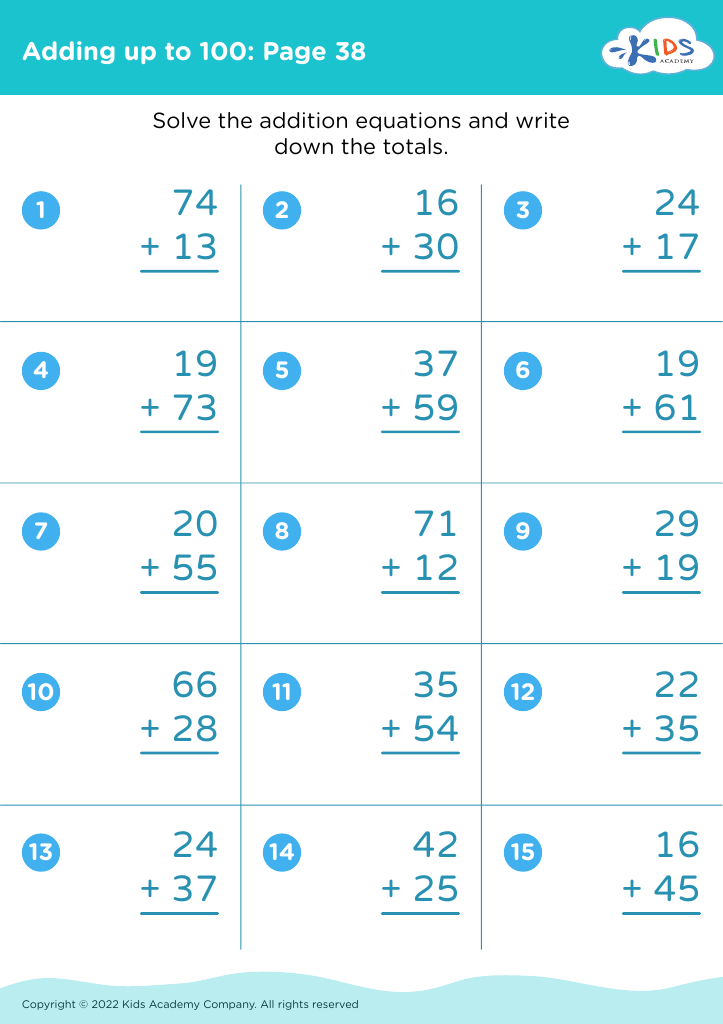
Adding up to 100: Page 38

Adding up to 100: Page 38

Adding up to 100: Page 38
Worksheet
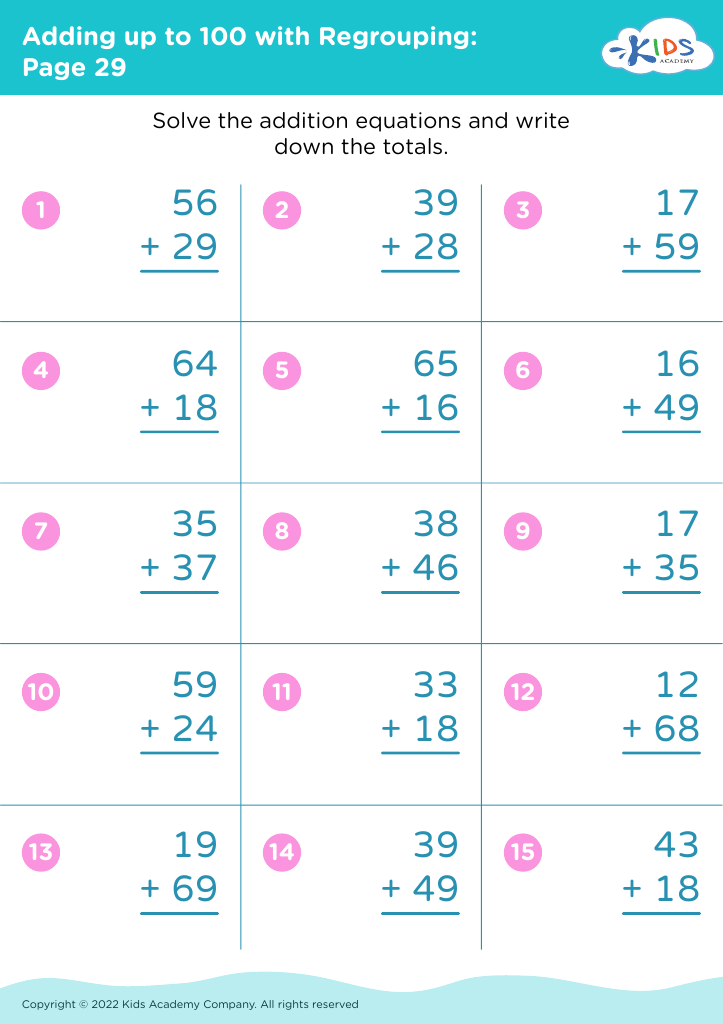
Adding up to 100 with Regrouping: Page 29
Worksheet
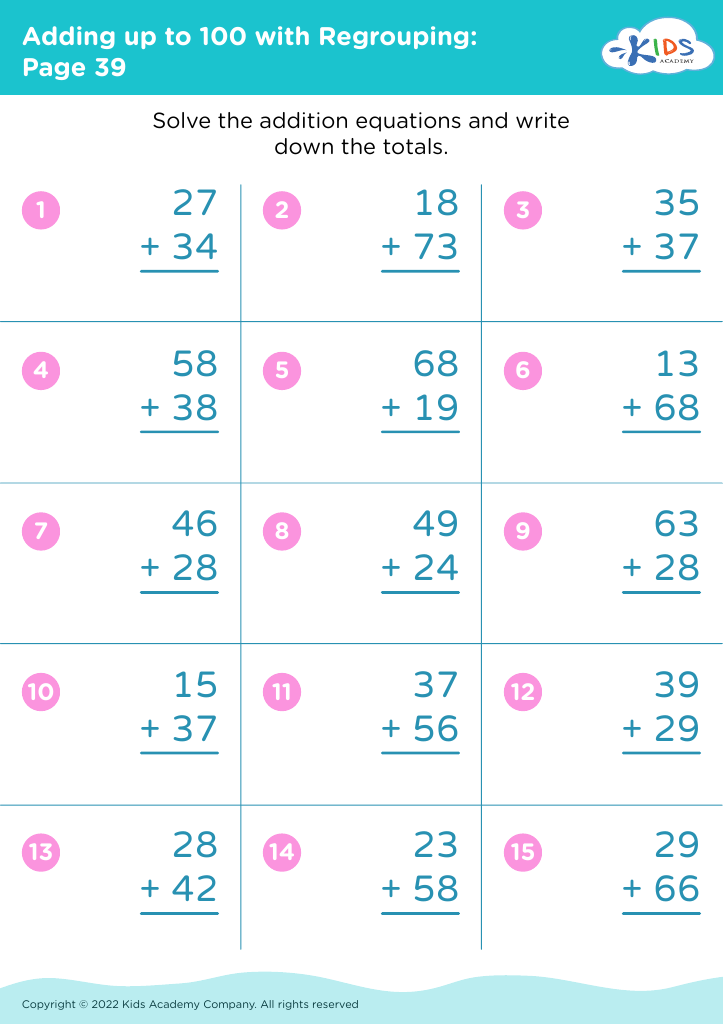
Adding up to 100 with Regrouping: Page 39
Worksheet
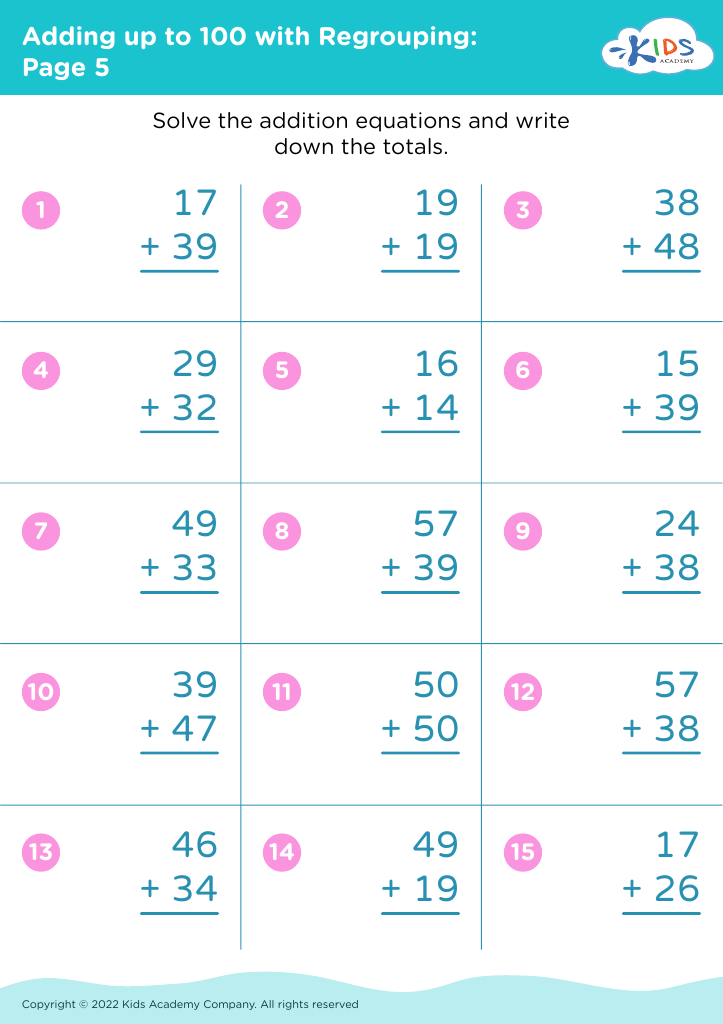
Adding up to 100 with Regrouping: Page 5
Worksheet
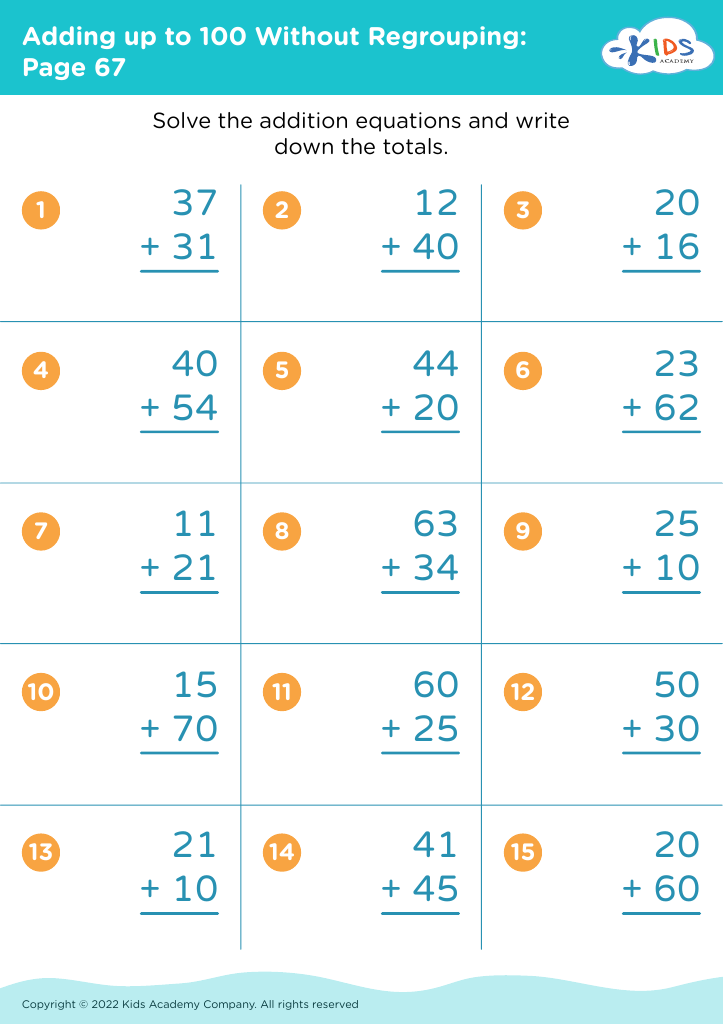
Adding up to 100 Without Regrouping: Page 67
Worksheet
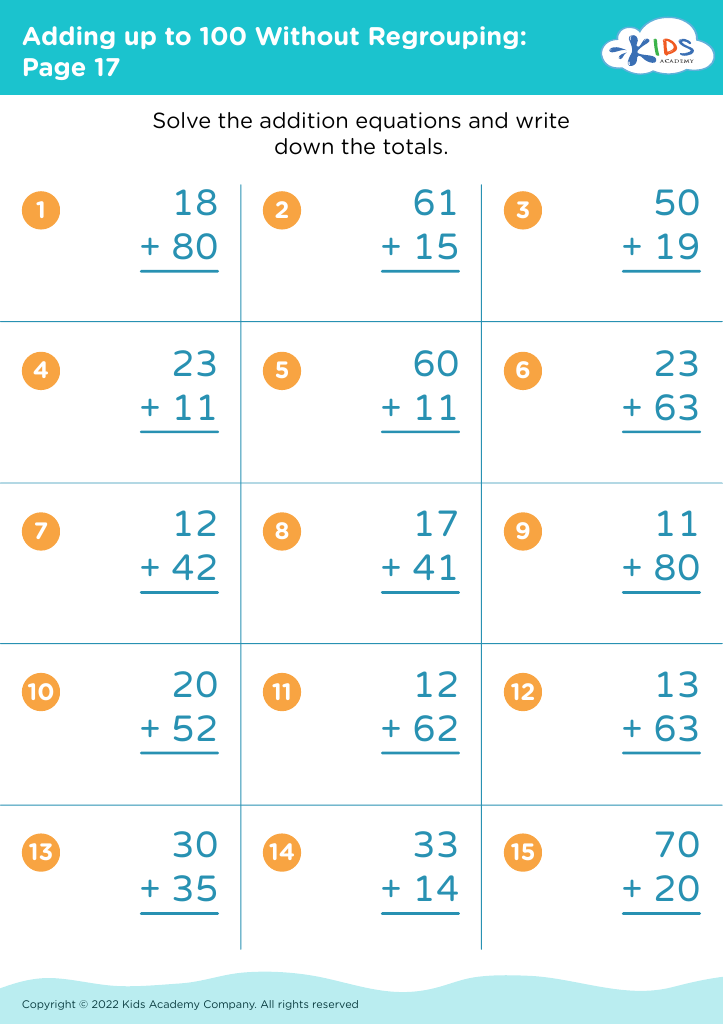
Adding up to 100 Without Regrouping: Page 17
Worksheet
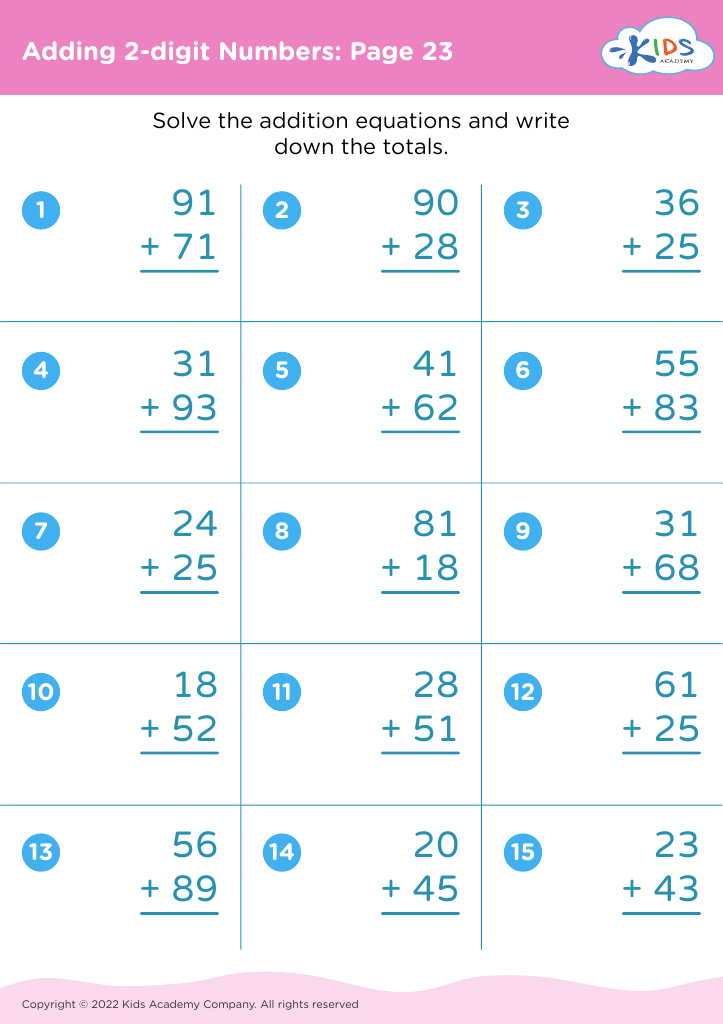
Adding 2-digit Numbers: Page 23

Adding 2-digit Numbers: Page 23

Adding 2-digit Numbers: Page 23
Worksheet
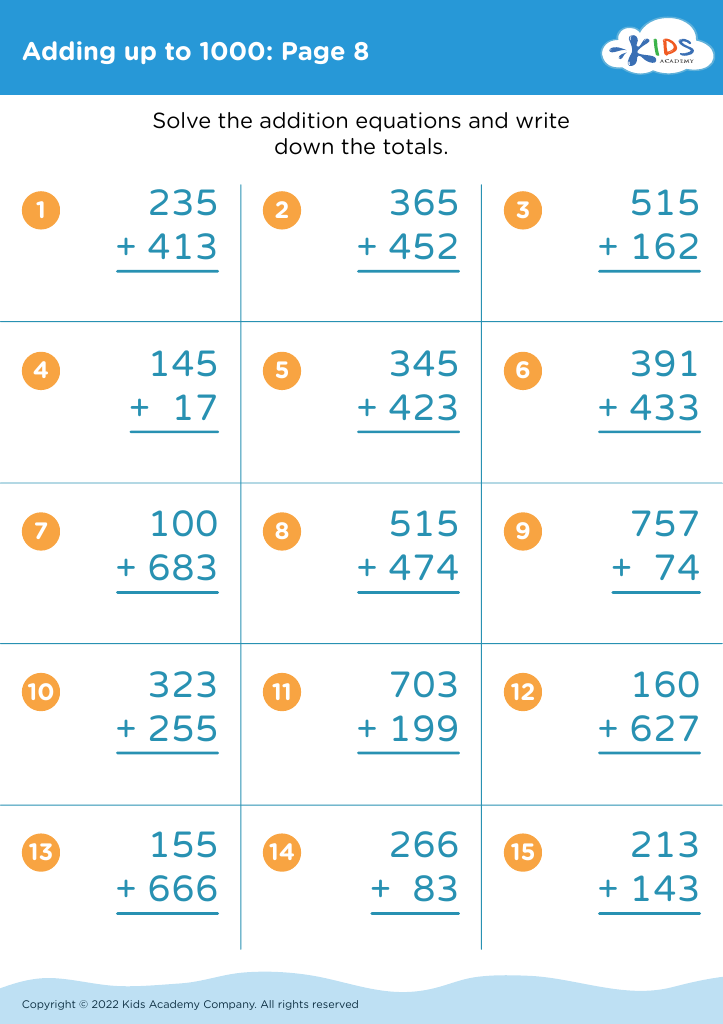
Adding up to 1000: Page 8

Adding up to 1000: Page 8

Adding up to 1000: Page 8
Worksheet
Assessment 3 Math Worksheet

Assessment 3 Math Worksheet

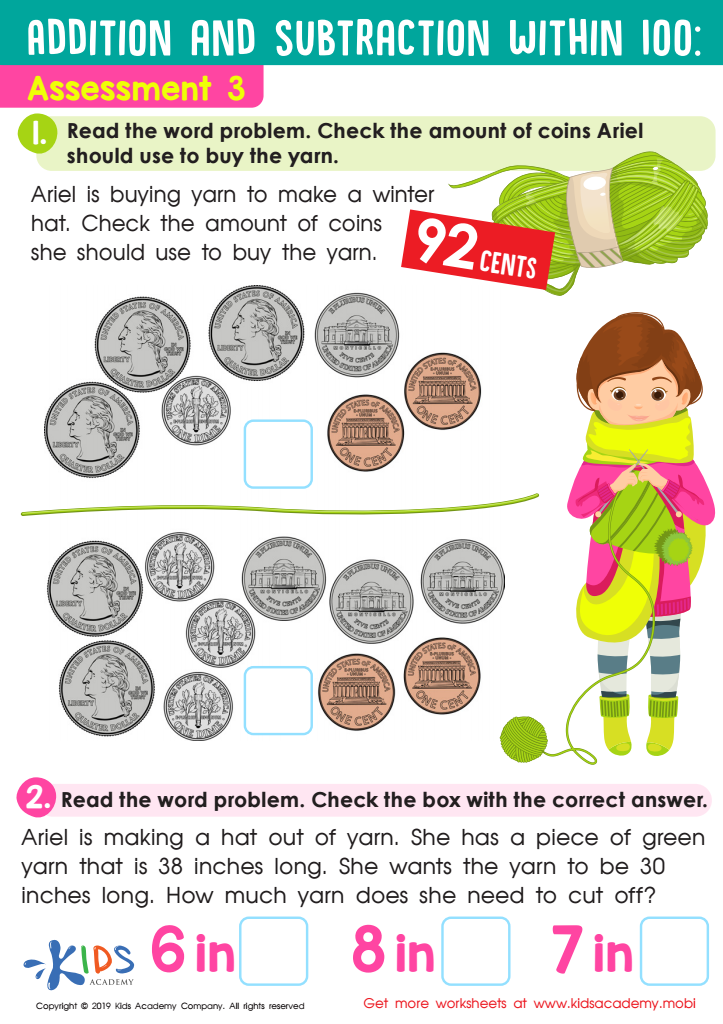
Ariel needs to buy yarn. Do your kids know what yarn is? If they've seen you knit, they will. Help them solve the two word problems to figure out how many coins Ariel needs to buy it.
Assessment 3 Math Worksheet
Worksheet
Assessment 2 Math Worksheet

Assessment 2 Math Worksheet

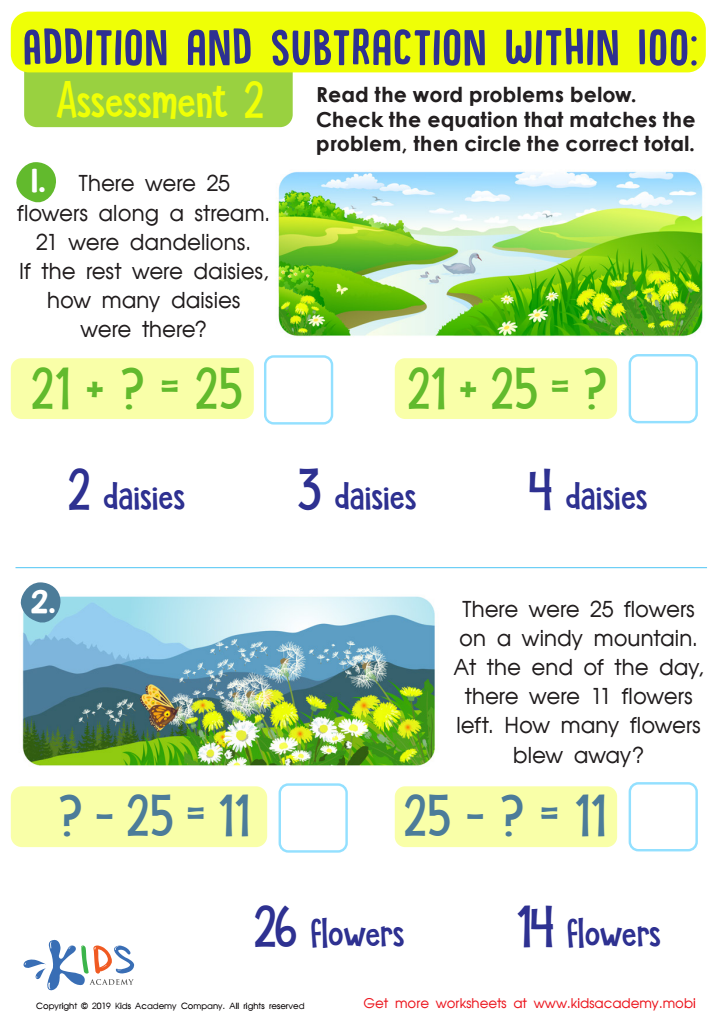
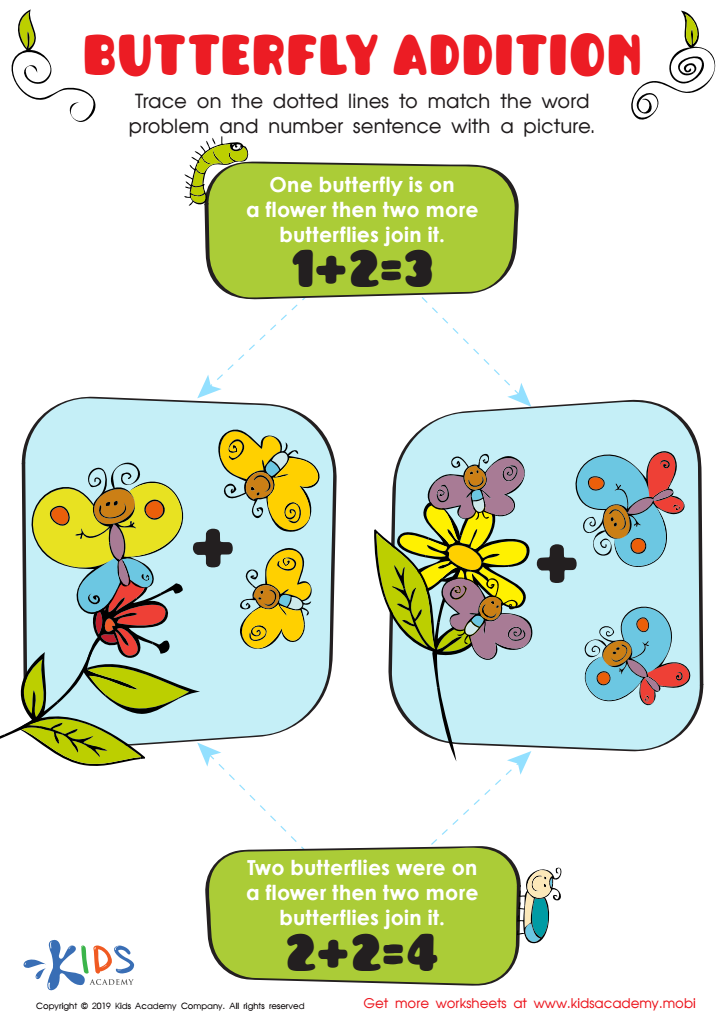
Using fun exercises and pictures, you can get kids excited about math. With practice and reminders of what they've learnt, they'll be solving simple addition and subtraction equations with ease. Read the word problems in the picture to them, then help them check the equation and choose the correct answer.
Assessment 2 Math Worksheet
Worksheet
Butterfly Addition Worksheet
Butterfly Addition Worksheet
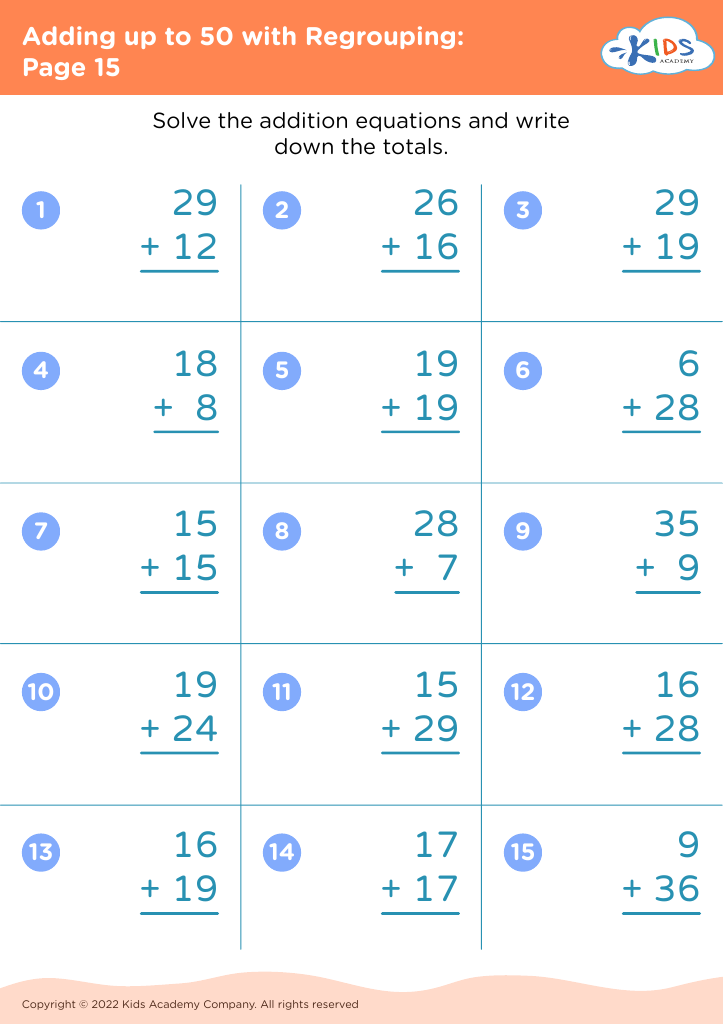
This tracing sheet is great for kids to work on math skills and have fun too. Read the word problems to them, then help them trace the dotted lines to match the problem and number sentence to a picture. Not only is it educational, it's beautiful too - your kids will love learning about butterflies!
Butterfly Addition Worksheet
Worksheet
Adding up to 50 with Regrouping: Page 15
Worksheet
Counting Maze Up to 20 Printable

Monkey Math Worksheet

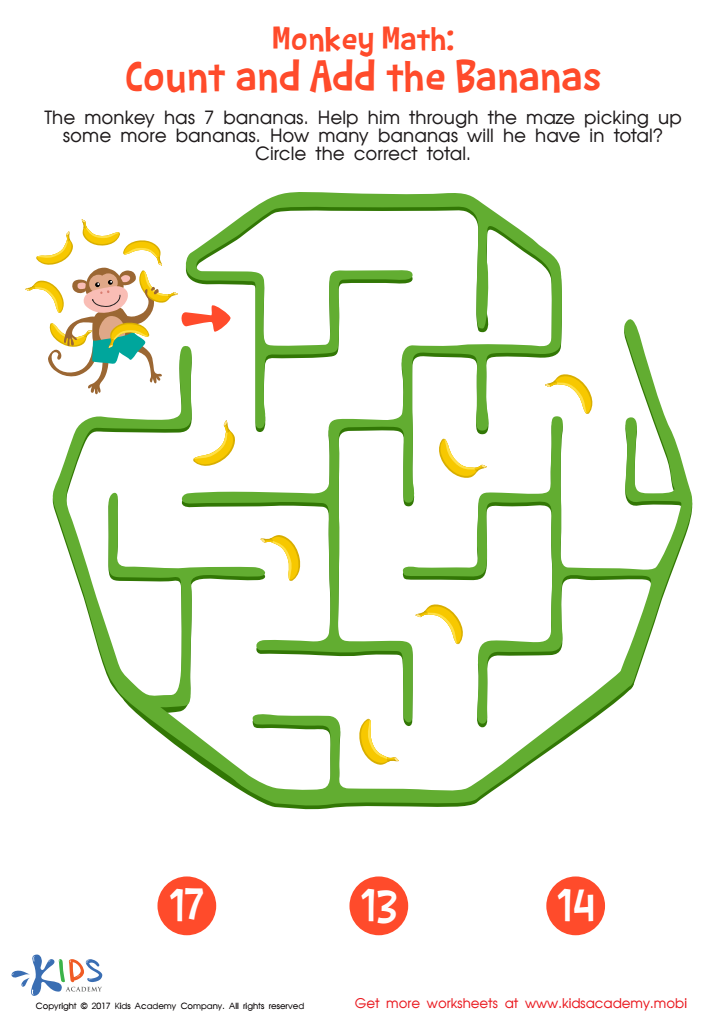
Try our printable maze to 20 for an enjoyable challenge.
Monkey Math Worksheet
Worksheet
Adding up to 50 with Regrouping: Page 11
Worksheet
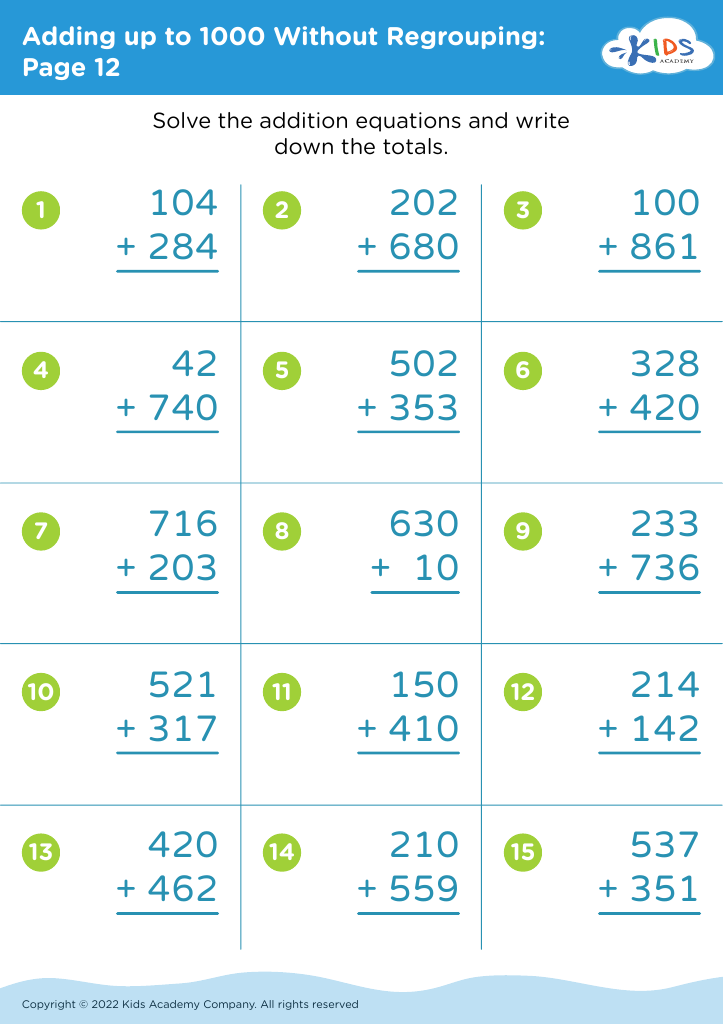
Adding up to 1000 Without Regrouping: Page 12
Worksheet
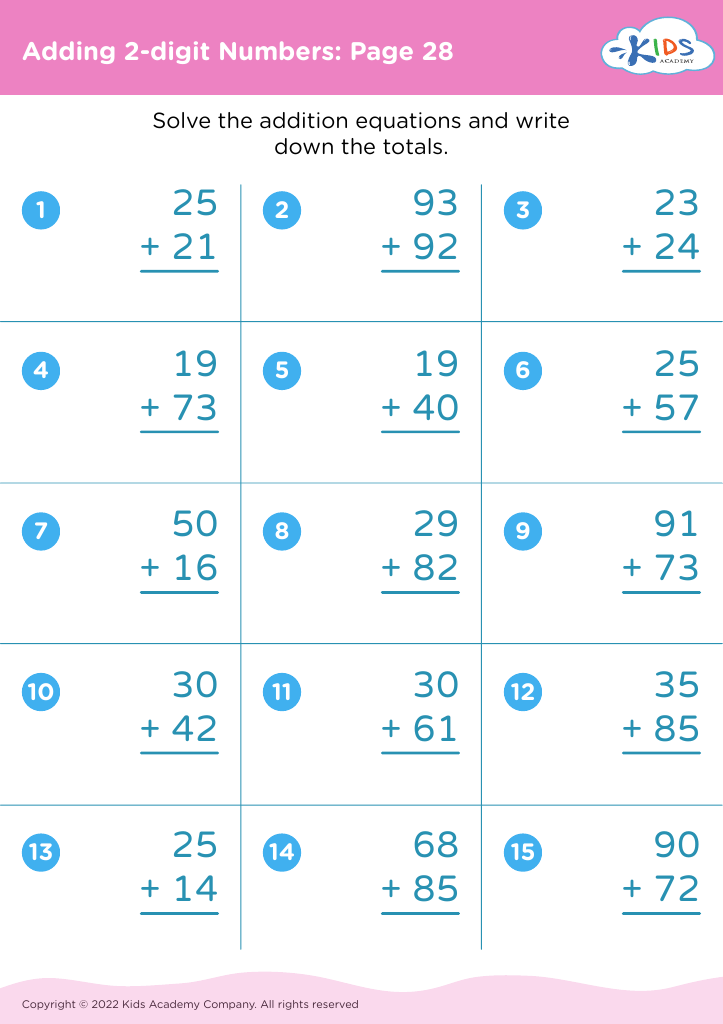
Adding 2-digit Numbers: Page 10

Adding 2-digit Numbers: Page 10

Adding 2-digit Numbers: Page 10
Worksheet


Parents and teachers should prioritize developing counting skills, addition, and subtraction for children aged 7-9 because these foundational arithmetic skills set the stage for advanced math concepts and everyday practical problem-solving. At this critical developmental stage, children begin to transition from concrete operational thinking to more abstract reasoning. Mastery of basic counting not only helps in number recognition but also enhances their ability to sequence events and understand patterns.

Addition and subtraction are crucial as they form the basis for more complex mathematical operations such as multiplication, division, and fractions. These skills boost cognitive development and logical thinking, allowing children to tackle various challenges in and out of the classroom setting. For example, counting money, measuring ingredients in cooking, or determining the time it takes to travel certain distances are everyday activities where these skills are applied.

Furthermore, fostering a strong math foundation at an early age boosts children’s confidence and interest in the subject, reducing math anxiety and setting a positive trajectory for future learning. Engaging and supporting children through interactive experiences, games, and practical examples make learning math fun and relevant, ensuring they develop a strong, lasting affinity for the subject.