Filters

817 filtered results

Clear all filters
Favorites
With answer key
Interactive

817 filtered results

Difficulty Level

Grade


Subject

    Check out this FREE Trial Lesson on Addition for age 7-9!

    My Family

    Favorites
    With answer key
    Interactive
    • 7-9
    • Addition
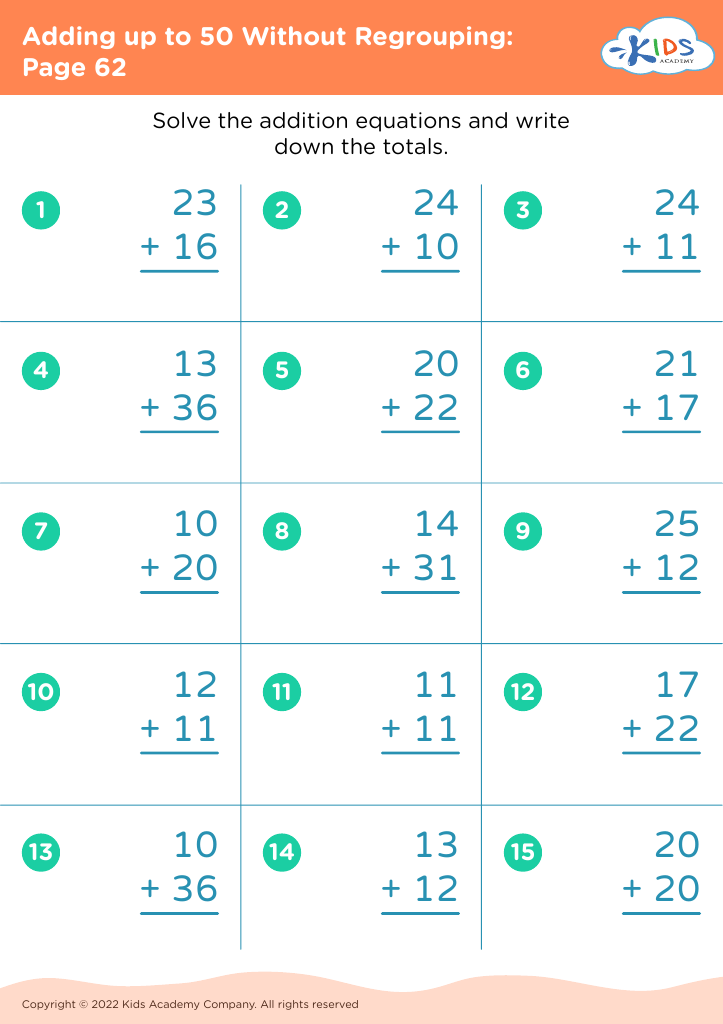
    Adding up to 50 Without Regrouping: Page 62
    Adding up to 50 Without Regrouping: Page 62
    Adding up to 50 Without Regrouping: Page 62
    Worksheet
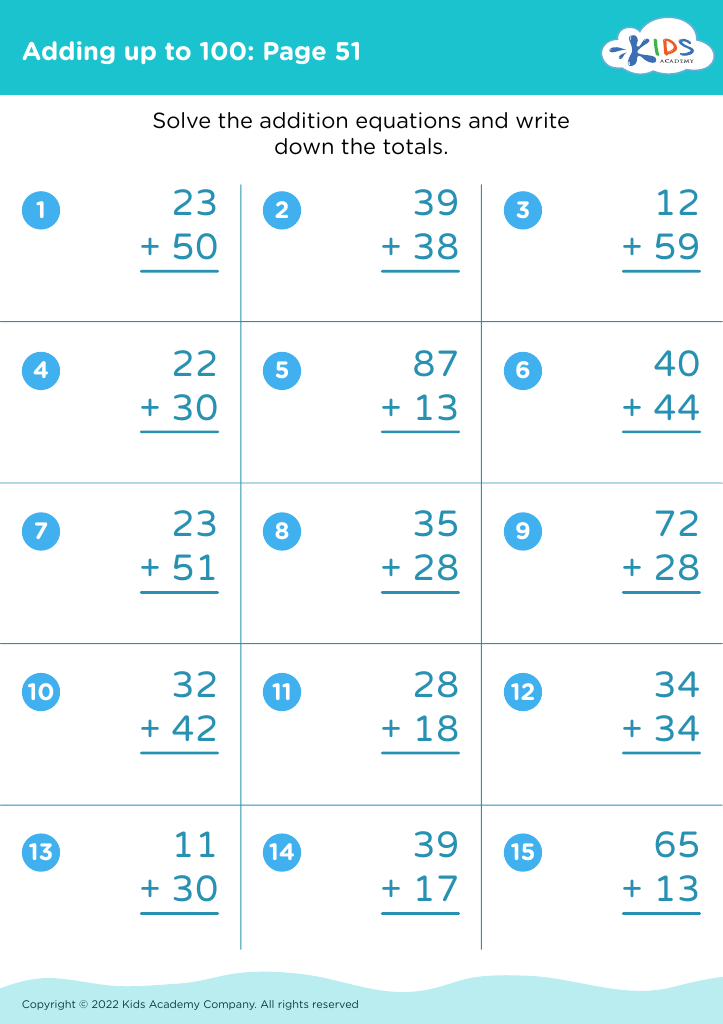
    Adding up to 100: Page 51
    Adding up to 100: Page 51

    Adding up to 100: Page 51

    Adding up to 100: Page 51
    Worksheet
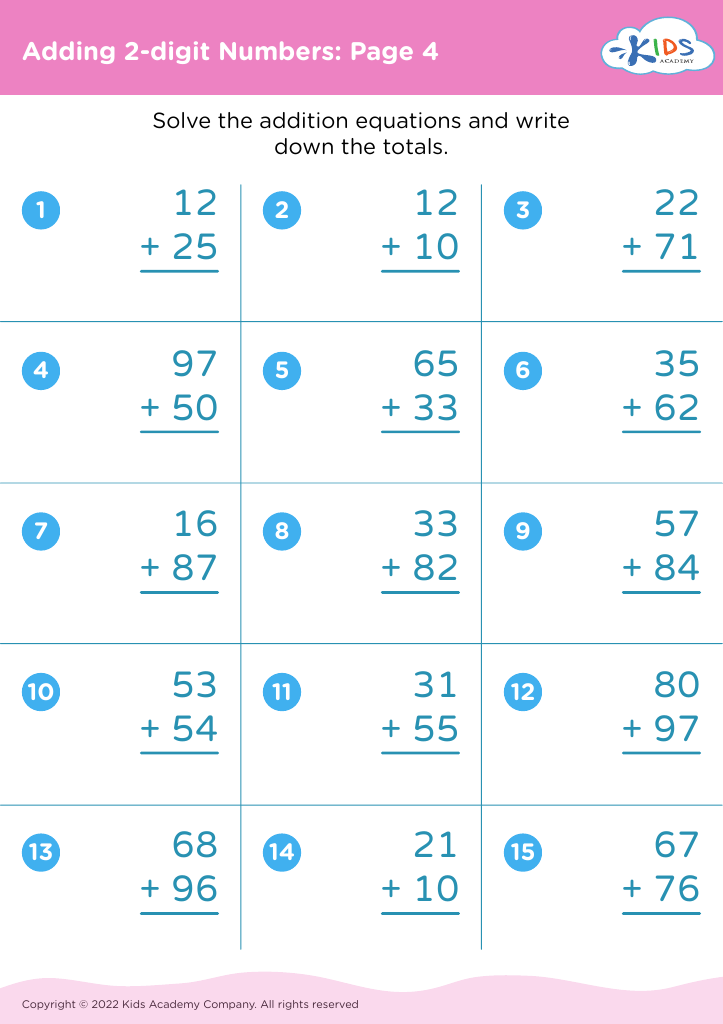
    Adding 2-digit Numbers: Page 4
    Adding 2-digit Numbers: Page 4

    Adding 2-digit Numbers: Page 4

    Adding 2-digit Numbers: Page 4
    Worksheet
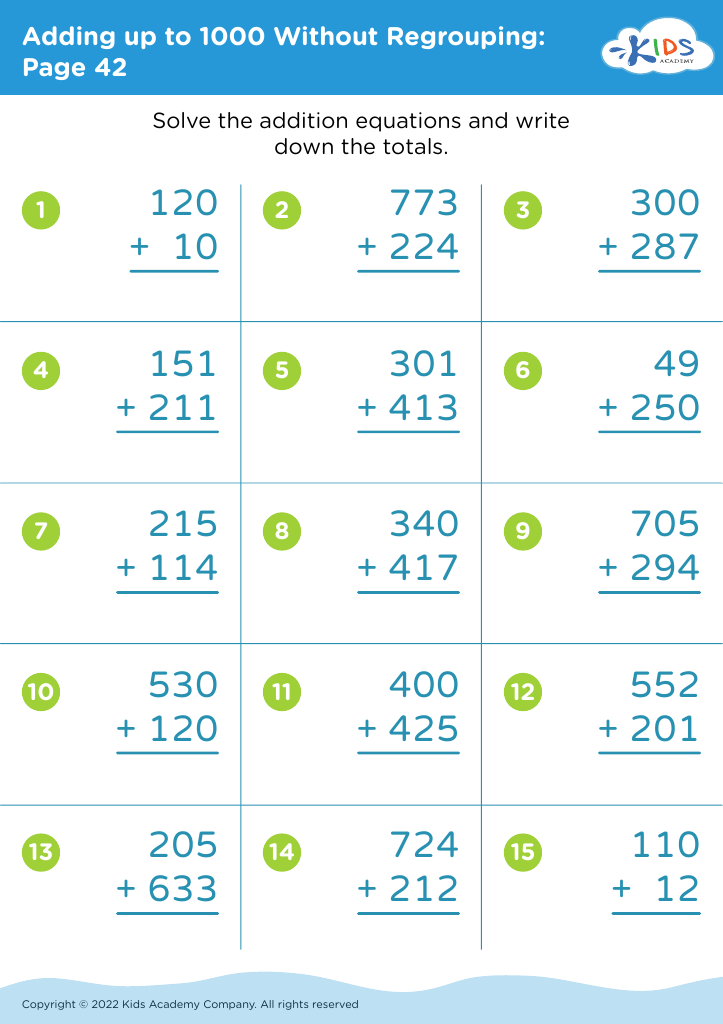
    Adding up to 1000 Without Regrouping: Page 42
    Adding up to 1000 Without Regrouping: Page 42
    Adding up to 1000 Without Regrouping: Page 42
    Worksheet
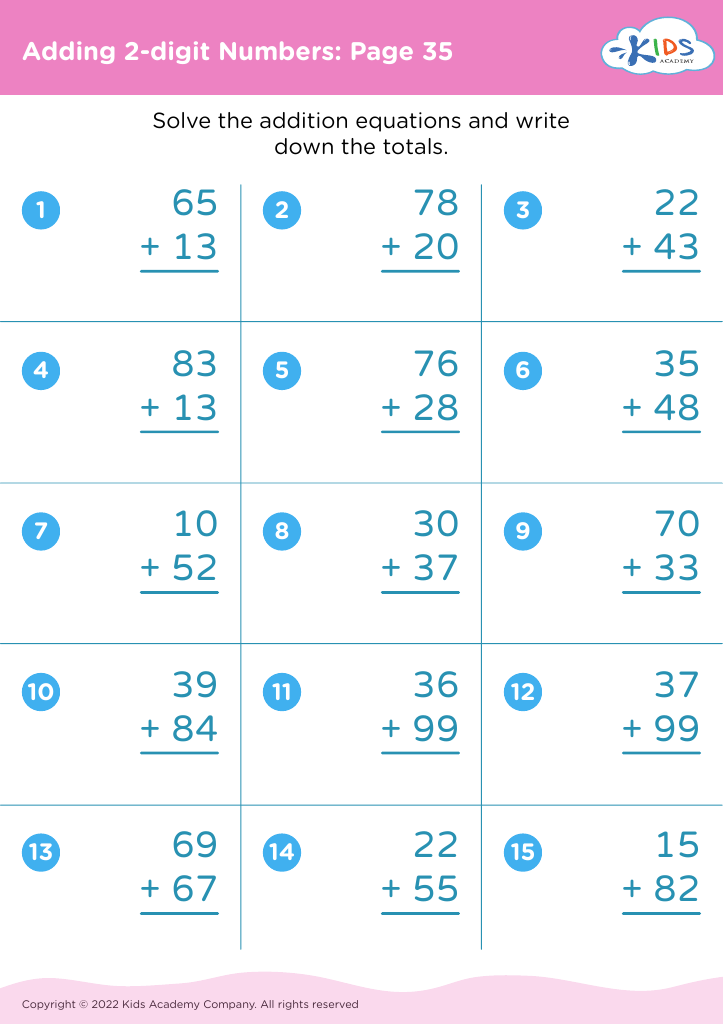
    Adding 2-digit Numbers: Page 35
    Adding 2-digit Numbers: Page 35

    Adding 2-digit Numbers: Page 35

    Adding 2-digit Numbers: Page 35
    Worksheet
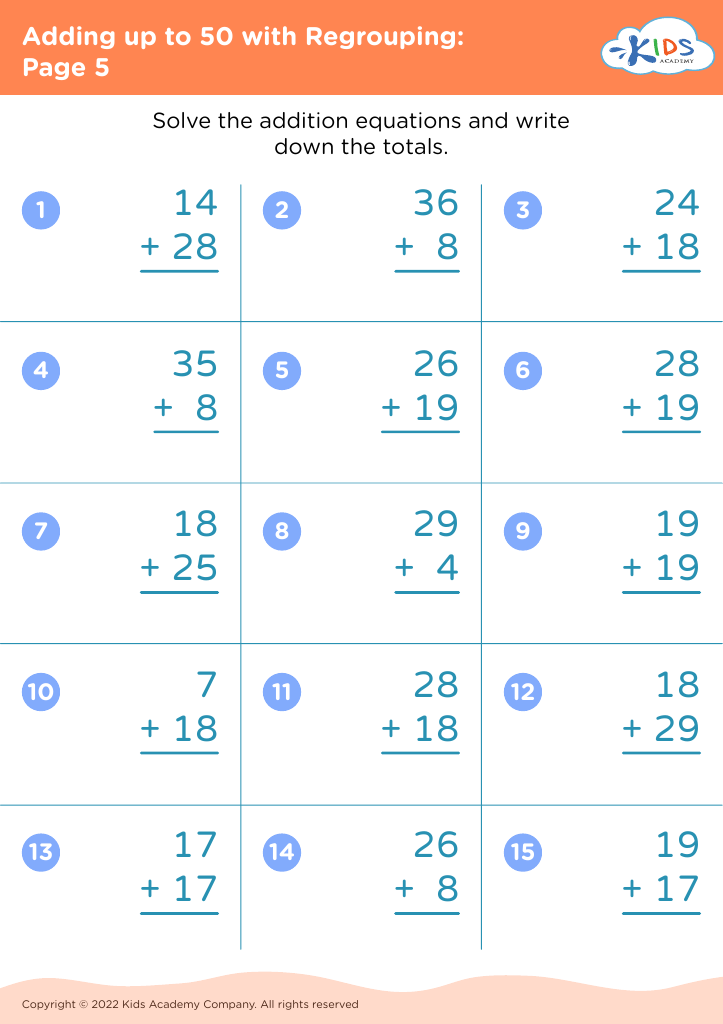
    Adding up to 50 with Regrouping: Page 5
    Adding up to 50 with Regrouping: Page 5
    Adding up to 50 with Regrouping: Page 5
    Worksheet
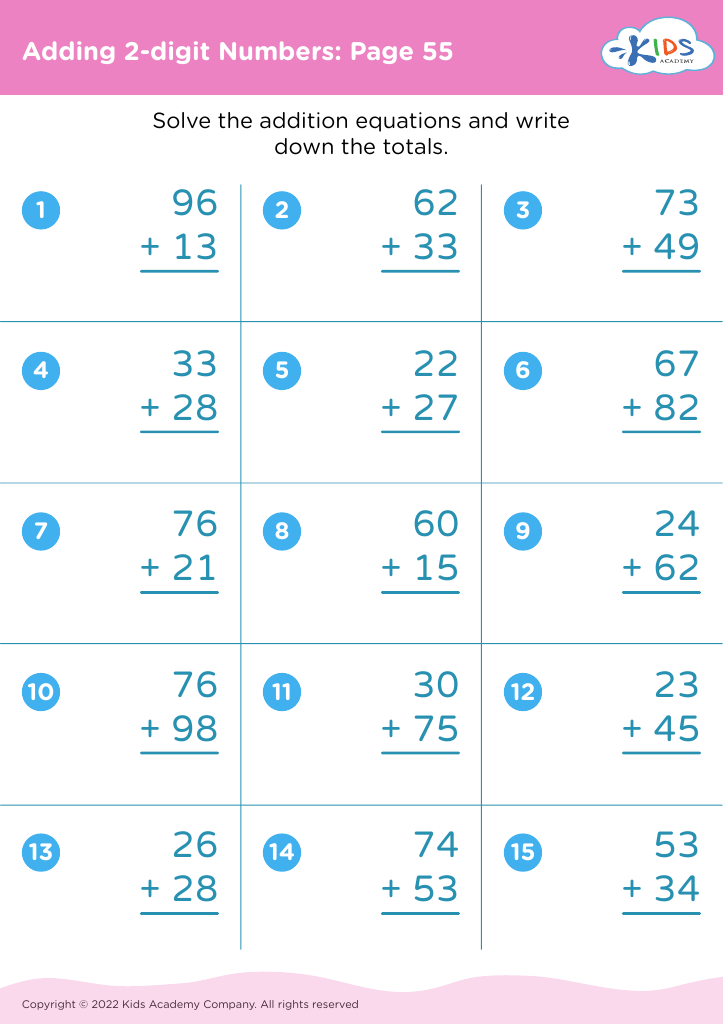
    Adding 2-digit Numbers: Page 55
    Adding 2-digit Numbers: Page 55

    Adding 2-digit Numbers: Page 55

    Adding 2-digit Numbers: Page 55
    Worksheet
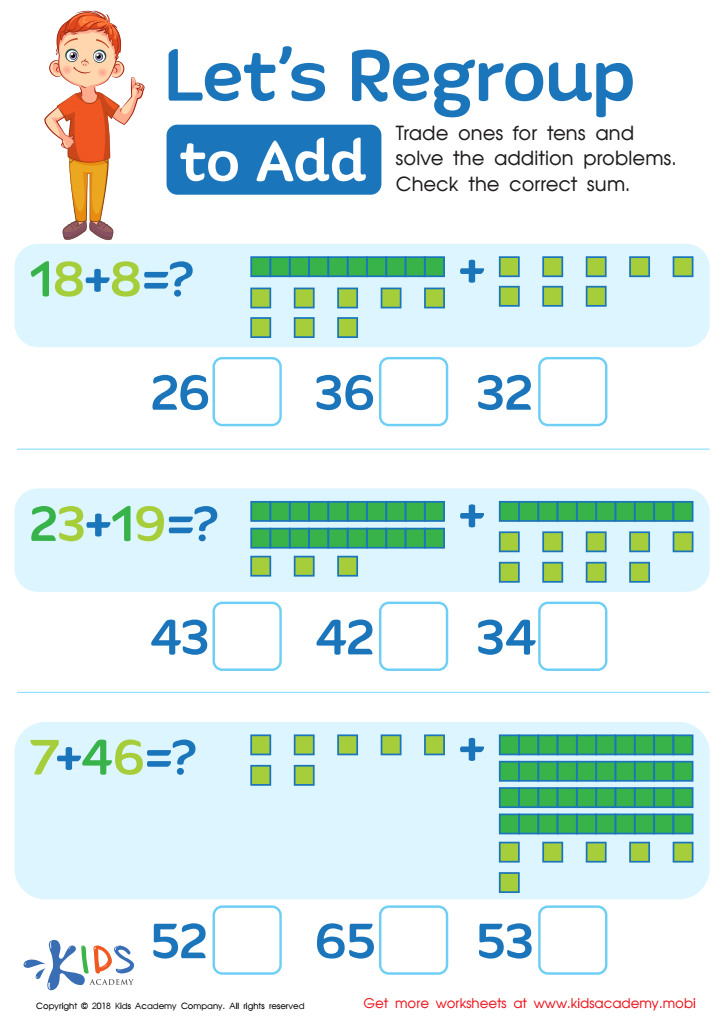
    Let's Regroup to Add Worksheet
    Let's Regroup to Add Worksheet

    Let's Regroup to Add Worksheet

    Practice regrouping and renaming numbers over ten with this worksheet. Using base ten blocks representations, students will turn single digits into '10s' and '1s', helping them to develop deeper mathematical reasoning, rather than just 'carrying the 1' when adding.
    Let's Regroup to Add Worksheet
    Worksheet
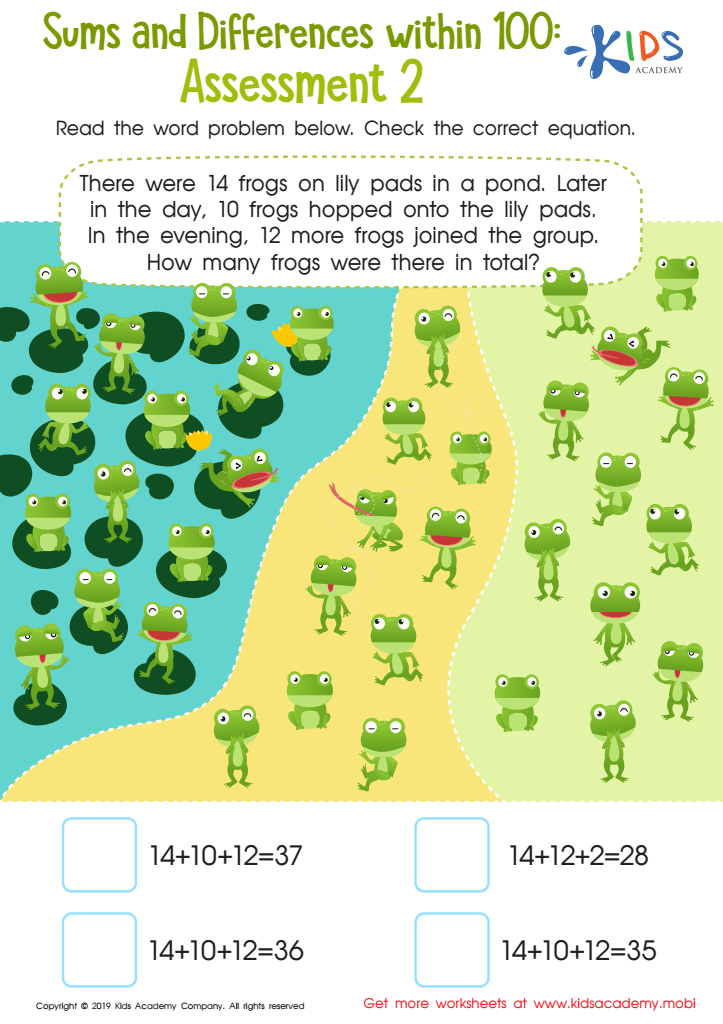
    Sums and Differences Within 1 - Assessment 2 Worksheet
    Sums and Differences Within 1 - Assessment 2 Worksheet
    Sums and Differences Within 1 - Assessment 2 Worksheet
    Help your kids practice math with these simple word problems. Read the question, discuss with them to form the equation and then check the answer. Give them a chance to sharpen their math skills!
    Sums and Differences Within 1 - Assessment 2 Worksheet
    Worksheet
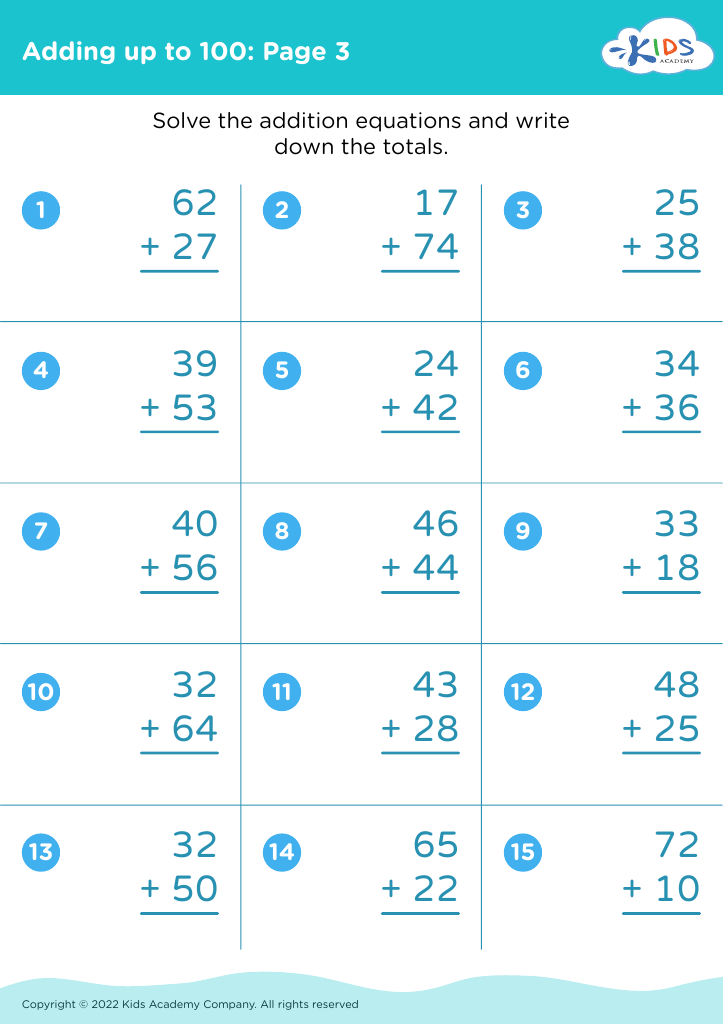
    Adding up to 100: Page 3
    Adding up to 100: Page 3

    Adding up to 100: Page 3

    Adding up to 100: Page 3
    Worksheet
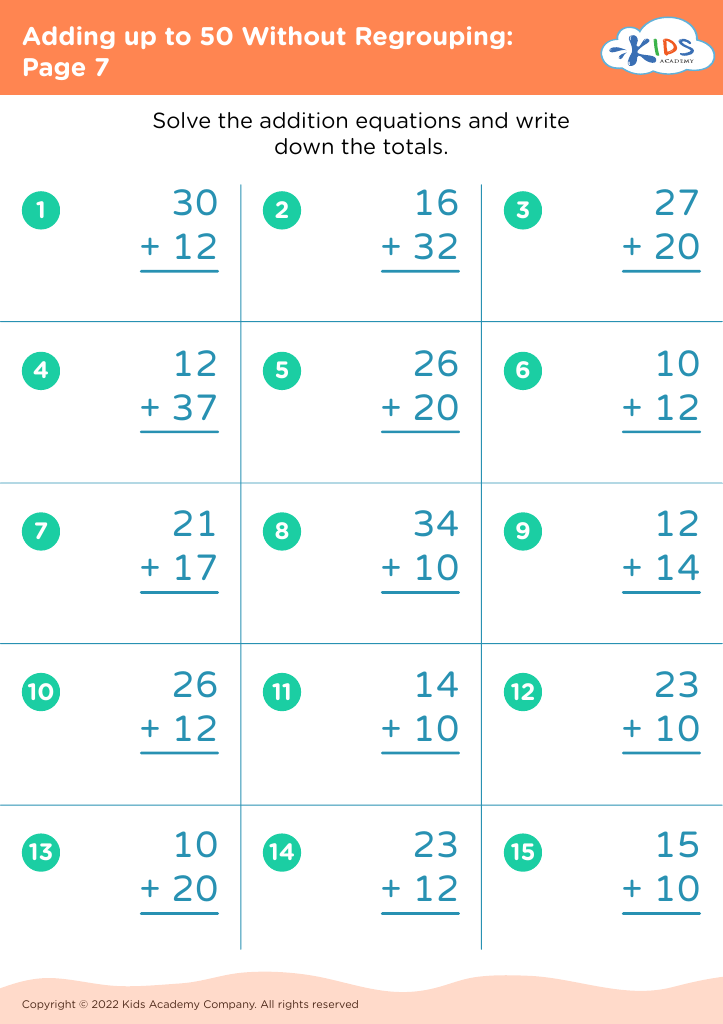
    Adding up to 50 Without Regrouping: Page 7
    Adding up to 50 Without Regrouping: Page 7
    Adding up to 50 Without Regrouping: Page 7
    Worksheet
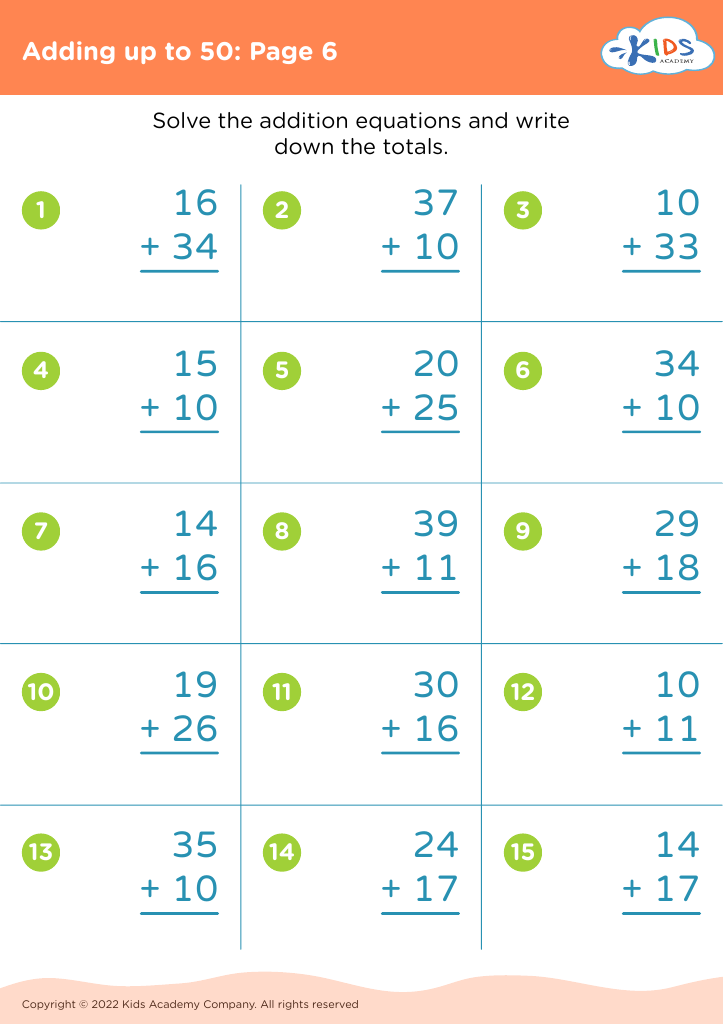
    Adding up to 50: Page 6
    Adding up to 50: Page 6

    Adding up to 50: Page 6

    Adding up to 50: Page 6
    Worksheet
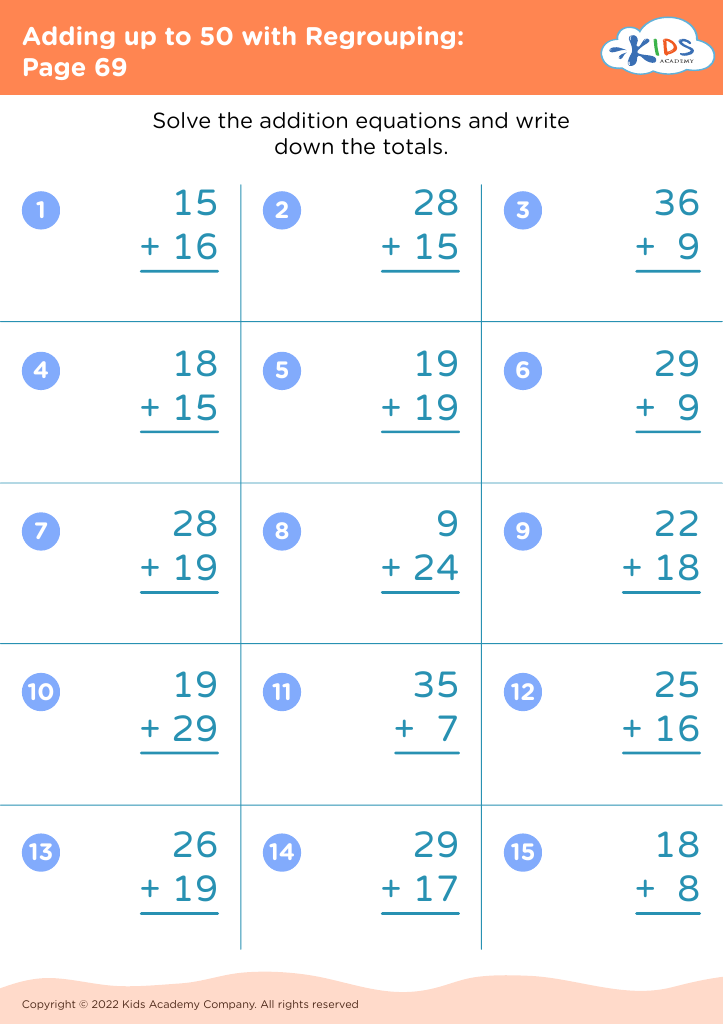
    Adding up to 50 with Regrouping: Page 69
    Adding up to 50 with Regrouping: Page 69
    Adding up to 50 with Regrouping: Page 69
    Worksheet
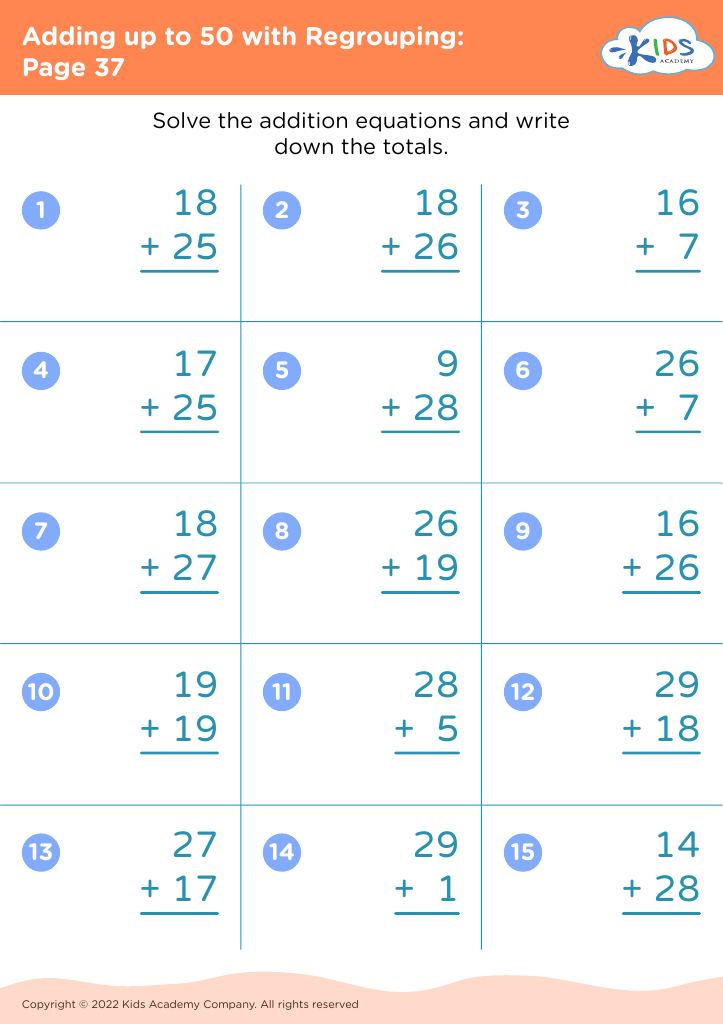
    Adding up to 50 with Regrouping: Page 37
    Adding up to 50 with Regrouping: Page 37
    Adding up to 50 with Regrouping: Page 37
    Worksheet
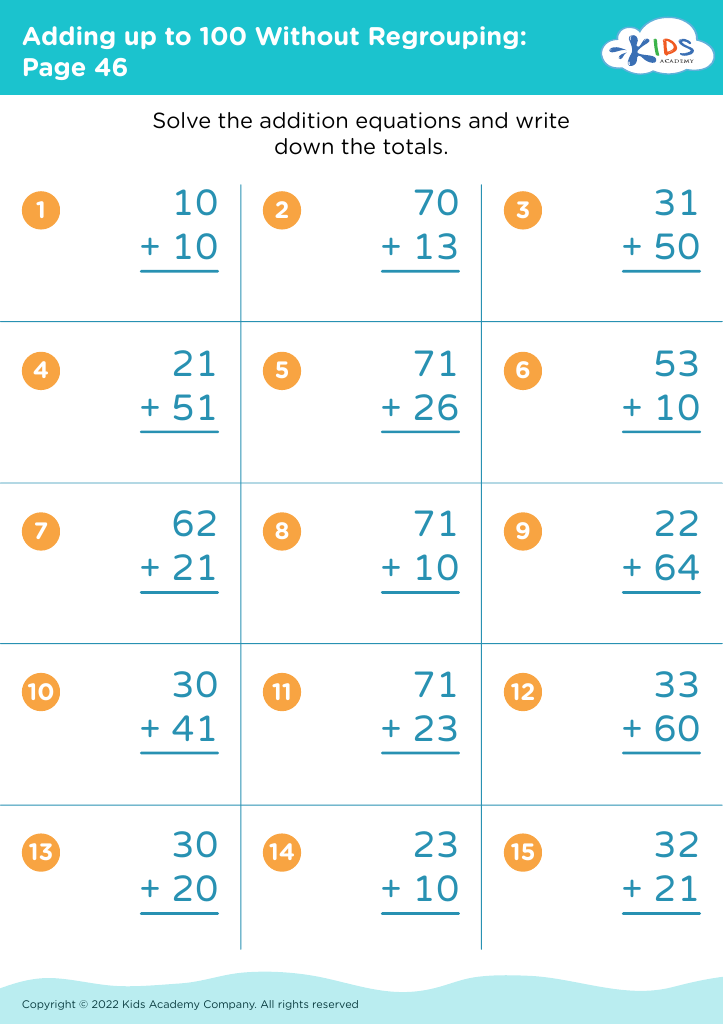
    Adding up to 100 Without Regrouping: Page 46
    Adding up to 100 Without Regrouping: Page 46
    Adding up to 100 Without Regrouping: Page 46
    Worksheet
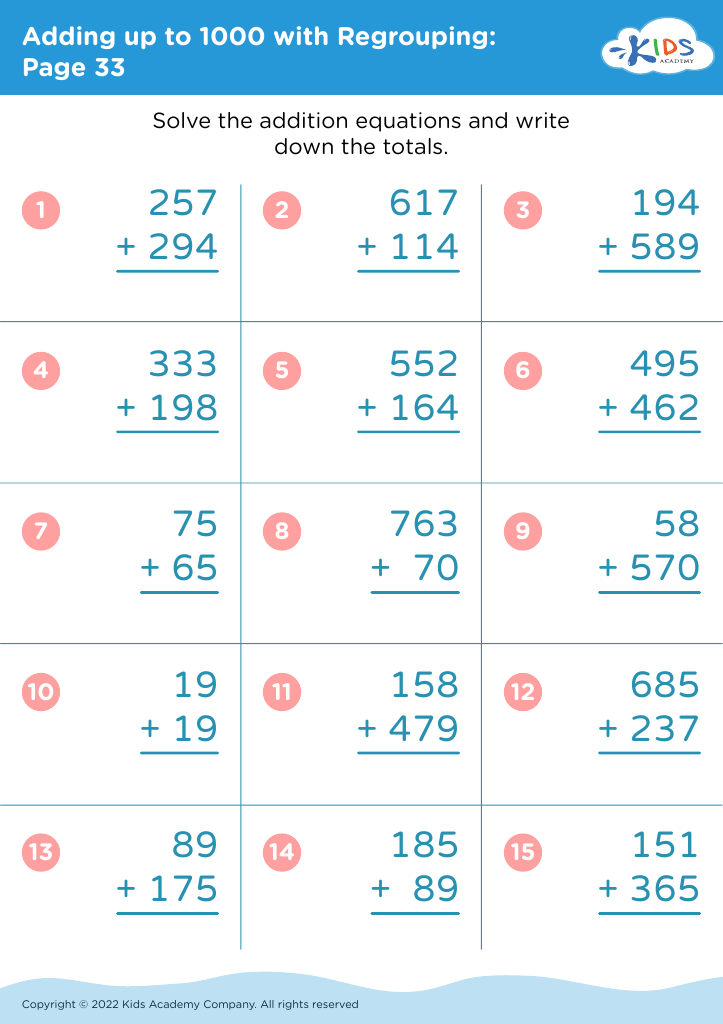
    Adding up to 1000 with Regrouping: Page 33
    Adding up to 1000 with Regrouping: Page 33
    Adding up to 1000 with Regrouping: Page 33
    Worksheet
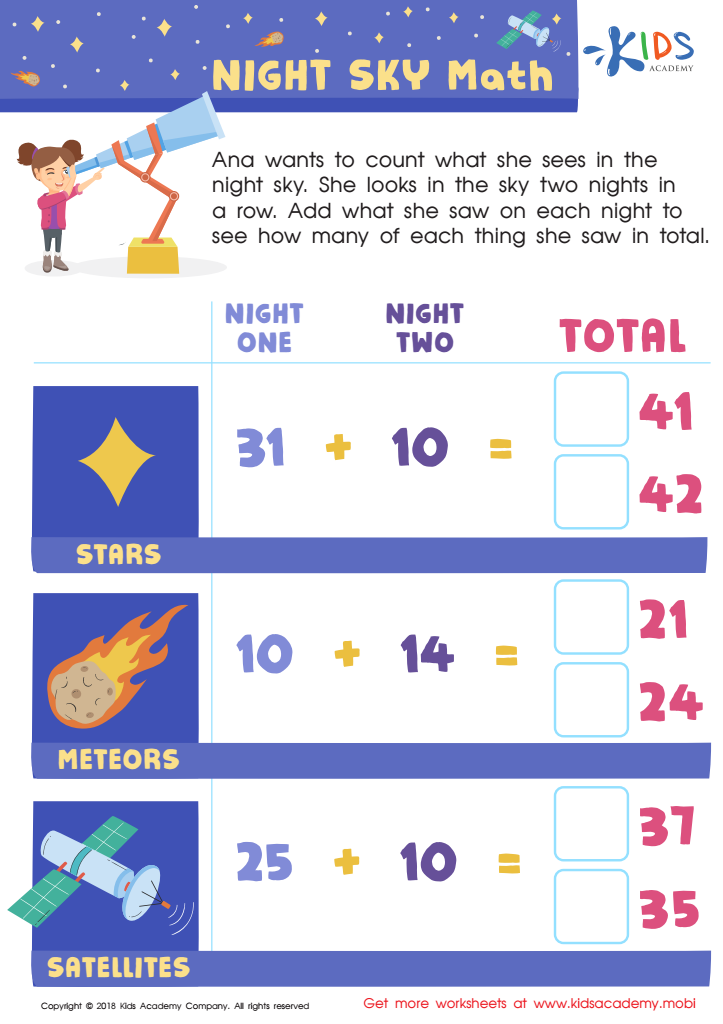
    Night Sky Math Worksheet
    Night Sky Math Worksheet
    Night Sky Math Worksheet
    Kids can use this colorful worksheet to learn math and addition while also exploring the night sky. Invite them to use a telescope to identify the things they see. Ask them to join Ana, the little girl in the worksheet, to count what she saw in two nights. Help them add the totals of each night to find out how many of each item she saw!
    Night Sky Math Worksheet
    Worksheet
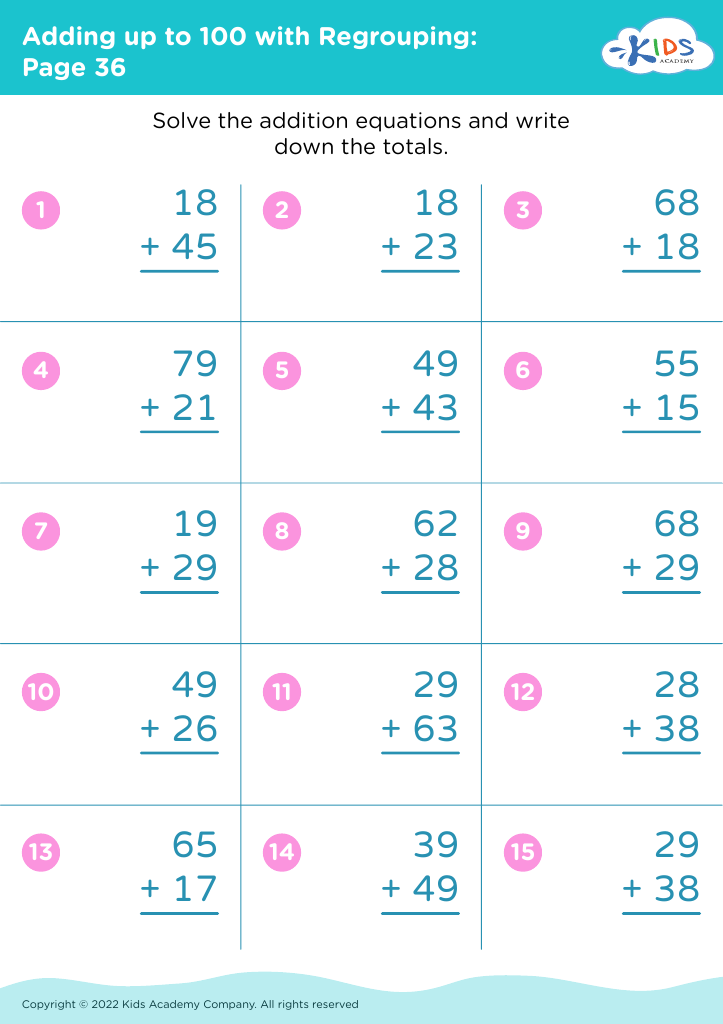
    Adding up to 100 with Regrouping: Page 36
    Adding up to 100 with Regrouping: Page 36
    Adding up to 100 with Regrouping: Page 36
    Worksheet
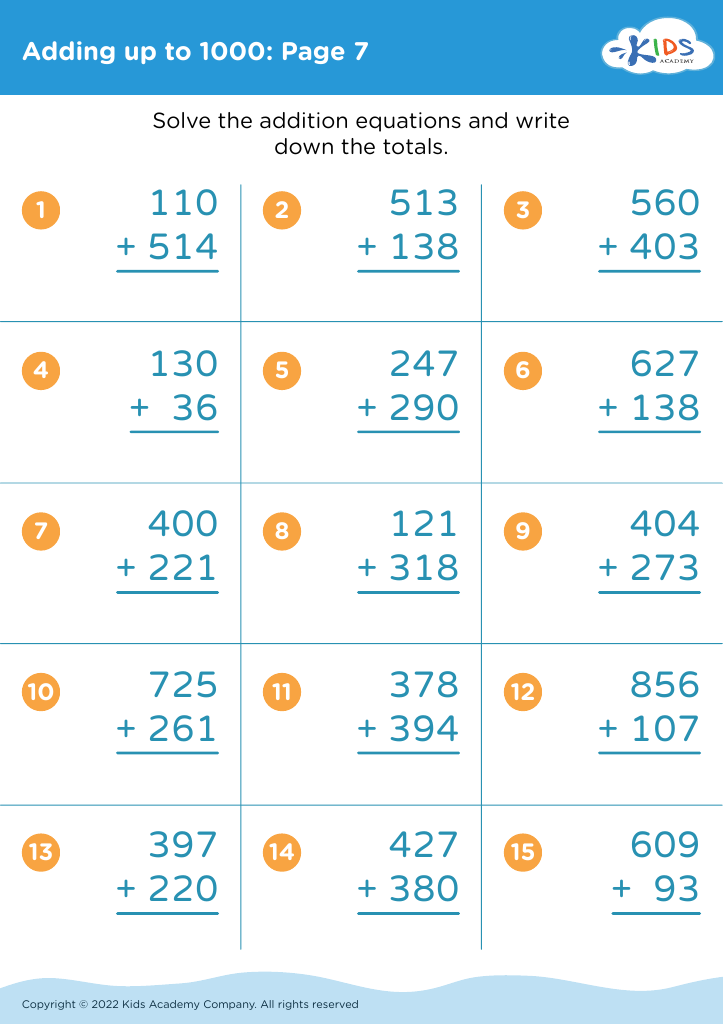
    Adding up to 1000: Page 7
    Adding up to 1000: Page 7

    Adding up to 1000: Page 7

    Adding up to 1000: Page 7
    Worksheet
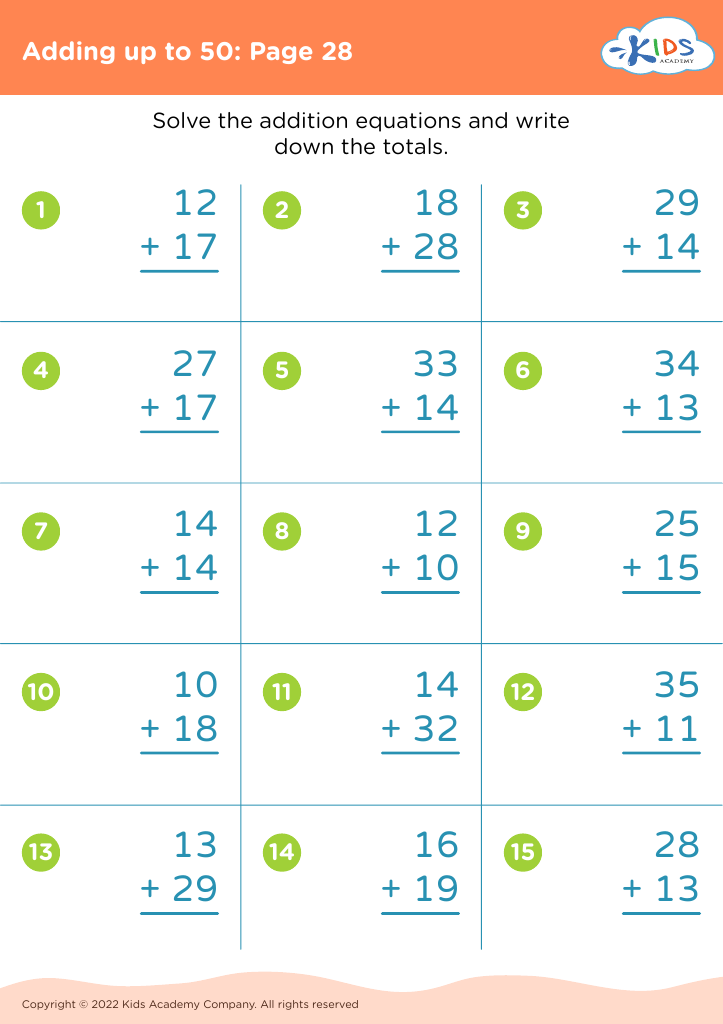
    Adding up to 50: Page 28
    Adding up to 50: Page 28

    Adding up to 50: Page 28

    Adding up to 50: Page 28
    Worksheet
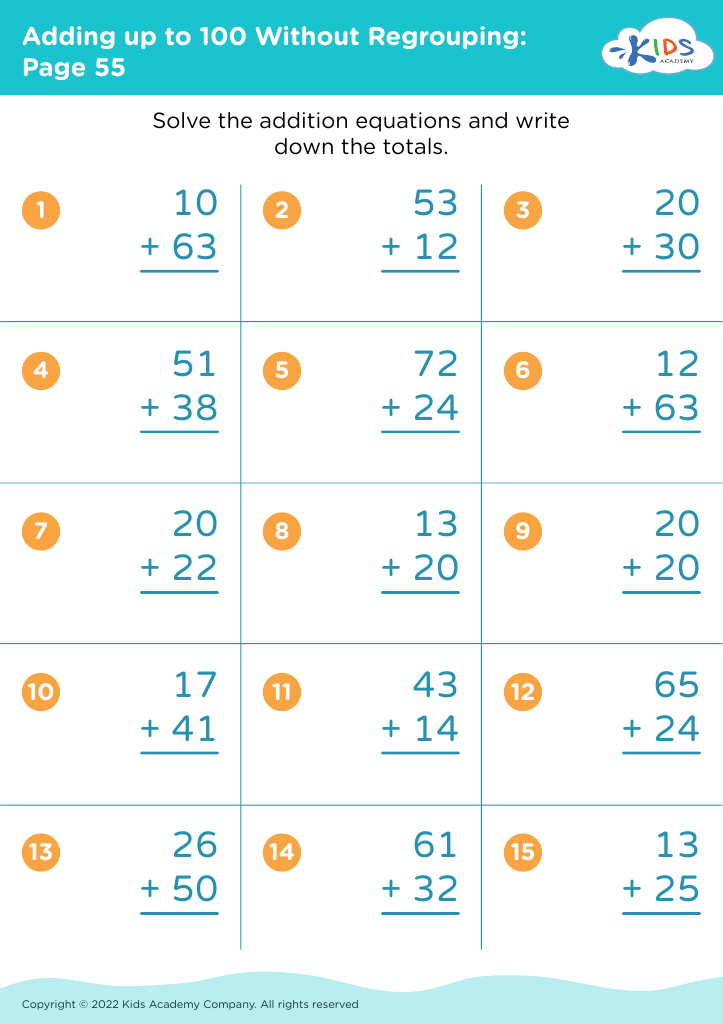
    Adding up to 100 Without Regrouping: Page 55
    Adding up to 100 Without Regrouping: Page 55
    Adding up to 100 Without Regrouping: Page 55
    Worksheet
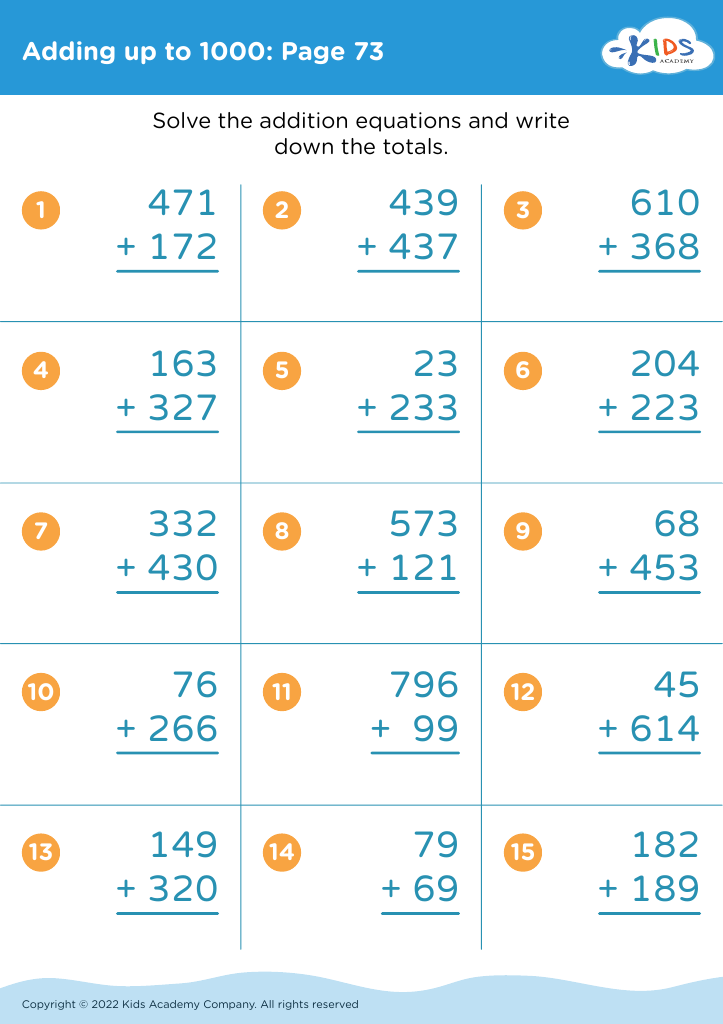
    Adding up to 1000: Page 73
    Adding up to 1000: Page 73

    Adding up to 1000: Page 73

    Adding up to 1000: Page 73
    Worksheet
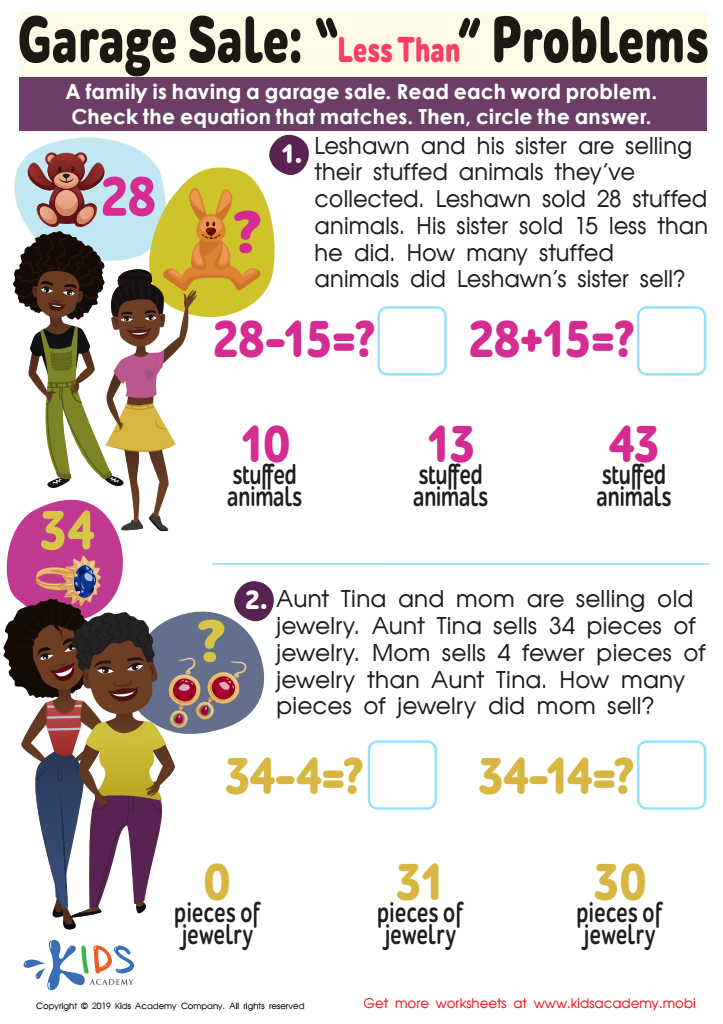
    Garage Sale Less Than Worksheet
    Garage Sale Less Than Worksheet

    Garage Sale Less Than Worksheet

    Kids often struggle with math word problems. This worksheet offers practice, using a real-world situation: friends having a garage sale. Students read each problem, extract the relevant information, match it with the correct equation and solve. Great for honing those essential problem-solving skills!
    Garage Sale Less Than Worksheet
    Worksheet
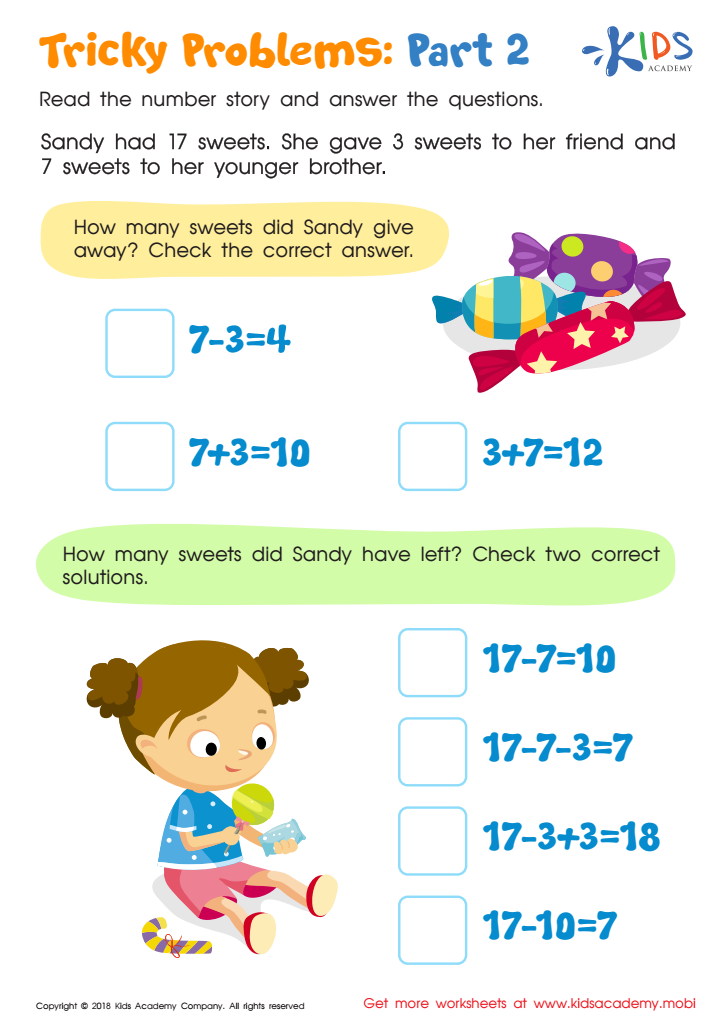
    Tricky Problems Worksheet: Part 2

    Tricky Problems Worksheet: Part 2

    Tricky Problems Worksheet: Part 2

    Help your little math learner visualize number stories with this engaging worksheet. They'll connect pictures to the story and use math facts to find the sums. After that, they'll be able to identify the correct number sentences to match. Let them practice and get better at problem solving!
    Tricky Problems Worksheet: Part 2

    Worksheet


    Parents and teachers should prioritize teaching addition to children ages 7-9, as this foundational skill plays a crucial role in a child’s overall development. At this age, children move beyond basic computation and begin to understand more complex mathematical concepts, which can influence their academic performance and future learning. Mastering addition builds confidence and fosters a positive attitude towards math, encouraging kids to tackle more challenging subjects as they progress.

    Addition is also integral to everyday life, enabling children to handle real-world situations, from managing their allowance to playing games that require point calculations. Early proficiency in addition supports the development of critical thinking and problem-solving skills, enhancing cognitive abilities. Furthermore, it lays the groundwork for understanding other important mathematical concepts, such as subtraction, multiplication, and division.

    Incorporating engaging methods, such as games and manipulatives, can make learning addition fun and relatable, reinforcing comprehension through diverse experiences. By investing in children’s addition skills, parents and teachers help create a strong mathematical foundation that will serve them well throughout their academic journeys and beyond.