Addition Worksheets for Ages 7-9 - Page 2
817 filtered results
-
From - To
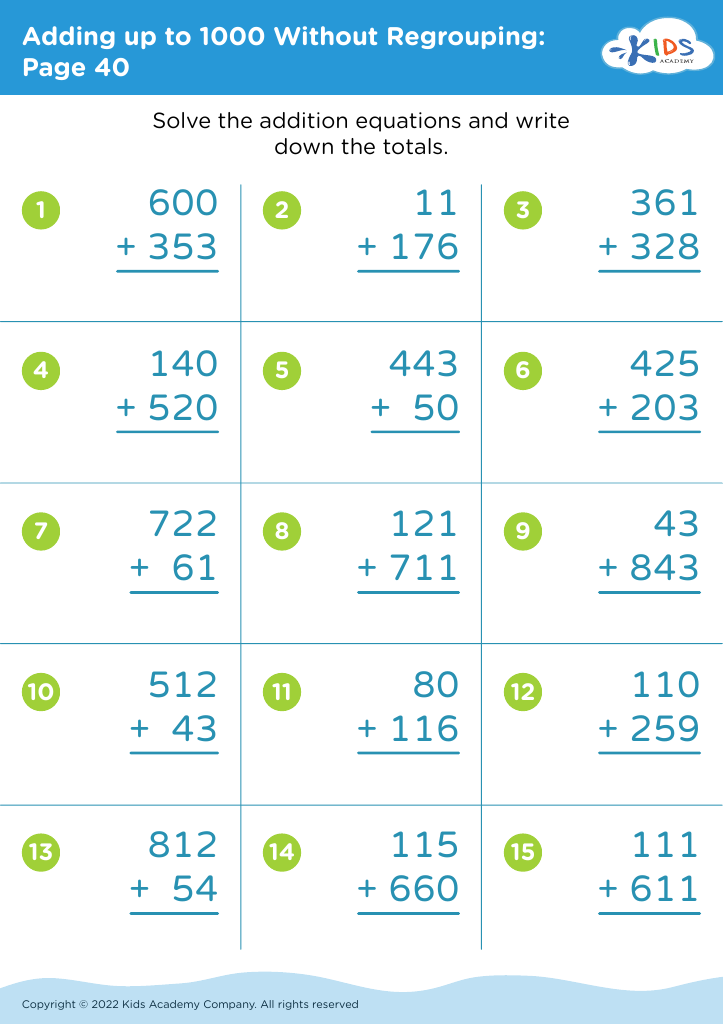
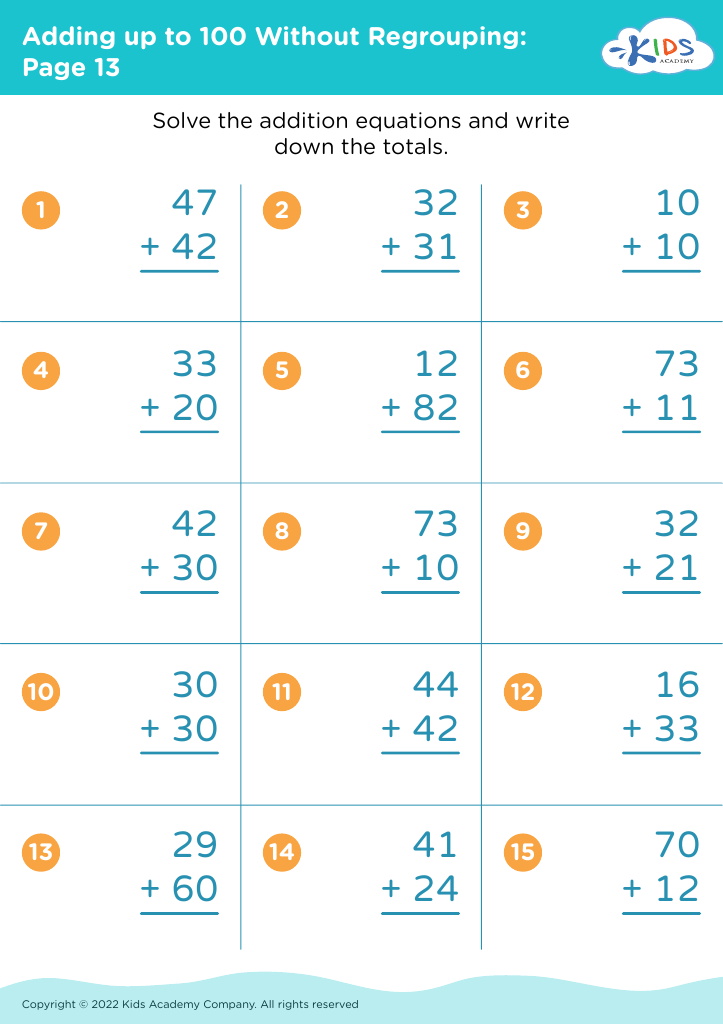
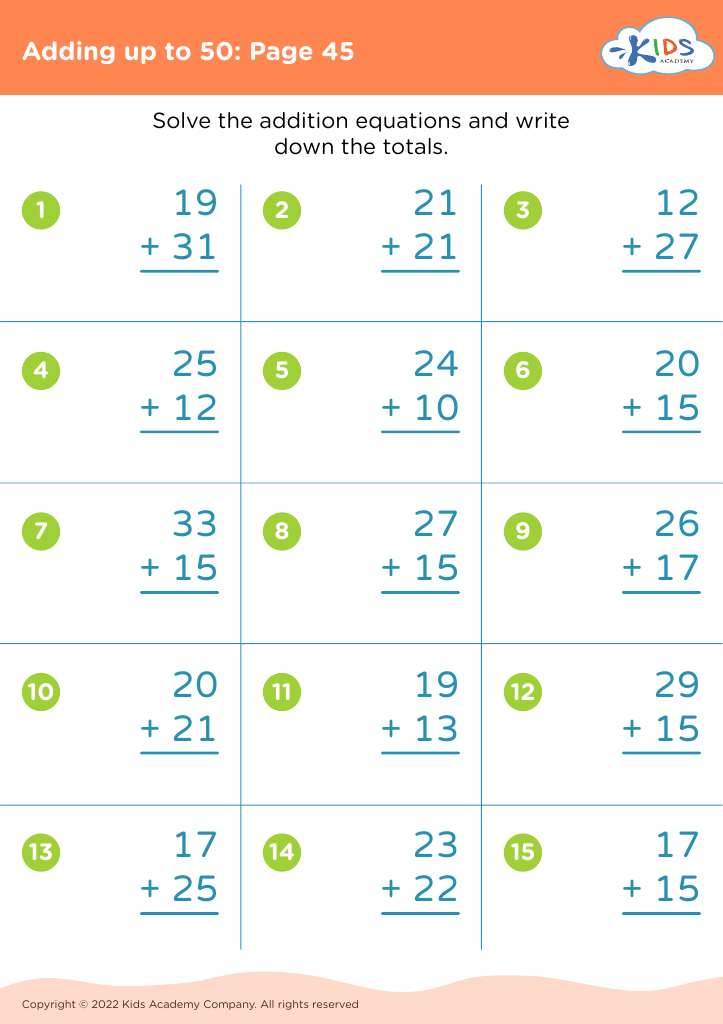
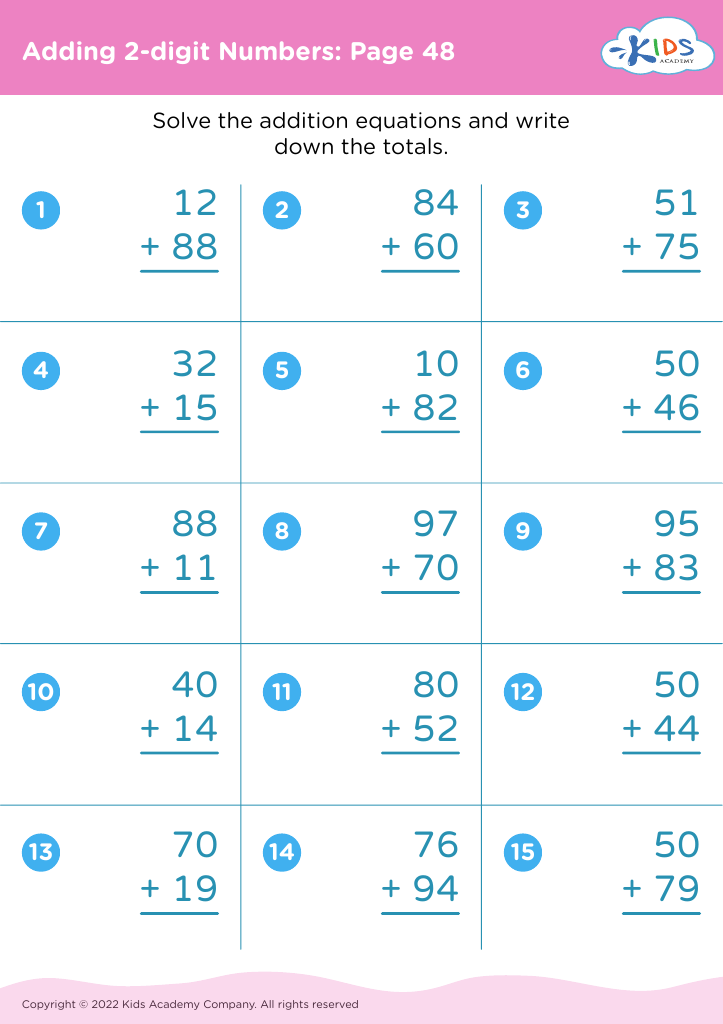
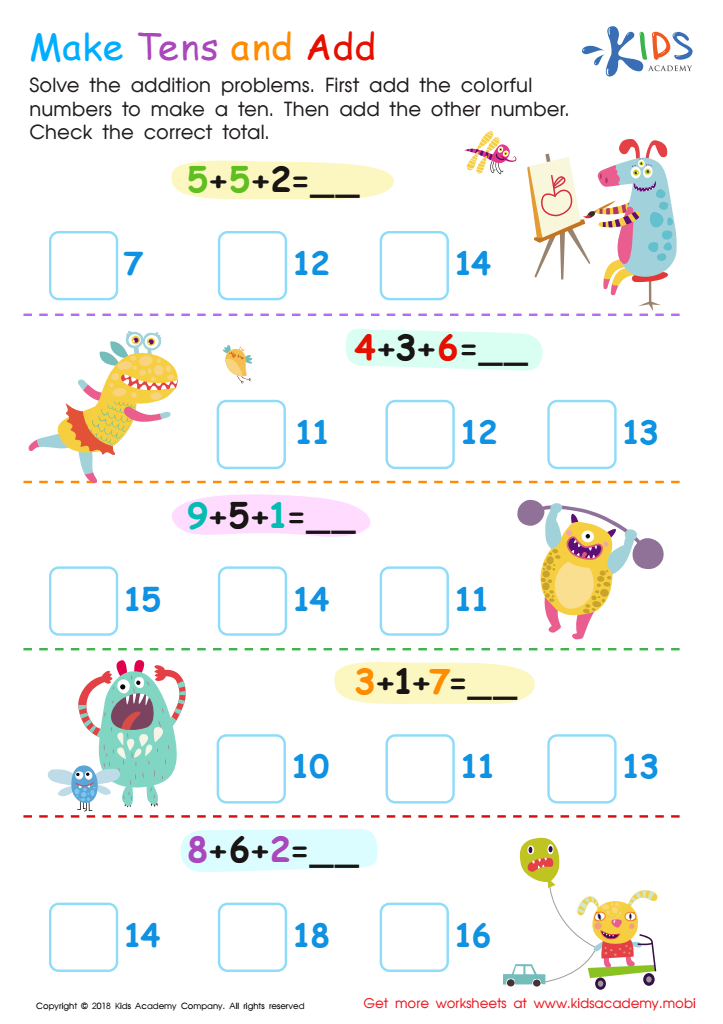
Make Tens and Add Worksheet
 Assign to My Students
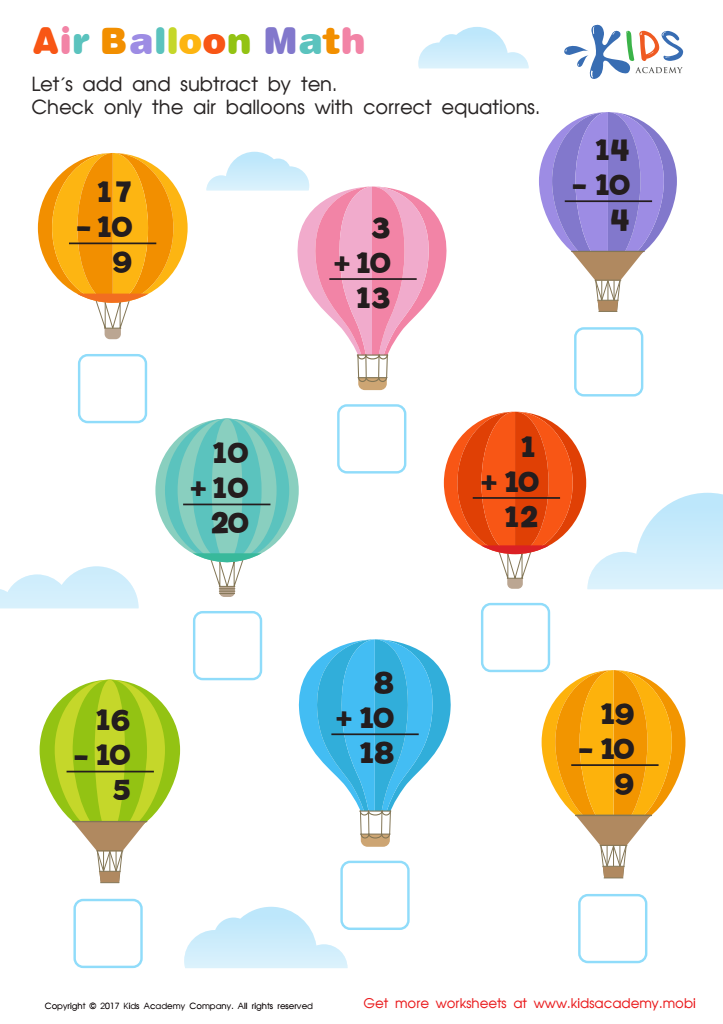
Air Balloon Math Worksheet
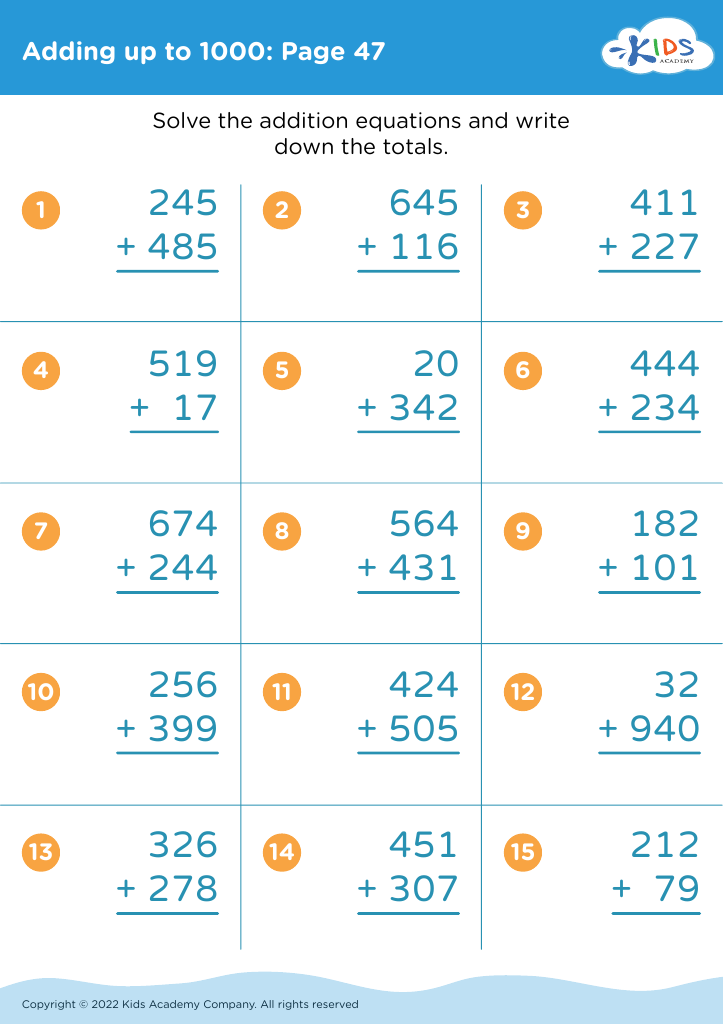
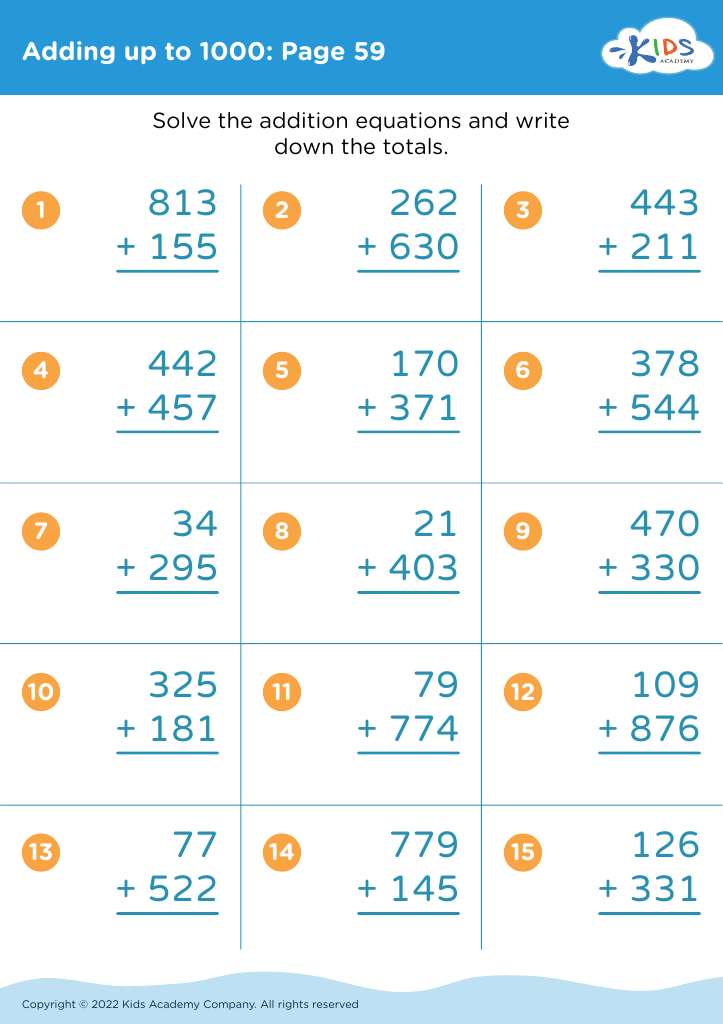
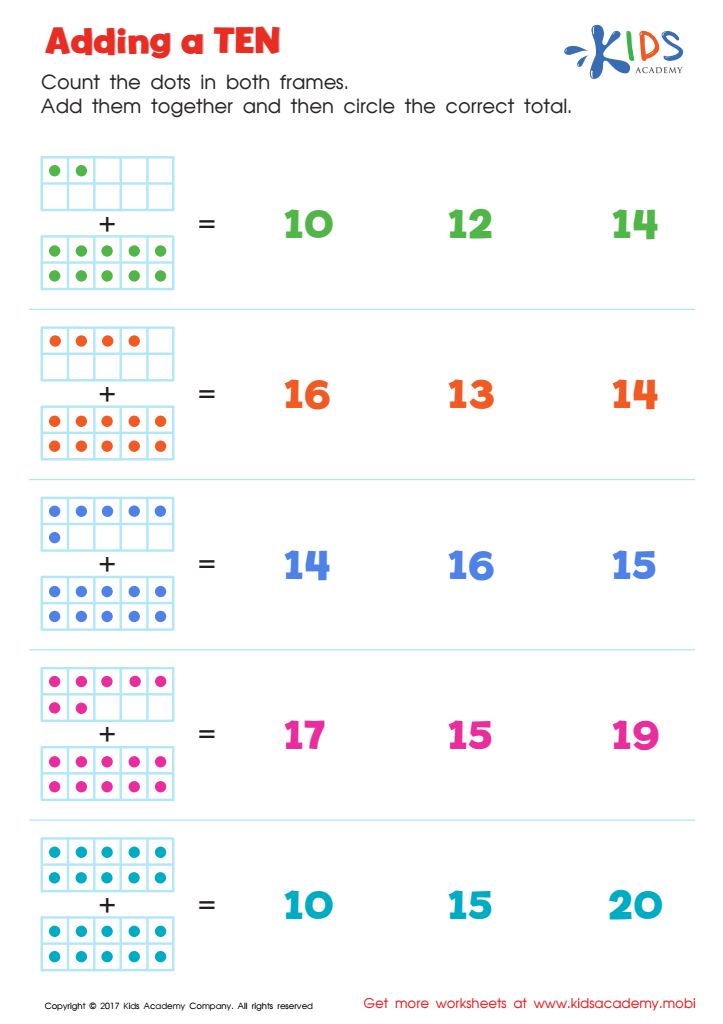
Adding a Ten Worksheet
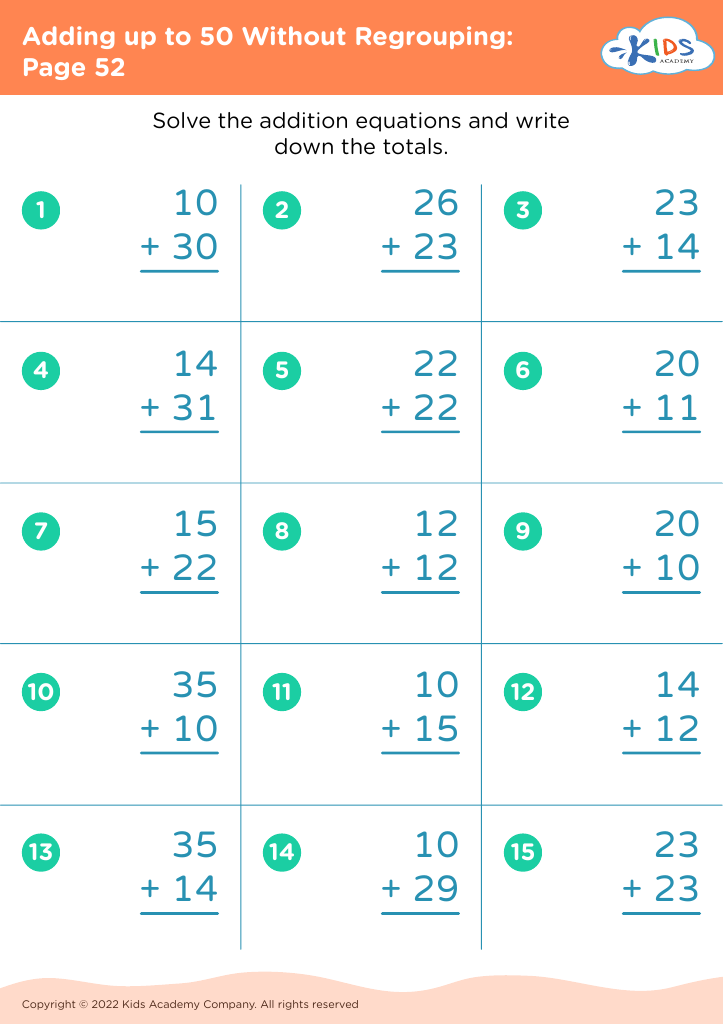
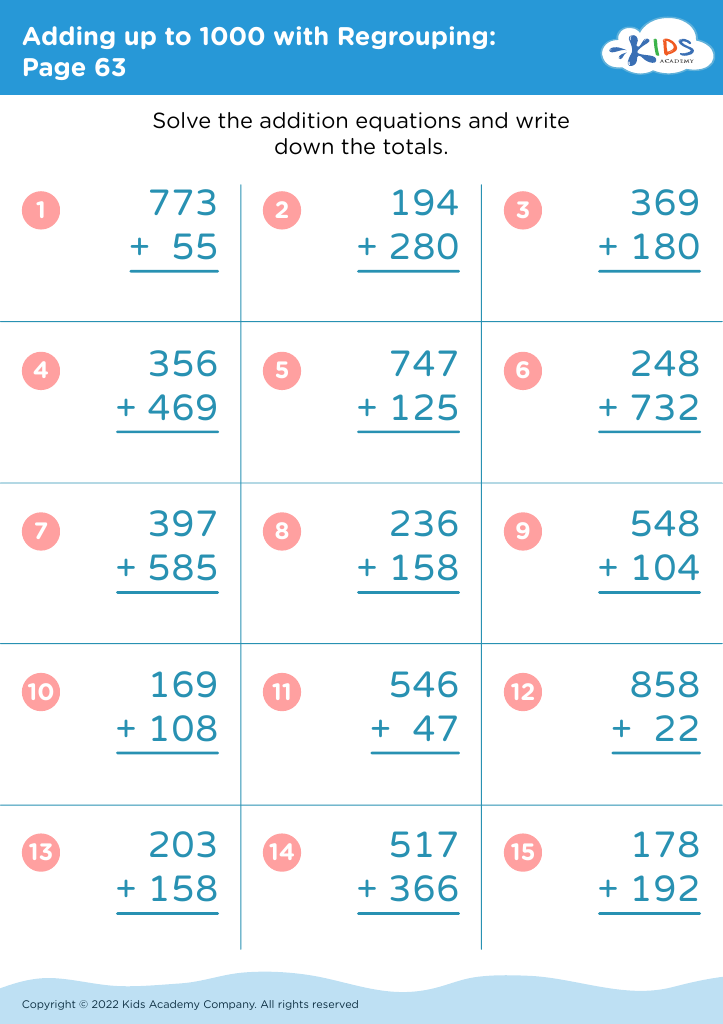
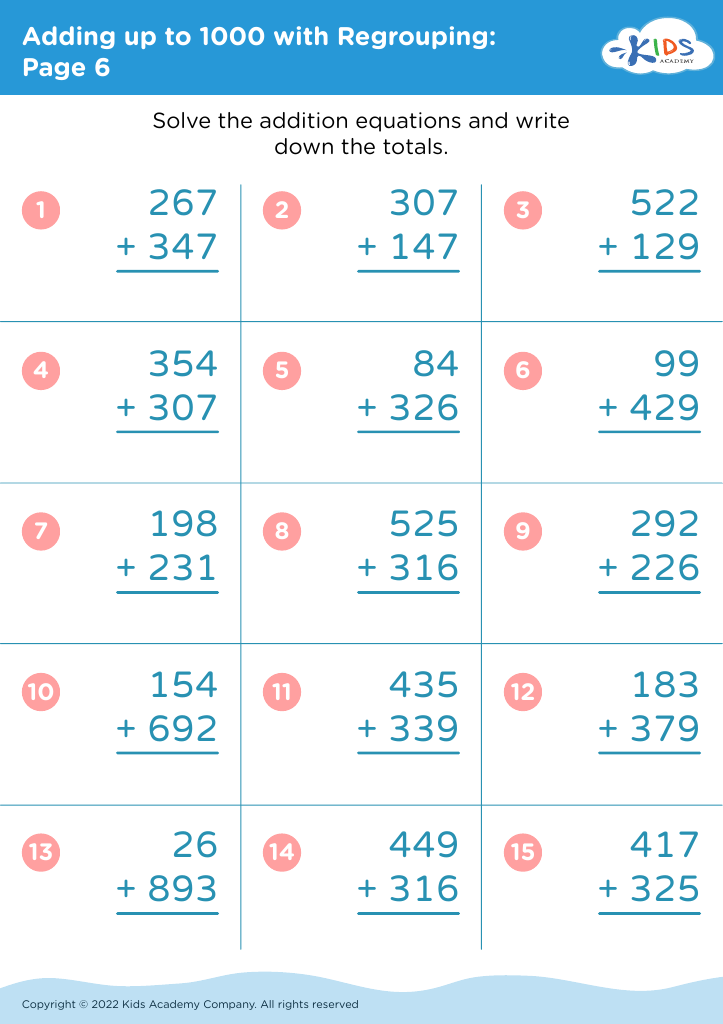
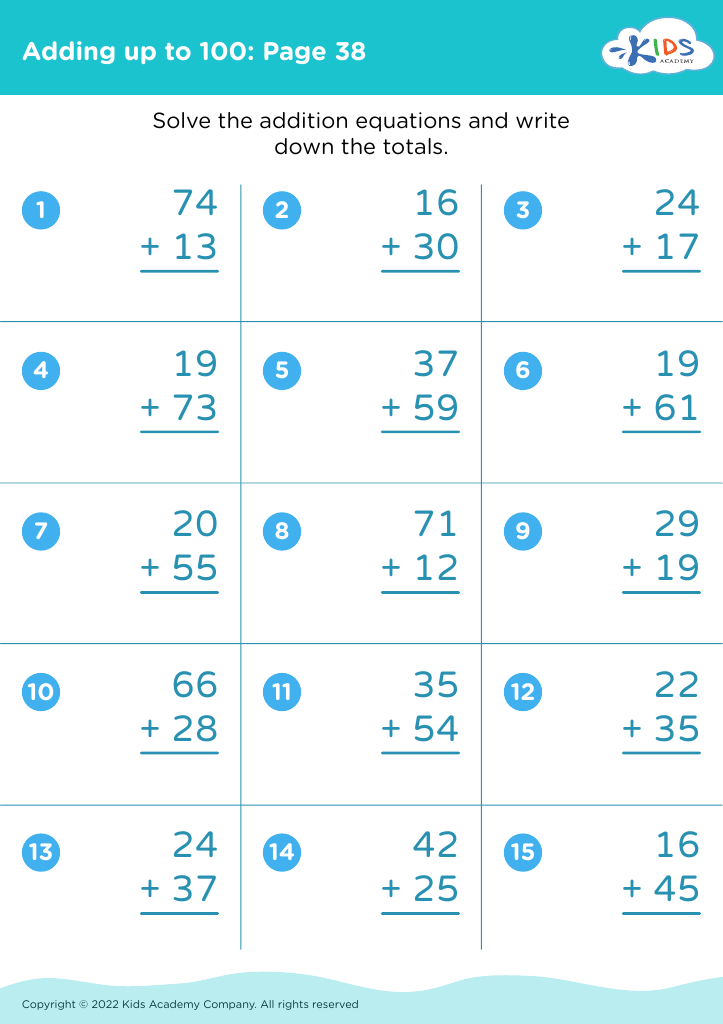
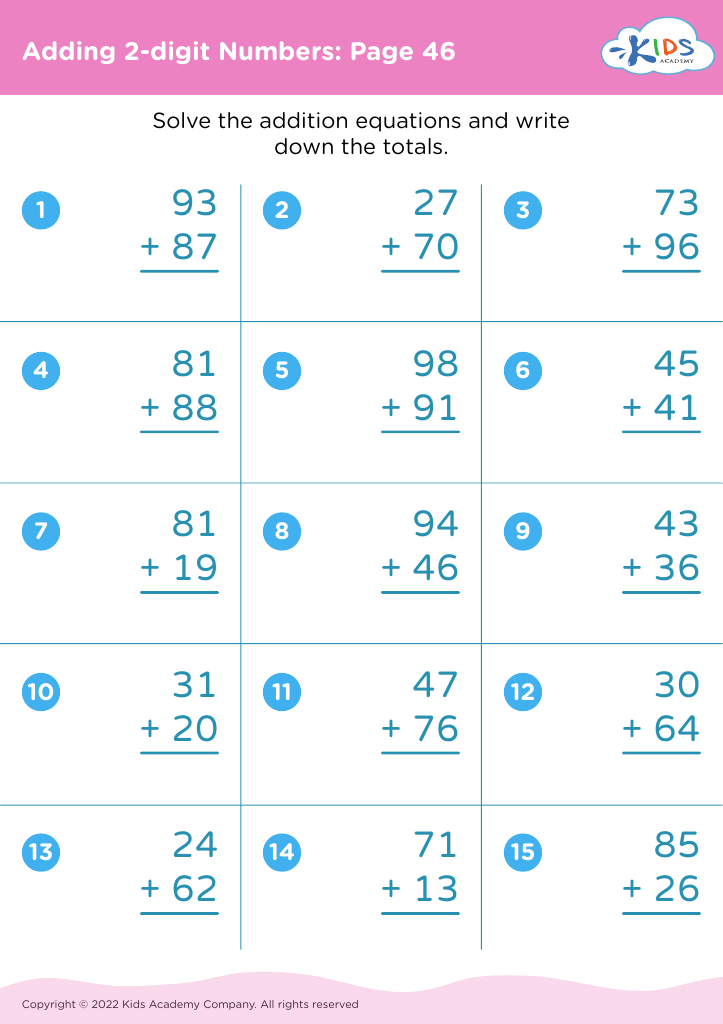
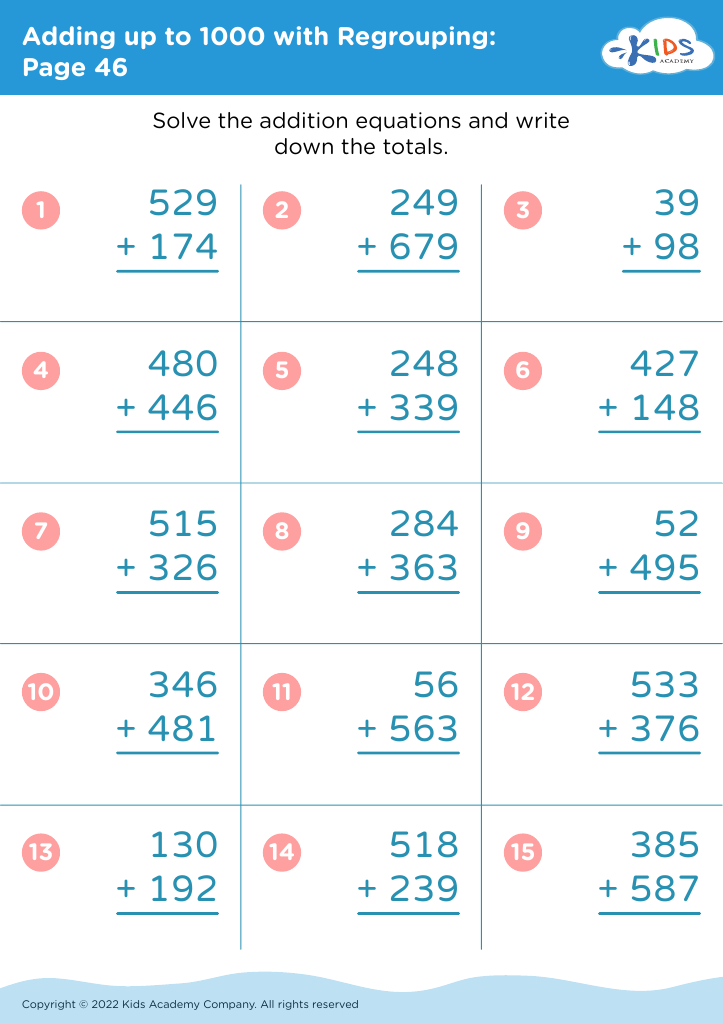
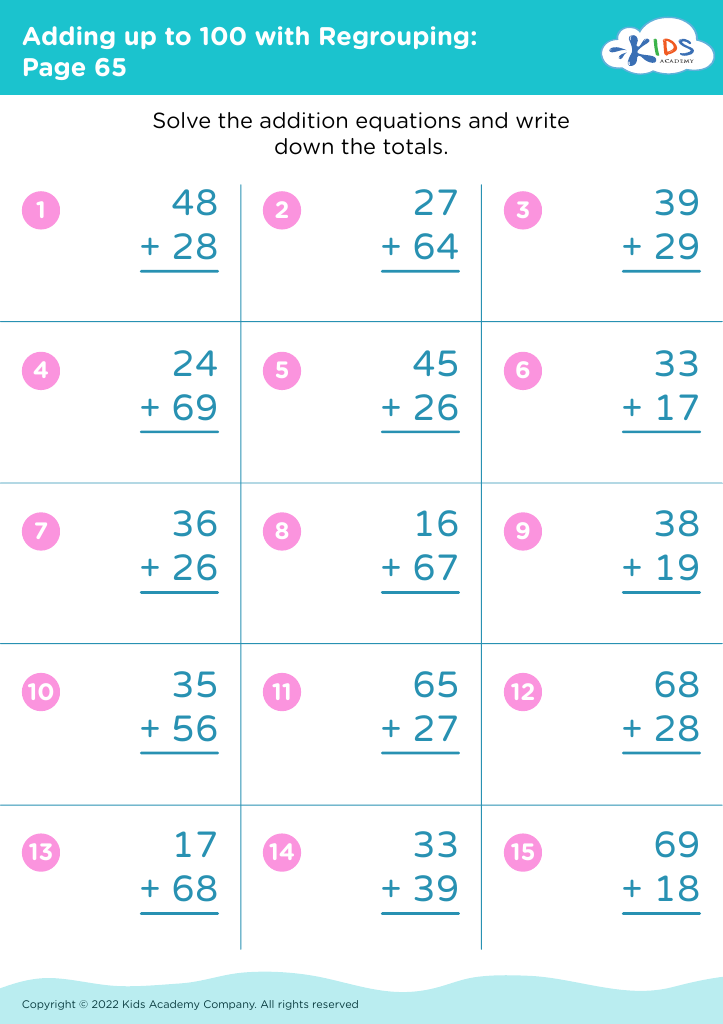
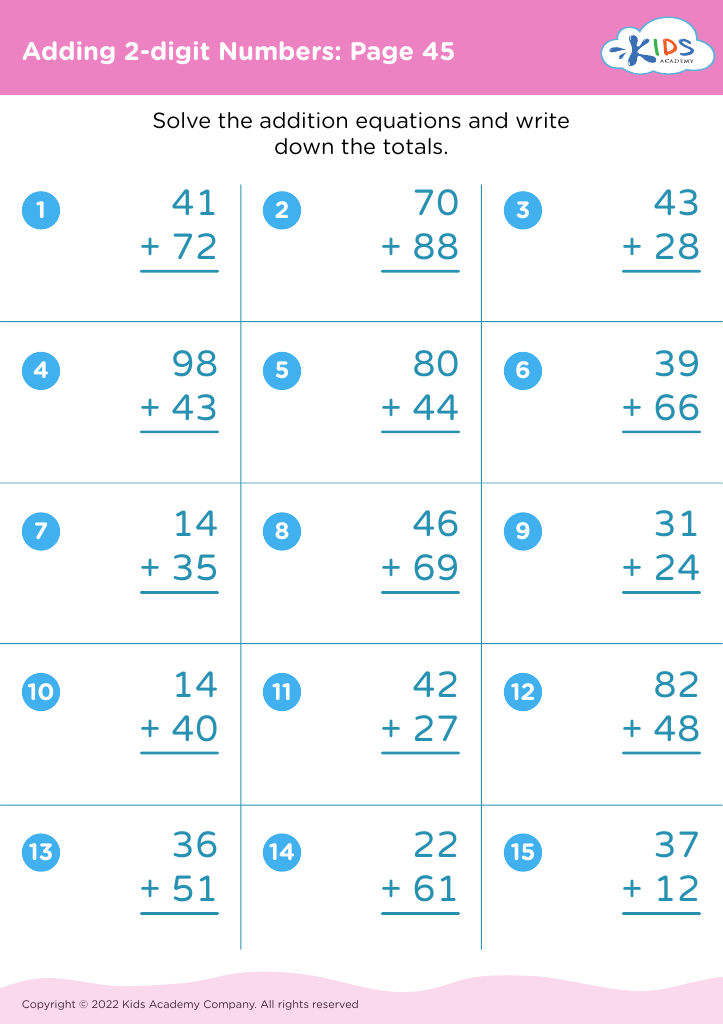








Parents and teachers should prioritize teaching addition to children ages 7-9, as this foundational skill plays a crucial role in a child’s overall development. At this age, children move beyond basic computation and begin to understand more complex mathematical concepts, which can influence their academic performance and future learning. Mastering addition builds confidence and fosters a positive attitude towards math, encouraging kids to tackle more challenging subjects as they progress.
Addition is also integral to everyday life, enabling children to handle real-world situations, from managing their allowance to playing games that require point calculations. Early proficiency in addition supports the development of critical thinking and problem-solving skills, enhancing cognitive abilities. Furthermore, it lays the groundwork for understanding other important mathematical concepts, such as subtraction, multiplication, and division.
Incorporating engaging methods, such as games and manipulatives, can make learning addition fun and relatable, reinforcing comprehension through diverse experiences. By investing in children’s addition skills, parents and teachers help create a strong mathematical foundation that will serve them well throughout their academic journeys and beyond.








