Understanding tens Numbers Worksheets for Ages 7-9
4 filtered results
-
From - To
Unlock your child's potential in math with our "Understanding Tens Numbers Worksheets for Ages 7-9." Tailored for young learners, these engaging worksheets are designed to build strong foundational skills in understanding tens and ones. Through a variety of fun activities, children will develop their ability to count, add, and recognize patterns in numbers. These worksheets not only make learning enjoyable but also enhance critical thinking and problem-solving skills. Perfect for both classroom use and at-home practice, they provide a seamless path to mastering the concept of tens, setting the stage for future math success. Explore now and watch your child’s confidence soar!
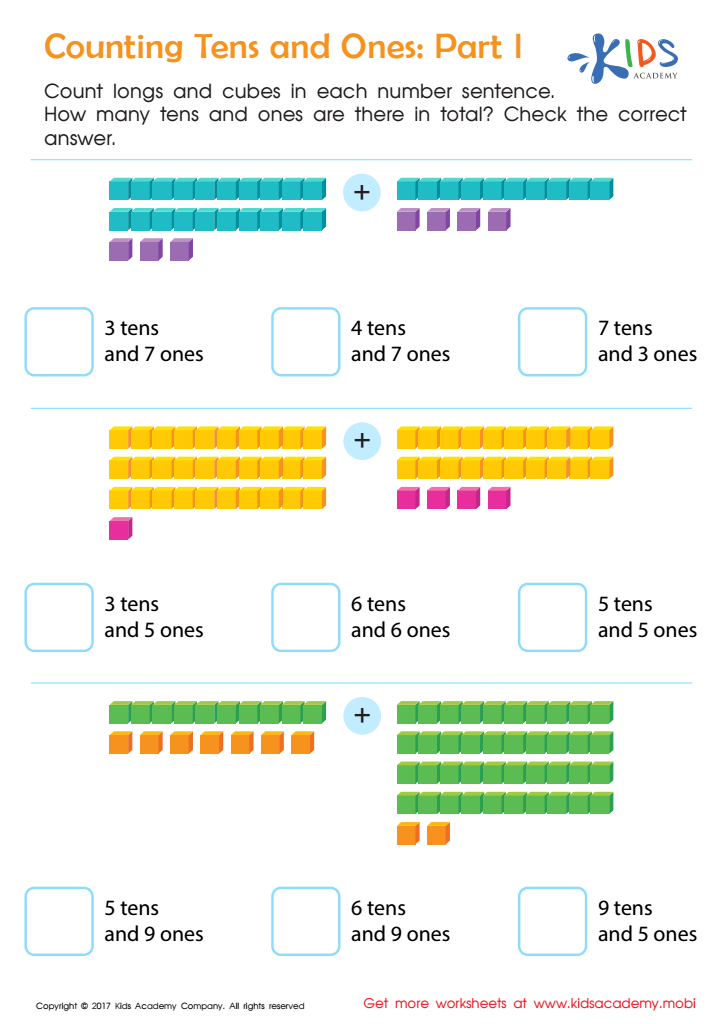
Counting Tens and Ones: Part 1 Worksheet
 Assign to My Students
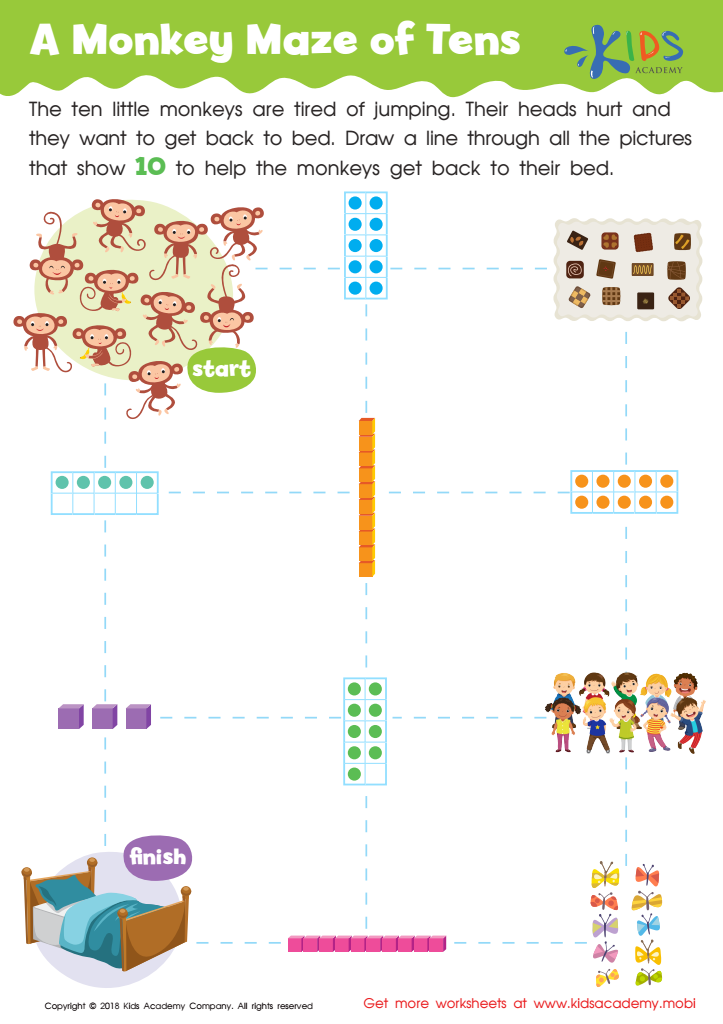
A Monkey Maze of Tens Worksheet
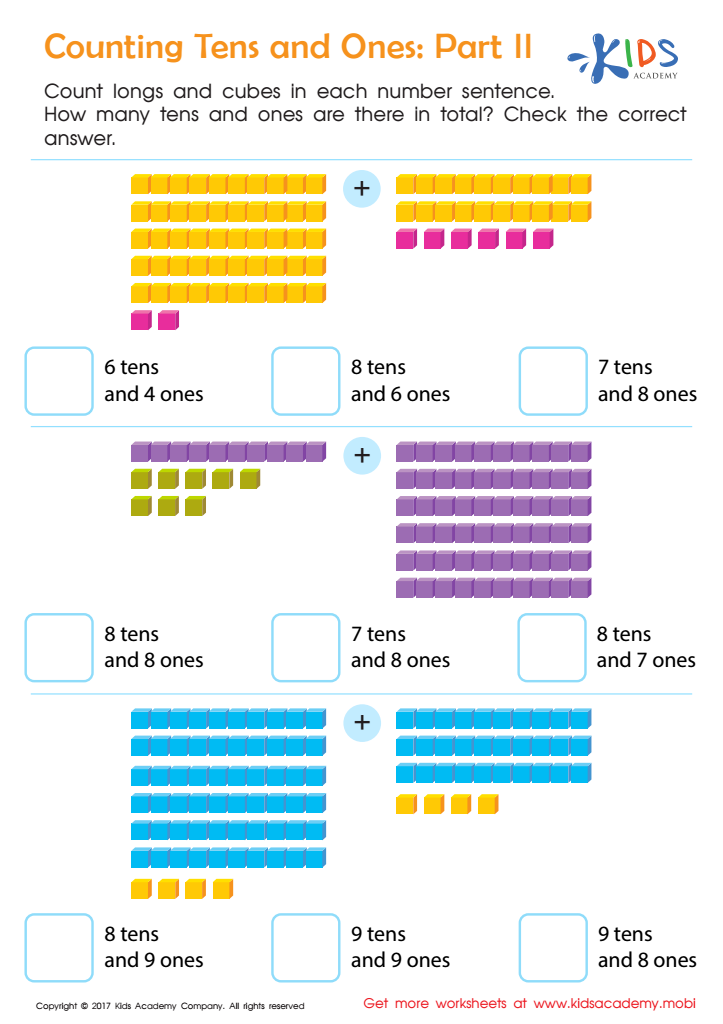
Counting Tens and Ones: Part 2 Worksheet
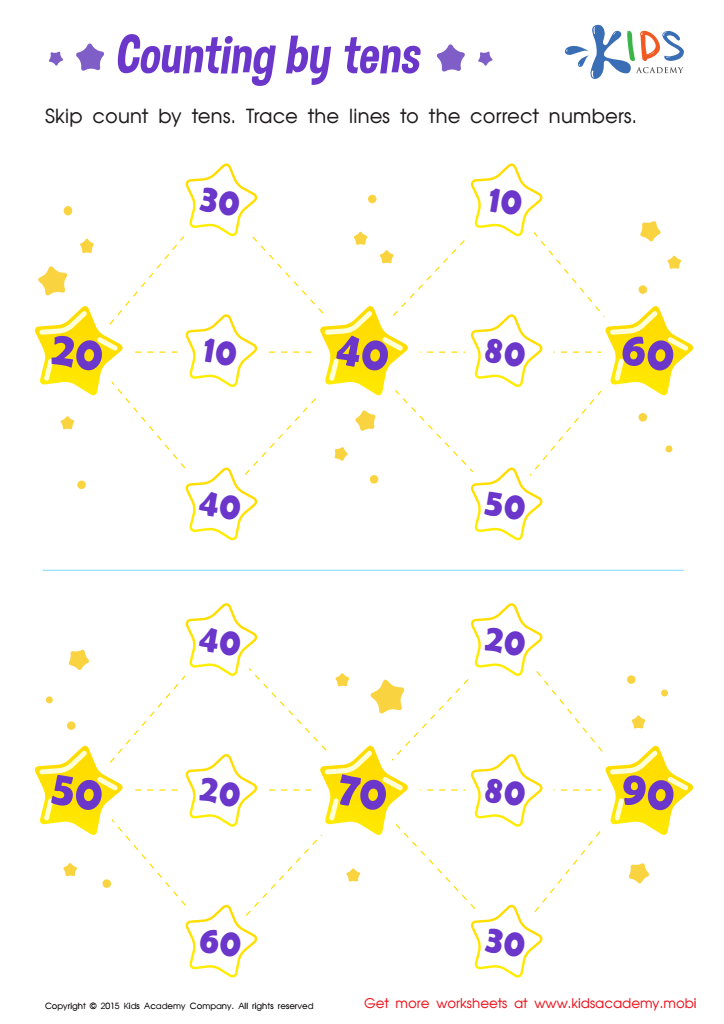
Learn Dozens: Counting by Tens Printable








Understanding tens numbers, or the concept of place value, is foundational for children aged 7-9 because it underpins most mathematical learning and reasoning they will encounter. This key concept helps children grasp that numbers are built using a system of tens, which is crucial as they advance to more complex mathematical operations such as addition, subtraction, multiplication, and division.
When children comprehend that each digit in a number has a specific value depending on its position, they can purposefully manipulate numbers through regrouping or borrowing across place values. It also aids visual and cognitive understanding of larger numbers compared to merely rote counting, enabling children to estimate, round numbers, and recognize patterns—skills vital in problem-solving and real-life applications.
Additionally, tens numbers are intertwined with our monetary system, measurement units, and many logical systems, making this understanding relevant beyond the classroom. Struggling with these basics can create a significant obstacle in advanced math, while mastering them promotes confidence, academic success, and lifelong analytical skills. Therefore, teachers and parents must ensure children have a solid grasp of tens numbers to build a strong mathematical foundation that supports ongoing education and everyday competency.








