Time-telling skills Math Worksheets for Ages 7-9
4 filtered results
-
From - To
Enhance your child's time-telling abilities with our engaging math worksheets designed specifically for ages 7-9! Our collection features a variety of exercises that help children master essential time concepts, including reading analog and digital clocks, understanding time intervals, and calculating durations. Each worksheet is crafted to make learning fun and interactive, ensuring that students build confidence in their time-telling skills. By incorporating these worksheets into your child’s routine, you can support their math education and help them develop crucial life skills. Discover an exciting way for your child to excel in math with our time-telling skills worksheets today!
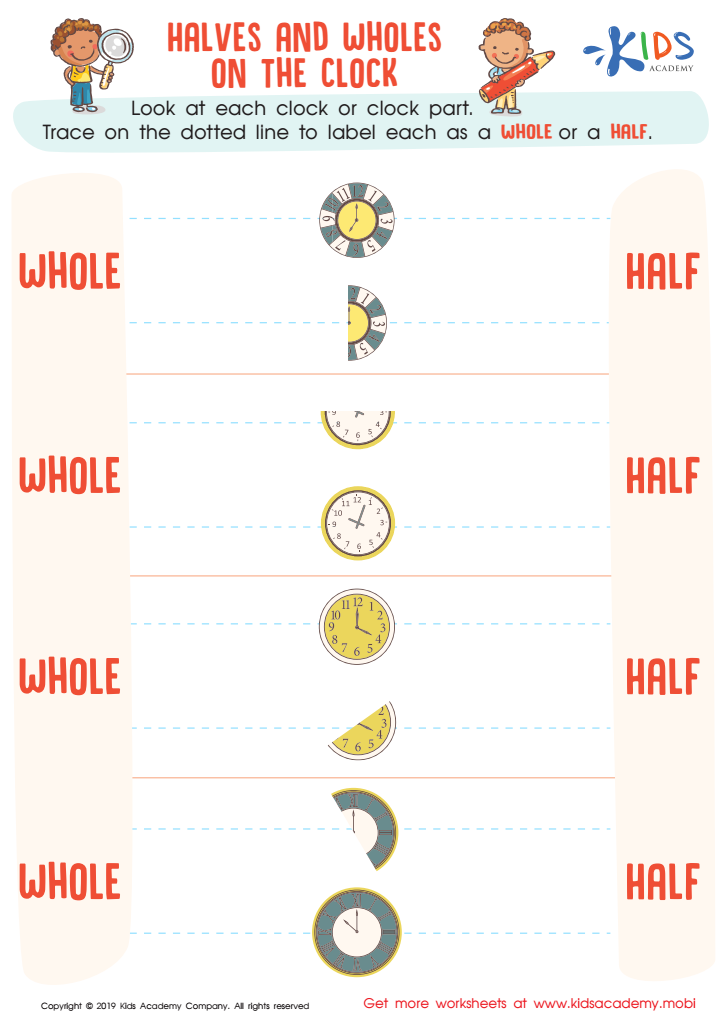
Halves and Wholes on the Clock Worksheet
 Assign to My Students
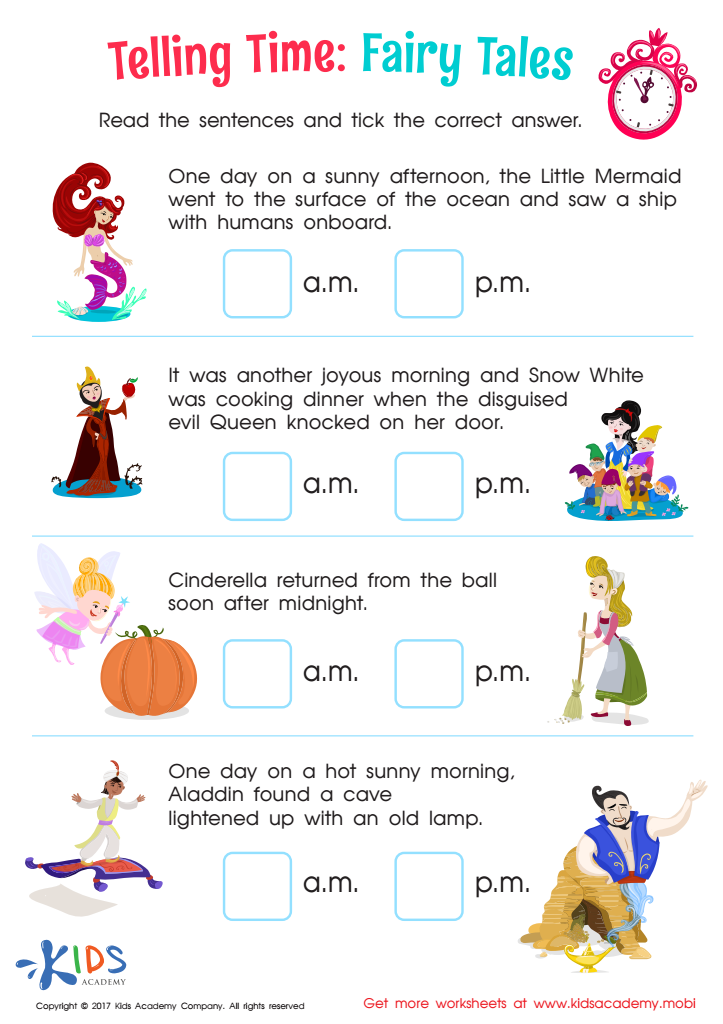
Telling Time: Fairy Tales Worksheet
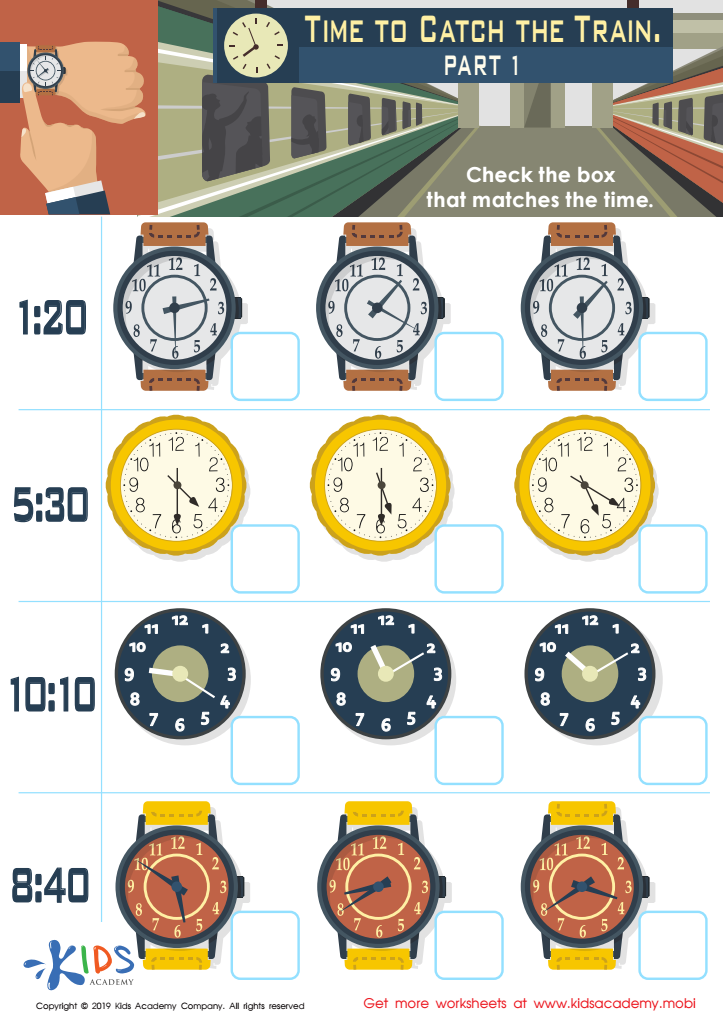
Time to Catch the Train Part 1 Worksheet








Time-telling skills are crucial for children aged 7-9 as they not only enhance mathematical understanding but also foster life skills essential for daily living. At this developmental stage, children are transitioning from concrete to more abstract thinking, making it an ideal period to reinforce the concept of time, which is both tangible and relevant to their daily routines. Mastering time-telling enhances their ability to understand schedules, manage their activities, and develop responsibility.
From a mathematical perspective, telling time involves essential skills such as counting, understanding fractions, and recognizing patterns—skills that build a strong foundation for more advanced math concepts. Additionally, as children learn to read analog and digital clocks, they sharpen their spatial awareness and logical reasoning abilities.
Moreover, time management is an invaluable life skill. Children who can tell time with confidence are better equipped to follow routines, such as finishing homework before extracurricular activities. This skill fosters independence, while also teaching them the importance of punctuality and planning.
Ultimately, encouraging time-telling during this critical developmental stage supports cognitive growth, practical knowledge, and valuable life lessons that help shape responsible and independent individuals. Parents and teachers should prioritize these skills to set children up for future success.








