Times Tables Worksheets for Ages 7-9
34 filtered results
-
From - To
Boost your child's math skills with our engaging Times Tables Worksheets designed for ages 7-9. These printable resources are perfect for helping young learners master multiplication in a fun and interactive way. Our worksheets feature colorful illustrations and varied exercises that cater to different learning styles, ensuring that practicing times tables becomes an enjoyable experience. From basic multiplication facts to more challenging problems, each worksheet is crafted to reinforce understanding and confidence. Enhance your child's academic journey and turn math practice into a delightful activity, all while preparing them for future Math success! Explore our collection today and watch their skills grow!
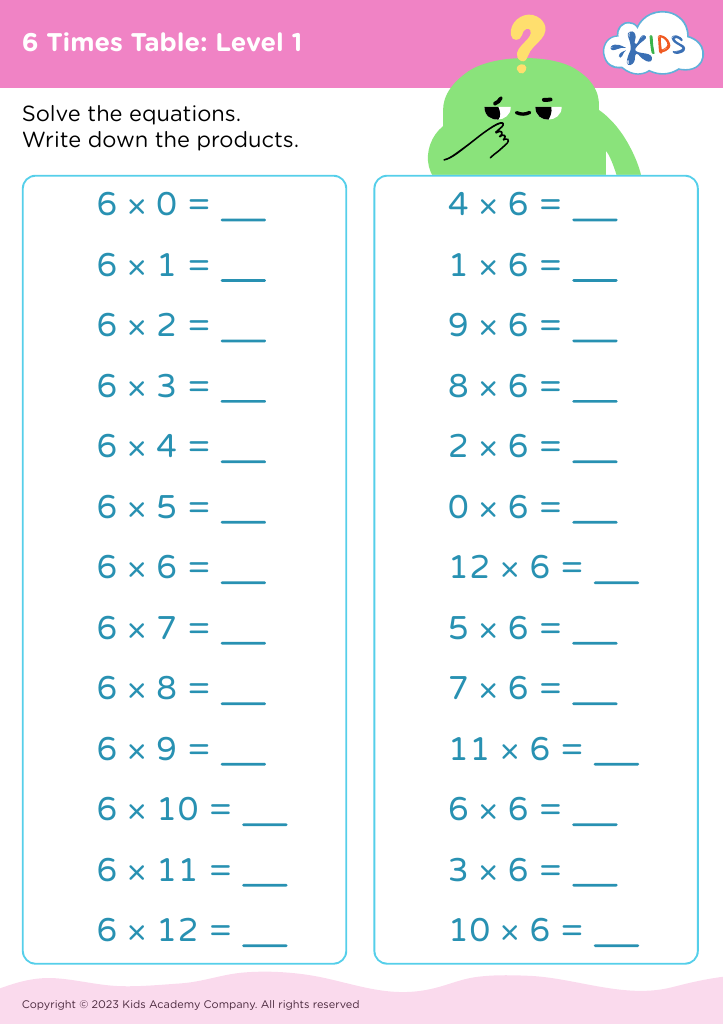
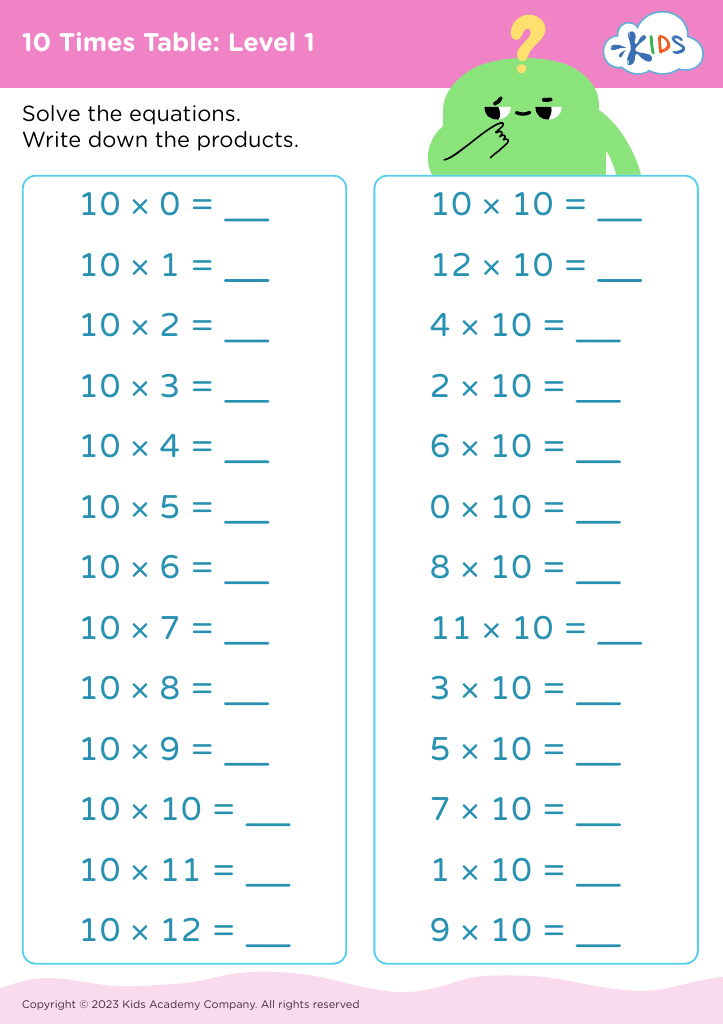
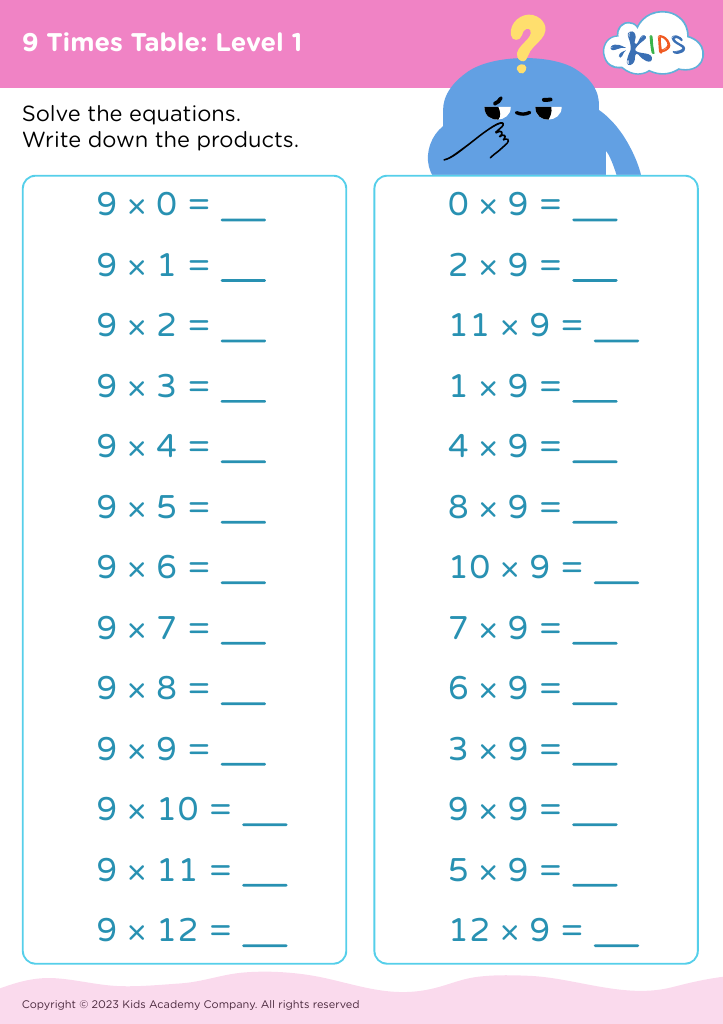
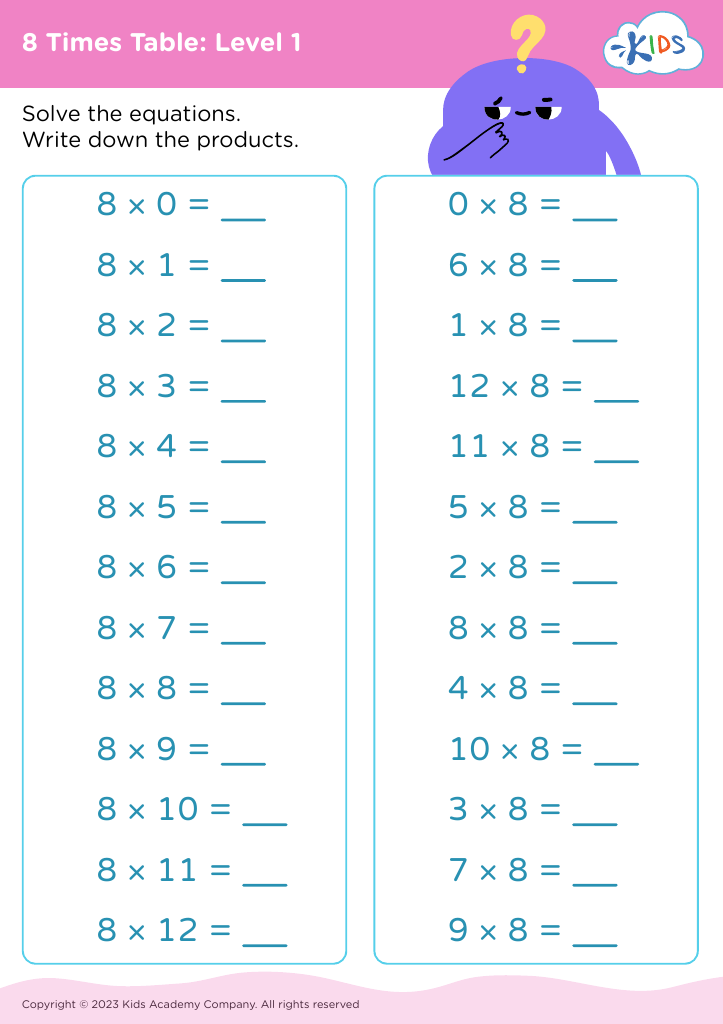
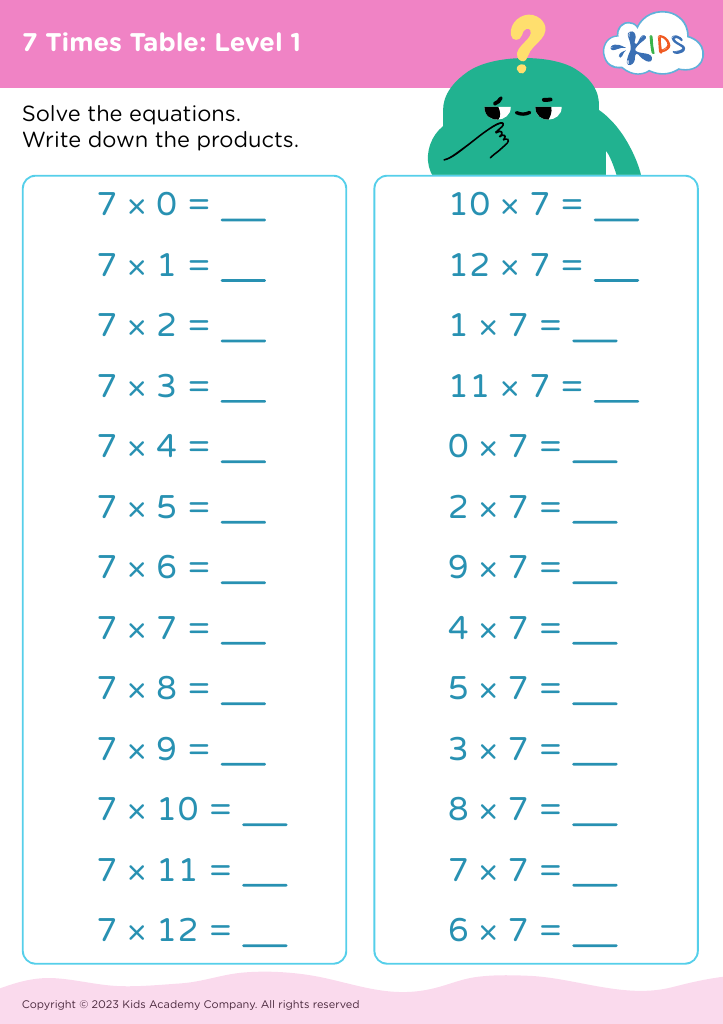
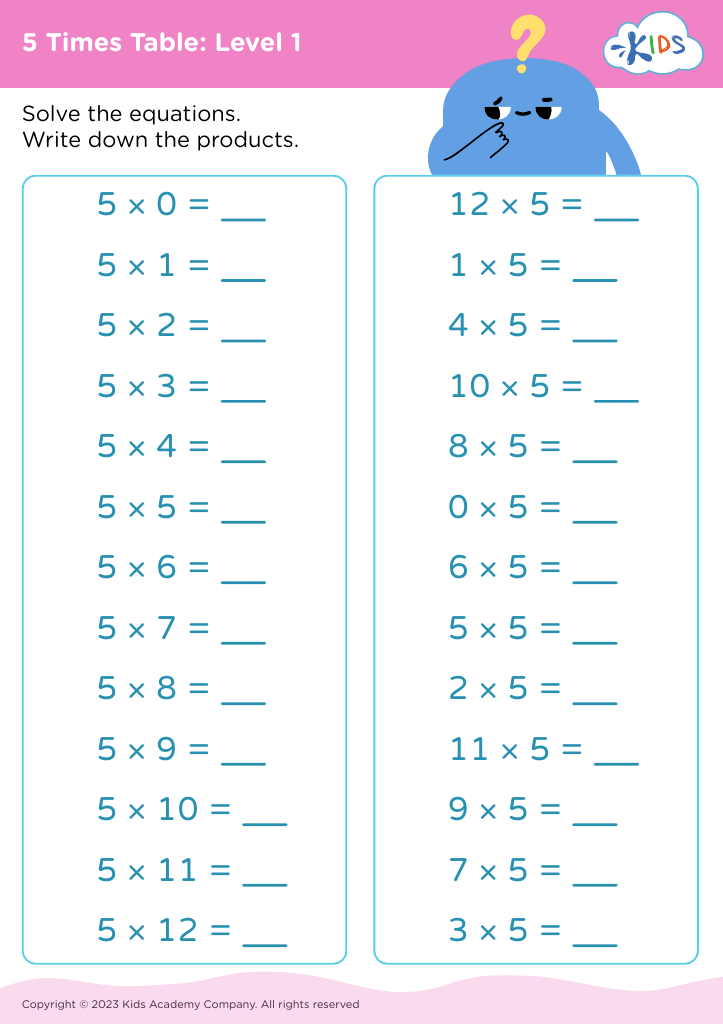
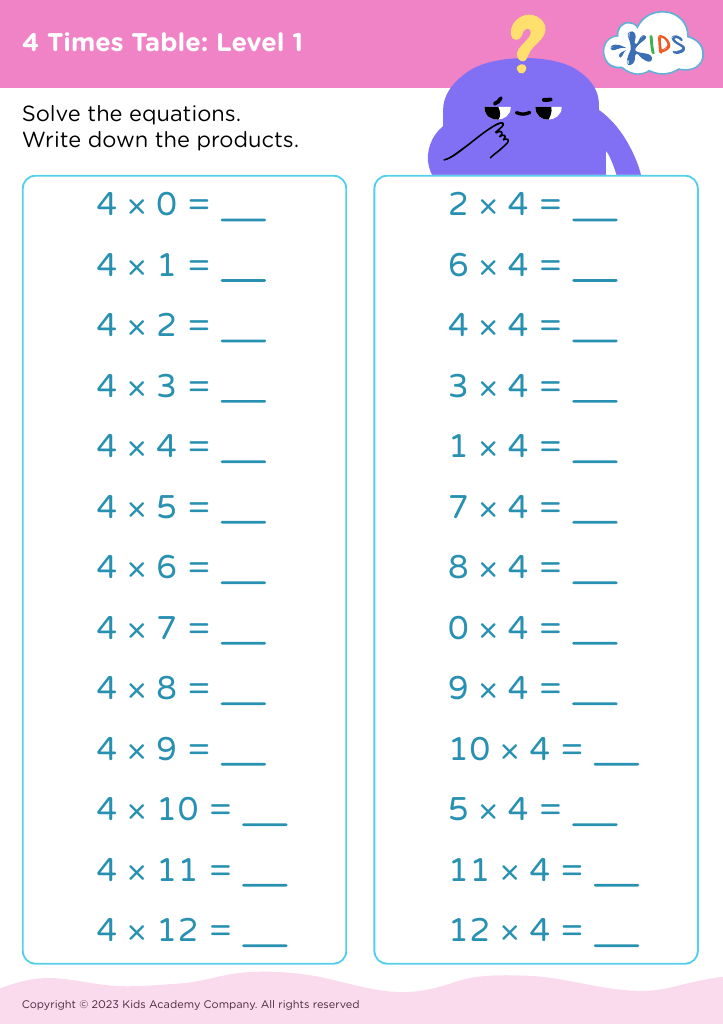
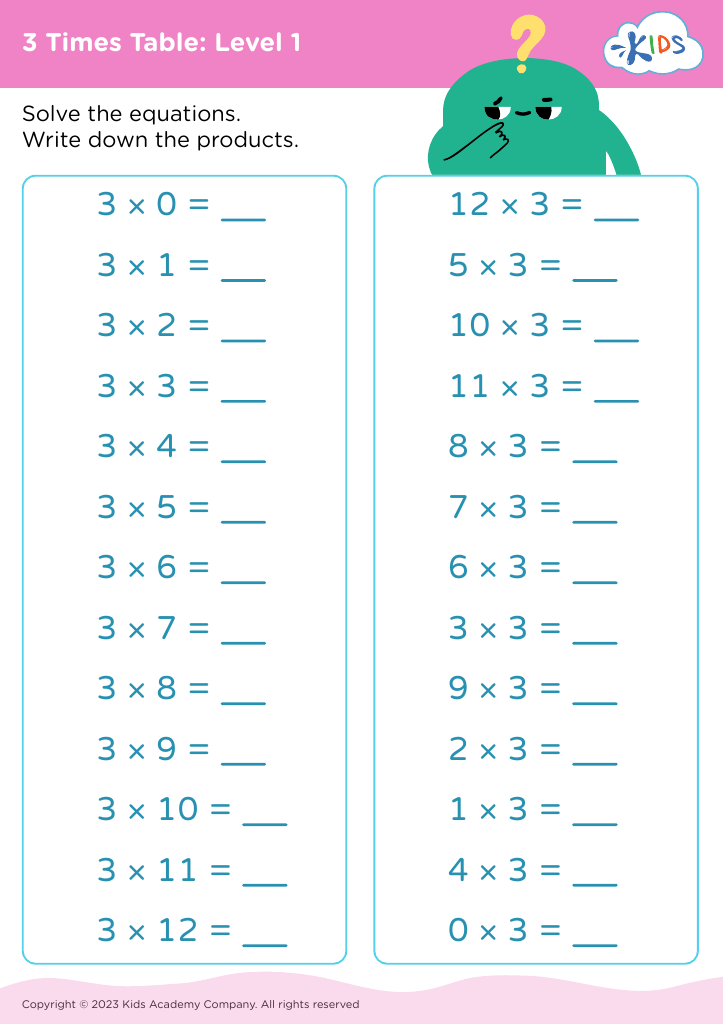
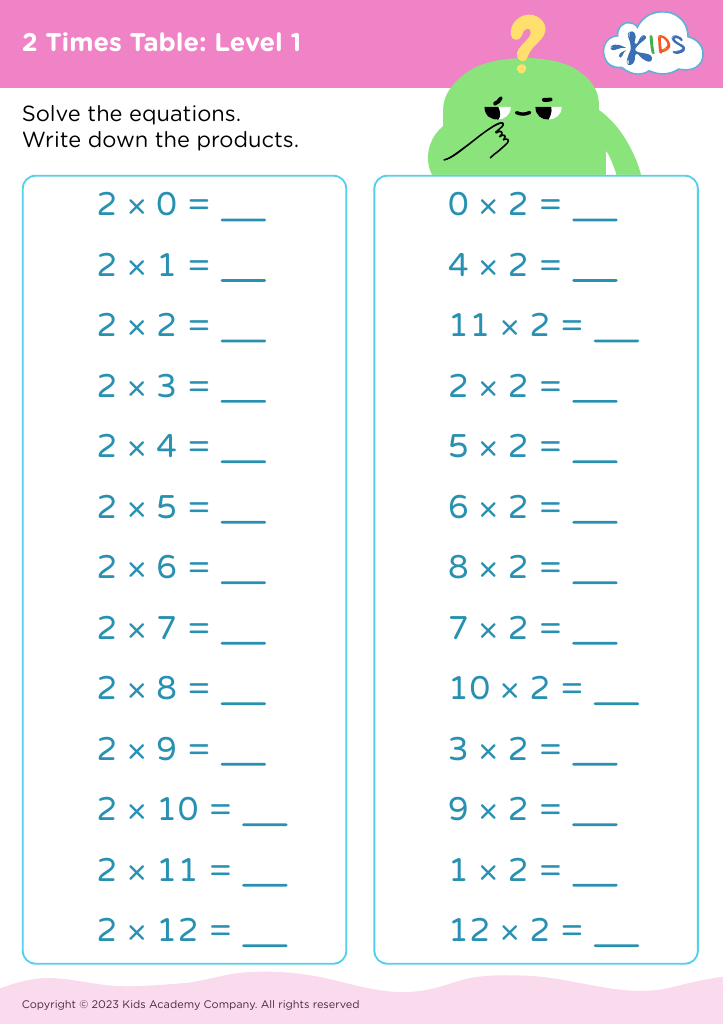
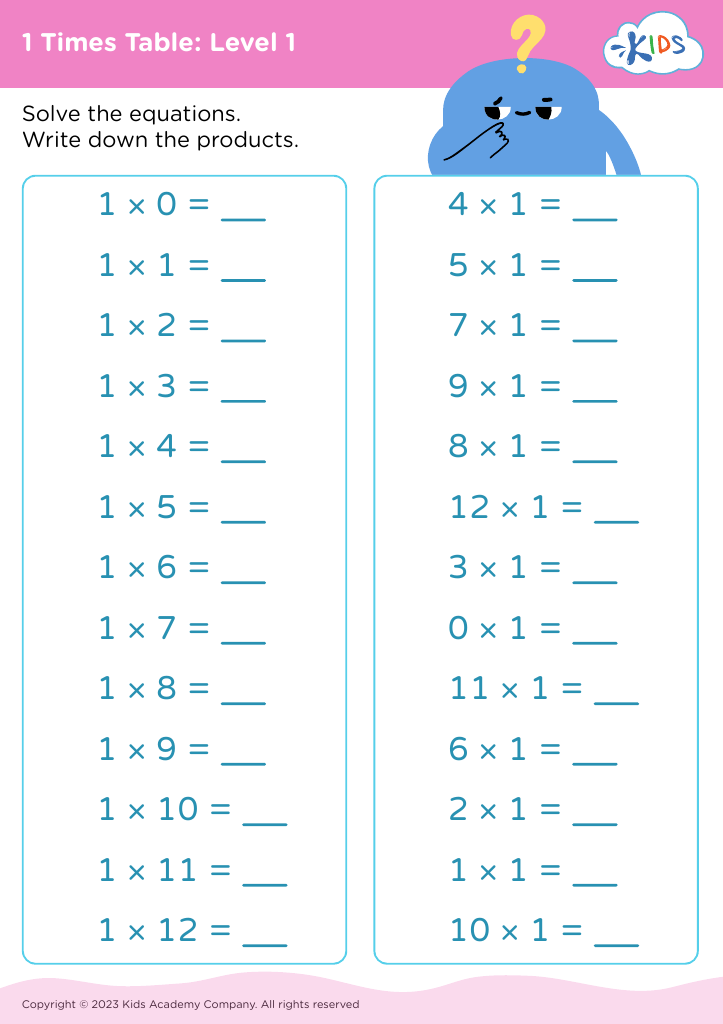
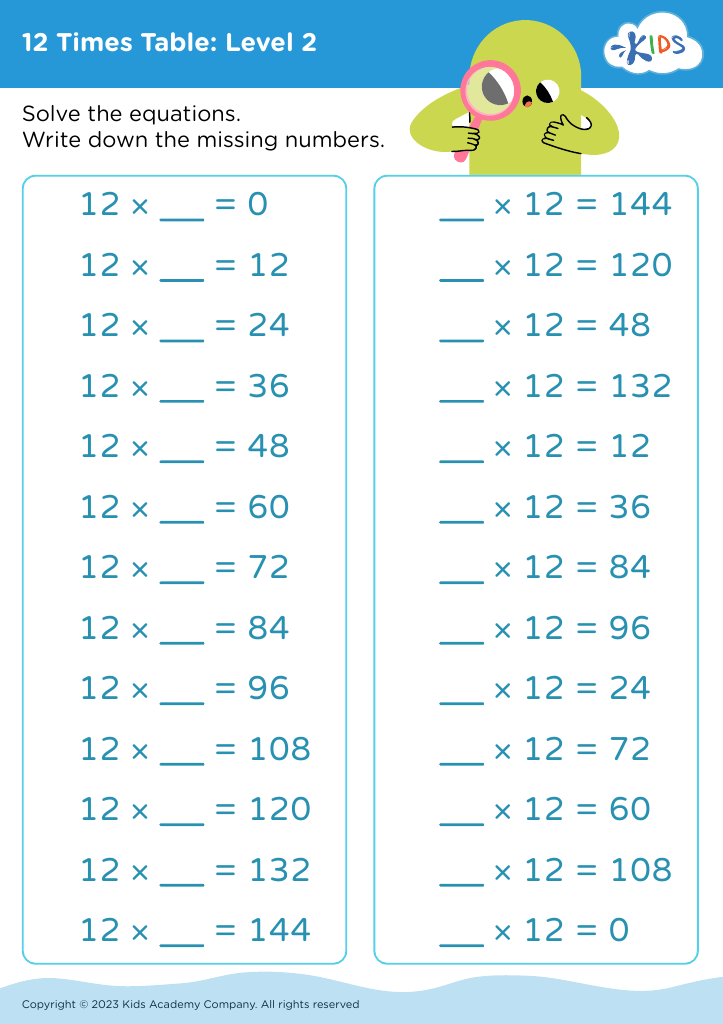
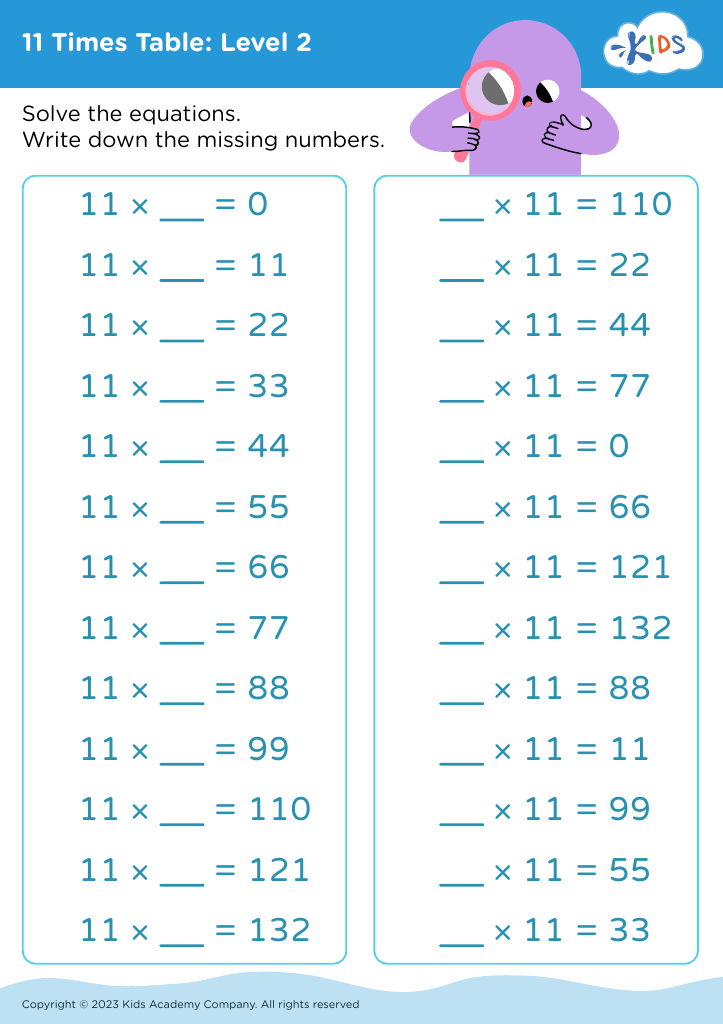
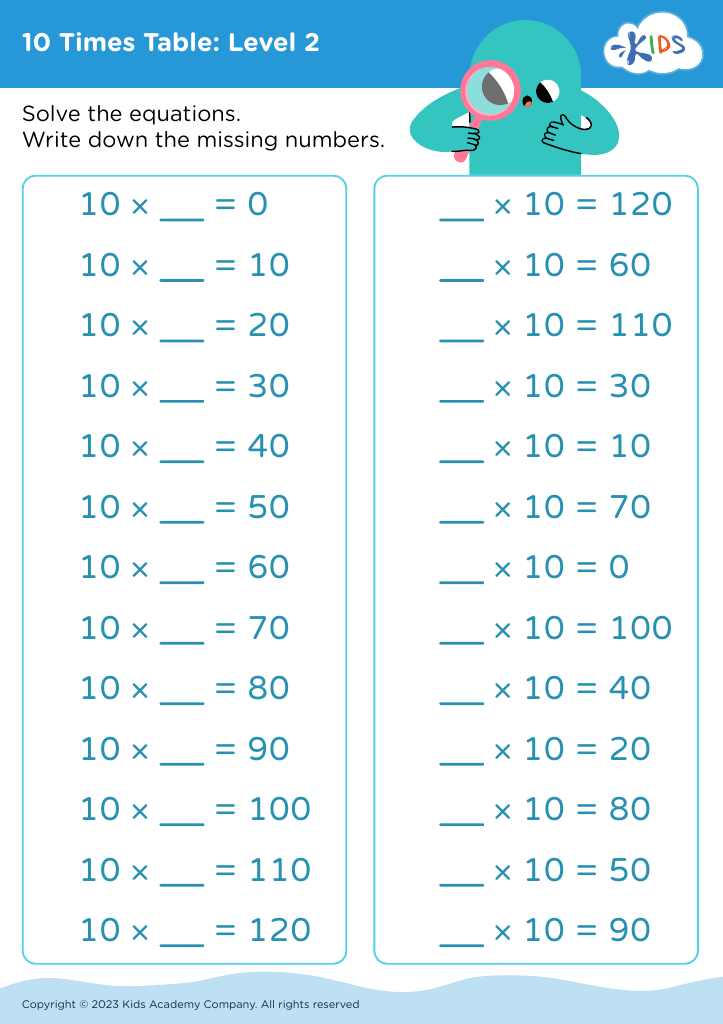
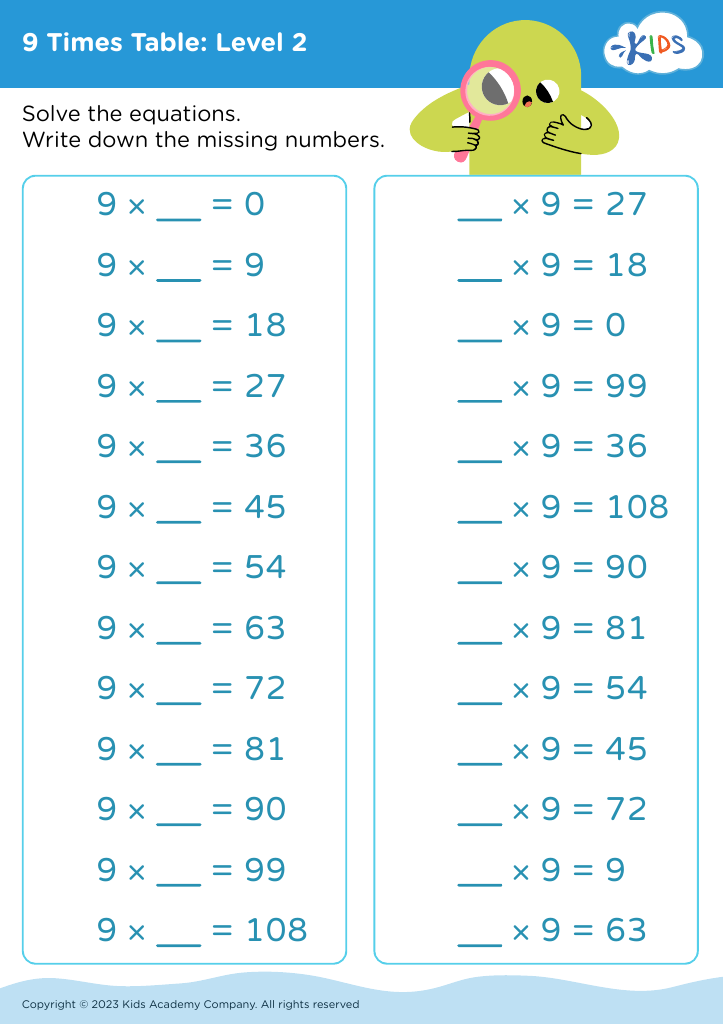
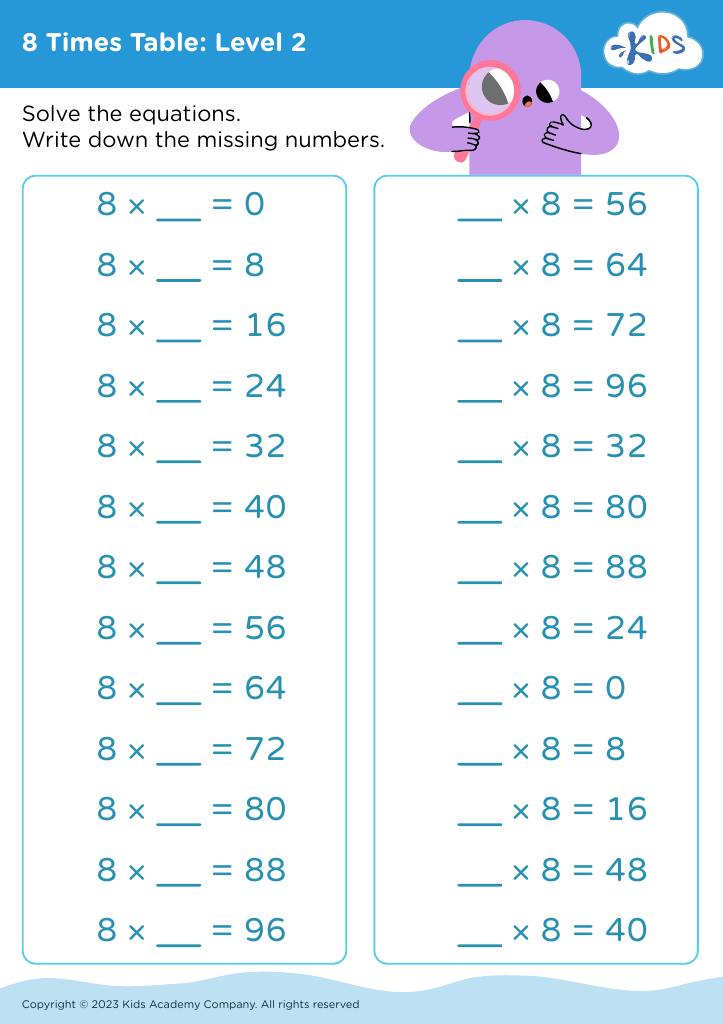
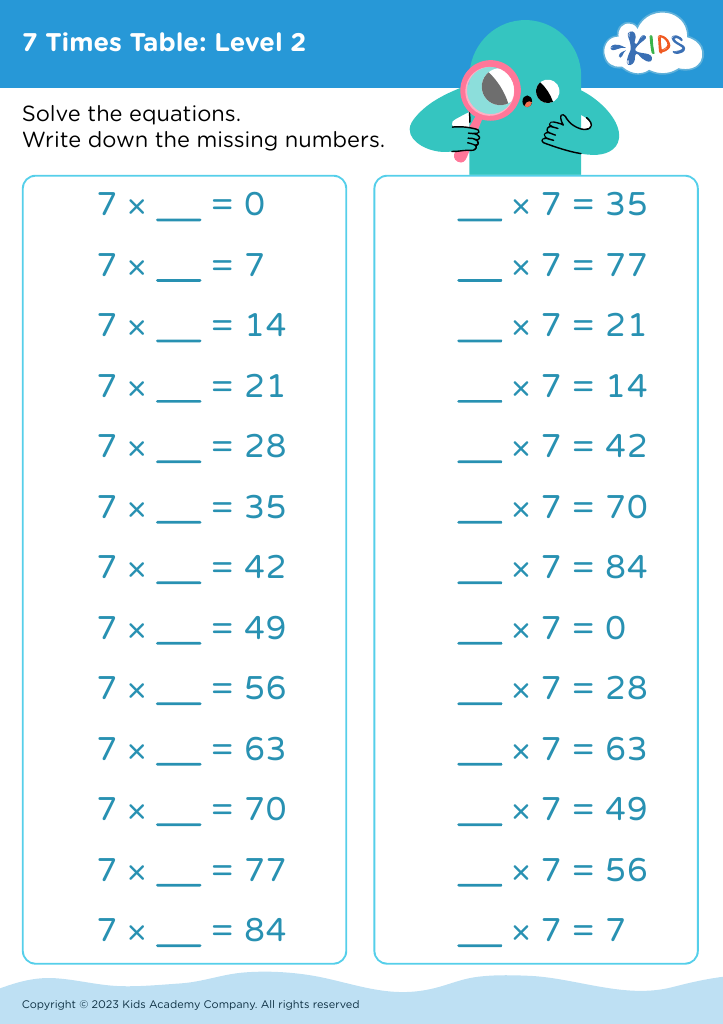
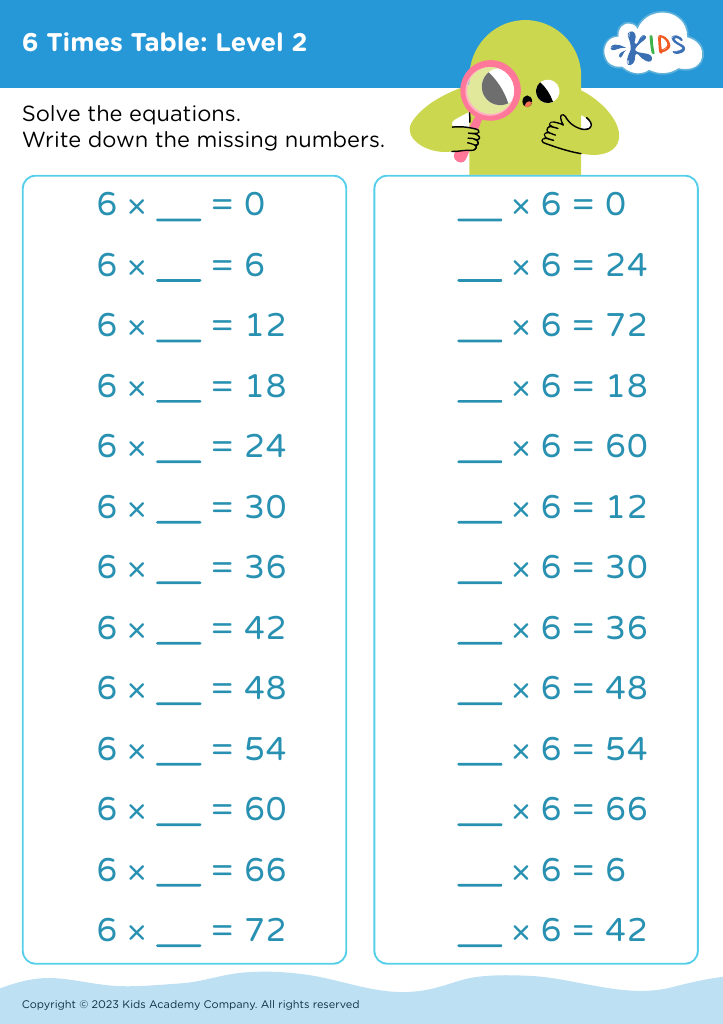
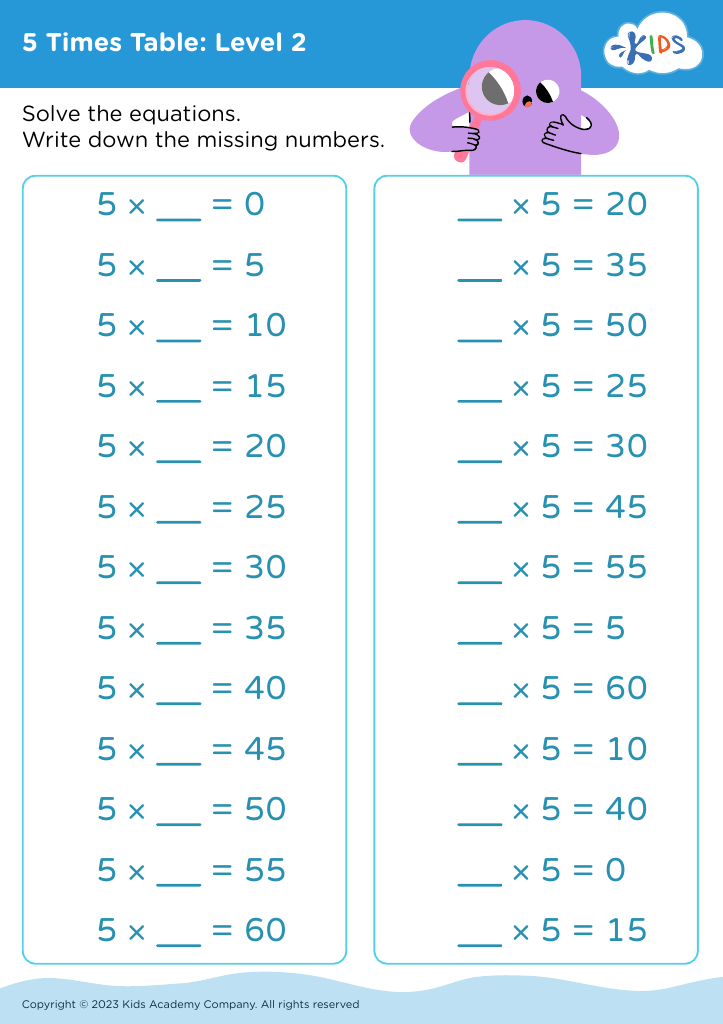
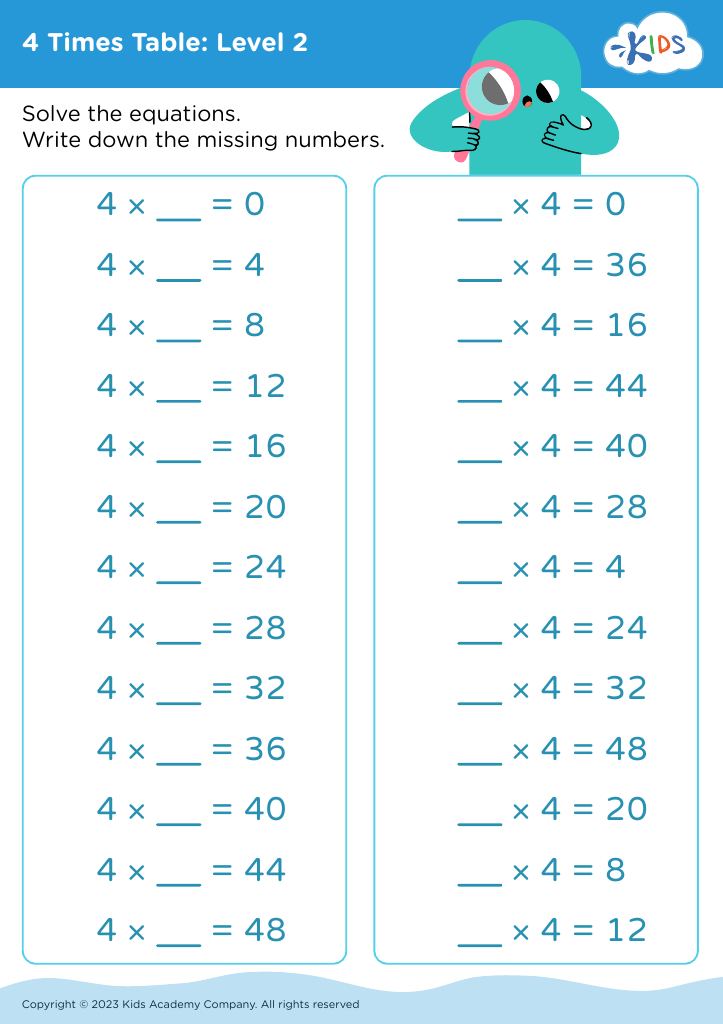
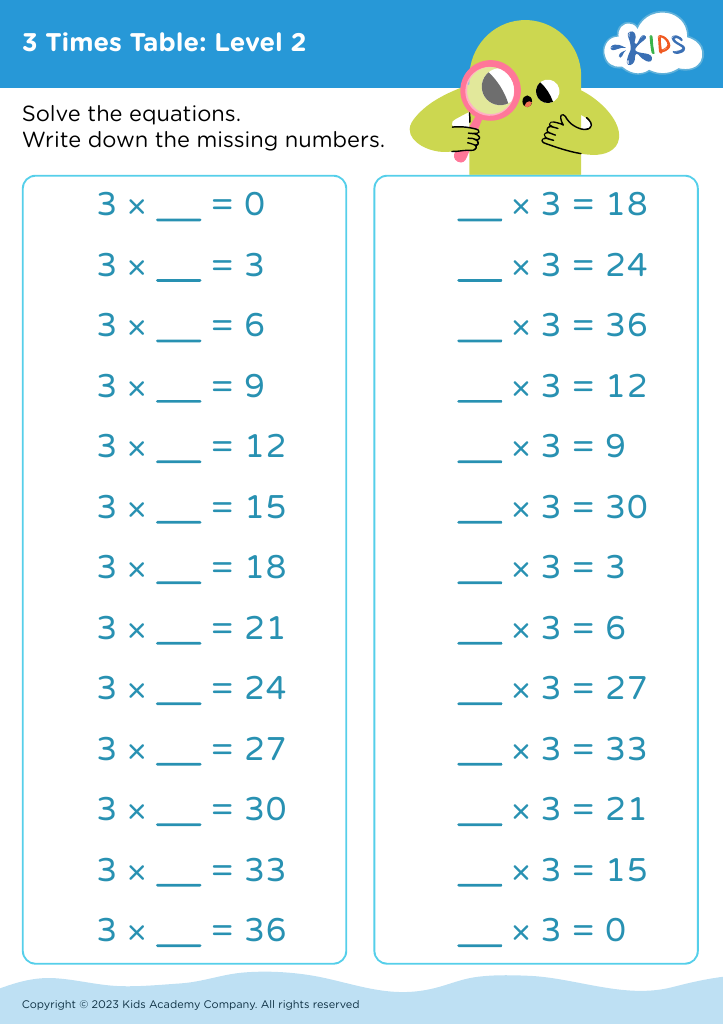
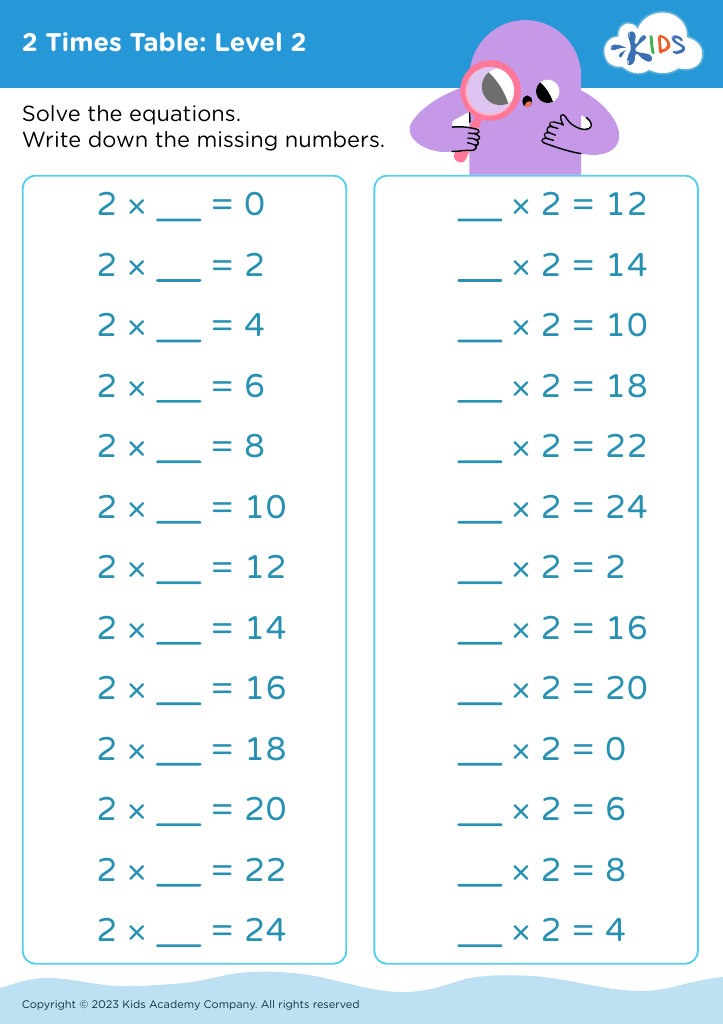
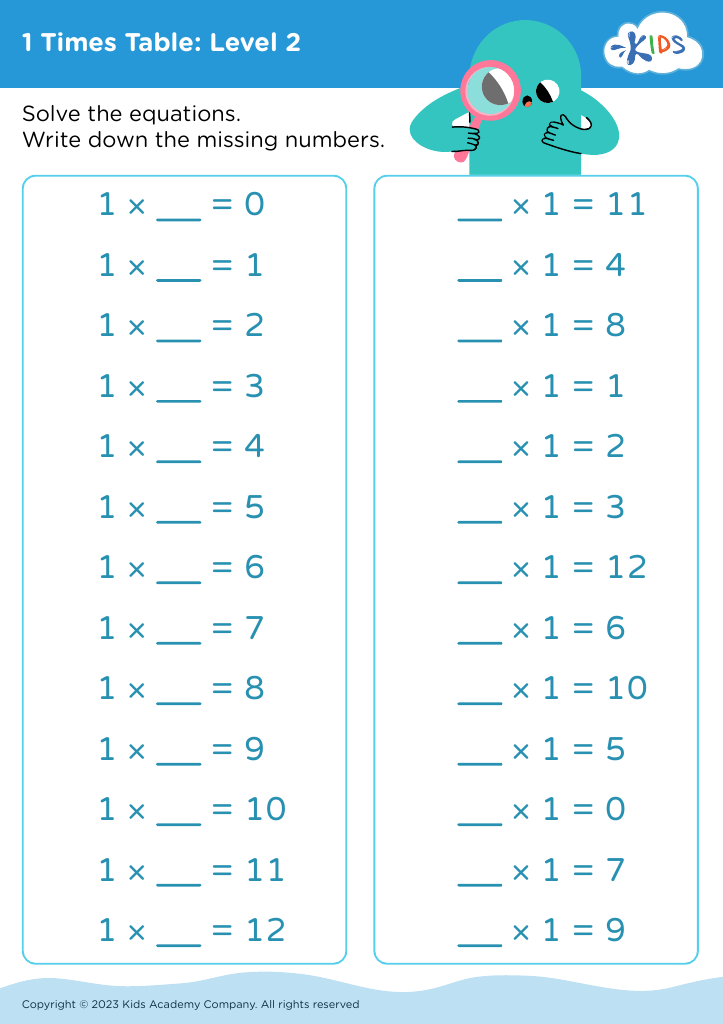
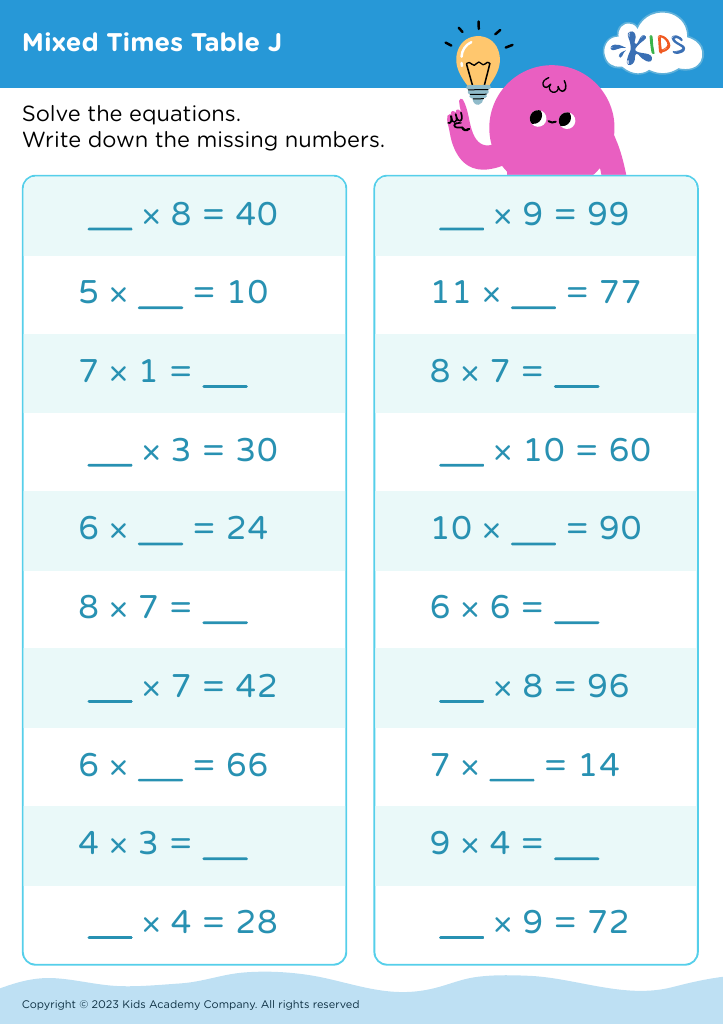
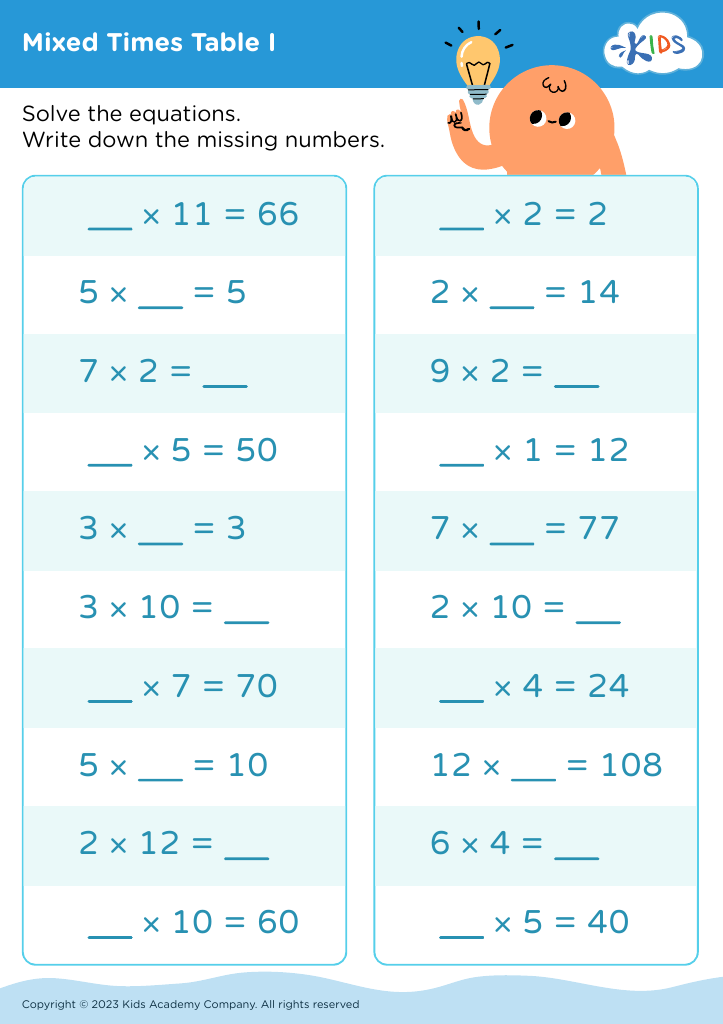





Times tables are a foundational element of mathematics for children aged 7-9, serving as a building block for more advanced arithmetic. Understanding times tables enhances children's ability to perform multiplication and division tasks efficiently, allowing them to solve problems quickly and accurately. When children master these concepts, they develop confidence in their math skills, which can lead to a more positive attitude toward learning.
Moreover, times tables help in building critical thinking and analytical skills; they encourage children to recognize patterns and relationships in numbers. For parents and teachers, fostering a strong grasp of multiplication can significantly improve academic performance in mathematics, impacting overall educational success.
Additionally, encouraging children to practice their times tables can promote perseverance and discipline, qualities that are beneficial beyond mathematics. Engaging with children in learning these tables can also strengthen the parent-child or teacher-student relationship, creating a supportive learning environment.
Finally, mastery of times tables can open the doors to complex math topics, such as fractions, decimals, and eventual algebra, making it imperative for educational stakeholders to prioritize this segment of learning in the developmental stages of children.








