Basic Addition Reading Worksheets for Ages 7-9
4 filtered results
-
From - To
Introduce your child to the world of numbers with our Basic Addition Reading Worksheets for ages 7-9. These engaging and educational worksheets seamlessly combine math practice with reading exercises to enhance learning. Each worksheet is designed to help young learners strengthen their addition skills while boosting their reading comprehension. Perfect for both classroom use and at-home practice, our worksheets feature fun and colorful activities that keep kids motivated. With a focus on understanding key concepts and developing critical thinking, our materials provide the ideal foundation for confident and proficient math skills. Explore a fun approach to learning today!

Baa Baa Black Sheep Printable
 Assign to My Students
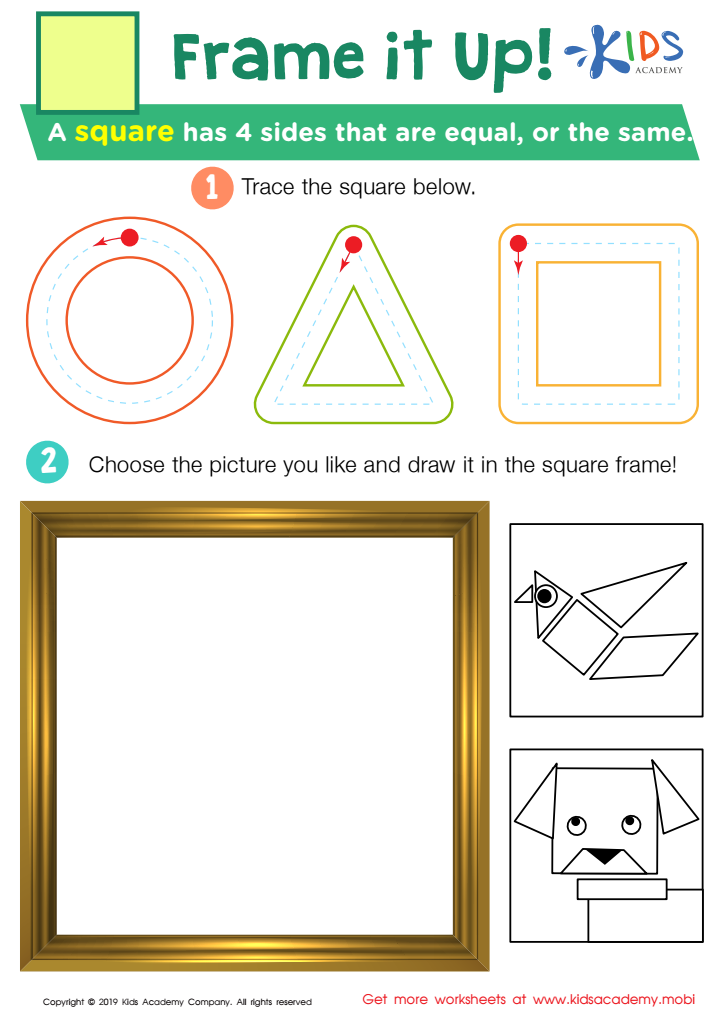
Frame it Up Worksheet








Basic addition is a cornerstone of a child's mathematical foundation, and it's crucial for ages 7-9, a critical period for cognitive development. Mastering basic addition not only helps children with immediate math problems but also sets the stage for more advanced mathematical concepts such as subtraction, multiplication, and division.
At this age, children are developing their problem-solving skills and enhancing their logical thinking. Understanding basic addition facilitates mental arithmetic, which strengthens memory and sharpens concentration. This foundational knowledge is essential for everyday tasks, including time management, money handling, and measurement in activities like cooking or playing sports.
Furthermore, basic addition supports overall academic performance. Many curricula integrate math into subjects like science and geography. Failure to grasp these concepts early on can impact a child's confidence and interest in learning. Positive reinforcement from parents and teachers during these formative years can foster a lasting appreciation for math.
Encouraging mastery in this area through engaging activities, online tools, or interactive games also builds perseverance and a growth mindset. When children see progress with basic addition, they associate effort with success, which is invaluable for overcoming future academic and life challenges.








