
Moral understanding Reading Worksheets for Ages 7-9
6 filtered results
Difficulty Level
Grade
Age
-
From - To
Subject
Activity
Standards
Introduce young learners to crucial life lessons with our Moral Understanding Reading Worksheets for Ages 7-9. Designed to develop both reading skills and ethical awareness, these engaging worksheets feature age-appropriate stories and scenarios that promote discussion on empathy, honesty, cooperation, and kindness. By combining literacy practice with moral education, kids learn how to navigate social situations and make thoughtful decisions, all while enhancing their comprehension abilities. Perfect for classroom or home use, these worksheets provide a fun, interactive way to instill strong moral values and essential reading skills in children. Download now to start nurturing compassionate, well-rounded students!
Favorites
With answer key
Interactive
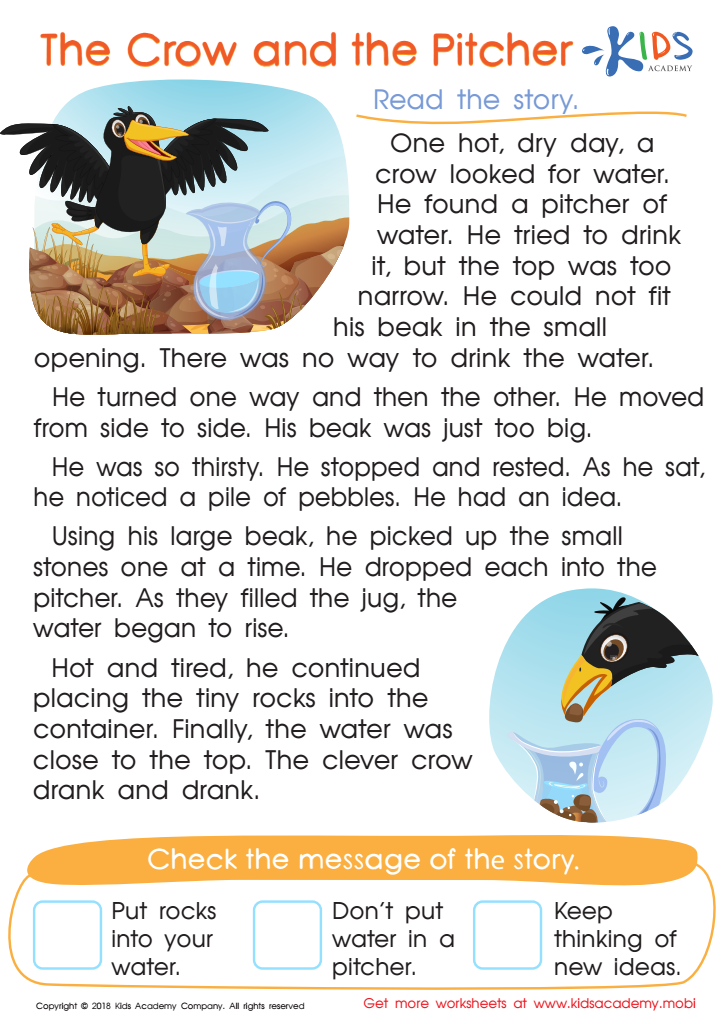
The Crow and the Pitcher Worksheet
Introduce your child to reading comprehension with this fascinating worksheet from Kids Academy! Featuring Aesop's fable of a thirsty crow, your child will enjoy reading and determining the central theme of the passage. This worksheet is a great way to give your child a purpose for reading while helping to build their comprehension skills.
 Assign to My Students
The Crow and the Pitcher Worksheet
Worksheet
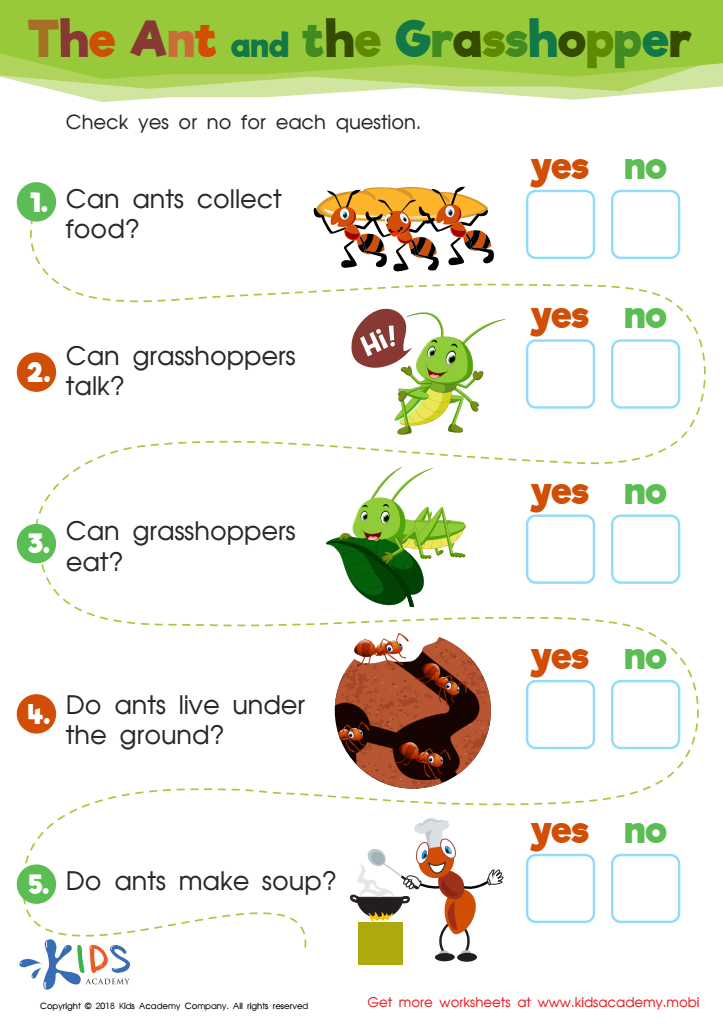
The Ant and The Grasshopper Worksheet
Does your child know about insects? If they're a nature lover or scared of them, use this worksheet to learn more. Read each of the questions and help them fill in the yes or no boxes. This may help them become less scared of insects.
The Ant and The Grasshopper Worksheet
Worksheet
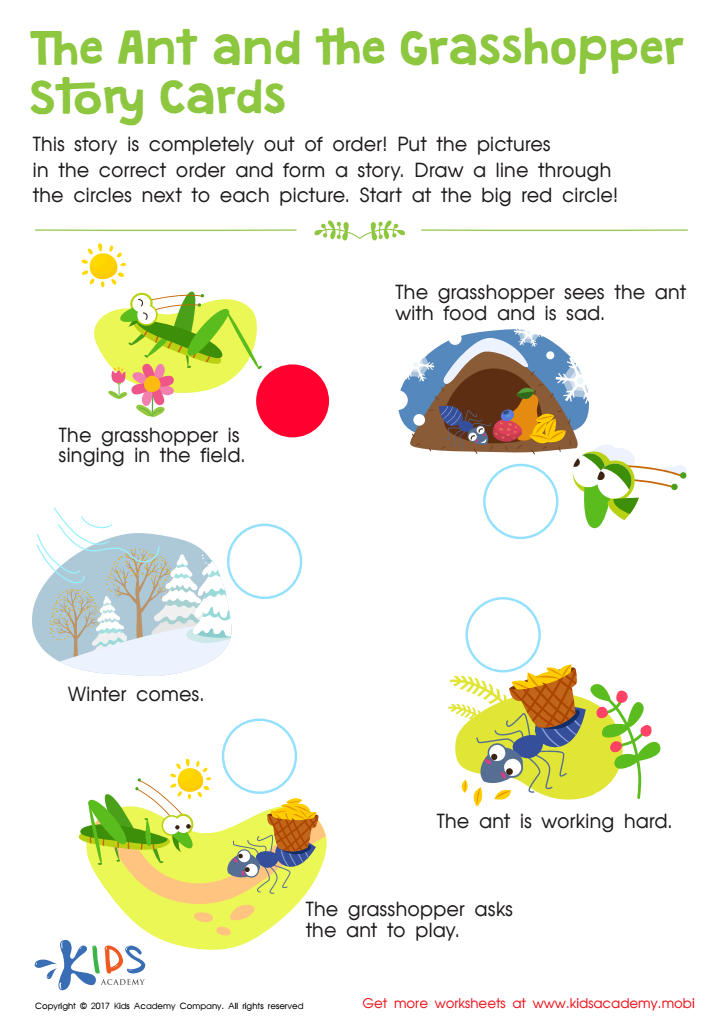
The Ant and The Grasshopper Worksheet
This worksheet uses the beloved childhood fable "The Ant and the Grasshopper" to teach your child about plot and order of events. Your child must read the events and put them in the right order. Once completed, review the story with your child to ensure its accuracy.
The Ant and The Grasshopper Worksheet
Worksheet
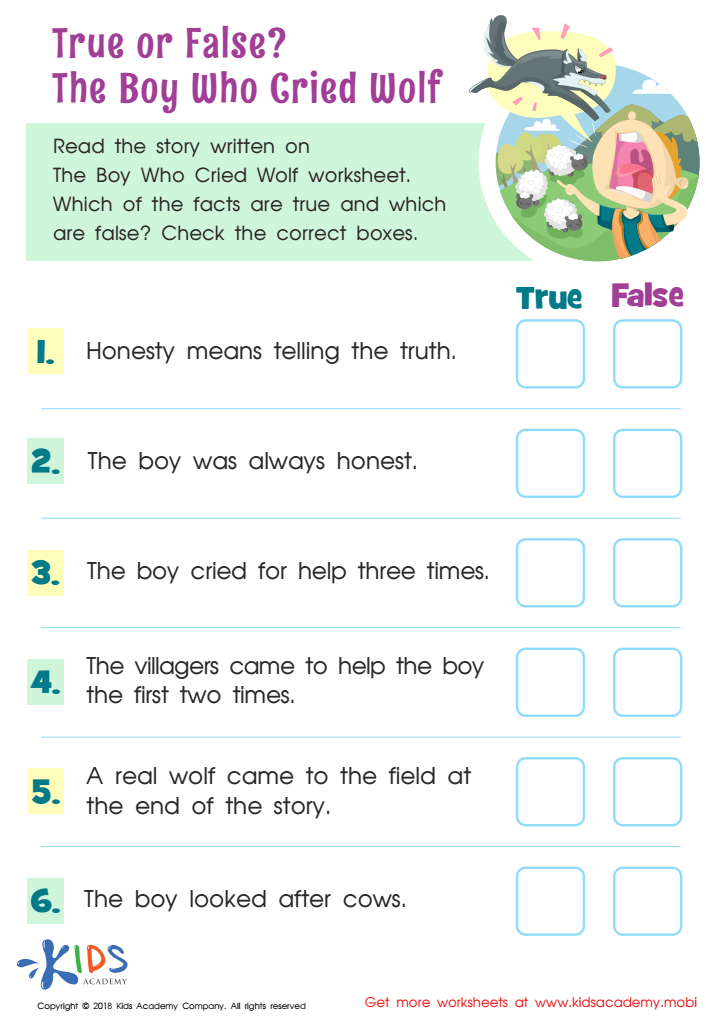
True or False? The Boy Who Cried Wolf Worksheet
Test students' understanding of The Boy Who Cried Wolf with this free downloadable worksheet. It contains true/false questions to assess comprehension of key events. Easy to complete, it checks students can recall facts from the story. Try it and see!
True or False? The Boy Who Cried Wolf Worksheet
Worksheet
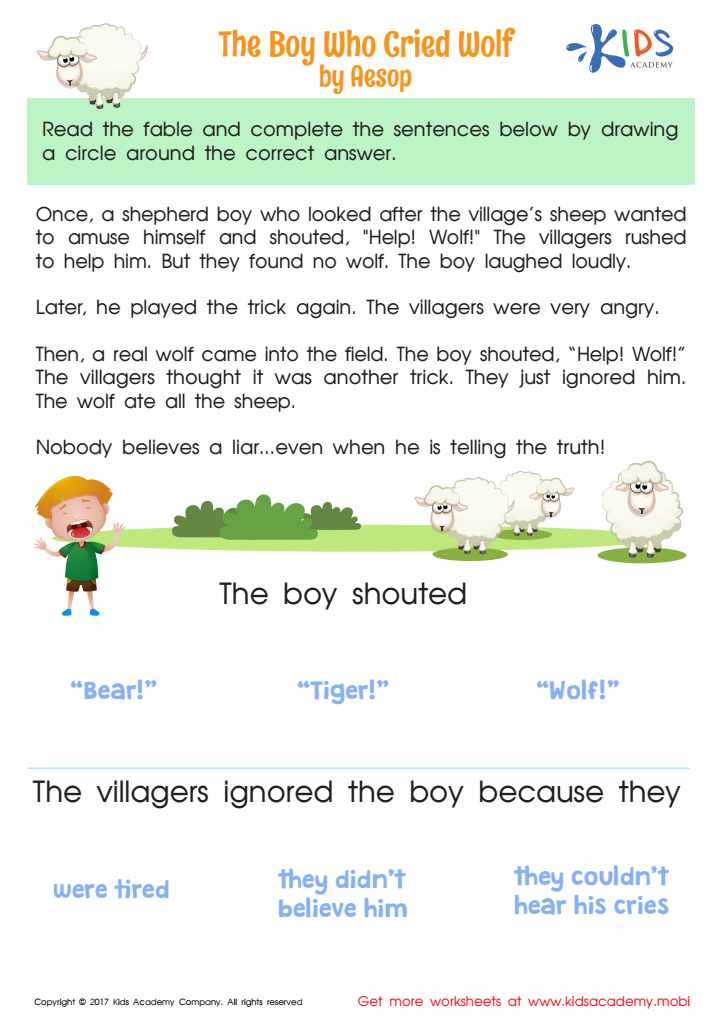
The Boy Who Cried Wolf Worksheet
Test your child's reading comprehension with The Boy Who Cried Wolf worksheet. Read the fable, then answer the questions. Use the text to help your child check their answers are correct. Boost reading skills in a fun, interactive way!
The Boy Who Cried Wolf Worksheet
Worksheet
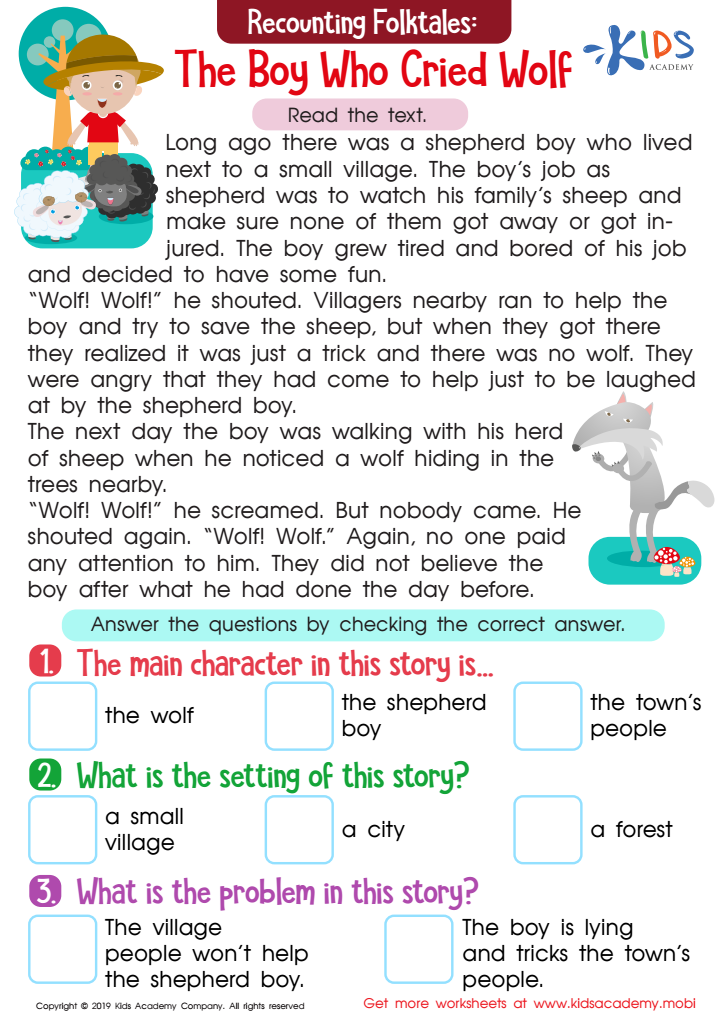
The Boy Who Cried Wolf Part 1 Worksheet
Storytime can be your kid's favorite part of the day. Ask them what their favorite stories are, then read the text in the printout. Read along with them, making sure they understand each word. At the end, go over the questions and have them check the correct answers.
The Boy Who Cried Wolf Part 1 Worksheet
Worksheet
Join Kids Academy for Free
Who is primarily going to use this learning content?








Moral understanding is crucial for children aged 7-9 because it lays the foundation for their ethical development and shapes their future behavior. At this age, children are beginning to grasp complex social concepts, and reading stories with moral lessons can significantly aid this process. When children are exposed to diverse narratives that illustrate the consequences of actions, empathy, and the importance of making good choices, they start to internalize these values.
For parents and teachers, making moral understanding a focus in reading means proactively contributing to the child's character building. It’s much more than just knowing right from wrong; it’s about understanding why certain behavior is appropriate and learning to think critically about ethical dilemmas. Stories can illustrate empathy, fairness, honesty, and other essential virtues in relatable, engaging ways.
Moreover, our society relies on well-rounded individuals who can collaborate, resolve conflicts, and contribute positively. Encouraging moral reasoning through reading helps children develop these essential social skills early on. Additionally, discussing stories with moral themes can strengthen the bond between child and adult, giving children a safe space to explore their thoughts and feelings about morality. Hence, focusing on moral understanding in reading benefits both the individual child and the larger community they are a part of.








