Understanding Sequences Reading Worksheets for Ages 7-9
3 filtered results
-
From - To
Enhance your child's reading skills with our "Understanding Sequences Reading Worksheets" designed specifically for ages 7-9. These engaging worksheets help young learners grasp the concept of sequences in stories, empowering them to follow plots and improve comprehension. Through various fun activities, children will explore how events unfold in a logical order, fostering critical thinking and enhancing their overall literacy. Our thoughtfully crafted materials encourage active participation, making learning enjoyable and effective. Perfect for home or classroom use, these worksheets provide an essential foundation for developing strong reading skills. Start your child’s journey towards reading mastery today!
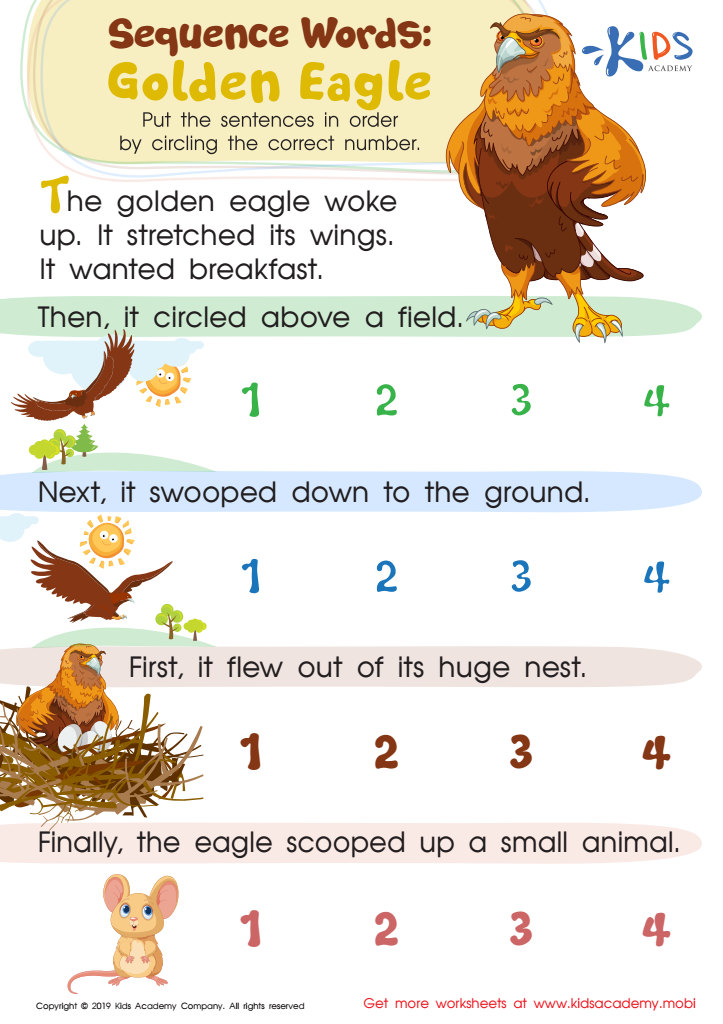
Sequence Word Eagle Worksheet
 Assign to My Students
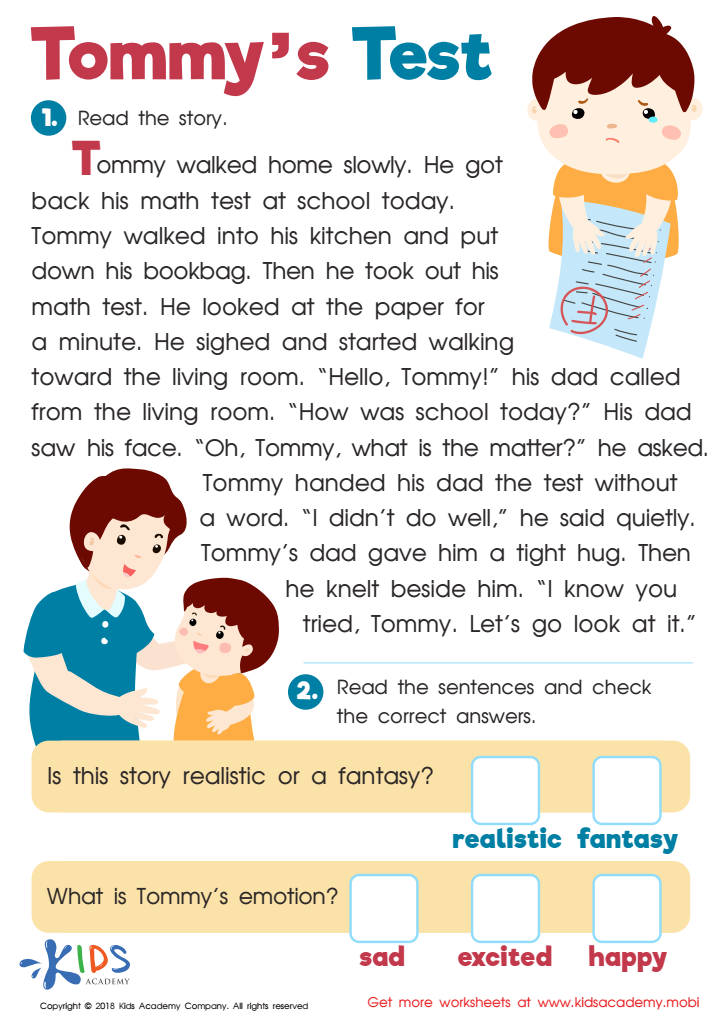
Tommys Test Worksheet
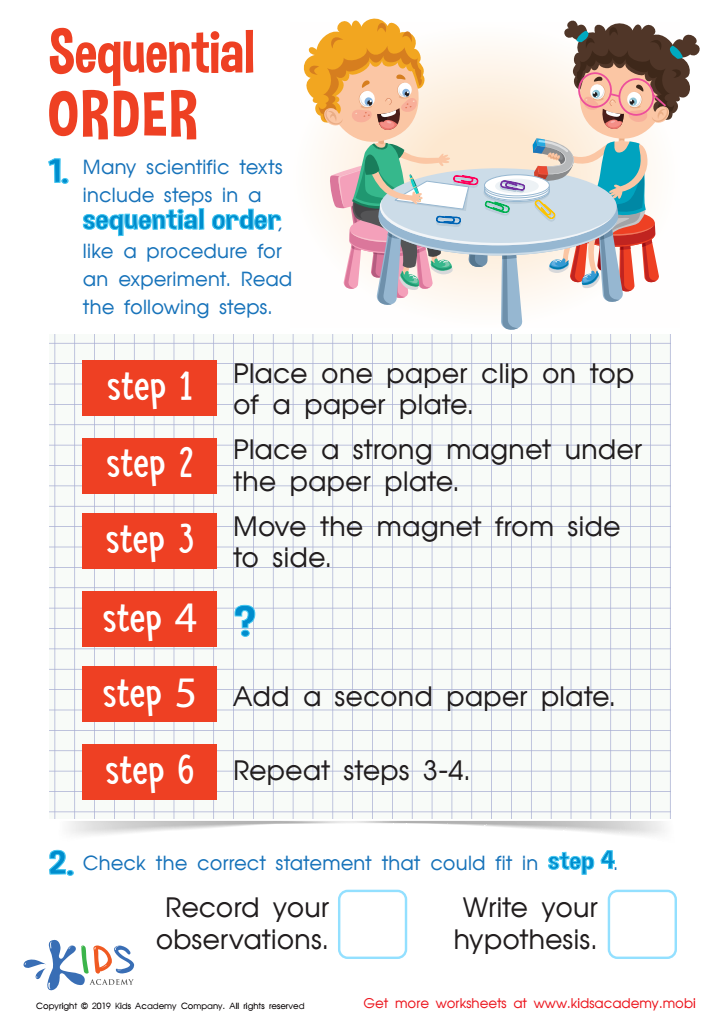
Sequencential Order Worksheet



.jpg)




Understanding sequences in reading is a crucial skill for children aged 7-9. At this developmental stage, readers begin transitioning from learning to read to reading to learn. Grasping the concept of sequences aids in comprehension, allowing students to better recognize and follow the structure of stories and information. Ability to understand sequences helps children identify the cause-effect relationships, develop narrative skills, and make predictions about what comes next, thus enhancing their overall engagement with texts.
Furthermore, sequences are foundational for various subjects beyond language arts, including math and science. Comprehending sequences promotes logical thinking, critical analysis, and problem-solving skills. By focusing on this fundamental aspect, parents and teachers can foster a deeper appreciation for reading, ensuring that children not only absorb information but also connect ideas meaningfully.
Additionally, strong sequence understanding can positively impact a child’s confidence in their reading abilities, encouraging them to explore a diverse range of literature. As children articulate the order of events or ideas, they also strengthen their expressive skills, setting the stage for effective communication. Overall, prioritizing sequence understanding equips young readers with essential skills that will benefit them throughout their educational journey and beyond.








