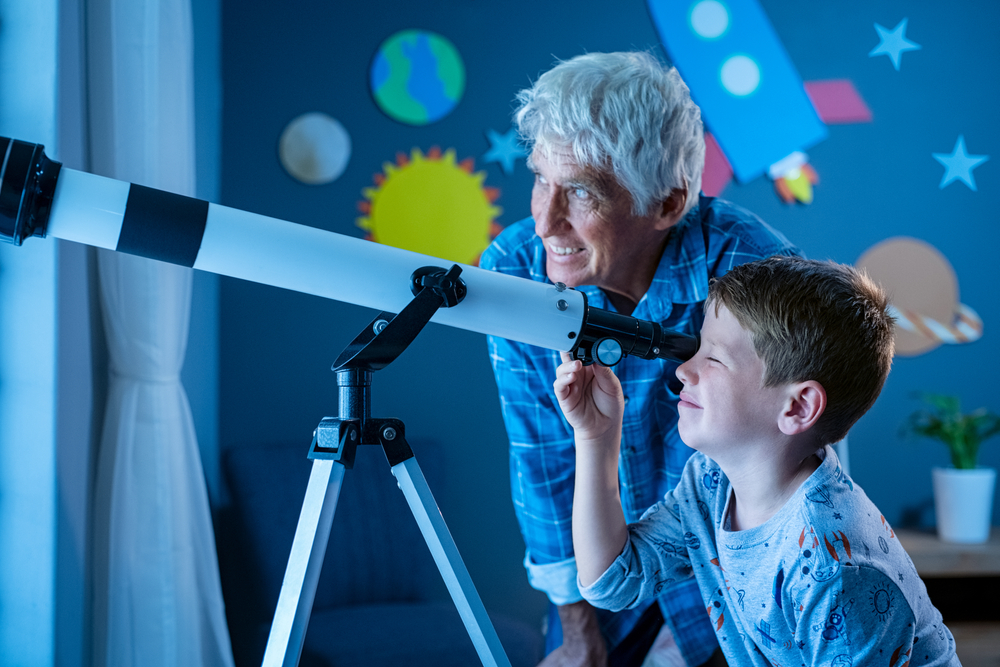
Enhancing observational skills is crucial for young learners, and our science worksheets for ages 7-9 are designed to develop these foundational abilities. These engaging resources provide a blend of fun and education, encouraging children to notice details, patterns, and changes in their environment. Each worksheet is filled with interactive puzzle games, experiments, and activities that sharpen critical thinking by promoting hands-on learning. By working through exciting tasks, kids enhance their cognitive abilities, improve concentration, and build a solid science foundation. Perfect for classroom use or at-home learning, these worksheets will inspire curiosity and a love for discovery in every child.

Check out this FREE Trial Lesson on Science for age 7-9!

Animal World

Favorites
With answer key
Interactive
  • 7-9
  • Enhancing observational skills
  • Science
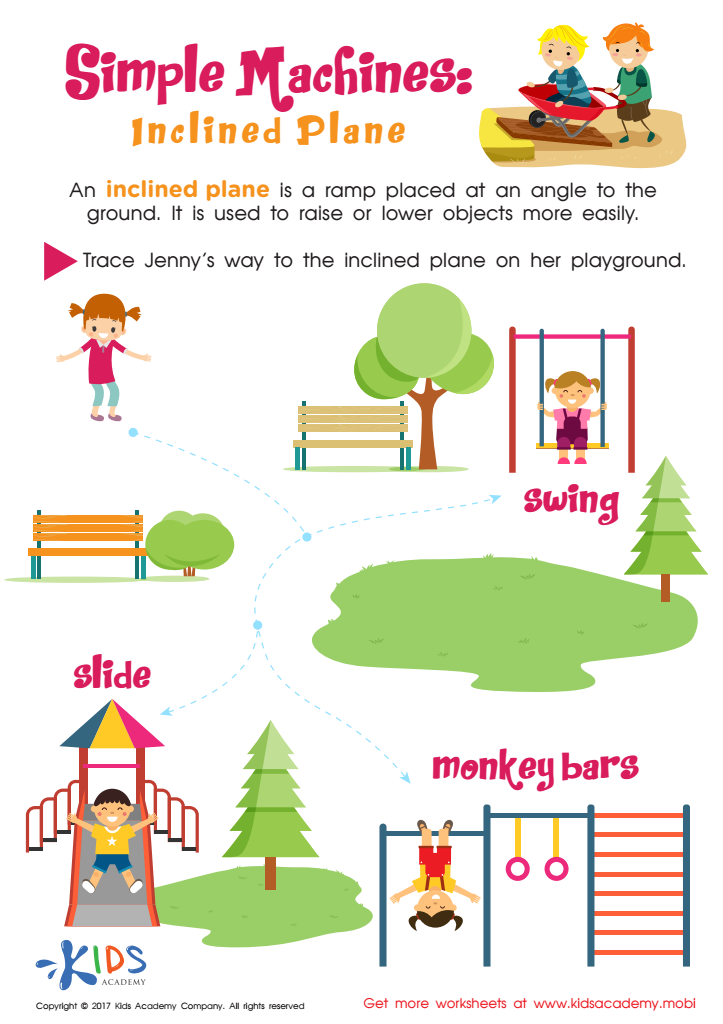
Simple machines inclined plane worksheet

Simple Machines Inclined Plane Worksheet

This fun worksheet will help them increase their science skills while they have fun.
Simple Machines Inclined Plane Worksheet
Worksheet
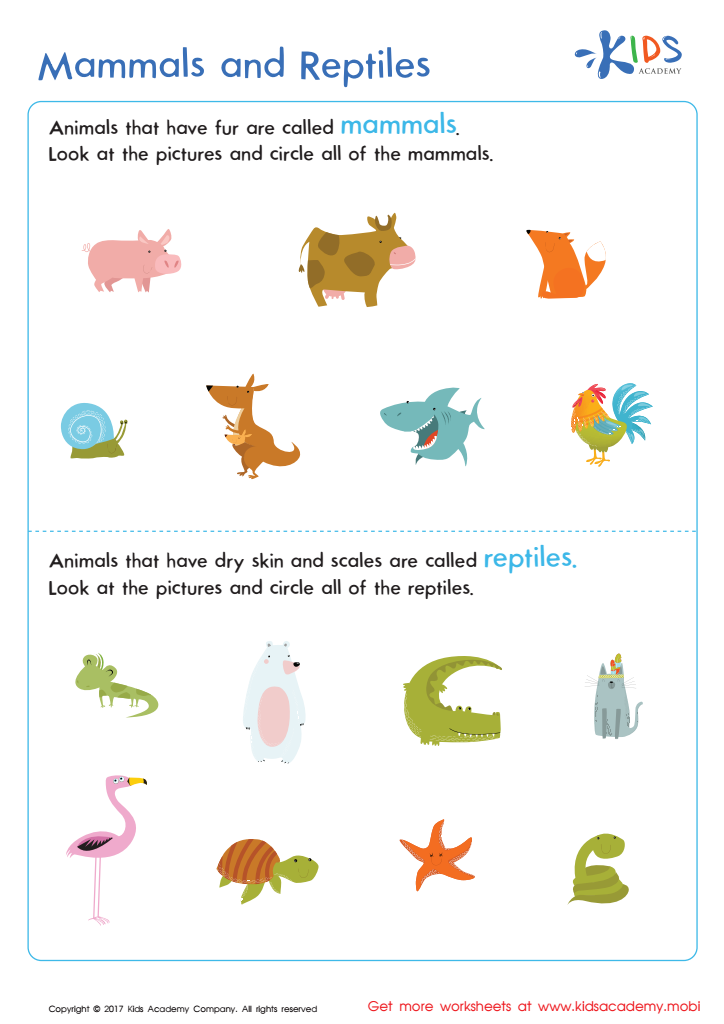
Mammals and Reptiles Worksheet

Mammals and Reptiles Worksheet

Challenge your child to identify mammals and reptiles with this worksheet. It's a great way to help them recognize the differences between these two types of animals.
Mammals and Reptiles Worksheet
Worksheet
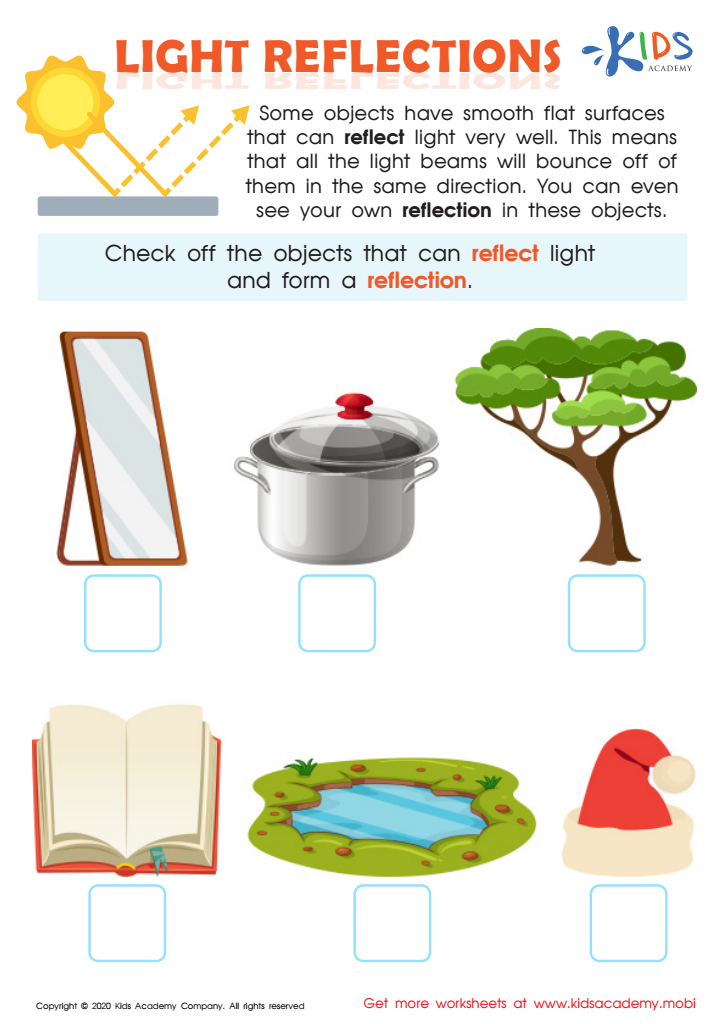
Light Reflections Worksheet

Light Reflections Worksheet

Teach your students that some objects reflect light and form a reflection. Ask them to name examples, then look at pictures and check off which objects can do this. Have them note how the light bounces off these surfaces, and observe their own reflections.
Light Reflections Worksheet
Worksheet
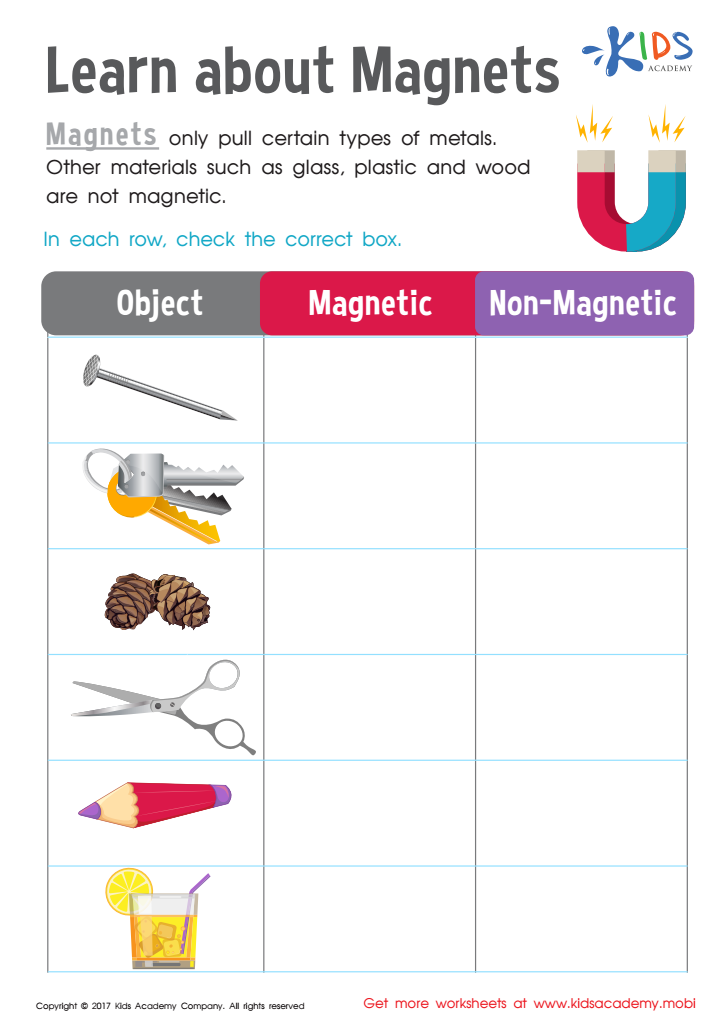
Magnetic or not worksheet

Magnetic Or Not Worksheet

Kids will love discovering the magical power of magnetism with this fun worksheet. Uncover the magic of magnetism with this fun worksheet! Kids will love identifying objects that are magnetic and those that are not. Objects made of metal and those that aren't can be identified, helping your child to gain valuable practice and explore the mysterious power of magnetism!
Magnetic Or Not Worksheet
Worksheet
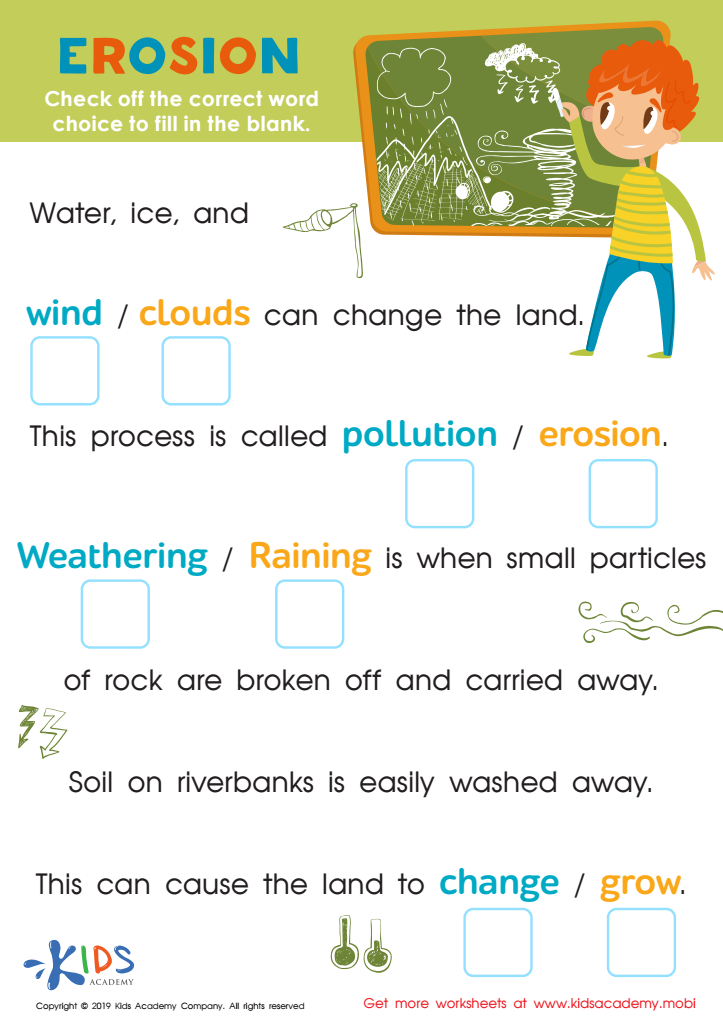
Erosion Worksheet
Erosion Worksheet

Erosion Worksheet

Erosion is when land is washed or crumbled away; it is caused by water, wind, or man. Teach kids its damaging impact, and how to prevent it. Check out this science worksheet to help them learn more. Read each sentence, then help them fill in the blanks with the correct words.
Erosion Worksheet
Worksheet
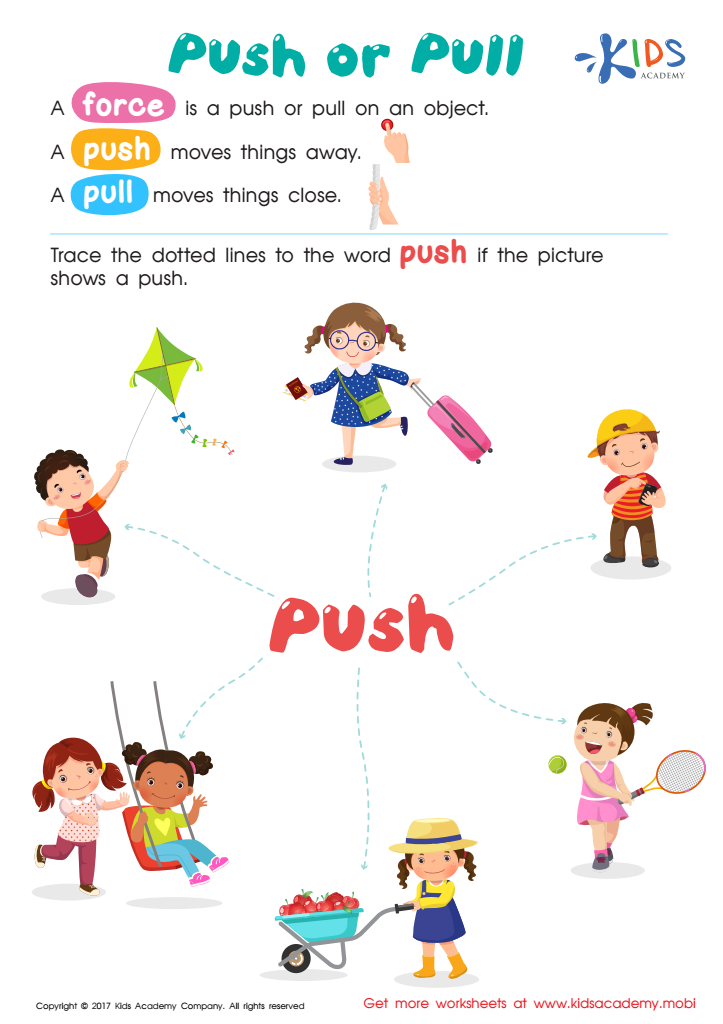
1st grade worksheet: Push or Pull

Push or Pull Worksheet

and which involve pulling! With this fun worksheet, your child will learn about force and its simple application in everyday activities. Get them started with Push or Pull! (80 words)
Push or Pull Worksheet
Worksheet
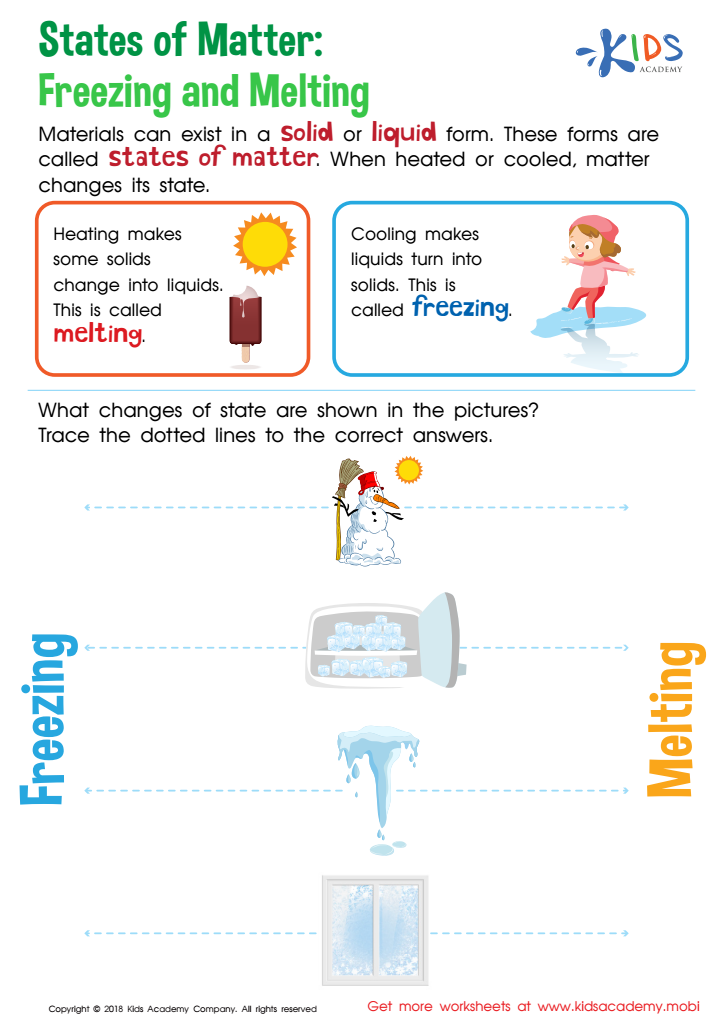
States of Matter: Freezing and Melting Worksheet

States of Matter: Freezing and Melting Worksheet

Have students look through the pics in the worksheet. Ask them what changes of state are shown, then trace the lines to the right answers. Matter can come in liquid or solid form, and changes between the two when heated or cooled (melting/freezing).
States of Matter: Freezing and Melting Worksheet
Worksheet
Fossil Skulls Worksheet


Fossil Skulls Worksheet
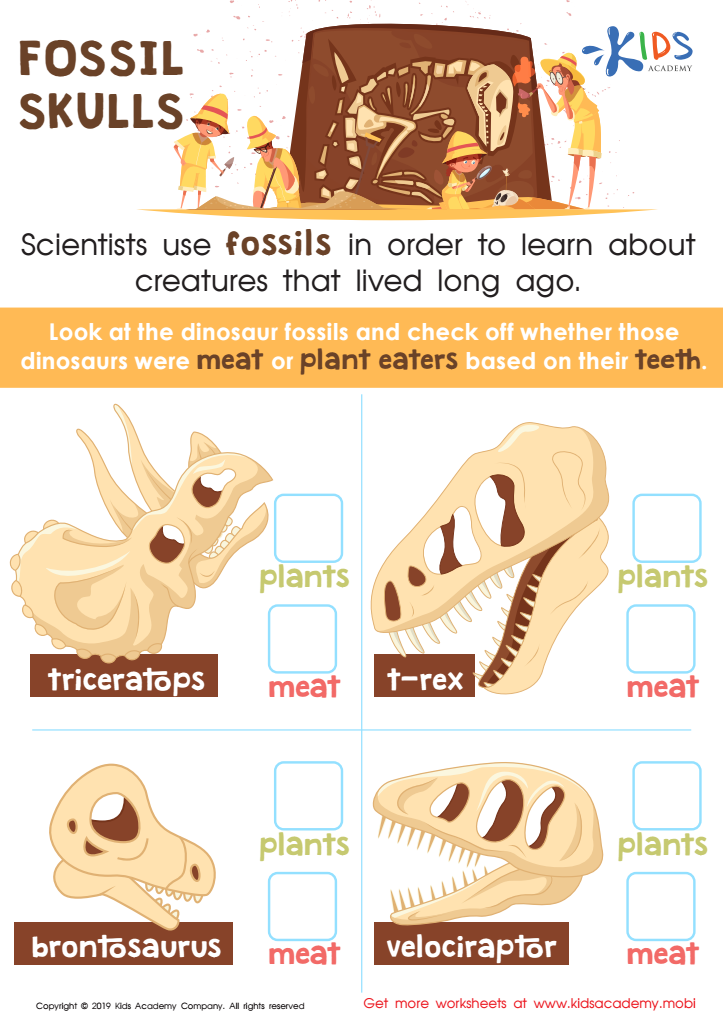
Your child is invited to join us on a fossil dig! With this free worksheet, they'll learn how paleontologists use fossils to discover what creatures ate long ago. Kids will examine dinosaur teeth to find out if the dinos were plant or meat eaters. It's a fun way to explore adaptation and how dinosaurs fed themselves.
Fossil Skulls Worksheet
Worksheet


Enhancing observational skills in science for ages 7-9 is crucial for several reasons, benefiting both parents and teachers. Firstly, young children are naturally curious, and nurturing this curiosity helps establish a lifelong interest in learning and discovery. By encouraging keen observation, children learn to notice details, ask questions, and think critically, which are fundamental aspects of scientific inquiry.

For parents, fostering these skills at home provides a shared experience that strengthens the parent-child bond while also offering a deeper understanding of their child’s learning process. Activities like nature walks, simple experiments, or even cooking together can be excellent opportunities for children to develop and practice these skills.

Teachers benefit by building a classroom environment rich in discovery and exploration. When students are trained to observe meticulously, classroom discussions become more engaging, and lessons are more memorable. Enhanced observational skills lead to improved comprehension and retention of scientific concepts because students have not only read or listened but have also seen and analyzed phenomena firsthand.

Moreover, these skills are transferable; children become better problem-solvers and more attentive listeners. They learn patience and discipline through persistent and careful observation methods. In essence, developing observational skills in young learners sets a strong foundation for academic achievement and personal growth, making it a critical focus for both parents and teachers.