Understanding magnetism Science Worksheets for Ages 7-9
4 filtered results
-
From - To
Explore the fascinating world of magnetism with our engaging science worksheets designed specifically for ages 7-9. These worksheets introduce young learners to essential concepts such as magnetic forces, poles, and real-life applications in a fun, interactive manner. Through a variety of activities, including matching games, hands-on experiments, and quizzes, children will develop a solid understanding of how magnets work. Our resources not only promote scientific inquiry but also boost critical thinking and problem-solving skills. Perfect for classroom use or at-home learning, these worksheets make mastering magnetism exciting and accessible for every young scientist! Explore today and ignite their curiosity!
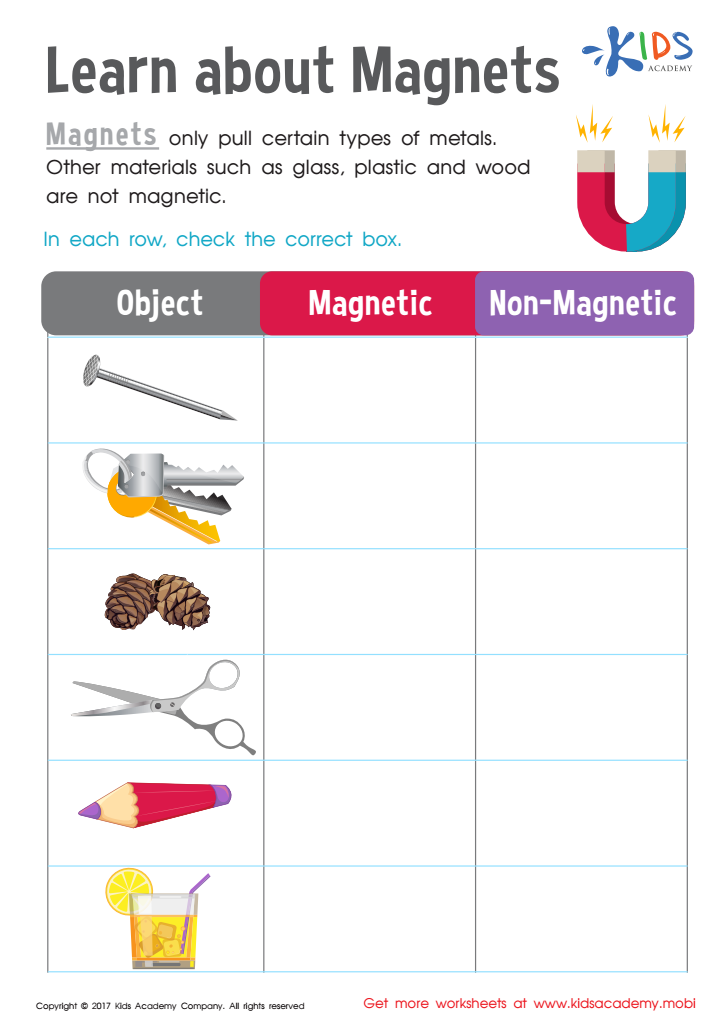
Magnetic Or Not Worksheet
 Assign to My Students
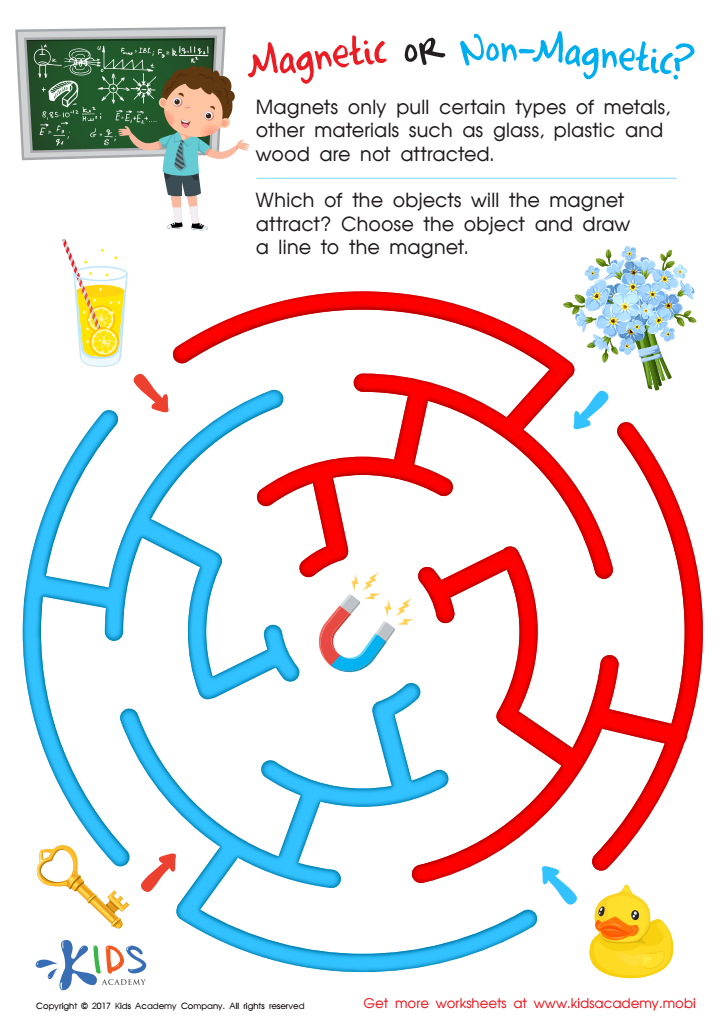
Magnetic or Non–Magnetic Worksheet
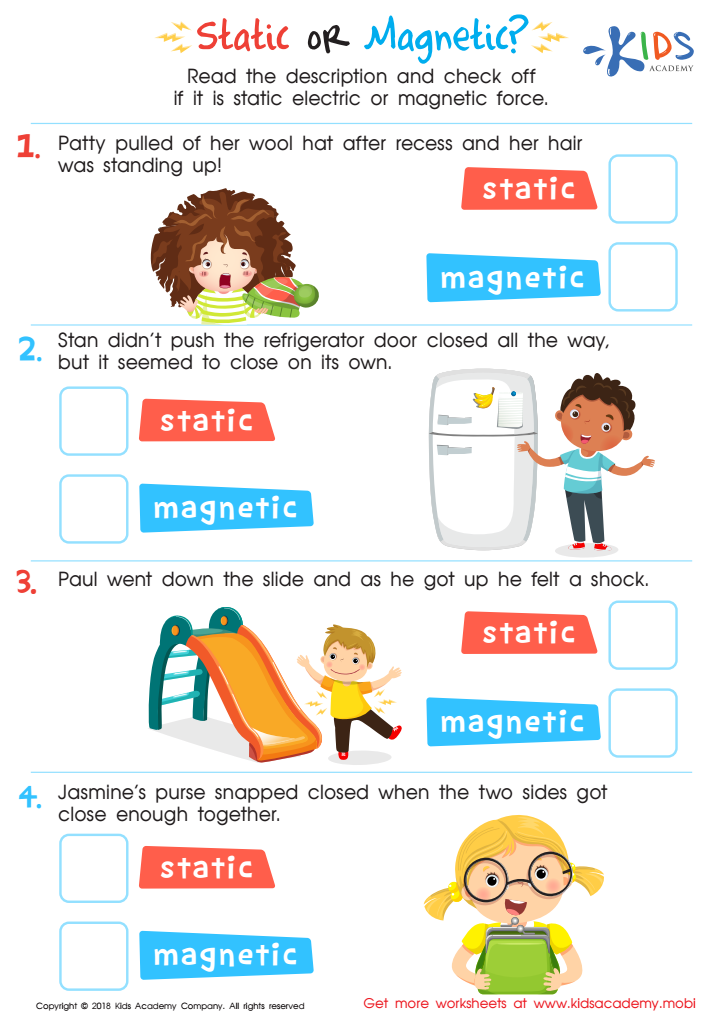
Static or Magnetic Printable Worksheet
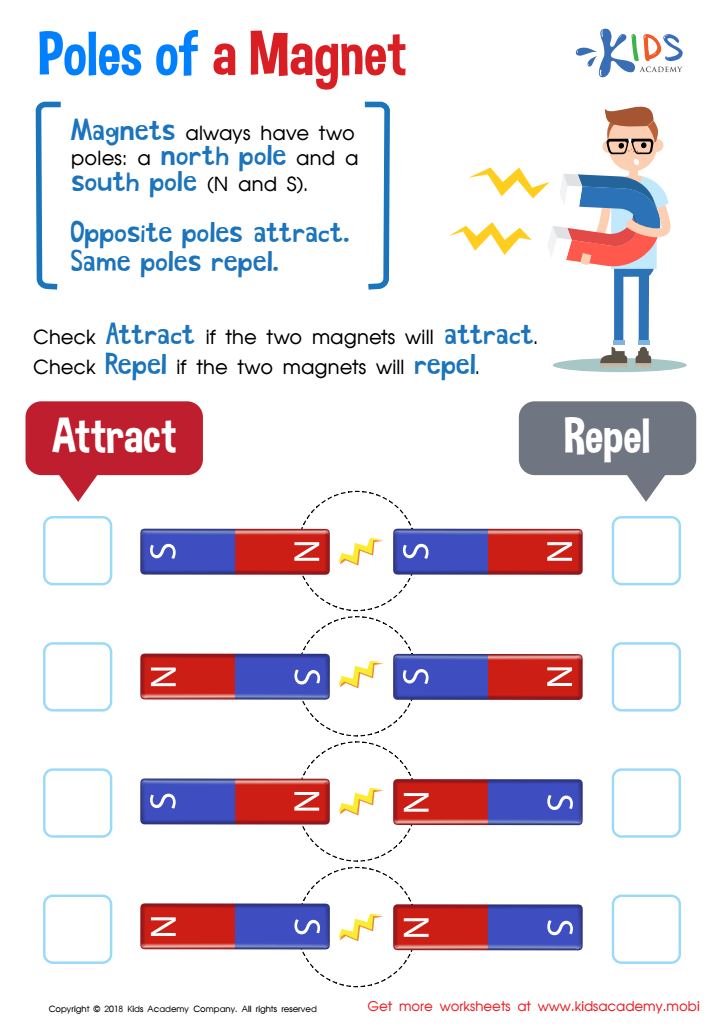
Magnet Poles Attract or Repel Worksheet






Understanding magnetism is essential for children aged 7-9 because it lays the groundwork for critical thinking and scientific inquiry. At this age, kids are naturally curious about their surroundings, and introducing concepts like magnetism can enhance their interest in science.
Magnetism is not only a fundamental scientific principle but also interacts with numerous aspects of everyday life, from how they use devices like fridges and toys to the functioning of MRI machines. By learning about magnetism, children can develop problem-solving skills, improve their ability to think abstractly, and foster curiosity about the physical world.
Furthermore, discussing magnetism allows children to explore broader scientific themes such as forces and energy. These experiences can spark interest in STEM (science, technology, engineering, and mathematics) fields, which are increasingly important in our technology-driven society.
In addition, understanding why certain materials are magnetic and others aren’t encourages a sense of discovery. By showing how science manifests in their daily lives, educators and parents can create engaging learning experiences that promote teamwork, critical thinking, and creativity, helping young learners build a strong foundation for future educational success. Overall, incorporating magnetism into learning contributes to a child’s cognitive and emotional development.







