
Vocabulary development Science Worksheets for Ages 7-9
13 filtered results
Difficulty Level
Grade
Age
-
From - To
Subject
Activity
Standards
Enhance your child's scientific vocabulary with our engaging Vocabulary Development Science Worksheets, designed specifically for ages 7-9. Our carefully crafted materials introduce essential science terms through fun activities that promote learning and retention. Kids will explore topics like biomes, ecosystems, and the human body while developing their language skills. These worksheets incorporate Matching exercises, Fill-in-the-blanks, and Word Searches that make learning enjoyable and interactive. Perfect for classroom settings or at-home practice, our worksheets encourage critical thinking and expand children's understanding of scientific concepts. Help your young learners build a solid foundation in science vocabulary today!
Favorites
With answer key
Interactive
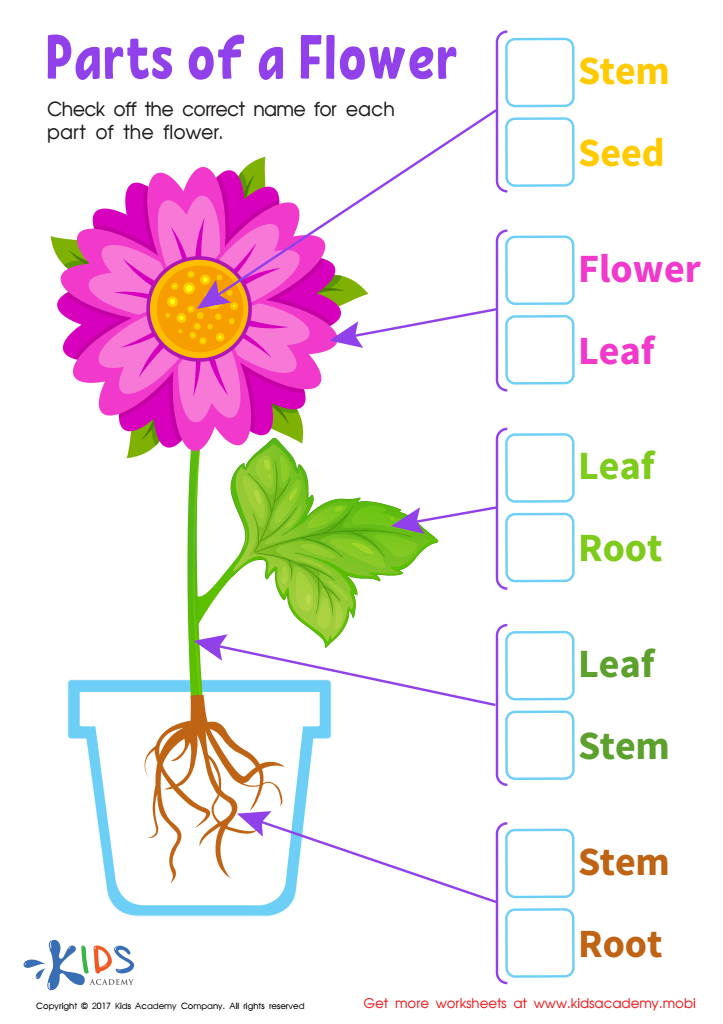
Parts Flower Printable
Introduce your child to life science with this vivid parts of a flower worksheet! They'll learn basic flower structures while building biology vocabulary and discovering plants are living creatures too! Perfect for budding little scientists!
Parts Flower Printable
Worksheet
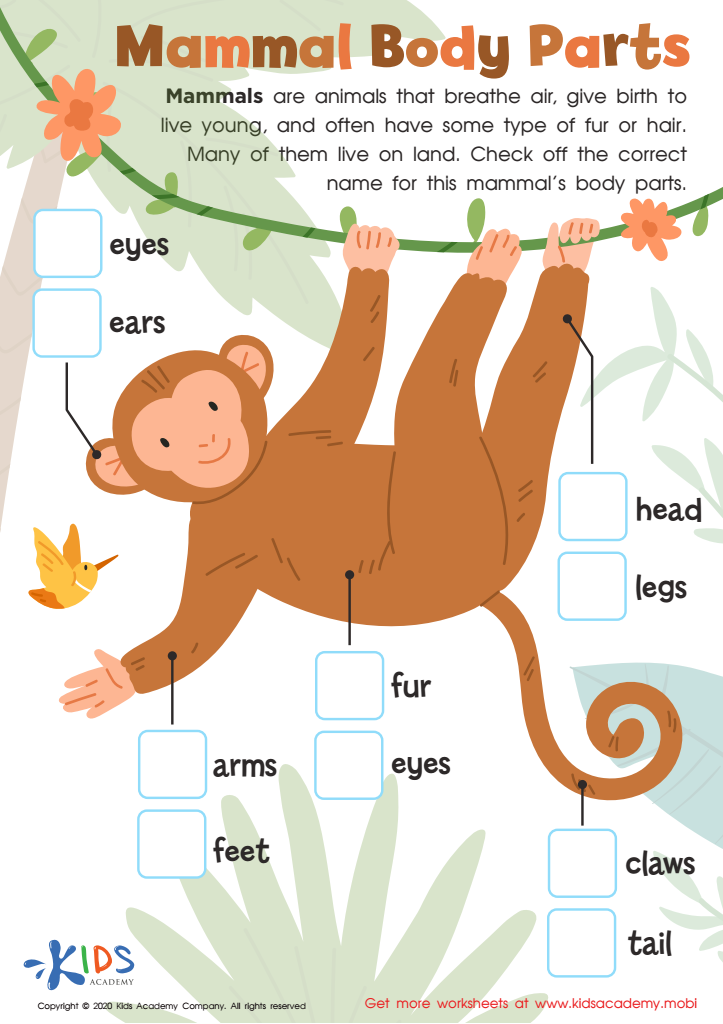
Mammal Body Parts Worksheet
Help your little scientist identify a mammal's body parts with this cute and colorful worksheet. It includes fur, arms, legs, tails, and more! Read the passage to learn what makes an animal a mammal, then have them check off the boxes to identify parts of the monkey. It's a fun way to learn about animals in the animal kingdom!
Mammal Body Parts Worksheet
Worksheet
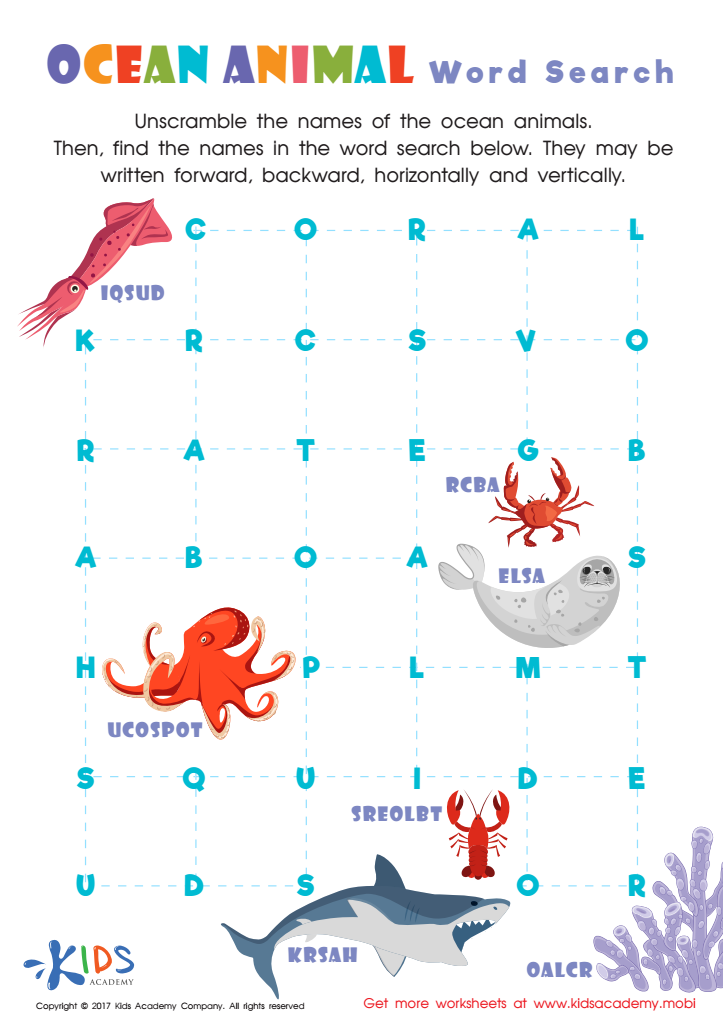
Ocean Animals Word Search Printable
Challenge your child to unscramble the names of ocean animals and find them in the word search. This ocean animals printable is a fun way to teach kids more about these fascinating creatures!
Ocean Animals Word Search Printable
Worksheet
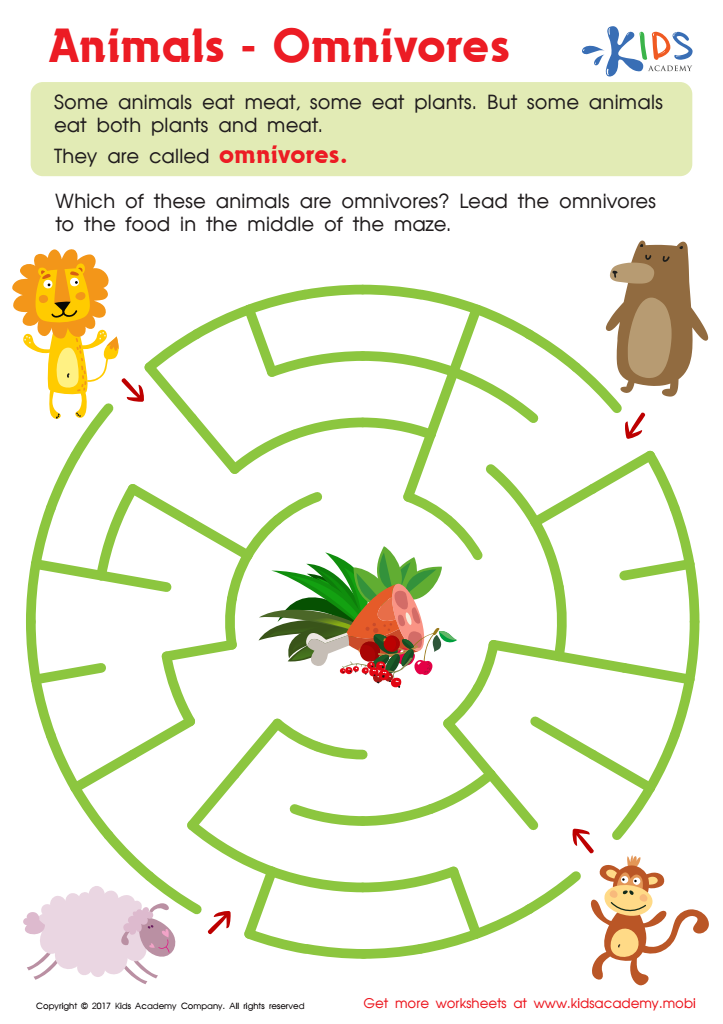
Omnivores Animals Worksheet
Kids can explore omnivores animals with this worksheet! It presents herbivores, carnivores and omnivores, with the main activity being a maze. Kids must guide a bear through it to get to its food. See how much they know about omnivores!
Omnivores Animals Worksheet
Worksheet
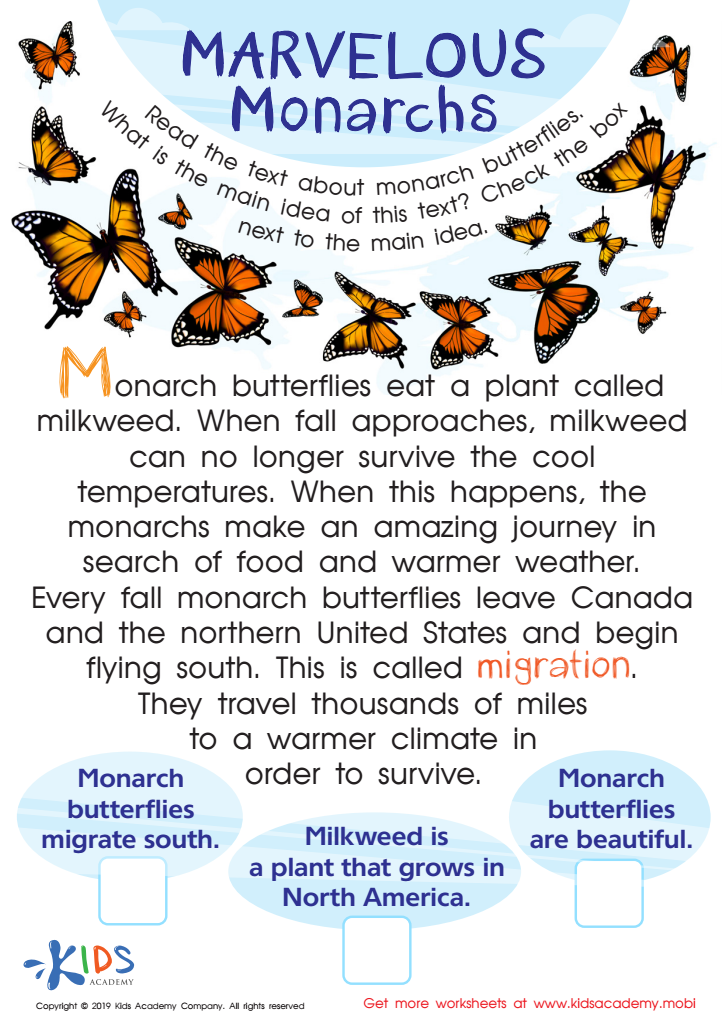
Marvelous Monarchs Worksheet
Help your kids have fun while reading - start with small words and short sentences. This worksheet can test your kids' reading and comprehension skills. Ask them to read the text about Monarch butterflies and help them locate the main idea.
Marvelous Monarchs Worksheet
Worksheet
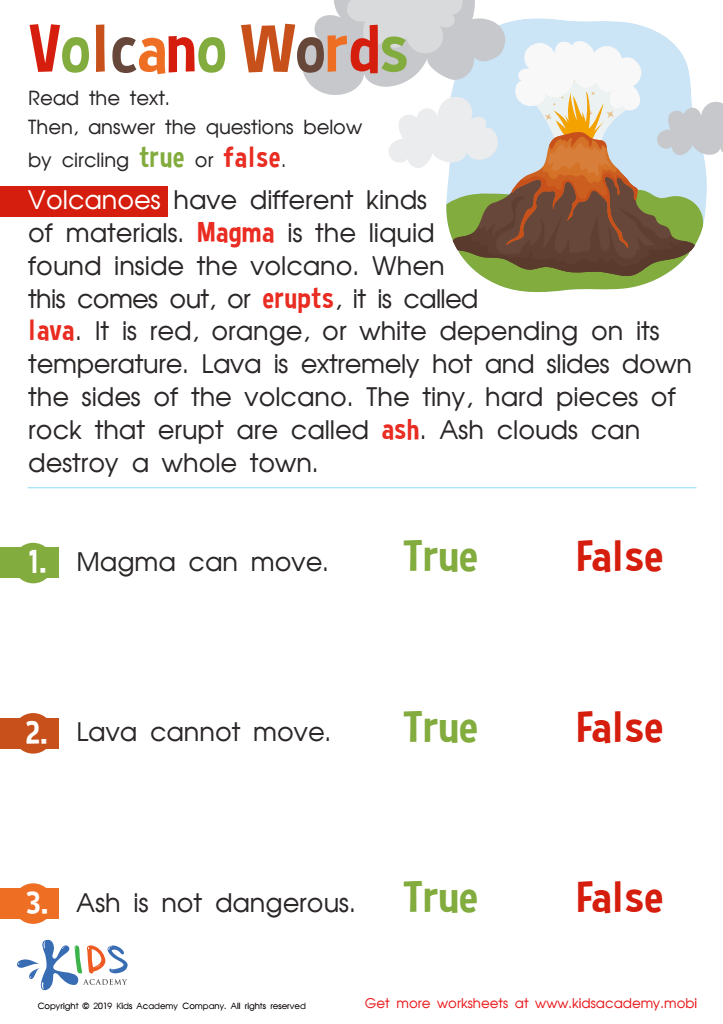
Volcano Words Worksheet
This worksheet helps kids focus and improve their reading comprehension skills. Start by reading a passage about volcanos and noting the bolded red words. Then answer true/false statements below, double-checking in the text if needed.
Volcano Words Worksheet
Worksheet
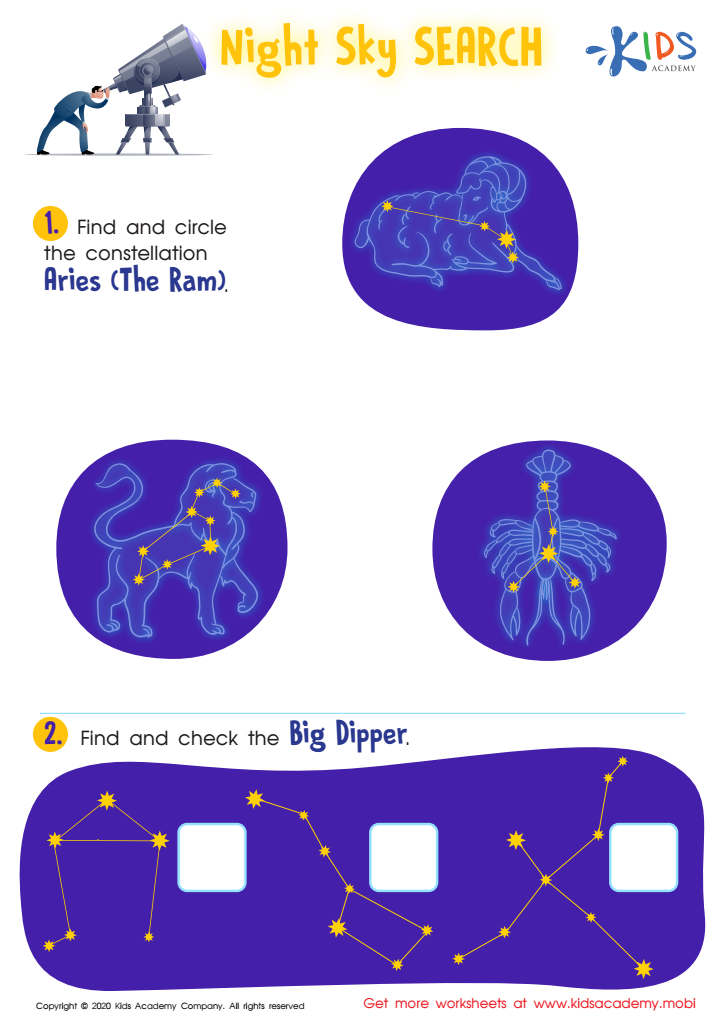
Night Sky Search Worksheet
Gaze up into the night sky and spot the stars! Your little astronomer can learn about Aries and Big Dipper constellations with this science worksheet. Simply find the ram for Aries and check the box for Big Dipper. Then, when the weather is right, go outside and look for them in the night sky!
Night Sky Search Worksheet
Worksheet
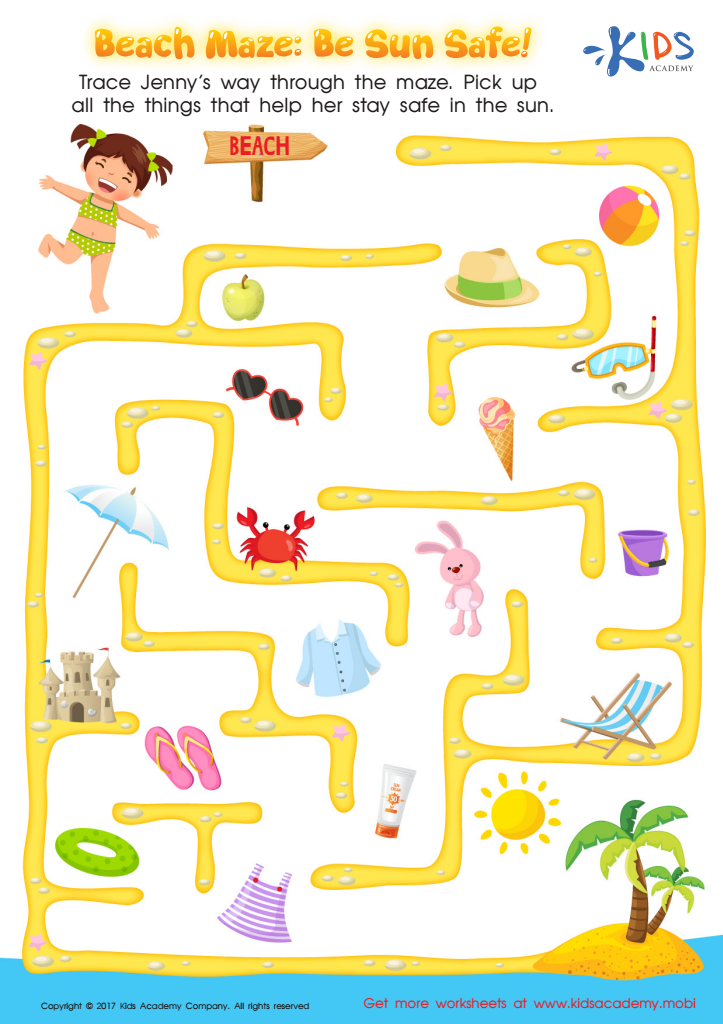
Beach Maze: Sun Safe Worksheet
Let's have fun in the sun! Use this worksheet to help guide your child - Jenny - through the maze and find the items she needs to stay safe. Your child will learn more about sun safety while they think through the maze and protect their skin.
Beach Maze: Sun Safe Worksheet
Worksheet
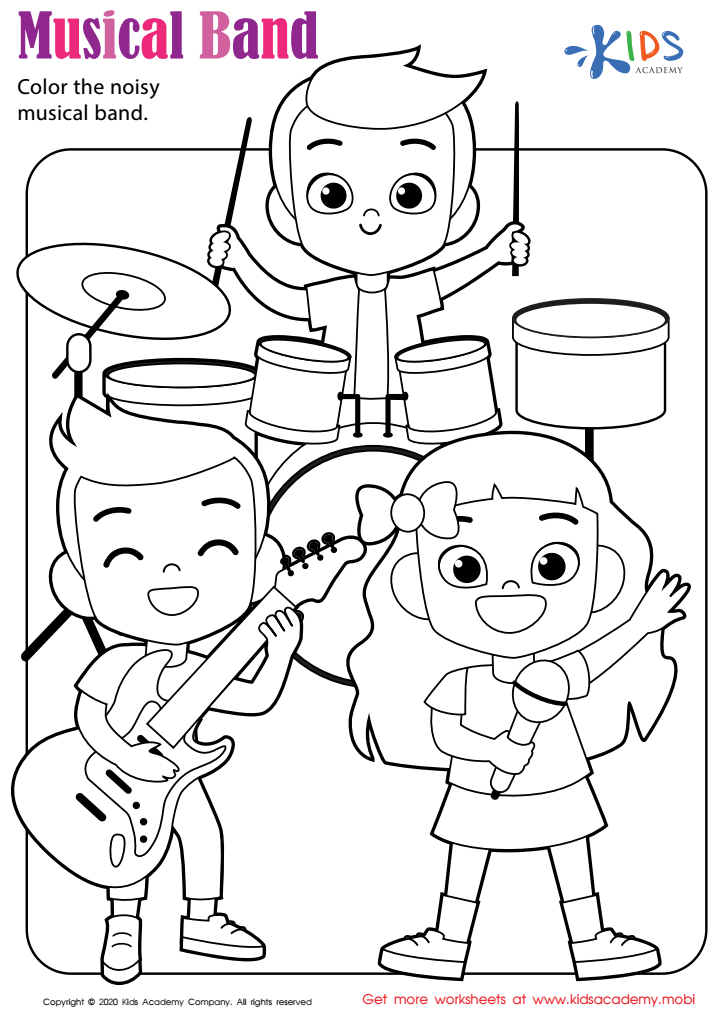
Musical Band Worksheet
Introduce music to your kids with this free printable coloring worksheet! Ask them to name the instruments and their sounds, then let them get creative with the colors. A band is formed when several people play instruments together - help your child learn this concept and get inspired to join a band one day!
Download (PDF)
 Assign to My Students
Assign to My Students
Musical Band Worksheet
Worksheet
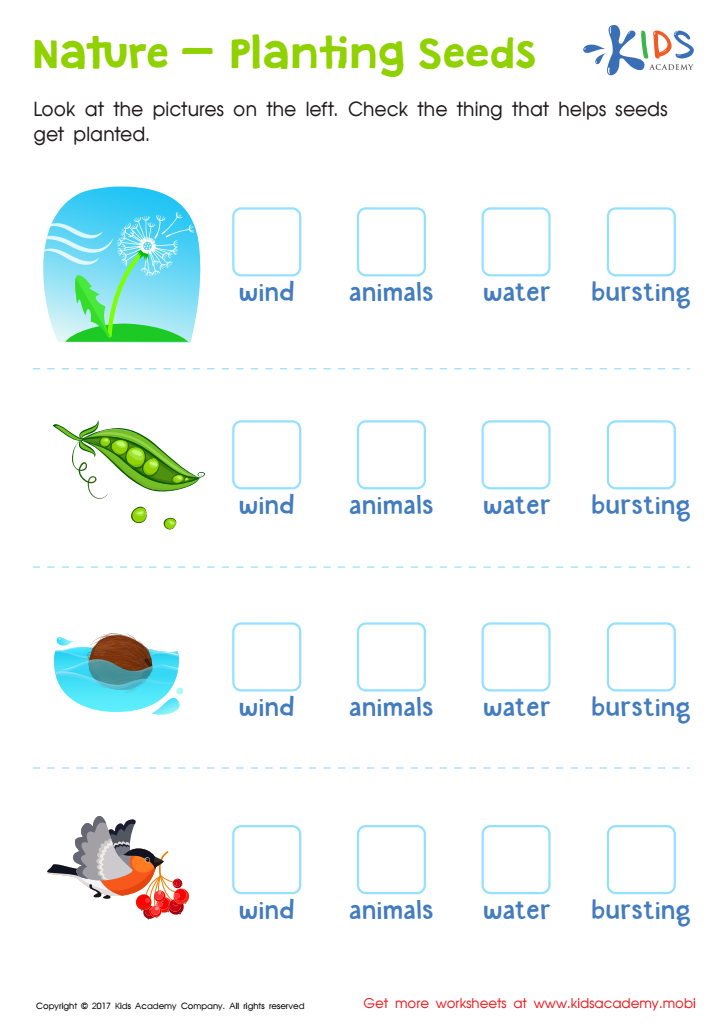
Nature Planting Seeds Worksheet
Help your child explore the fascinating cycle of plants and seeds with this worksheet. They'll learn how plants grow and how seeds travel to the ground. Challenge them to identify the right way each seed gets planted!
Nature Planting Seeds Worksheet
Worksheet
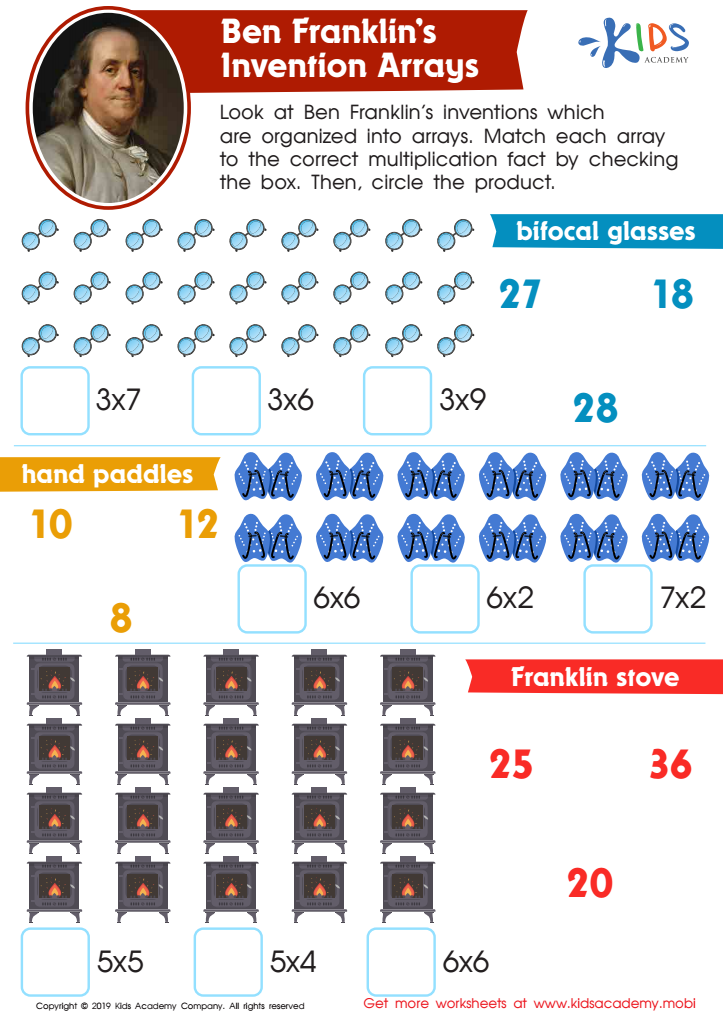
Ben Franklin’s Invention Arrays Worksheet
Have your child guess some of the inventors of the popular items we use today. For instance, the light bulb was invented by Thomas Edison. Look at Ben Franklin's inventions and help your kids match the arrays to the correct multiplication fact. Check the box and circle the product.
Ben Franklin’s Invention Arrays Worksheet
Worksheet
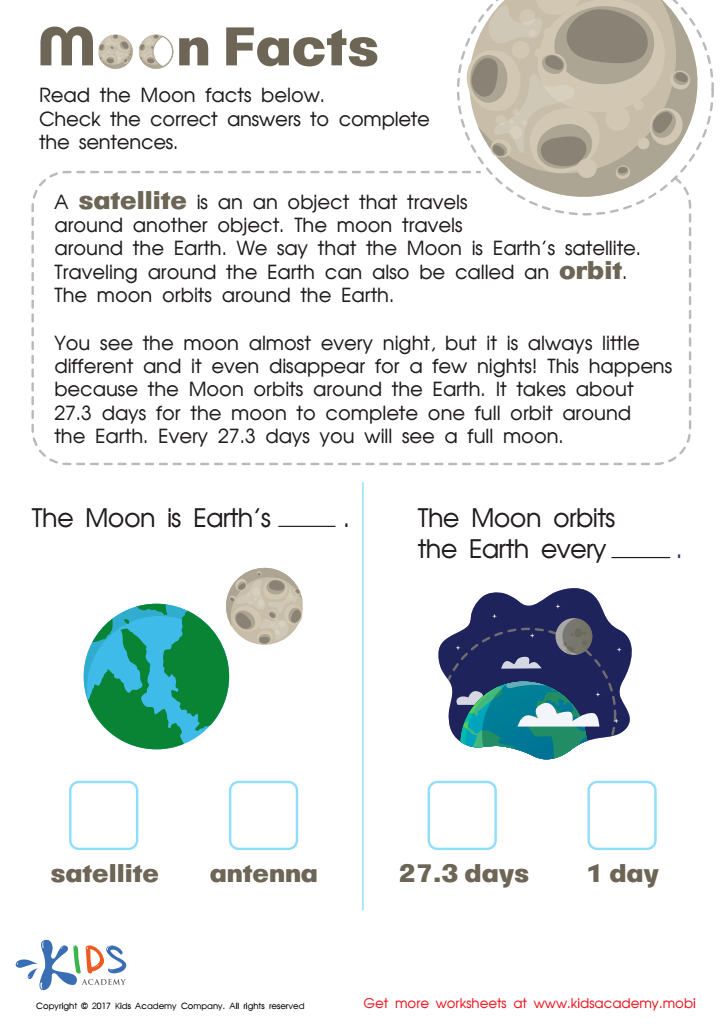
Moon Facts Worksheet
This worksheet challenges your child's reading comprehension. They'll learn all about satellites and the moon's orbit, observing the moon's fascinating phases!
Moon Facts Worksheet
Worksheet
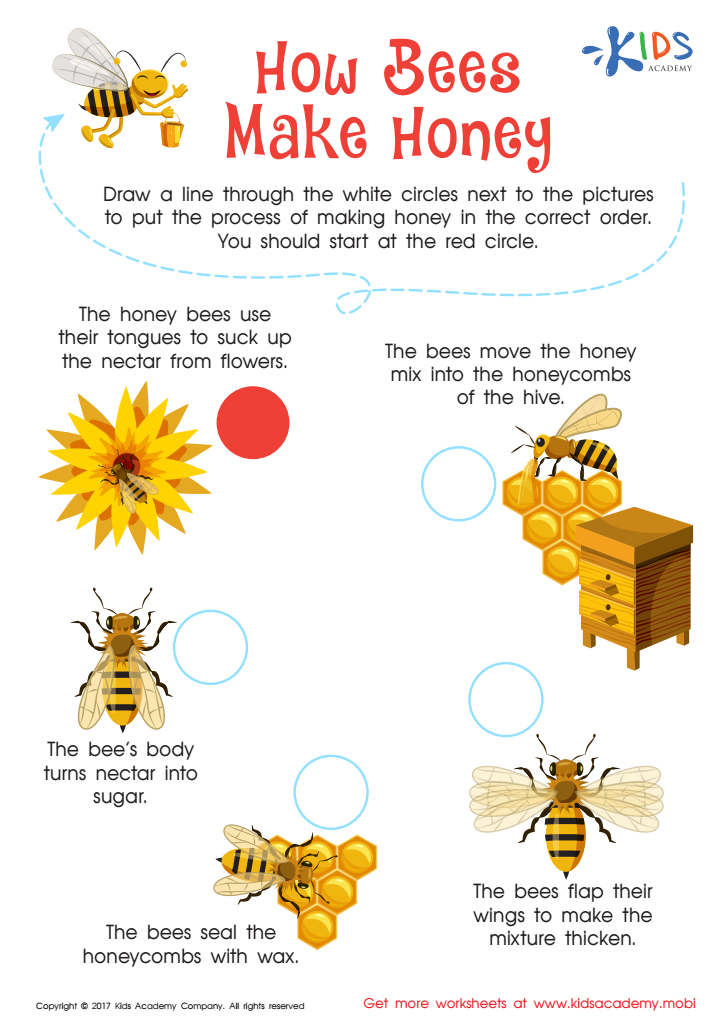
Honey Bee Worksheet
Kids learn about life science and the process of making honey with this sweet honeybee worksheet for 3rd grade. They identify the steps bees take and put the cycle in order, developing knowledge and appreciation for honeybees!
Honey Bee Worksheet
Worksheet
Join Kids Academy for Free
Who is primarily going to use this learning content?








Parents and teachers should prioritize vocabulary development in the science education of children aged 7-9 for several compelling reasons. At this stage, children are not only building essential literacy skills but also developing cognitive abilities essential for scientific understanding. A robust vocabulary allows young learners to accurately express concepts, ask questions, and engage in discussions about the natural world, fostering critical thinking and curiosity.
Moreover, science vocabulary often includes specialized terms that describe processes, structures, and phenomena. Familiarity with these terms enables children to participate in scientific explorations confidently and enhances their comprehension of complex topics. For instance, understanding words like “habitat,” “energy,” or “ecosystem” helps children grasp important scientific relationships and principles, making learning more meaningful and relevant.
Additionally, a well-developed vocabulary is linked to overall academic success. Strong language skills can lead to better reading comprehension, written expression, and performance in other subjects, creating a well-rounded learner. Involving parents in vocabulary-building activities, such as reading together or engaging in science-related discussions at home, can bridge classroom learning and everyday experiences, thereby reinforcing educational growth. Ultimately, focusing on vocabulary development in science cultivates informed, inquisitive, and articulate young citizens ready to engage with the complexities of the world.







