Understanding life cycles Plants and Animals Worksheets for Ages 7-9
6 filtered results
-
From - To
Explore the fascinating world of life cycles with our comprehensive "Understanding Life Cycles: Plants and Animals" worksheets designed for ages 7-9. Engaging and educational, these worksheets help young learners grasp essential scientific concepts by focusing on the developmental stages of various organisms. From seeds to flowering plants and from hatchlings to adult animals, children will enjoy hands-on activities that promote critical thinking and observation skills. These worksheets are perfect for enhancing classroom learning or providing fun at-home practice. Inspire curiosity about nature and foster a love for science in your child as they uncover the stages of life in both plants and animals!
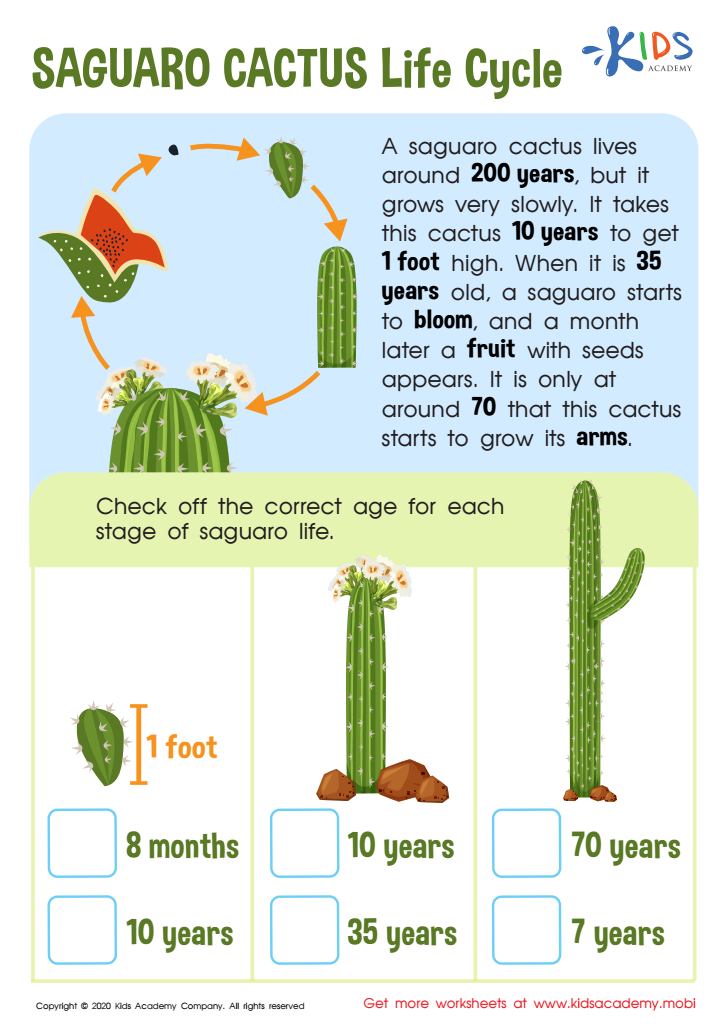
Saguaro Cactus Life Cycle Worksheet
 Assign to My Students











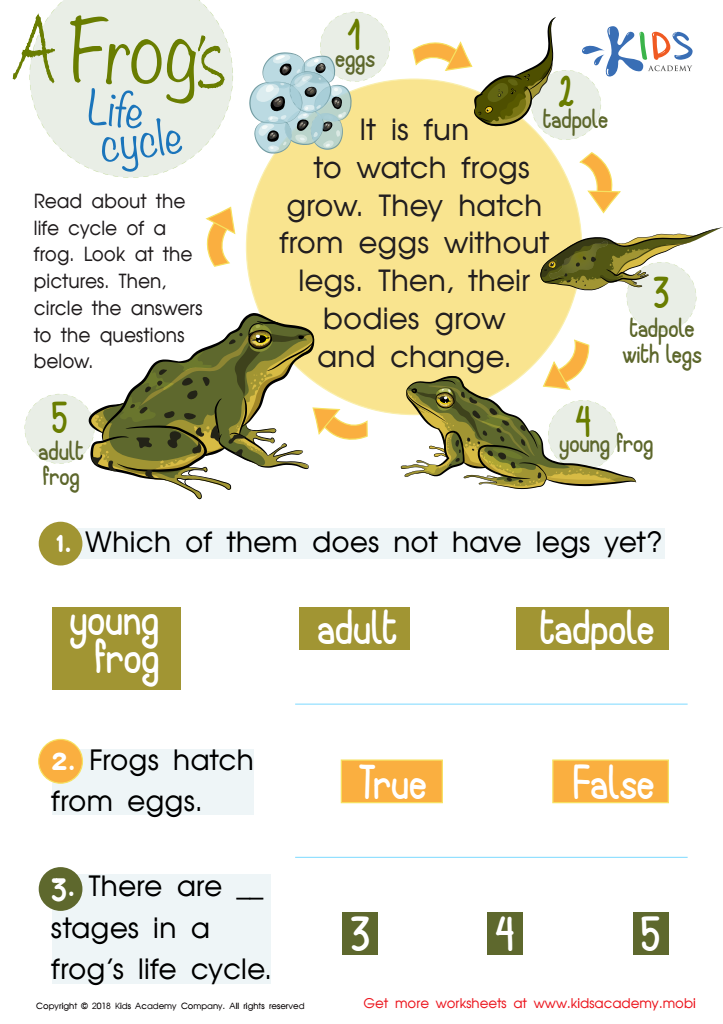
A Frog’s Life Cycle Worksheet
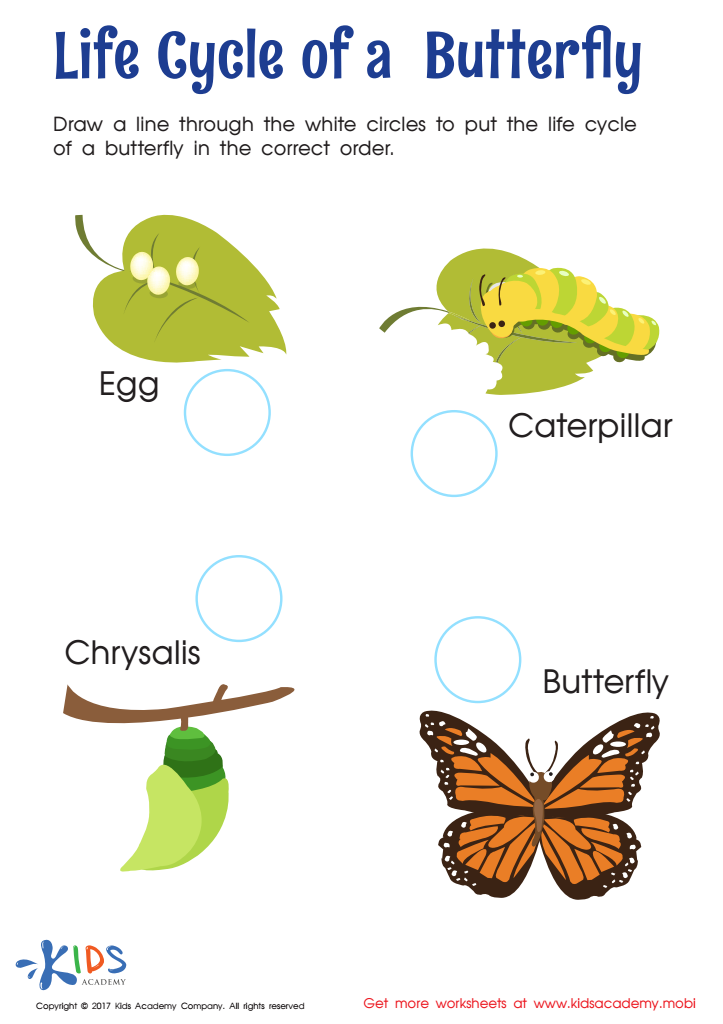
Life Cycle of Butterfly Worksheet
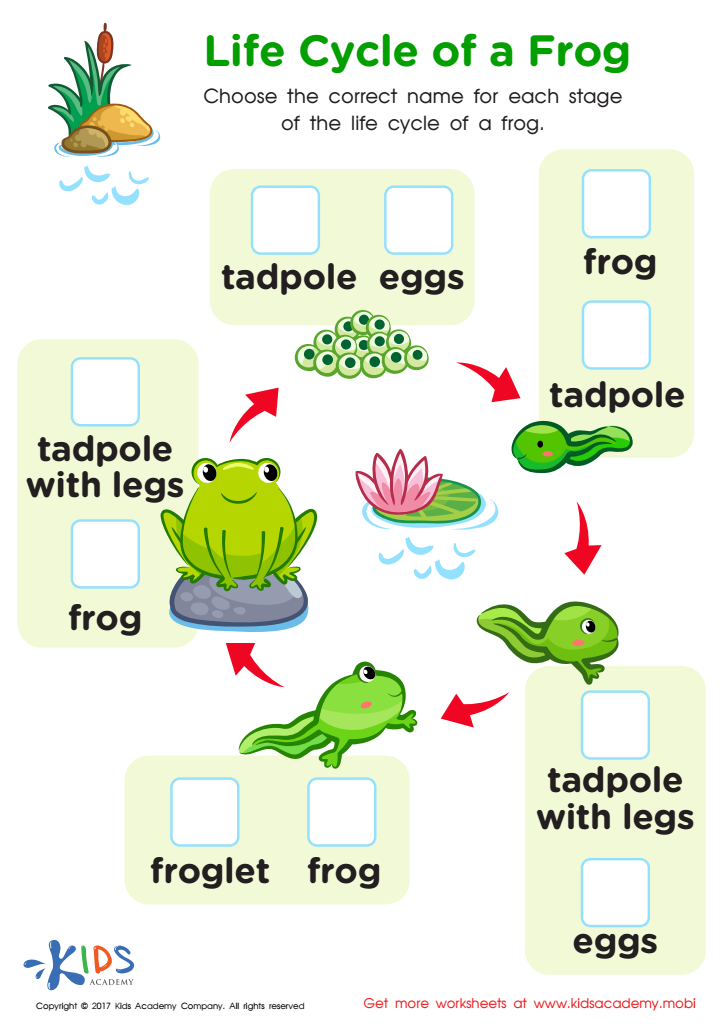
Life Cycle Frog Printable
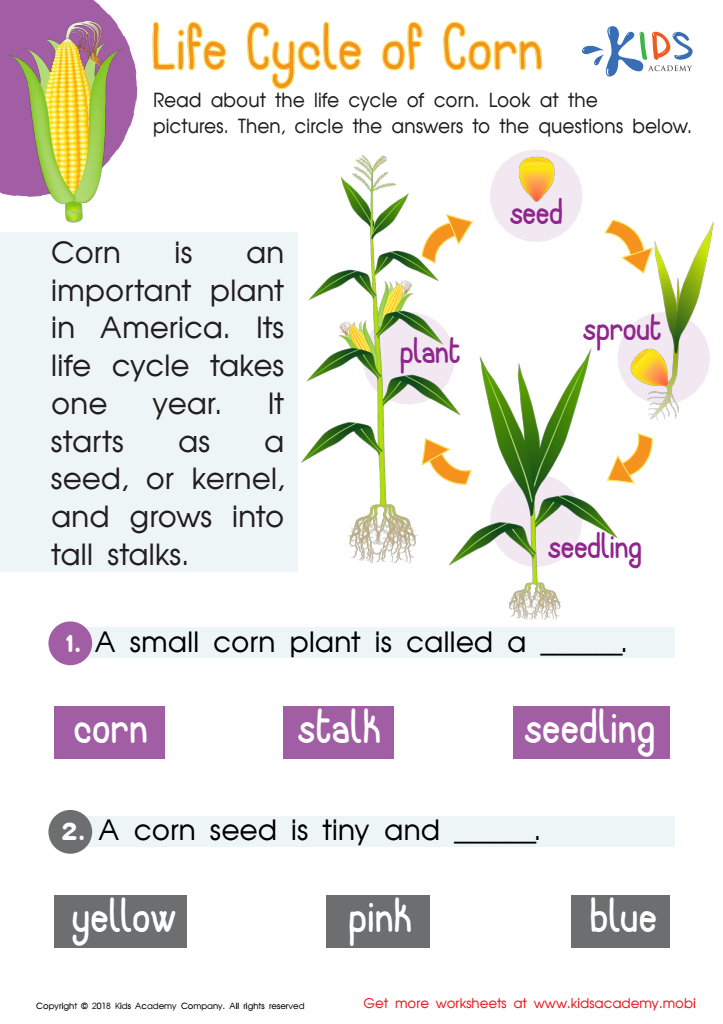
Life Cycle of Corn Worksheet
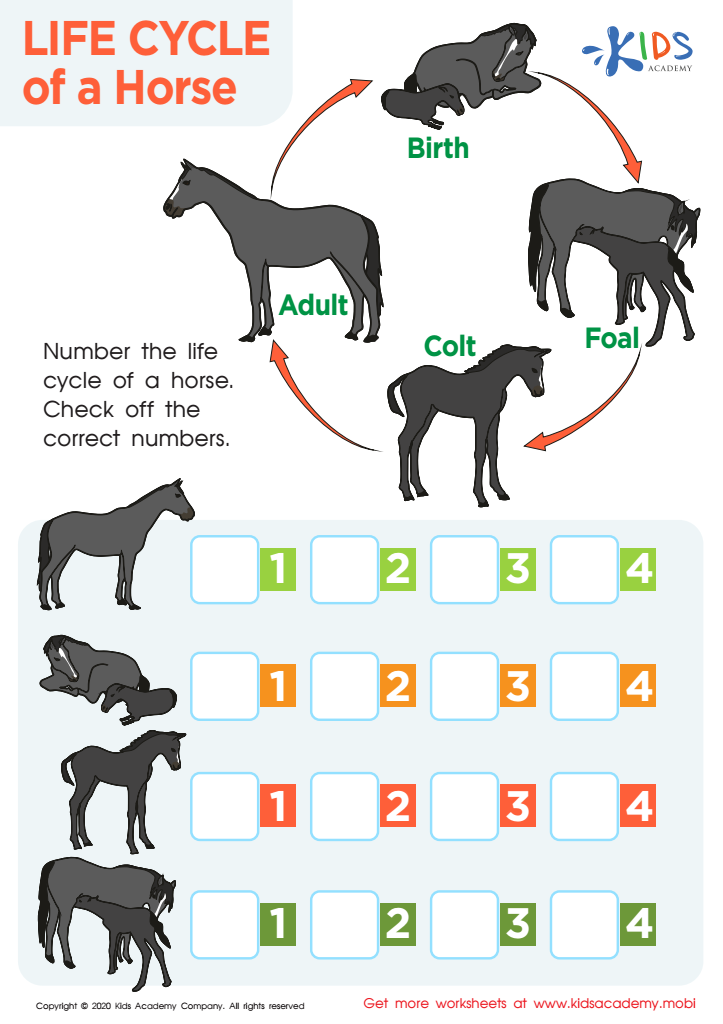
Life Cycle of a Horse Worksheet








Understanding life cycles of plants and animals is essential for children ages 7-9, as it fosters a deep appreciation for the natural world. For parents and teachers, this knowledge cultivates curiosity and develops critical thinking skills necessary for academic success. Learning about life cycles engages children in scientific inquiry, allowing them to observe, discuss, and experiment with concepts they encounter in their daily lives.
When children explore the stages of growth and transformation in plants and animals—such as the metamorphosis of a butterfly or the flowering process of a plant—they gain insights into the interconnectedness of ecosystems. This understanding can foster empathy for living organisms, encouraging attitudes of respect and stewardship towards the environment.
Additionally, knowledge of life cycles provides a foundation for more complex scientific principles later on, such as reproduction, adaptation, and biodiversity. Parents and teachers play a crucial role in facilitating this learning experience, using creative lessons, outdoor activities, and hands-on projects. By nurturing an appreciation for life cycles, they help children become informed, responsible global citizens who value sustainability and the importance of protecting our planet. Ultimately, this education not only enhances academic achievement but also contributes to children's overall emotional and social development.








