Understanding moon phases Space Worksheets for Ages 7-9
3 filtered results
-
From - To
Discover our engaging "Understanding Moon Phases" Space Worksheets designed for children ages 7-9! These educational resources make learning about the fascinating phases of the moon fun and interactive. With colorful illustrations and easy-to-follow activities, young learners will explore concepts such as the new moon, full moon, and everything in between. Our worksheets promote critical thinking and observation skills, encouraging students to make connections with celestial events. Perfect for classroom use or at-home learning, these worksheets enhance science knowledge while sparked curiosity about our universe. Help your child shine bright in their understanding of space with these printable, enriching activities!
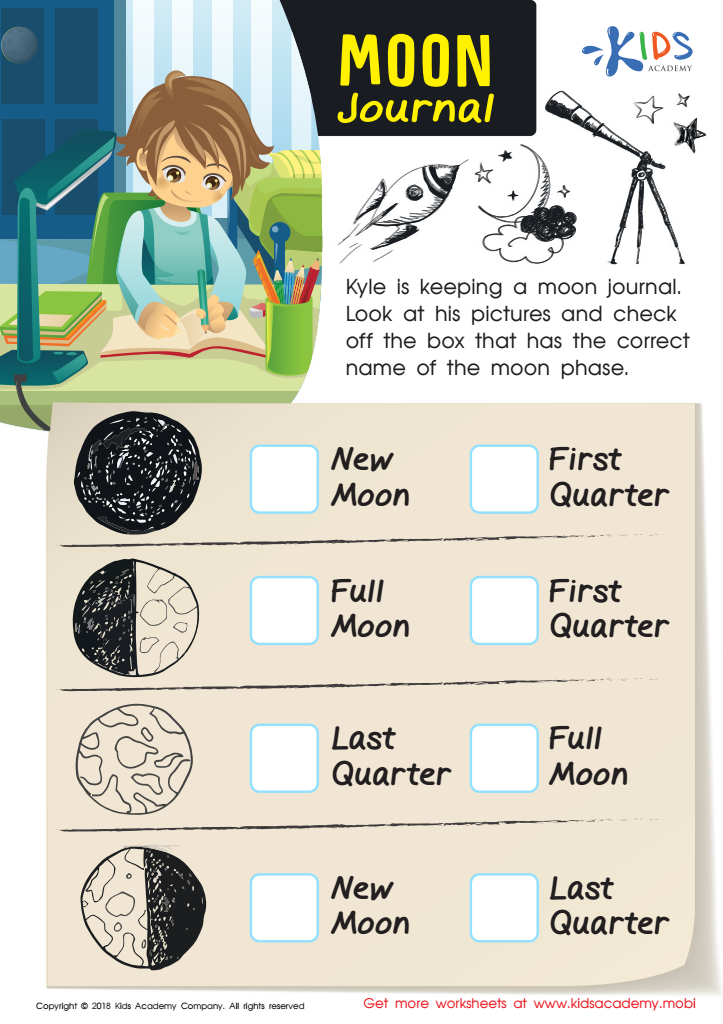
Moon Journal Worksheet
 Assign to My Students
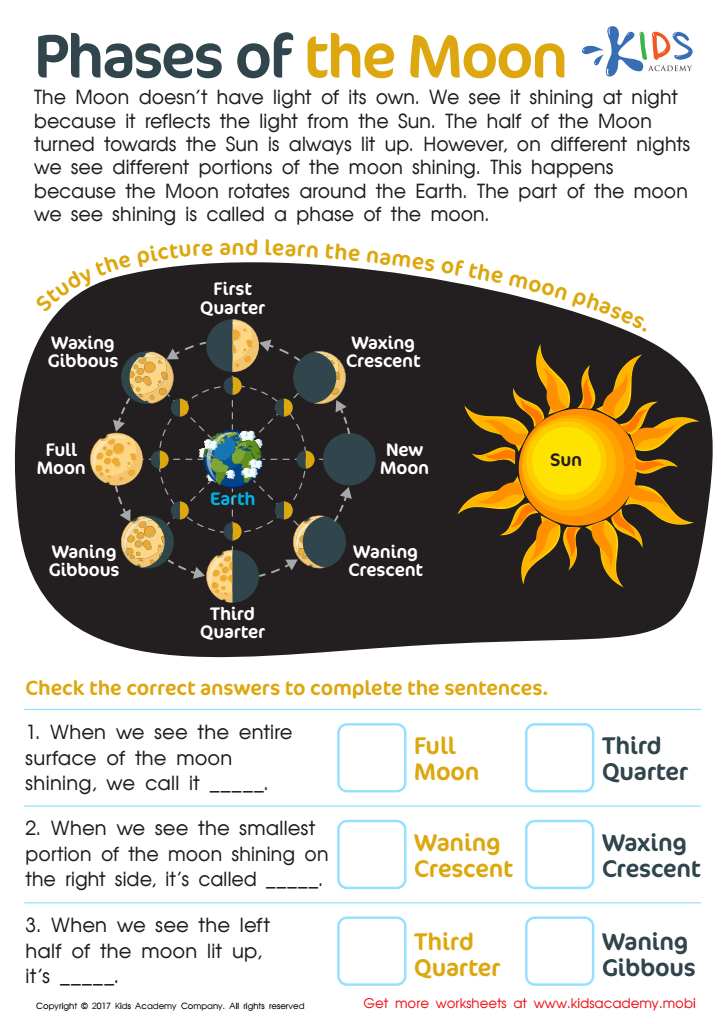
Phases of The Moon Worksheet
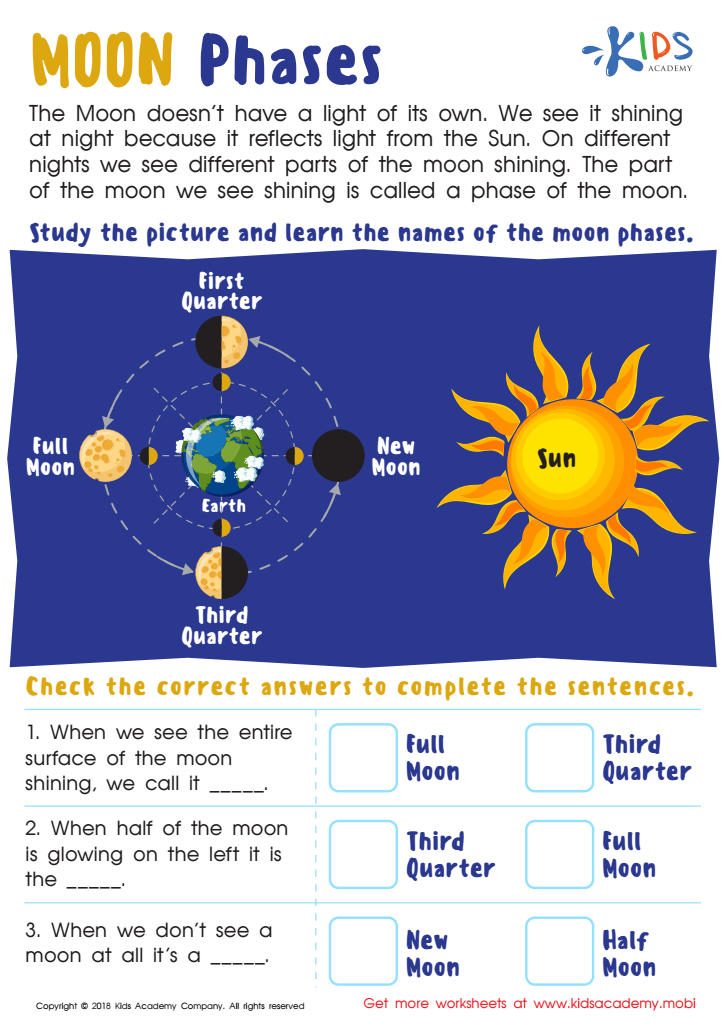
Moon Phases Worksheet





.jpg)


Understanding moon phases is crucial for children aged 7-9 as it fosters curiosity about the natural world and enhances scientific literacy. At this age, children are often fascinated by space and celestial bodies. Learning about the moon's phases—new moon, first quarter, full moon, and last quarter—helps them grasp fundamental astronomical concepts, fostering critical thinking and observational skills.
Teaching moon phases also intersects with various subjects; it incorporates elements of Earth science, mathematics (measuring time), and even creative arts (drawing and storytelling). This multidisciplinary approach enriches their educational experience. Additionally, engaging with topics like lunar cycles can inspire discussions about larger themes such as astronomy, the importance of the moon in calendars, and its influence on Earth’s tides, thereby broadening their understanding of interconnected systems.
Furthermore, fostering an appreciation for the moon can encourage outdoor exploration and scientific inquiry. Parents and teachers can motivate children to observe nighttime skies, contributing to a sense of wonder and appreciation for the universe. Ultimately, these early forays into astronomy not only lay a strong foundation for further scientific learning but also cultivate lifelong interests and a sense of stewardship for the environment. Understanding moon phases is the first step in sparking a passion for science and exploration.







