Verb identification Writing Worksheets for Ages 7-9
5 filtered results
-
From - To
Enhance your child's writing skills with our engaging Verb Identification Writing Worksheets designed specifically for ages 7-9. These interactive worksheets help young learners recognize and underline verbs within sentences, boosting their comprehension and grammatical skills. Each worksheet is crafted to encourage critical thinking and application of verbs in various contexts, offering a fun and educational experience. With colorful illustrations and age-appropriate tasks, your child will enjoy honing their language abilities while developing a solid foundation for future writing. Perfect for classroom use or at-home practice, these worksheets provide an excellent resource for fostering a love for language and learning in your child.
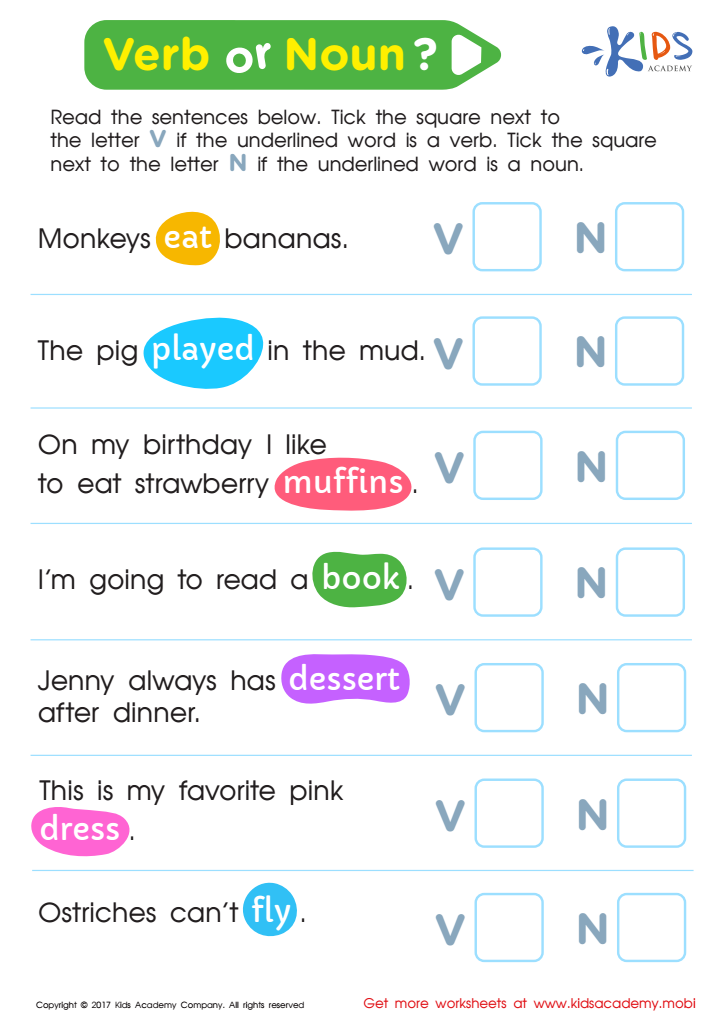
Verb or Noun Worksheet
 Assign to My Students
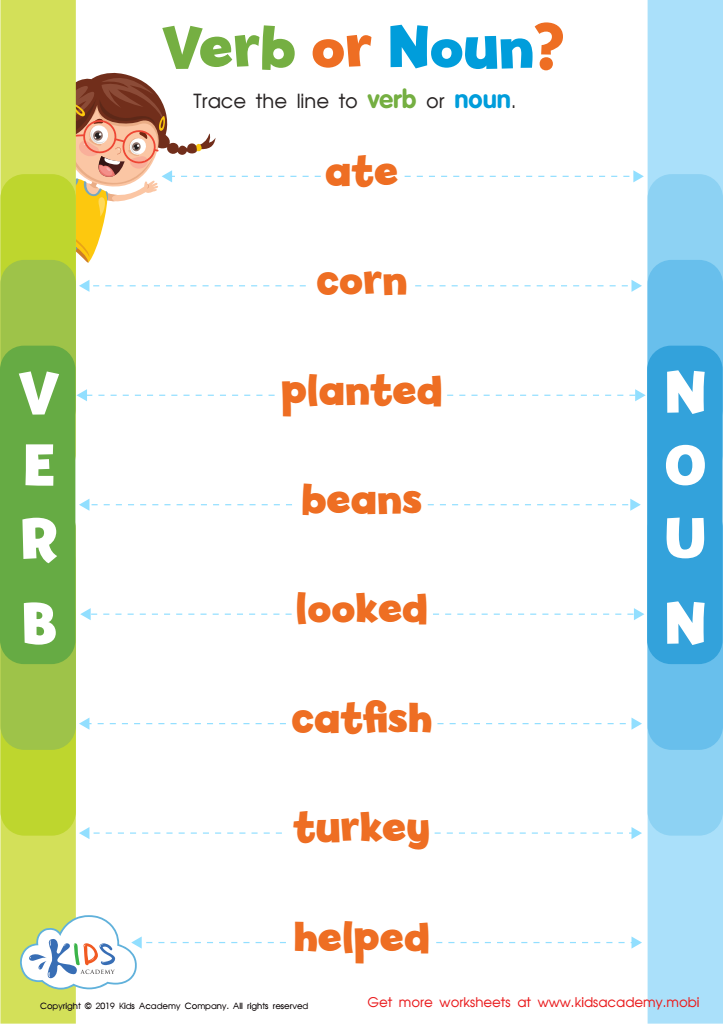
Verb or Noun Worksheet
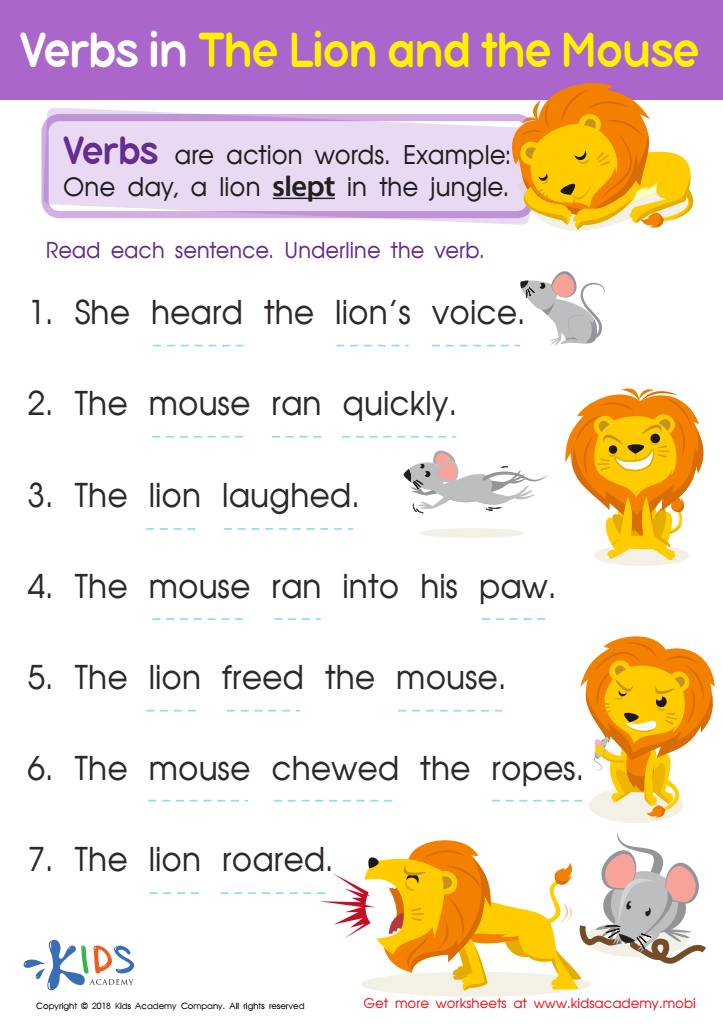
Verbs in The Lion and the Mouse Worksheet
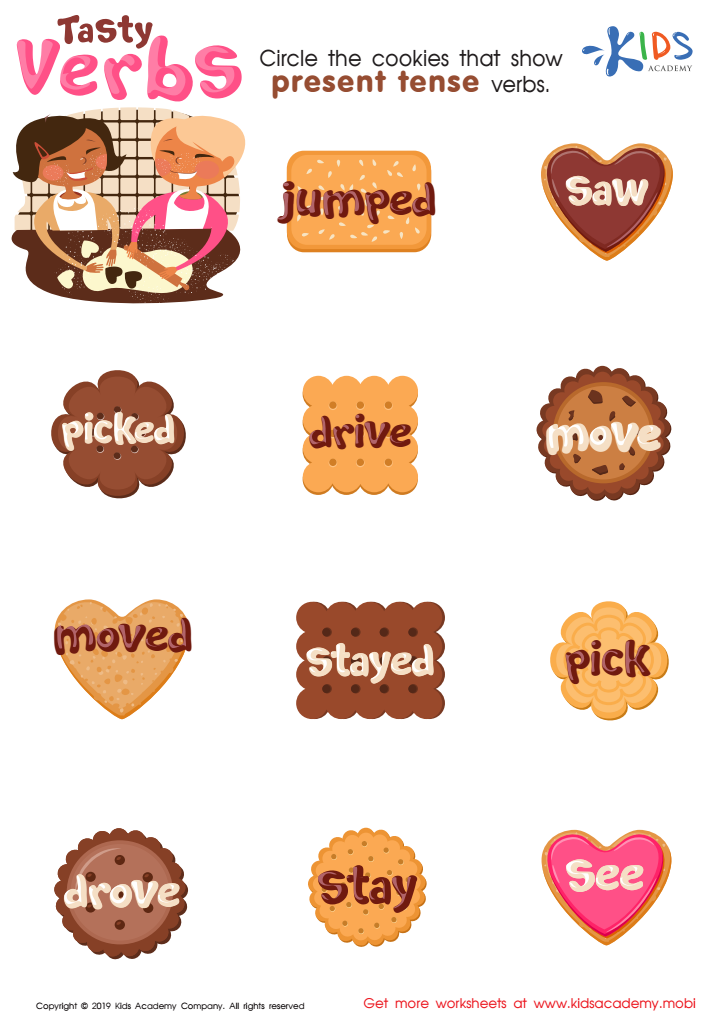
Tasty Verbs Worksheet
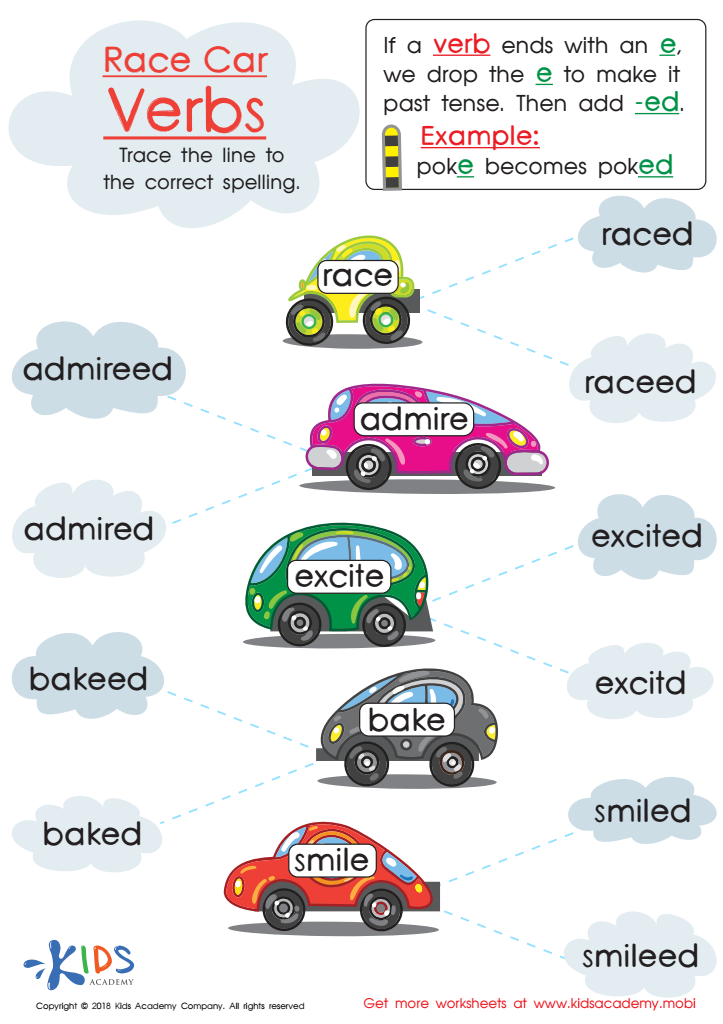
Race Car Verbs Worksheet







.jpg)
Verb identification is crucial for children aged 7 to 9 as it lays a foundational skill for effective communication and writing. At this age, students are transitioning from basic sentence structures to more complex writing. Understanding verbs helps them construct clear, concise sentences, enhancing their narrative and descriptive capabilities.
When children identify verbs, they learn about action and state of being, which broadens their vocabulary and strengthens their grammar skills. This knowledge allows them to convey emotions, actions, and ideas more precisely, making their writing more engaging and coherent.
For parents and teachers, focusing on verb identification nurtures critical thinking and analytical skills. It encourages children to assess their writing, making thoughtful word choices that enhance their expression. Furthermore, mastering verbs facilitates reading comprehension, as strong readers can identify and understand actions or states within a text, thereby deepening their overall engagement with literature.
Incorporating verb identification into learning activities also makes writing fun and interactive. Through games and creative exercises, children can explore language creatively, fostering a love for writing. Supporting this skill means empowering children to communicate their thoughts and experiences more effectively, setting the stage for their academic success and language proficiency in the future.








