Understanding tens Numbers Worksheets for 7-Year-Olds
4 filtered results
-
From - To
Discover our engaging "Understanding Tens Numbers Worksheets" designed for 7-year-olds! These worksheets help young learners grasp the concept of tens and enhance their math skills. With colorful visuals and fun exercises, children will practice identifying tens, comparing numbers, and building strong foundational skills. Our comprehensive materials promote critical thinking and encourage hands-on learning. Ideal for classroom use or home practice, these worksheets cater to diverse learning styles and keep kids entertained while they learn. Equip your child with the confidence to tackle numbers as they explore the exciting world of mathematics. Get started on their journey to numerical fluency today!
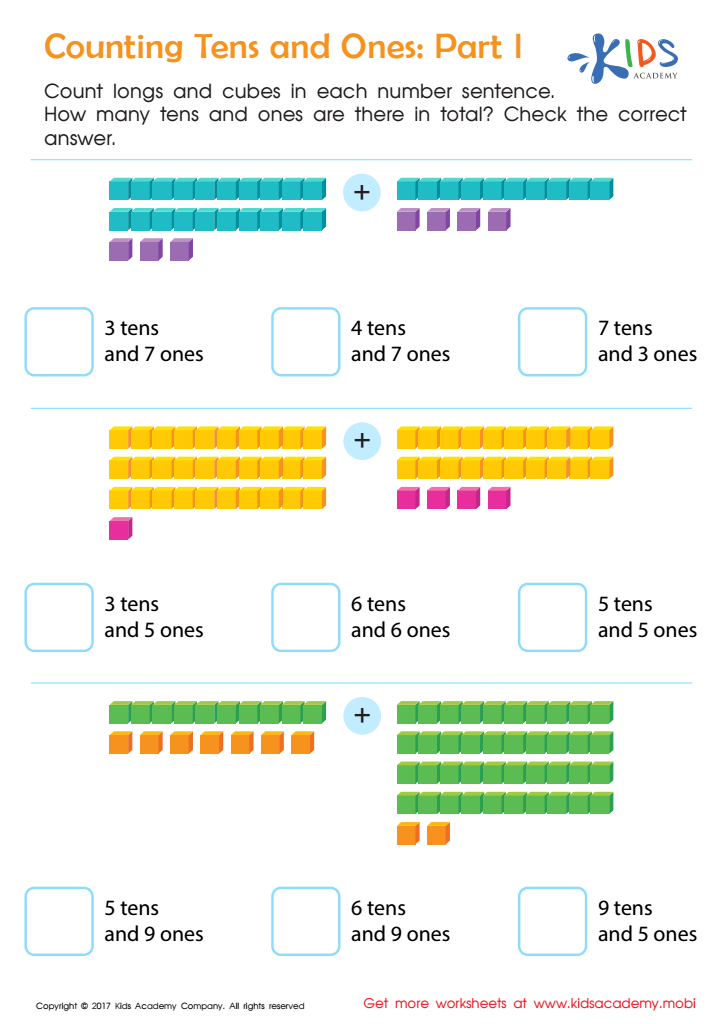
Counting Tens and Ones: Part 1 Worksheet
 Assign to My Students
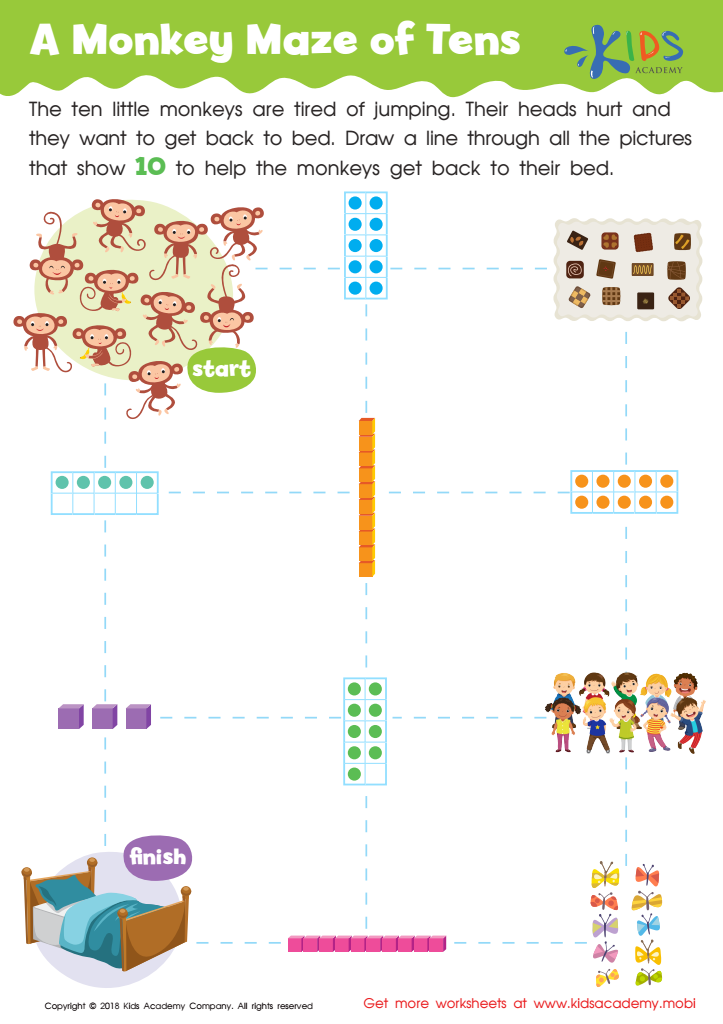
A Monkey Maze of Tens Worksheet
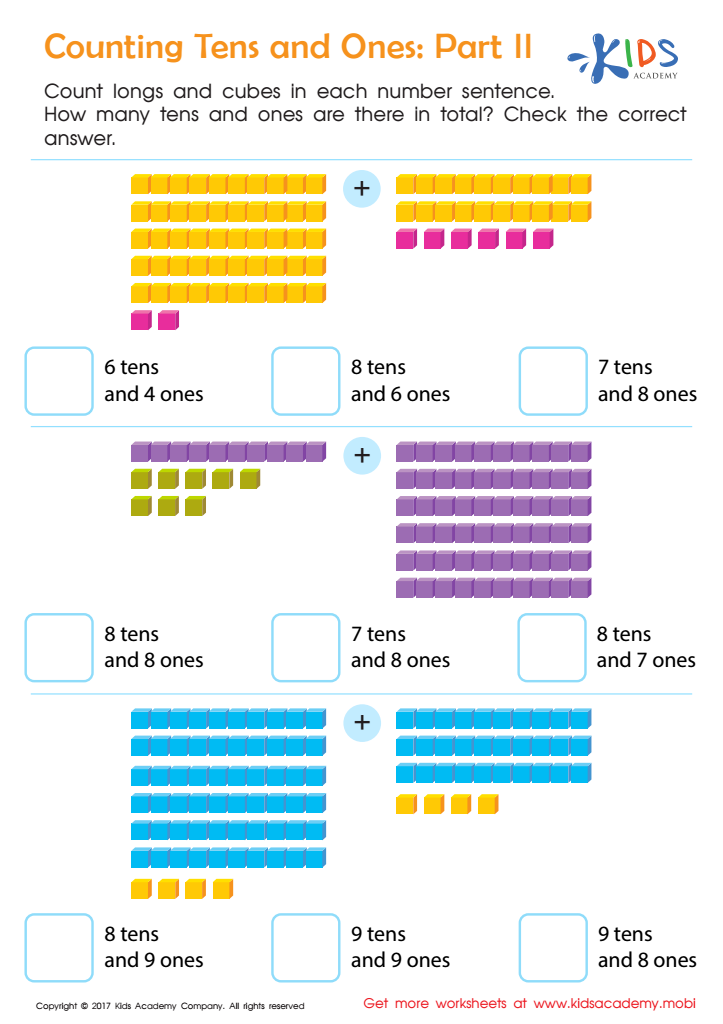
Counting Tens and Ones: Part 2 Worksheet
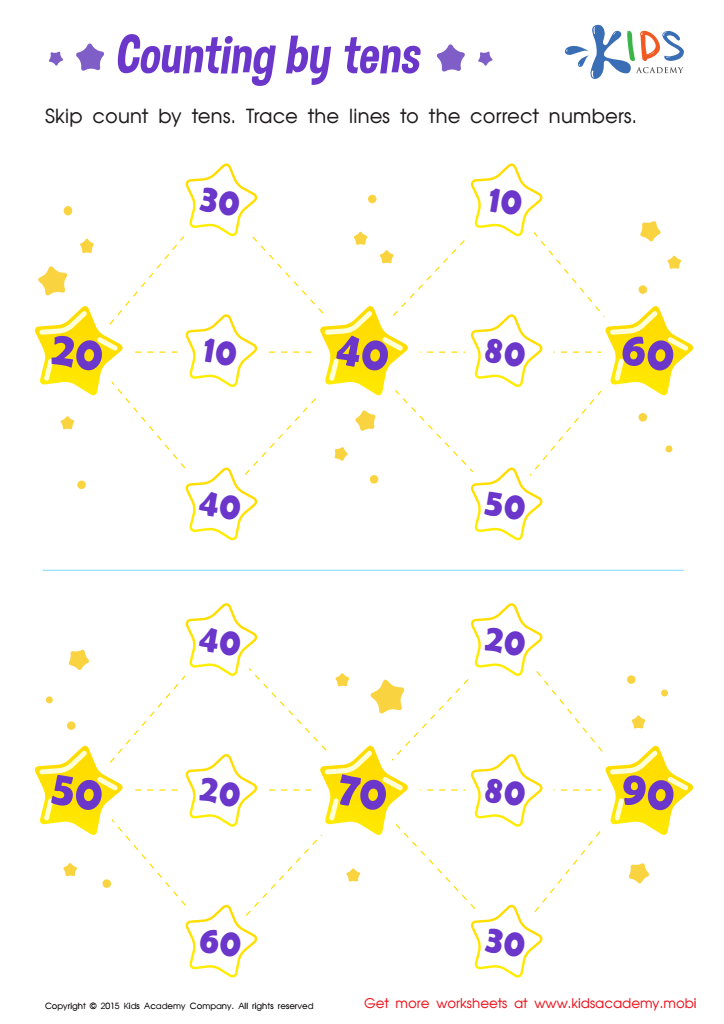
Learn Dozens: Counting by Tens Printable






Understanding tens numbers is crucial for 7-year-olds as it lays the foundational skills necessary for higher-level math concepts. At this age, children transition from counting and basic addition to more complex problem-solving. Familiarity with tens numbers helps them grasp place value, which is essential when working with larger numbers. Recognizing that numbers like 10, 20, and 30 are composed of tens and ones aids comprehension beyond mere calculation.
Moreover, understanding tens numbers enhances mental math capabilities. When children learn to group and recognize patterns within tens, they can perform addition and subtraction more fluently. It empowers them to tackle word problems and quantitative reasoning—a skill highly valued in everyday life and future academic pursuits.
Additionally, a solid grasp of tens numbers cultivates confidence in young learners. As they become comfortable manipulating these numbers, their willingness to engage with math increases, setting a positive tone toward math education. For teachers and parents, instilling this understanding through play, engaging activities, and real-life applications ensures that children not only excel in math but also develop a love for the subject, fostering lifelong learning habits and critical thinking skills essential for their overall growth.








