Shape Recognition Tracing Shapes Worksheets for 7-Year-Olds
5 filtered results
-
From - To
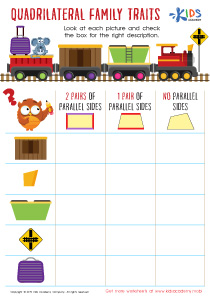
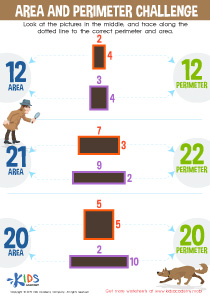
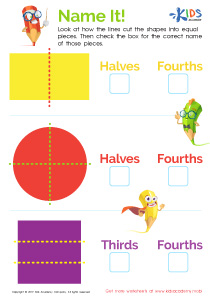
Introducing our "Shape Recognition Tracing Shapes Worksheets" designed specifically for 7-year-olds! These engaging worksheets help young learners develop essential shape recognition skills through fun tracing activities. Children will explore various shapes, including circles, squares, and triangles, improving their fine motor skills and hand-eye coordination along the way. Each worksheet is crafted to captivate children's interest, providing a mix of colorful illustrations and easy-to-follow instructions. Ideal for classroom use or at-home practice, these worksheets enhance critical thinking and shape identification, making learning a delightful and interactive experience. Start your child’s journey to mastering shapes today with our exciting tracing worksheets!
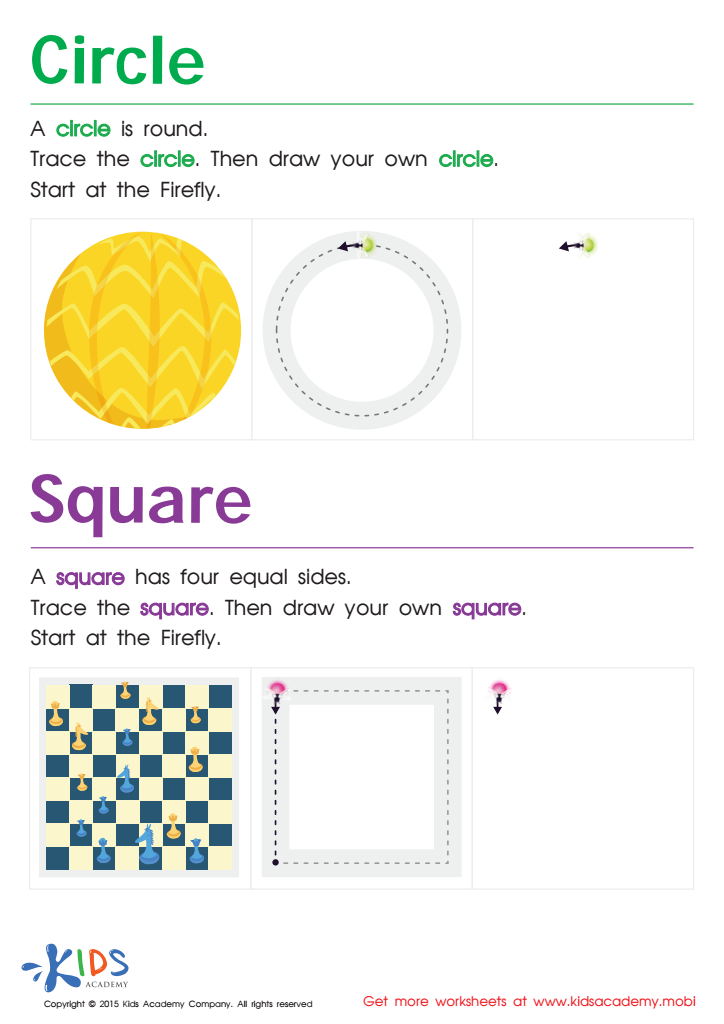
Trace And Draw a Circle And a Square Worksheet
 Assign to My Students
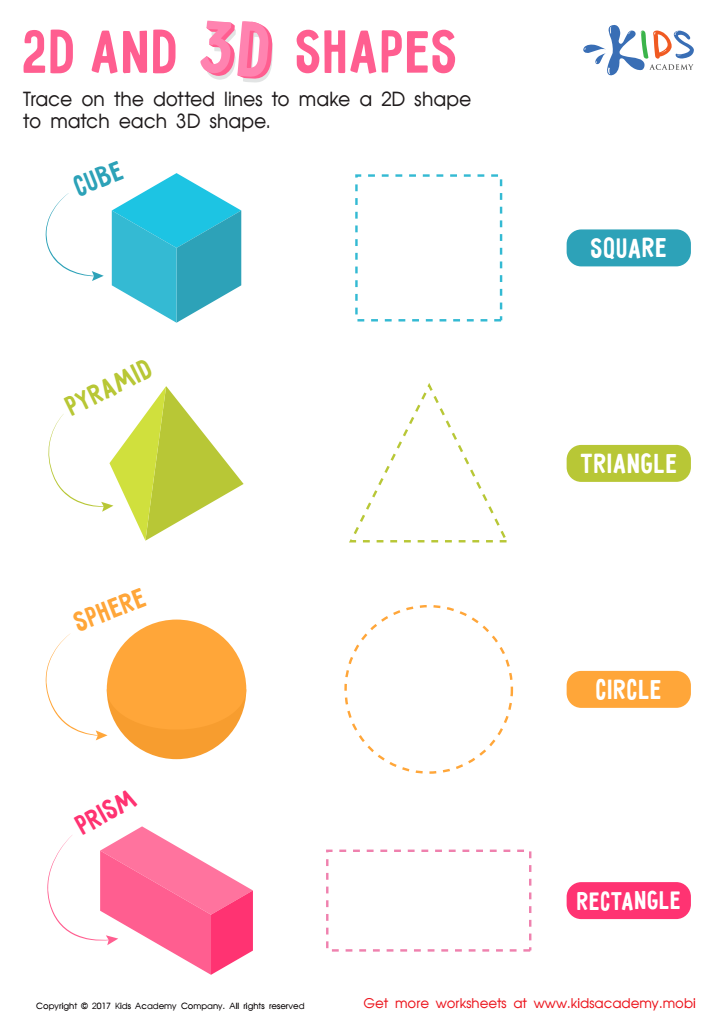
2D and 3D Shapes Worksheet
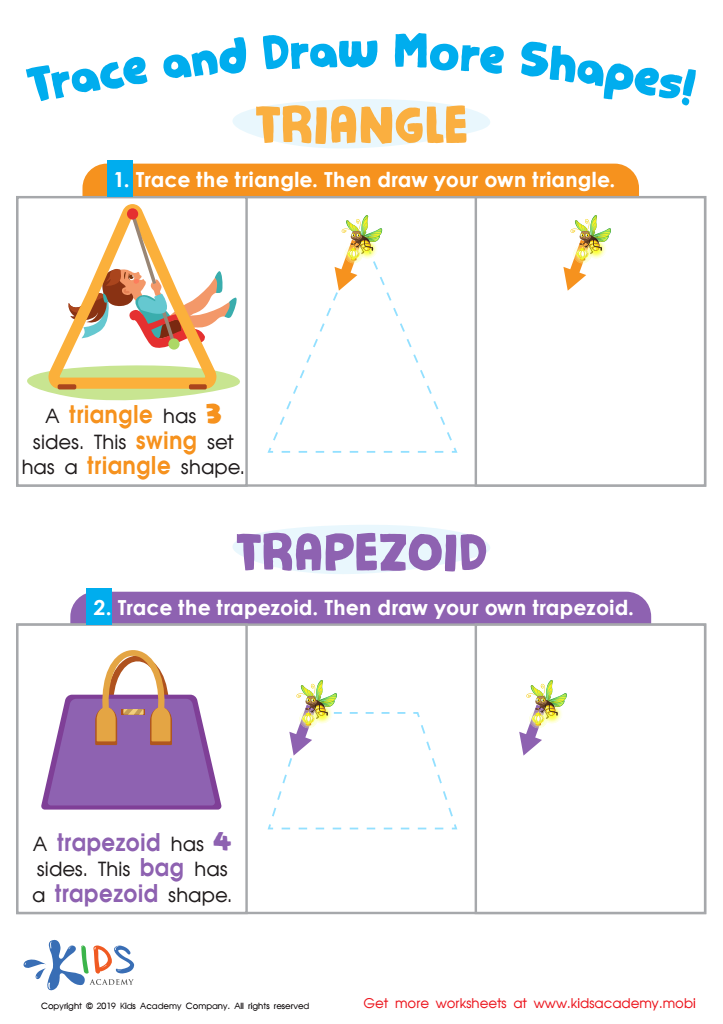
Trace and Draw More Shapes Worksheet
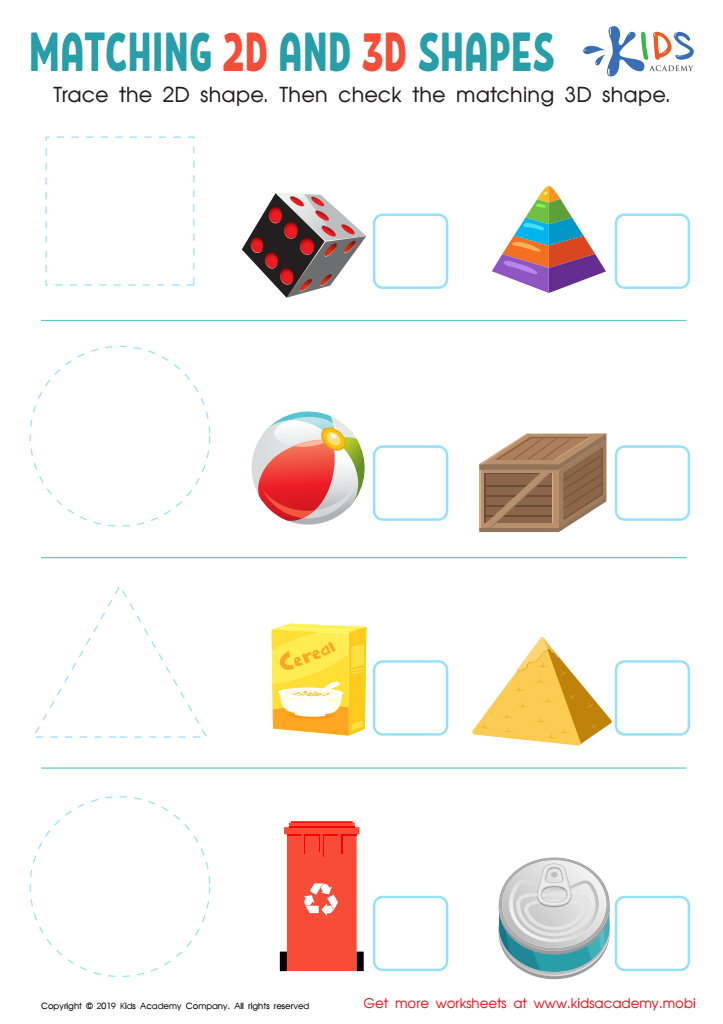
Matching 2D and 3D Shapes Worksheet
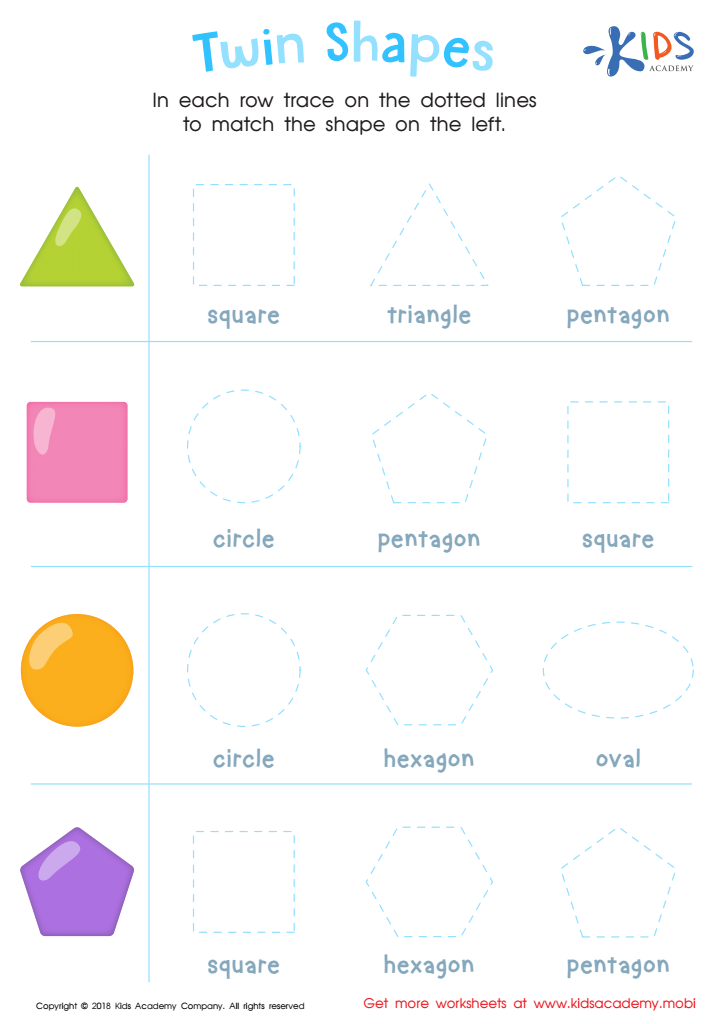
Twin Shapes Dot-to-Dot Worksheet








Shape recognition and tracing are essential skills for 7-year-olds, as they form a foundational part of early cognitive development. Understanding shapes is crucial not only for geometry but also for problem-solving and spatial reasoning. By tracing shapes, children enhance their fine motor skills, improving hand-eye coordination and dexterity, which are vital for writing and other tasks.
Parents and teachers should care about these activities because they promote critical thinking and creativity. Recognizing shapes allows children to categorize and understand their surroundings better, fostering observational skills. These activities also encourage visual discrimination, enabling children to notice differences and similarities, which is pivotal in subjects like math, art, and science.
Additionally, tracing shapes can create opportunities for discussion about properties, such as number of sides or symmetry, linking math to real-life experiences. By engaging in shape recognition and tracing, children also gain confidence in their abilities, laying the groundwork for more complex concepts encountered later in their education. When parents and teachers prioritize these activities, they help cultivate a lifelong passion for learning and exploration, which will serve children throughout their academic journey and beyond.