Filters

11 filtered results

Clear all filters
Favorites
With answer key
Interactive

11 filtered results

Difficulty Level

Grade


Enhance your 7-year-old's cognitive development with our engaging science worksheets! Designed to stimulate critical thinking and problem-solving skills, these worksheets cover diverse topics that encourage exploration and creativity. Each activity is crafted to challenge young minds, promoting reasoning and analytical skills while making learning enjoyable. Whether it's fascinating experiments, fun puzzles, or intriguing questions, our resources are tailored to meet the developmental needs of seven-year-olds. Support your child's intellectual growth and foster a lifelong love of learning with our carefully curated worksheets. Discover the joy of science while building essential cognitive skills today! Get ready to spark curiosity and unleash creativity!

Check out this FREE Trial Lesson on Science for age 7!

Shadows

Favorites
With answer key
Interactive
  • 7
  • Cognitive Development
  • Science
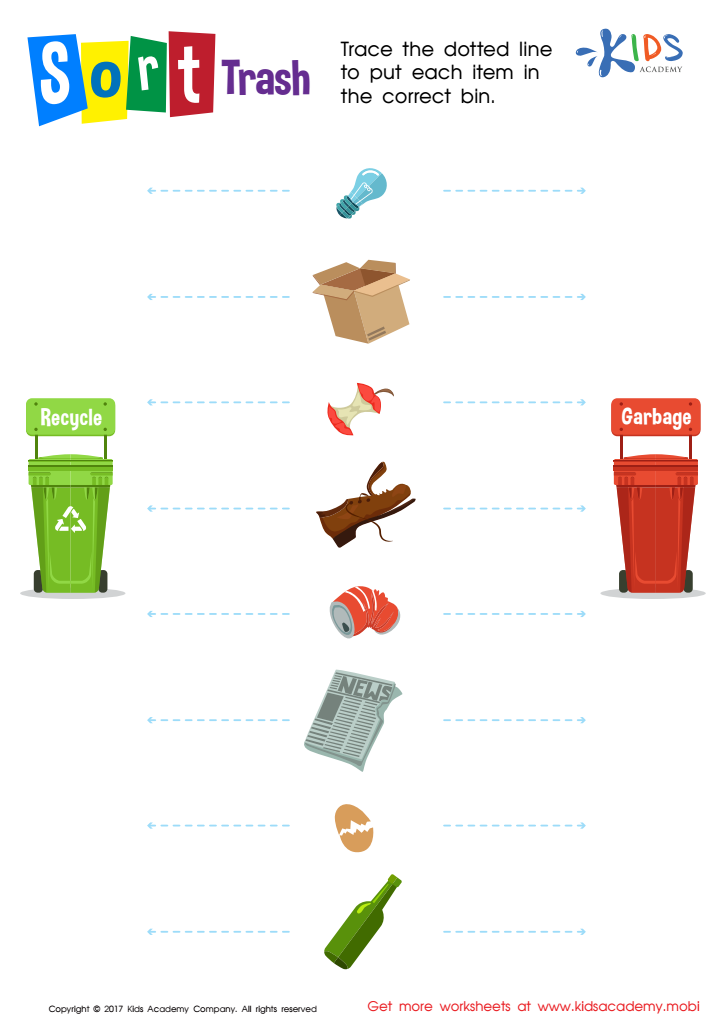
Trash sorting worksheet

Trash Sorting Worksheet

Recycling is essential for protecting our planet. It limits landfill waste and allows materials to be reused. This worksheet teaches kids how to recycle properly, distinguishing between items that can be recycled and those that need to be thrown away.
Trash Sorting Worksheet
Worksheet
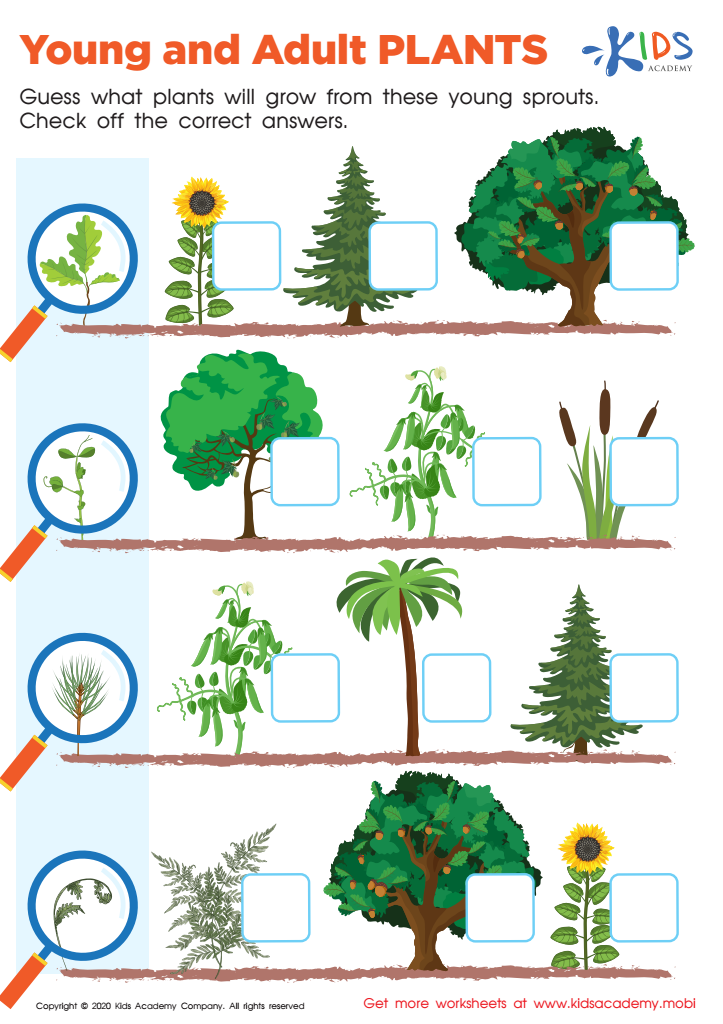
Young and Adult Plants Worksheet

Young and Adult Plants Worksheet

Examine the sprouts, then compare the leaves of the nearby trees. Check the box next to the tree that looks similar to the sprout to complete the worksheet. Problem-solving and analysis skills will be put to the test! 80 words.
Young and Adult Plants Worksheet
Worksheet
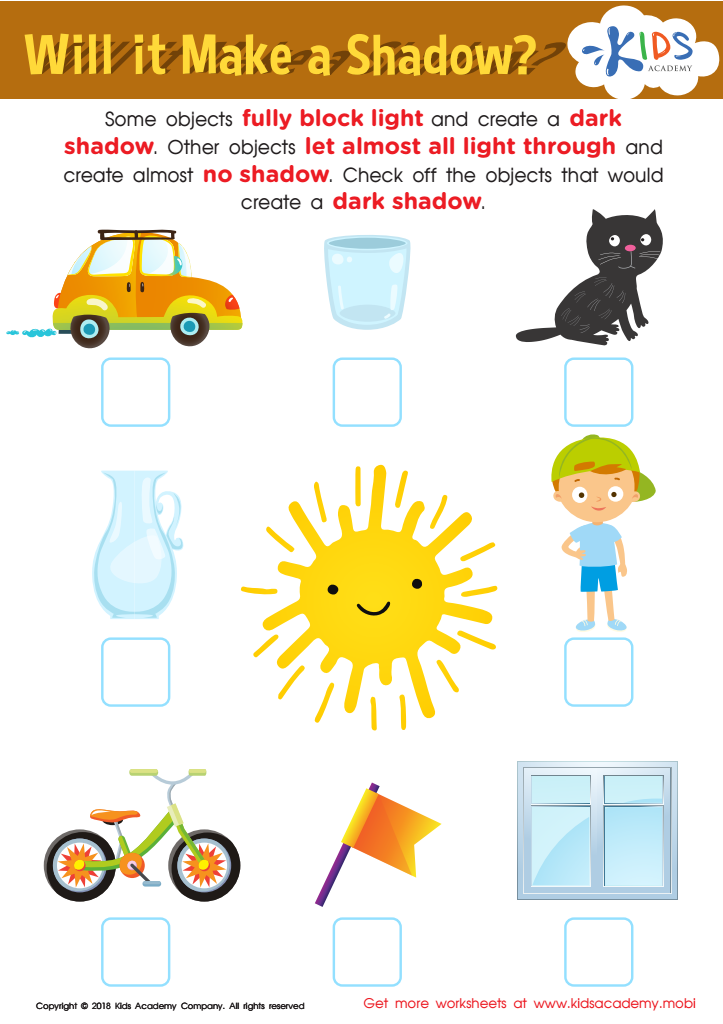
Will It Make a Shadow? Worksheet

Will It Make a Shadow? Worksheet

Teach your students about shadows with this printout. Ask them to check off the boxes next to the pictures that create a shadow. Explain that some objects block light, forming a shadow, while others don't and thus don't create a shadow. Your students are likely already familiar with their own shadow.
Will It Make a Shadow? Worksheet
Worksheet
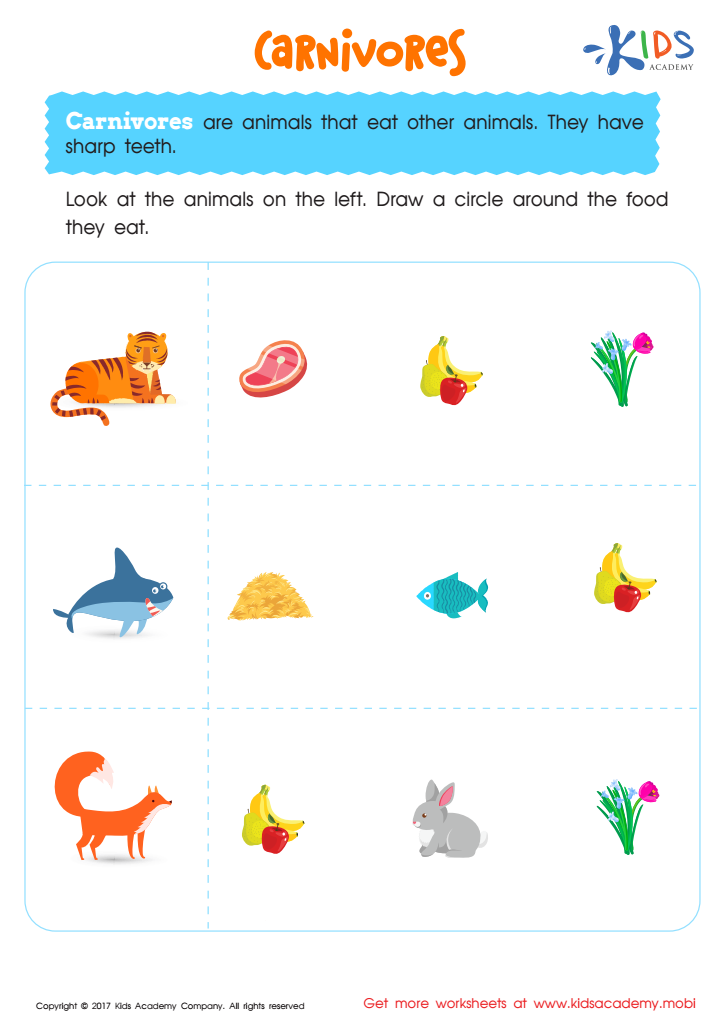
Carnivorous animals worksheet

Carnivores Worksheet

Boost their vocabulary and help them explore the incredible world of carnivores.
Carnivores Worksheet
Worksheet
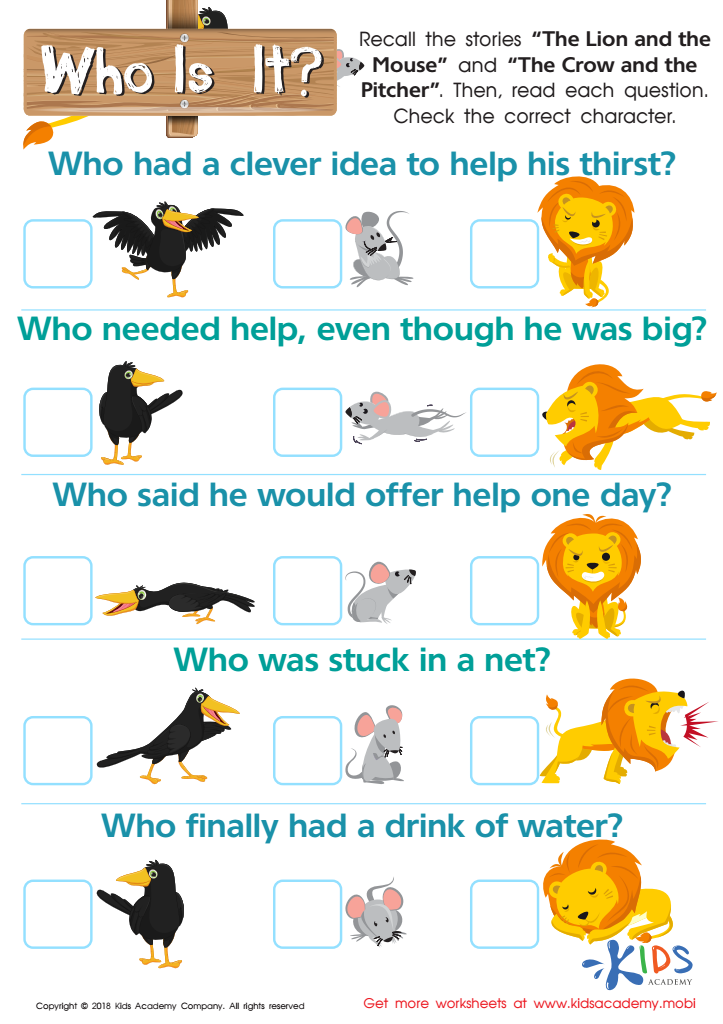
Who Is It? Worksheet

Who Is It? Worksheet

This worksheet helps students recall details from The Crow and the Pitcher and The Lion and the Mouse stories. Students will answer questions about the characters' actions. Use it to assess their understanding of both stories, as this is a key comprehension skill.
Who Is It? Worksheet
Worksheet
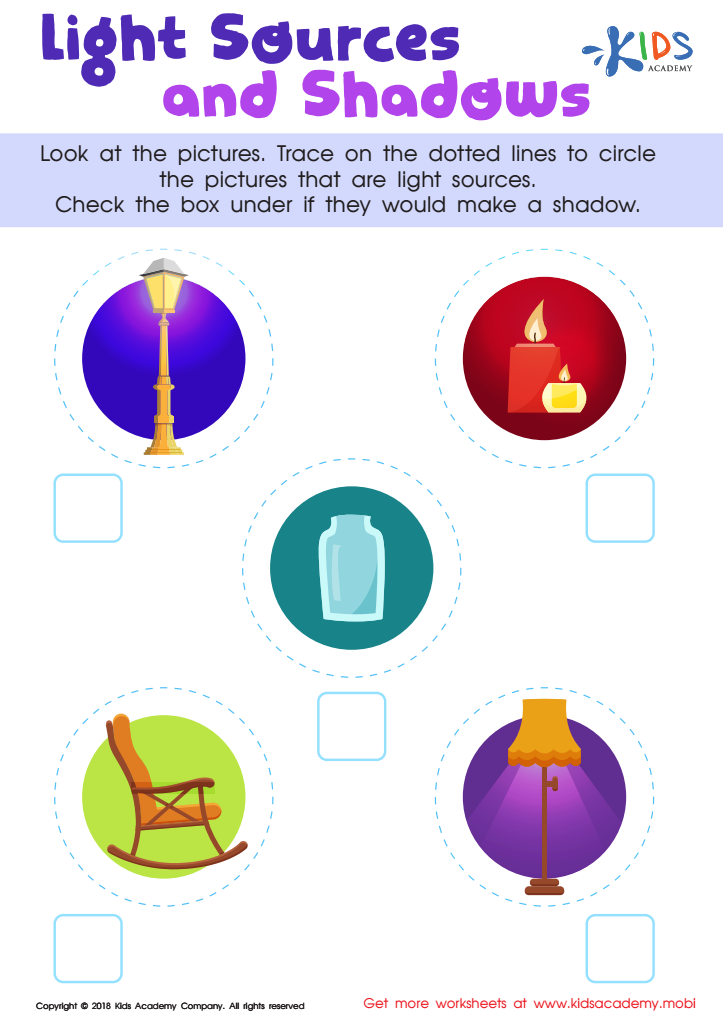
Light Sources and Shadows Worksheet

Light Sources and Shadows Worksheet

During the day, the sun radiates bright light. At night, when it's time for bed, the sun sets and darkness takes over. To light our way, we use other sources of light. With your students, trace the dotted lines around the pictures of light sources and check the boxes under the objects that will cast shadows.
Light Sources and Shadows Worksheet
Worksheet
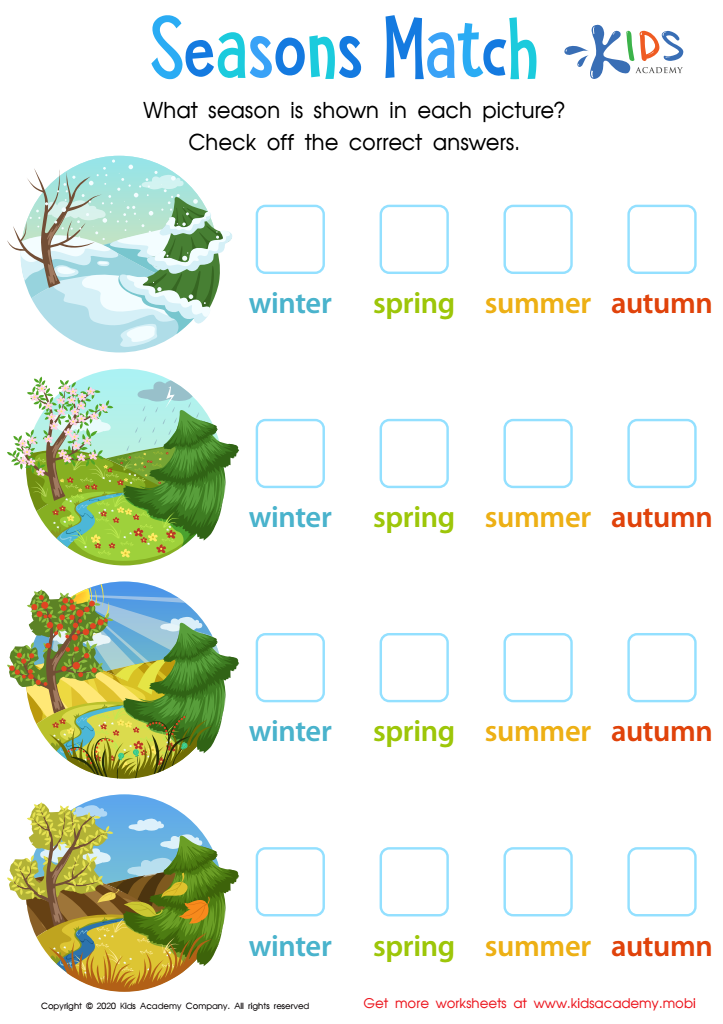
Seasons Match Worksheet

Seasons Match Worksheet

Preschoolers should begin learning about seasons and weather early. Most can tell what season it is by upcoming holidays or school activities. Test their knowledge with a printable PDF worksheet. It asks them to match each image with its corresponding season!
Seasons Match Worksheet
Worksheet
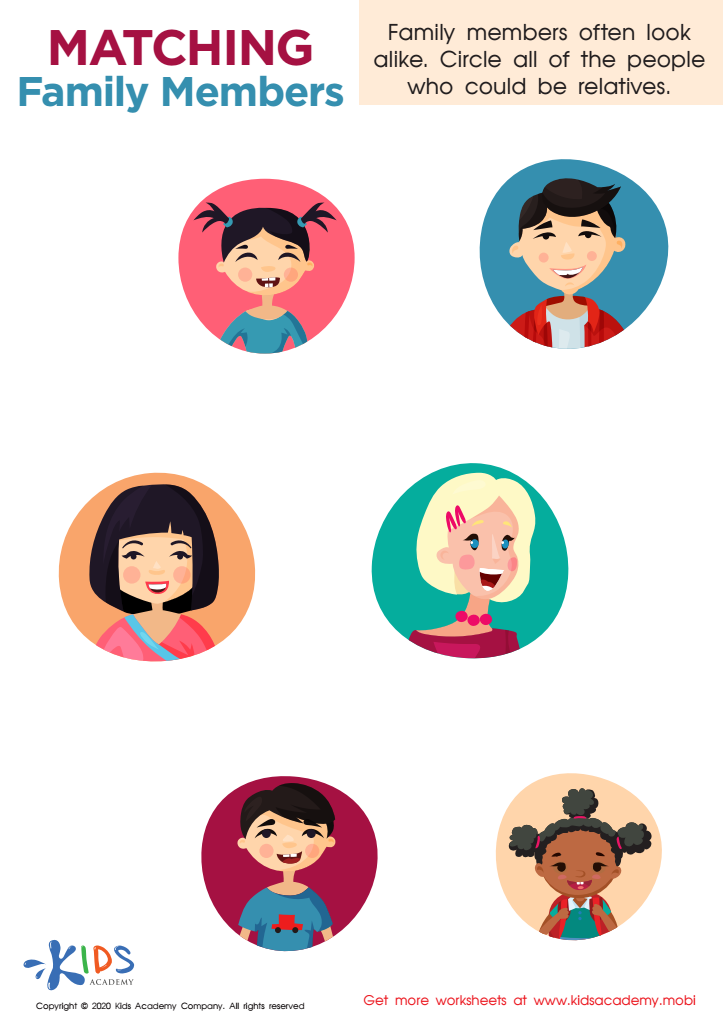
Matching Family Members Worksheet

Matching Family Members Worksheet

Most family members look similar due to genetics. Teach this concept to your child using this worksheet - look for similar facial and bodily features, then circle those from the same family. Help them learn how to recognise family resemblance.
Matching Family Members Worksheet
Worksheet
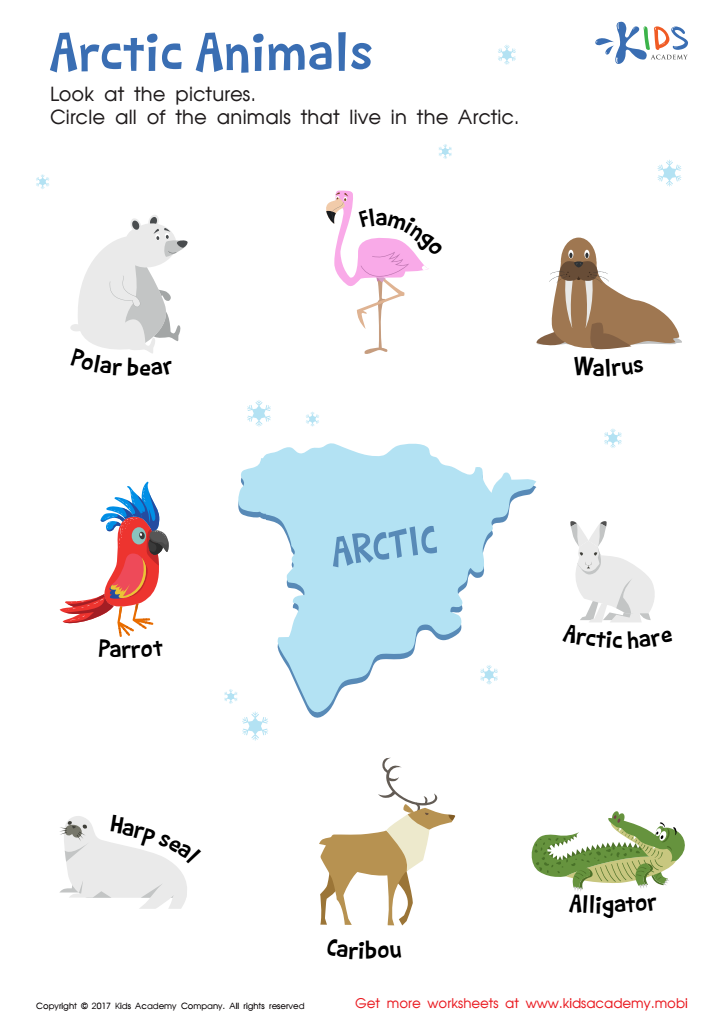
Arctic Animals Worksheet

Arctic Animals Worksheet

Kids love animals and this worksheet is a great way to teach them where they live. It reinforces classification skills and introduces new animals, like the Arctic hare. Use it to discuss the Arctic climate and how these animals live, then ask your child where other animals live to keep the conversation going.
Arctic Animals Worksheet
Worksheet
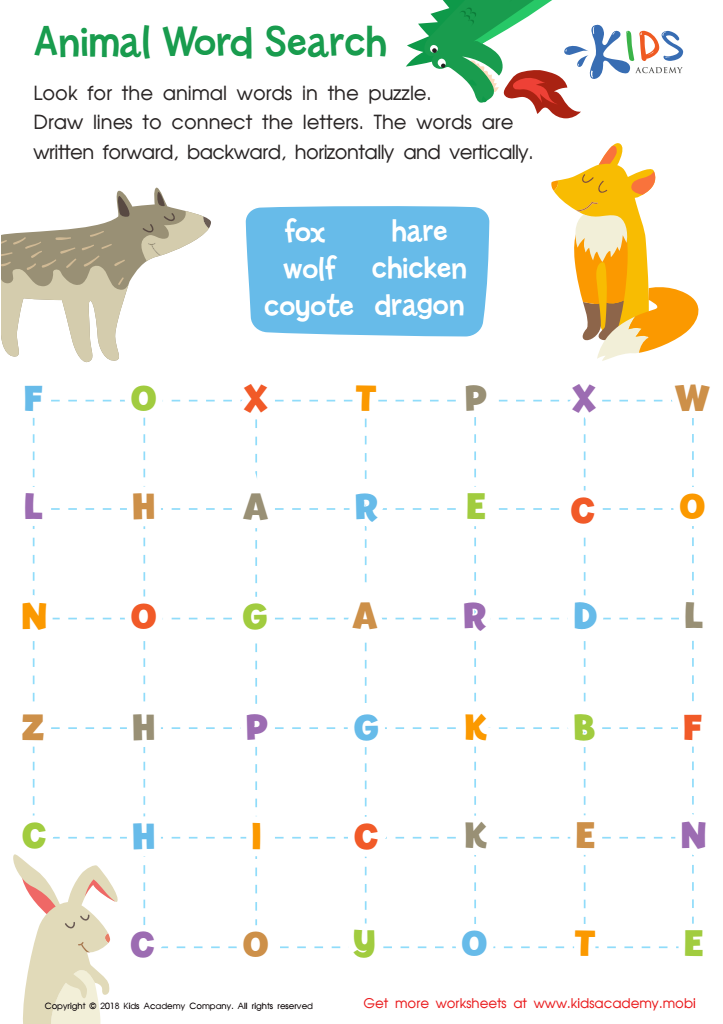
Animal Word Search Worksheet

Animal Word Search Worksheet

Students can have fun and strengthen spelling and vocabulary skills with this word search worksheet. Search for animal words and circle the letters in the puzzle. Words can be found forwards, backwards, horizontally or vertically, providing a great challenge to foster critical thinking skills. An enriching activity for all ages!
Animal Word Search Worksheet
Worksheet
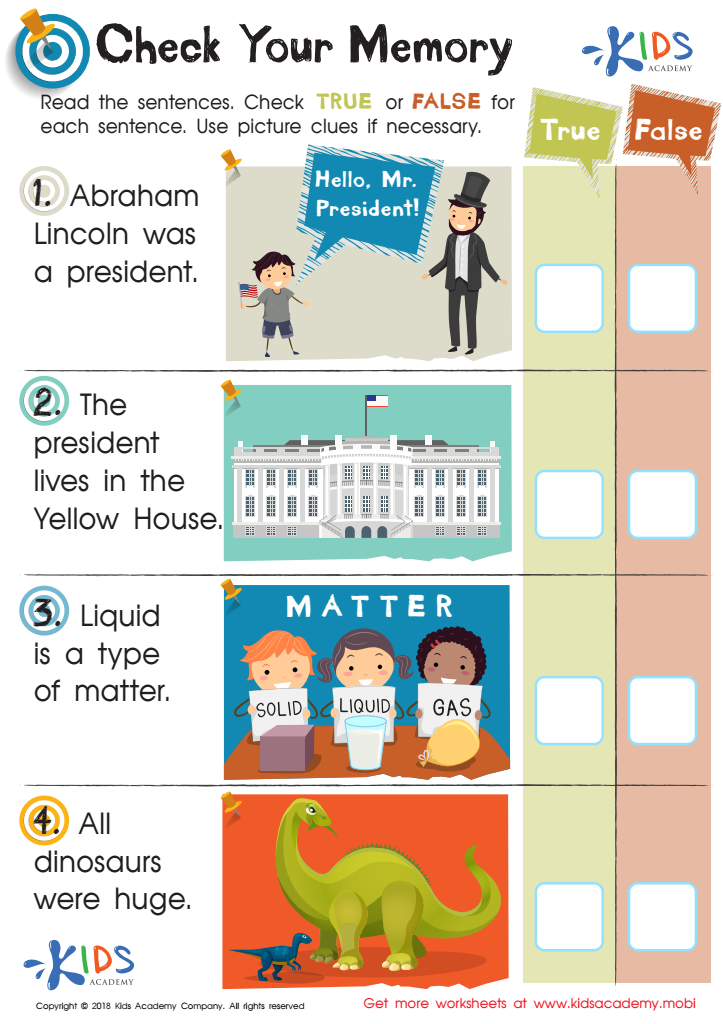
Check Memory Worksheet


Check Memory Worksheet

Assisting your kids with their homework and using worksheets is a great way for them to learn. The vibrant visuals in this printout can help stimulate the mind and motivate your child. Have them read the sentences and then point to the associated images. Afterwards, ask them to state True or False for each sentence. If they are still uncertain, offer them the picture clues to assist further.
Check Memory Worksheet
Worksheet


Cognitive development science is crucial for understanding how a child's mind works, especially at the age of seven, a pivotal time for cognitive growth. By this age, children are enhancing their problem-solving abilities, language skills, and critical thinking. This understanding can help parents and teachers provide the right support for learning. Awareness of cognitive development enables adults to create enriched learning environments that foster curiosity and creativity, essential for academic success.

Moreover, knowing the stages of cognitive development helps in recognizing individual differences among children. Some students may grasp concepts quickly, while others may need more time and support. Teachers can adapt their instructional strategies accordingly, ensuring that each child receives appropriate challenges and guidance.

Incorporating techniques rooted in cognitive development science, such as hands-on learning, play-based activities, and social interactions, encourages active engagement and motivation. This approach promotes not only academic skills but also social-emotional well-being.

Lastly, understanding cognitive development can fortify the parent-teacher partnership, allowing parents to reinforce learning strategies at home, contributing to a holistic educational experience. By prioritizing cognitive development science, parents and educators can better equip children for lifelong learning and success.