Understanding pollination Science Worksheets for 7-Year-Olds
3 filtered results
-
From - To
Discover the fascinating world of pollination with our engaging science worksheets designed for 7-year-olds! At Kids Academy, our "Understanding Pollination" worksheets combine fun activities and educational content to help young learners grasp the crucial role of pollinators in ecosystems. Through interactive diagrams, coloring pages, and simple experiments, children will explore the process of pollination, learn about different types of pollinators, and understand how plants reproduce. These worksheets foster curiosity and appreciation for nature while reinforcing essential science skills. Perfect for classroom use or homeschooling, our resources make learning about pollination exciting and accessible for early grade students!
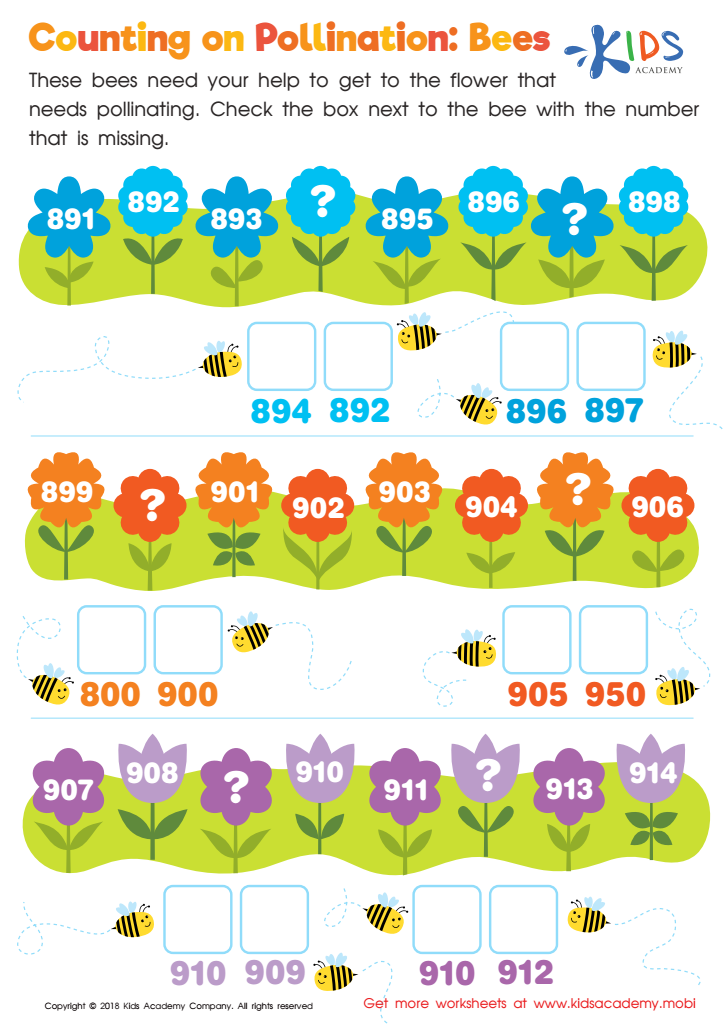
Counting on Pollination: Bees Worksheet
 Assign to My Students
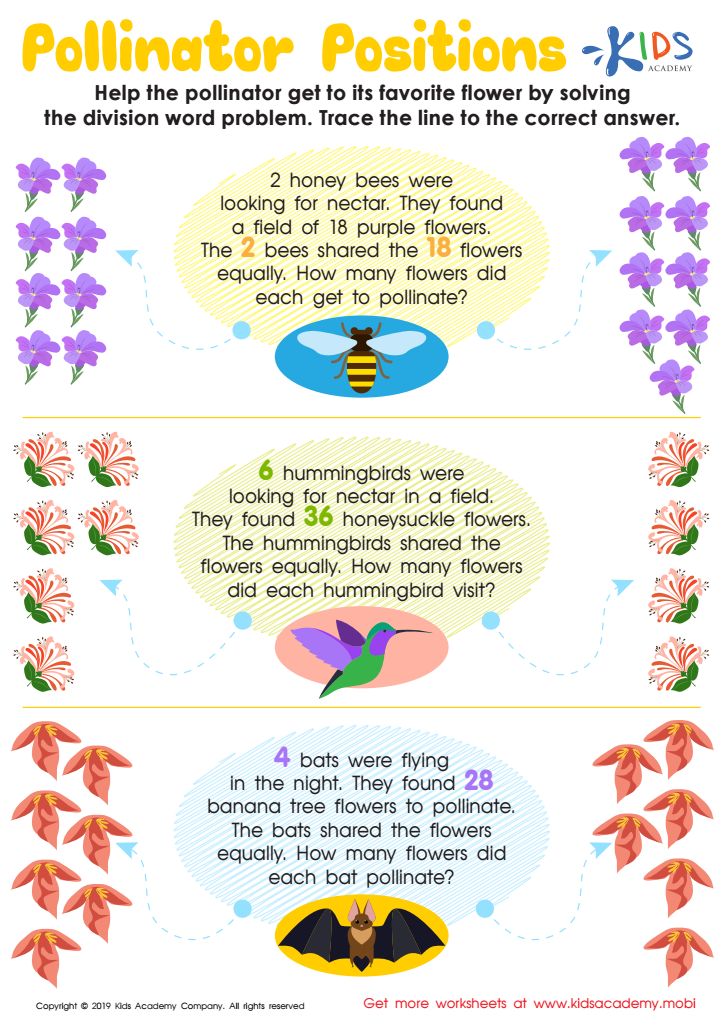
Pollinator Positions Worksheet
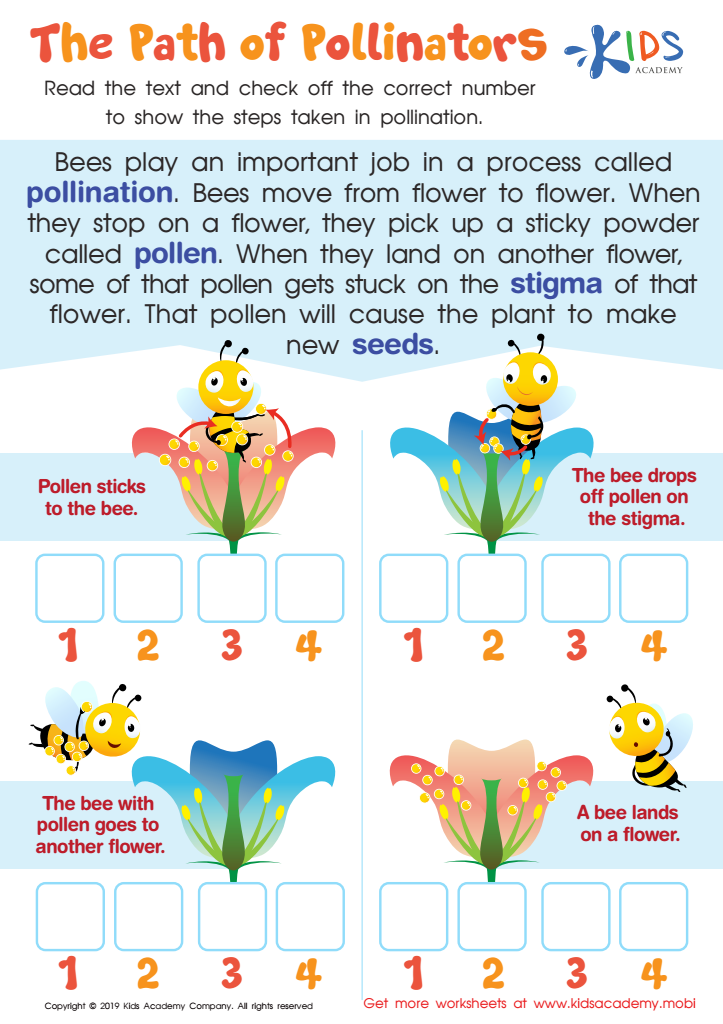
The Path of Pollinators Worksheet






Understanding pollination science is crucial for 7-year-olds because it cultivates an early appreciation for the natural world and essential biological processes. By teaching children about pollination, parents and teachers play a pivotal role in fostering environmental stewardship. Young learners develop an appreciation for vital insects such as bees, butterflies, and other pollinators, which contribute to the growth of many plants, including fruits and vegetables that form a significant portion of our diet.
Moreover, exploring pollination encourages curiosity and critical thinking. It can integrate various subjects like biology, geography, and even art, making learning more comprehensive and engaging. This foundational knowledge can lead to informed discussions about biodiversity and the importance of protecting ecosystems, creating a generation that is more aware of environmental issues.
Educators and parents can employ hands-on activities, such as examining flowers, identifying pollinators, or even growing a small garden. Such interactive experiences make the concept tangible and memorable. Teaching pollination not only sharpens scientific understanding but also instills a sense of responsibility towards nature. In a world facing ecological challenges, early education in such vital areas imparts knowledge and values that children can carry forward into adulthood, promoting a sustainable future.







