
Critical thinking development Worksheets for Ages 8-9
16 filtered results
Difficulty Level
Grade
Age
-
From - To
Subject
Activity
Standards
Enhance your child's cognitive skills with our Critical Thinking Development Worksheets designed specifically for ages 8-9. These engaging and interactive worksheets blend fun and education, empowering young learners to think independently and solve problems creatively. Each activity encourages children to analyze, evaluate, and apply their knowledge in varied scenarios, laying a strong foundation for future academic success. From puzzles and logic games to thought-provoking questions, our resources stimulate curiosity and critical reasoning. Ideal for classroom use or home learning, these worksheets are the perfect tool to foster essential thinking skills that will benefit your child throughout their education. Explore our collection today!
Favorites
With answer key
Interactive
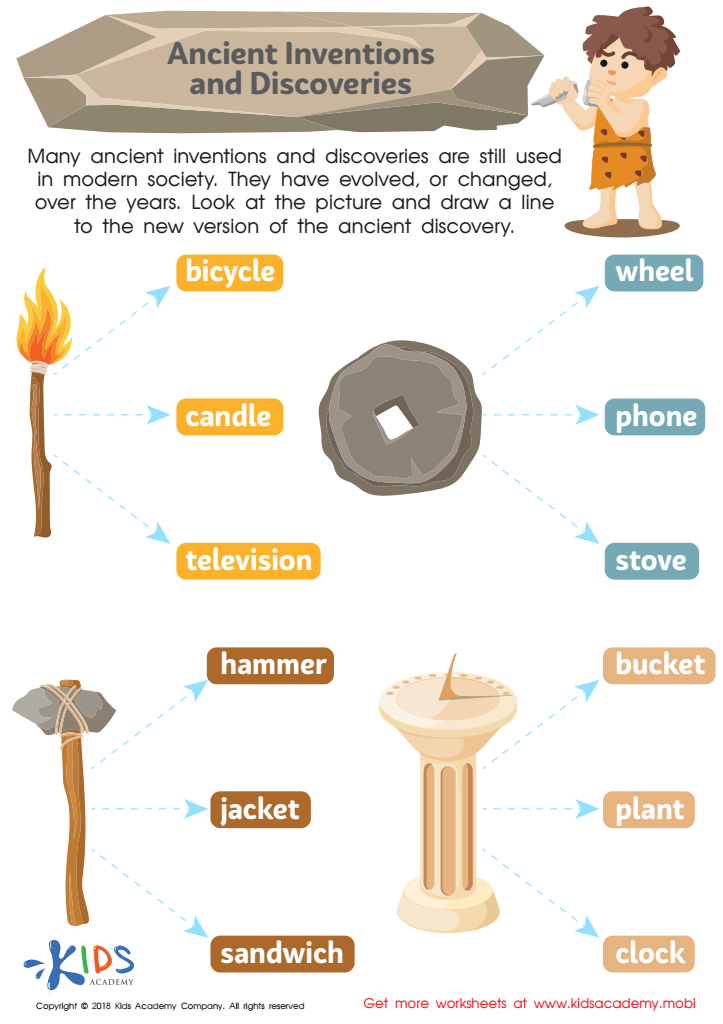
Ancient Inventions and Discoveries Worksheet
Kids may think inventions are high-tech, but many of the world's most important inventions are ancient! This Kids Academy worksheet helps kids learn about the wheel, clock, tools and candles - inventions that changed the world! Kids will simply review the pictures and trace the dotted lines to the right answers. Great for social studies!
 Assign to My Students
Ancient Inventions and Discoveries Worksheet
Worksheet
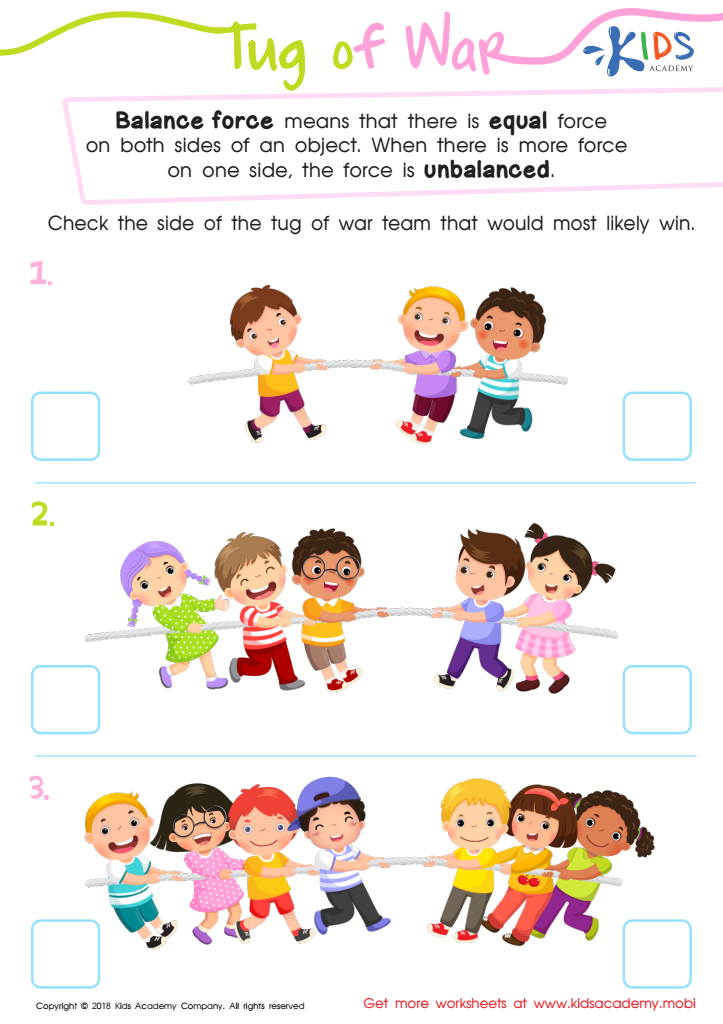
Balanced Forces Worksheet
Ready for a fun game? This worksheet will balance the forces so your kids can decide who will win their tug of war! With the right number of kids on each side of the rope, the forces will be equal. Help your little ones decide who will prevail in the game. Ready, set, go!
Balanced Forces Worksheet
Worksheet
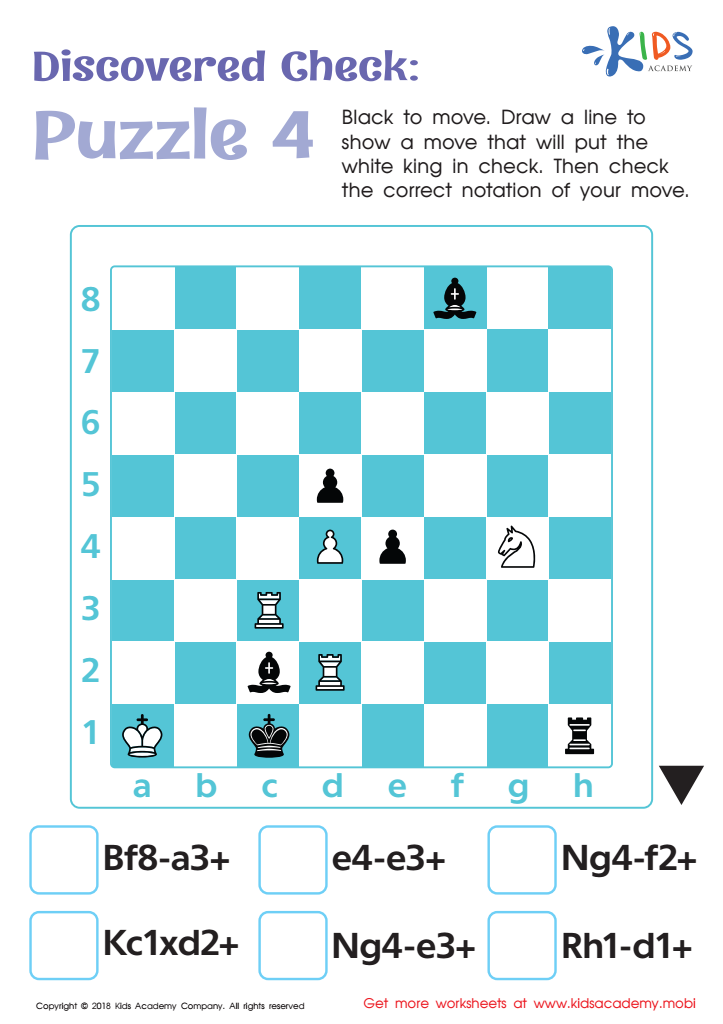
Discovered Check: Puzzle 4 Worksheet
Let your child test their chess skills with this easy worksheet. Have them take control of the black pieces and try to put the white king in checkmate. Ask them to draw a line from their chess piece to the white king, showing the move they'll make, then check the correct answer.
Discovered Check: Puzzle 4 Worksheet
Worksheet
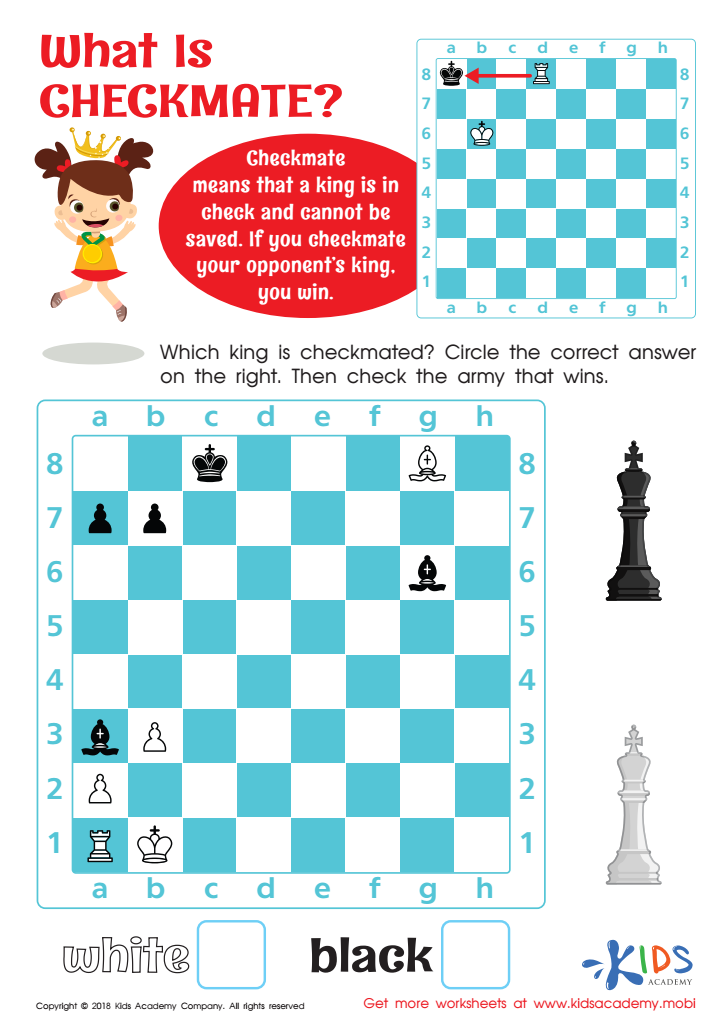
What is Checkmate? Worksheet
This downloadable PDF worksheet lets your child practice identifying when a king is checkmated and how it looks on a chessboard. Checkmate is the best move and with this colorful worksheet, they'll learn that it means their opponent's king is in check and cannot be saved, so they can win!
What is Checkmate? Worksheet
Worksheet
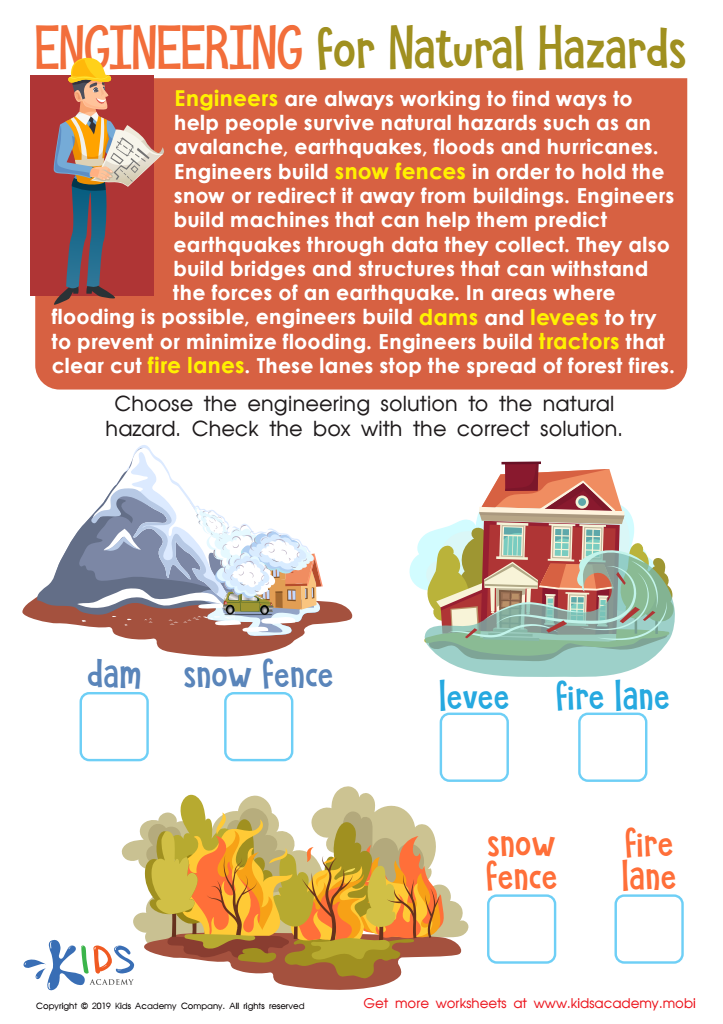
Engineering Natural Hazards Worksheet
Natural hazards can be lessened with precautions. This free worksheet engages kids with informative text on how engineers protect us and lets them practice reading comprehension by choosing the right option.
Engineering Natural Hazards Worksheet
Worksheet
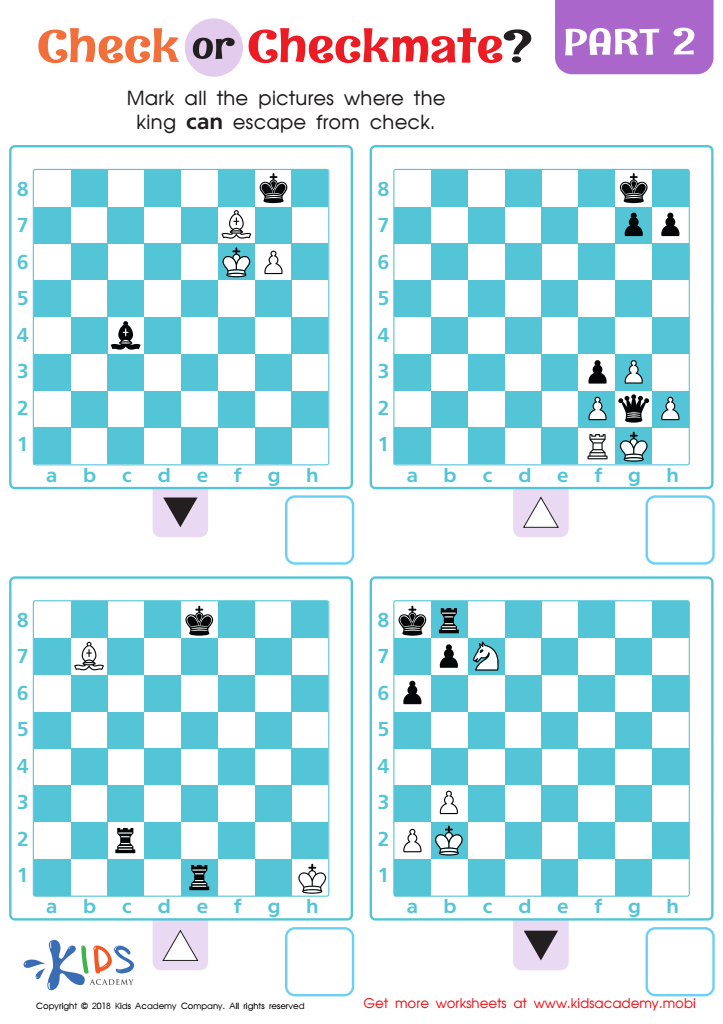
Check or Checkmate: Part 2 Worksheet
Chess is a fun and competitive way for your child to practice strategic thinking, problem-solving and critical reasoning. This free PDF will help them sharpen their skills, by analyzing boards and marking ones where the king can escape check. An invaluable skill when playing on real boards.
Check or Checkmate: Part 2 Worksheet
Worksheet
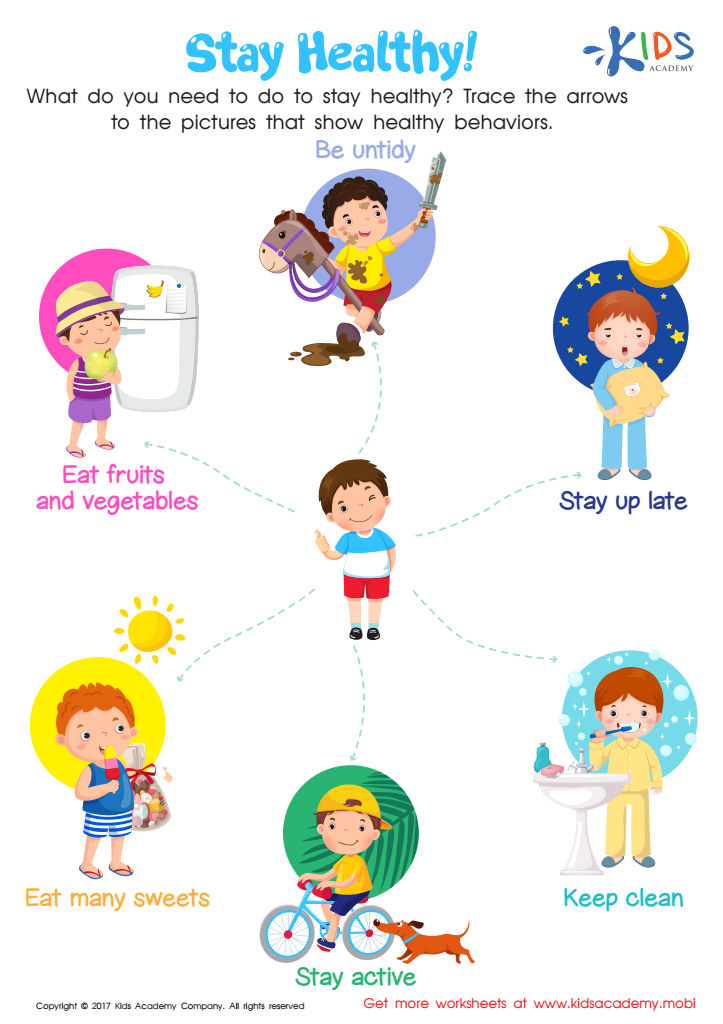
Healthy and Unhealthy Behaviors Worksheet
Assist your youngster to recognize beneficial habits for a joyful, healthy life with this healthy/unhealthy behaviors worksheet! After they finish, motivate them to follow the tips on the worksheet to show healthy habits.
Healthy and Unhealthy Behaviors Worksheet
Worksheet
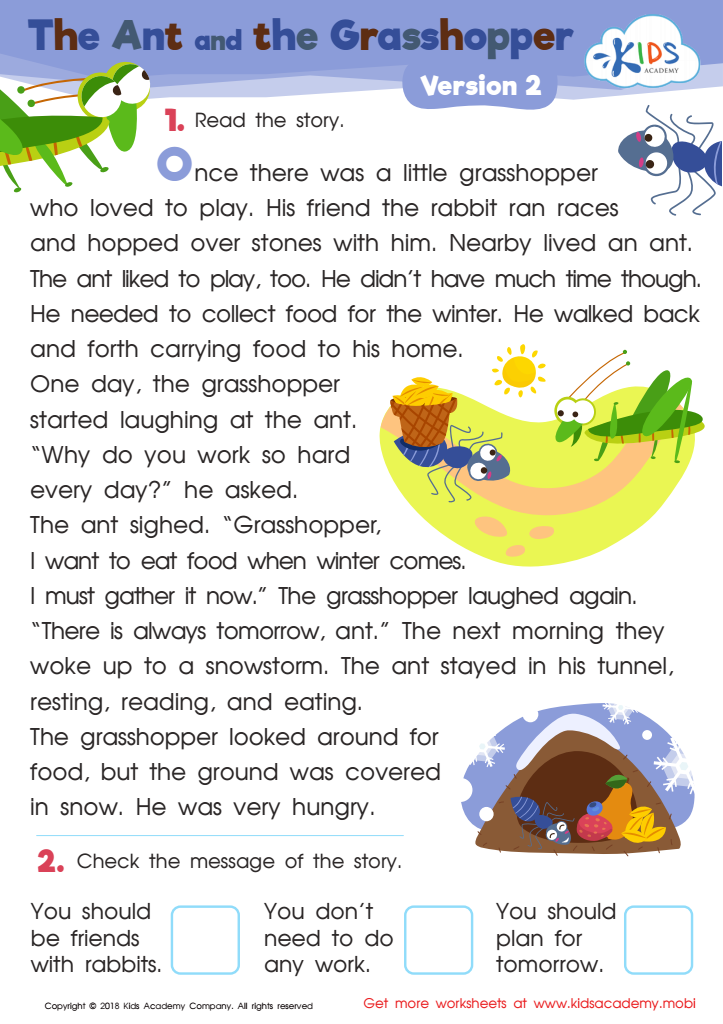
The Ant and The Grasshopper Version 2 Worksheet
Story time is a great way to bond with kids and share a fun story. The Ant and the Grasshopper is a classic with a lesson for everyone. Listen together and then ask your students what the message of the story was. Prompt them with choices from the worksheet and see which one they select. It's a great way to increase their vocabulary and help them learn important lessons.
The Ant and The Grasshopper Version 2 Worksheet
Worksheet
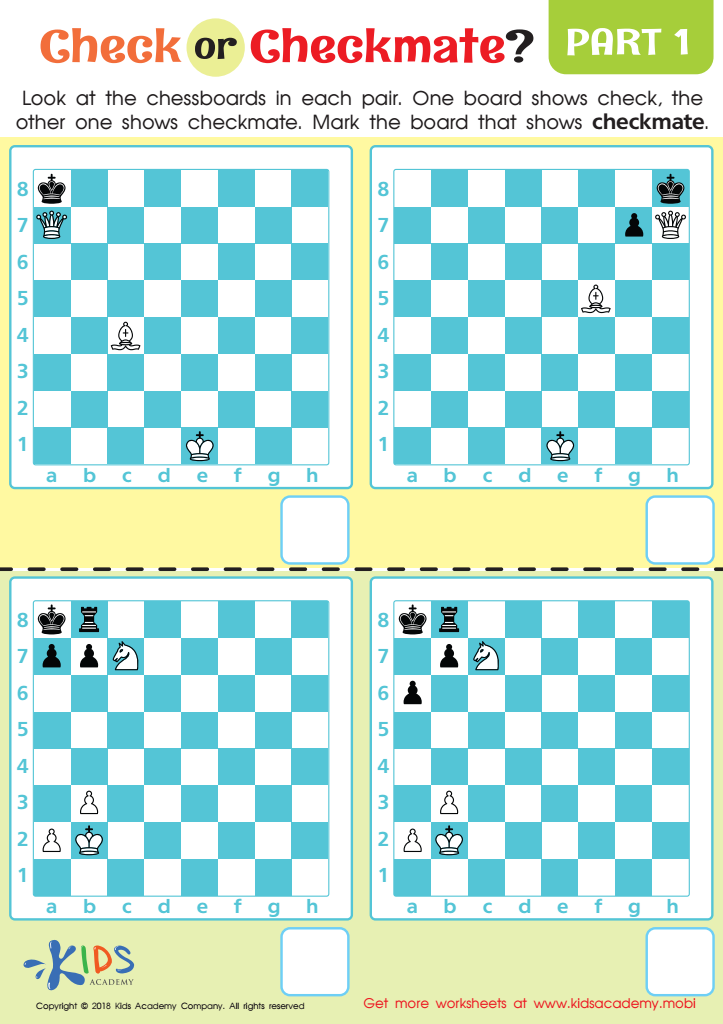
Check or Checkmate: Part 1 Worksheet
Kids can learn and strengthen problem-solving and strategic thinking skills with this free chess worksheet. They'll have fun as they look at the pair of chessboards and decide which is check and which is checkmate. It's the perfect way to get them playing the game and making checkmates without even realising they're exercising their brains!
Check or Checkmate: Part 1 Worksheet
Worksheet
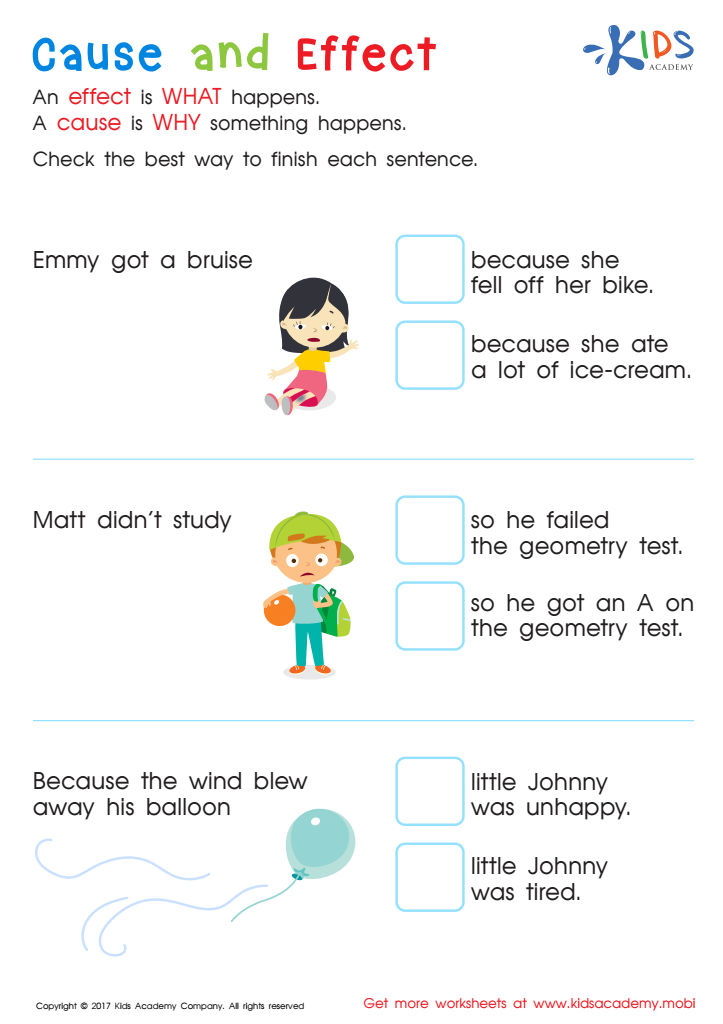
Cause and Effect Worksheet
Improve your child's reading comprehension and critical analysis skills with this cause and effect worksheet PDF! Have your child use the examples to create their own story, strengthening their understanding of the concept.
Cause and Effect Worksheet
Worksheet
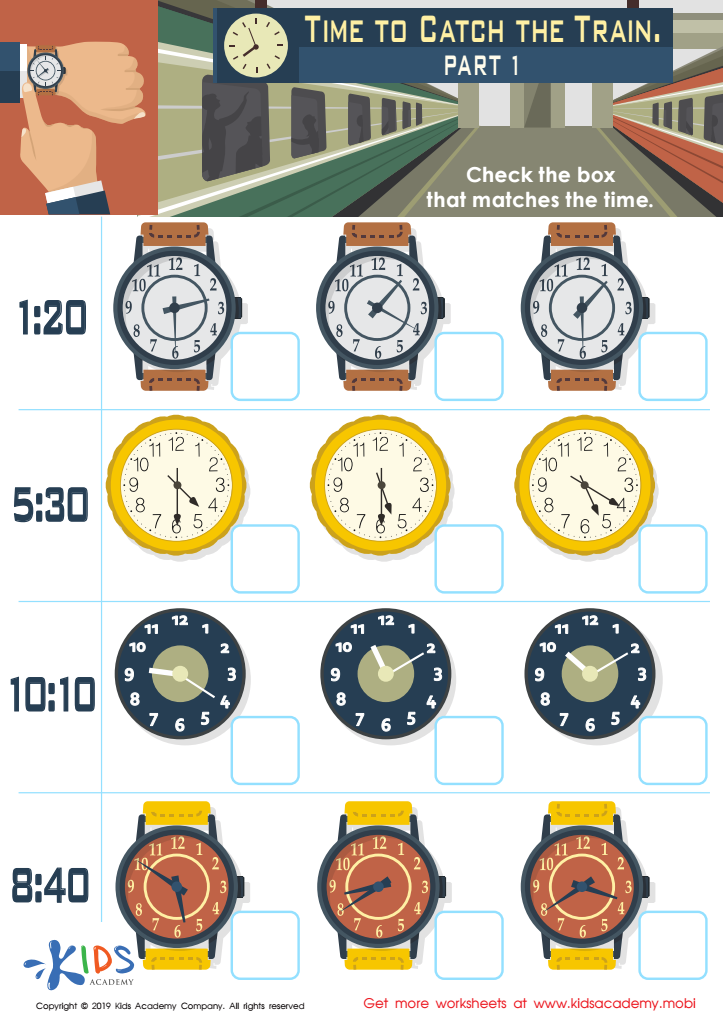
Time to Catch the Train Part 1 Worksheet
Time is essential for us; it lets us know when to do various things. Your kids likely wake up at a specified hour and prepare for the school bus. Demonstrate to them that time-telling is vital, and show them there are multiple ways to show time. Point to the time written on the left and the watches in the picture. Assist your children to check the box that corresponds to the time.
Time to Catch the Train Part 1 Worksheet
Worksheet
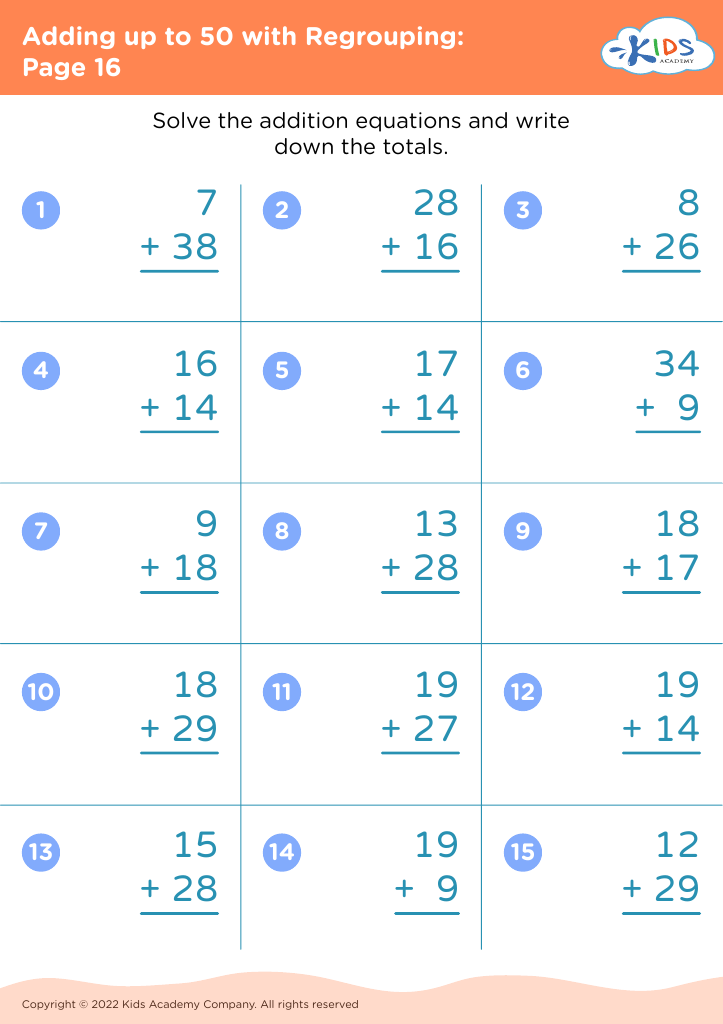
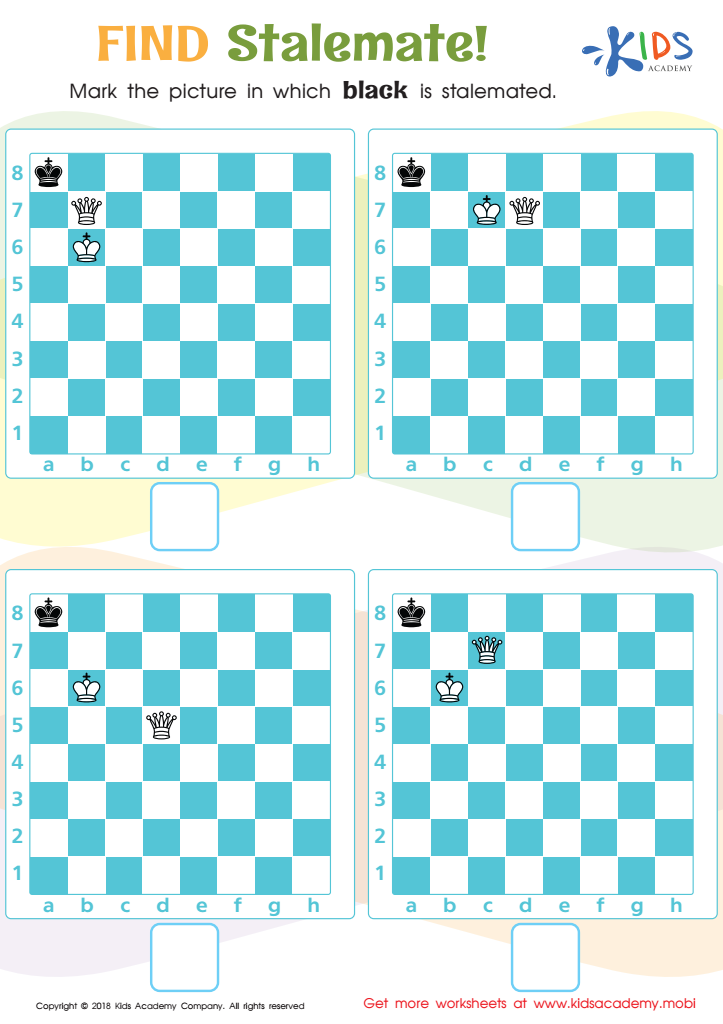
Find Stalemate! Worksheet
Teach your kids Chess and give them more than a hobby - equip them with critical thinking, rationale and problem-solving skills! This free worksheet helps them understand stalemates by examining various sample boards. By providing visual discernment and the joy of the game, your child's logical skills will soar!
Find Stalemate! Worksheet
Worksheet
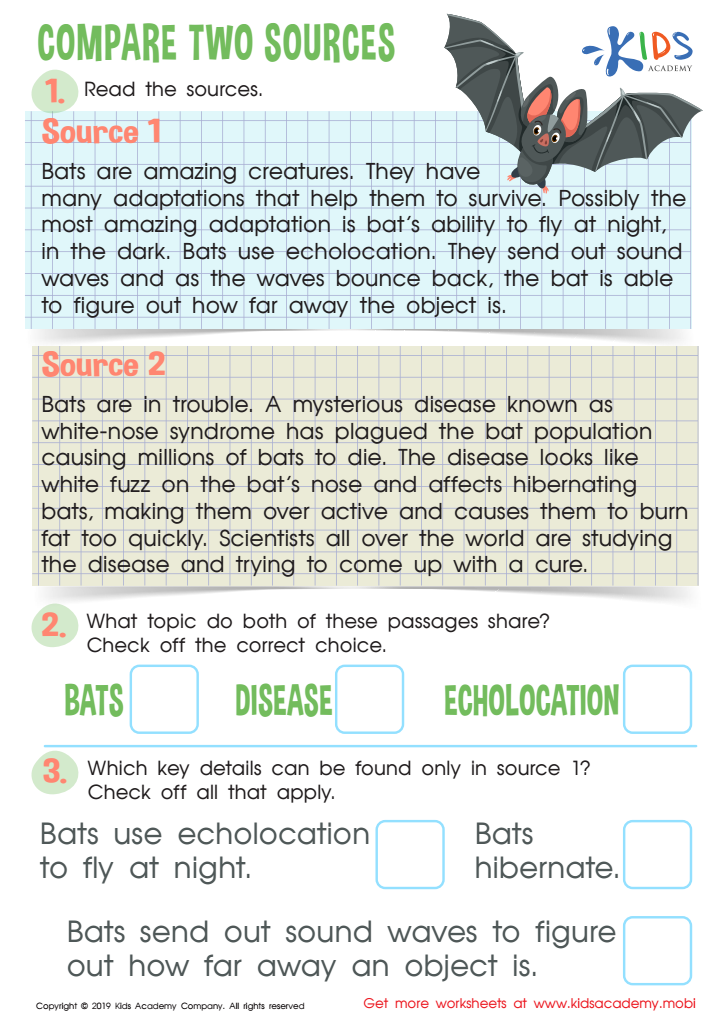
Compare Two Sources Worksheet
Reading exposes us to new words, spelling, and info about different topics. Kids can practice their reading skills, and learn about bats, with this worksheet. Read the two sources in the picture, then help your kids answer the questions at the bottom.
Compare Two Sources Worksheet
Worksheet
Join Kids Academy for Free
Who is primarily going to use this learning content?







Parents and teachers should prioritize the development of critical thinking skills in children aged 8-9 because this is a pivotal age for cognitive growth. At this stage, children are transitioning from concrete operational thinking to more abstract reasoning. Encouraging critical thinking not only enhances their problem-solving abilities but also promotes independence in decision-making.
Critical thinking skills enable children to analyze information, evaluate different perspectives, and develop well-founded opinions. When students practice critical thinking, they become more adept at questioning assumptions, understanding cause-and-effect relationships, and making informed choices. These abilities are essential for navigating the complexities of daily life, both academically and socially.
Moreover, fostering critical thinking helps children become lifelong learners. It encourages curiosity and a love for learning, equipping them to face future academic challenges with confidence. Teachers and parents can facilitate this process by implementing activities that require reasoning, such as discussing stories, solving puzzles, or debating various points of view.
Ultimately, developing critical thinking skills early not only supports children’s academic success but also cultivates thoughtful, engaged citizens who are capable of contributing positively to society. The benefits of these skills extend well beyond the classroom, impacting children’s futures in an increasingly complex world.








