
Shape identification Worksheets for Ages 8-9
20 filtered results
Difficulty Level
Grade
Age
-
From - To
Subject
Activity
Standards
Discover our engaging shape identification worksheets designed specifically for children aged 8-9! These resources promote essential visual learning skills while making geometry fun and interactive. Through a variety of activities, including colorful visuals and challenging exercises, kids will enhance their understanding of shapes, learn to distinguish between them, and apply their knowledge in real-world situations. Ideal for classroom use or at-home learning, these worksheets support kids in building critical observation skills and confidence in their mathematical abilities. Foster a solid foundation in shape recognition and geometry with our thoughtfully crafted worksheets, designed to captivate and educate your child effectively!
Favorites
With answer key
Interactive
 Assign to My Students
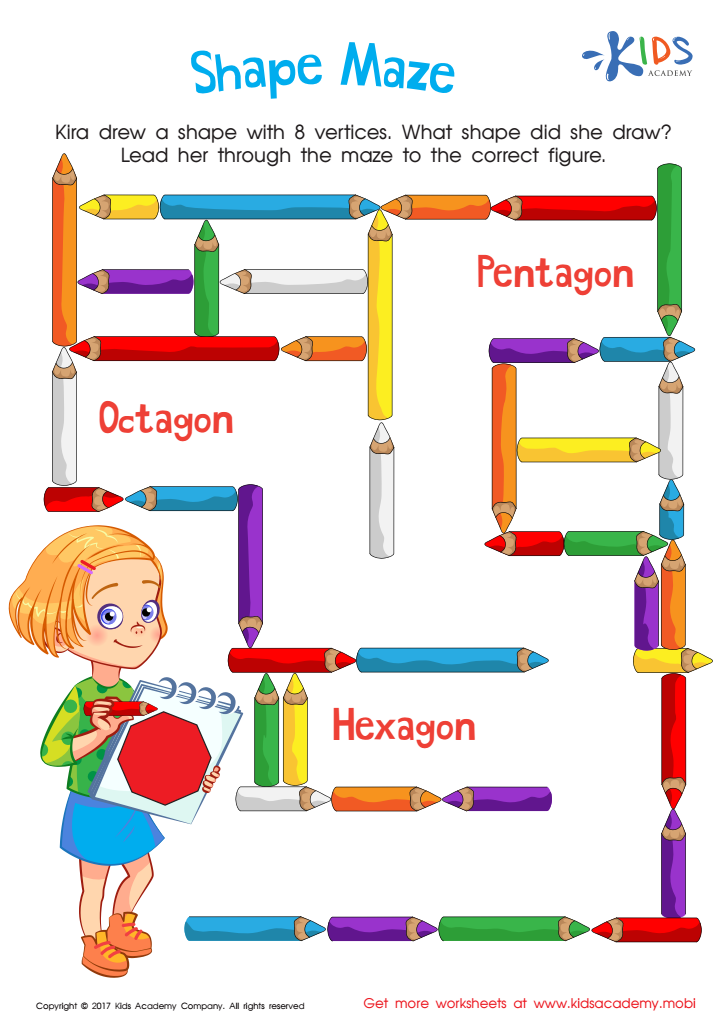
Shape Maze Worksheet
Test your child's geometry knowledge with this fun printable maze! They'll need to identify shapes with 8 vertices to find their way through the maze and get the correct answer.
Shape Maze Worksheet
Worksheet
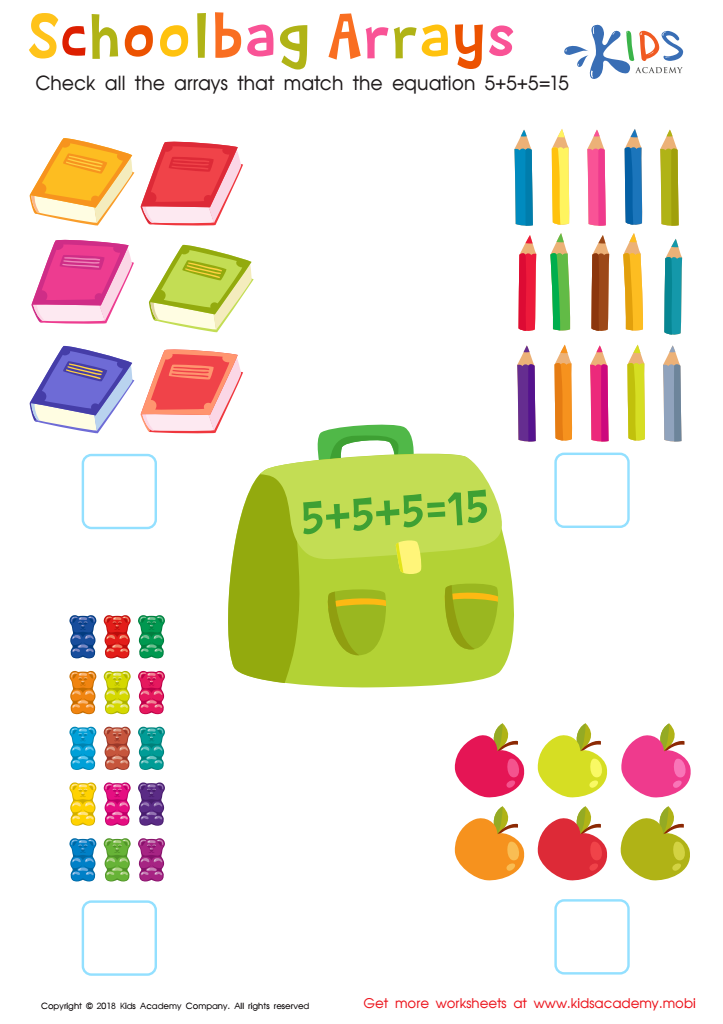
Schoolbag Arrays Worksheet
Help your child spot the correct arrays in this worksheet: having them count the items in each and check the boxes for the ones with 15 objects. Ask them to differentiate between rows and columns and explain which ones match the equation 5+5+5=15.
Schoolbag Arrays Worksheet
Worksheet
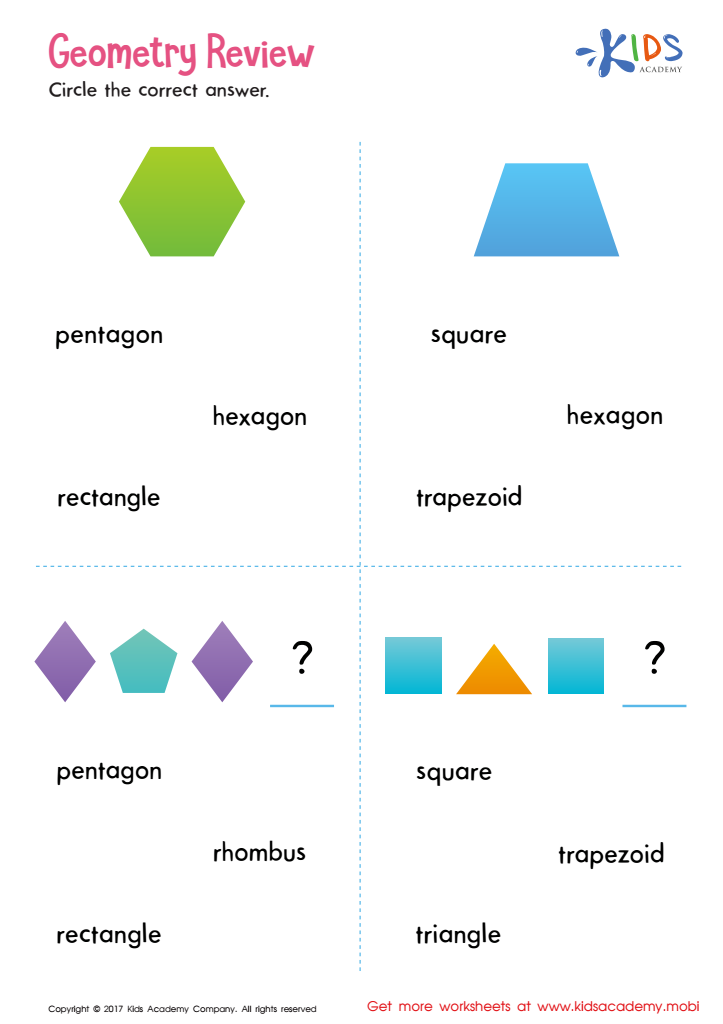
Geometry Review Printable
Repetition is key to success; give your child the practice they need with this geometry worksheet.
Geometry Review Printable
Worksheet
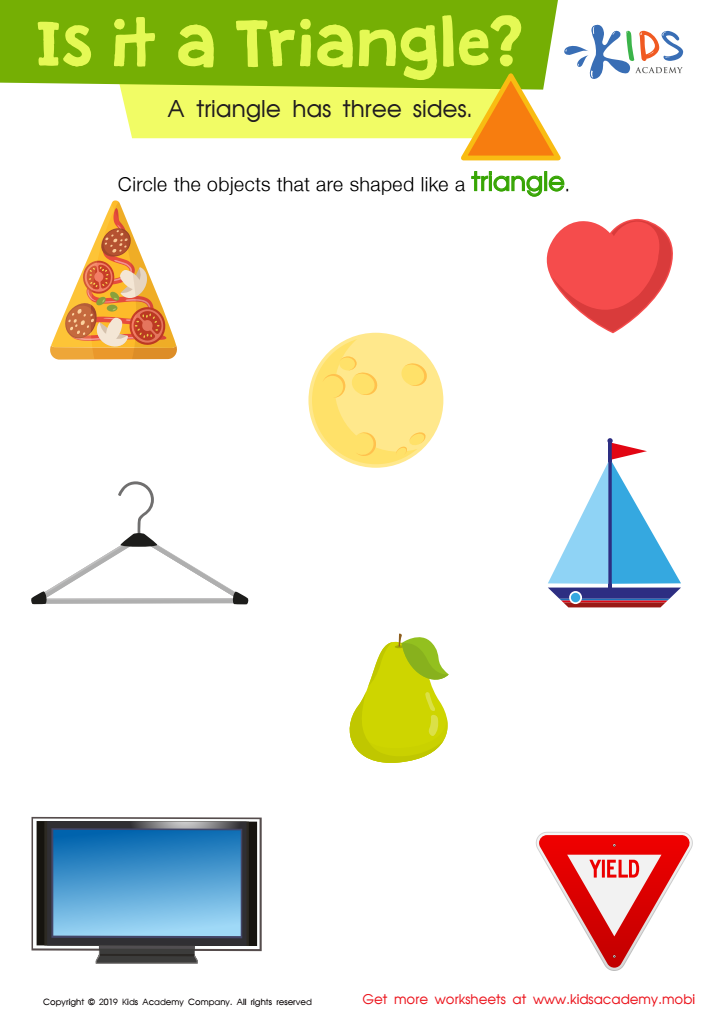
Is It a Triangle? Worksheet
Young kids need to learn to identify basic shapes for math. Show them what a triangle looks like with this fun worksheet. They can look around their environment for everyday objects shaped like a triangle and circle them on the sheet. Download now and start learning what a triangle is!
Is It a Triangle? Worksheet
Worksheet
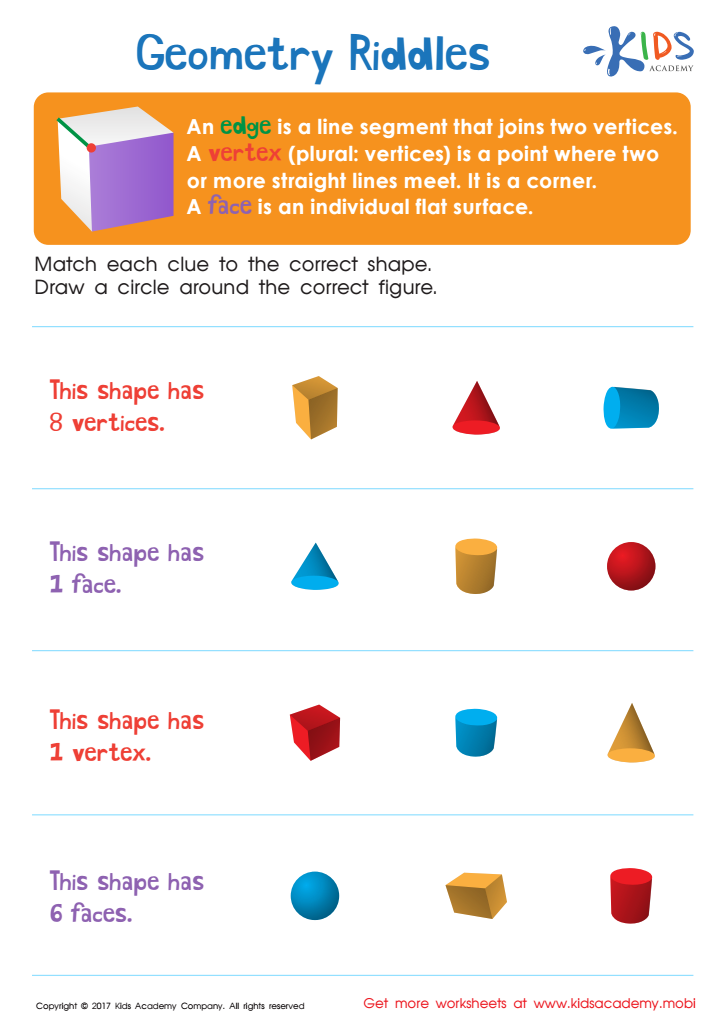
Geometry Riddles Printable
Review geometry terms with your child using this challenging worksheet of tricky riddles. Identifying and counting vertices, edges, and faces of shapes becomes fun as they solve the riddles!
Geometry Riddles Printable
Worksheet
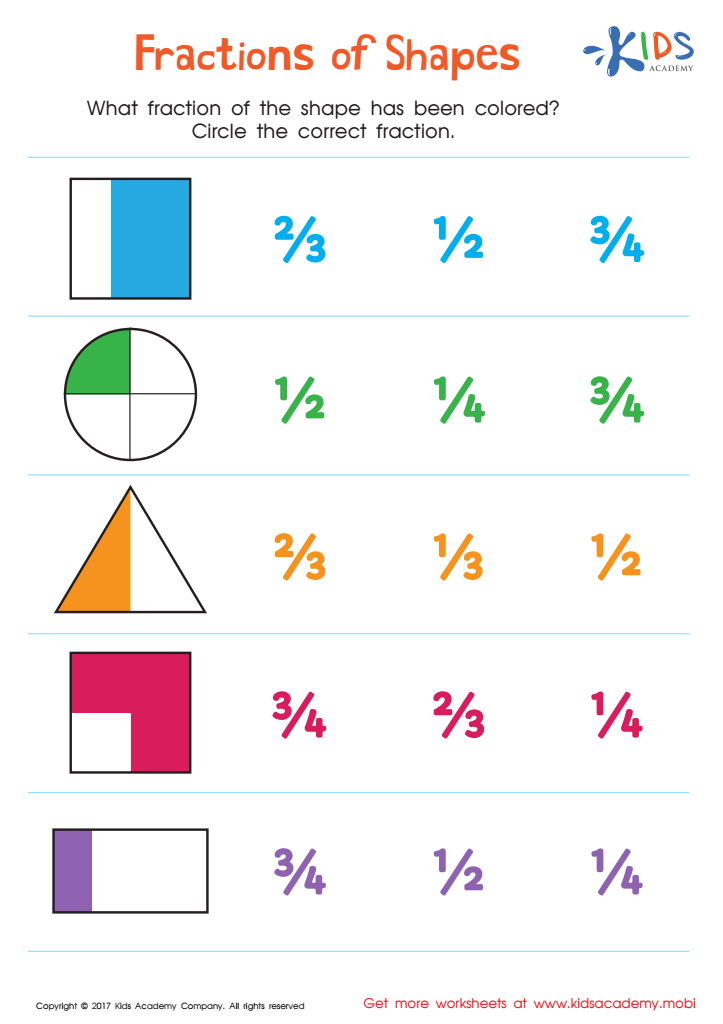
Fractions of Shapes: Math Concept Worksheet
Fractions can be tricky, but with pictures to illustrate them, they become much easier to understand. Our fractions of shapes worksheet is a great way to help children visualize fractions and gain a better understanding of them.
Fractions of Shapes: Math Concept Worksheet
Worksheet
Join Kids Academy for Free
Who is primarily going to use this learning content?







Shape identification is a foundational skill for students aged 8-9 that transcends basic geometry; it lays the groundwork for critical thinking and problem-solving. At this age, children are naturally curious and explorative, making it the ideal time to engage them in recognizing and categorizing shapes. Being able to identify shapes helps refine their observational skills and enhances spatial awareness, essential for mathematical understanding and real-world applications.
Parents and teachers should care because shape identification fosters cognitive development by encouraging pattern recognition and analytical thinking. Children learn to connect concepts such as area, perimeter, and volume, which are crucial in advanced mathematics. Furthermore, understanding shapes helps enhance creativity—students apply these concepts in art, design, and even daily problem-solving, enriching their learning experience.
Additionally, promoting shape identification can aid in combating learning gaps. Engaging activities and hands-on learning cater to diverse learners, ensuring that each child builds a strong mathematical foundation. In essence, shape identification is not merely about learning shapes; it builds the essential skills children need in math, science, and creative fields, thus playing a vital role in their overall development and future academic success.








