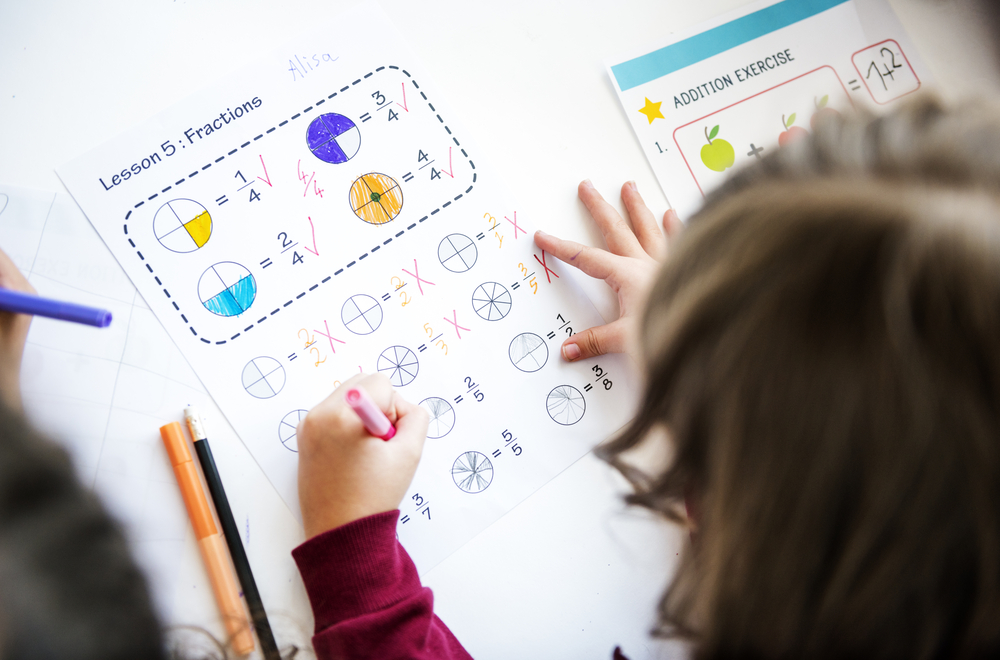
Welcome to our "Simplifying Fractions Worksheets" designed for children aged 8-9! Our engaging and interactive worksheets help young learners grasp the concept of simplifying fractions through fun activities and practical examples. These resources are tailored to strengthen math skills, boosting confidence in handling fractions effectively. With clear instructions and colorful illustrations, your child will enjoy the process of identifying equivalent fractions and reducing them to their simplest form. Encourage mathematical fluency and a solid understanding of fractions with our thoughtfully crafted worksheets, perfect for classroom or home practice. Explore our collection and support your child's early math journey today!

Check out this FREE "Simplifying Fractions" Trial Lesson for age 8-9!

Making a Whole from Fractions

Favorites
With answer key
Interactive
  • 8-9
  • Simplifying Fractions
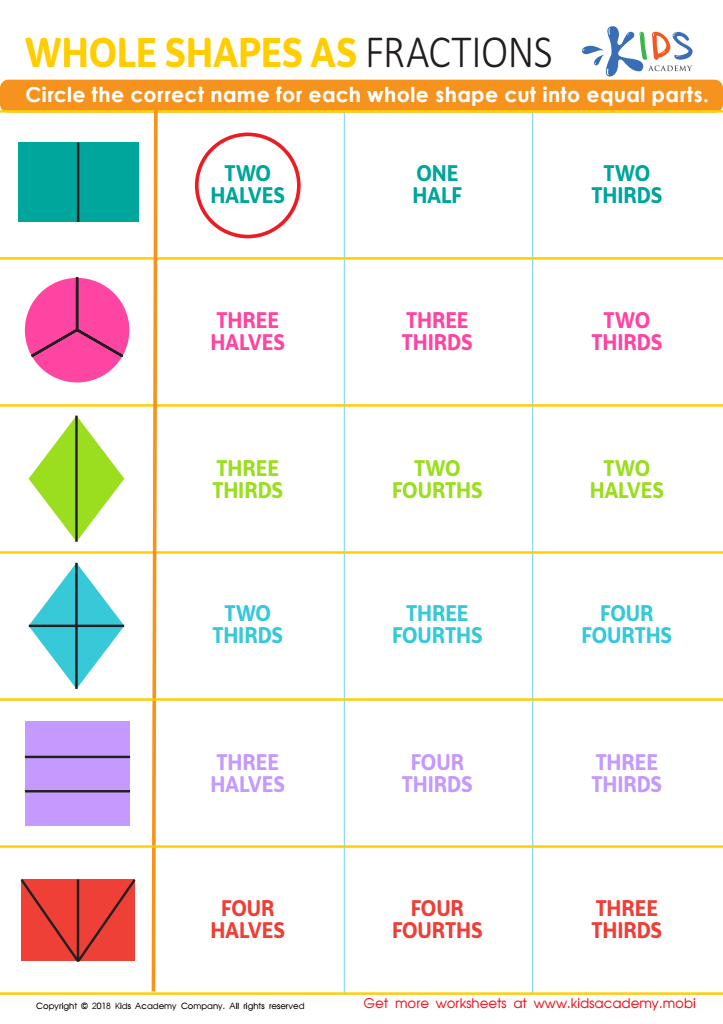
Whole Shapes as Fractions Worksheet

Whole Shapes as Fractions Worksheet

Introduce your child to fractions! After they can draw whole shapes, have them represent them as fractions using a simple worksheet. This will help improve their understanding of naming whole shapes cut into equal parts.
Whole Shapes as Fractions Worksheet
Worksheet
Fractions: Assessment 1 Worksheet

Fractions: Assessment 1 Worksheet

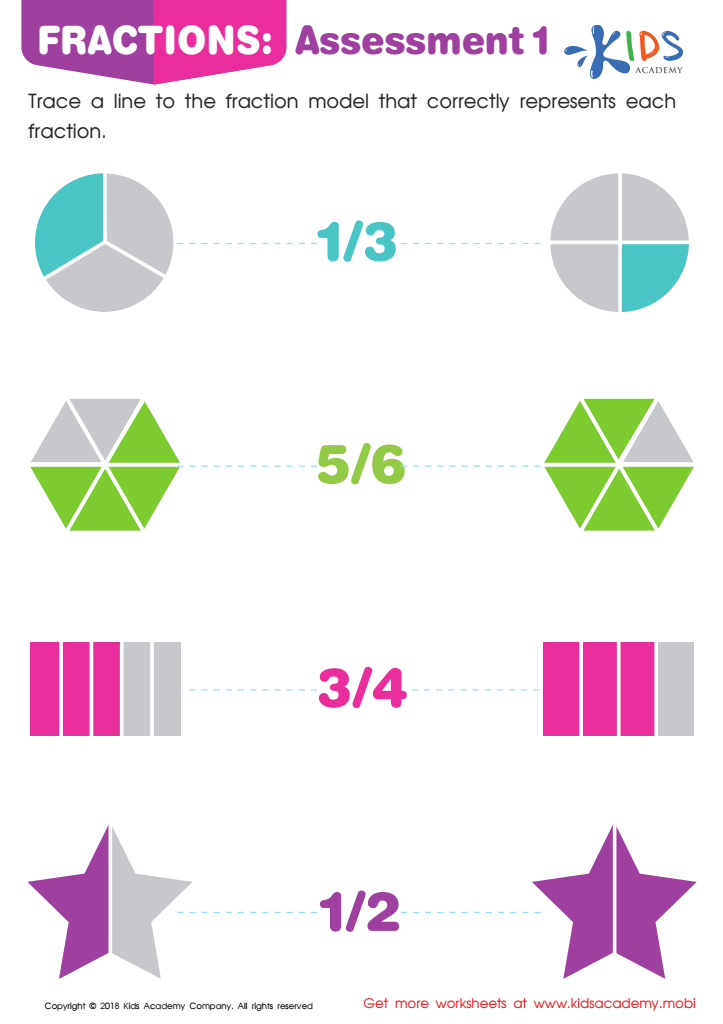
Master fractions easily with this worksheet! It has four sets of fraction models and fraction equations with two models each. Guide your kids to trace a line to the correct fraction model for each equation.
Fractions: Assessment 1 Worksheet
Worksheet
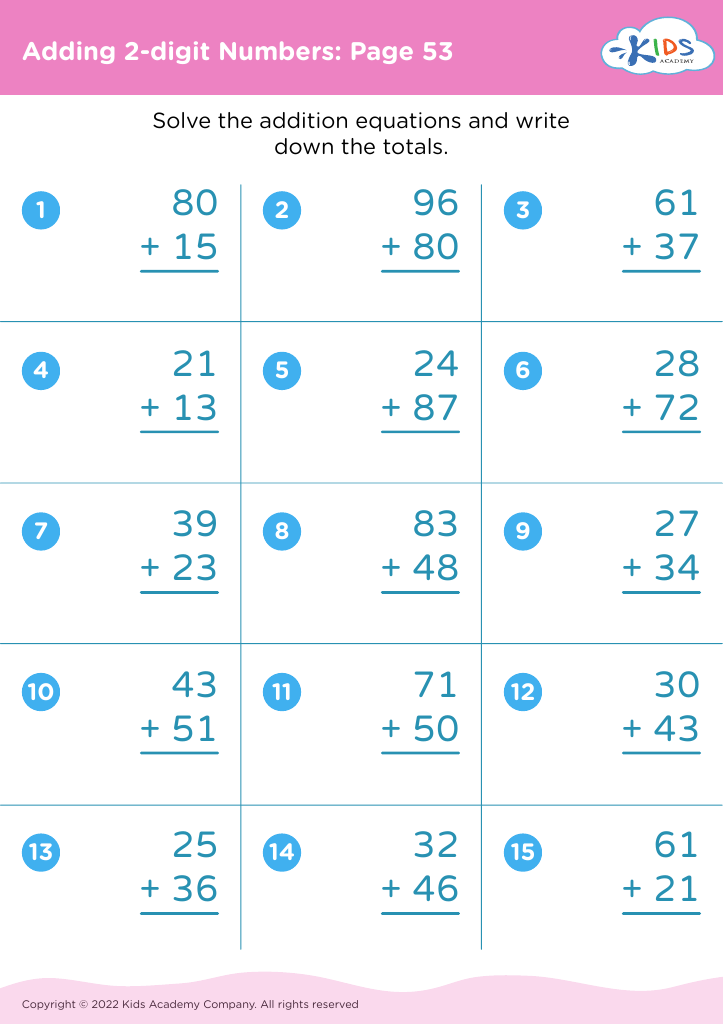
Adding 2-digit Numbers: Page 53

Adding 2-digit Numbers: Page 53

Adding 2-digit Numbers: Page 53
Worksheet
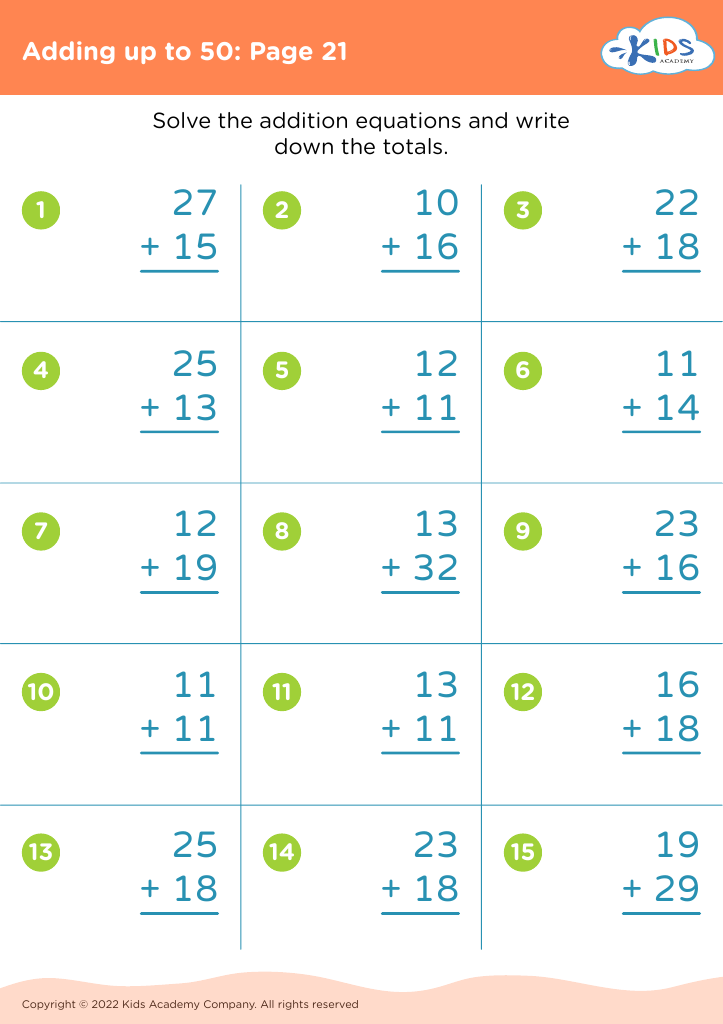
Adding up to 50: Page 21

Adding up to 50: Page 21

Adding up to 50: Page 21
Worksheet
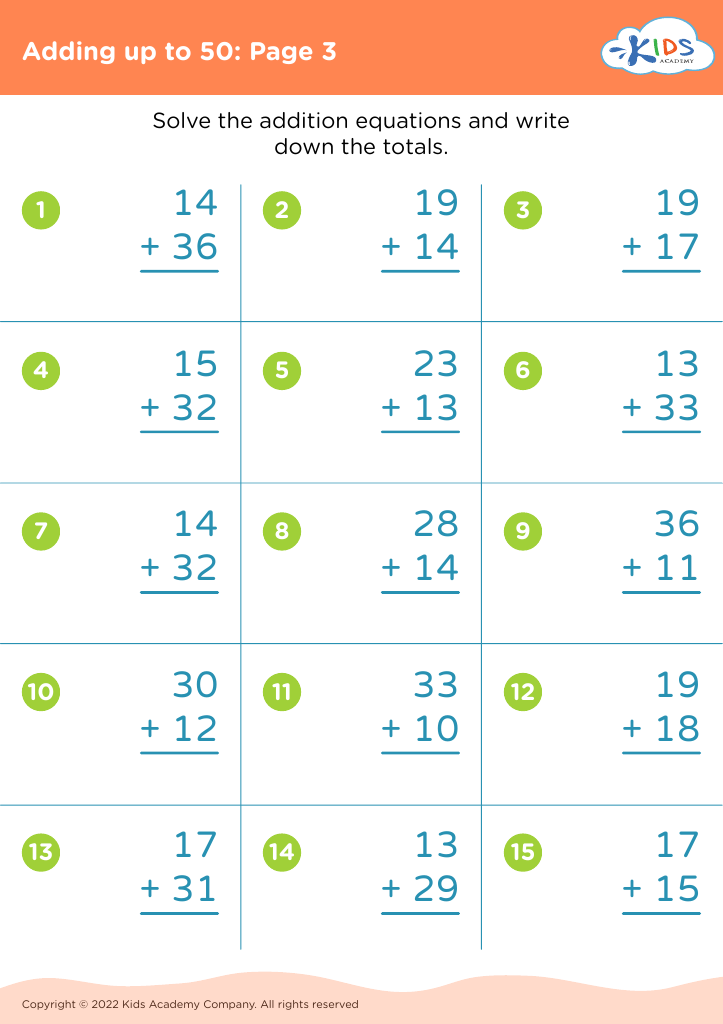
Adding up to 50: Page 3

Adding up to 50: Page 3

Adding up to 50: Page 3
Worksheet
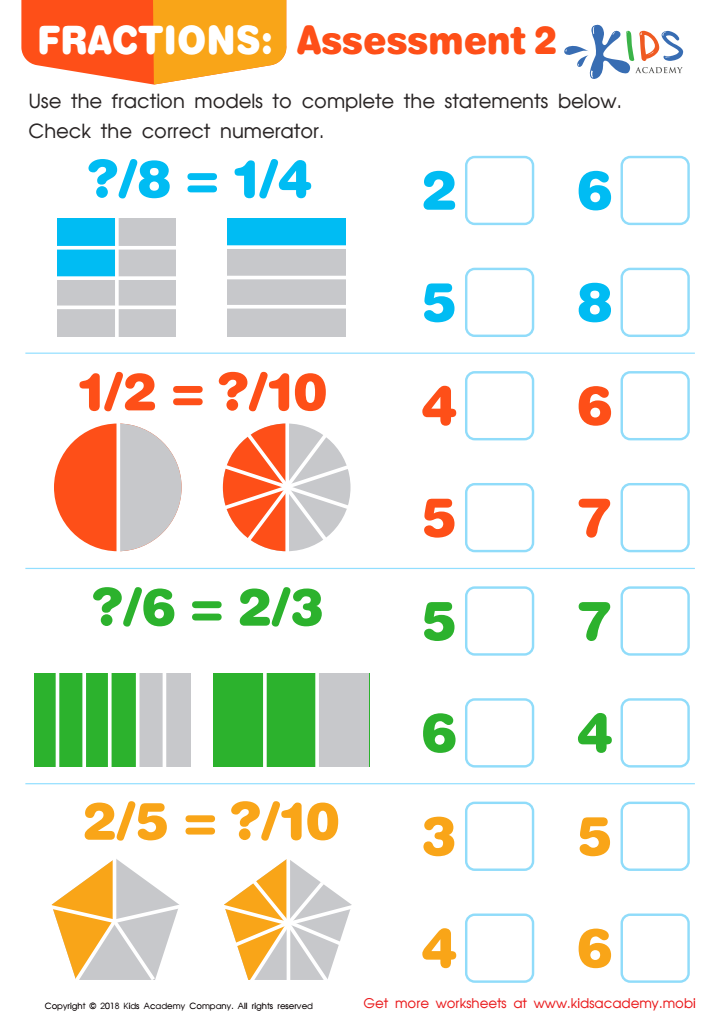
Fractions: Assessment 2 Worksheet
Fractions: Assessment 2 Worksheet

Help your kids understand fractions better with this worksheet. Ask them to complete the fraction statements using the fraction models on the left and then check the correct numerators. This can help clear up any confusion they may have with fractions and fraction models.
Fractions: Assessment 2 Worksheet
Worksheet
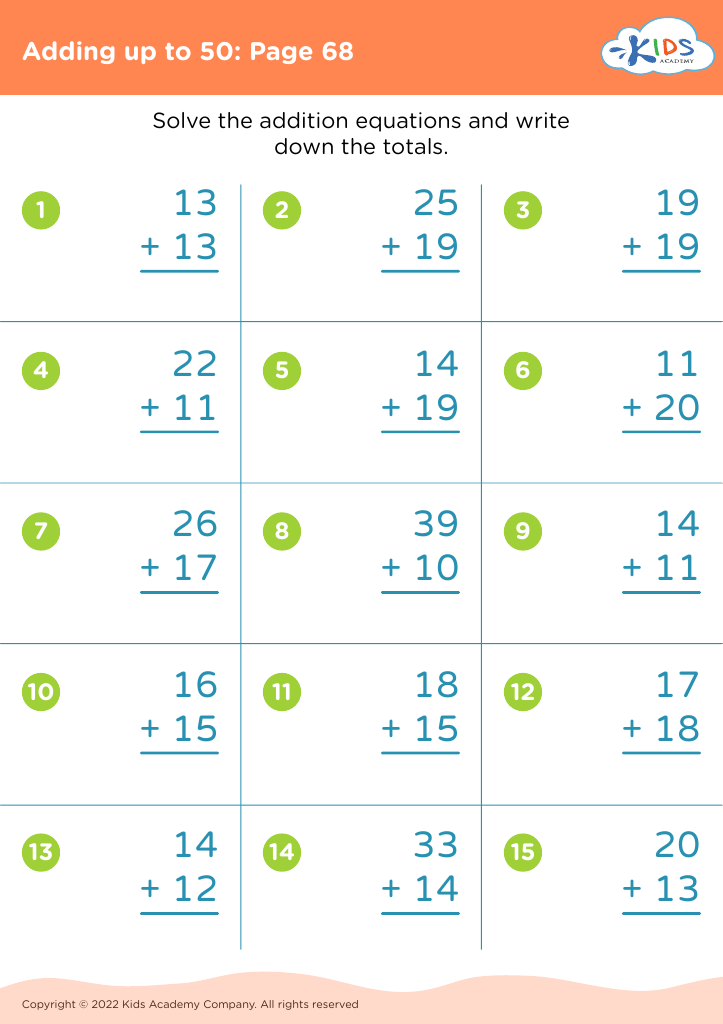
Adding up to 50: Page 68

Adding up to 50: Page 68

Adding up to 50: Page 68
Worksheet
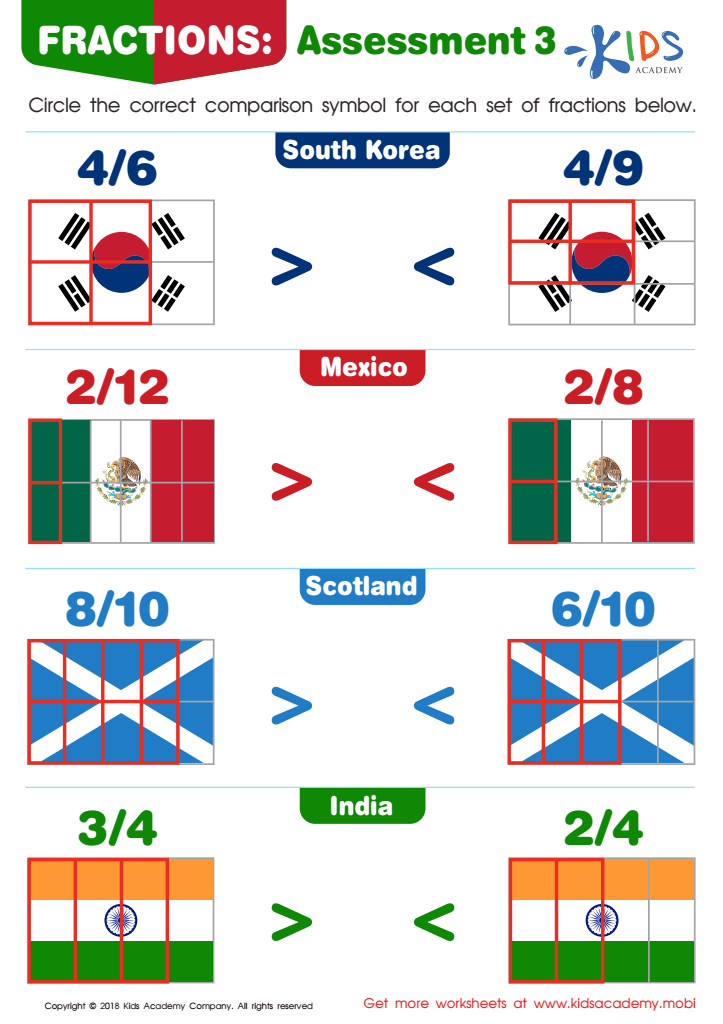
Fractions: Assessment 3 Worksheet
Fractions: Assessment 3 Worksheet
This worksheet helps teach kids about fractions and introduces them to countries and their flags. Have them read the country names and point to the flags. Then help them assess the fractions, and ask them to circle the symbol that shows their values.
Fractions: Assessment 3 Worksheet
Worksheet
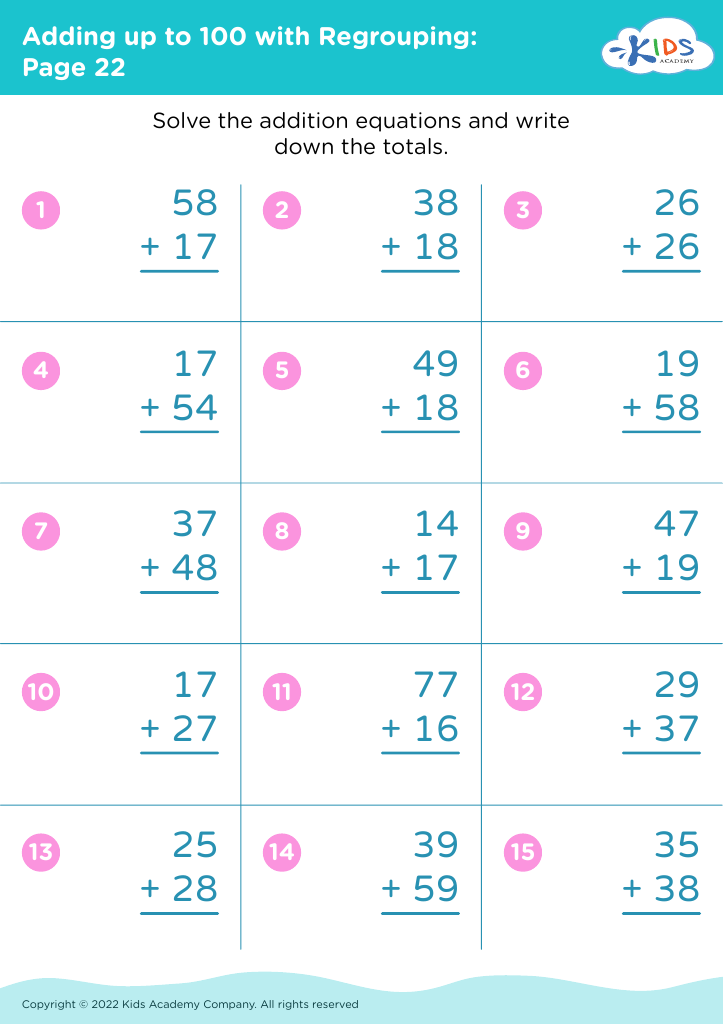
Adding up to 100 with Regrouping: Page 22
Worksheet
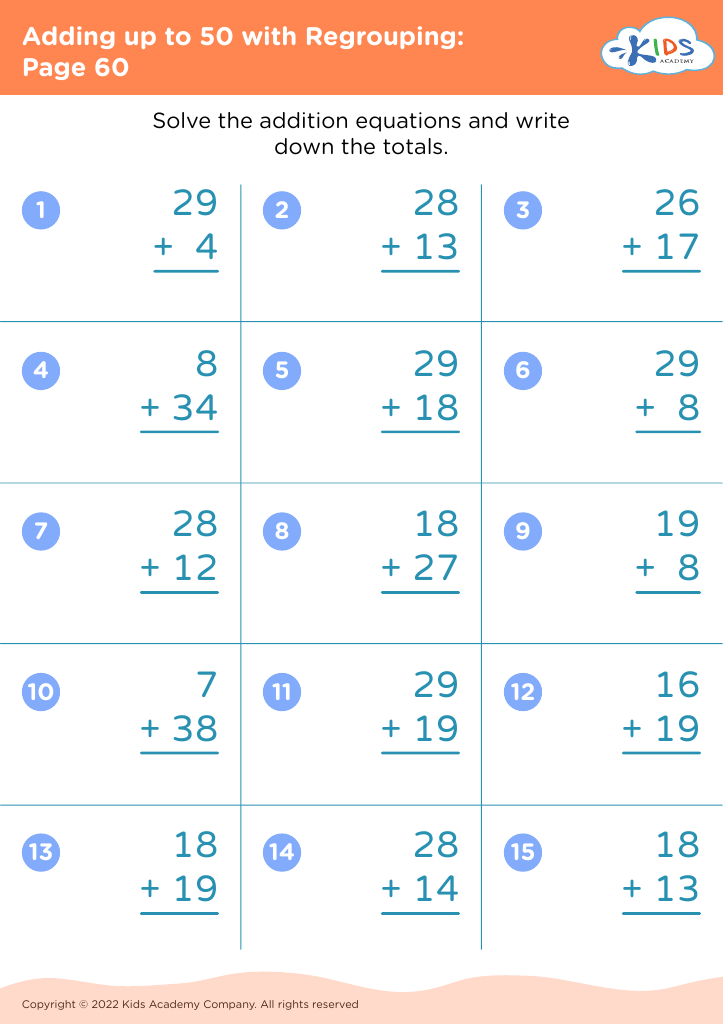
Adding up to 50 with Regrouping: Page 60
Worksheet
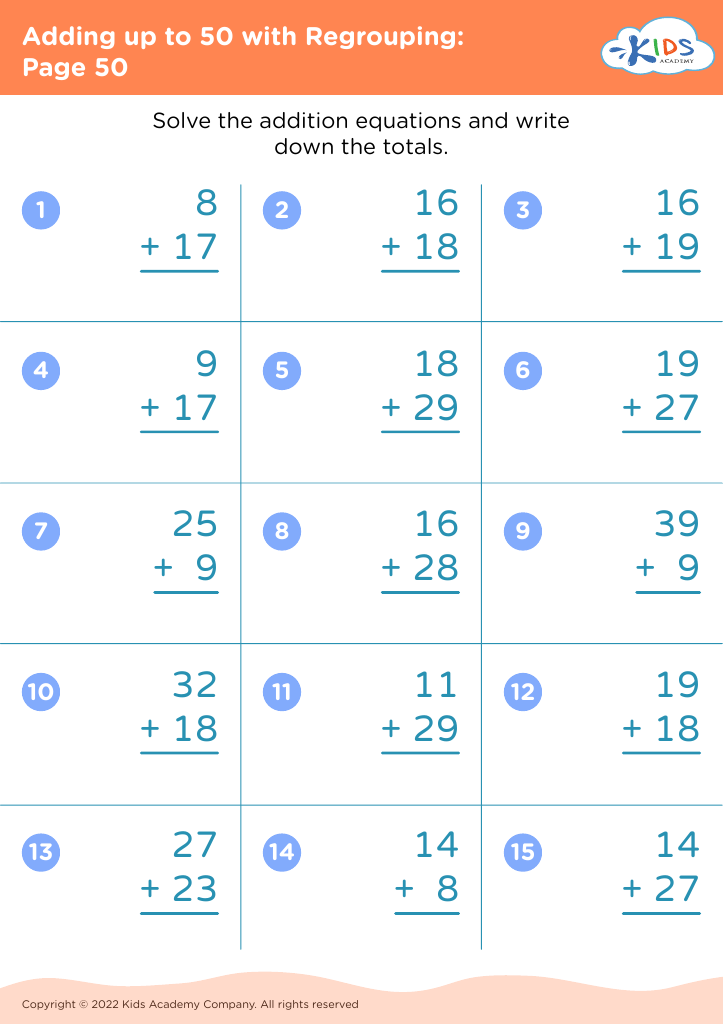
Adding up to 50 with Regrouping: Page 50
Worksheet
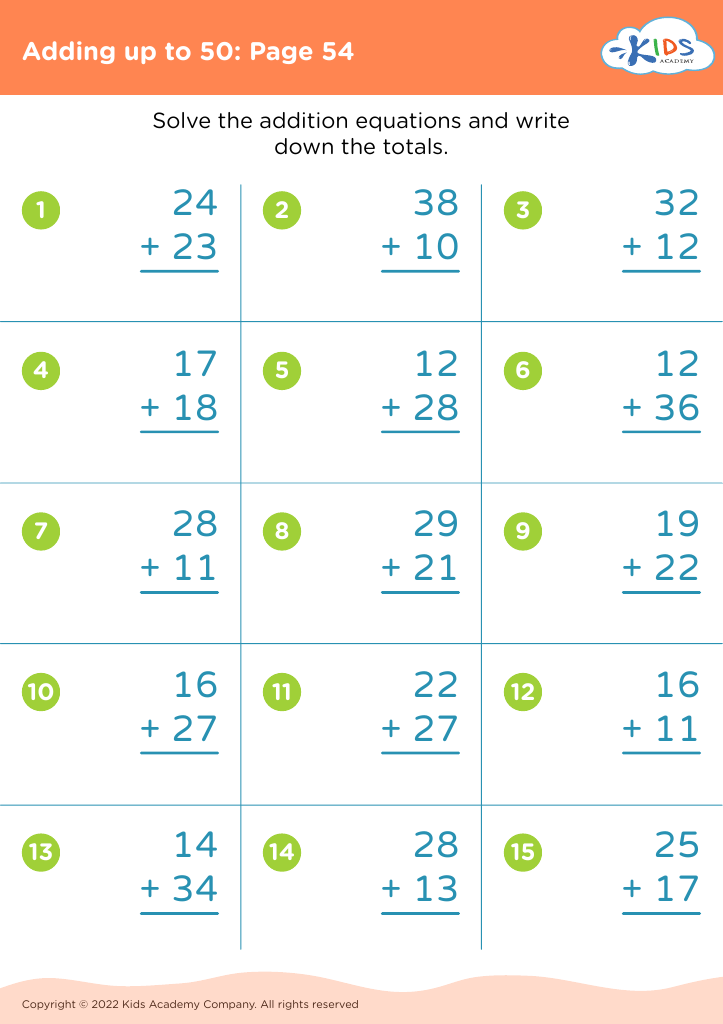
Adding up to 50: Page 54

Adding up to 50: Page 54

Adding up to 50: Page 54
Worksheet
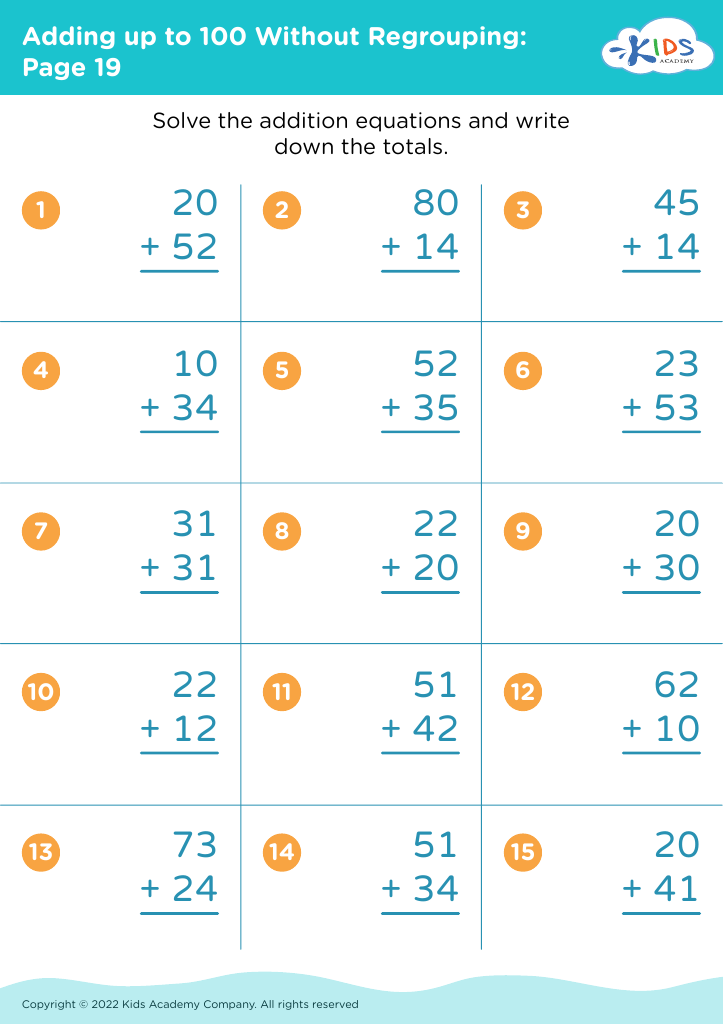
Adding up to 100 Without Regrouping: Page 19
Worksheet
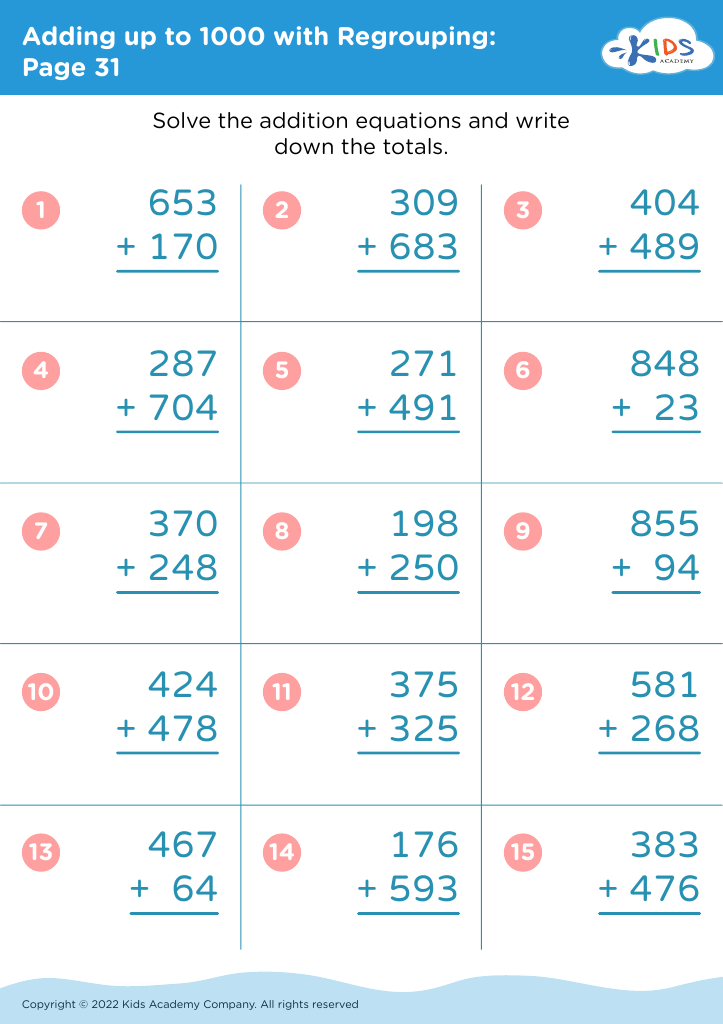
Adding up to 1000 with Regrouping: Page 31
Worksheet
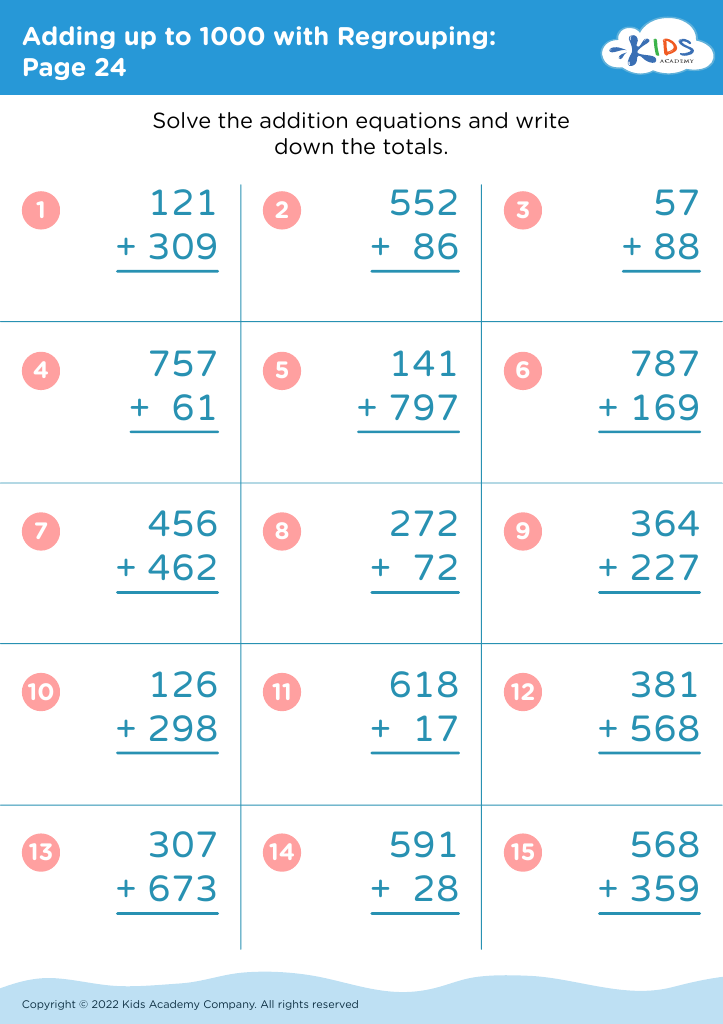
Adding up to 1000 with Regrouping: Page 24
Worksheet
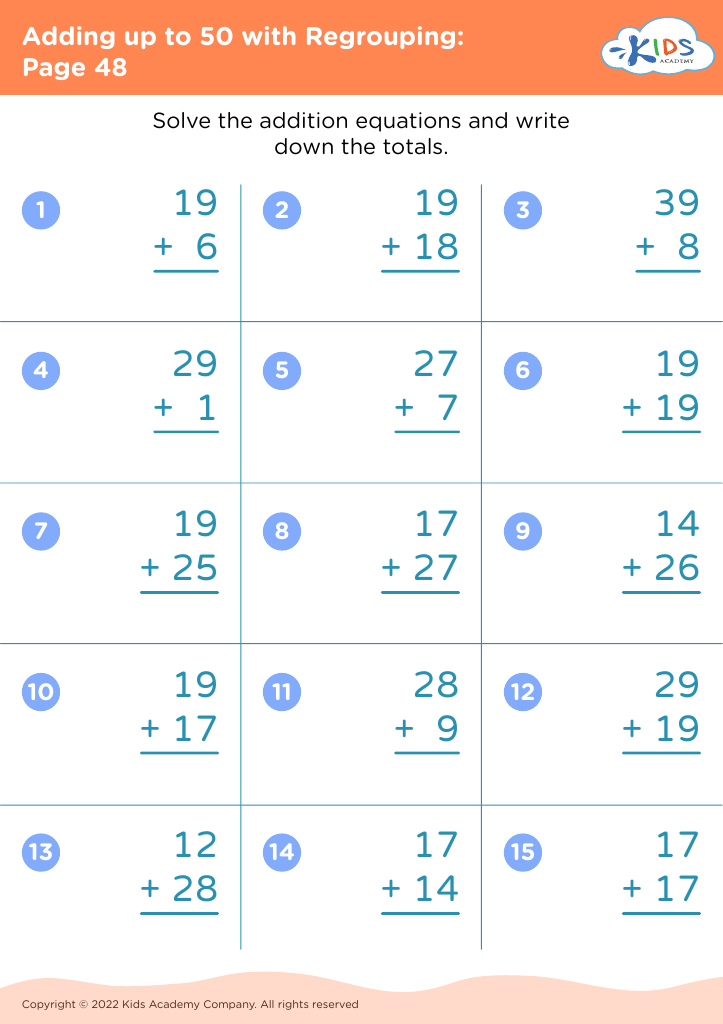
Adding up to 50 with Regrouping: Page 48
Worksheet
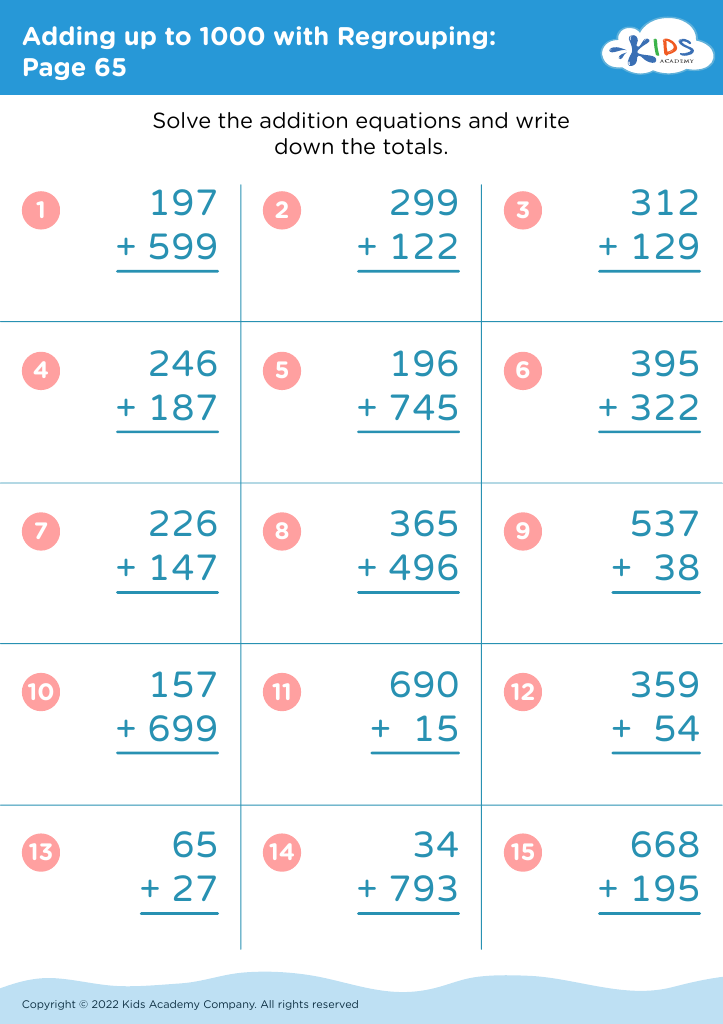
Adding up to 1000 with Regrouping: Page 65
Worksheet
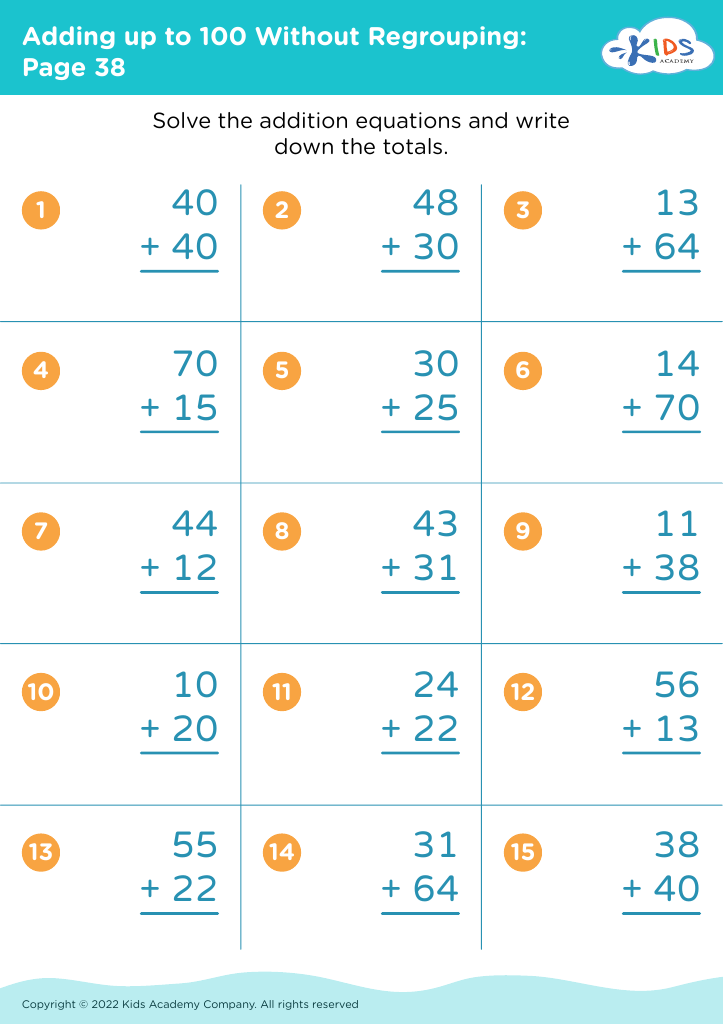
Adding up to 100 Without Regrouping: Page 38
Worksheet
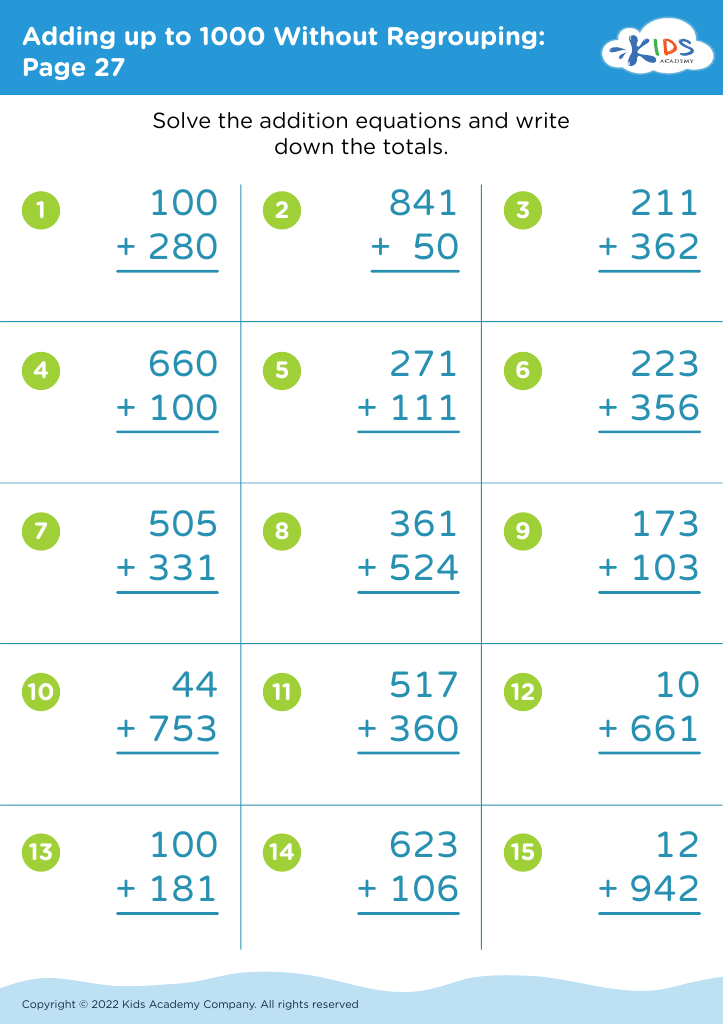
Adding up to 1000 Without Regrouping: Page 27
Worksheet
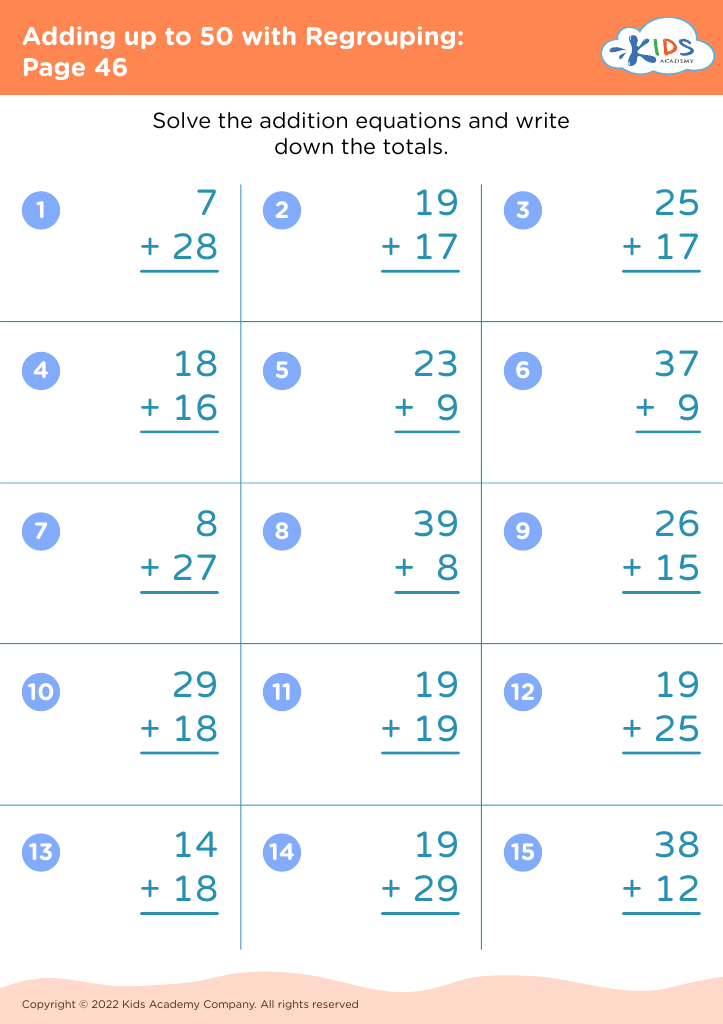
Adding up to 50 with Regrouping: Page 46
Worksheet
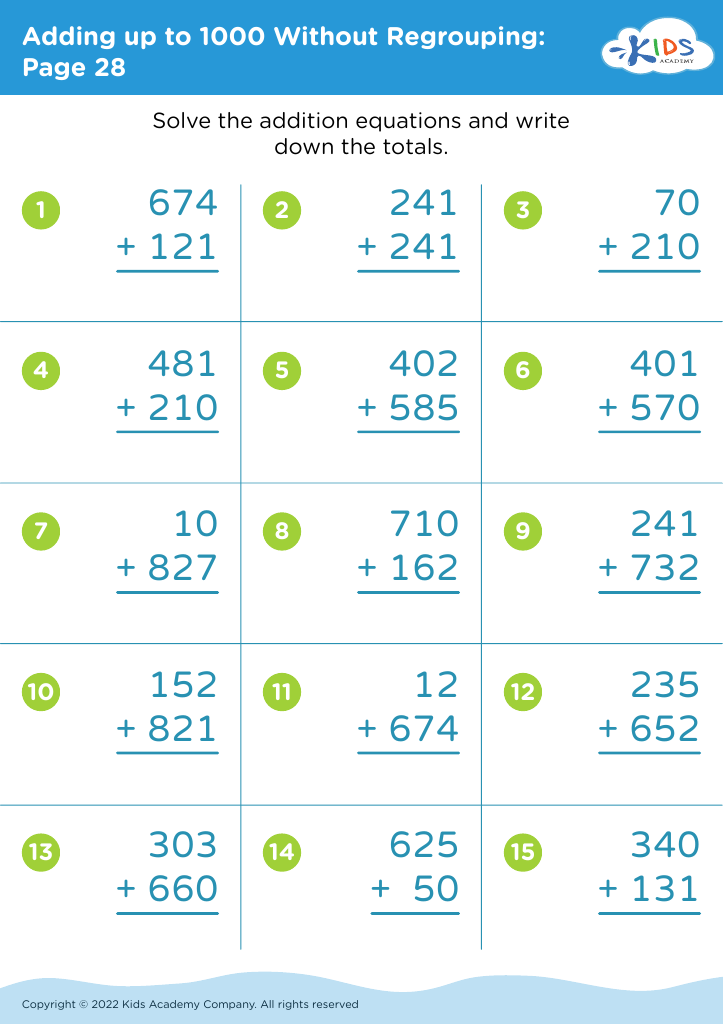
Adding up to 1000 Without Regrouping: Page 28
Worksheet
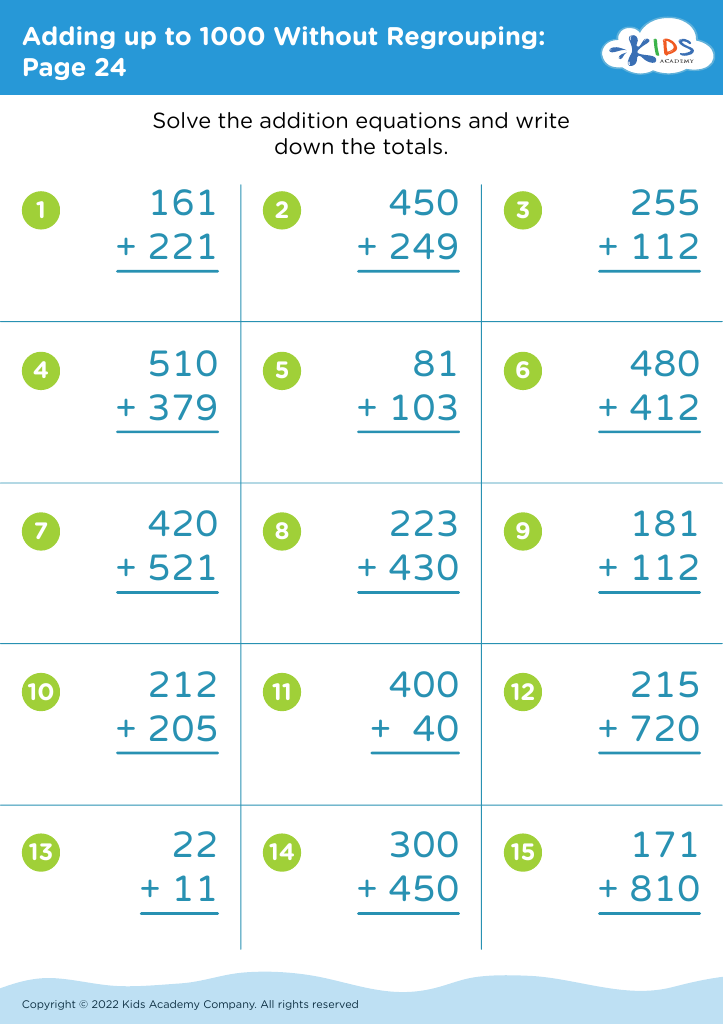
Adding up to 1000 Without Regrouping: Page 24
Worksheet
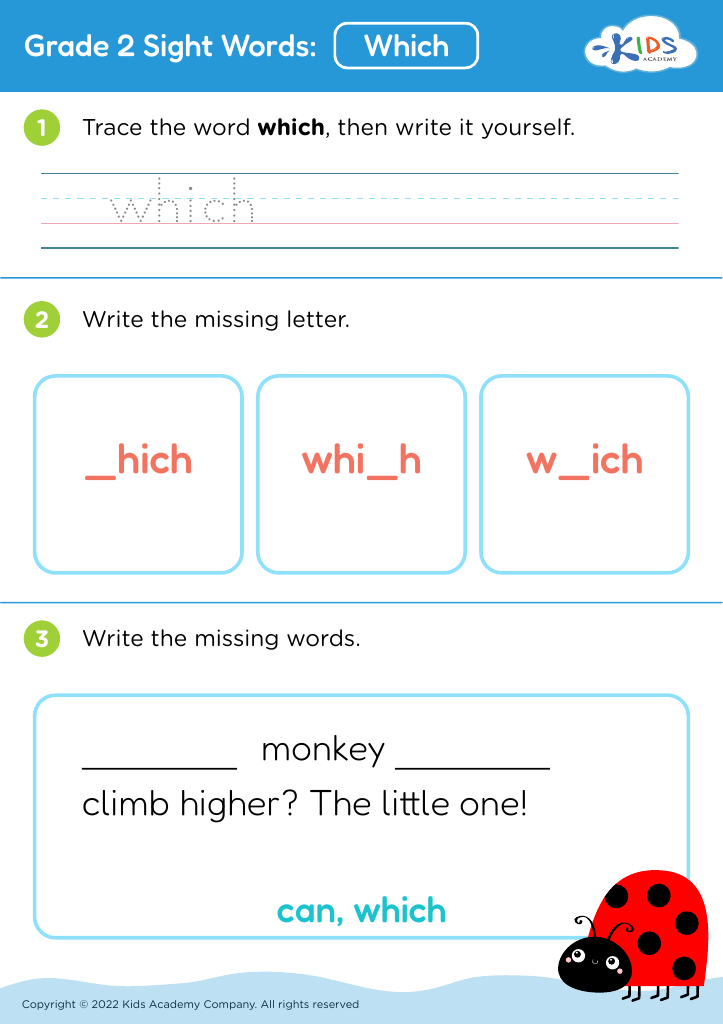
Grade 2 Sight Words: Which

Grade 2 Sight Words: Which

Grade 2 Sight Words: Which
Worksheet
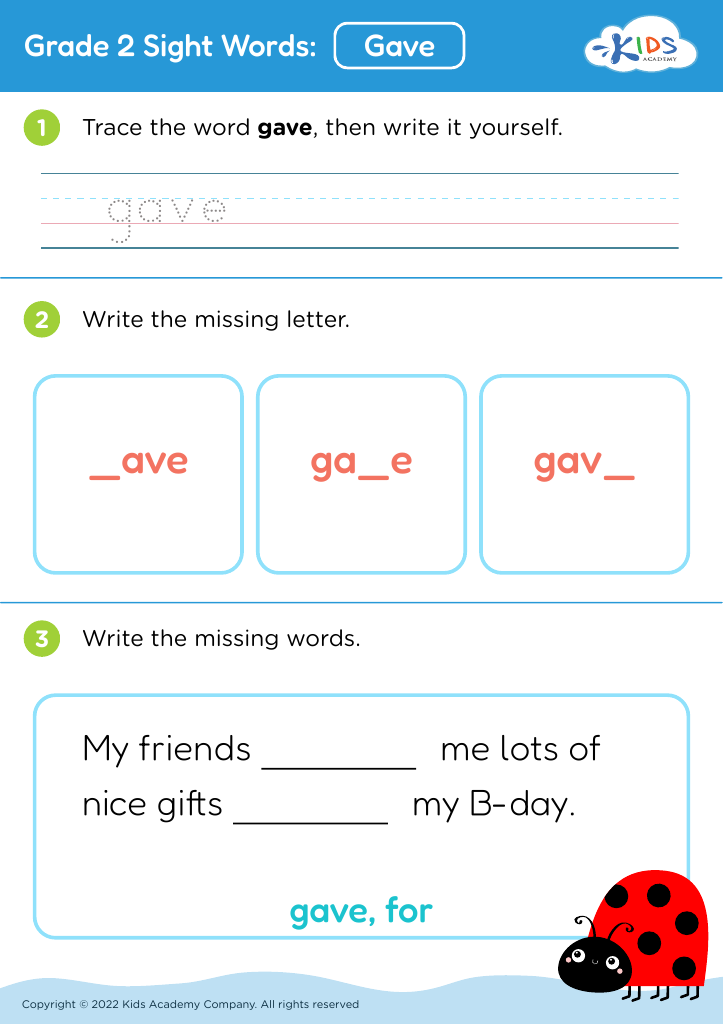
Grade 2 Sight Words: Gave

Grade 2 Sight Words: Gave

Grade 2 Sight Words: Gave
Worksheet


Simplifying fractions is a crucial mathematical skill for children aged 8-9, as it lays the foundation for more complex concepts in math and enhances their problem-solving abilities. Understanding how to simplify fractions helps children grasp the concept of equivalence, which is essential in various math topics such as addition, subtraction, multiplication, and division of fractions. By learning to simplify fractions, students develop critical thinking skills, as they must analyze numbers, find common factors, and make decisions on how to reduce fractions effectively.

Furthermore, simplifying fractions builds confidence and promotes a positive attitude towards math. Children can feel a sense of accomplishment when they can take a seemingly complex fraction and reduce it to its simplest form, reinforcing their understanding. It also facilitates better communication with peers and teachers, as they can express and compare their answers more easily.

For parents and teachers, emphasizing the importance of simplifying fractions in the curriculum can foster a deeper understanding of mathematics in children. Encouraging practical applications, like cooking or measuring, can make the learning process engaging and relevant. Ultimately, the skills gained through simplifying fractions not only prepare students for future math challenges but also enhance their overall mathematical literacy.