Understanding multiplication Addition & Subtraction Worksheets for Ages 8-9
24 filtered results
-
From - To
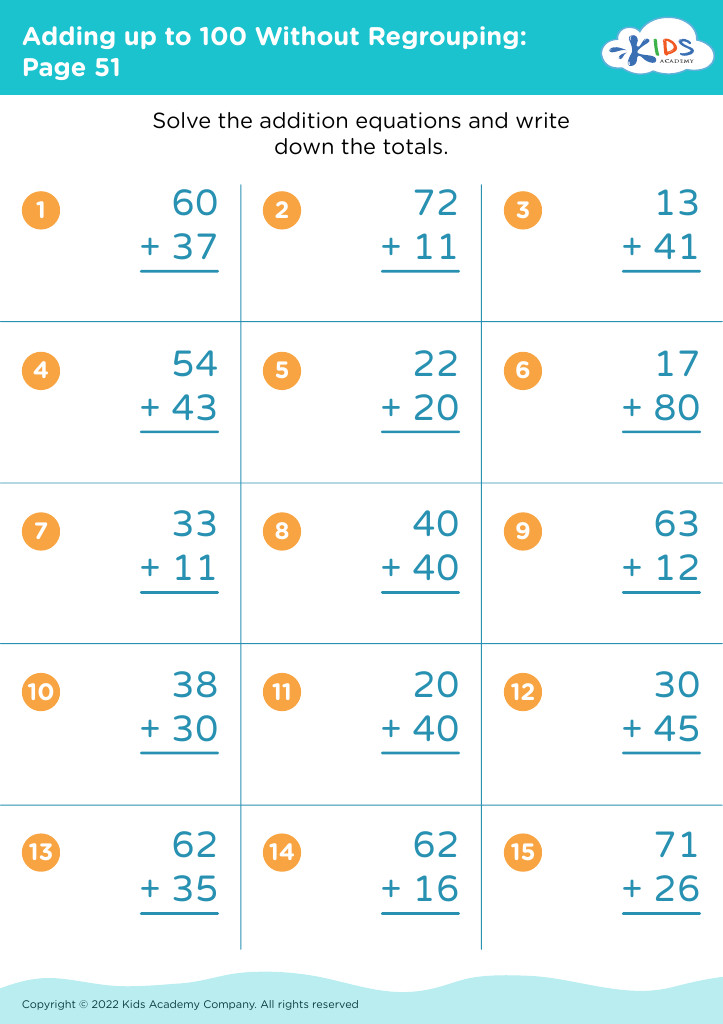
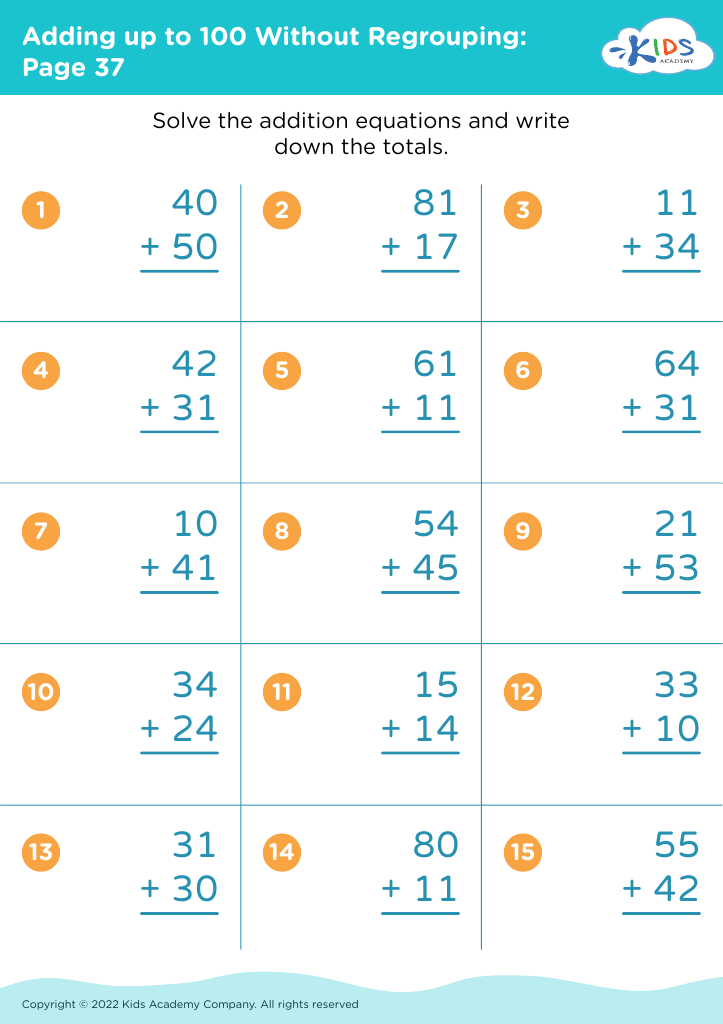
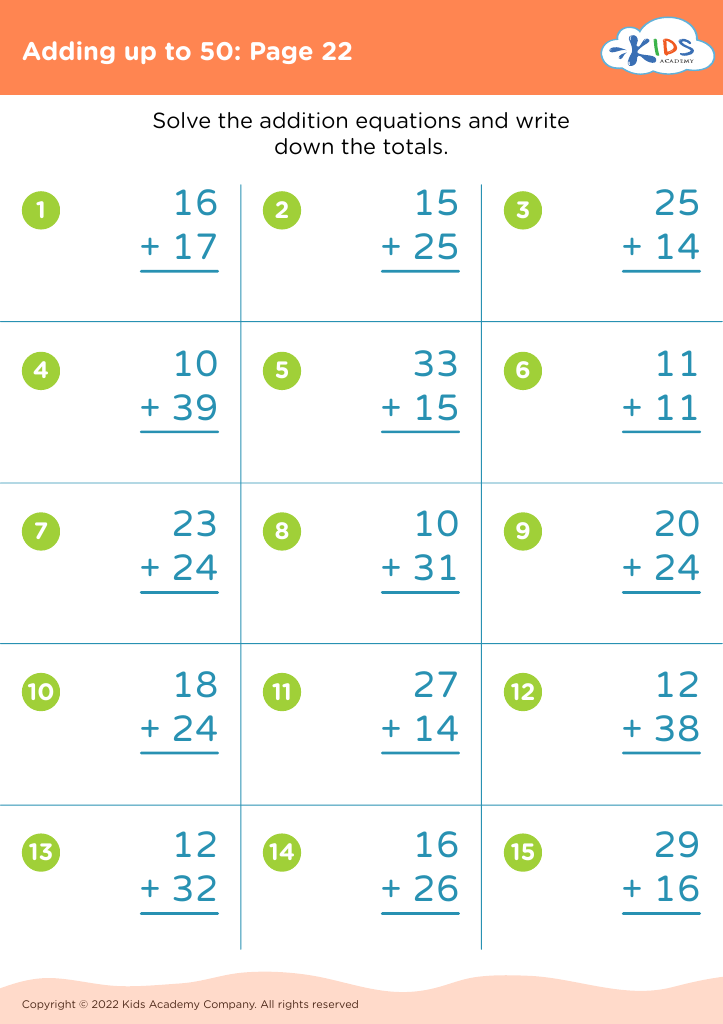
Dive into the world of math with our "Understanding Multiplication, Addition & Subtraction Worksheets, tailored for ages 8-9. Our engaging and educational printables are designed to help young learners excel in fundamental math skills. Each worksheet enhances their understanding of multiplication, while reinforcing their abilities in addition and subtraction. Through a variety of exercises, children will build a strong mathematical foundation, critical for future academic success. Ideal for classroom or at-home practice, our worksheets make learning math fun and effective. Unlock your child’s potential with Kids Academy’s expertly crafted resources today.
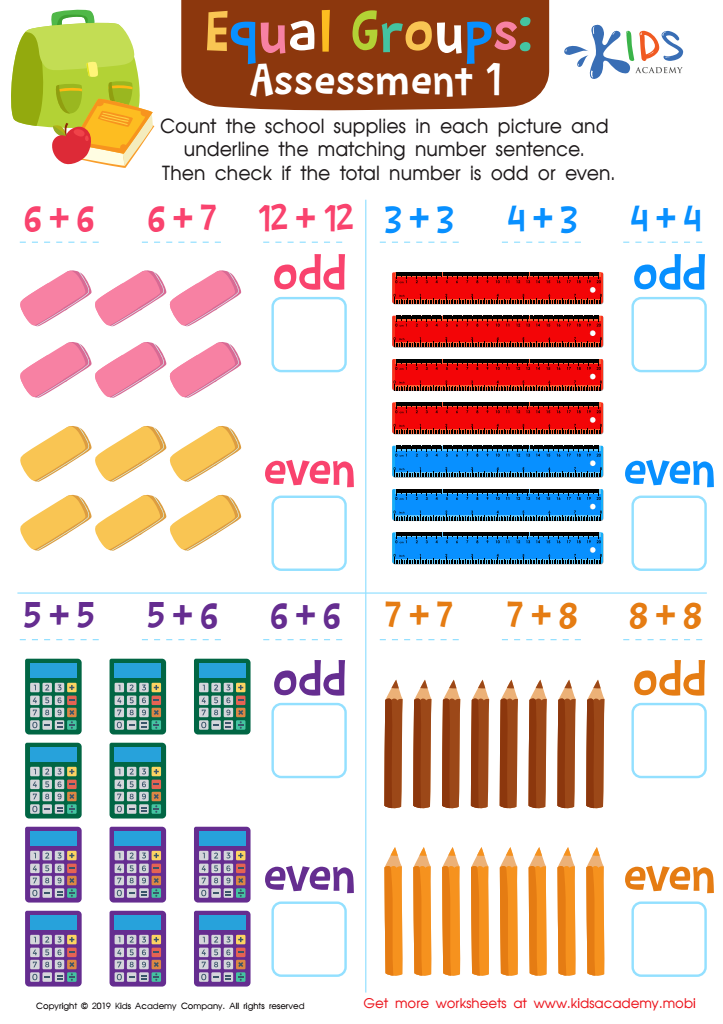
Equal Groups: Assessment 1 Worksheet
 Assign to My Students
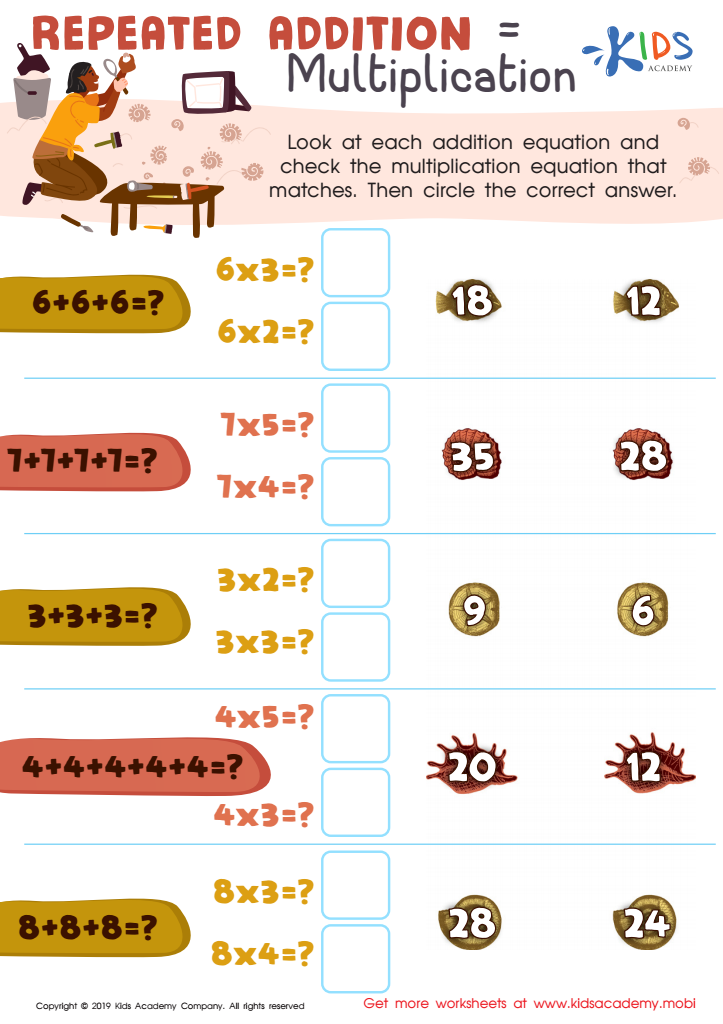
Repeated Addition = Multiplication Worksheet
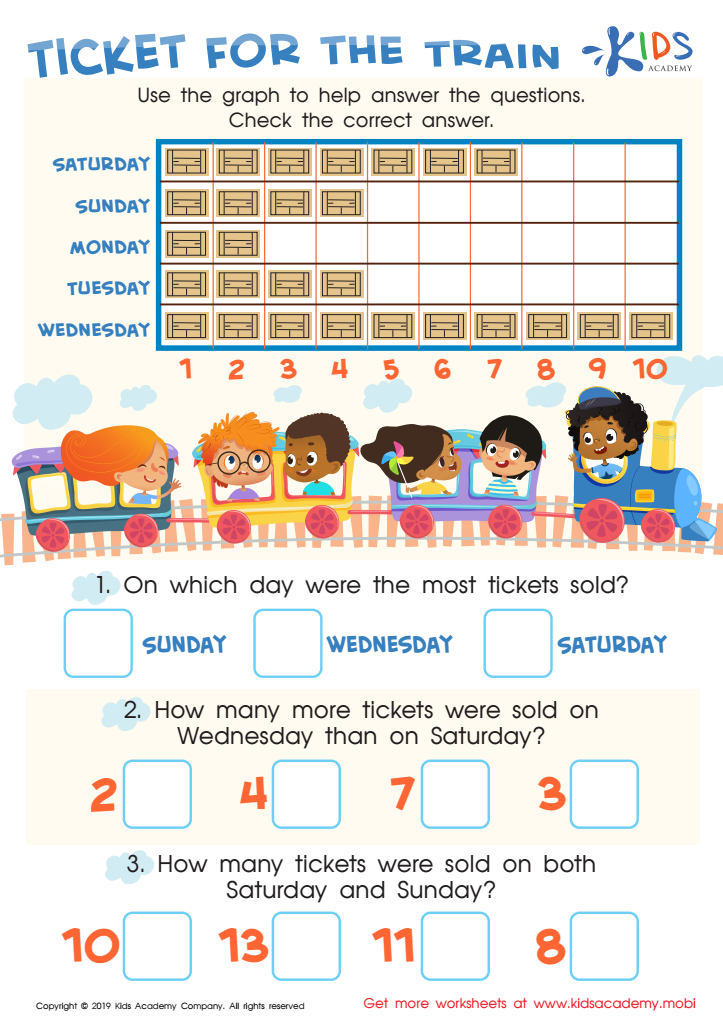
Ticket for the Train Worksheet
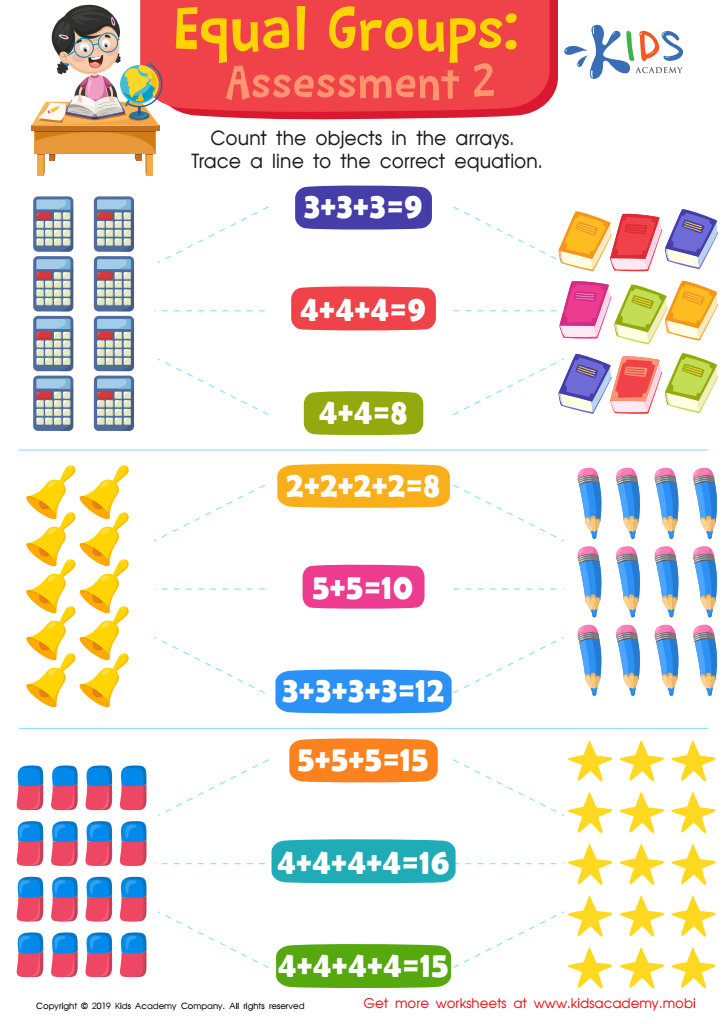
Equal Groups: Assessment 2 Worksheet
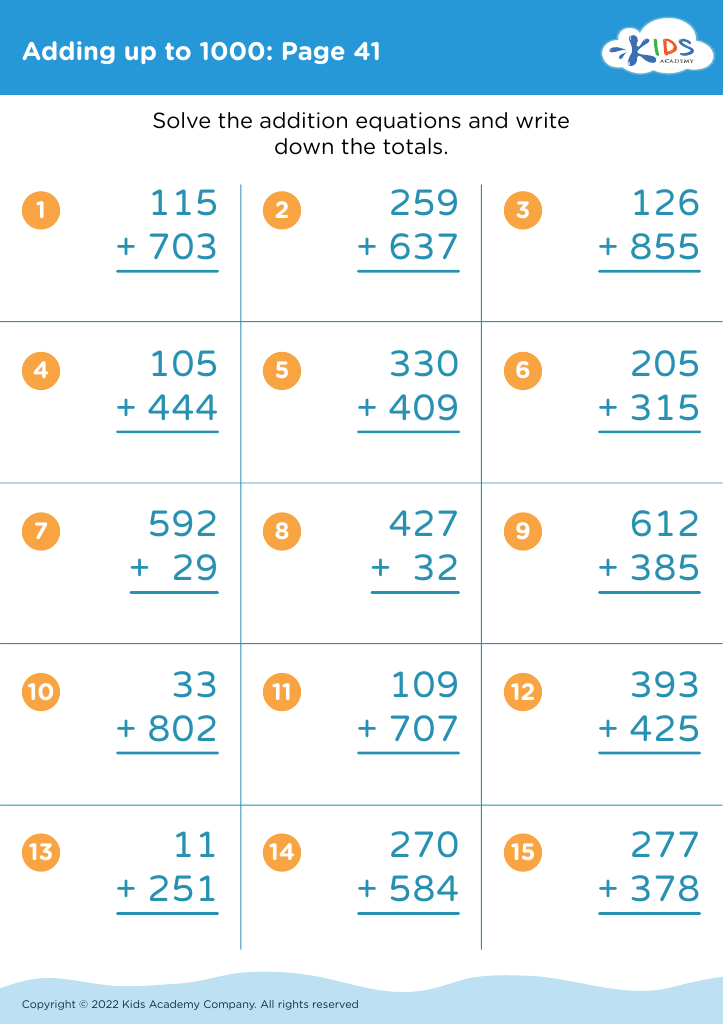
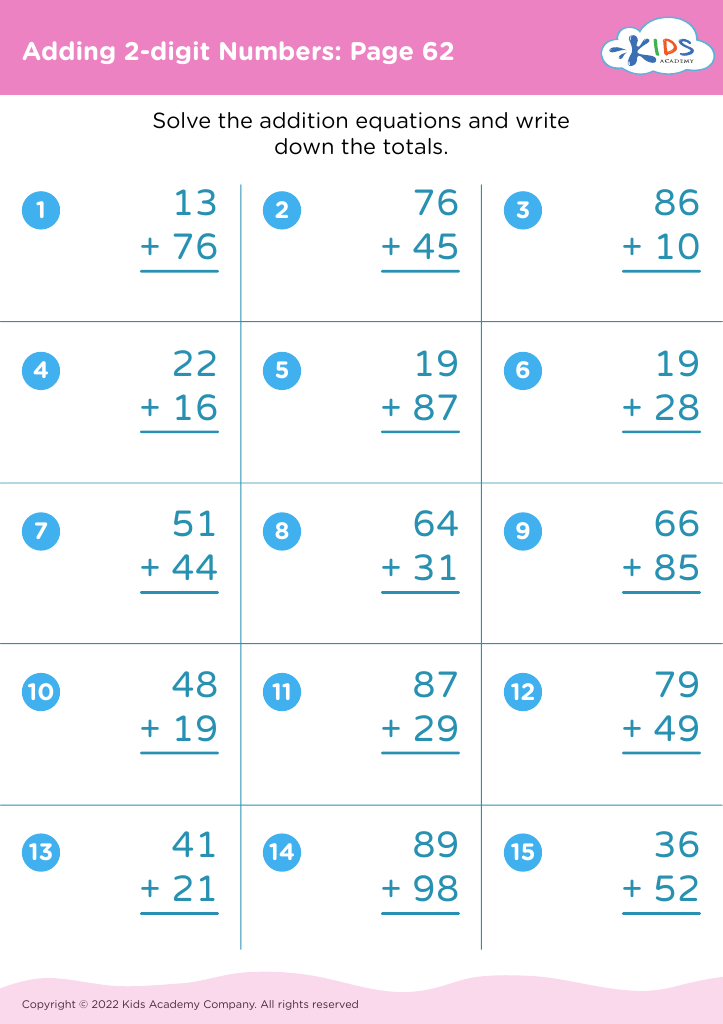
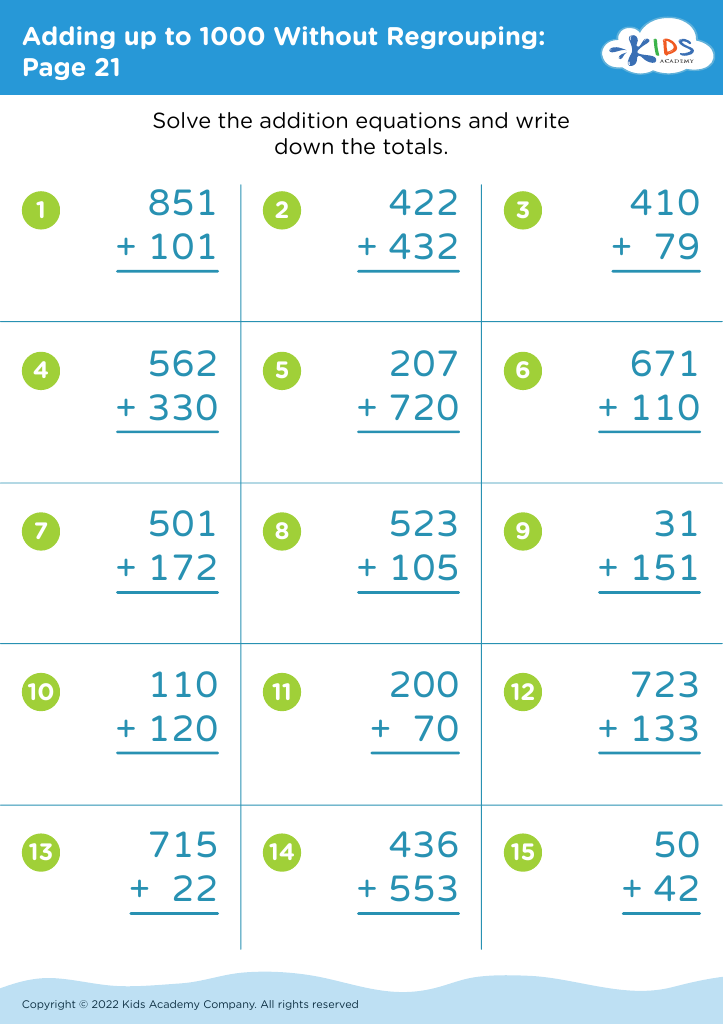
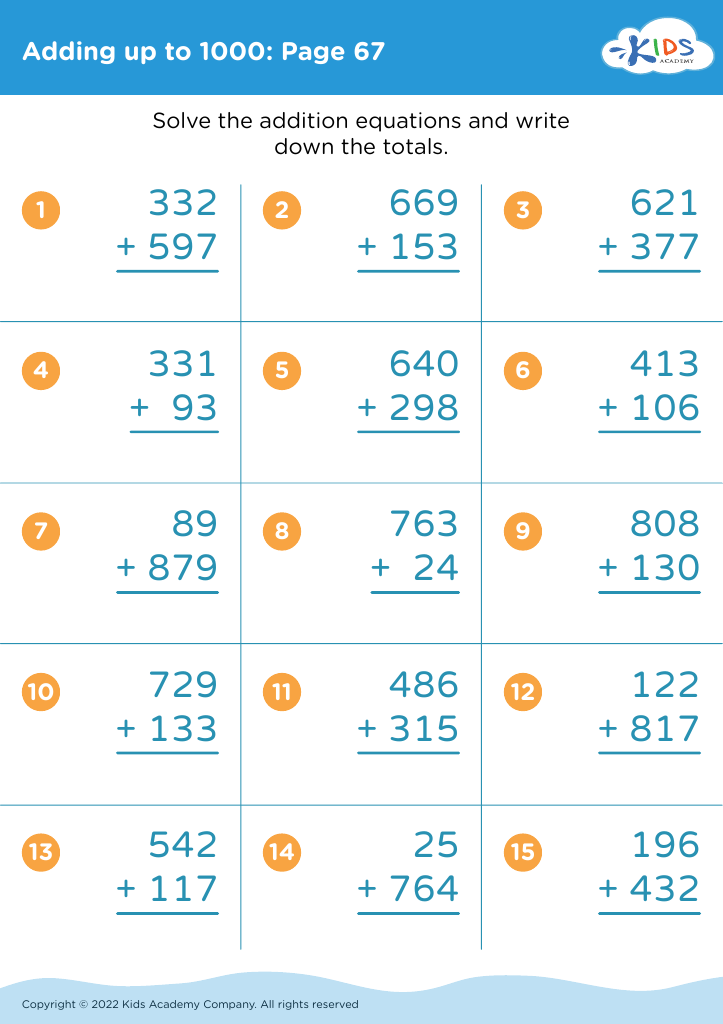








Understanding multiplication, addition, and subtraction for ages 8-9 is critical as it forms the foundation for all future mathematical learning. At this developmental stage, children's cognitive abilities are expanding, enabling them to grasp more abstract concepts. Mastery of these basic operations enhances their problem-solving skills and logic, which are essential not only in math but across all academic disciplines and daily life.
First and foremost, addition and subtraction are fundamental operations that children will use extensively throughout their education and life. They underpin more complex mathematical concepts like division, fractions, and algebra. A strong grasp of these basics contributes to a student’s confidence and competence in mathematics, preventing the development of math anxiety and enhancing overall academic performance.
Multiplication, often seen as repeated addition, introduces students to a more advanced arithmetic operation which is crucial for understanding ratios, percentages, and geometric concepts. It also develops their number sense and pattern recognition, enabling them to quickly perform calculations and solve more sophisticated problems later on.
Moreover, a solid understanding of these three operations can foster a positive attitude towards math. It helps children see mathematics as an exciting and manageable challenge rather than an insurmountable hurdle. This positive relationship with math can encourage lifelong learning and critical thinking skills, both of which are invaluable in today’s information-rich world.








