
Spatial awareness Geometry Worksheets for Ages 8-9
10 filtered results
Difficulty Level
Grade
Age
-
From - To
Subject
Activity
Standards
Discover our engaging Spatial Awareness Geometry Worksheets designed specifically for children aged 8-9! These printable resources help young learners understand spatial relationships and geometric concepts through fun, interactive activities. By completing these worksheets, students will enhance their ability to visualize shapes, understand symmetry, and navigate space effectively. Our materials promote critical thinking and problem-solving skills, laying a solid foundation for future math success. Ideal for both classroom use and home learning, these worksheets provide a diverse range of exercises, ensuring that every child can boost their spatial awareness in a playful yet educational manner. Start exploring geometry creatively today!
Favorites
With answer key
Interactive
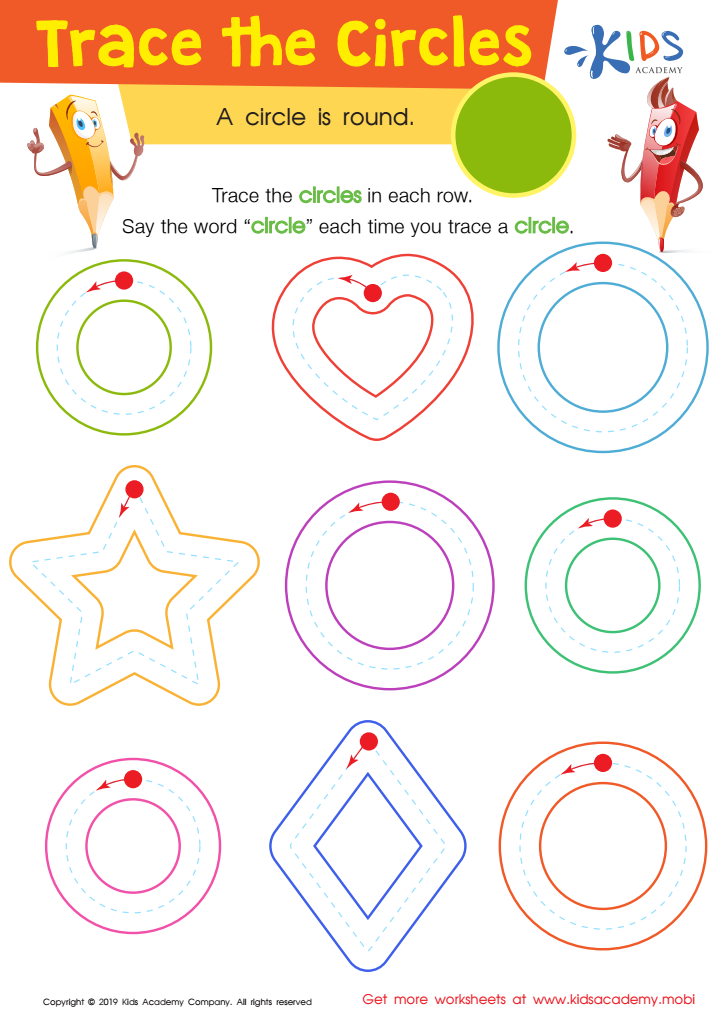
Trace The Circles Worksheet
Preschoolers and kindergarteners love learning shapes! This worksheet provides practice in naming and tracing circles. Students say "circle" each time they trace one. It's a fun way to help kids learn math vocabulary and develop fine motor skills. Enjoy this printable and get ready to master circles!
 Assign to My Students
Trace The Circles Worksheet
Worksheet











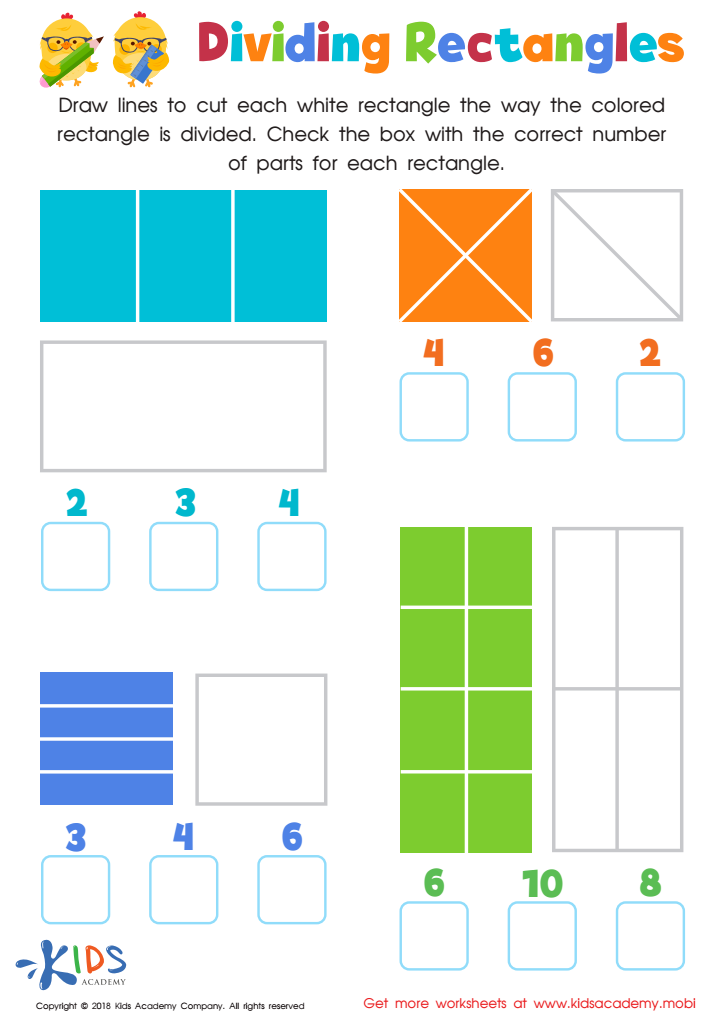
Dividing Rectangles Worksheet
Ask your child to draw lines to divide the white rectangles like the colored ones. Then, have them count the parts in each and choose the correct number. This worksheet will help them practice counting and dividing.
Dividing Rectangles Worksheet
Worksheet
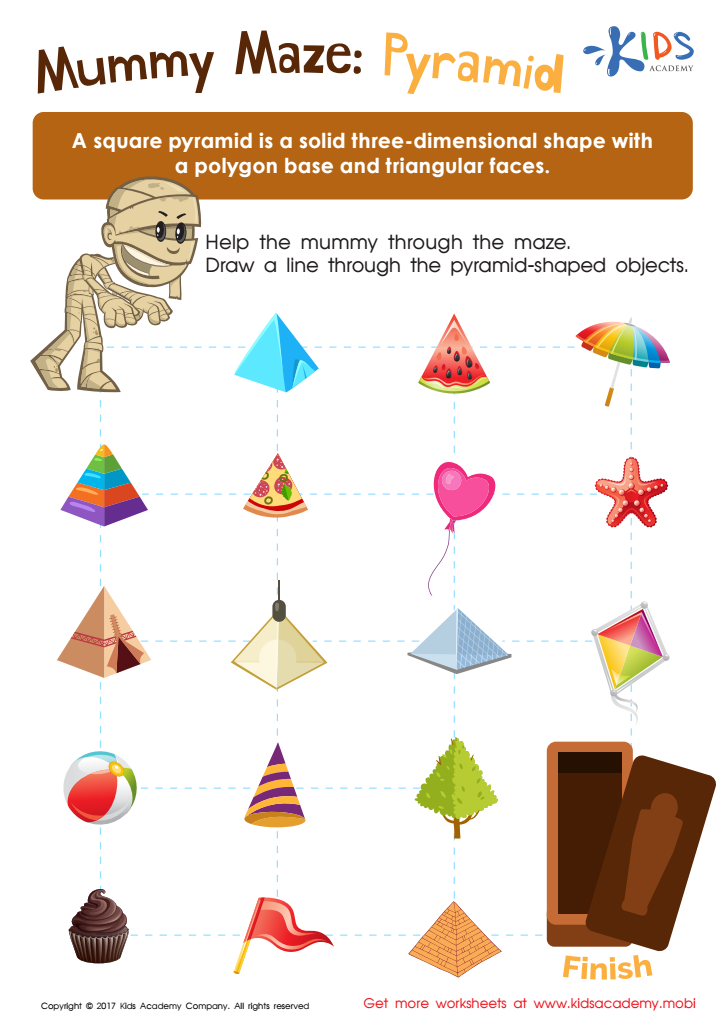
Mummy Maze: Pyramid Printable
Let's learn to spot 3D shapes, such as the iconic pyramid! This fun pyramid geometry worksheet PDF provides interesting illustrations and a maze to help your child identify pyramids in the pictures.
Mummy Maze: Pyramid Printable
Worksheet
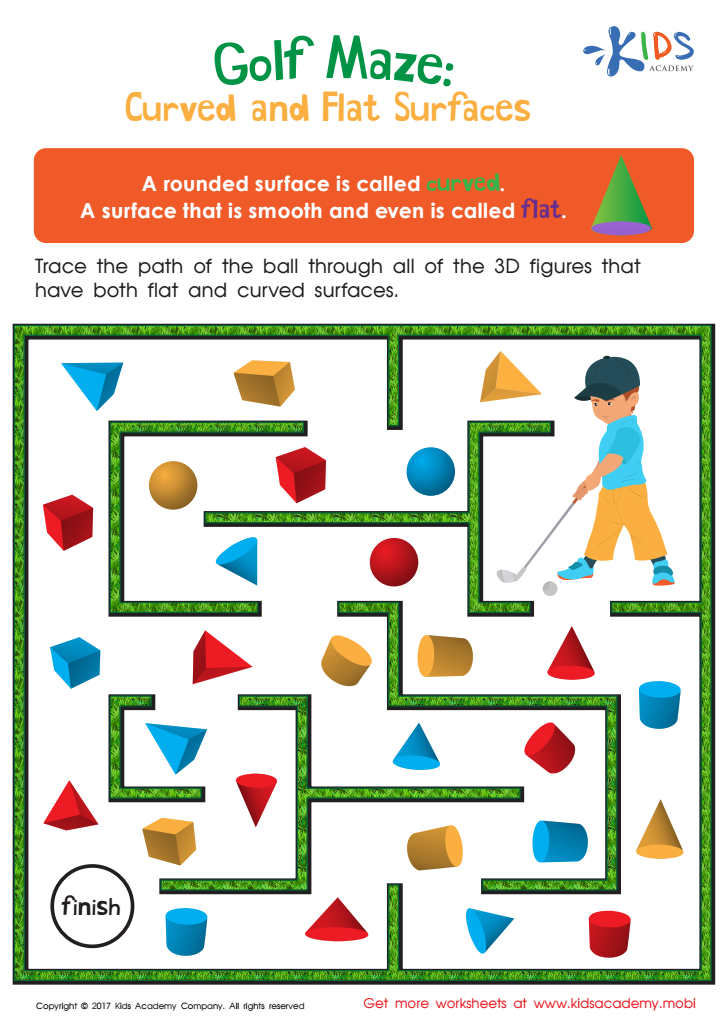
Golf Maze: Curved and Flat Surfaces Worksheet
Give your child a fun and educational challenge with this geometry maze! Your child will navigate 3D shapes to find objects with flat and curved surfaces, while learning important math concepts.
Golf Maze: Curved and Flat Surfaces Worksheet
Worksheet
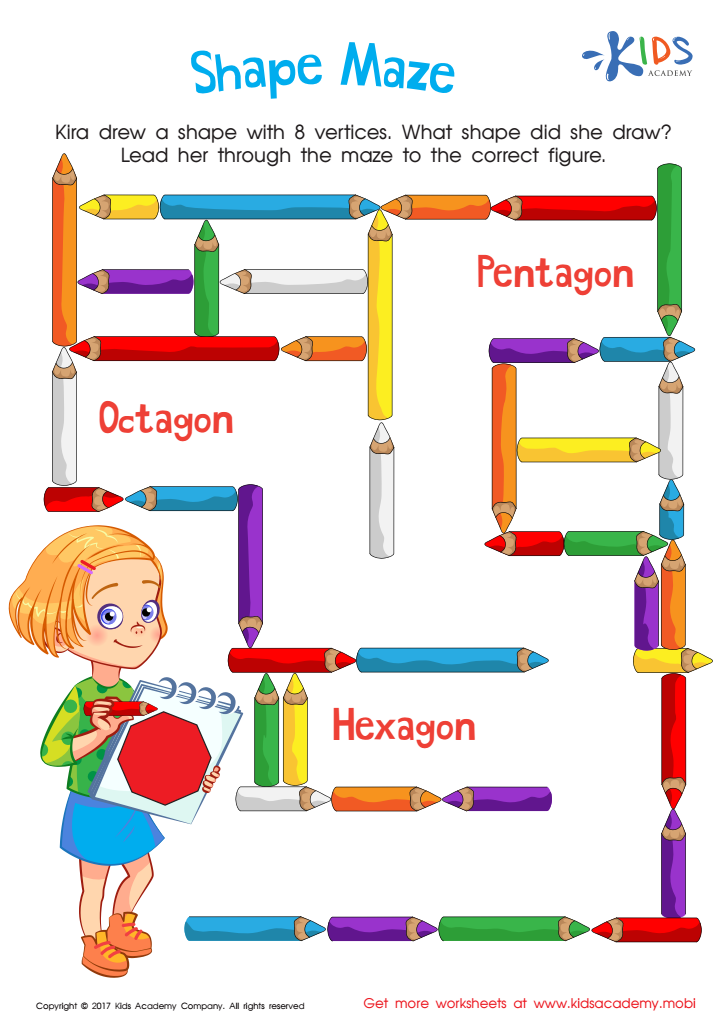
Shape Maze Worksheet
Test your child's geometry knowledge with this fun printable maze! They'll need to identify shapes with 8 vertices to find their way through the maze and get the correct answer.
Shape Maze Worksheet
Worksheet
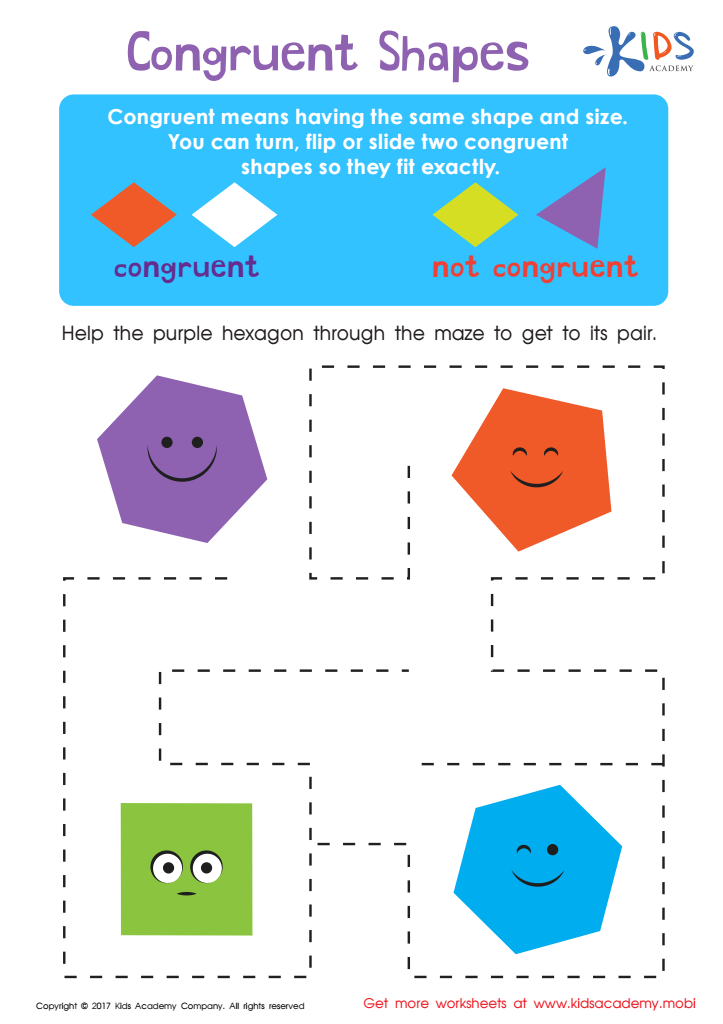
Congruent Shapes Worksheet
Help your child find the twin of the purple hexagon! This congruent shapes worksheet is great for increasing vocabulary while challenging mental rotation skills.
Congruent Shapes Worksheet
Worksheet
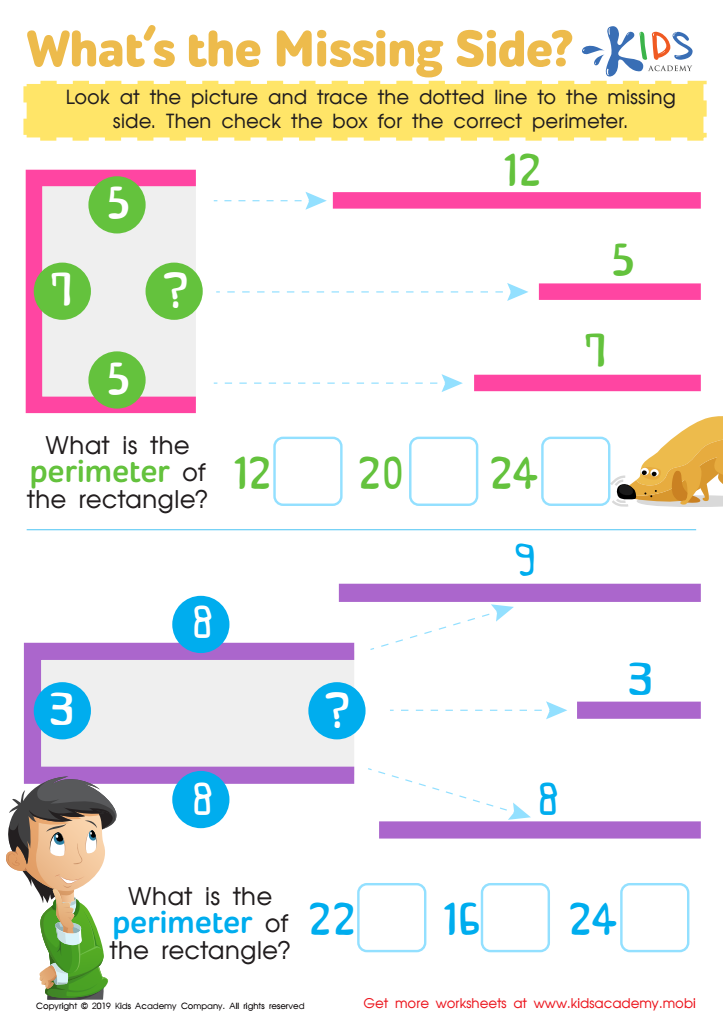
What's the Missing Side Worksheet
Assist your pupils in improving math skills with fun exercises like the tracing sheet. Show them the picture and guide them to trace the missing side. Ask them to check the box of the right perimeter afterwards. Doing this regularly can help them to enjoy and appreciate the subject more.
What's the Missing Side Worksheet
Worksheet
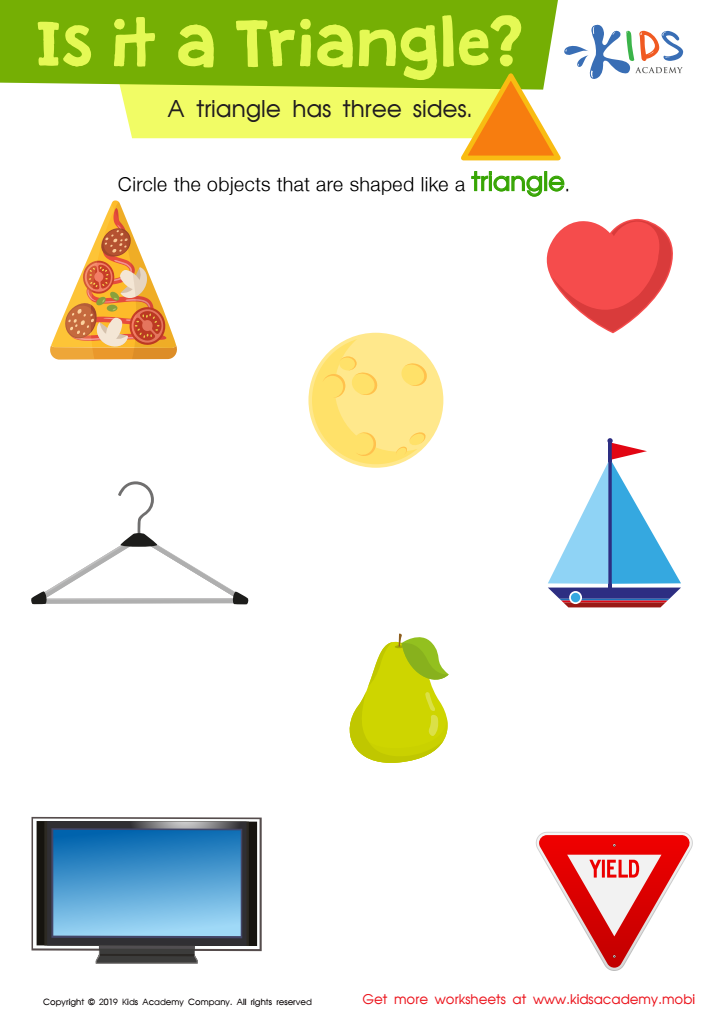
Is It a Triangle? Worksheet
Young kids need to learn to identify basic shapes for math. Show them what a triangle looks like with this fun worksheet. They can look around their environment for everyday objects shaped like a triangle and circle them on the sheet. Download now and start learning what a triangle is!
Is It a Triangle? Worksheet
Worksheet
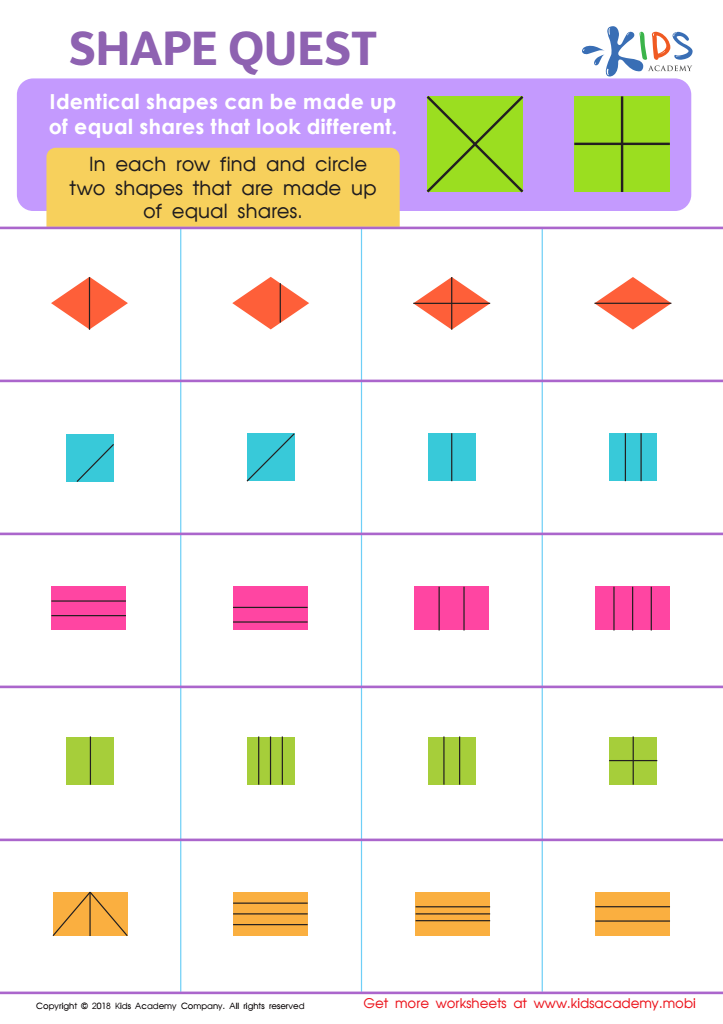
Shape Quest Worksheet
Help your child identify shapes by having them find shapes made up of equal parts. This colorful worksheet challenges them to look through each row and circle two matching shapes. It's a great way to teach them the unique features of each shape, while also helping them understand that identical shapes can look different.
Shape Quest Worksheet
Worksheet
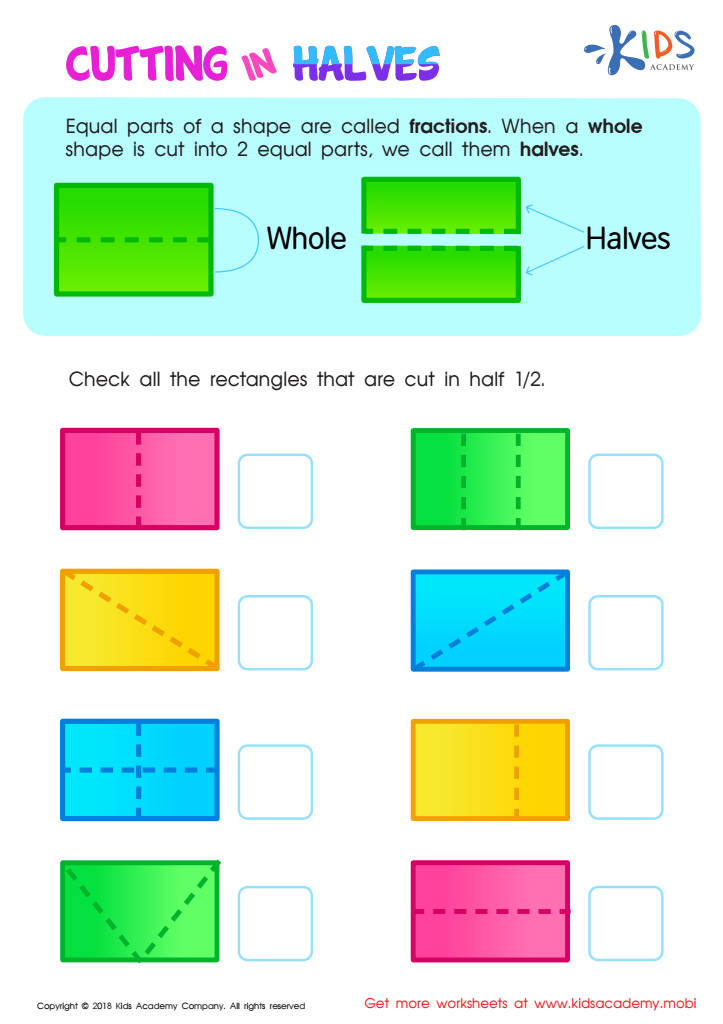
Cutting in Halves Worksheet
Show your child how to divide a whole shape, like a square, into smaller pieces to become fractions. Point out when a shape is divided into two equal parts, it's called a half. Look at the worksheet together, and identify all rectangles that are cut in half (½).
Cutting in Halves Worksheet
Worksheet
Join Kids Academy for Free
Who is primarily going to use this learning content?








Spatial awareness and geometry are crucial skills for children ages 8-9, as they form the foundation for various academic and life competencies. At this age, children begin to deepen their understanding of shapes, spatial relationships, and measurement. Developing spatial awareness enhances critical thinking and problem-solving abilities, allowing children to visualize and manipulate objects mentally. This skill not only aids in geometry but also in subjects like science, art, and even physical activities where spatial reasoning is key.
Moreover, strong spatial awareness contributes to improved mathematical skills. Young learners who grasp geometric concepts are better equipped to understand angles, symmetry, and distance, which are vital in more advanced math learning. These skills are increasingly important in today’s technology-driven world, particularly in fields like engineering, architecture, and design.
Parents and teachers play a vital role in nurturing these skills through engaging activities like puzzles, block building, and tabletop games that require spatial thinking. By emphasizing spatial awareness in everyday learning, they can inspire confidence, creativity, and curiosity within children, equipping them with the tools needed for successful navigation through both academic challenges and everyday scenarios. This foundation benefits children far beyond their early school years.








