Comprehension skills Math Worksheets for Ages 8-9
5 filtered results
-
From - To
Enhance your child's math learning experience with our engaging comprehension skills worksheets designed for ages 8-9. These printable resources focus on improving critical thinking and problem-solving abilities, enabling students to interpret and analyze mathematical concepts effectively. Each worksheet combines fun activities, relatable scenarios, and interactive exercises that make learning enjoyable and effective. Parents and educators will appreciate how these materials align with educational standards, fostering a deeper understanding of key math topics while promoting logical reasoning. Equip your young learners with the comprehension skills they need to excel in math and build a strong foundation for future success!
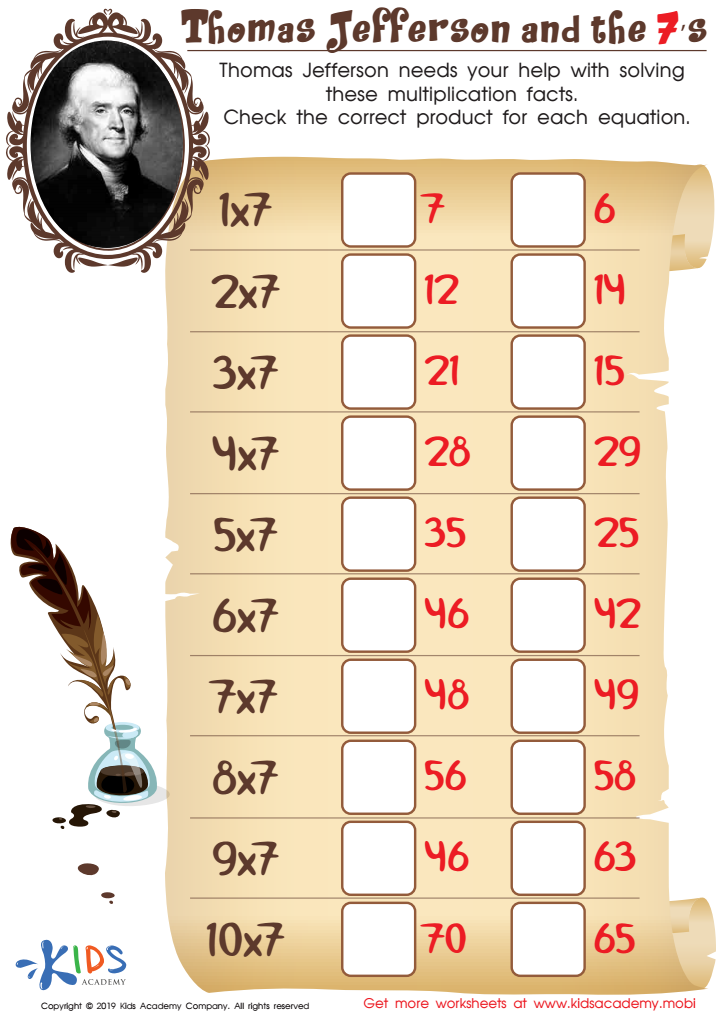
Thomas Jefferson and the 7’s Worksheet
 Assign to My Students
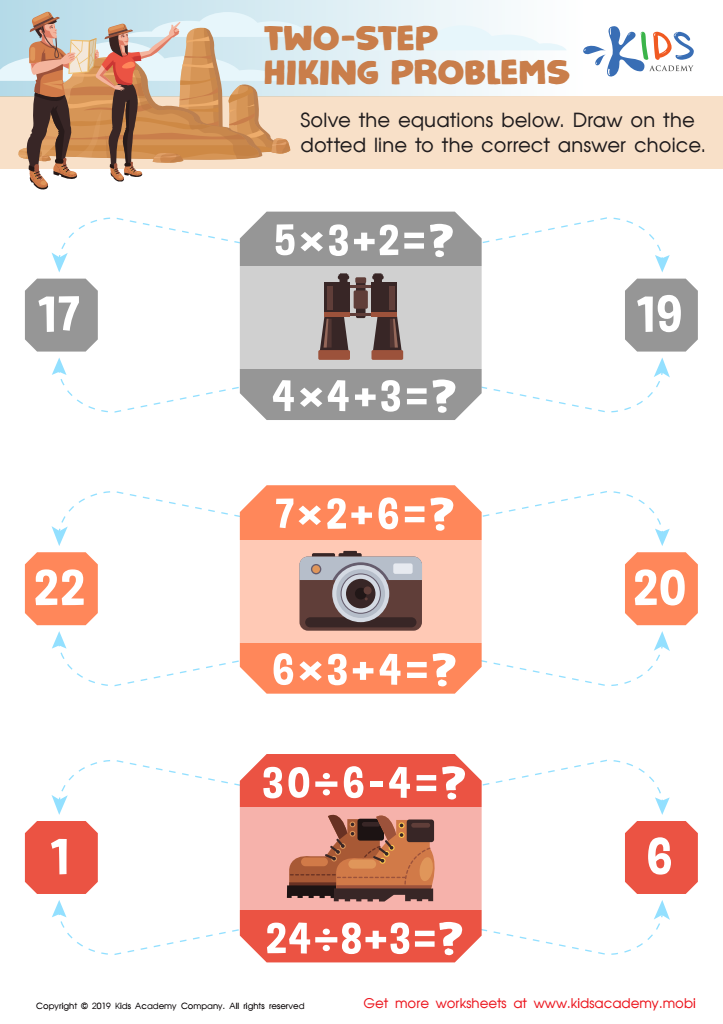
Two-Step Hiking Problems Worksheet
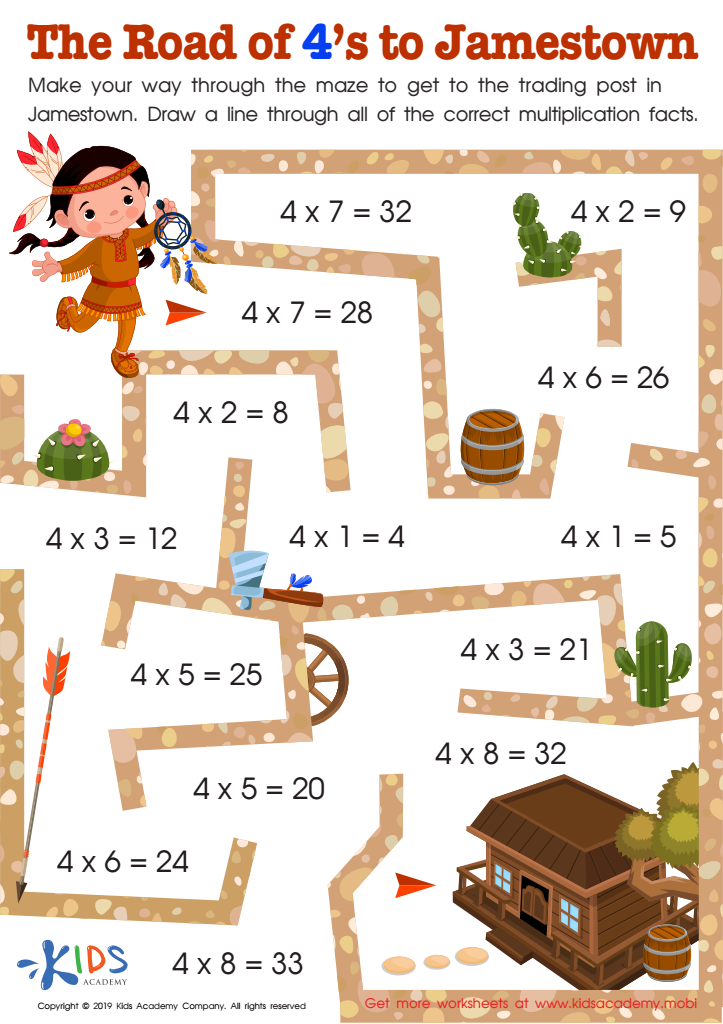
The Road of 4’s to Jamestown Worksheet
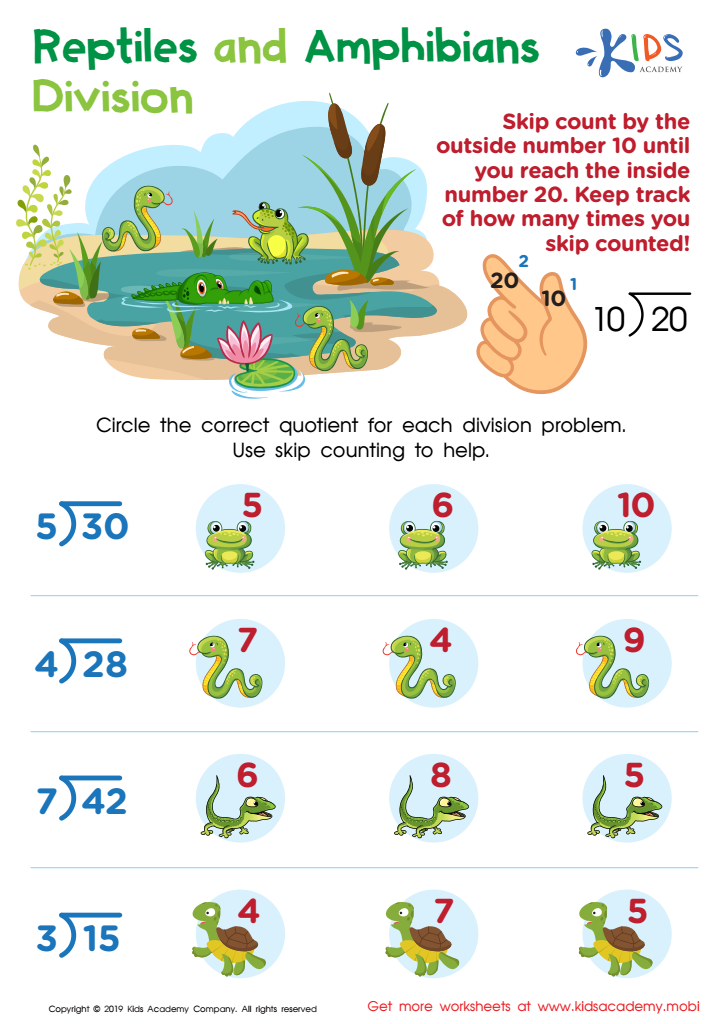
Reptile and Amphibians Division Worksheet








Comprehension skills in math are essential for children aged 8-9 because they serve as the foundation for future learning and critical thinking. At this developmental stage, children are transitioning from basic arithmetic to more complex problem-solving and reasoning tasks. Strong comprehension skills enable them to understand not only how to perform mathematical operations but also why those operations are necessary, facilitating a deeper understanding of mathematical concepts.
When parents and teachers actively support and nurture these skills, they help children develop the ability to interpret word problems, visualize situations mathematically, and apply logical reasoning. This is particularly important as children begin to encounter real-world applications of math, where comprehension bridges the gap between abstract concepts and practical use.
Furthermore, fostering comprehension skills promotes confidence in students and encourages a positive attitude toward math, which can lead to greater engagement and persistence in learning. On a broader scale, strong math comprehension is vital for academic success across subjects, as many areas rely on quantitative understanding and data interpretation. Ultimately, investing in these skills during this crucial age not only enhances mathematical ability but also cultivates critical thinking and problem-solving capabilities that benefit children's overall cognitive development.








