Understanding measurements Math Worksheets for Ages 8-9
17 filtered results
-
From - To
Discover our engaging "Understanding Measurements" math worksheets designed specifically for children aged 8-9. These printable resources introduce young learners to the concept of measurement through fun and interactive activities. Students will practice using various units of measurement, including length, weight, and volume, while enhancing their problem-solving skills. Our worksheets promote critical thinking and enable kids to develop a solid foundation in understanding measurements, making math enjoyable and accessible. Ideal for classroom use or at-home learning, these worksheets cater to different learning styles and paces, ensuring every child can grasp essential measurement concepts effectively. Download now and inspire your child’s math journey!
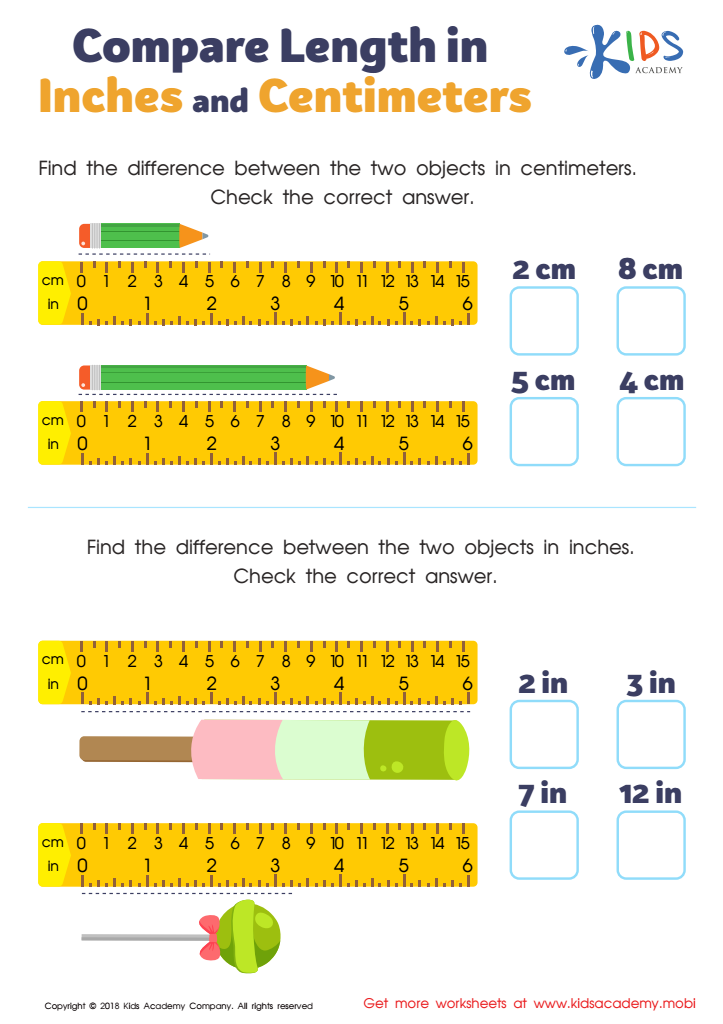
Compare Length in Inches and Centimeters Worksheet
 Assign to My Students
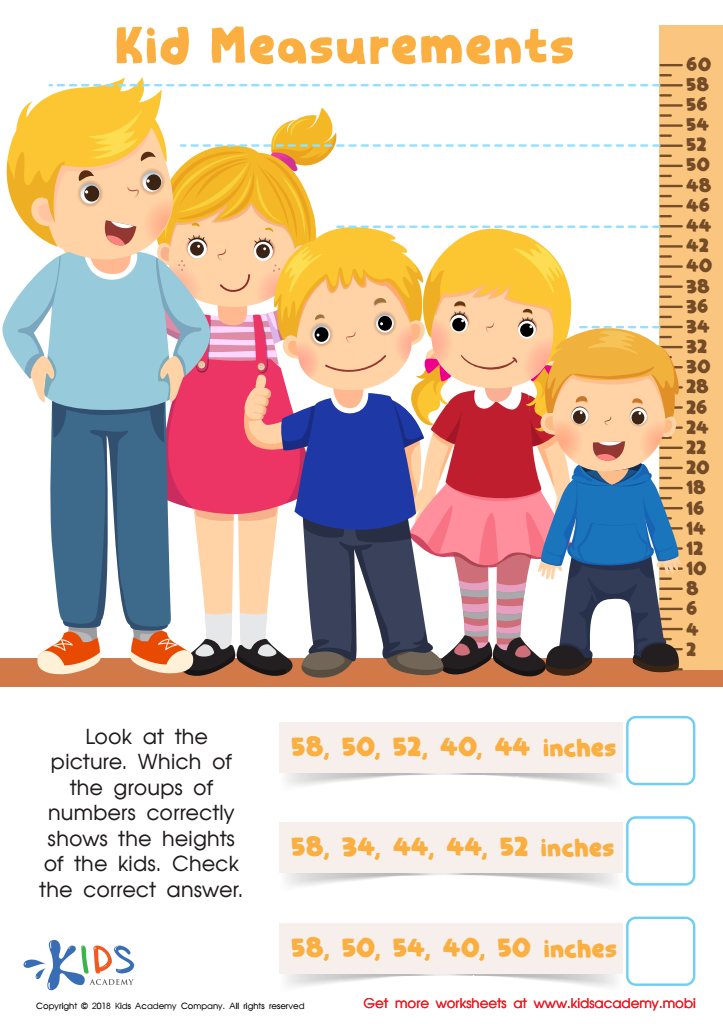
Kids Measurements Worksheet
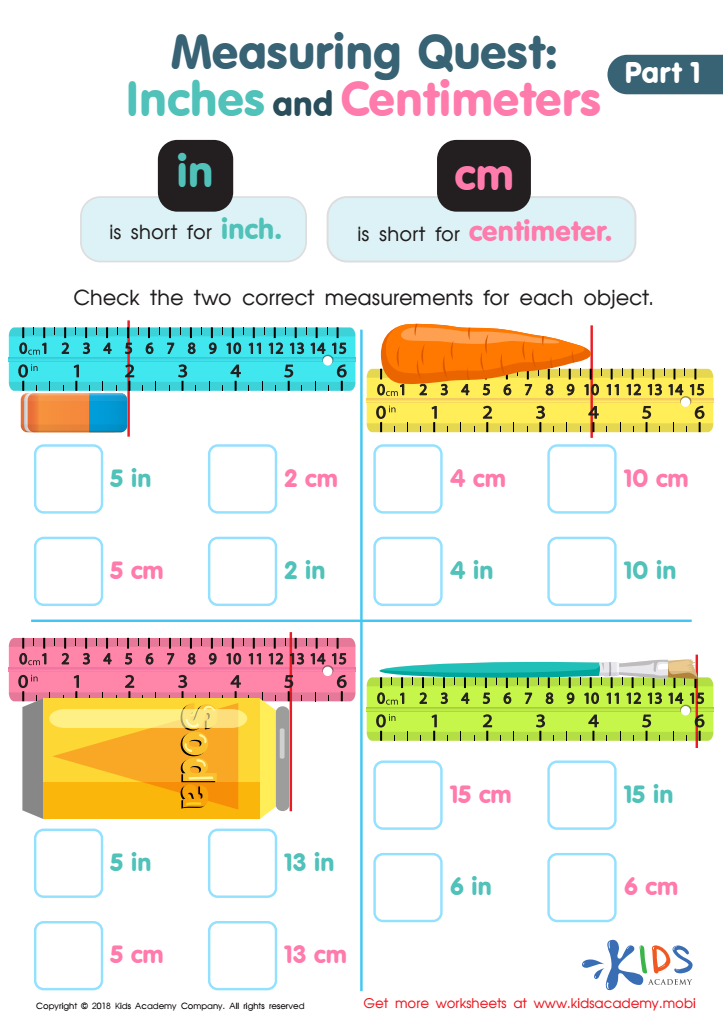
Measuring Quest: Inches and Centimeters Worksheet
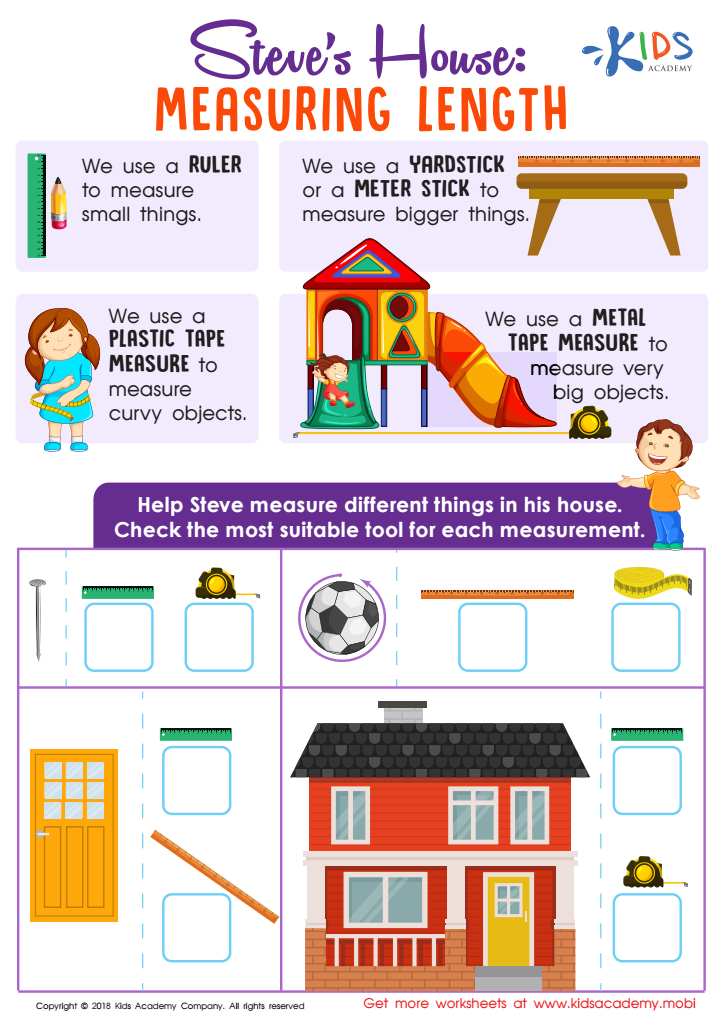
Steve's House: Measuring Length Worksheet
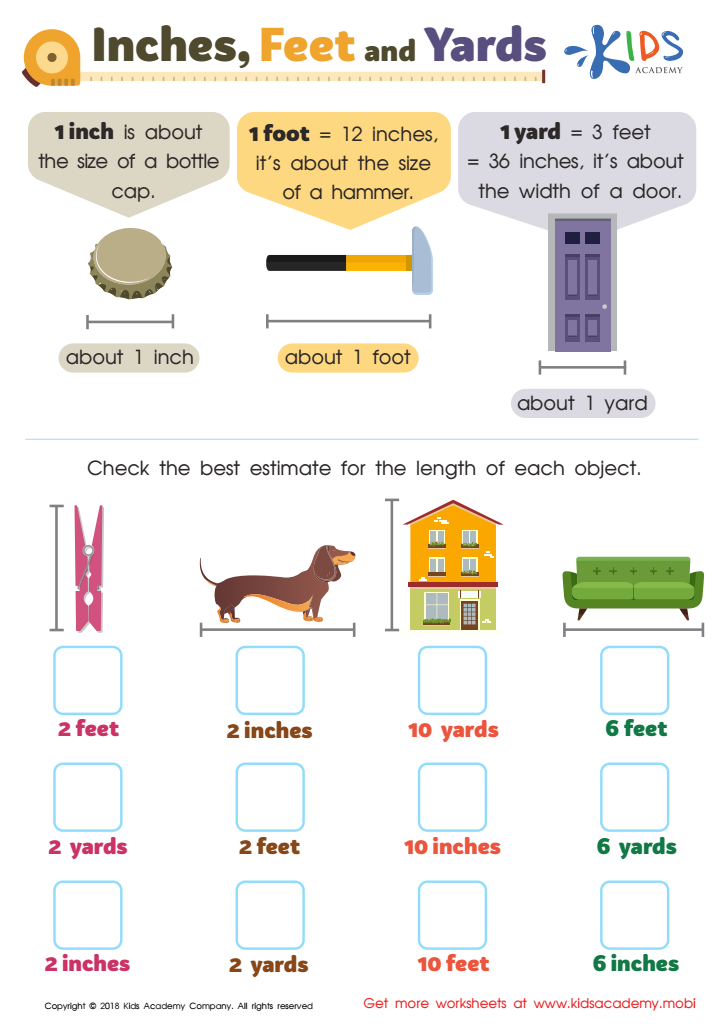
Inches, Feet and Yards Worksheet
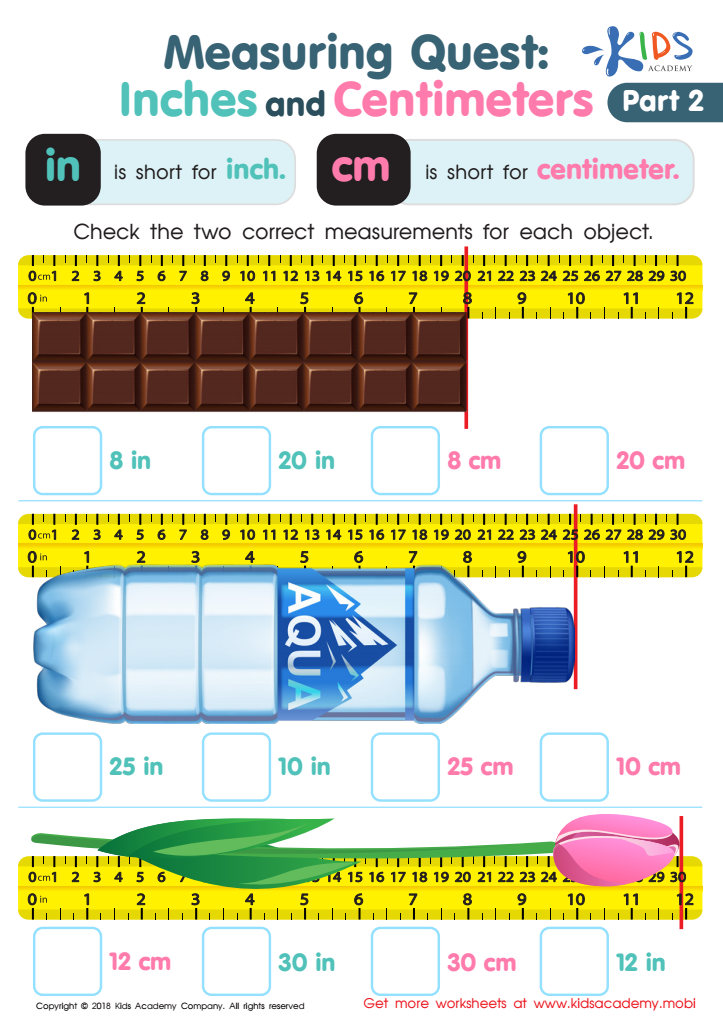
Measuring Quest: Inches and Centimeters - Part 2 Worksheet
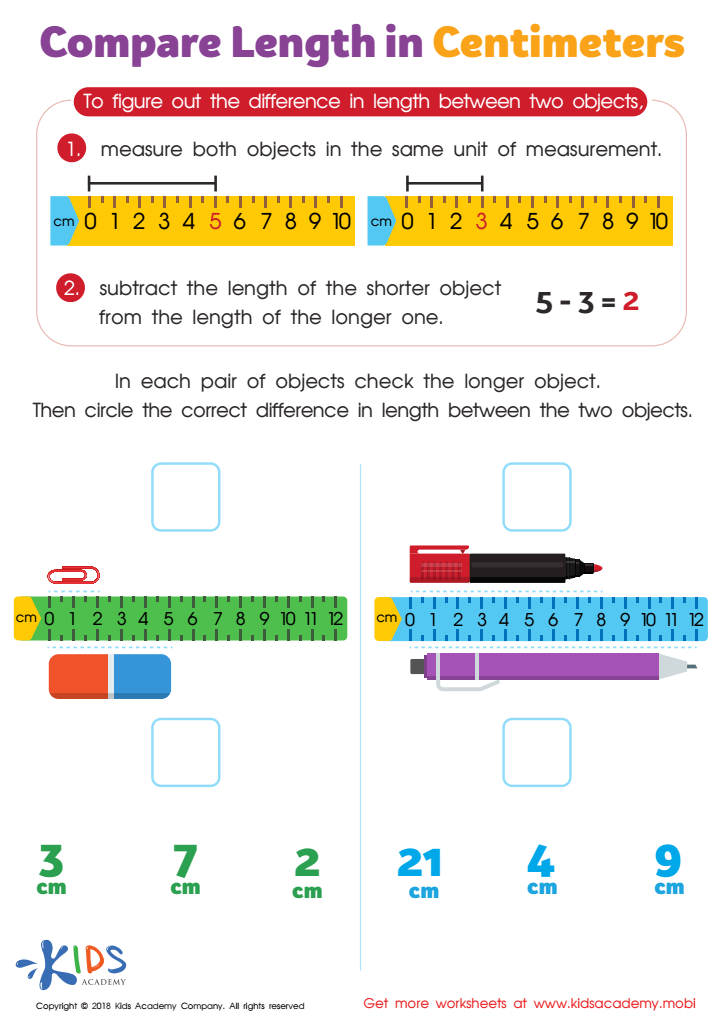
Compare Length in Centimeters Worksheet
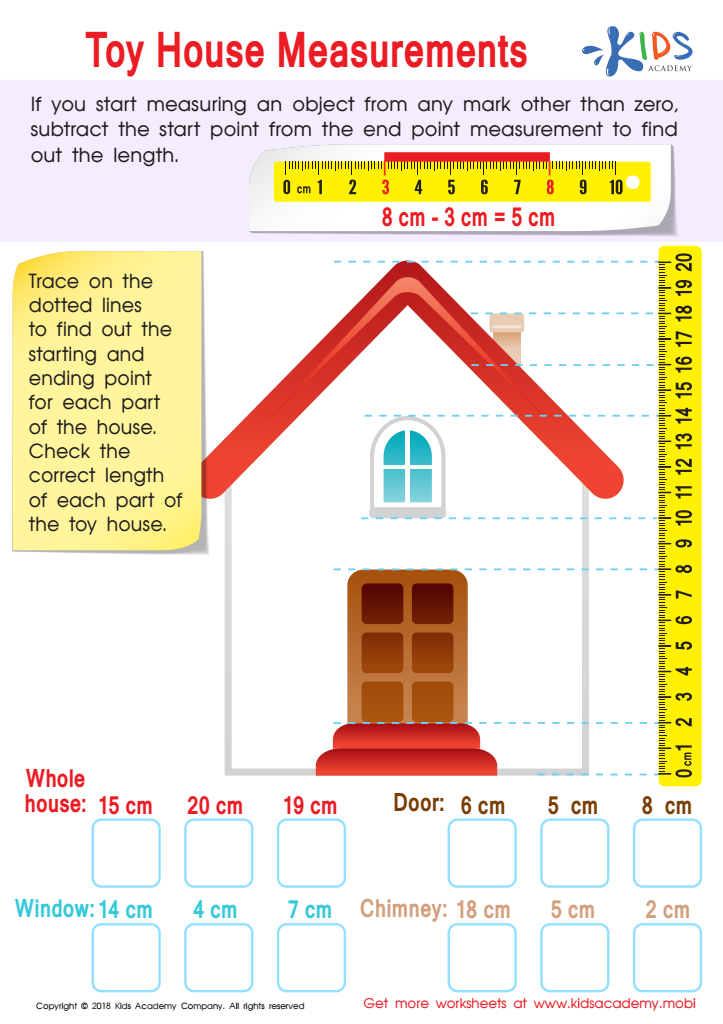
Toy House Measurements Worksheet
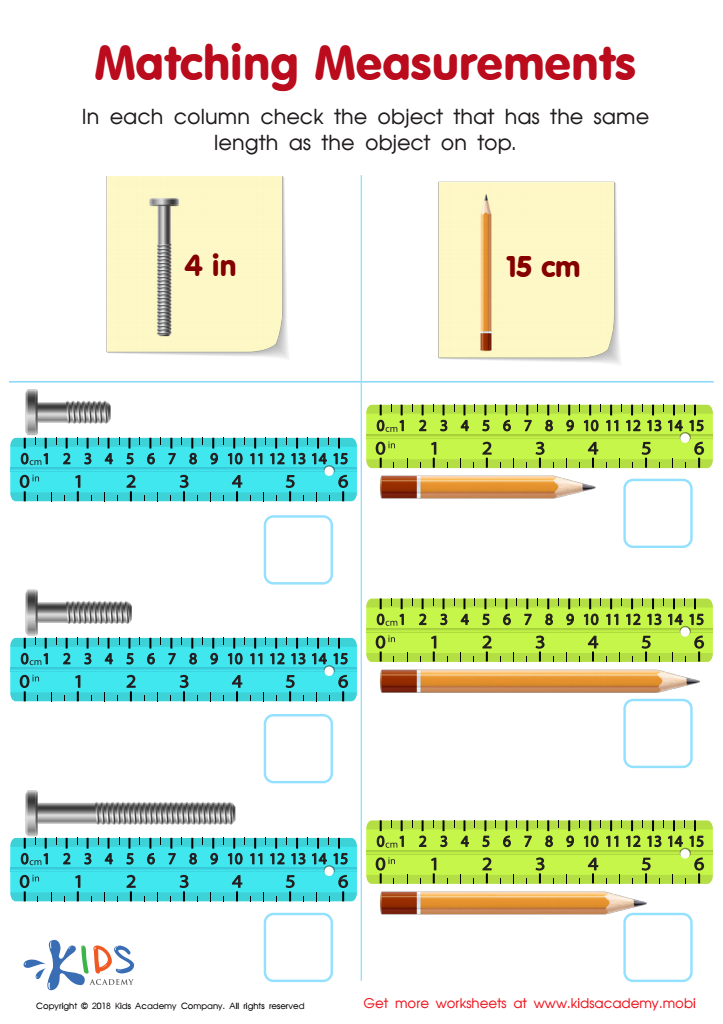
Matching Measurements Worksheet
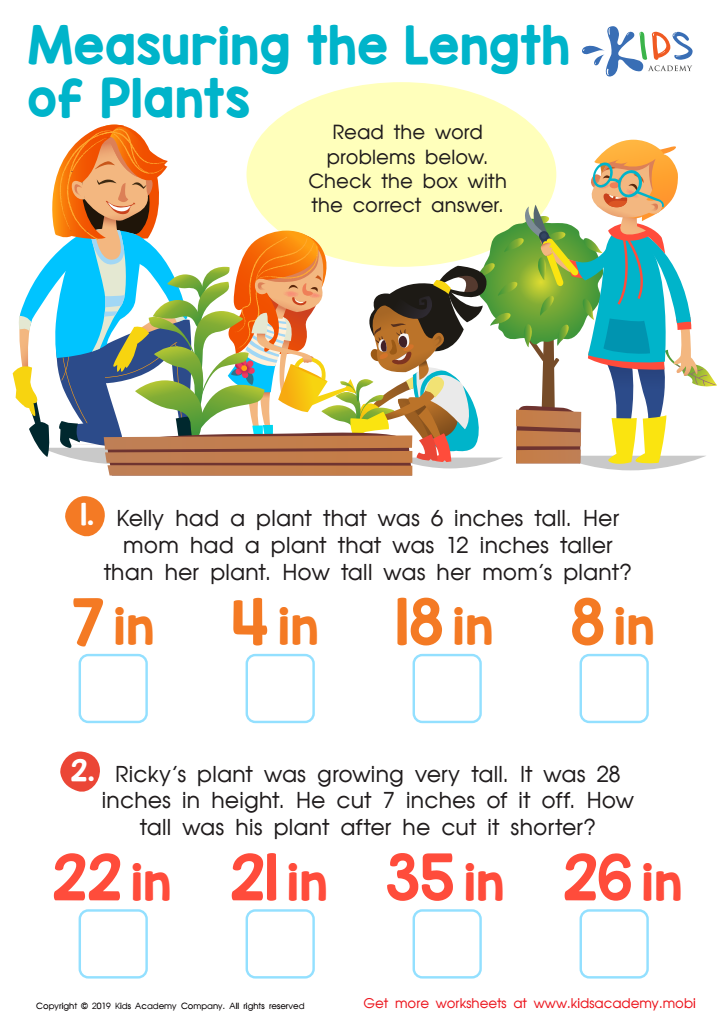
Measuring the Length of Plants Worksheet
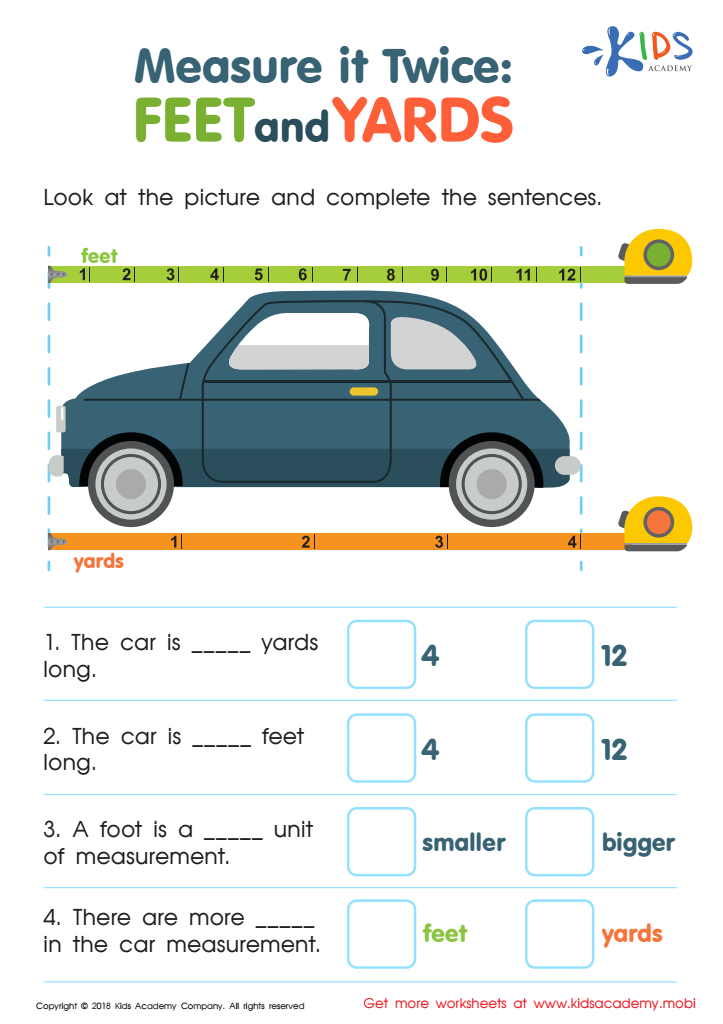
Measure It Twice: Feet and Yards Worksheet
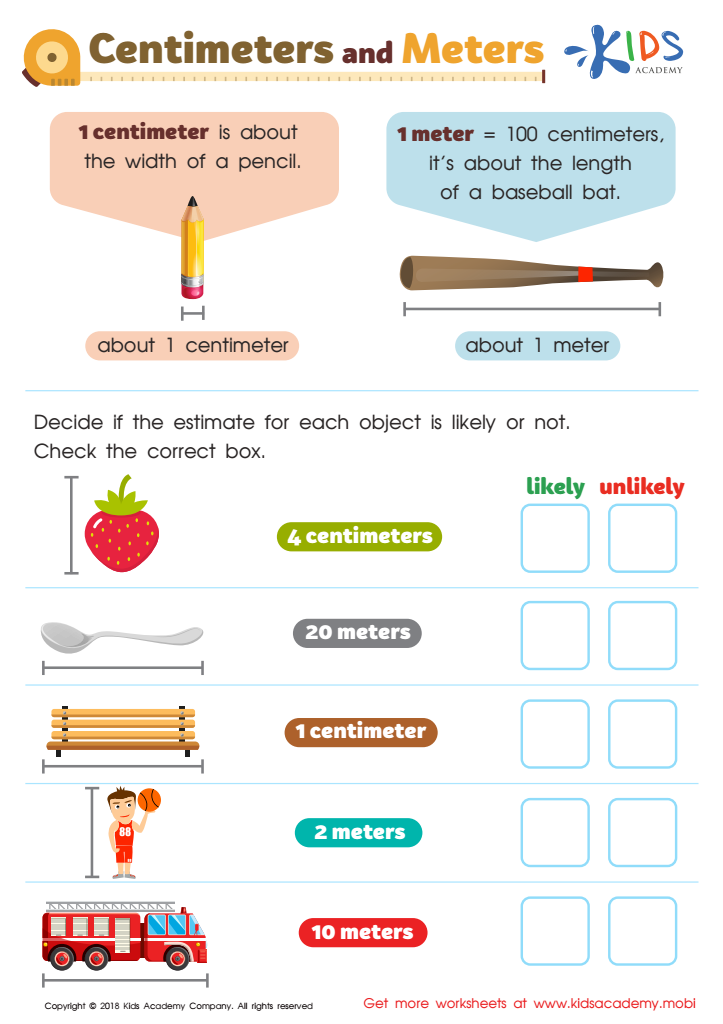
Centimeters and Meters Worksheet
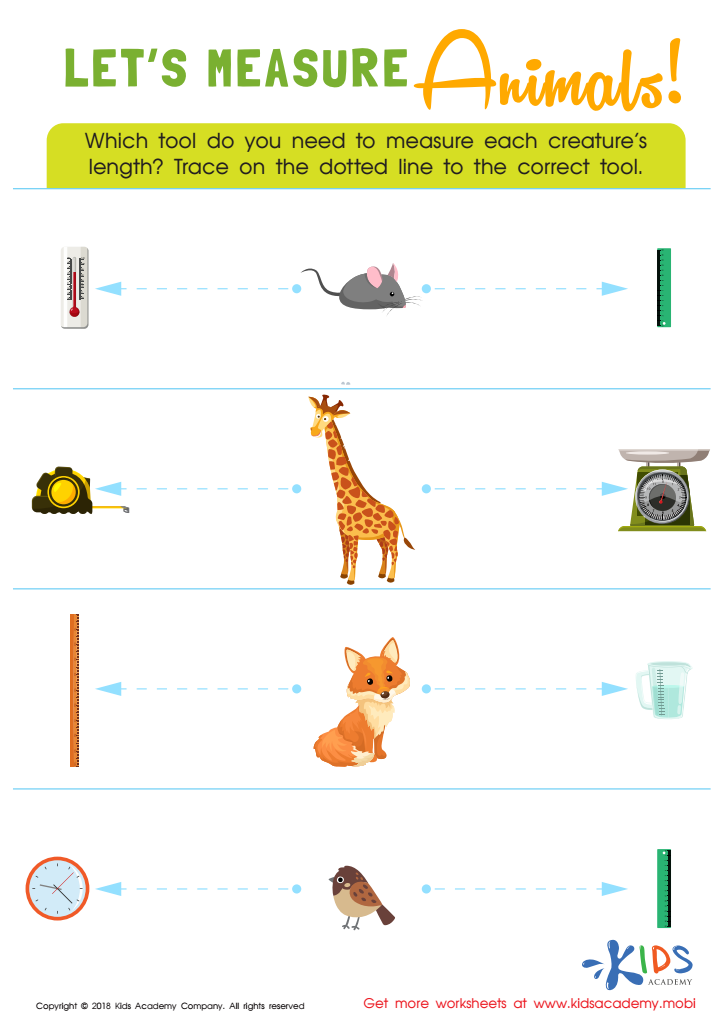
Let's Measure Animals! Worksheet
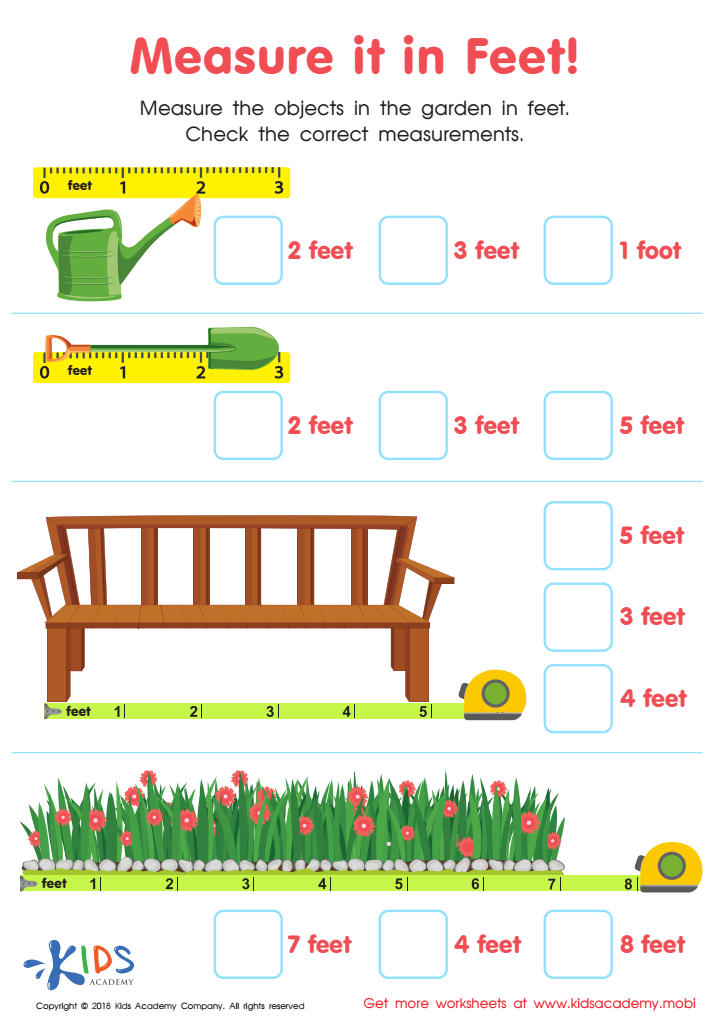
Measure it in Feet Worksheet
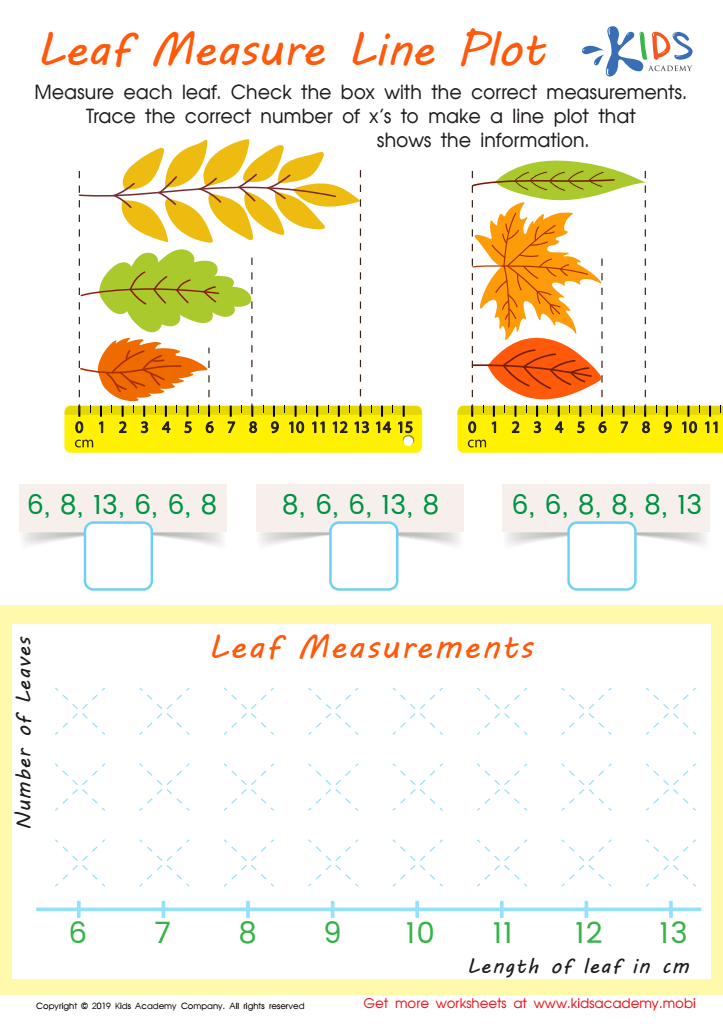
Leaf Measure Line Plot Worksheet







Understanding measurements in math for ages 8-9 is crucial for several reasons. Firstly, this foundational skill enhances children's ability to make sense of the world around them. From measuring ingredients in cooking to determining the height of a plant, measurement skills are essential for everyday problem-solving.
Secondly, mastering measurement concepts helps build critical thinking and analytical skills. By working with units, estimating distances, and comparing sizes, children learn to approach problems methodically, fostering their overall cognitive development.
In addition, measurement is intrinsically linked to various disciplines, such as science, technology, engineering, and math (STEM), which are increasingly important in today’s job market. Early proficiency in these areas can ignite a lifelong interest in learning and open doors to future academic and occupational prospects.
Furthermore, understanding measurements lays the groundwork for more complex mathematical concepts that students will encounter later on, such as geometry and data analysis.
For parents and teachers, prioritizing measurement skills is an investment in a child's academic readiness and success. Engaging children in fun, relatable measurement activities enhances their learning experience and reinforces the practical applications of math in daily life. Ultimately, this contributes to well-rounded, confident learners.








