Filters

7 filtered results

Clear all filters
Favorites
With answer key
Interactive

7 filtered results

Difficulty Level

Grade


Unlock your child's potential with our Problem-Solving Skills Measurement Worksheets for ages 8-9! Designed to make learning engaging and enjoyable, these worksheets focus on enhancing critical thinking and analytical skills. Tailored specifically for young learners, they incorporate real-world scenarios that encourage children to apply mathematical concepts in practical situations. From word problems to puzzles, each worksheet fosters cognitive development while reinforcing measurement skills. Perfect for at-home learning or classroom use, these resources help kids build confidence and mastery in problem-solving. Discover a fun way to nurture essential skills that will benefit your child's academic journey!

Check out this FREE Trial Lesson on Measurement for age 8-9!

Estimate Length

Favorites
With answer key
Interactive
  • 8-9
  • Problem-Solving Skills
  • Measurement
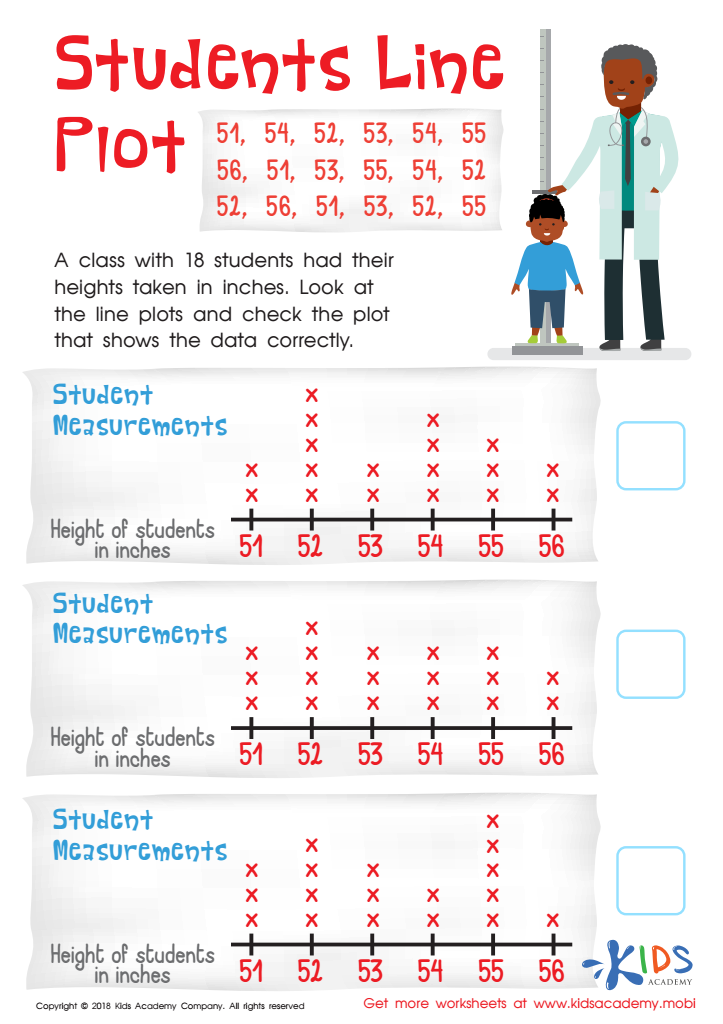
Students Line Plot Worksheet

Students Line Plot Worksheet

Help your students learn to draw a line plot correctly by giving real examples. In this exercise, they must check the data of a class of 18 students' heights (in inches). Have them compare two line plots and figure out which one is correct.
Students Line Plot Worksheet
Worksheet
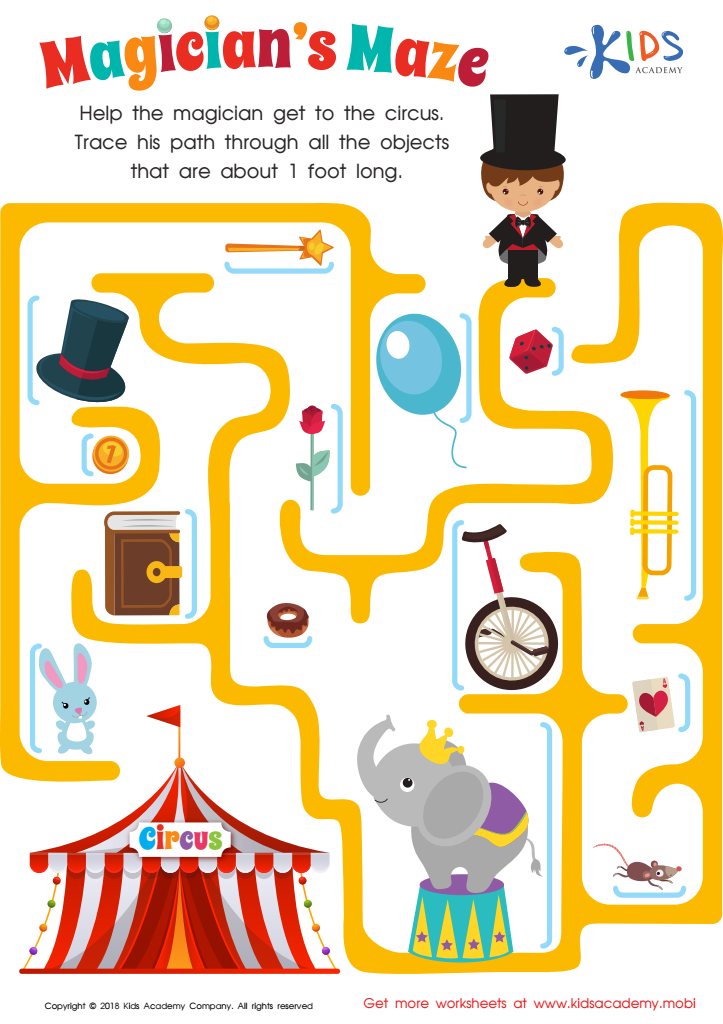
Estimating Length: Magician's Maze Worksheet

Estimating Length: Magician's Maze Worksheet

Does your kid want to practice magic and have a blast? This exercise will be a great way to help them do so! In the worksheet, they'll need to guide the magician to the circus. How? By tracing his path through the 1-foot long obstacles in the maze. Once they help him get through the objects, the circus will be just a few steps away!
Estimating Length: Magician's Maze Worksheet
Worksheet
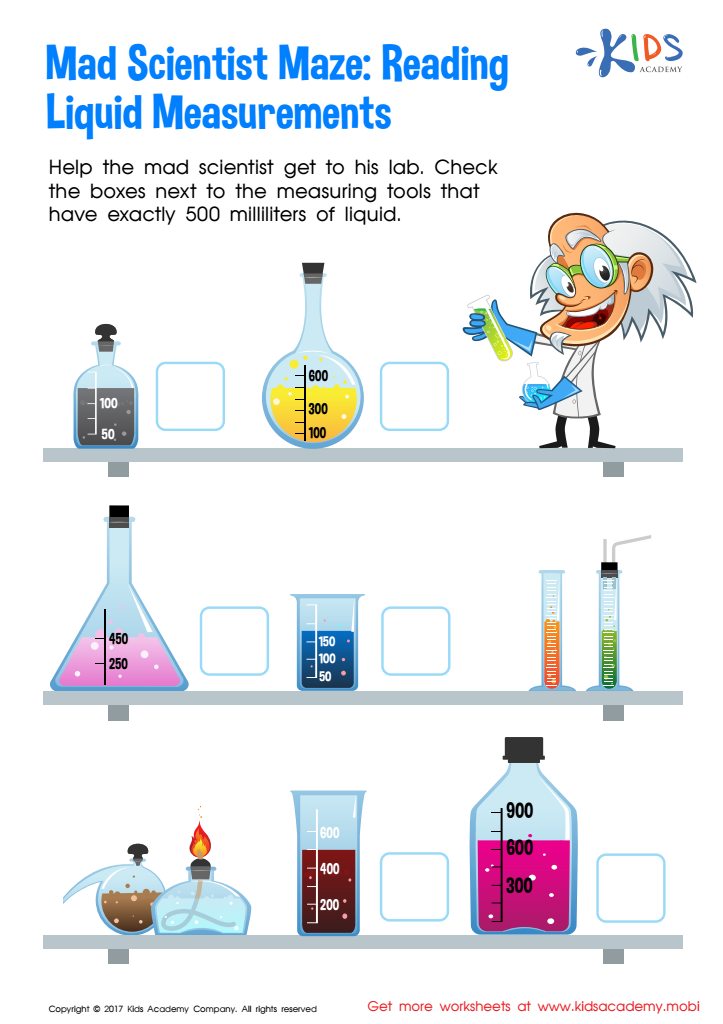
Reading Liquid Measurement Worksheet

Reading Liquid Measurement Worksheet

Help a mad scientist return to his lab by having your child measure the liquid in each flask. Their results will determine his fate! Help a mad scientist return to his lab! Kids can practice reading liquid measurements to the millimeter on this worksheet. Determine the amount of liquid in each flask and let your child's results decide the scientist's fate!
Reading Liquid Measurement Worksheet
Worksheet
Measure It Twice: Feet and Yards Worksheet

Measure It Twice: Feet and Yards Worksheet

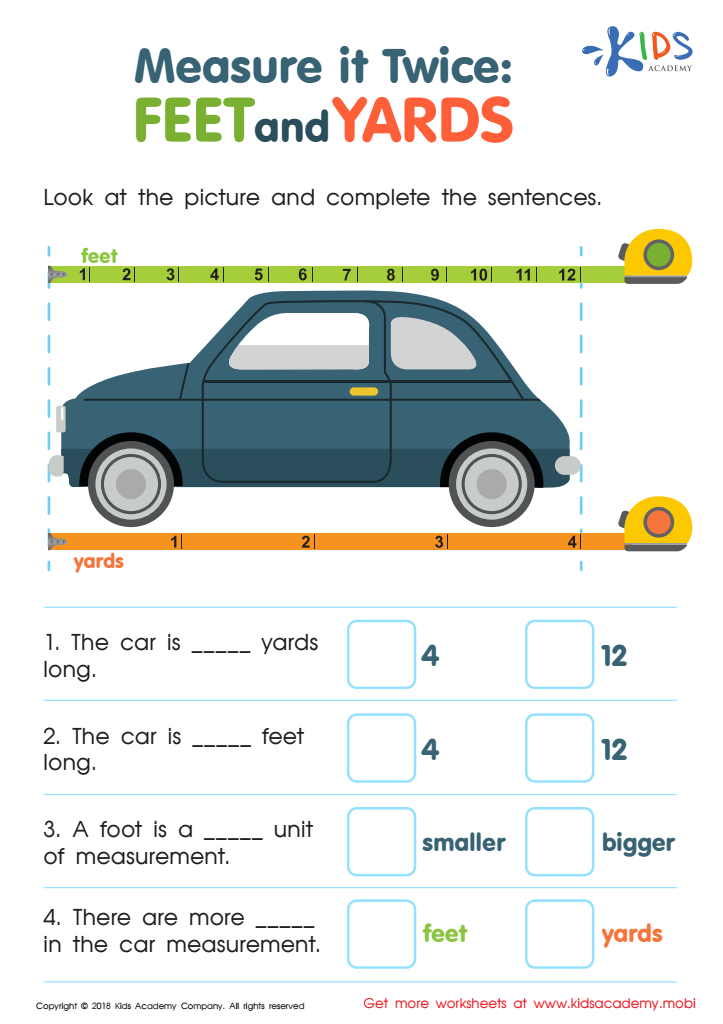
A car is pictured with a metric ruler in feet at the top and a yard ruler at the bottom. Get your child to look at the picture and complete sentences about it; for example, how many yards long is the car? Is a foot a bigger or smaller unit of measurement? It'll teach them that 1 yard is equal to 3 feet.
Measure It Twice: Feet and Yards Worksheet
Worksheet
Line plot worksheet for 2nd grade

Line Plot Worksheet

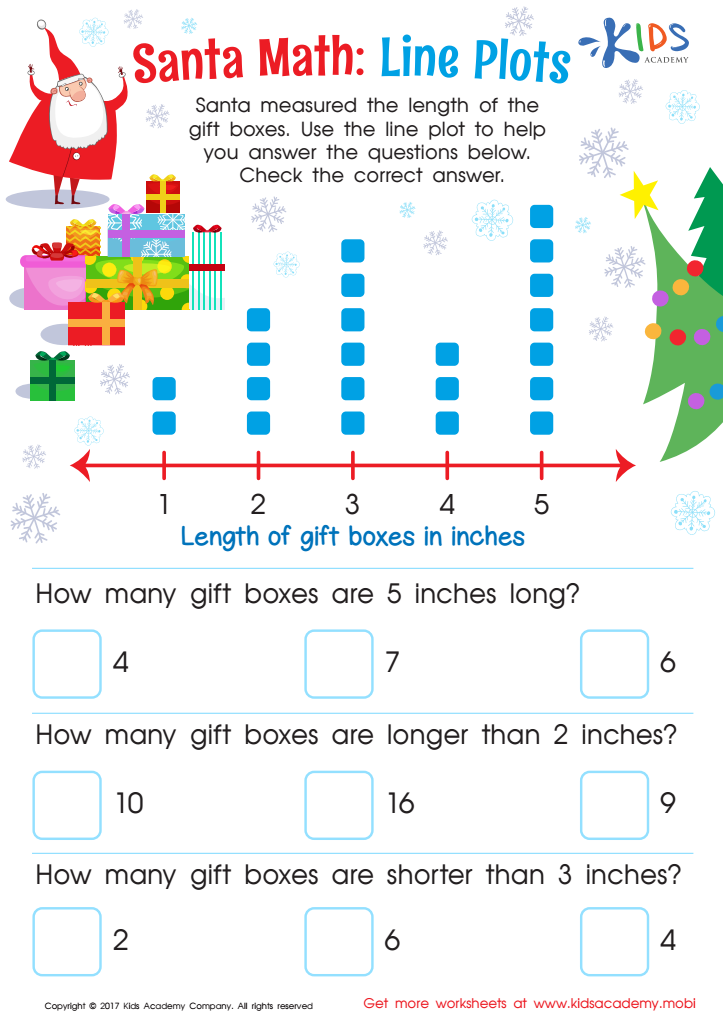
Help your child measure presents with Santa using this 2nd grade line plot worksheet! It's a fun way to boost math skills and analyze data. Plus, it's sure to delight your child!
Line Plot Worksheet
Worksheet
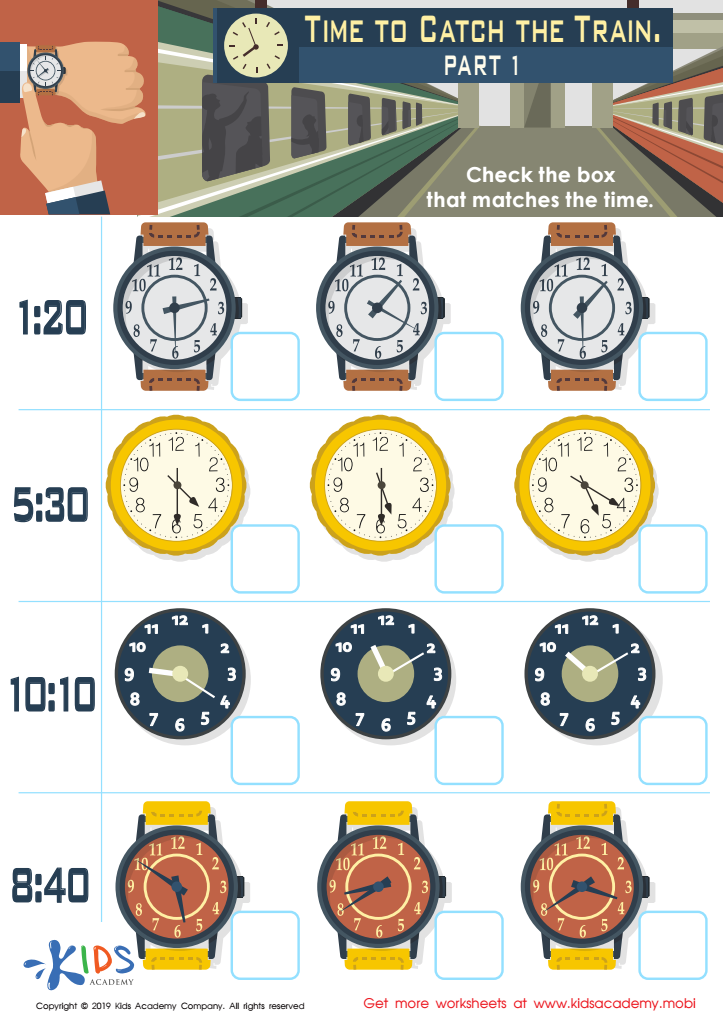
Time to Catch the Train Part 1 Worksheet

Time to Catch the Train Part 1 Worksheet

Time is essential for us; it lets us know when to do various things. Your kids likely wake up at a specified hour and prepare for the school bus. Demonstrate to them that time-telling is vital, and show them there are multiple ways to show time. Point to the time written on the left and the watches in the picture. Assist your children to check the box that corresponds to the time.
Time to Catch the Train Part 1 Worksheet
Worksheet
Time to Catch the Train Part 2 Worksheet


Time to Catch the Train Part 2 Worksheet

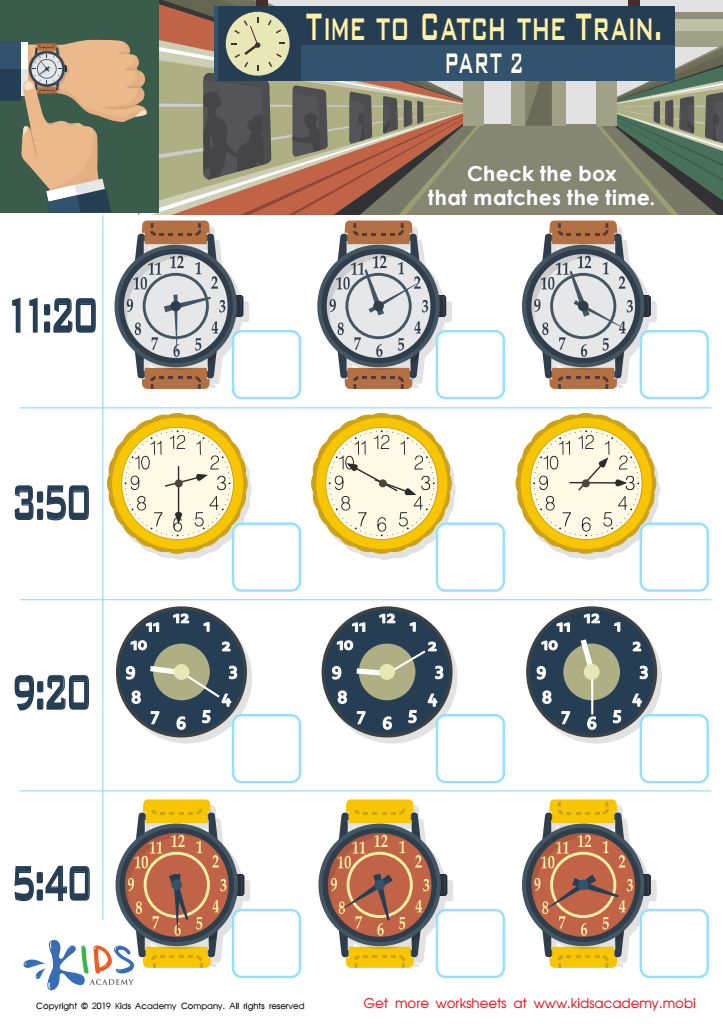
Teach your kids the importance of telling time and how to do it. Explain that there are multiple ways to show the time, such as written on the left side or watches in the picture. Guide them to check the box that matches the time. Knowing the time is essential to get things done and create order. Ensure your kids understand this and they will reap the benefits.
Time to Catch the Train Part 2 Worksheet
Worksheet


Problem-solving skills are crucial for children's cognitive development, especially for those aged 8-9, and measurement of these skills serves as an important tool for parents and teachers. At this age, children enter crucial stages of learning where they tackle more complex concepts in mathematics, science, and social situations. By measuring problem-solving abilities, educators and parents can identify strengths and weaknesses in a child's analytical thinking, creativity, and decision-making processes.

Parents and teachers should care about assessing these skills because it helps guide instructional strategies, ensuring that children receive tailored support that caters to their unique learning needs. Early identification of challenges in problem-solving can facilitate timely interventions, preventing struggles from becoming persistent.

Furthermore, problem-solving skills are fundamental not only for academic success but also for life skills. Children learn to assess situations, think critically, and develop resilience when faced with challenges. By fostering these skills early on, we prepare children for future complexity in education and daily life.

Ultimately, regular measurement provides valuable insights into a child's progress, allowing for celebratory milestones and the opportunity for reassessment of teaching methods, thereby fostering a supportive and growth-oriented learning environment.