Handwriting practice Tracing Numbers Worksheets for Ages 8-9
3 filtered results
Difficulty Level
Grade
Age
-
From - To
Subject
Activity
Standards
Boost your child's numeracy and handwriting skills with our Handwriting Practice Tracing Numbers Worksheets for Ages 8-9. Our expertly designed worksheets help young learners refine their number formation and writing precision through engaging activities and repetition. Each sheet offers a fun and educational way to improve math readiness while strengthening fine motor skills. Ideal for both classroom and at-home use, these worksheets cater to various learning styles, ensuring every child can benefit. Begin your child's journey to confident number writing with Kids Academy's trusted resources, and watch them excel in both handwriting and mathematics.
Favorites
With answer key
Interactive
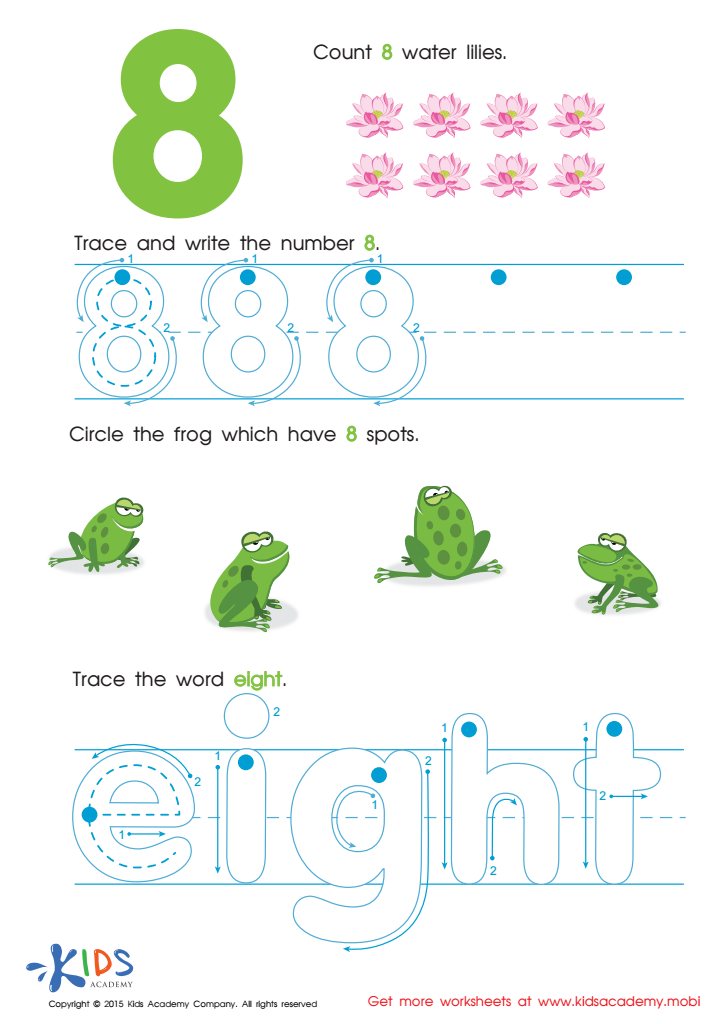
Learn Number 8 Easily Worksheet
Kids can trace, write numbers and learn to pronounce them through exciting activities and games. Try our number worksheets for preschoolers to make learning fun!
 Assign to My Students
Learn Number 8 Easily Worksheet
Worksheet
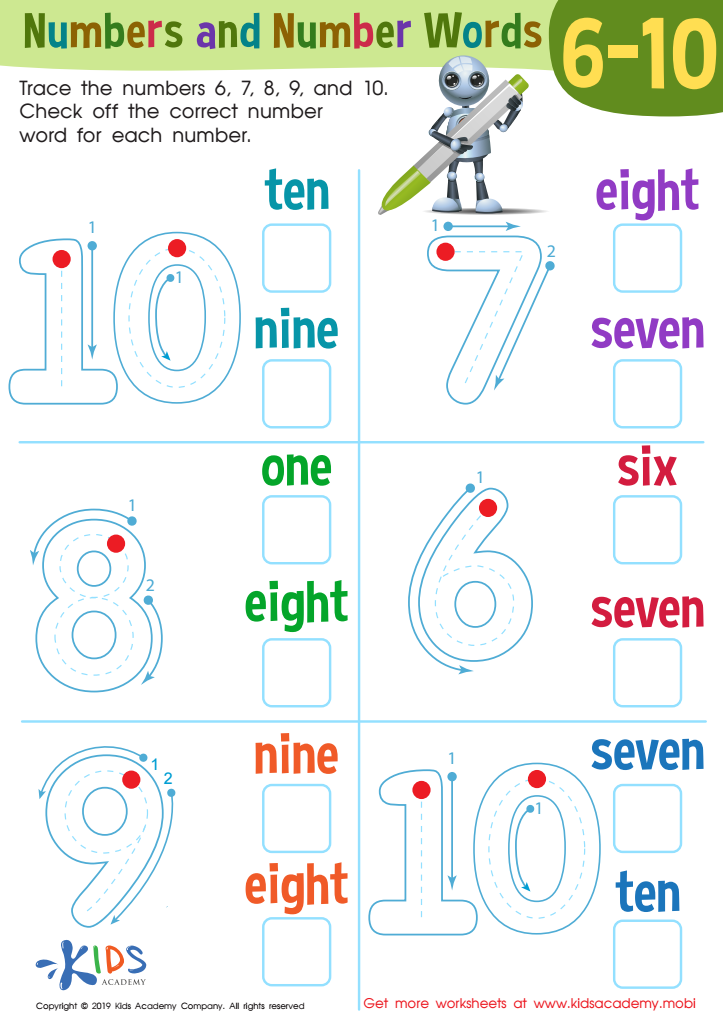
Numbers and Number Words 6–1 Worksheet
As children explore numbers and words, parents and teachers can help them learn to count and read with activities such as this worksheet. Here, the student traces numbers 6-10 and then selects the right number words to match. A fun and interactive way to learn!
Numbers and Number Words 6–1 Worksheet
Worksheet
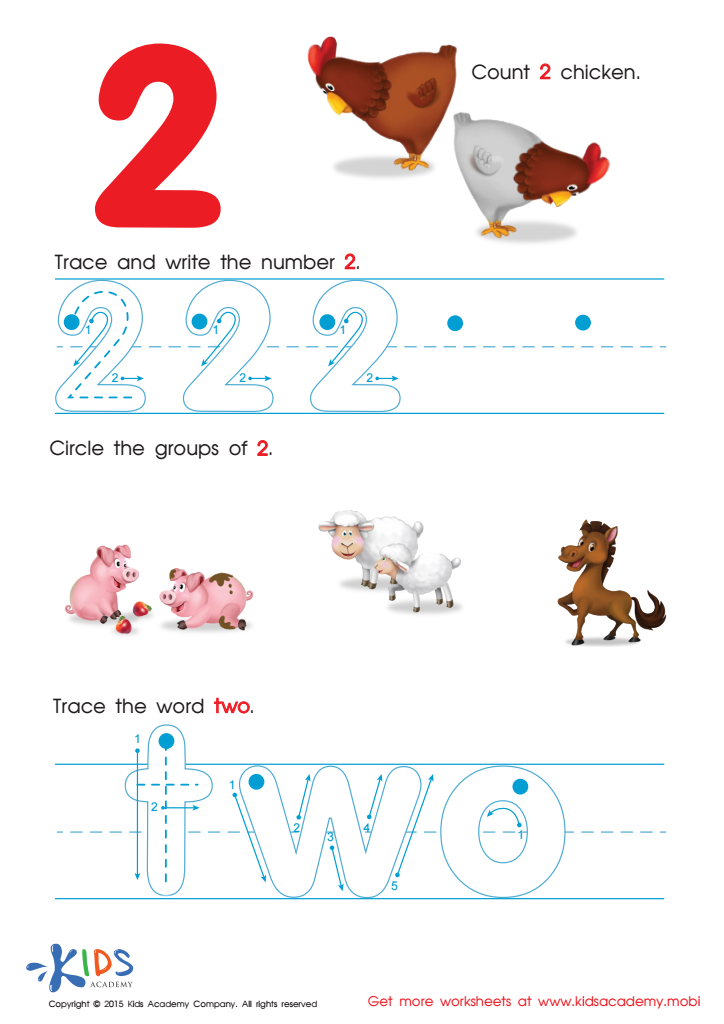
Learn to Write the Number 2 Worksheet
Teaching numbers should be fun! Ask your kids to count the two chicks, circle the groups of two among the animals, then trace and write the number and word. Get more fun worksheets from Kids Academy.
Learn to Write the Number 2 Worksheet
Worksheet
Join Kids Academy for Free
Who is primarily going to use this learning content?








Handwriting practice, including tracing numbers, remains crucial for children ages 8-9, despite the digital era's emphasis on typing skills. Parents and teachers should prioritize this practice due to several cognitive and developmental benefits. Tracing numbers enhances fine motor skills by strengthening the small muscles in children's fingers and hands, which are integral for tasks ranging from writing to tying shoelaces. This activity refines eye-hand coordination, fostering better control and precision.
Additionally, handwriting supports cognitive development. When children trace numbers, it reinforces their number recognition and counting skills, helping solidify foundational math concepts. This kinesthetic activity engages multiple pathways in the brain, enhancing memory retention and understanding.
Further, handwriting practice influences academic performance. Children who develop clear, efficient handwriting tend to produce schoolwork with greater ease and speed, reducing cognitive load and allowing them to focus more on content than the mechanics of writing.
Emotionally and psychologically, mastering handwriting can build confidence and a sense of accomplishment, fostering a positive attitude toward learning. It also offers an escape from the ubiquitous screens, providing a tactile, hands-on learning experience that can be both calming and engaging.
Hence, incorporating handwriting practice into daily routines is essential for holistic educational development, ensuring children grow up with a balanced skill set.