Enhance critical thinking Reading Worksheets for Ages 8-9
3 filtered results
-
From - To
Boost your child’s critical thinking skills with our engaging reading worksheets designed specifically for ages 8-9. These worksheets encourage young learners to analyze, evaluate, and interpret texts while fostering a deeper understanding of the material. Each activity is designed to challenge their thinking, promote discussion, and enhance comprehension through thought-provoking questions and interactive exercises. Perfect for classroom or home use, our resources aim to make critical thinking both fun and educational, helping children develop essential skills that will benefit them throughout their academic journey and beyond. Explore our diverse collection today and empower your child's reading journey!
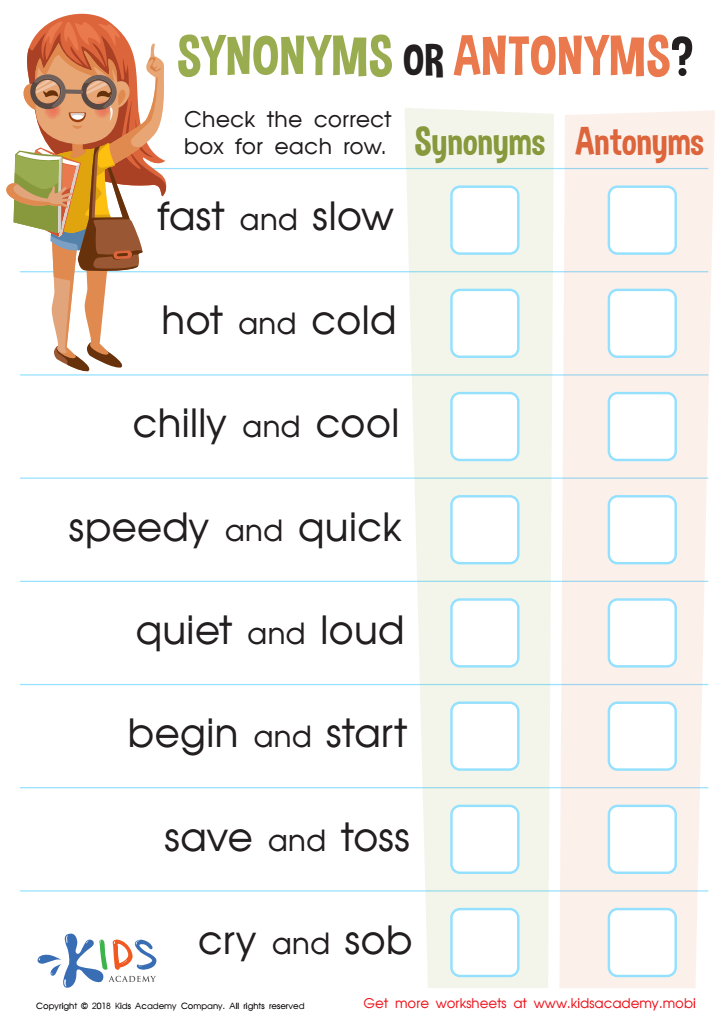
Synonyms or Antonyms: Assessment Worksheet
 Assign to My Students
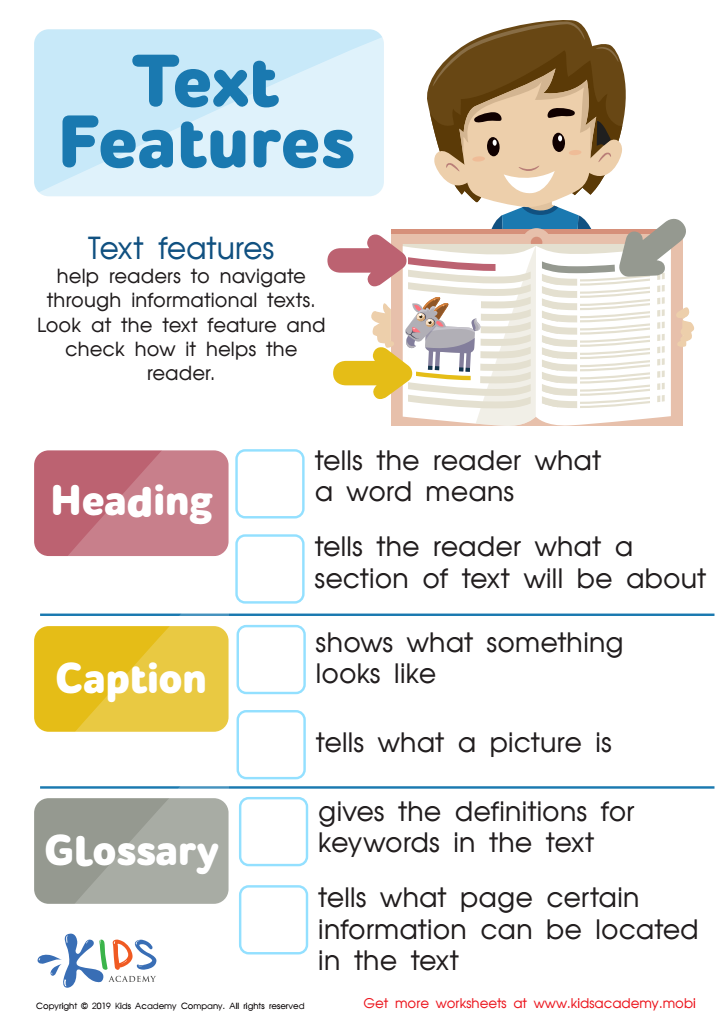
Text Features Worksheet








Enhancing critical thinking skills through reading for children aged 8-9 is essential for several reasons. First, this developmental stage typically marks a transition from learning to read to reading to learn. To facilitate effective learning, it is crucial that children develop the ability to analyze, evaluate, and synthesize information from texts. Critical thinking fosters a deeper understanding of content, allowing children not just to absorb facts but to engage with ideas and question perspectives.
Moreover, nurturing critical thinking through reading helps children develop essential life skills, such as problem-solving and decision-making. These skills are invaluable in navigating complex social interactions and academic challenges they’ll face in the future. Encouraging children to make inferences, draw conclusions, and recognize biases prepares them for a world inundated with information.
Additionally, actively engaging students in discussions about what they read encourages communication and collaboration skills. This holistic development promotes active citizenship and empowers them to become thoughtful, informed individuals. Ultimately, fostering critical thinking in reading lays the groundwork for academic success and a more profound intellectual curiosity that benefits learners throughout their lives, making it a priority for parents and teachers alike.








