Grammar skills improvement Reading Worksheets for Ages 8-9
5 filtered results
-
From - To
Unlock your child's potential with our engaging Grammar Skills Improvement Reading Worksheets for ages 8-9! These worksheets are designed to enhance your child's grammar understanding through fun and interactive reading exercises. Each worksheet focuses on key grammar concepts, helping students grasp important rules while developing their reading comprehension skills. Tailored for this critical age group, our resources ensure lessons are age-appropriate and captivating. Perfect for both classroom and home use, these worksheets not only promote learning but also instill a love for language. Boost your child's grammar proficiency today—building a strong foundation for their future success in reading and writing!
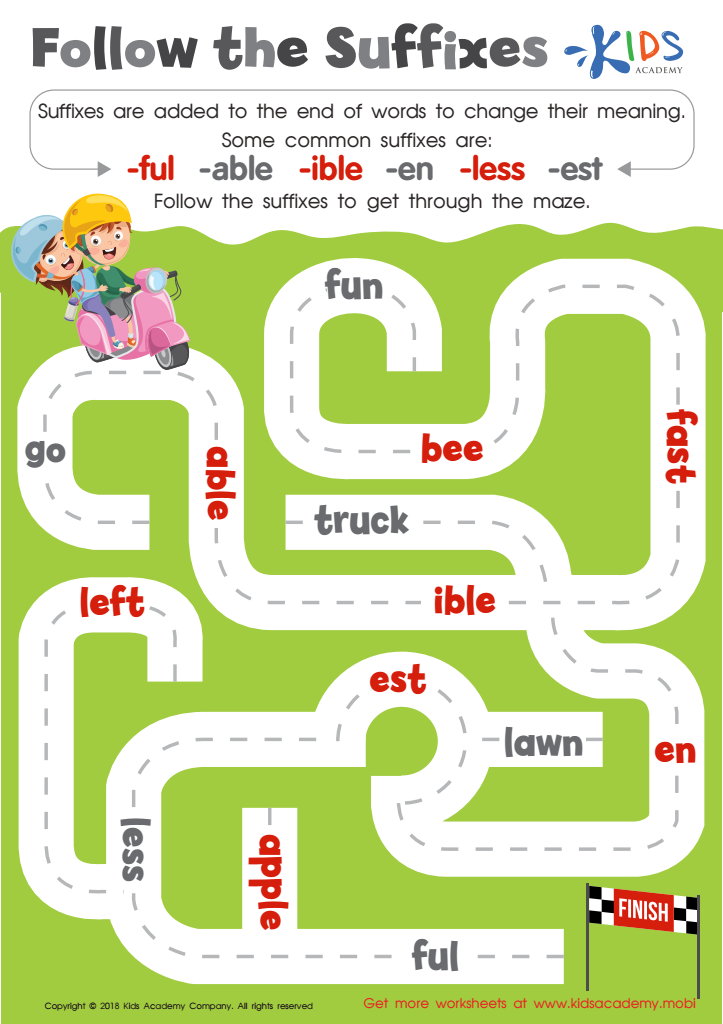
Reading: Follow the Suffixes Worksheet
 Assign to My Students
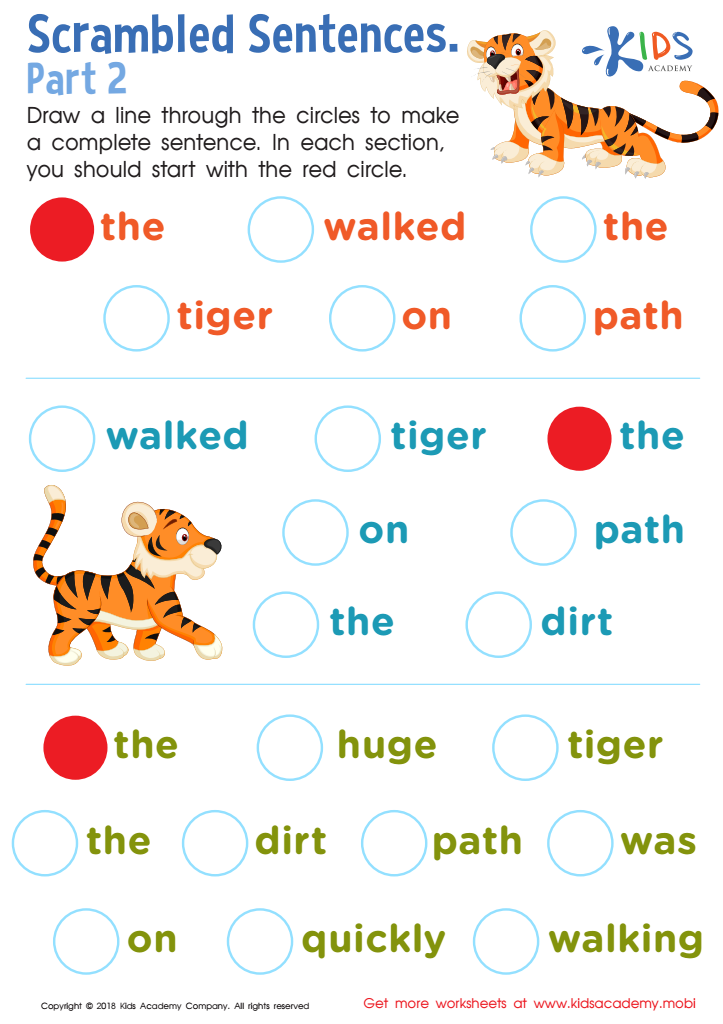
Scrambled Sentences Part 2 Worksheet
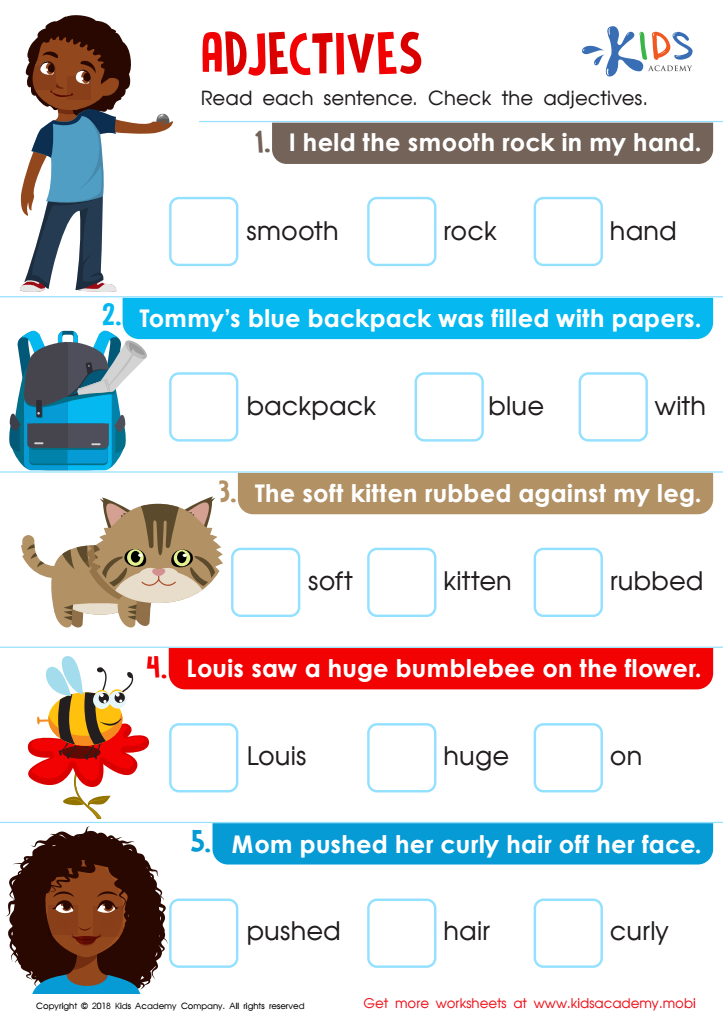
Adjectives Worksheet
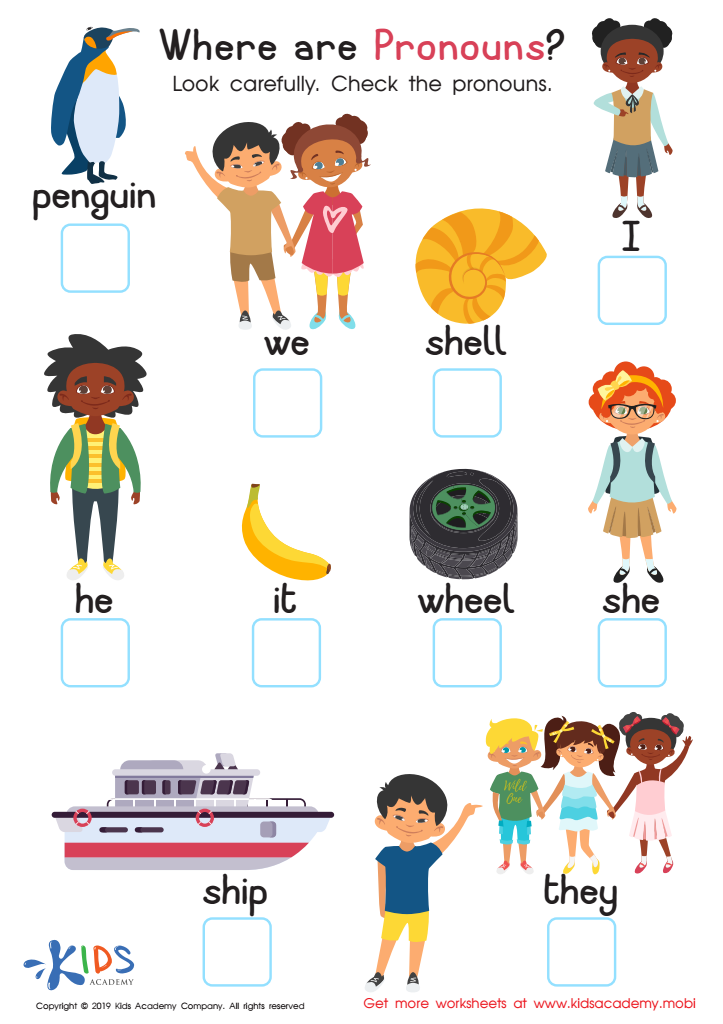
Where Are Pronouns? Worksheet
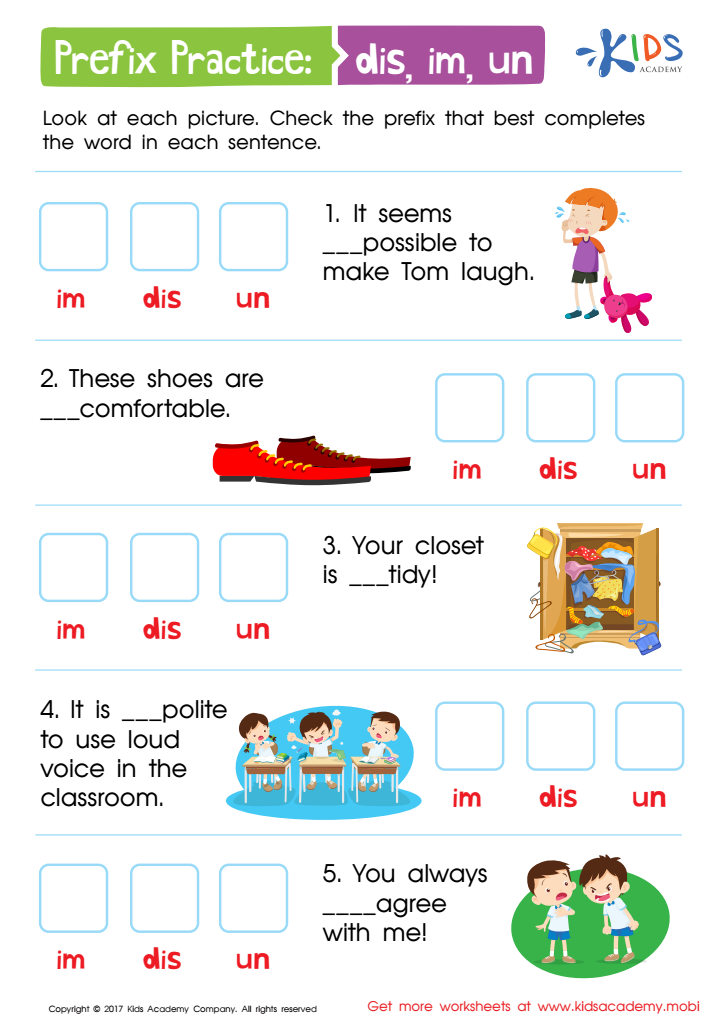
Prefix Practice Worksheet: DIS, IM, UM








Parents and teachers should prioritize the improvement of grammar skills in reading for children ages 8-9 because this age marks a critical period for language development and comprehension. At this stage, children begin to engage with more complex texts, making a solid grasp of grammar essential for understanding the meaning and structure of sentences. Enhanced grammar skills not only improve reading comprehension but also encourage effective communication, allowing children to express their thoughts more coherently.
Moreover, strong grammar skills help in developing writing abilities, reinforcing the connection between reading and writing. Children learn to recognize the rules of language, which aids in crafting well-structured sentences and enhancing overall literacy. This foundation is vital as academic expectations increase in subsequent grades.
Additionally, children's self-confidence grows as they become more proficient in their language skills. Improved grammar strengthens their ability to analyze texts critically and participate in discussions, preparing them for future educational challenges. By investing time in developing these skills, parents and teachers equip children with essential tools for their academic journey, fostering a lifelong love of reading and learning.








