Story sequencing Reading Worksheets for Ages 8-9
7 filtered results
-
From - To
Unlock the magic of storytelling with our Story Sequencing Reading Worksheets for Ages 8-9! Designed to enhance comprehension and critical thinking, these worksheets guide young readers through arranging story events in the correct order. They encourage children to dive deep into narratives, making sense of the plot, and understanding cause and effect. With engaging activities, kids develop strong reading skills while having fun. Perfect for both classroom and home learning, these worksheets are an excellent resource for educators and parents aiming to support reading fluency and confidence. Let your child explore their favorite tales with these interactive sequencing exercises.
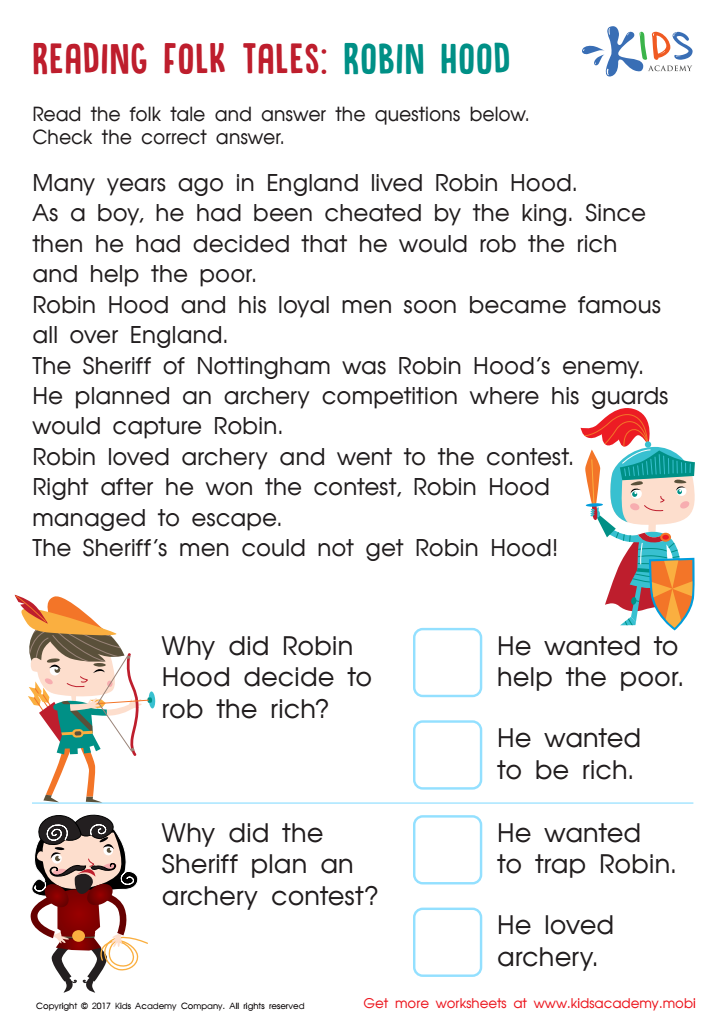
Robin Hood Folktale Worksheet
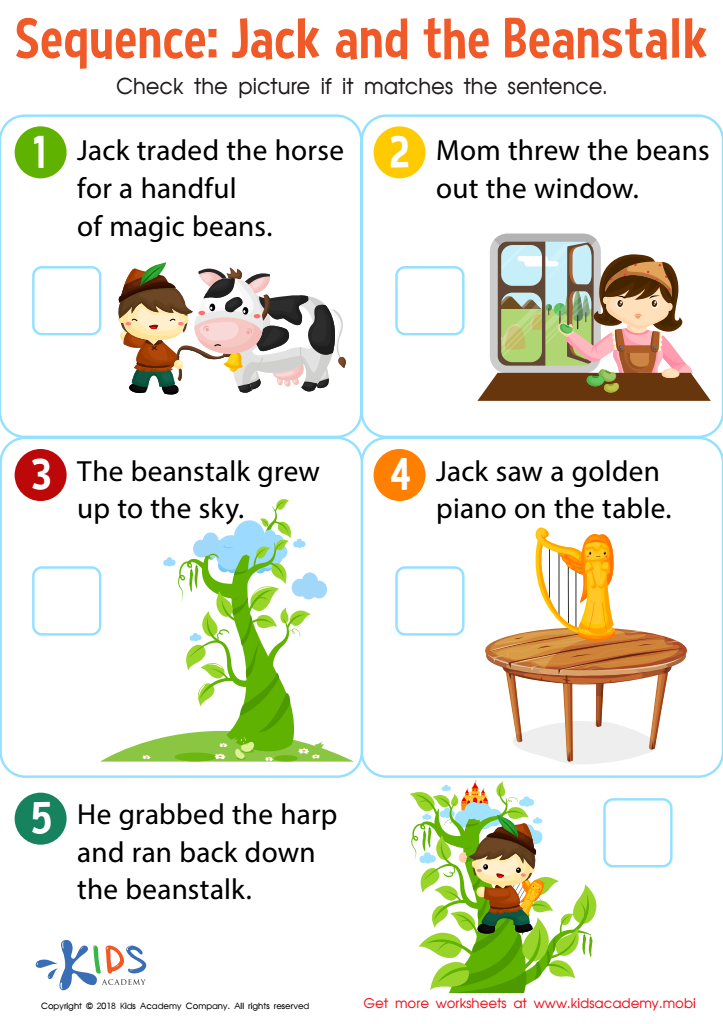
Sequence: Jack and The Beanstalk Worksheet
Folktales Printable PDF Worksheet: The 3 Little Pigs
 Assign to My Students
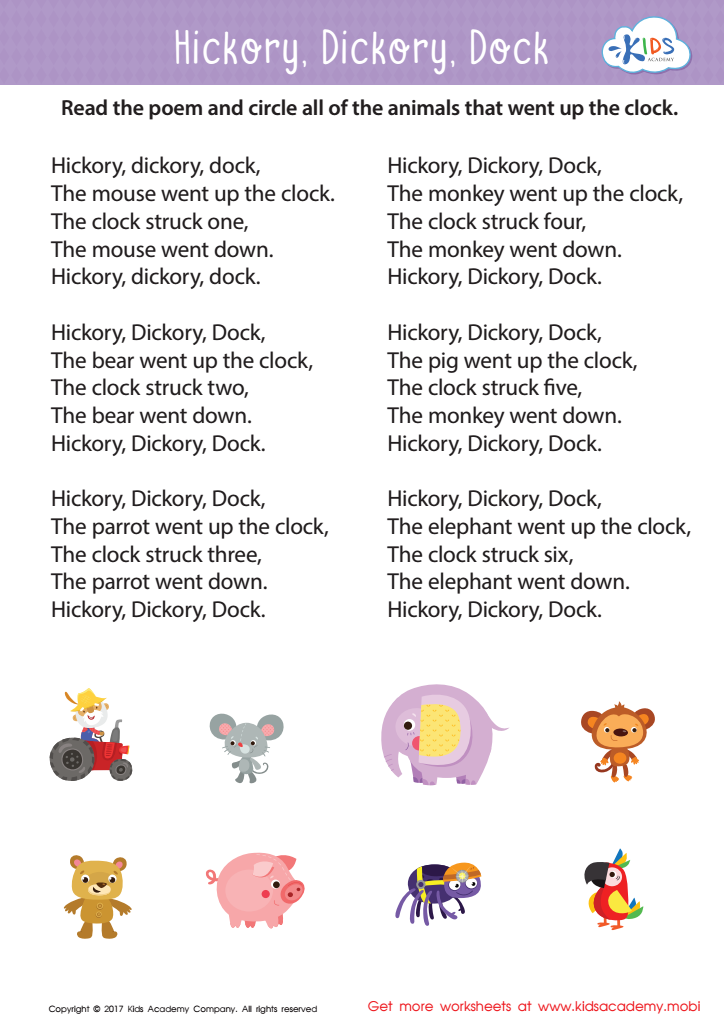
Hickory Dickory Dock Sequencing Worksheet
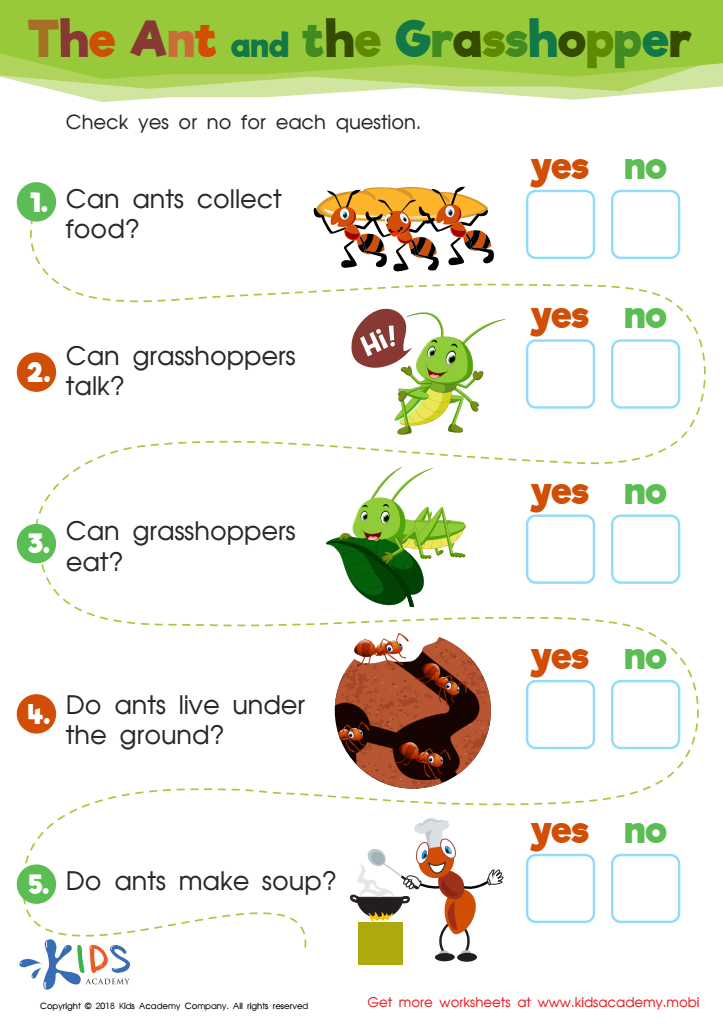
The Ant and The Grasshopper Worksheet
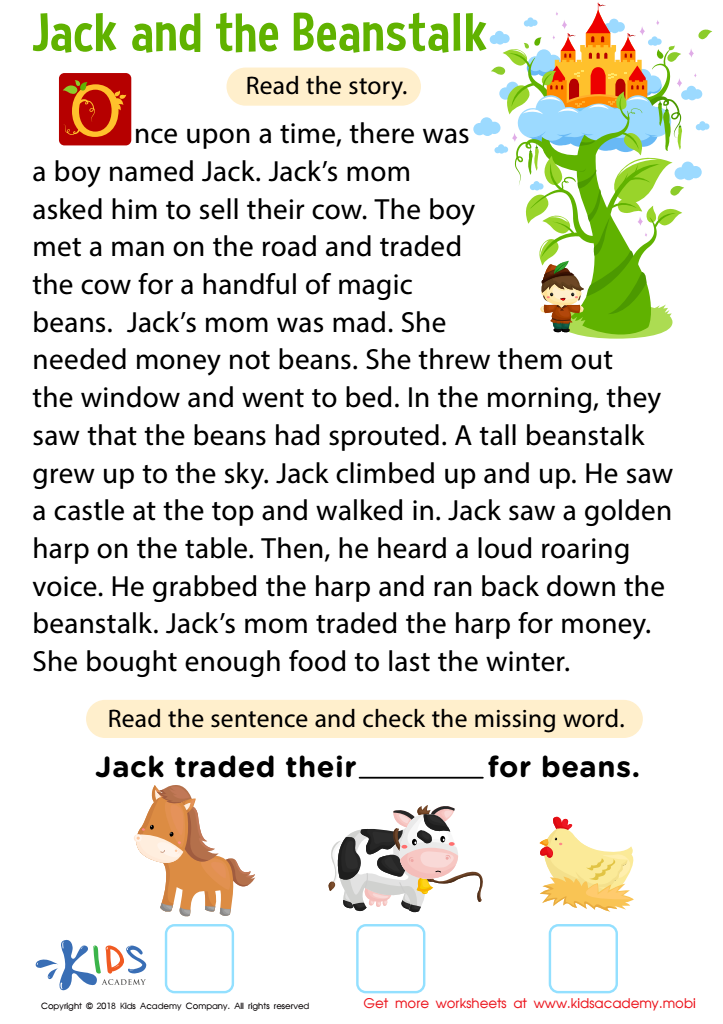
Jack and Beanstalk Worksheet
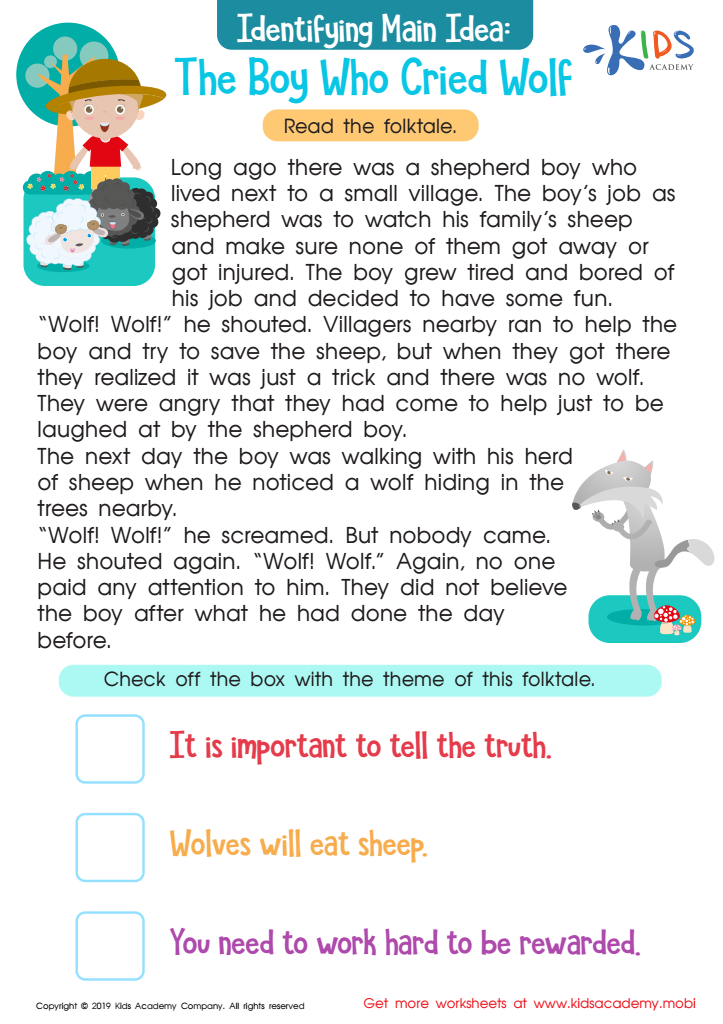
The Boy Who Cried Wolf Part 2 Worksheet








Story sequencing is crucial for children aged 8-9 as it enhances their comprehension and critical thinking skills. At this developmental stage, kids transition from learning to read to reading to learn. Story sequencing helps them understand the flow of a narrative by arranging events in the correct order, which improves their grasp of cause-and-effect relationships within the story. This foundational skill acts as a stepping stone for more complex comprehension tasks.
Moreover, sequencing aids memory retention. When children put events in sequence, they are more likely to remember details and better understand the narrative structure. This can make reading a more enjoyable and rewarding experience, encouraging a lifelong love for books.
Understanding story sequence also bolsters writing skills. When children comprehend how stories are structured, they can apply similar patterns in their writing, enhancing clarity and coherence in their own stories. This skill is transferable to other academic areas, providing a framework for organizing thoughts in subjects like science and history.
Lastly, sequencing fosters analytical thinking. It encourages children to think critically about why events happen in a particular order and predict future outcomes. This analytical perspective is invaluable, cultivating problem-solving skills that are essential not just in academics, but in everyday life.
In essence, story sequencing is foundational for developing stronger readers, capable writers, and critical thinkers, making it a key focus for both parents and teachers.








