Geography knowledge Science Worksheets for Ages 8-9
3 filtered results
-
From - To
Discover our engaging Geography Knowledge Science Worksheets designed specifically for ages 8-9! These interactive resources make learning fun and accessible, helping young learners develop a strong understanding of geography concepts. Our worksheets cover essential topics, including maps, continents, and ecosystems, allowing children to explore the world around them through creative exercises. Perfect for homeschooling or classroom use, these worksheets provide a hands-on approach that nurtures curiosity and boosts critical thinking skills. With colorful illustrations and thoughtfully crafted questions, each worksheet encourages children to engage with their environment while reinforcing key geographic principles. Start their geographic journey today!
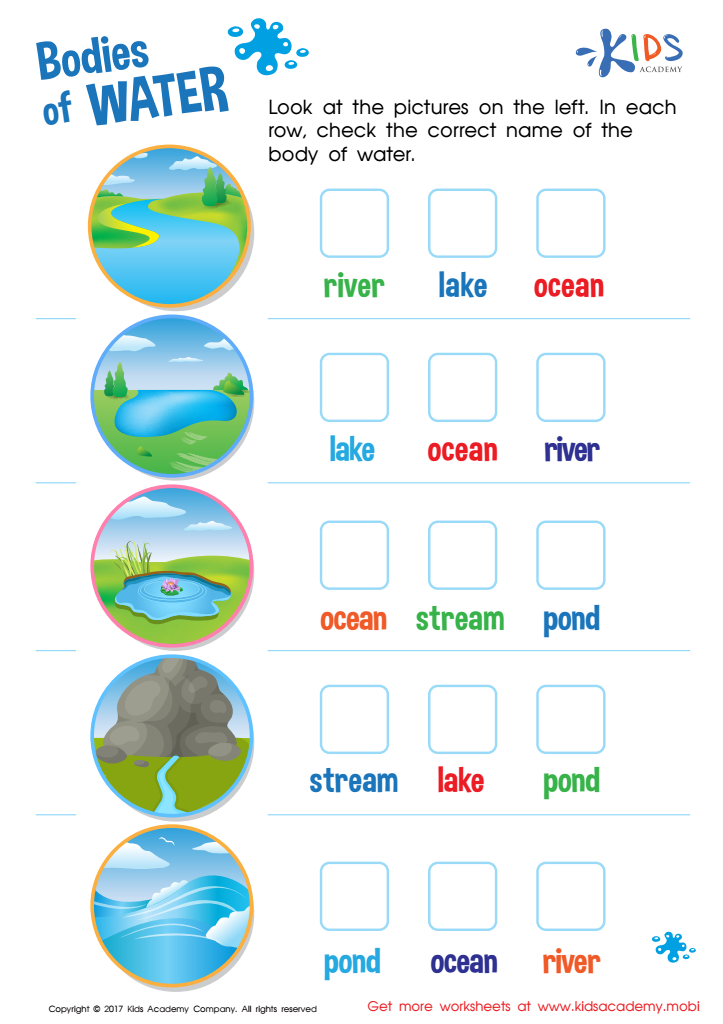
Bodies of Water Worksheet
 Assign to My Students
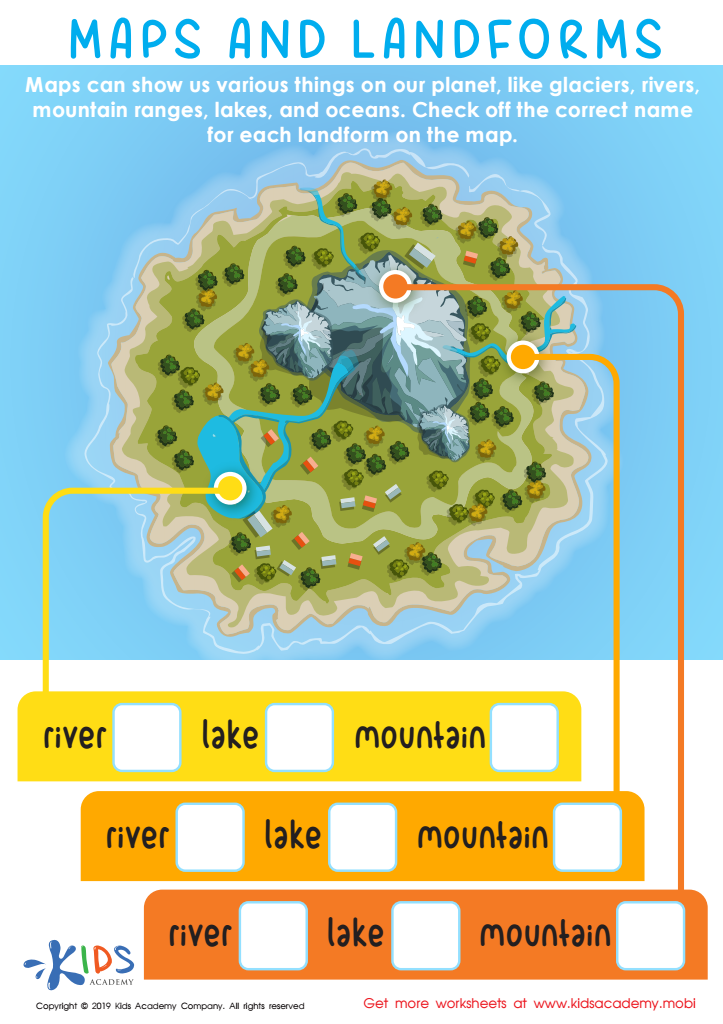
Maps and Landforms Worksheet
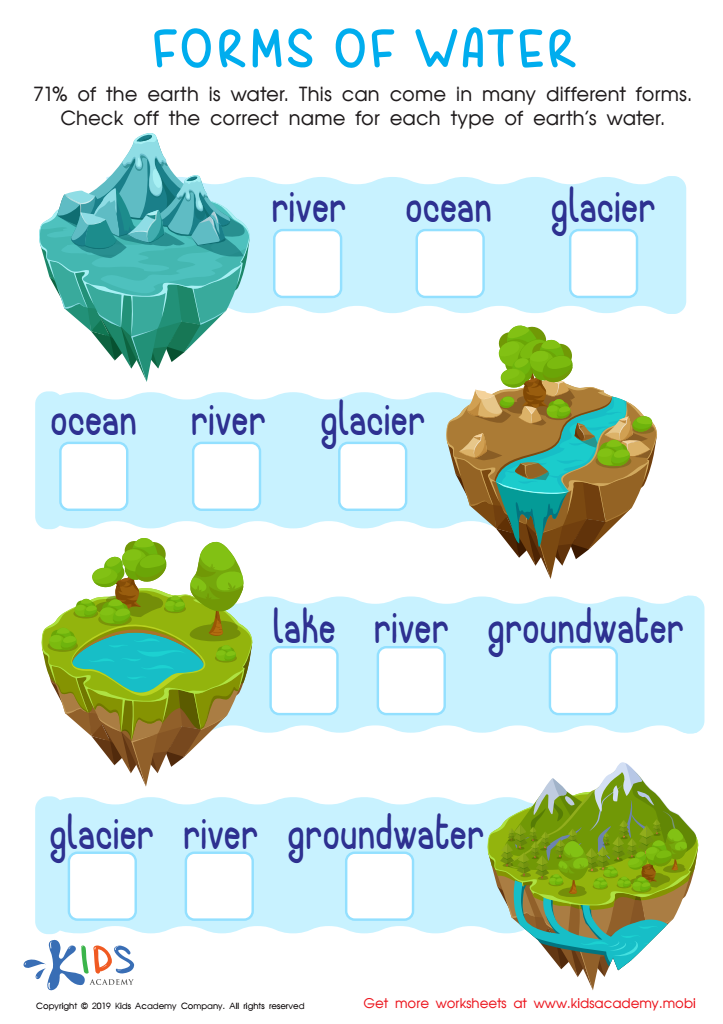
Forms of Water Worksheet








Geography knowledge is essential for children aged 8-9 as it lays a foundational understanding of the world they inhabit. At this age, children are naturally curious about their surroundings, and geography helps satisfy this curiosity by explaining physical landscapes, cultures, and environmental systems. Learning geography fosters critical thinking as children explore how different regions interact and influence each other, helping them comprehend real-world issues like climate change and resource distribution.
Furthermore, geography helps children develop a sense of place and identity. When they study maps, countries, and communities, they connect personally to broader global contexts, fostering empathy and cultural awareness. This is particularly important in an increasingly interconnected world where global citizenship is vital.
Incorporating geography knowledge also supports STEM education. Understanding geographical science introduces children to concepts like ecosystems, the water cycle, and human impacts on the environment, all of which are critical in nurturing environmentally literate citizens.
Ultimately, equipping children with geography knowledge cultivates informed, compassionate individuals who can make responsible decisions. Thus, both parents and teachers should prioritize geography in the curriculum to promote a well-rounded education that prepares children for future challenges.







