Information retention Science Worksheets for Ages 8-9
3 filtered results
-
From - To
Unlock your child's potential with our Information Retention Science Worksheets designed specifically for ages 8-9! These engaging and educational resources help young learners improve their memory, comprehension, and analytical skills through fun activities and hands-on exercises. Each worksheet encourages children to actively process and recall scientific concepts, fostering deeper understanding and cognitive development. Perfect for enhancing classroom learning or enriching home study routines, our worksheets provide a balanced mix of visuals and interactive elements to keep your child's interest alive. Empower your little scientist with the tools they need to thrive academically—explore our collection today and watch them succeed!
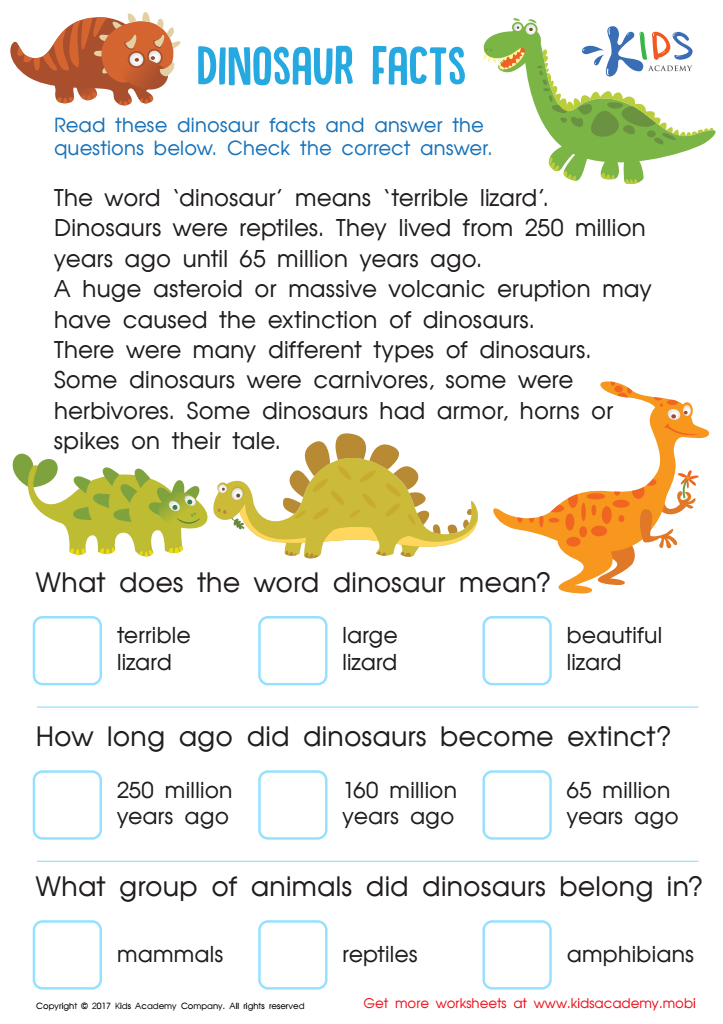
Dinosaur Facts Worksheet
 Assign to My Students
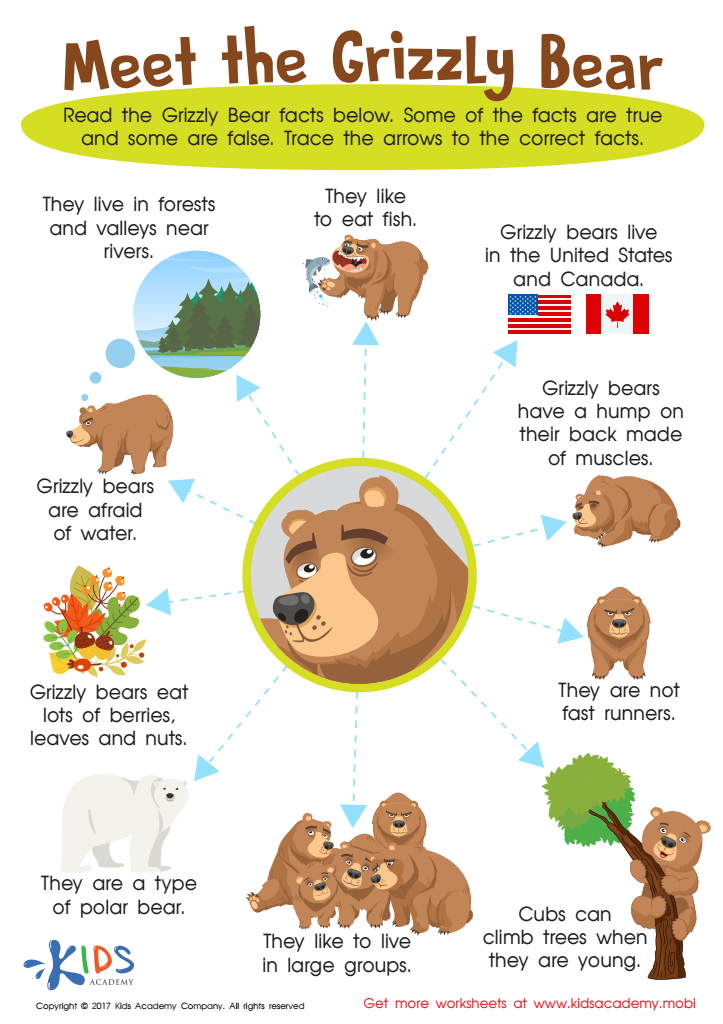
Grizzly Bear Facts Worksheet
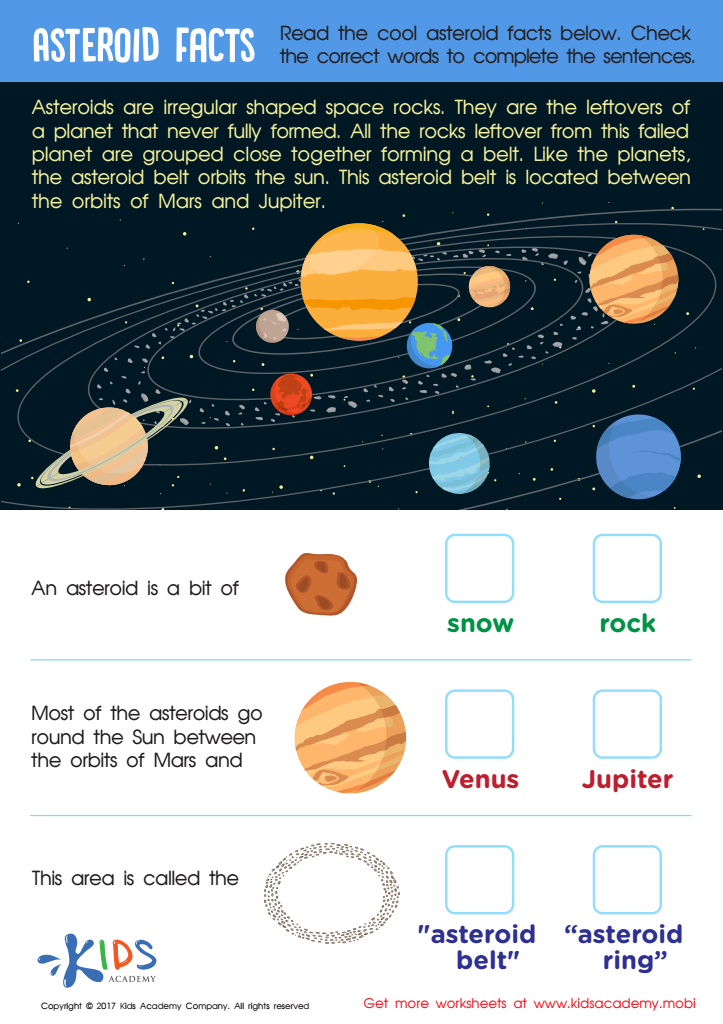
Asteroid Facts Worksheet






%20(1).jpg)

Understanding Information Retention Science is crucial for parents and teachers of children aged 8-9 because this age group is at a pivotal stage of cognitive development. During these years, children are transitioning from concrete thinking to more abstract reasoning, making it essential to support their learning in ways that foster long-term retention of knowledge.
Research indicates that children retain information better through active engagement strategies, such as hands-on activities, storytelling, and collaborations with peers. By implementing these practices, educators and parents can enhance children’s capacity to absorb and recall information, ultimately leading to a deeper understanding of subjects.
Additionally, understanding how memory works can help back educators and parents tailor learning experiences to individual students, accommodating diverse learning styles. For instance, utilizing repetition and varied forms of media can significantly improve memory retention.
Moreover, parents and teachers who prioritize information retention can help instill a love of learning, encouraging curiosity and resilience. When children retain information more effectively, they build confidence in their abilities, leading to higher academic achievement and a more positive attitude toward future learning endeavors. Therefore, emphasizing information retention science should be an integral part of educational approaches for this age group.







