Understanding life cycles Science Worksheets for Ages 8-9
4 filtered results
-
From - To
Enhance your child's understanding of life cycles with our engaging science worksheets designed for ages 8-9. These thoughtfully crafted resources break down complex concepts into fun, age-appropriate activities that encourage exploration and inquiry. Students will learn about the life cycles of various organisms, including plants and animals, through dynamic exercises like matching, fill-in-the-blank, and diagram labeling. Our worksheets not only support curriculum goals but also promote critical thinking and curiosity about the natural world. Ideal for classroom or home learning, these interactive materials make mastering life cycles an enjoyable experience for young scientists. Discover the wonders of life today!
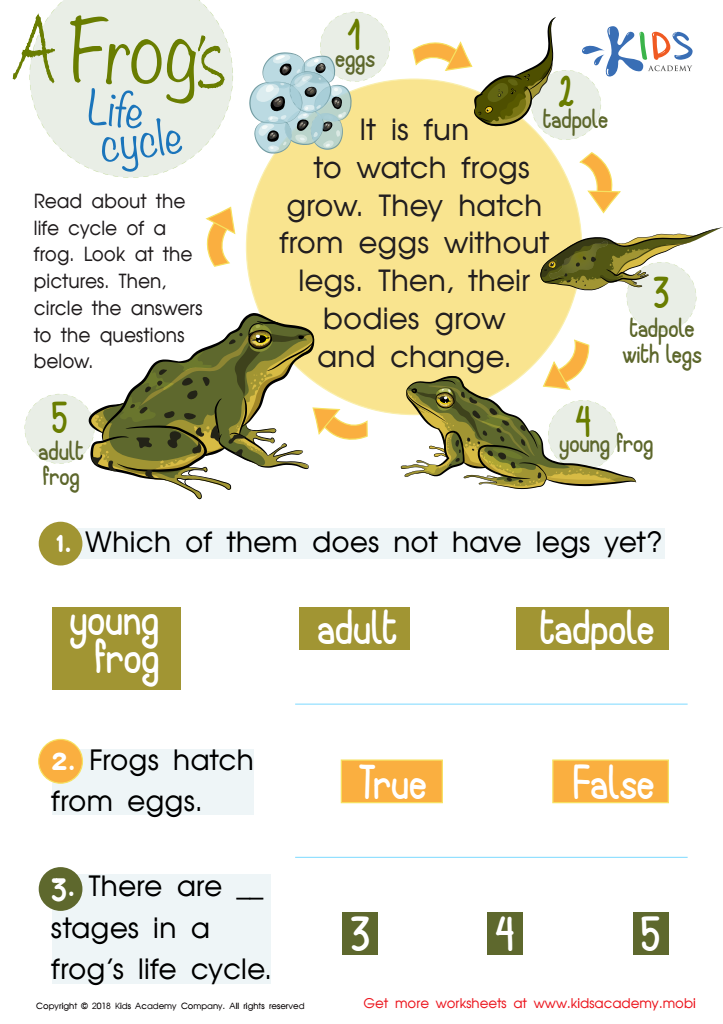
A Frog’s Life Cycle Worksheet
 Assign to My Students
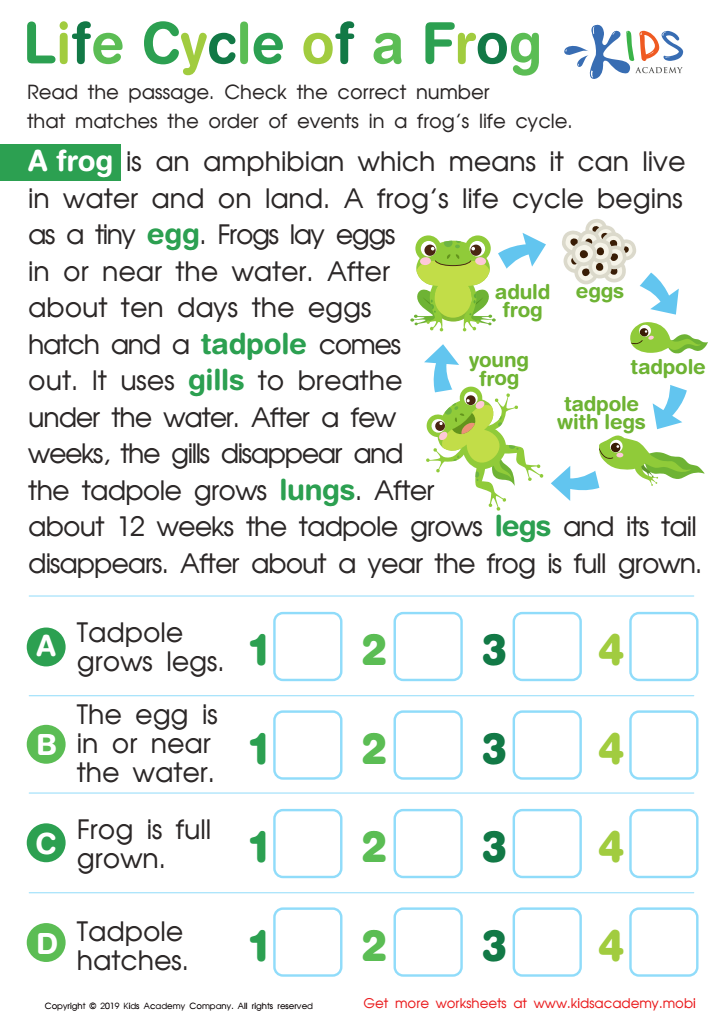
Life Cycle of a Frog Worksheet
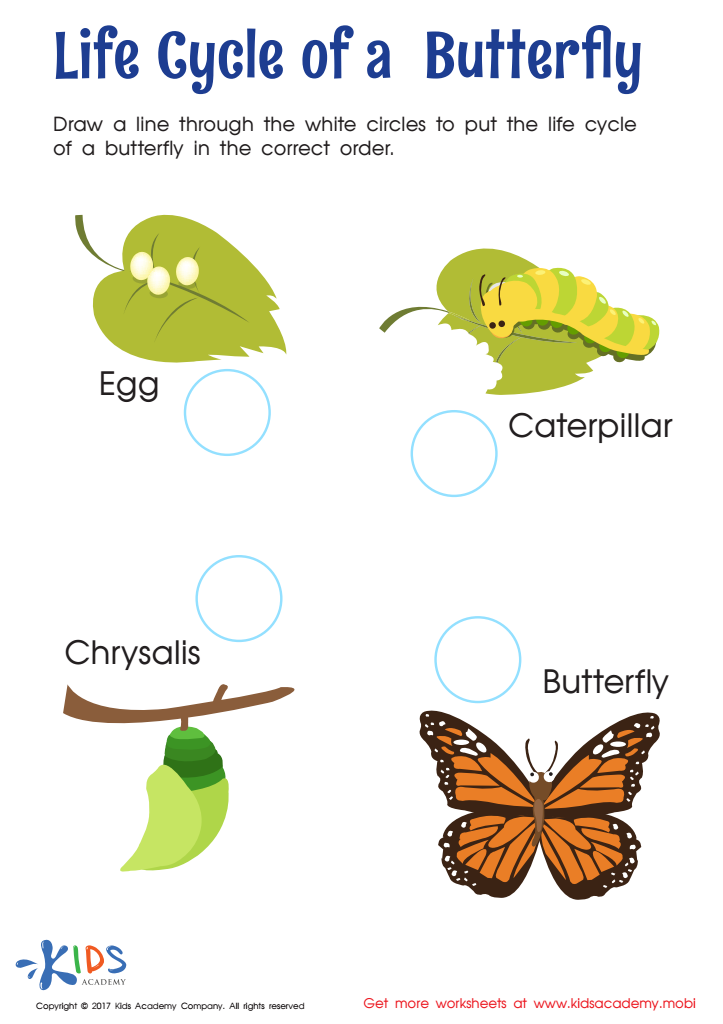
Life Cycle of Butterfly Worksheet
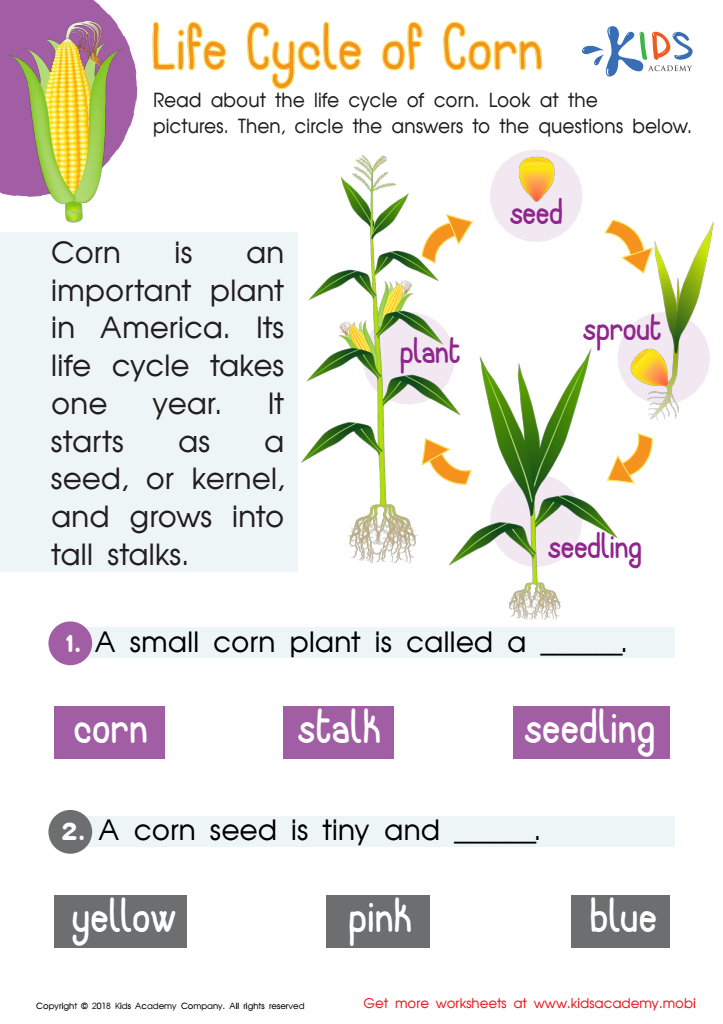
Life Cycle of Corn Worksheet







Understanding life cycles is crucial for children aged 8-9 as it fosters curiosity about the natural world and lays the foundation for scientific literacy. At this age, kids are naturally inquisitive, and studying life cycles – such as those of plants, animals, and even microorganisms – provides them with tangible examples of growth, change, and interdependence in ecosystems.
Parents and teachers should care about this subject because it encourages critical thinking and observation skills. When children learn about life cycles, they begin to grasp concepts like reproduction, adaptation, and environmental impact. This knowledge promotes empathy towards living things and can nurture a sense of responsibility for the environment, as kids come to understand their role within larger biological systems.
Moreover, integrating life cycles into education enhances interdisciplinary learning, connecting science with art, literature, and social studies. It sets the stage for future scientific exploration and inquiry while making learning enjoyable and engaging. By emphasizing the importance of life cycles, parents and teachers can help cultivate a generation that values science, supports biodiversity, and recognizes the intricate web of life that sustains our planet. Ultimately, an early appreciation for these concepts can lead to informed, compassionate future stewards of the Earth.







