Understanding pollination Science Worksheets for Ages 8-9
3 filtered results
-
From - To
Explore the fascinating world of pollination with our "Understanding Pollination Science Worksheets" designed for kids aged 8-9. These engaging worksheets provide a fun and interactive way for young learners to grasp essential concepts of plant reproduction and the role of pollinators like bees and butterflies. Through colorful illustrations, real-life examples, and hands-on activities, students will deepen their understanding of how plants grow and thrive. These materials can be seamlessly integrated into science lessons, enhancing critical thinking and observational skills while nurturing a love for nature. Perfect for classrooms or at-home learning, inspire curiosity about environmental science today!
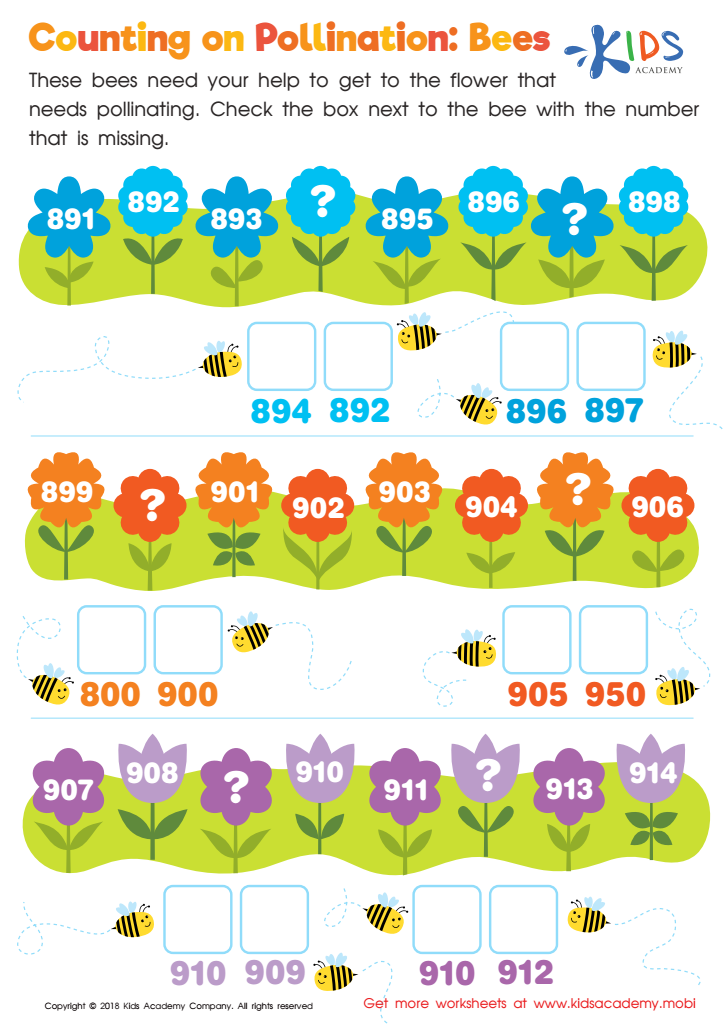
Counting on Pollination: Bees Worksheet
 Assign to My Students
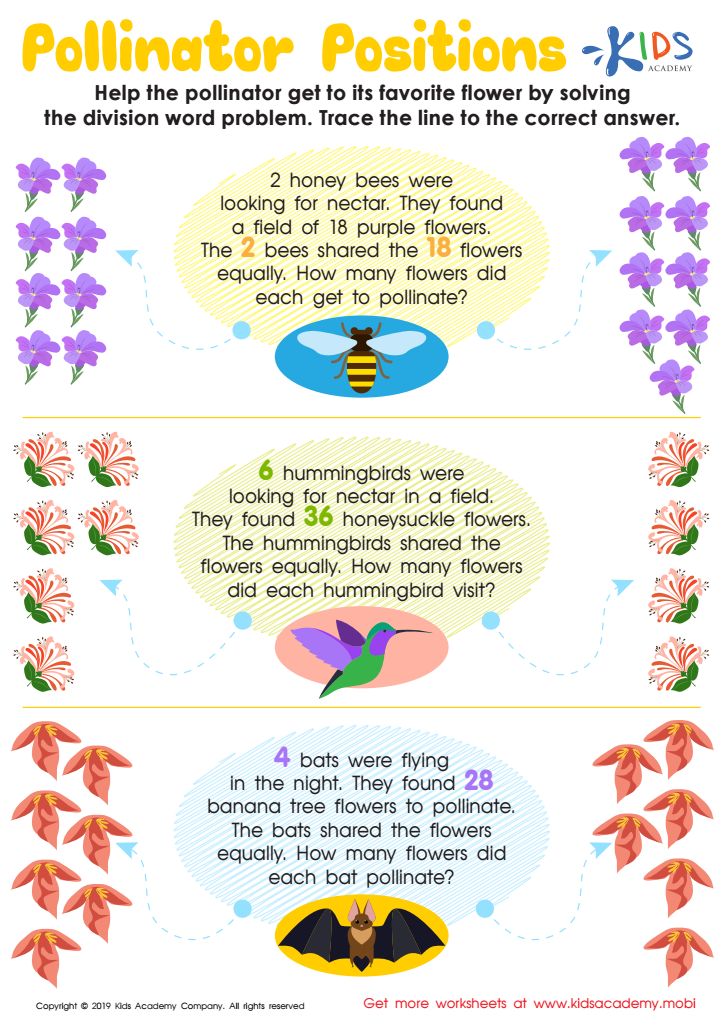
Pollinator Positions Worksheet
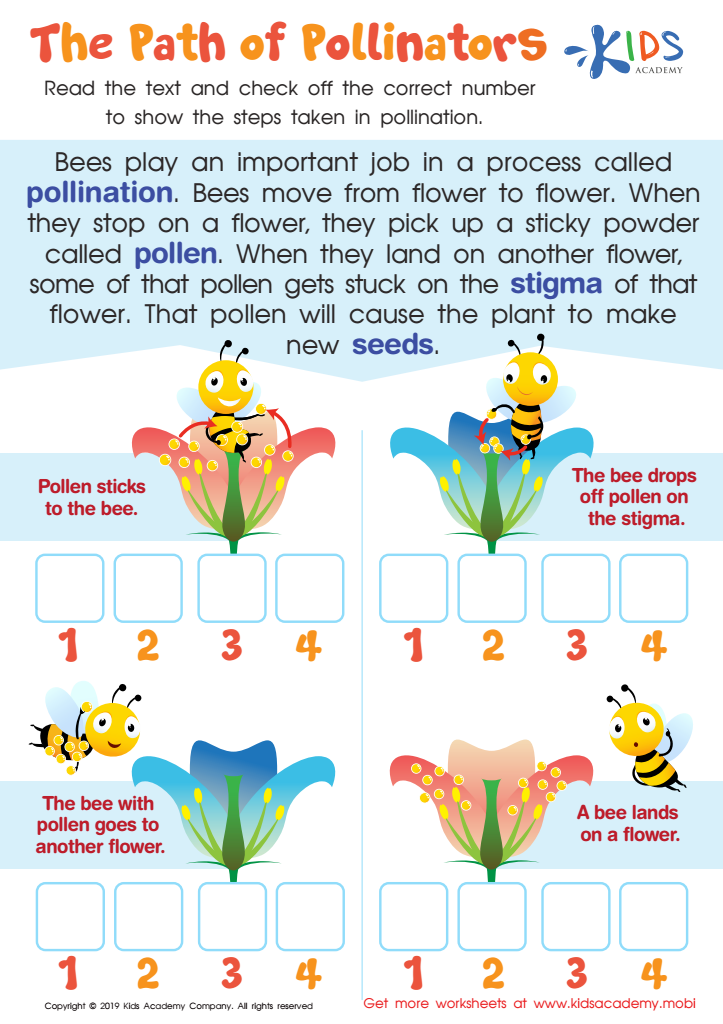
The Path of Pollinators Worksheet





Understanding pollination science is essential for parents and teachers nurturing children aged 8-9 because it plays a crucial role in environmental awareness and education. At this age, children are naturally curious, eager to explore how the world works, and learn about the interconnections within ecosystems. Pollination is a key ecological process that sustains food production and biodiversity. Educating children about how plants reproduce and the vital role pollinators—such as bees, butterflies, and birds—play in this process can foster a love for nature and biology.
Moreover, understanding pollination is critical in the context of global challenges like climate change and declining pollinator populations. Children who grasp these concepts are more likely to develop a sense of responsibility towards protecting the environment. Through hands-on activities and discussions about pollination, both parents and teachers can encourage critical thinking and problem-solving skills.
Ultimately, instilling knowledge about pollination can inspire the next generation to advocate for sustainable practices, engage in scientific inquiry, and appreciate the delicate balance of nature, leading to a generation that is more informed and proactive about environmental conservation and health.







