Geography knowledge Our Planet and Environment Worksheets for Ages 8-9
3 filtered results
-
From - To
Discover our engaging "Geography Knowledge: Our Planet and Environment" worksheets designed specifically for ages 8-9. These vibrant and educational resources, available at Kids Academy, spark curiosity about the world. Through interactive exercises, students explore earth's continents, ecosystems, climate zones, and natural resources, enhancing their understanding and appreciation of our planet. Perfect for reinforcing classroom learning or homeschooling, these worksheets foster critical thinking and environmental awareness. Easy to download and print, they promote independent learning while being a fun and effective tool for young geographers. Unlock the wonders of our world with Kids Academy today!
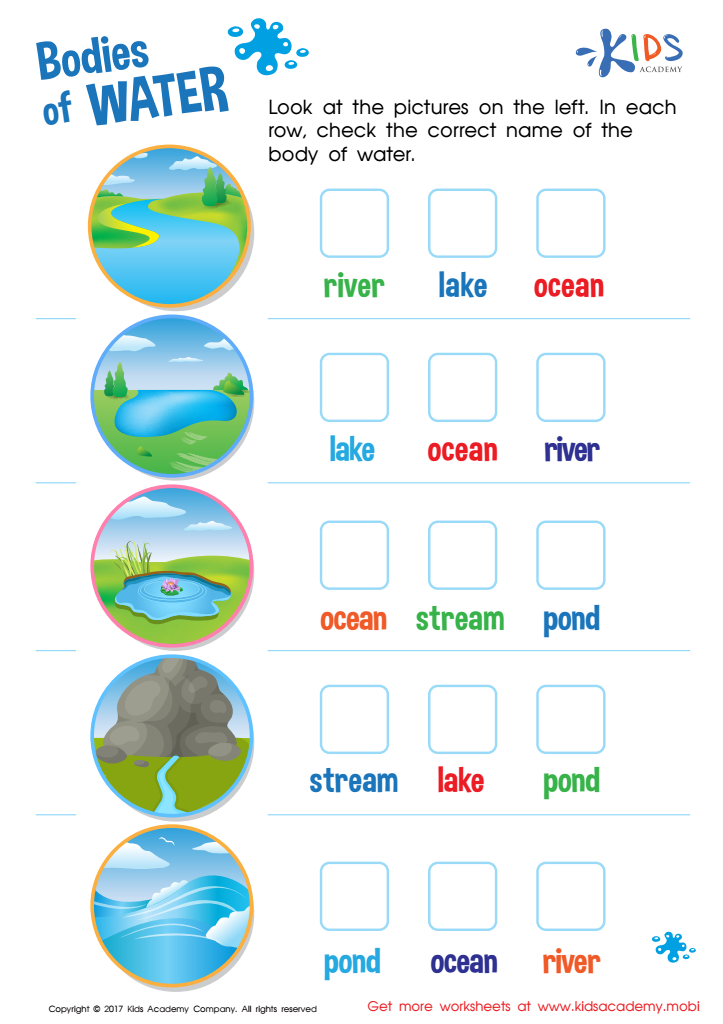
Bodies of Water Worksheet
 Assign to My Students
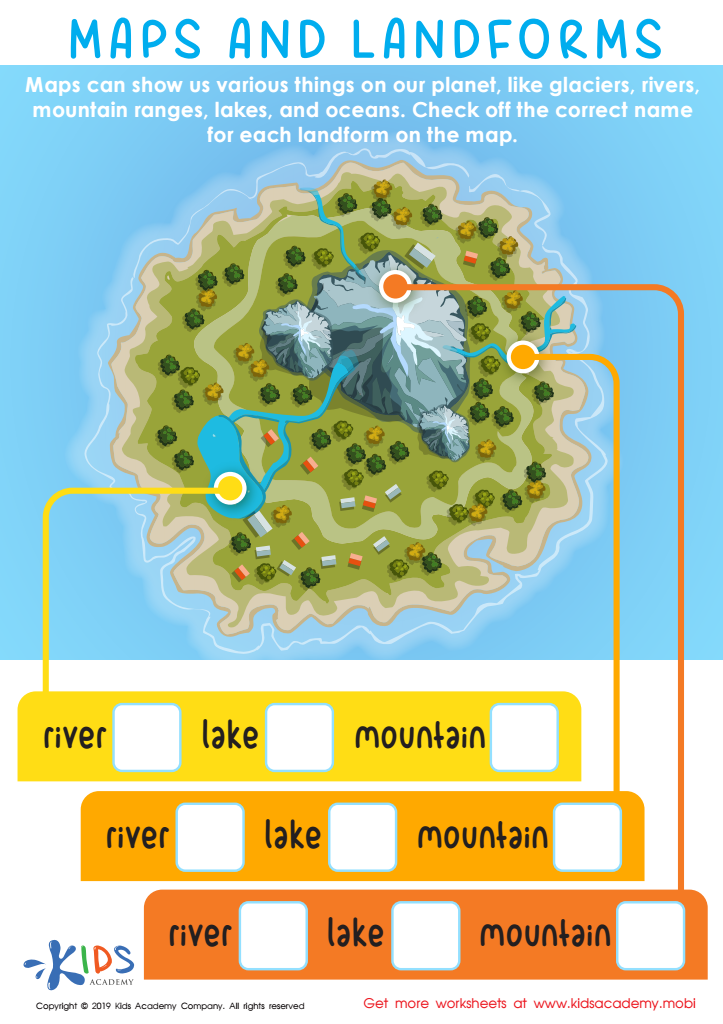
Maps and Landforms Worksheet
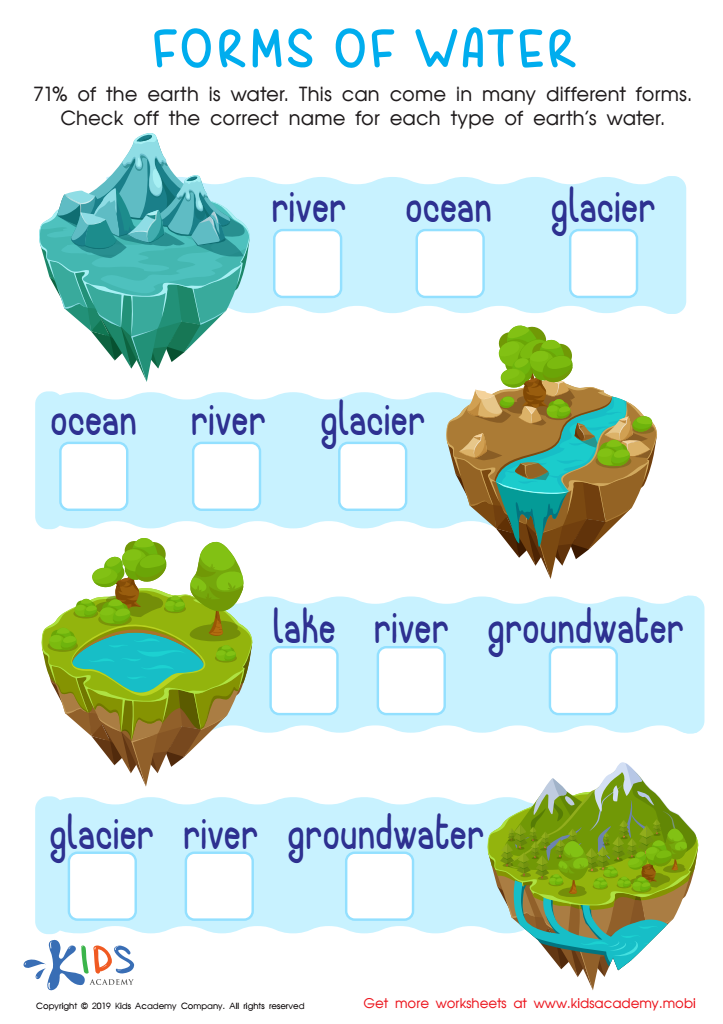
Forms of Water Worksheet




Having a fundamental grasp of geography from a young age is pivotal for children because it fosters a sense of global awareness and environmental stewardship. For parents and teachers of children aged 8-9, instilling knowledge about our planet and environment is crucial for several reasons.
First, geography educates children about different cultures, landscapes, and global interdependencies, enriching their understanding of the world beyond their immediate surroundings. This cultural awareness promotes empathy and open-mindedness toward people from diverse backgrounds.
Second, understanding the Earth's systems and environments lays the groundwork for responsible citizenship. Children who learn about climate change, natural resources, and ecosystems are more likely to develop a concern for environmental conservation and sustainability.
Furthermore, geography is intertwined with various key academic subjects such as history, science, and economics. By connecting these subjects, children receive a more comprehensive education, enhancing their critical thinking and problem-solving skills.
Incorporating geography into early education also harnesses natural curiosity. Activities like map reading, exploring local geography, and discussing global current events can be highly engaging, fostering a lifelong love for learning.
Ultimately, providing children with a robust foundation in geography relocates them as proactive, informed, and compassionate members of a global community, perfectly poised to tackle the challenges of tomorrow.







