
Understanding food chains Plants and Animals Worksheets for Ages 8-9
3 filtered results
Difficulty Level
Grade
Age
-
From - To
Subject
Activity
Standards
Explore the fascinating world of food chains with our "Understanding Food Chains: Plants and Animals Worksheets" designed specifically for ages 8-9. These engaging worksheets introduce young learners to the interconnected relationships between plants and animals in various ecosystems. Through vibrant illustrations and interactive activities, children will discover how energy flows from producers to consumers, helping them grasp fundamental ecological concepts. Designed to enhance science literacy, these printables promote critical thinking and encourage curiosity about nature. Perfect for classroom use or home education, these worksheets provide an entertaining and informative way to develop a deeper understanding of our world’s ecosystems.
Favorites
With answer key
Interactive
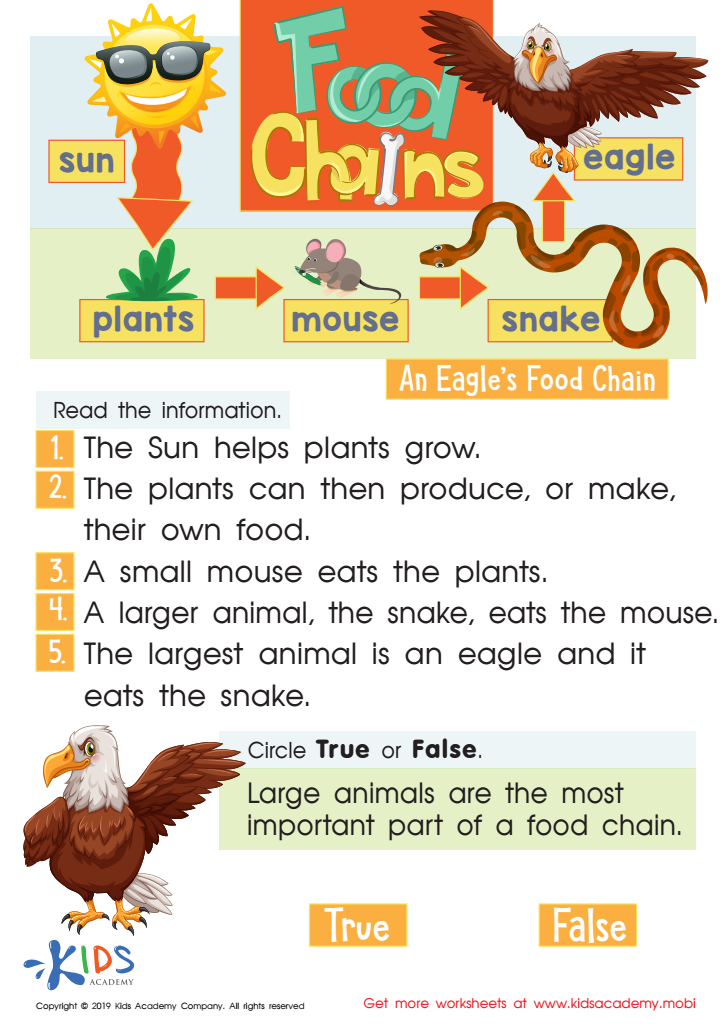
Food Chains Worksheet
This worksheet gets your child thinking about the sun's key role in the food chain. Read the info on the page, then discuss the true/false question. Are large animals the most important? Explain that without the sun, the other organisms would not exist. Have them circle the correct answer to finish.
 Assign to My Students
Food Chains Worksheet
Worksheet

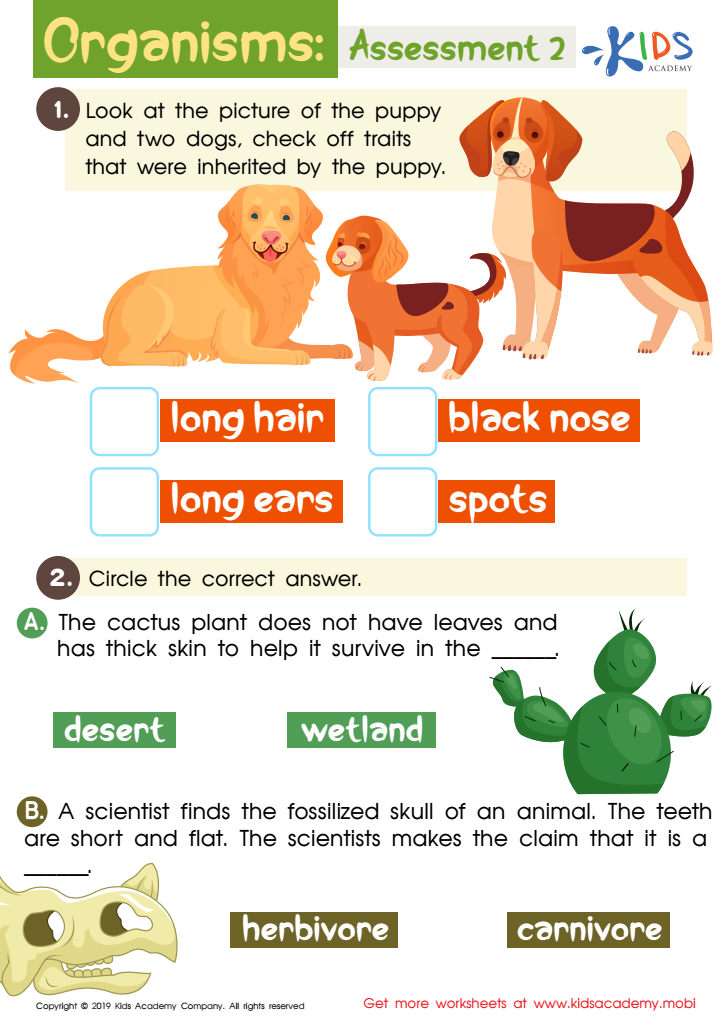
Organisms: Assessment 2 Worksheet
This free assessment helps you measure your child's science knowledge. They can check off traits a puppy inherited, identify a cactus's habitat, and review a dinosaur's diet. It's an efficient way to assess their skills.
Organisms: Assessment 2 Worksheet
Worksheet
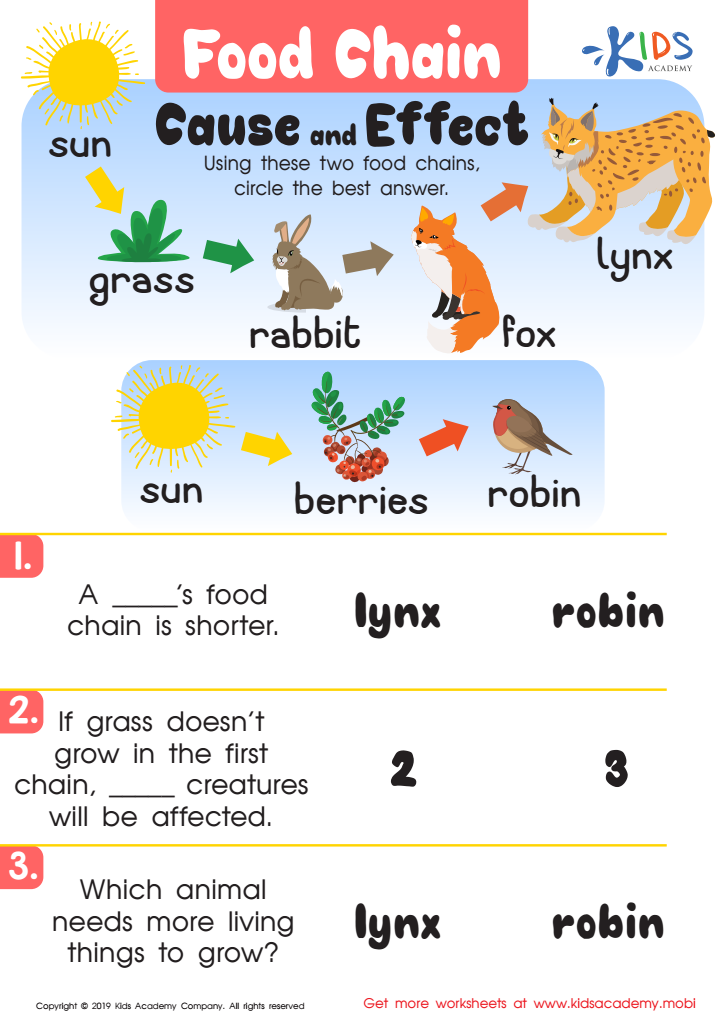
Food Chain Cause Worksheet
Help your little learner analyze ecosystems and compare food chains with this Kids Academy worksheet! Kids will compare a carnivore's and herbivore's food chain; which is longer and why? Questions at the bottom of the page will help them compare and circle the best answers. A great way to understand animal food chains!
Food Chain Cause Worksheet
Worksheet
Learning Skills
Understanding food chains
Learning about ecosystems
Comprehending energy transfer
Identifying animal diets
Recognizing predator-prey relationships
Identifying organisms
Analyzing organisms relationships
Understanding organisms interactions
Identifying cause and effect
Analyzing ecological relationships
Join Kids Academy for Free
Who is primarily going to use this learning content?








Understanding food chains involving plants and animals is crucial for children aged 8-9 as it lays the foundation for ecological literacy. At this age, children are naturally curious about the world around them and forming connections between different life forms. Teaching them about food chains helps them understand how energy flows in an ecosystem, emphasizing the interdependence of organisms. When children grasp that plants are the primary producers, converting sunlight into energy through photosynthesis, and that animals depend on these plants (and each other) for survival, they build a comprehensive view of nature.
Moreover, this knowledge fosters respect for biodiversity and the environment. It enables children to recognize the importance of each organism, from tiny insects to large mammals, in maintaining ecological balance. This awareness can instill a sense of responsibility toward environmental conservation at an early age.
Parents and teachers can further encourage stewardship by discussing real-world applications, such as the impact of human actions on food chains. By engaging children in hands-on activities, such as nature walks or experiments, they become active participants in their learning experience. Ultimately, understanding food chains enriches their appreciation for life, promotes critical thinking, and prepares them to address environmental challenges in the future.








