Critical thinking skills Social Studies Worksheets for Ages 8-9
4 filtered results
Difficulty Level
Grade
Age
-
From - To
Subject
Activity
Standards
Unlock your child's potential with our Critical Thinking Skills Social Studies Worksheets tailored for ages 8-9. These engaging resources are designed to enhance analytical abilities, promote problem-solving, and nurture independent thinking. Each worksheet is thoughtfully created to make learning interactive and fun, offering challenges that excite young minds and encourage deeper understanding of social studies concepts. Ideal for classroom use or at-home practice, our worksheets empower children to explore historical events, community roles, and civic responsibilities with curiosity and confidence. Prepare your child for lifelong success with our expertly crafted critical thinking worksheets.
Favorites
With answer key
Interactive
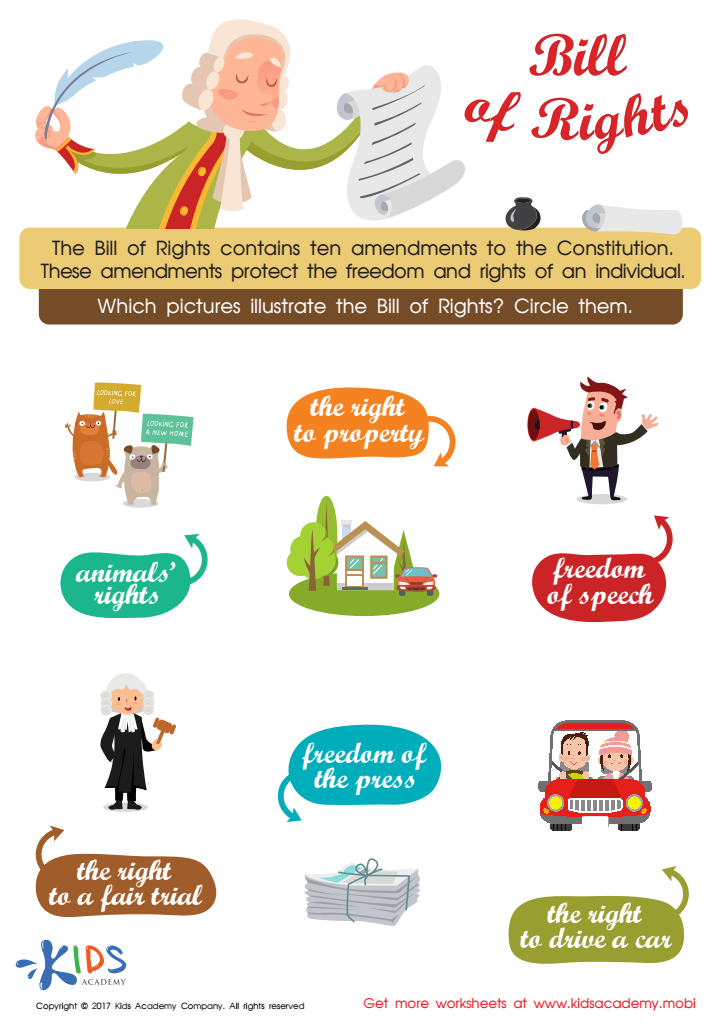
Bill of Rights Worksheet
Kids can learn about the rights the Bill of Rights grants us as US citizens. Work on the PDF worksheet with your 3rd grader to understand the ten amendments. This is a great way for your child to learn about the historical and essential document!
 Assign to My Students
Bill of Rights Worksheet
Worksheet
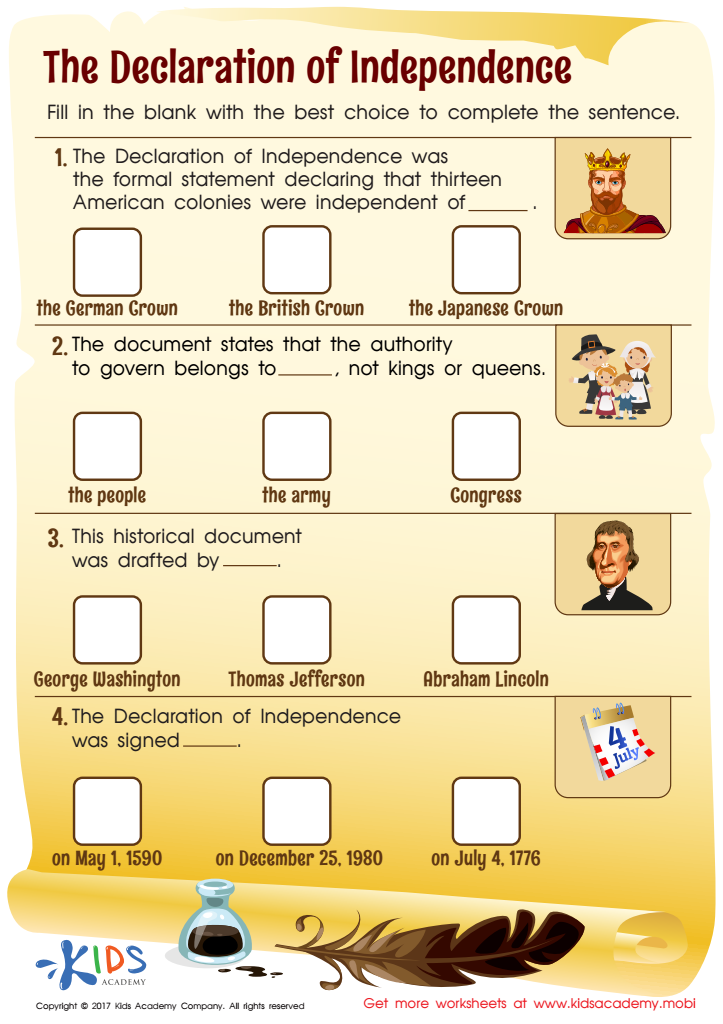
Declaration of Independence Worksheet
This PDF worksheet will help your child review important US history facts about the Declaration of Independence. It will cover key topics such as its purpose, author and date it was signed, which are integral to the US as a nation.
Declaration of Independence Worksheet
Worksheet
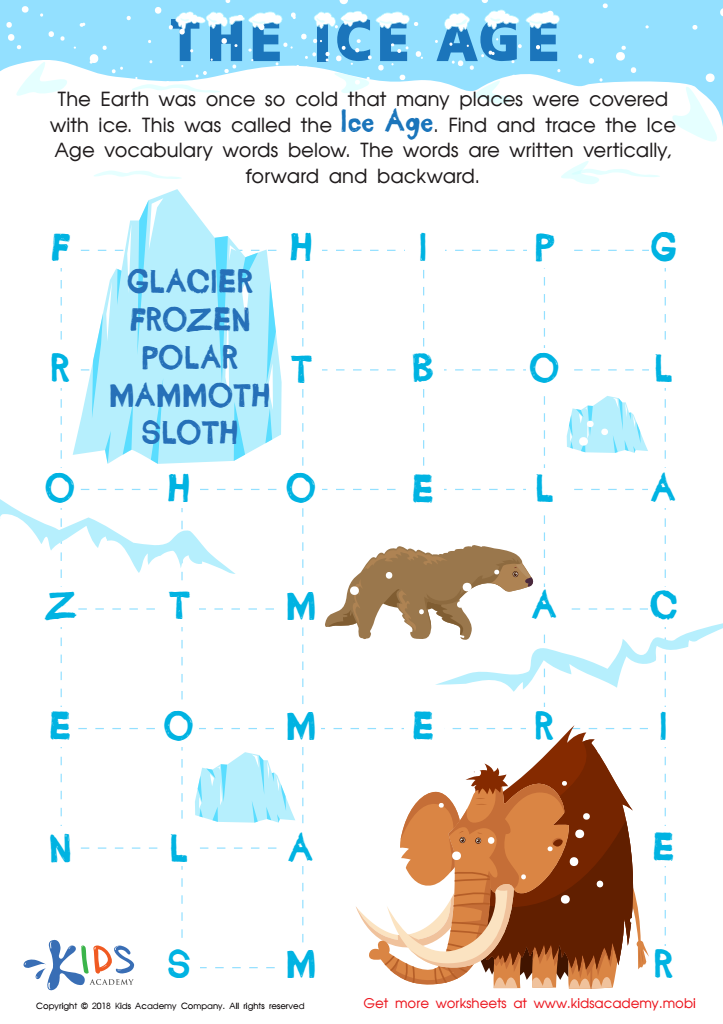
The Ice Age Worksheet
Let your child explore the Ice Age with this fun word search from Kids Academy! They can find words like glacier, frozen, polar, mammoth, and sloth. After finding each, discuss the meaning to help them build a better vocabulary and understanding of ancient history.
The Ice Age Worksheet
Worksheet
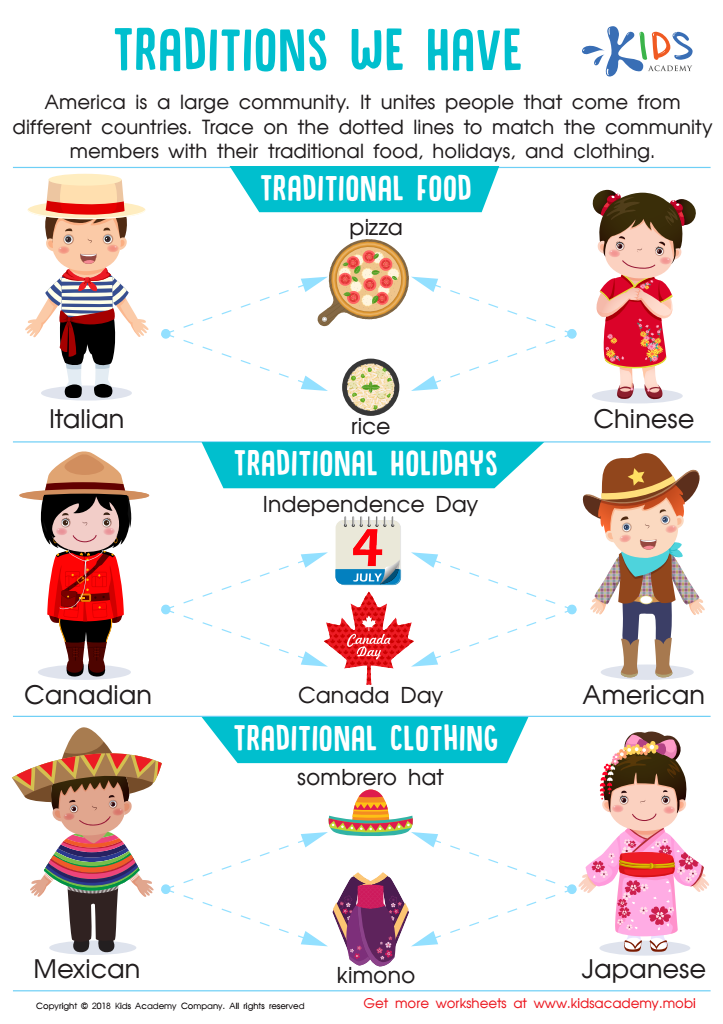
Traditions We Have Worksheet
Help your child learn about the world's diverse cultures with this tracing sheet. Trace the dotted lines to match different community members with their traditional holidays, foods and clothing. America is just one of many countries with multiple communities living together - teach your child that everybody has different backgrounds and customs, opening their minds to an even bigger world.
Traditions We Have Worksheet
Worksheet
Join Kids Academy for Free
Who is primarily going to use this learning content?


.jpg)





Critical thinking skills in social studies for children ages 8-9 are essential because they lay the foundation for informed and engaged citizenship. At this crucial developmental stage, kids are naturally curious and begin forming a comprehension of the world around them. Social studies curricula that emphasize critical thinking can teach children how to evaluate information, understand diverse perspectives, and make reasoned decisions—all of which are pivotal in today's complex society.
For parents, instilling these skills early ensures that their children grow up to be independent thinkers who can navigate various challenges effectively. Critical thinking enables children to differentiate fact from opinion, recognize bias, and develop the ability to ask probing questions. This forms a crucial toolkit for their future educational endeavors and personal lives.
Teachers who prioritize critical thinking in social studies not only align with educational standards but also foster an inclusive classroom environment where children learn to respect and understand different cultures and viewpoints. It prepares students for higher levels of learning and helps in developing problem-solving skills, which are emphasized across all subjects.
Ultimately, fostering critical thinking in social studies empowers youngsters to contribute meaningfully to their communities and equips them with the skills necessary for lifelong learning and active, informed participation in democracy.